
Blog
5kW Solar Power System for Home in Kenya
Discover the requirements and cost of installing a solar power system for a home, which range from KES 100,000 to KES 1,500,000. The cost varies with the power capacity of the system you want. For instance, a 5kW solar system for home would cost between KES 350,000 to KES 700,000 on average.
Quick Takeaways
- A 5kW solar power system is ideal for medium-sized homes.
- Typical system cost in Kenya ranges from KES 350,000 to KES 700,000.
- The system usually includes solar panels, an inverter, batteries, mounting structures, and wiring.
- Solar systems can power lights, fridges, TVs, washing machines, and other electric appliances.
- Most solar systems pay for themselves within 2–3.
- Solar panels typically last 20–25 years with minimal maintenance.
- Solar energy provides energy independence and protection from power outages.
Cost of Solar Power System for Home
| System Size | Best For | Price Range (KES) | Monthly Savings |
| 1-2 kW | Small apartments | 110,000 – 230,000 | 5,000 – 10,000 |
| 3-5 kW | 3-bedroom homes | 350,000 – 700,000 | 15,000 – 25,000 |
| 5-10 kW | Large homes/offices | 700,000 – 1,200,000 | 25,000 – 50,000 |
| 10+ kW | Commercial properties | 1,200,000+ | 50,000+ |
The Solar Energy Revolution: Why Shift to Solar Power?
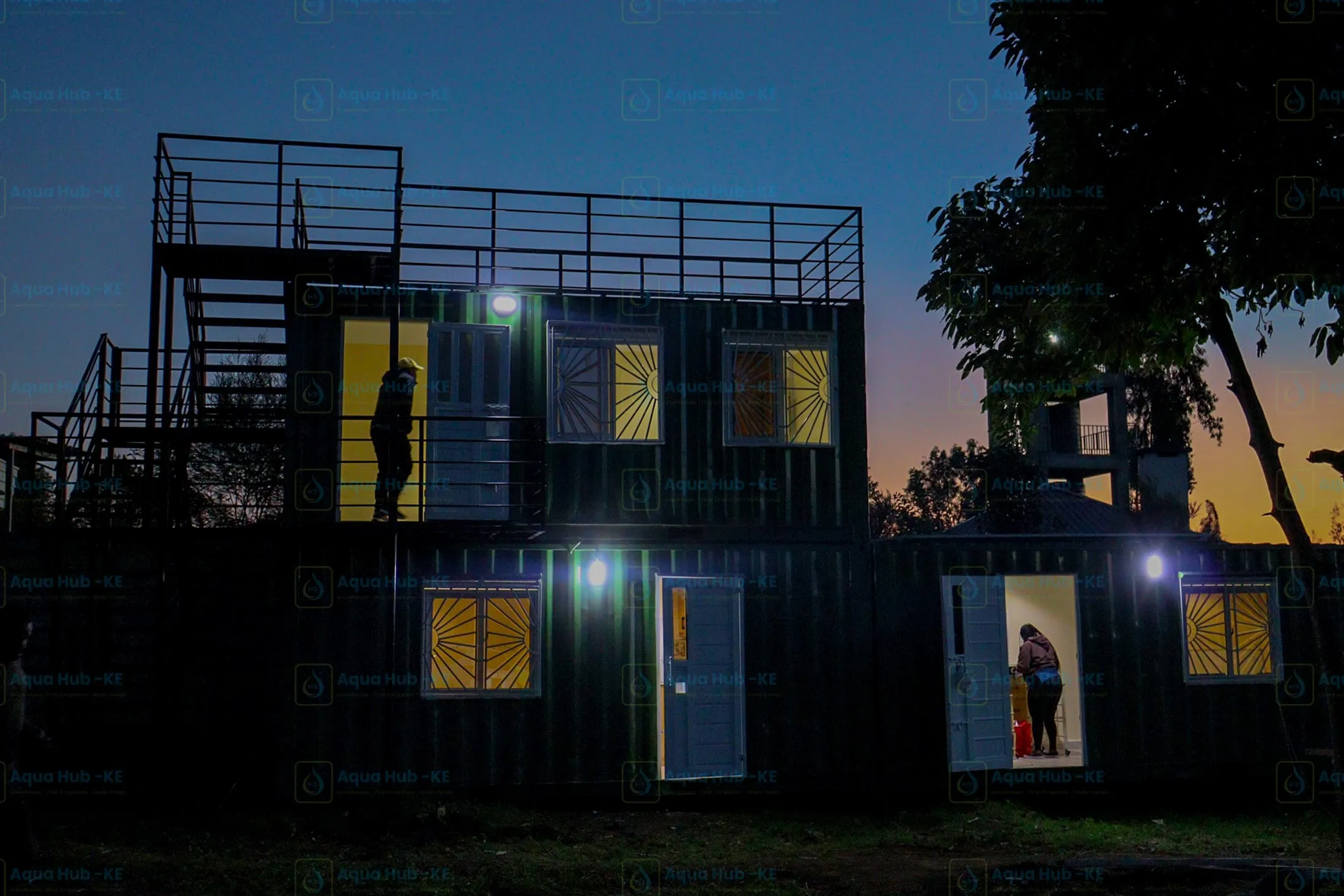
Solar power system lighting container house at night
Many household owners are now shifting to solar power because electricity is unreliable and expensive. According to research by the Energy and Petroleum Regulatory Authority (EPRA), Kenya has a high rate of solar irradiance (4-6 hours of peak sunlight). This means you can capture sufficient sunlight for home energy requirements such as lighting and powering devices.
5kW Solar Power System for Home
Solar power setup for moderate household energy requirements of 16 – 20 kWh. It generates 5000 watts of electricity per day under optimal solar irradiance.
What a 5kw Solar System Can Power
- Up to 25 LED lights
- Televisions
- Washing Machine
- Microwave
- Water Pumps
- Wi-Fi Routers
- CCTV cameras
If properly sized and designed with high-performance lithium backup batteries, solar power becomes fully reliable.
Components for Home Solar Power System Setup
- Solar Panels – the Photovoltaic (PV) modules that capture solar power and convert it to electric current. Panel requirement varies with power capacity needed. A 5kW system requires 4 550W monocrystalline panels.
- 2 – 10 KVA Hybrid Inverter – converts Direct Current is AC current which powers electric appliances. Has an inbuilt MPPT controller for efficient power control.
- Lithium Backup Batteries – stores excess energy generated for use when solar irradiance is low or at night.
- Clamps and screws – for mounting the panels on the roof.
- Cable and connectors – power supply from the solar panels to the inverter.
- Circuit breakers – for short circuit protection.
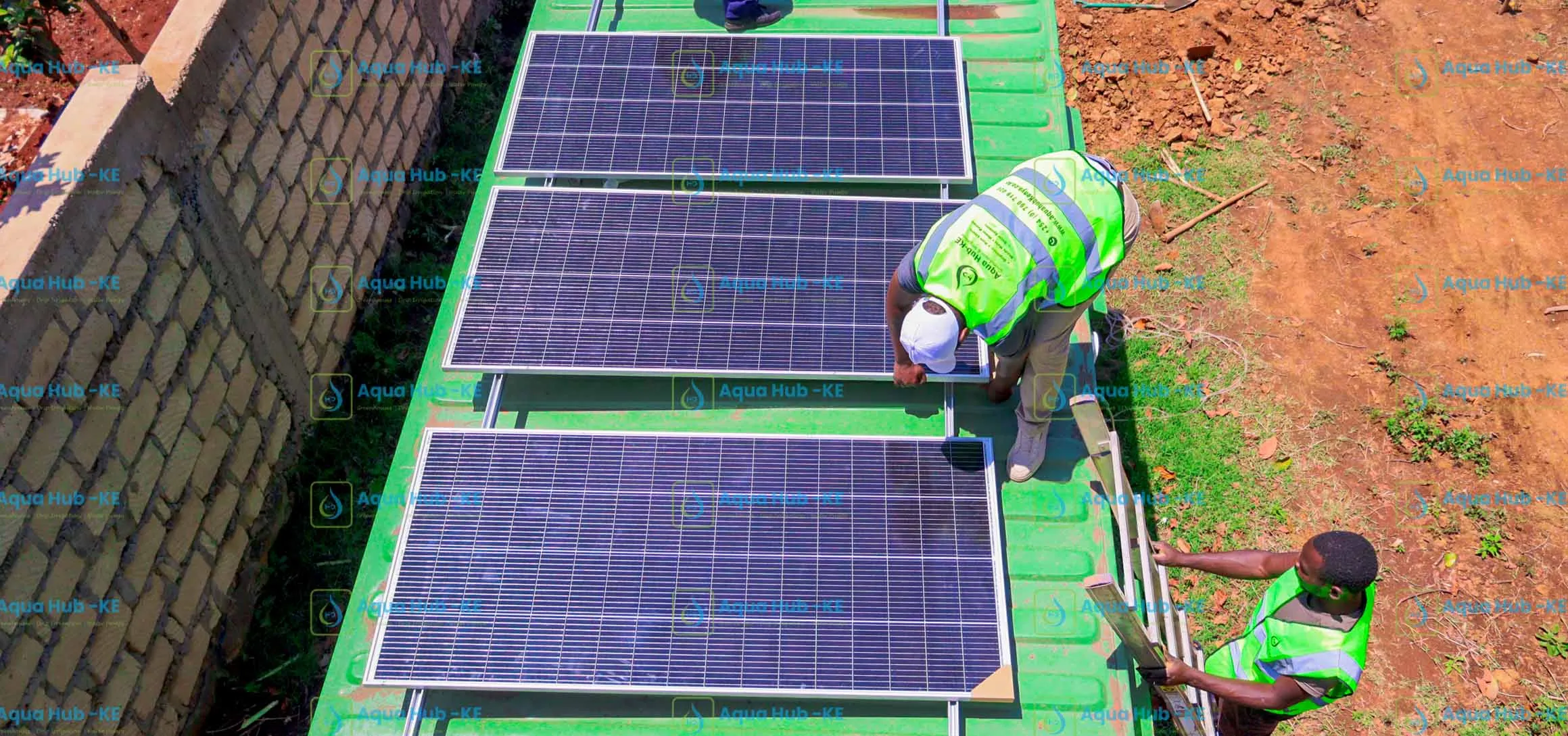
Mounting and connection of solar panels that collects power used in the system
How Do Solar Power Systems Work?
Photovoltaic modules capture sunlight and convert it to electric current (DC solar power). Direct current flows to the inverter, and it is converted to AC power, which powers appliances. Excess energy is stored in backup batteries connected to the system.
During the day, solar panels power the house and charge batteries. At night, the stored energy provides backup power.
Why Use Hybrid Solar Inverter
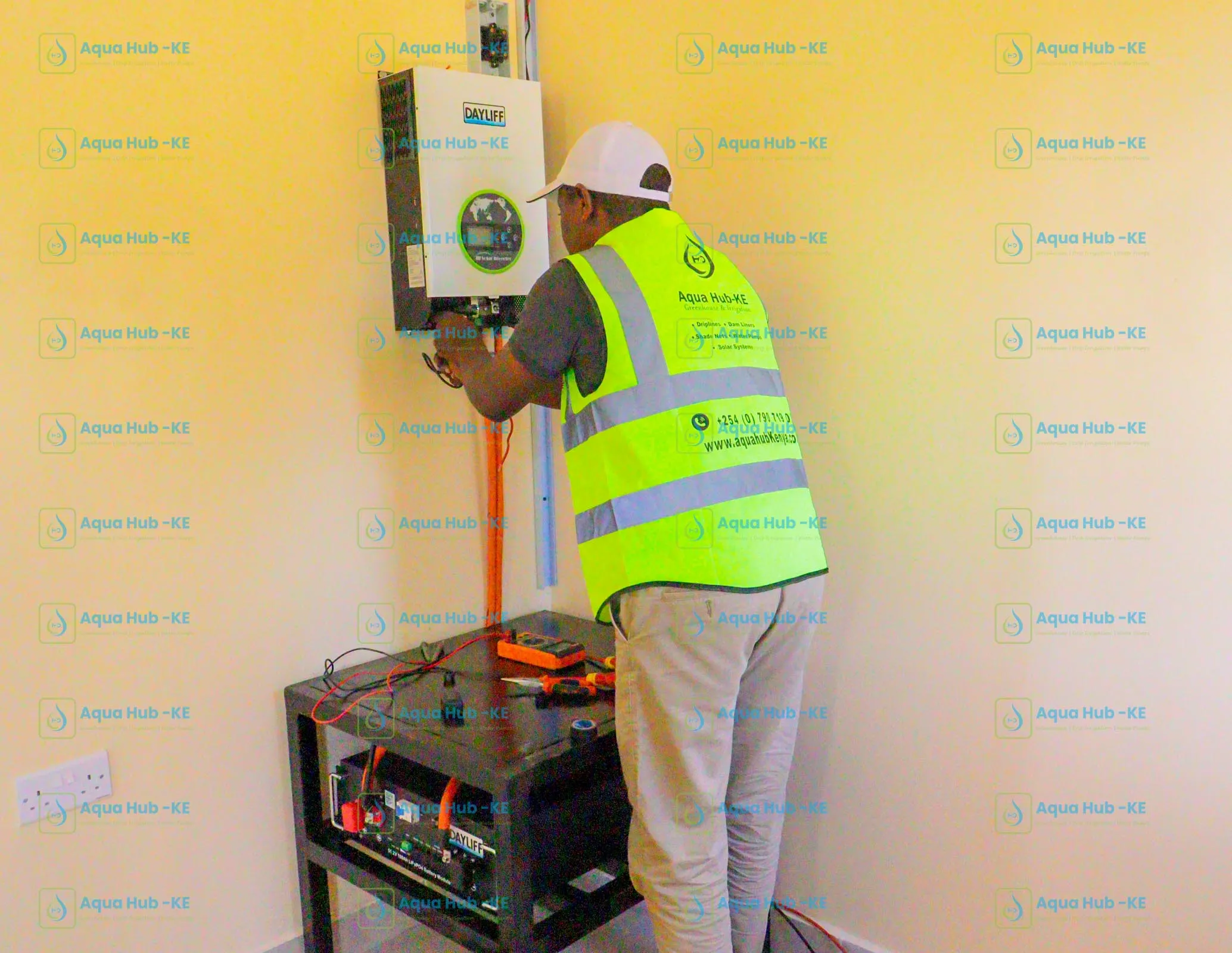
Connection of sunverter to a backup battery for Backup Power Storage
The inverter is the heart of your solar system. Choosing the right one ensures efficient energy conversion and long-term reliability. LCD display and smart in-built MPPT charger that automatically switches between grid and solar power for optimal battery performance. Also has Wi-Fi enabled for real-time monitoring on mobile devices.
For example, some hybrid inverters reach up to 97% efficiency and support lithium or lead-acid batteries, ensuring optimal performance.
Designing Solar Power System for Home
Designing a solar system for home requires careful planning to ensure maximum efficiency.
It involves:
- Energy consumption calculation – assessment of your home power needs according to your appliances.
- Roof orientation and sunlight exposure – sunlight irradiance varies with region, so your location and the suitability of your roof should be checked.
- PV module sizing – calculation of the solar panel capacity and number that will generate the power needed.
- Battery sizing – selection of the appropriate backup power batteries that will supply power when solar output is low.
- Inverter sizing – the inverter used should match the solar power requirements.
Solar panels should be installed facing south to maximise sunlight exposure throughout the day.
Proper system design ensures your solar panels generate maximum electricity while reducing energy losses.
How to Size a Solar Power System for Your Home
- Determine the total power demand: find the total load that is needed to power your appliances.
- Calculate the Solar Power Required: multiply the total power load (panel power output) needed by 1.3 to accommodate for power losses.
- Size the solar panels: divide the total watts needed per day by the number of sunlight peak hours. The average peak hours of solar irradiance are 4-6 in Kenya. Varies with location.
- Calculate the number of solar panels needed: Divide the solar power wattage needed per hour (in 3 above) by the power rating of solar panels you have.
How to Size the Solar Inverter
The input power capacity of the inverter should not be lower than the total load required, especially for stand-alone appliances. It should have 25–30% higher power capacity than the total required power load. The inverter must have the same nominal voltage as your battery.
For grid-integrated solar systems, the input rating of the inverter should be the same as the PV array rating to allow for safe and efficient operation.
How to Install a Solar Power System for Home
- Roof inspection and structural assessment
- Mounting panel support structures
- Installing solar panels
- Connecting inverter and batteries
- Wiring safety components
- System testing and commissioning
Advantages of a Solar Power System
1. Cuts expenses on electricity bills
Solar reduces reliance on grid electricity and can significantly cut monthly power bills.
2. Energy Independence
You have control over energy usage in your home. No wastage of power.
3. Reliable due to backup power
Solar systems with batteries provide electricity during outages.
4. Environmentally friendly
Solar energy produces zero carbon emissions and reduces fossil fuel use.
5. Long Lifespan
Solar panels last 20–25 years and require minimal maintenance.
6. Automatic Integration with grid power
Can be connected to the grid power supply to work as an alternative during a power outage.
Return on Investment in Solar System
Solar power system installation takes 2–3 years for you to break even after spending on initial expenditure. The cost of installation is often high, but in the long run you save a lot of money.
For example, a 5kW system for a 3-bedroom home at KES 480,000 will save you KES 20,000–22,500 per month. This in a year translates to KES 240,000 – KES 270,000; thus, the payback period will take 1.75 – 2 years.
Maintenance Tips for Solar Power Systems
Recommended maintenance includes:
- Cleaning solar panels to remove dust.
- Checking wire connections.
- Monitoring battery performance
- Inspecting inverter alerts or system faults
Frequently Asked Questions
1. How much does a 5kW solar power system cost in Kenya?
KES 350,000 to KES 500,000 or more as per the system complexity.
2. How many solar panels are needed for a 5kW system?
8–10 solar panels rated between 500W and 550W each.
3. What size solar power system do I need for my home?
The required system size depends on your daily power consumption. Homes using around 20 kWh per day usually need a 5kW system.
4. Is solar energy a good investment?
Yes. Solar power offers reliable and low-cost power access.
5. How long do solar panels last?
20–25 years.
6. Is solar power reliable during power outages?
Yes. With backup batteries, you can access power.
7. How many solar panels do I need for a 5 kVA inverter??
10–15.
8. Do solar panels require maintenance?
Maintenance is minimal. Cleaning panels and occasional inspections are usually sufficient.
9. Can solar power eliminate electricity bills completely?
In many cases, yes. A properly sized system can cover most or all household electricity needs.
10. How many batteries can a 5 kVA inverter use?
At least 4 12V batteries.