
Blog
Avocado Irrigation in Kenya: Best Watering Guide
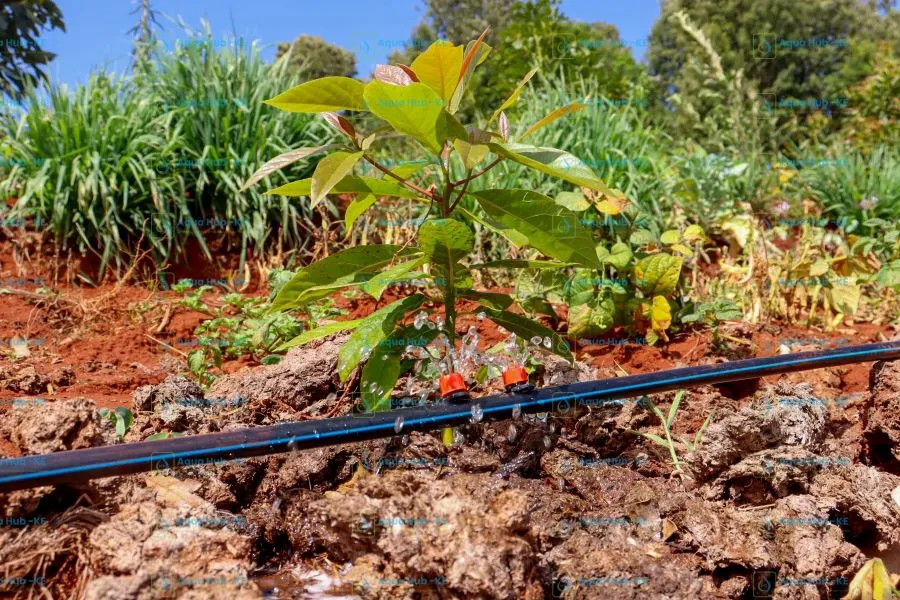
As the demand for quality avocado fruits continues to rise, avocado farming is gaining popularity as one of the high-income crops to grow. Avocado farming in Kenya relies on irrigation to meet the high market demand since rainfall is not sufficient or reliable. For efficient irrigation productivity, use a quality avocado irrigation kit from Aqua Hub Kenya.
Call 0790719020
Avocado Farming in Kenya
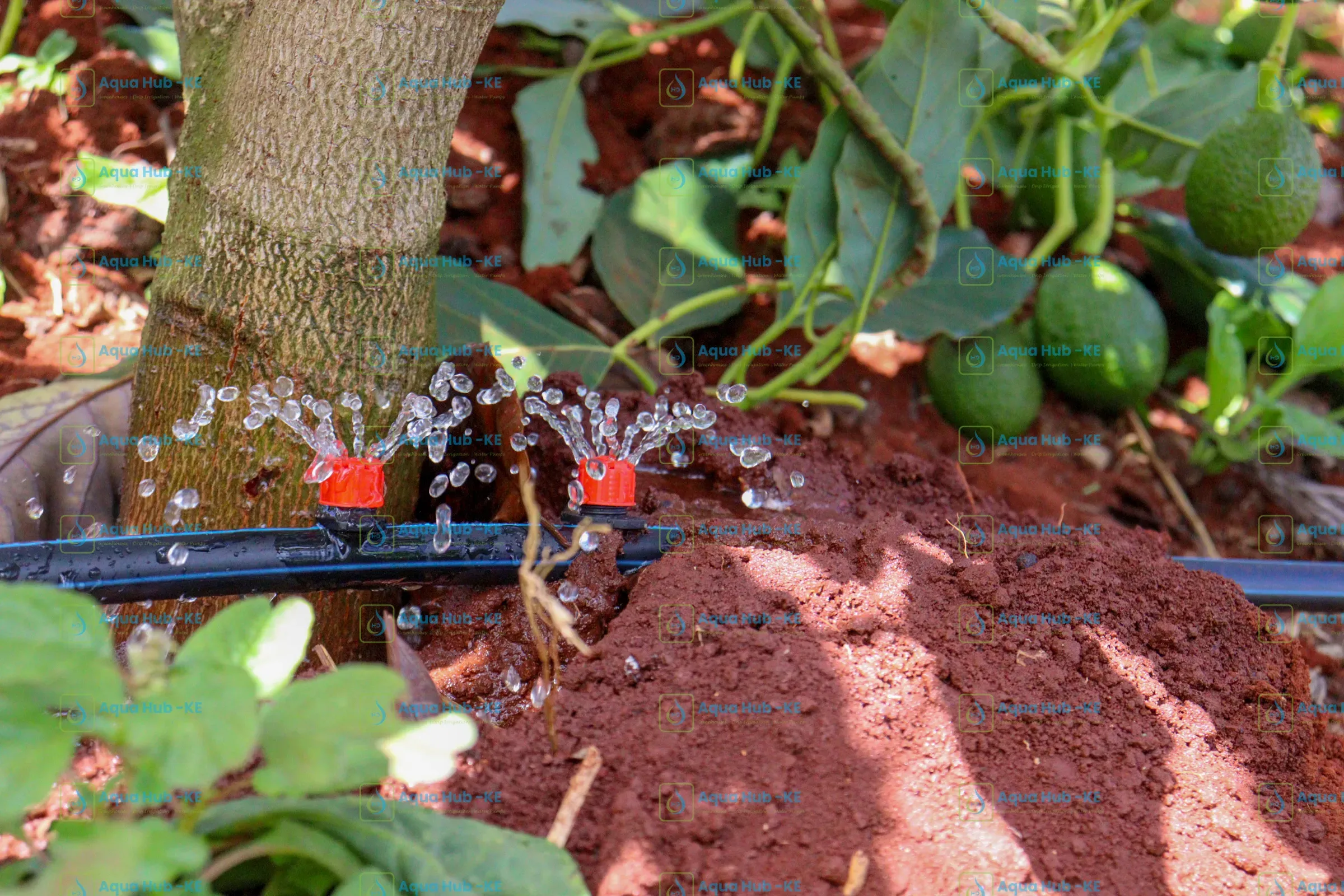
irrigation of grown avocado tree using button drippers
Kenya is currently a global powerhouse in avocado production, favoured by its equatorial climate and volcanic soils. While many farmers rely on rain-fed systems, the shift toward commercialised exports has made an avocado irrigation kit mandatory for success. The market demands consistency in fruit size and oil content factors directly controlled by water management.
Avocado Varieties Grown in Kenya
Avocado varieties grown in Kenya have similar water needs but different ecological conditions.
- Hass: Thrives at 1,000–2,000 m ASL; high oil content; dark purple skin when ripe.
- Fuerte: Pear-shaped; green skin; excellent pollinator for Hass (Type B).
- Jumbo: Primarily for the local market; massive size but lower oil content.
Best Avocado Variety in Kenya
Hass avocado is the undisputed best avocado variety due to its high yield and demand, especially in export markets.
Why Avocado Irrigation is Essential in Kenya
Annual rainfall is unreliable and often fails in most parts of the country. Without a consistent and sufficient water supply, your avocado plants would not yield to their full potential.
Proper irrigation ensures:
- 30-40% increase in fruit size and weight.
- Consistency in flowering, preventing the “biennial bearing” cycle.
- Protection against heat stress in regions like Machakos or Embu.
- Precise delivery of nutrients through fertigation.
Essential Avocado Planting Tips
Here are some tips for proper avocado planting and crop management.
- Hole Preparation: Dig holes 2 ft x 2 ft x 2 ft to allow for deep root penetration.
- Soil Testing: Ensure a pH of 5.5–6.5.
- Mounding: In heavy clay soils, plant on mounds to prevent Phytophthora root rot, a common killer in poorly drained soils.
- Mulching: Always use organic mulch to reduce evaporation by up to 70%.
Water Requirements
Avocado trees need about 4 – 12 litres per hour, delivered consistently to ensure proper growth and fruit set.
Avocado Irrigation Methods
Choosing between avocado tree irrigation methods depends on your budget and terrain.
Button Drippers
Button drip irrigation is the most effective method to water avocado trees in Kenya. It emits water slowly to the root zone using button drippers installed on a delivery pipe. Ideal for young or mature trees and reduce water stress.
Micro-Sprinklers
Excellent for cooling the orchard and mimicking natural rain; ideal for sandy soils.
Avocado Irrigation Kit | Complete System
A full avocado irrigation kit in Kenya includes HDPE mainlines, delivery PE, fittings, and button drippers.
Other additional requirements may include:
- Pressure Compensated (PC) Drippers: ensure that a tree at the top of a hill gets the same amount of water as one at the bottom.
- Filtration Systems: Essential to prevent silt from clogging your emitters.
How to Irrigate Avocado Trees
- Placement: Place drippers at the delivery pipe (the edge of the leaf canopy) where feeder roots are most active.
- Duration: Run the system for 2–4 hours depending on the flow rate.
- Frequency: Increase frequency during the dry months (January–March).
Avocado Irrigation Schedule
Irrigation should be done for a minimum of 3 days a week. Water application rates will depend on the age and growth stage of the plant.
Seasonal Irrigation Adjustment
During dry months, water more frequently, while during rainy seasons, reduce watering to avoid waterlogging.
Avocado Irrigation Best Practices
- Water early in the morning to reduce evaporation.
- Use moisture sensors or simple probes to monitor soil water content. Soil should be moist but not saturated.
- Apply 10–15cm of mulch around the tree base to conserve soil moisture and cut evaporation.
- Collect rainwater in tanks during the rainy season to supplement irrigation in drier periods and save on costs.
Avocado Irrigation Yield per Acre in Kenya
Expected Yield per Acre
With proper irrigation and management, avocado trees generate high yield. For instance, mature avocado trees can produce 10 tonnes of avocado fruits per acre.
Irrigation & Fruit Quality
Adequate water during flowering and fruit development enhances fruit size, oil content, and overall market quality.
Avocado Growth Stages Needing Proper Irrigation
- Flowering to Fruit Set: Drought here causes the tree to shed flowers.
- Rapid Fruit Development: Lack of water here leads to small fruits that exporters reject.
Cost of Avocado Irrigation Kit in Kenya
The cost of Avocado irrigation kit for 1 acre is between KES 75,000 and KES 120,000. This seemingly high cost can be recovered within the first harvest.
Frequently Asked Questions
1. What is the best avocado variety in Kenya?
Hass avocado is currently the most profitable for export.
2. How many liters of water does a mature avocado tree need?
Approximately 80–120 litres per week.
3. What is included in a standard avocado irrigation kit?
HDPE pipes, connectors, filters, and button drippers.
4. Can I use overhead sprinklers to water avocado trees?
It is not recommended as it wastes a lot of water.
5. How often should I water my avocado trees?
Usually 2–3 times a week.
6. How many times can you harvest avocados per year?
Avocadoes yield fruits all year round.
7. What are the challenges facing avocado farming in Kenya?
Limited market access, inconsistent product quality, export barriers, Pest and diseases.
8. What is the spacing for avocados in Kenya?
The standard is 5m x 5m, allowing 150 trees per acre.
9. How long does it take for a grafted avocado to fruit?
2–3 years.
10. How many avocado trees per acre in Kenya?
100 to 150 trees.