
Blog
Best Agricultural Seedling Trays in Kenya
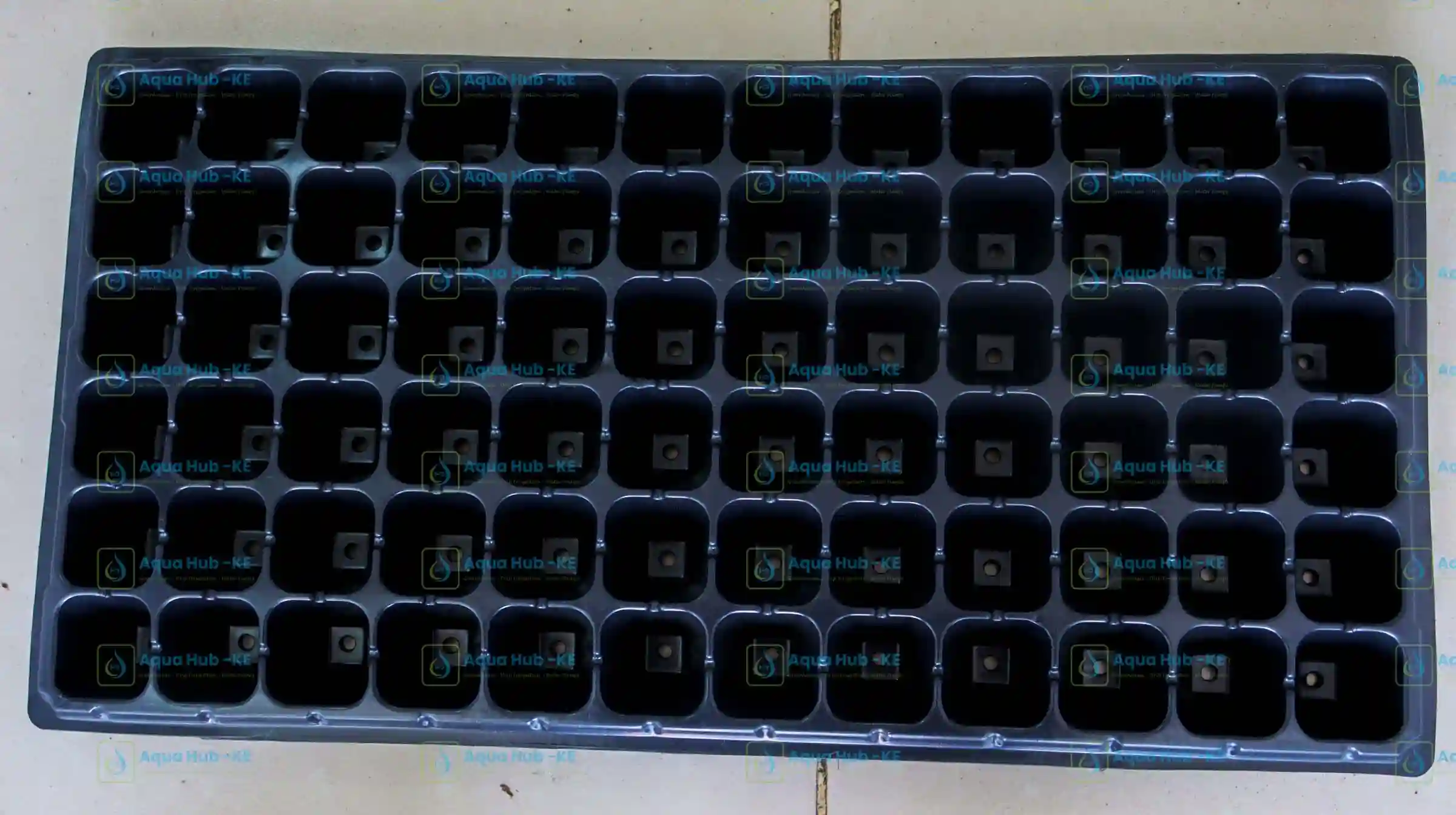
We have different types of seedling trays for a wide variety of vegetable and fruit seedlings. Agricultural seedling trays in Kenya come in different numbers of cells including 28, 50, 72, 128, 200 and 288.
Call 0790719020.
Cost of Agricultural Seedling Trays in Kenya
Our seedling trays are available at KES 150 each.
What Are Agricultural Seedling Trays?
Agricultural seedling trays are specially designed containers divided into small cells where seeds are planted and nurtured before transplanting. These trays are widely used in modern farming to improve seed management and germination success.
Features of Seedling Trays
- UV-treated plastic – making them durable and reusable across seasons
- Cell Holes – designed with cell holes to hold seeds. Trays are available with different cell hole capacity from 28 to 288.
- Black plastic – to absorb heat and retain warmth for faster growth.
- Light and portable – enhances easier transport, packing and handling of seedlings.
Importance of Seedling Trays for Farmers
Seedling trays improve germination rates and reduce seed wastage especially for expensive hybrid seeds.
Research shows germination rates can reach up to 95% in well-managed trays. This is a huge advantage compared to direct planting.
The common benefits of seedling trays are as follows:
- Efficient seedling propagation
- High seedling propagation rate
- Viable Seedling production
- Reduces risk of infections
- Easy management
How Do Seedling Trays Work?
Seedling trays hold the soil to allow for efficient germination and growth of seedlings. Each cells holds 1 or 2 seedlings thus balance in aeration, moisture and nutrient absorption thus proper growth.
The tray also prevents risk of soil erosion, soil-borne diseases and other interference which occur with seedlings in open soil beds.
Types of High-Quality Seedling Trays in Kenya
Seedling trays come in different sizes, typically ranging from 50 to 288 cells. The common trays are ideal for propagation of:
- 50 – beetroots.
- 72 cells → large seedlings (tomatoes, peppers)
- 128 cells → medium crops (cabbage)
- 200–288 cells → small crops (onions)
How to Prepare Seedling Trays
- Clean trays thoroughly
- Disinfect to prevent diseases
- Fill with moist growing medium
Using sterilized trays prevents fungal infections like damping-off, which can wipe out entire nurseries.
Best Growing Media for Seedling Trays
The best medium for trays is cocopeat, which is light and retains moisture well.
Cocopeat has excellent aeration and water retention. It is also sterile once treated (mixed with ammonium to remove salts) and has no risk of infections. You can mix with compost manure and soil to ensure you get an optimal growing medium.
How to Plant Seeds in Seedling Trays
- Fill trays with medium
- Place one seed per cell
- Cover lightly
- Water gently
Avoid planting too deep this delays germination.
How to Use Seedling Trays Properly
- Place trays under shade or greenhouse
- Use the right planting media. Treated Cocopeat mixed with compost and soil is the best.
- Avoid direct sunlight during germination
- Ensure adequate light after sprouting.
Too much heat can damage seedlings, while too little light causes weak stems.
How Often Do You Water Seedling Trays?
- Water daily (lightly)
- Keep soil moist, not soggy
Smaller cells dry faster and need more frequent watering.
Overwatering can be detected by:
- Yellow leaves
- Mold growth
- Slow growth
How Long to Keep Seedlings in Trays
Most vegetable seedlings stay in trays for 3–5 weeks before transplanting.
How to Know your Seedlings are Ready for Transplanting
Check for:
- 3–4 true leaves
- Strong roots
- Healthy green colour.
Keeping seedlings too long leads to root binding and poor growth after transplanting.
How to Prevent Mold in Seedling Trays
- Avoid overwatering – set your mist irrigation to water conveniently as per seedling growth level.
- Ensure airflow – your growing environment should be well ventilated
- Use clean trays – sterilised trays will ensure no risk of infections.
- Use treated propagation media – treated cocopeat retains water and has no risk of infections.
Common Mistakes to Avoid when Propagation with Trays
- Using wrong tray size
- Overwatering
- Planting too many seeds per cell
Where to Buy Seedling Trays in Kenya
Aqua Hub LTD.
Quick Takeaways
- Seedling trays improve germination and reduce seed waste
- Choose tray size based on crop type
- Use cocopeat for best results
- Water lightly but consistently
- Transplant after 3–5 weeks
- Prevent Mold with proper hygiene
- Invest in durable, reusable trays
Frequently Asked Questions
1. How much are seedling trays in Kenya?
They create individual growing spaces with proper drainage and aeration for healthy roots.
2. How often do you water seedling trays?
Light watering daily is ideal; avoid waterlogging.
3. How long to keep seedlings in trays?
3–5 weeks before transplanting.
4. What is the best medium for seedling trays?
Cocopeat is the best due to moisture retention and aeration.
5. How to prevent Mold in seedling trays?
Use clean trays, avoid overwatering, and ensure airflow.
6. What size tray is best for tomatoes?
50–72 cell trays are ideal for tomatoes.
7. Why are my seedlings dying in trays?
Common causes include overwatering, poor drainage, or fungal diseases.
8. Are seedling trays reusable?
Yes, especially high-quality plastic trays.
9. Can I use soil instead of cocopeat?
Yes, but cocopeat gives better results.
10. Where to buy seedling trays in Kenya?
Aqua Hub LTD.