
Blog
Best Irrigation Water Filters in Kenya
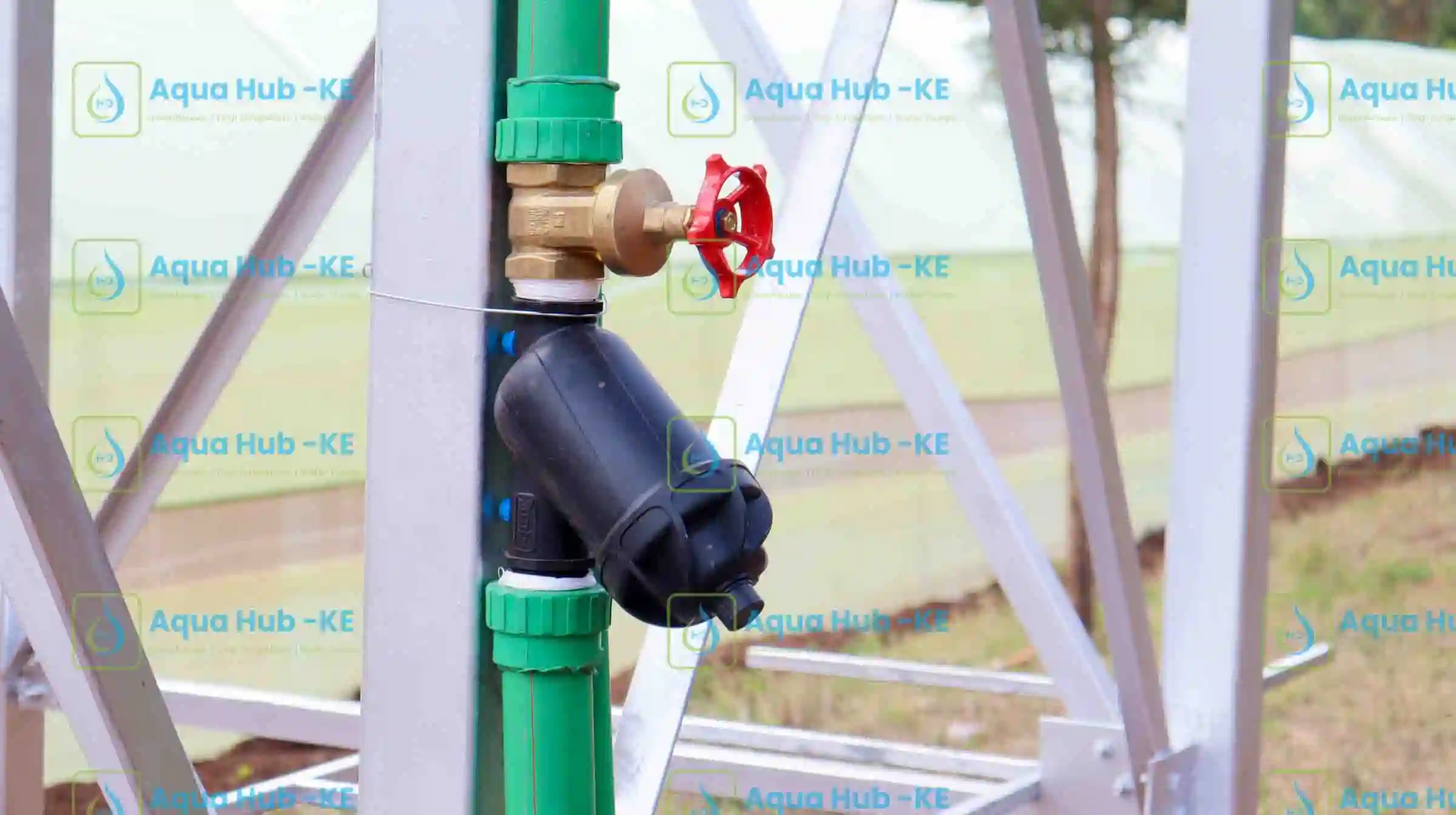
Irrigation water filters prevent sand and debris from blocking pipes in the irrigation system to ensure efficient water flow.
Buy quality irrigation water filters in Kenya from Aqua Hub LTD and get professional installation that will guarantee a long-lasting irrigation system.
Call 0790719020
Why Irrigation Filters Matter
Irrigation filters protect your entire system by removing sediment, debris, and organic particles before water reaches drip emitters or sprinkler heads. Unfiltered water can quickly clog tiny holes in drip lines or block micro-sprinkler nozzles, leading to uneven watering, frequent maintenance, and reduced crop health. Filters thus help maintain uniform distribution and low operating costs over time.
Types of Irrigation Filters
Screen Filters
Screen filters use a fine mesh to catch medium-sized particles. They are popular for gravity-fed and slightly dirty water sources.
Advantages of Screen Filters
- Simple and low cost
- Easy maintenance
- Best for small to medium systems
Disc Filters
Disc filters consist of stacked plastic discs with grooves that trap particles throughout the depth of the stack. They’re ideal for water that contains fine silt and organic matter.
Advantages of Disc Filters
- Higher filtering efficiency than screens
- Easy to clean (often without tools)
- Better for variable water quality
Sand Filters
Sand filters use layers of sand and gravel to trap a range of particle sizes. Suitable for high debris loads, sand filters are robust but larger and more expensive than screens or discs.
Automatic Self-Cleaning Filters
These advanced filters flush themselves automatically, offering low-maintenance operation for large farms. Farmers with large acreage and inconsistent water quality benefit most.
How Irrigation Filters Work
Irrigation filters trap particles by forcing water through a medium whether a mesh screen, disc grooves, or sand layers.
Screen filters trap particles on the surface, while disc filters trap them throughout stacked discs with varying groove sizes.
Sand filters use sand layers as a physical barrier, effective for larger systems with heavy debris loads.
Choosing the Right Filter for Your Farm
Choosing Based on Water Source
- River or pond water: Higher sediments — consider disc or sand filters.
- Well or borehole: Lower solid content — screen filters can be sufficient.
- Recycled or runoff water: Often requires larger capacity filters.
Based on Irrigation Type
- Drip irrigation: Needs finer filtration (e.g., 100–200 microns).
- Sprinklers: Less fine but consistent filtration helps maintain nozzles.
Based on Flow & Pressure
Match filters to your irrigation flow rate and system pressure. High flow systems usually need larger diameter filters; pressure losses through filters can be minimized by choosing high surface area units.
Irrigation Filter Prices in Kenya
Prices vary depending on type and size:
| Filter Type | Price Range |
| Screen Filters | KES 1,000 – 3,500 |
| Disc Filters | KES 1,400 – 4,850 |
| Imported Disc Filter 1.5″ | KES 16,200 |
Recommended Water Filters for Irrigation Systems
Disc Filters: Drip Irrigation
Disc filters are especially suited for cropping systems because they combine deeper filtration and ease of cleaning. Water passes through the grooves of stacked discs, trapping particles throughout the depth rather than just on the surface. This design makes them more efficient than many basic screen filters and reduces cleaning frequency.
Screen Filters for Sprinkler & Drip Irrigation
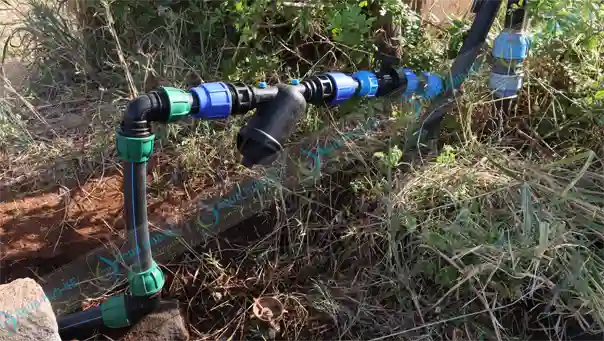
A screen filter installed in a mainline section of a drip irrigation system
Screen filters are common in Kenya, particularly for medium-clean water sources. They have mesh screens that catch sand and silt before water reaches drip tapes or sprinklers. These filters are often recommended where water quality is generally good, and debris size is predictable.
Sand Filters: Best for High-Debris Water
Sand filters excel when water contains large sediment loads, such as river water or pond sources. Filtration occurs as water moves through sand and gravel layers, capturing a wide range of particle sizes. Sand filters are ideal when other filters clog frequently due to heavy sediment.
Combined Filter Pressure Regulator Units
Some irrigation systems use units that combine filtration with pressure regulation. These are especially useful where both debris removal and stable pressure are needed to protect drip lines and sprinklers. For example, pressure-regulating filters maintain optimal performance while preventing clogging, ideal for variable farm water setups.
How to Install a Filter for Drip Irrigation
- Installing a filter correctly ensures efficient performance:
- Place the filter after the pump but before distribution lines.
- Ensure proper inlet/outlet alignment with the mainline.
- Use gaskets and clamps rated for your pressure.
- For gravity systems, install filters slightly above the mainline to reduce backflow.
Proper positioning maximizes debris trapping and minimizes interruptions. Consult supplier documentation for specifics.
How to Replace Irrigation Water Filters
- Turn off the water supply.
- Release system pressure (open a valve or drip line).
- Remove the filter housing and take out the old element.
- Clean or replace with a new filter element.
- Reassemble and test flow before full operation.
How to Ensure Irrigation Filters Work Efficiently
- Clean filters every week in case of high sediment water.
- Inspect seals and gaskets.
- Flush larger dirt via backwash valves if available.
- Keep spare elements on hand for seasonal shifts in water quality.
Proper maintenance significantly extends service life and reduces clog-related irrigation downtime.
Common Mistakes with Irrigation Water Filters
The common mistakes people make when connecting a filter on an irrigation system include:
- Installing filters after emitters instead of before distribution.
- Using a low micron filter for high-debris water, causing frequent clogs
- Wrong sizing of flow rate and pressure requirement.
- Failure to consider pressure loss.
Frequently Asked Questions
1. What are the best filters for irrigation systems in Kenya?
Disc and screen filters are most used; choose disc filters for fine particles and screen filters for medium debris.
2. How much is an irrigation filter price in Kenya?
KES 1,000 – KES 4,000 depending on type and size.
3. What type of filter do I need for drip irrigation?
A disc or screen filter with 100–200 microns.
4. Where should an irrigation filter be installed in the irrigation system?
After the pump and aligned with supply lines.
5. How often should I clean my irrigation filter?
Clean every week in case of high-debris water.
6. Are sand filters better than disc filters?
Sand filters handle heavy sediment well but take more space; disc filters are more efficient for fine particles.
7. Why install a pressure regulator with a filter?
It protects drip emitters by stabilizing pressure and removing particles simultaneously.
8. Do irrigation filters reduce water pressure?
Yes, slightly; choosing larger filters or high-surface-area models minimizes pressure loss.
9. What micron size is best for irrigation filters?
100–200-micron filter.
10. Can filters improve crop yields?
Yes. Through uniform water delivery, crops thrive well and yield is better.