
Kenol, Muranga
16 x 30m Commercial Greenhouse and Drip Setup in Kenol, Muranga
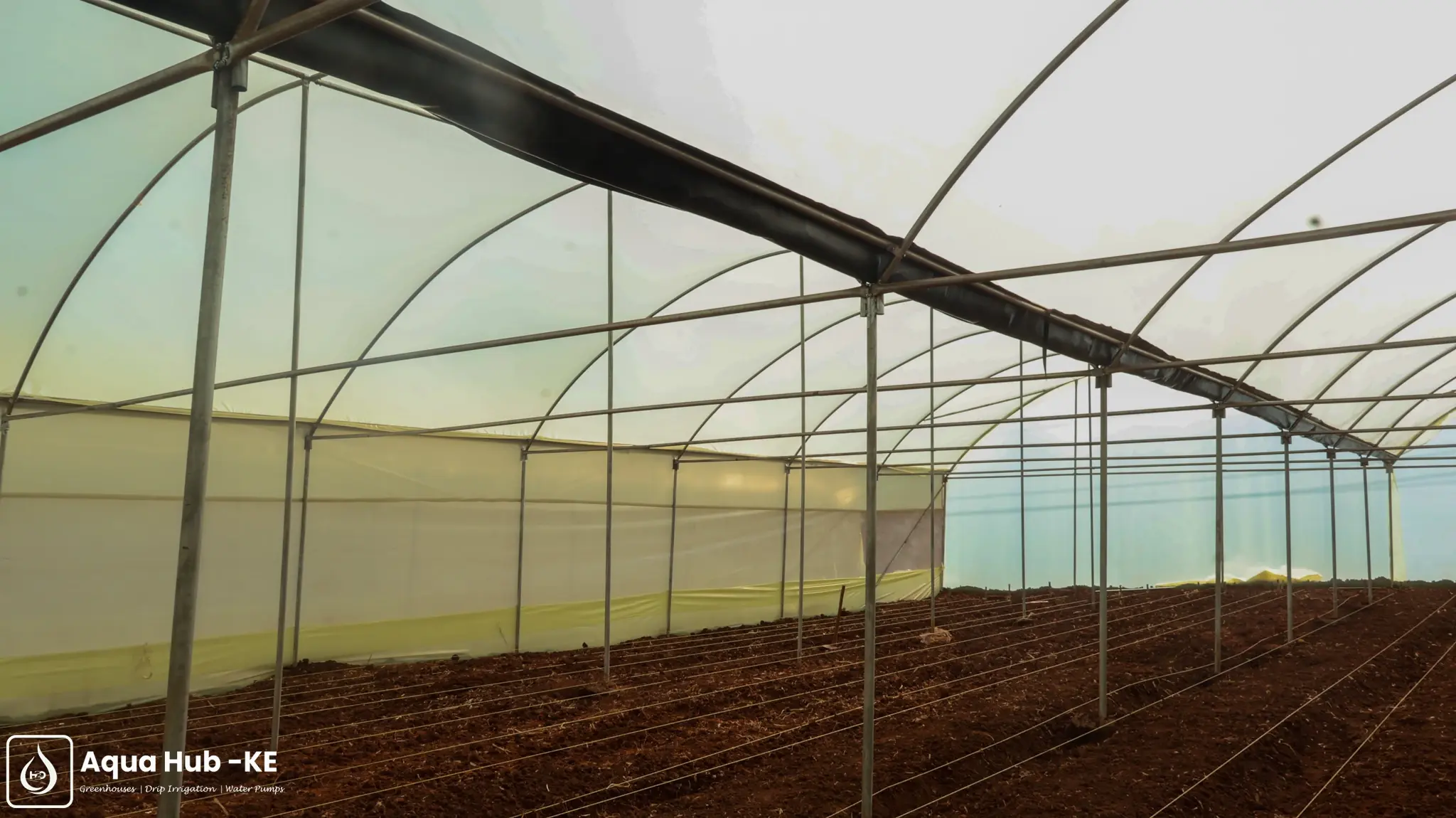
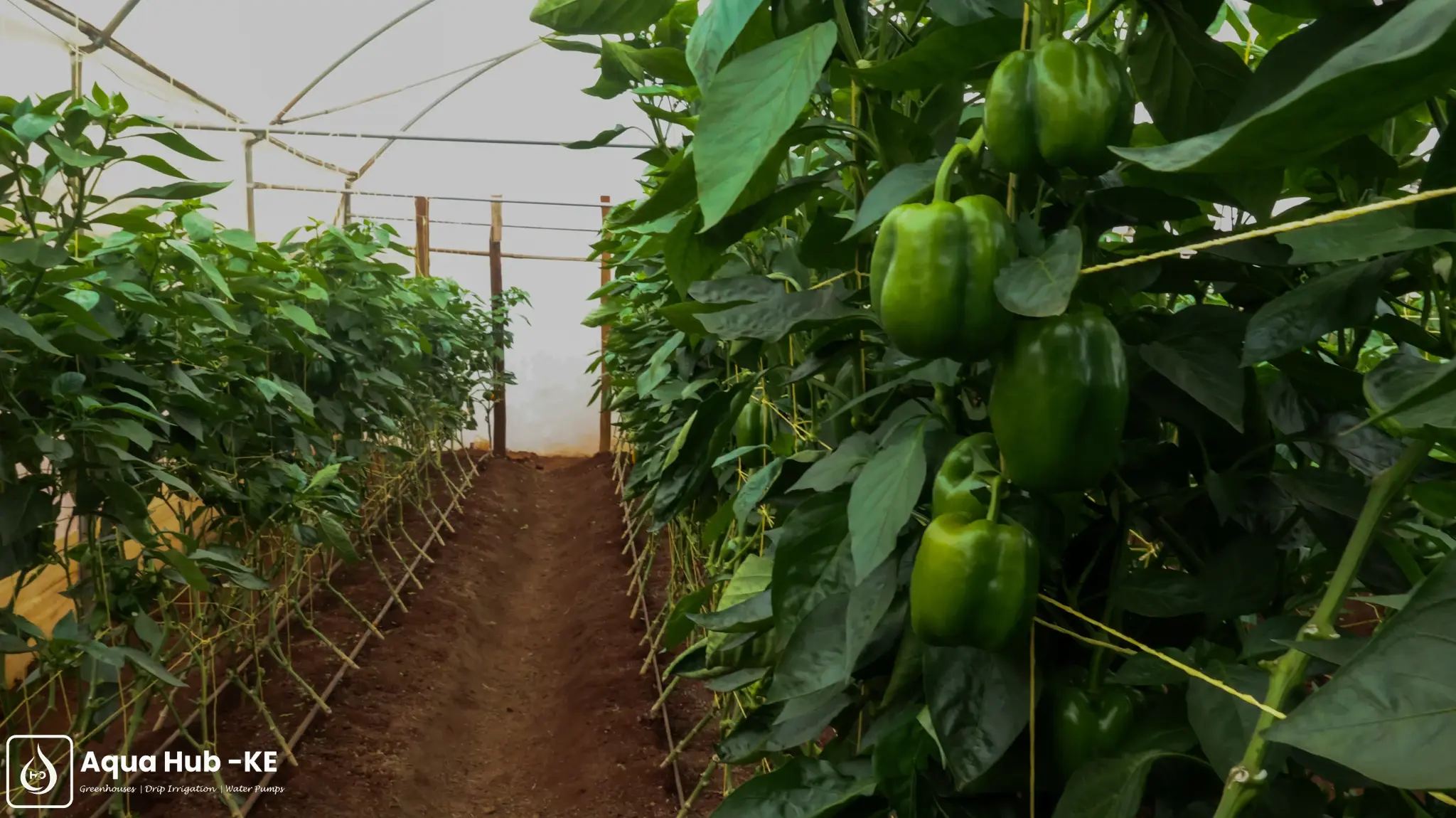
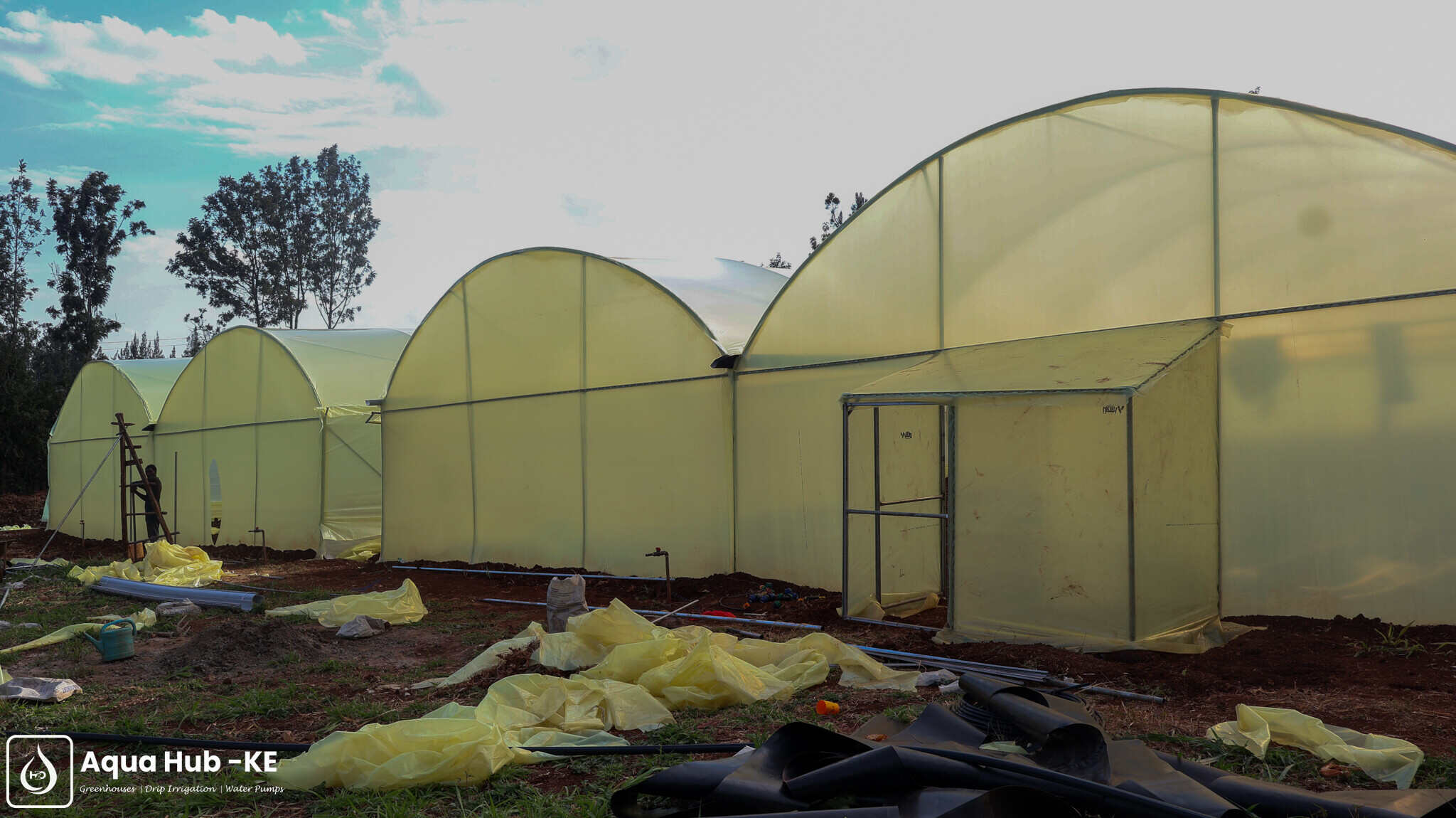
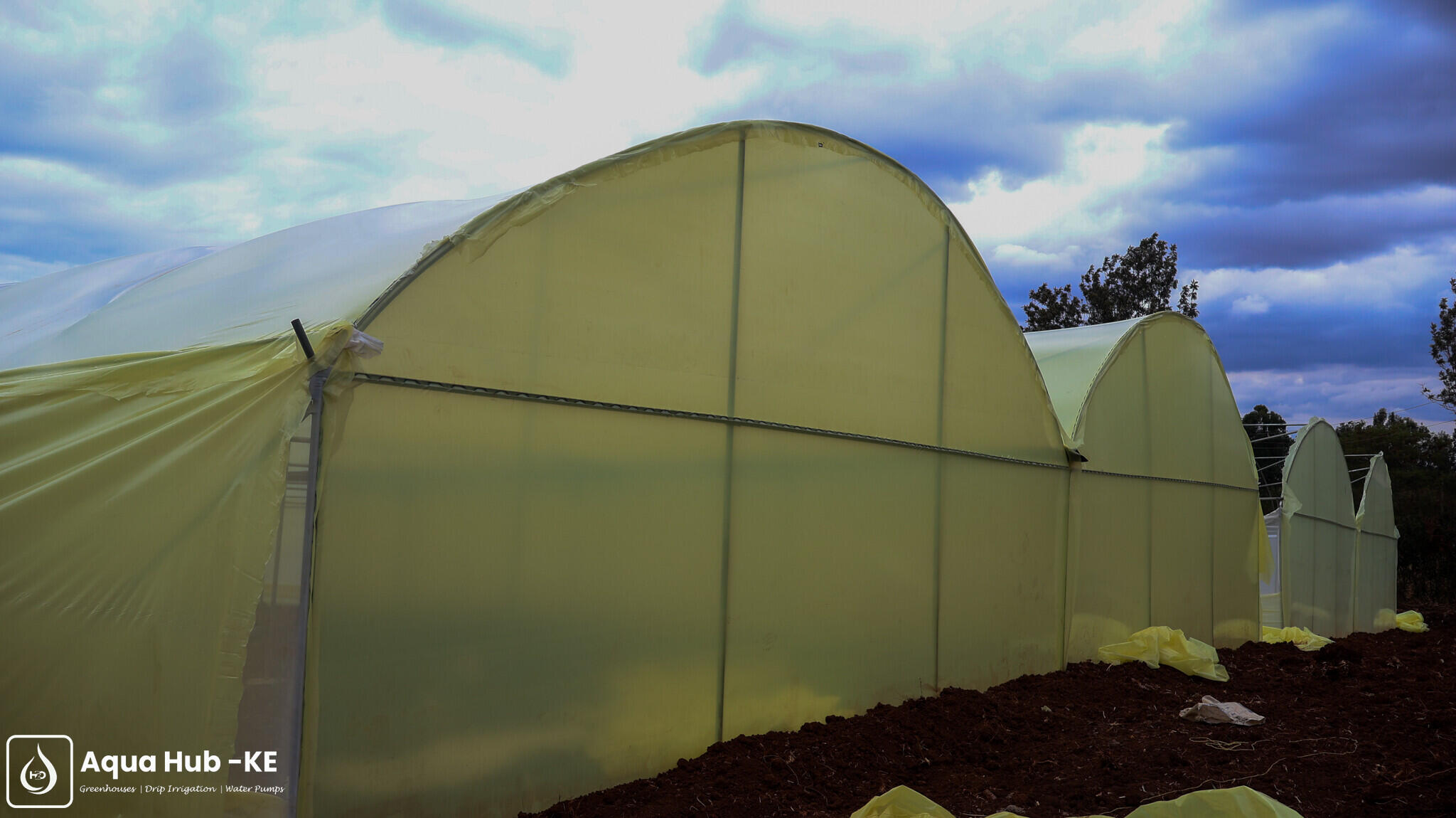
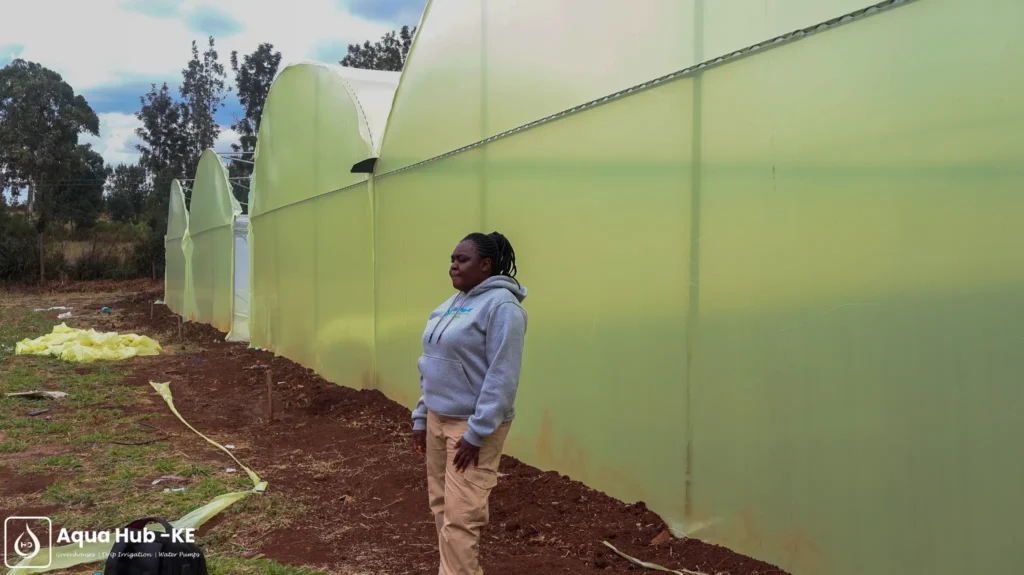
Aqua Hub Kenya installed three semi-galvanized metallic greenhouses with drip lines for capsicum farming in Kenol, Murang’a County. Two measure 16 m x 30 m and the third measures 14 m x 30 m. Each has a polythene cover, an insect net, roll-up side ventilation and a gutter. The client wanted a higher yield and better-quality capsicum than open field growing gives. The greenhouses give control over the growing conditions, and the drip lines deliver steady watering to the crop. Our team spent 10 days on site installing the first two greenhouses in August 2026, and the third followed after a later order.
Location
Kenol, Muranga
Duration
3 months
Completed
2026-09-04
PROJECT AT A GLANCE
What we delivered
Aqua Hub Kenya delivered three greenhouses with drip lines in Kenol, Murang’a County: two measuring 16 m x 30 m and a third measuring 14 m x 30 m. Our team supplied and installed:
- Semi-galvanized metallic frames
- Polythene covers
- Insect net
- Roll-up side ventilation
- Gutters
- Drip lines
After installation, the work was handed over to the client.
The challenge
Capsicum growers in open field face several problems at once. Pests feed on the leaves and young fruit, and harsh weather stresses the plants. Watering is often uneven, so some plants get too much and others too little. The result is a lower yield and fruit of lower quality, with marked or misshapen capsicums that sell for less.
What growers need is a controlled growing space that shields the crop from pests and weather, with steady watering to every plant. A greenhouse with drip lines meets both needs, and it gives better returns from the same land.
Our approach
Our team visited the site to assess the land and advised the client to clear, plough and harrow it before installation. We recommended two 16 m x 30 m greenhouses, with an insect net and a polythene cover to protect the crop from pests and weather, and drip lines for steady watering. After discussion with the client, we settled on a semi-galvanized frame and revised the quote.
Before work began, we shared a list of the materials and what we would deliver. When the client later asked for a third greenhouse, we quoted a 14 m x 30 m structure.
HOW IT HAPPENED
The process, start to finish
Every Aqua Hub Kenya project follows the same stages. Here’s exactly how this one went, with photos and video from each visit.
9 July 2026
The client first contacted us at the end of June, and our team then visited the site in Kenol to assess the land. We advised the client to clear whatever was on the plot, and to plough and harrow it, so the ground would be ready before installation began. The quote that followed was based on what we saw during the visit.
16 July 2026
We sent the client a quote for two 16 m x 30 m greenhouses. After some back and forth, the client settled on a semi-galvanized frame.
20 July 2026
We revised the quote to match the semi-galvanized frame. Once the client was satisfied, we shared a portfolio of the materials, covering the frame sizes, the polythene and its thickness in microns, the mesh of the insect net and what we would deliver.
21 July 2026
The client paid for the two greenhouses, and we went ahead with installation as agreed.
24 August 2026
After the first two greenhouses were installed, the client asked for a third. We quoted a 14 m x 30 m structure, and the client paid for it on 4 September 2026.
Early August 2026
We transported the semi-galvanized frame materials, the polythene and insect net, the fittings and drip line materials, and the installation team with their tools to the farm in Kenol.
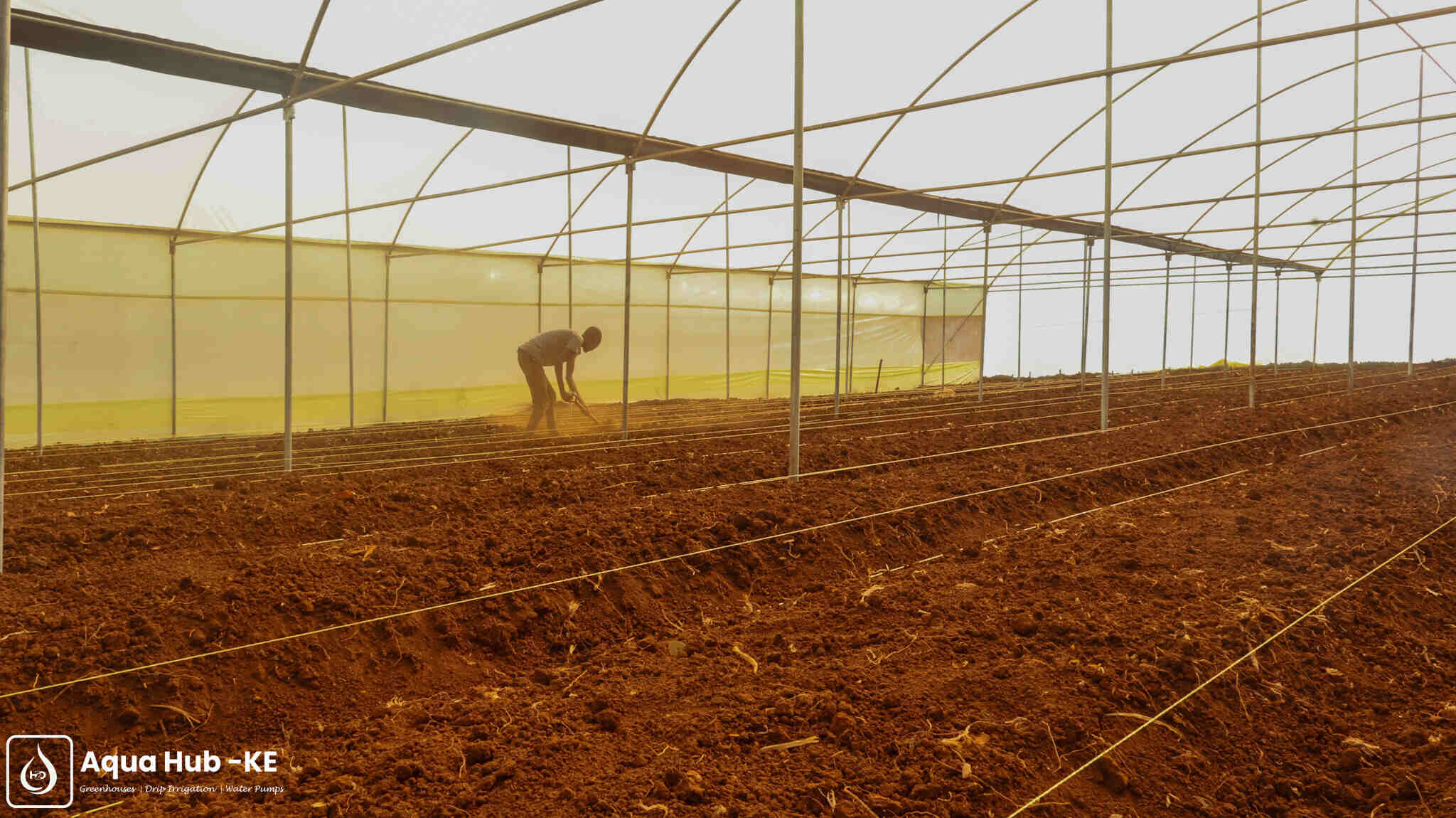
The client had prepared the land as advised, so groundwork began with marking out the layout for the two 16 m x 30 m greenhouses. Holes were then dug for the posts, ready for the frames to go up.
Early August to 4 September 2026
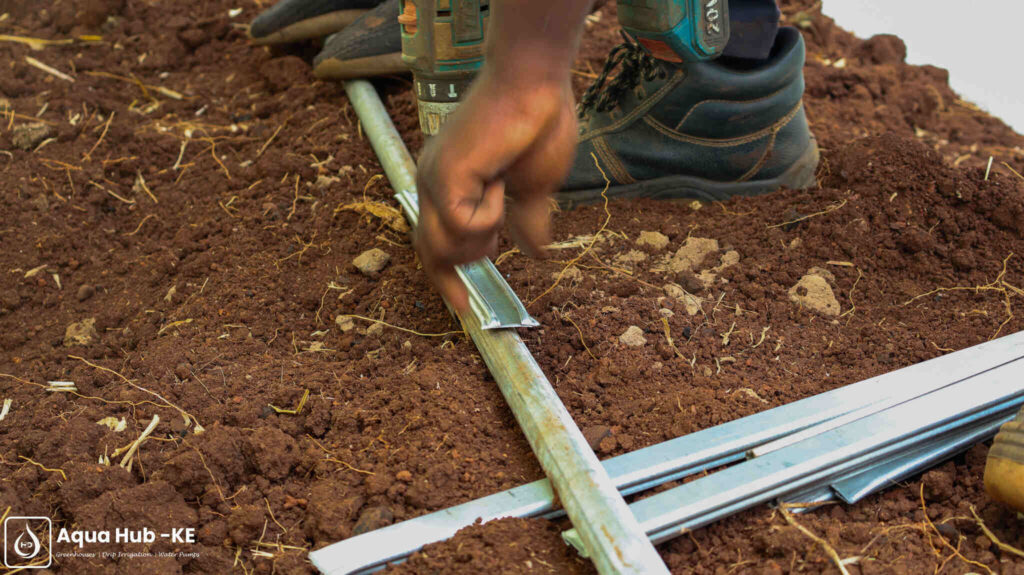
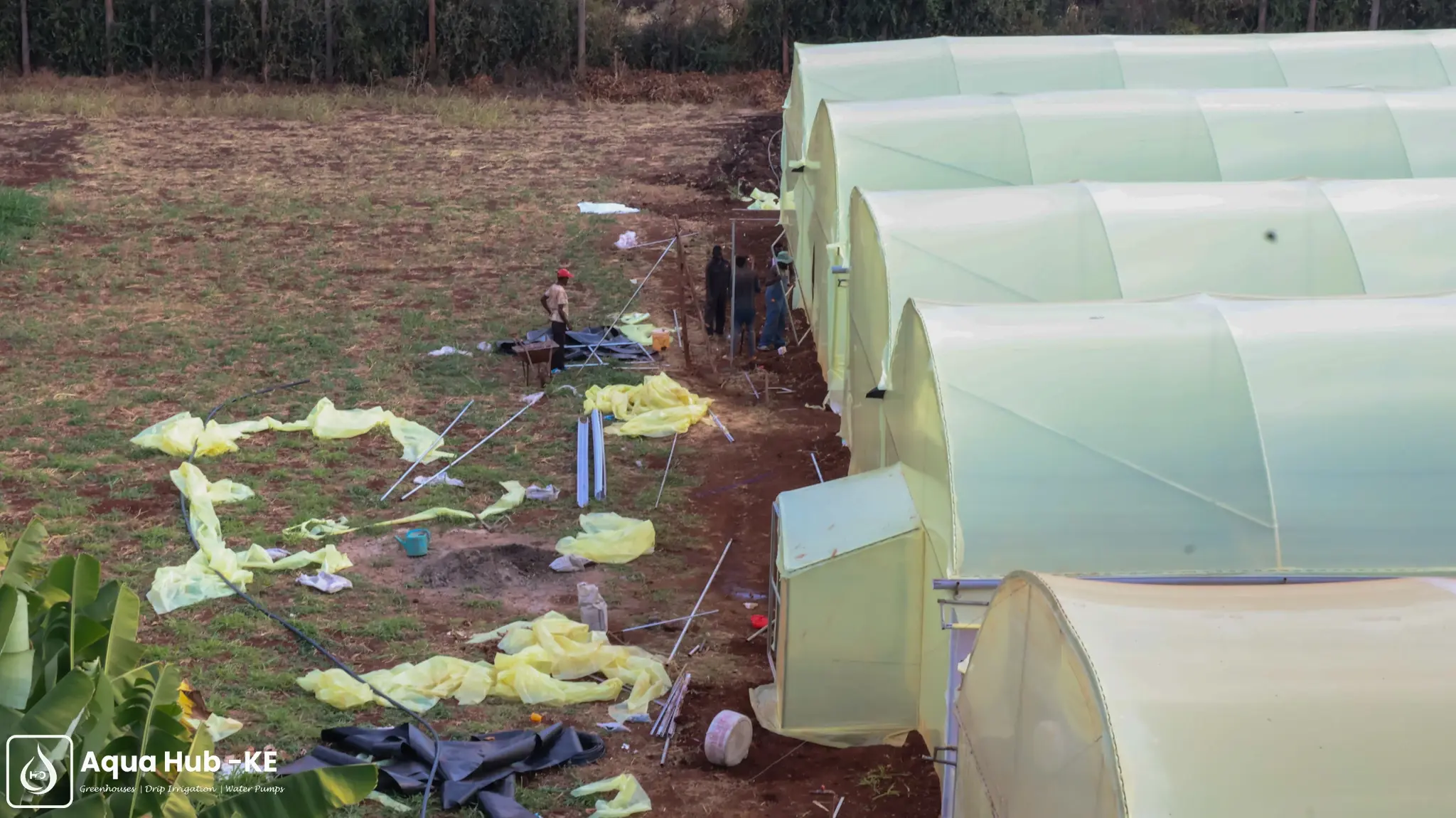
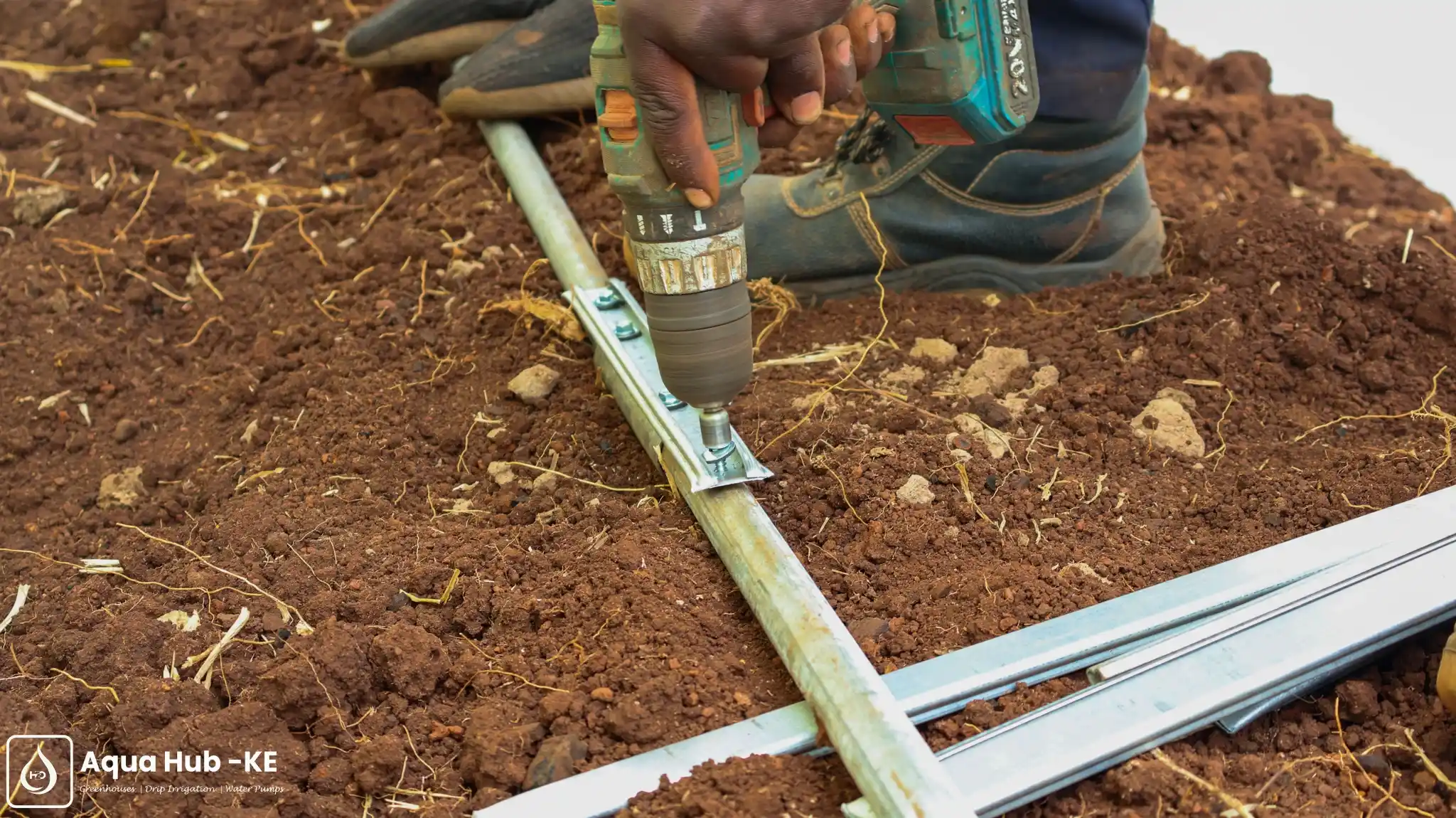
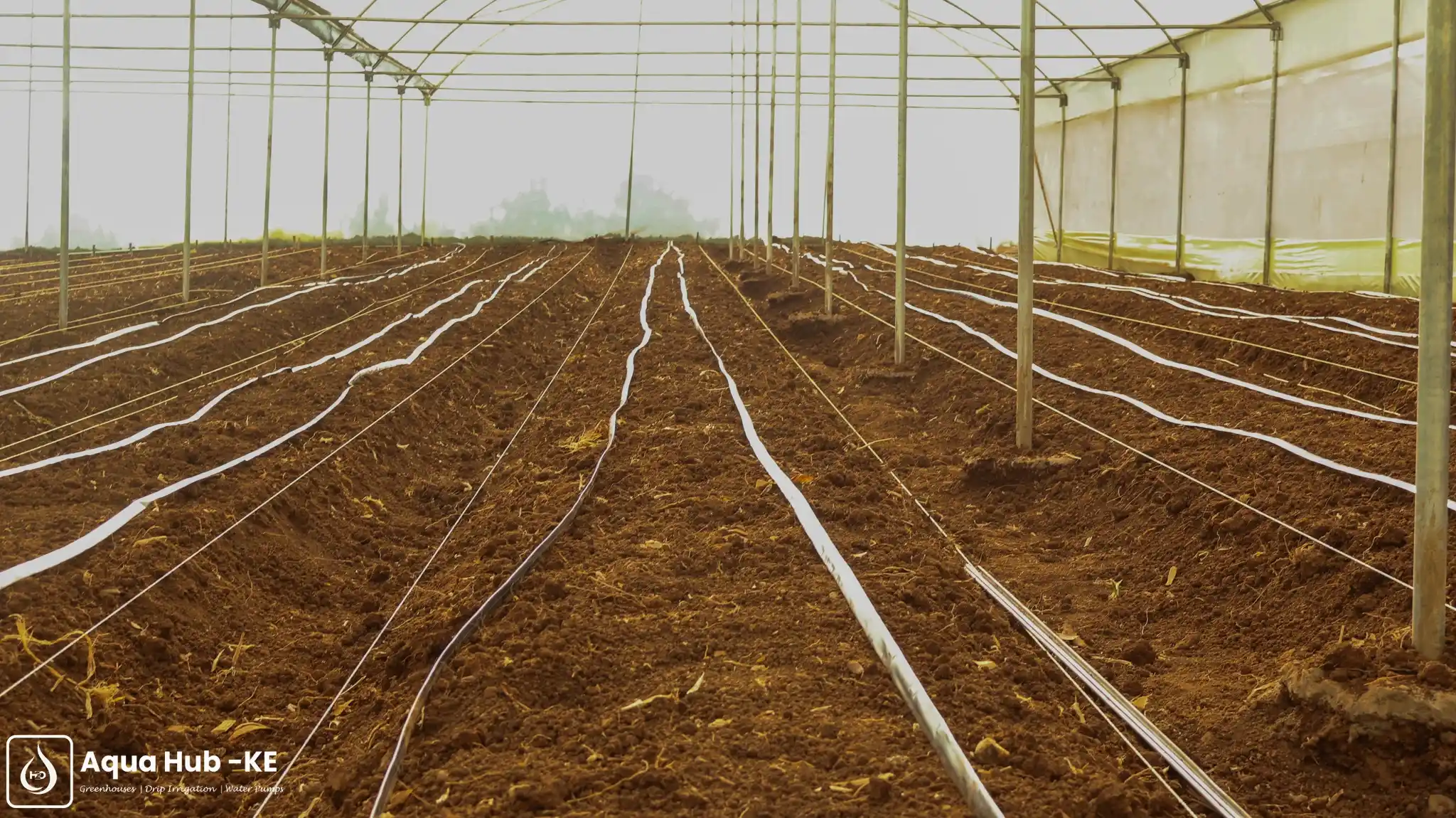
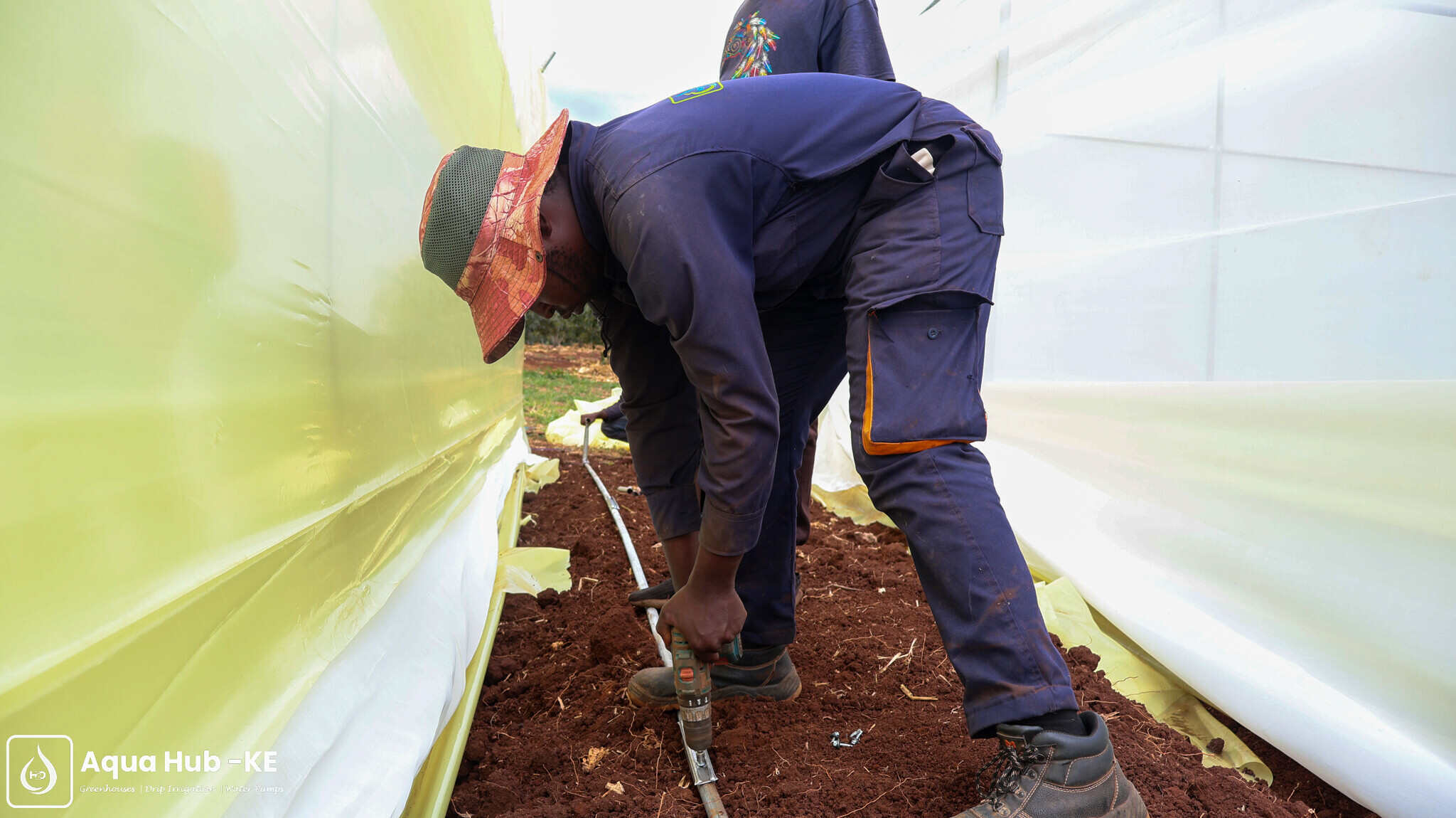
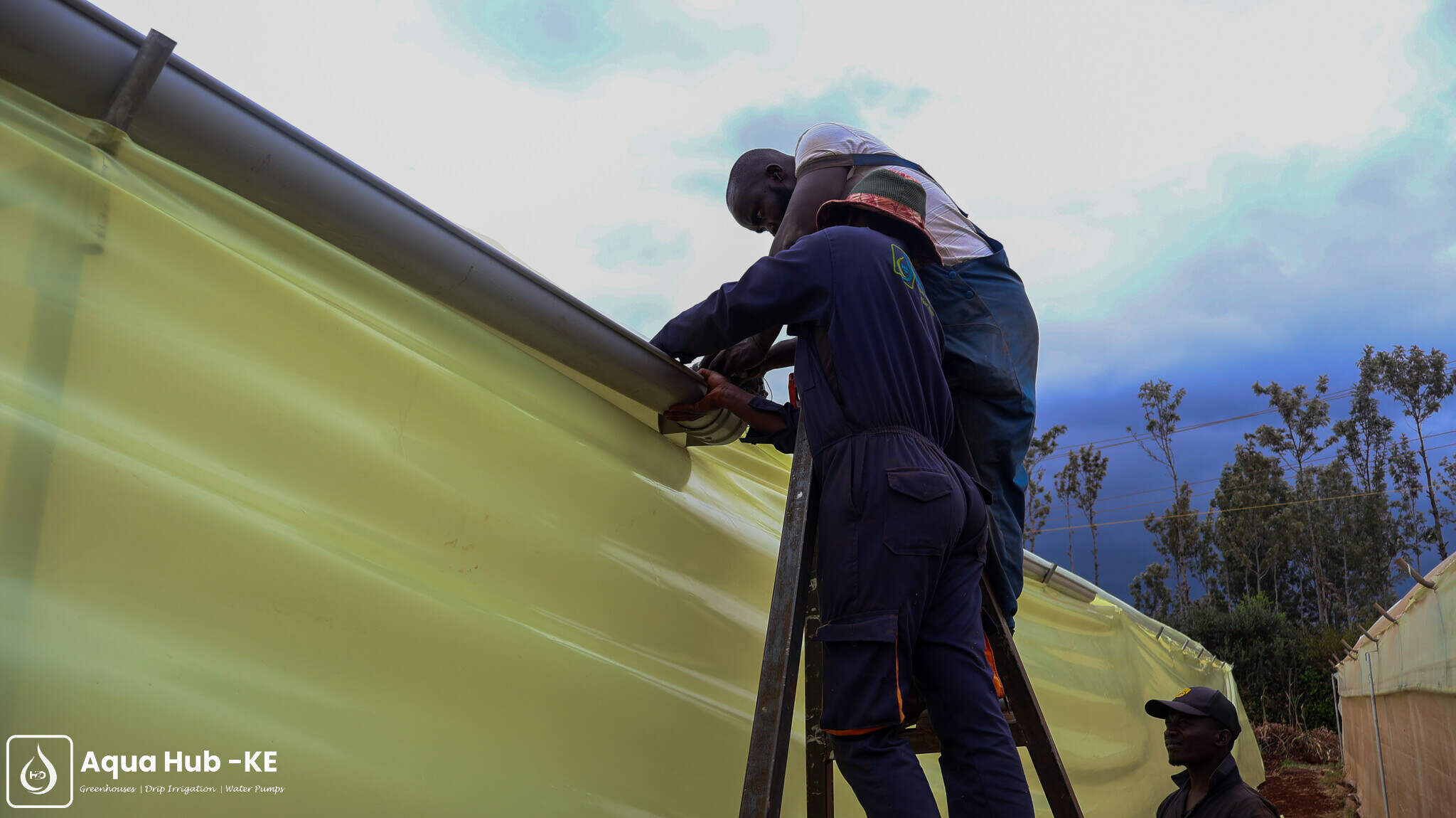
Installation of the first two greenhouses took our team 10 days on site. For each one, the posts were erected first, and the arches were fixed to them to form the roof, with purlins and bracing added to stiffen the structure.
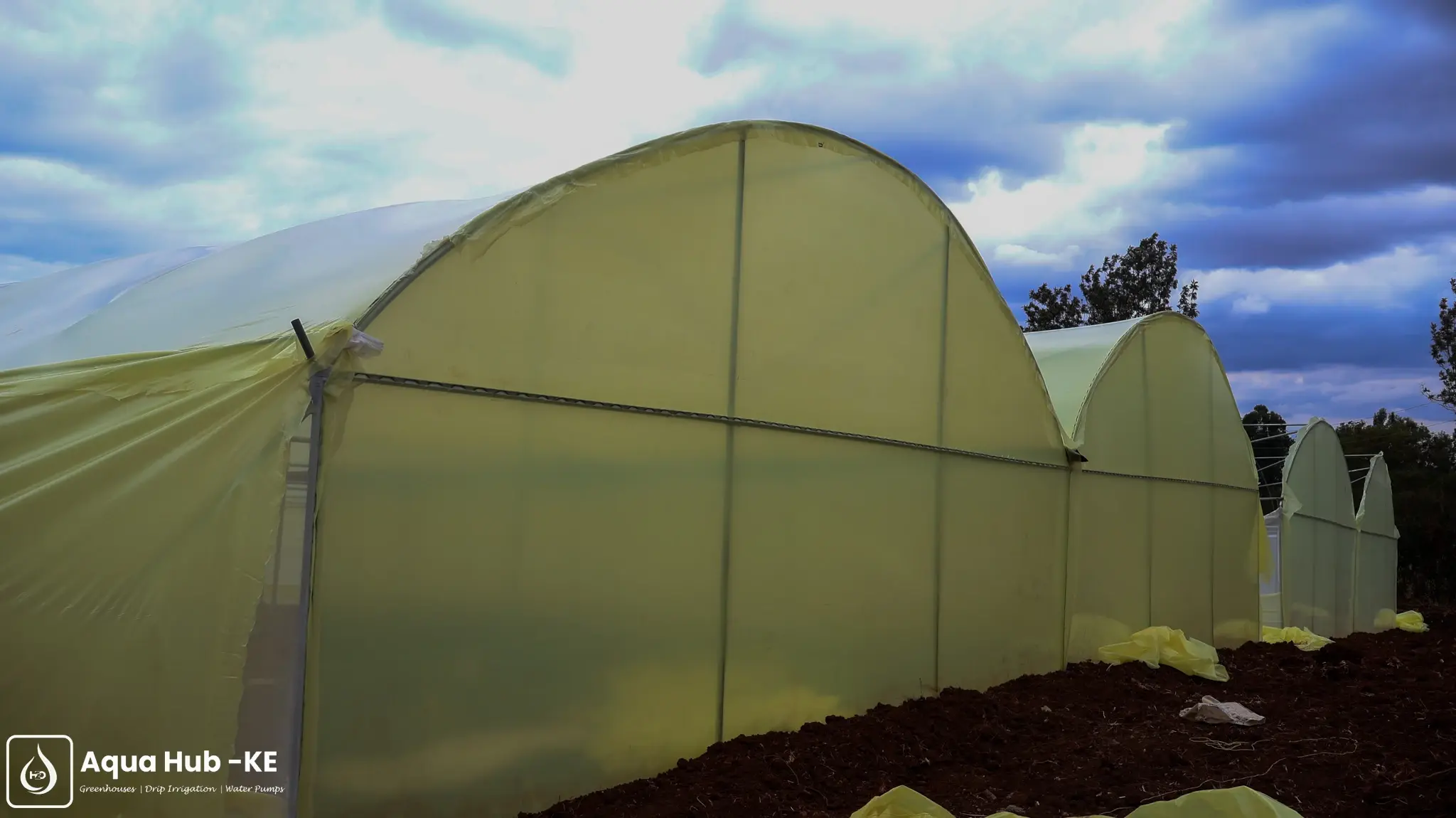
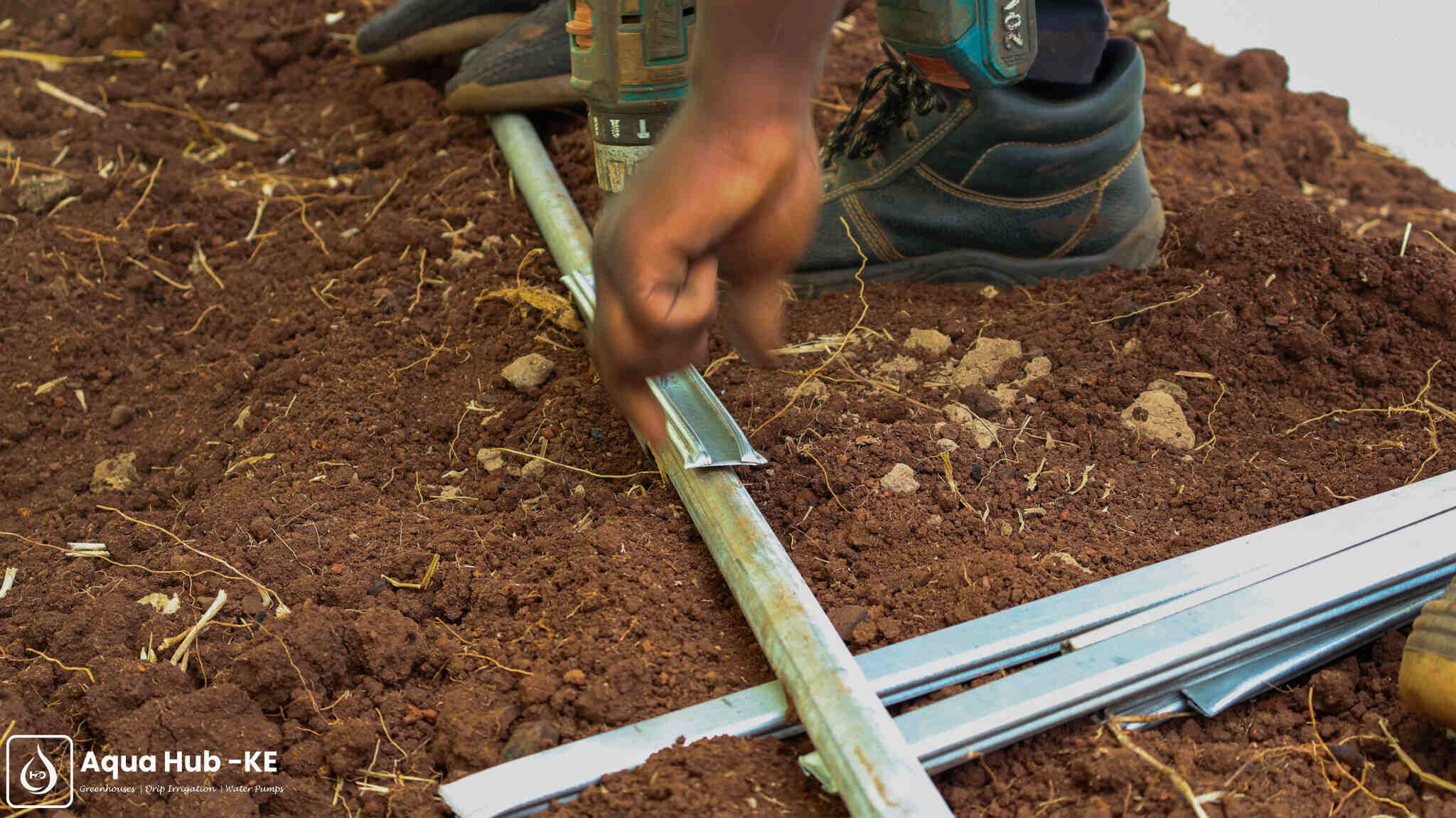
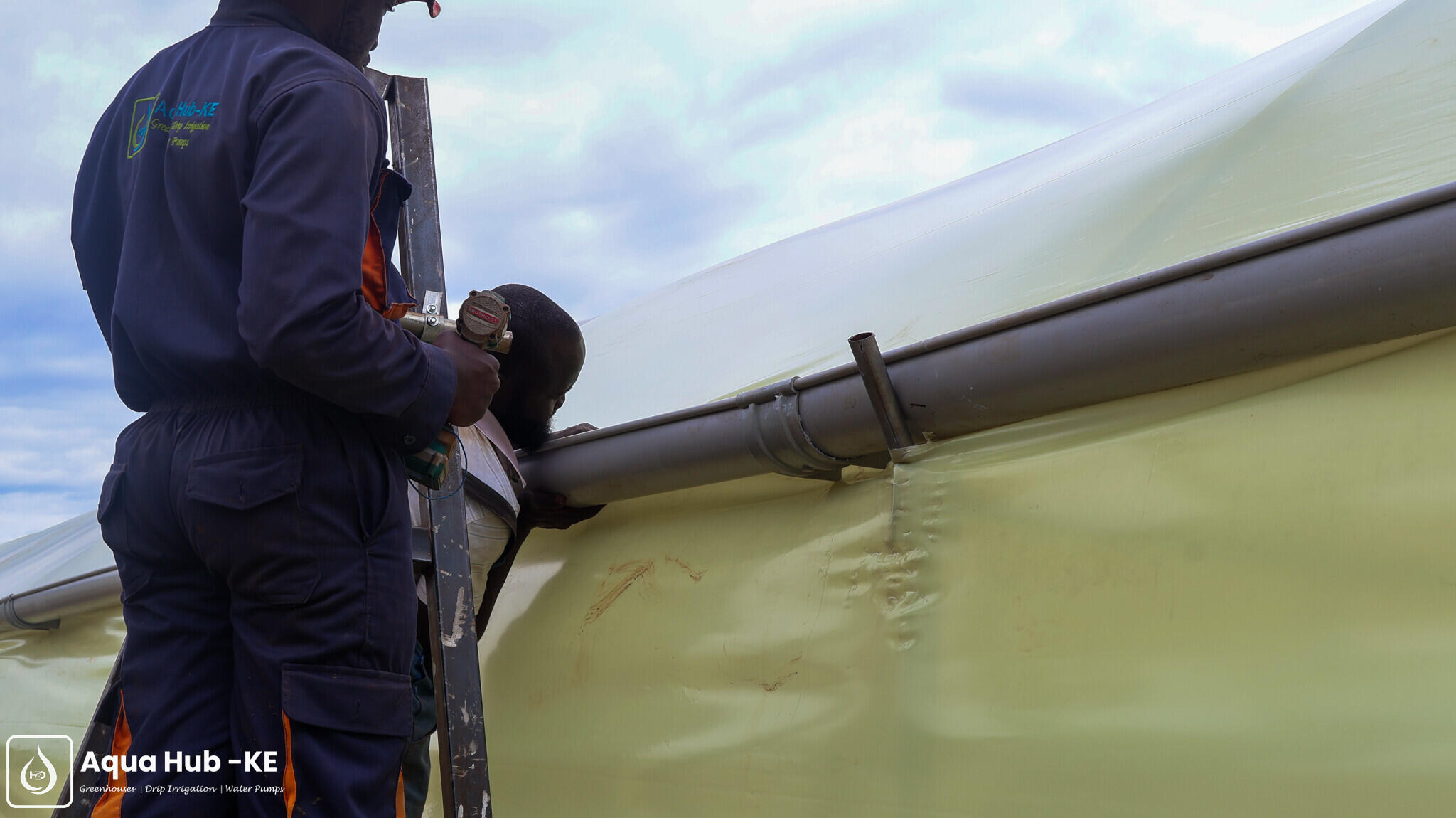
The polythene cover was fixed over the roof and the insect net was fixed to the structure, both held in channels with wiggle wire. The roll-up side ventilation was fitted next, along with the gutter, and the drip lines were then laid inside.
The third greenhouse, measuring 14 m x 30 m, was delivered after the client’s later order in September.
10 August 2026
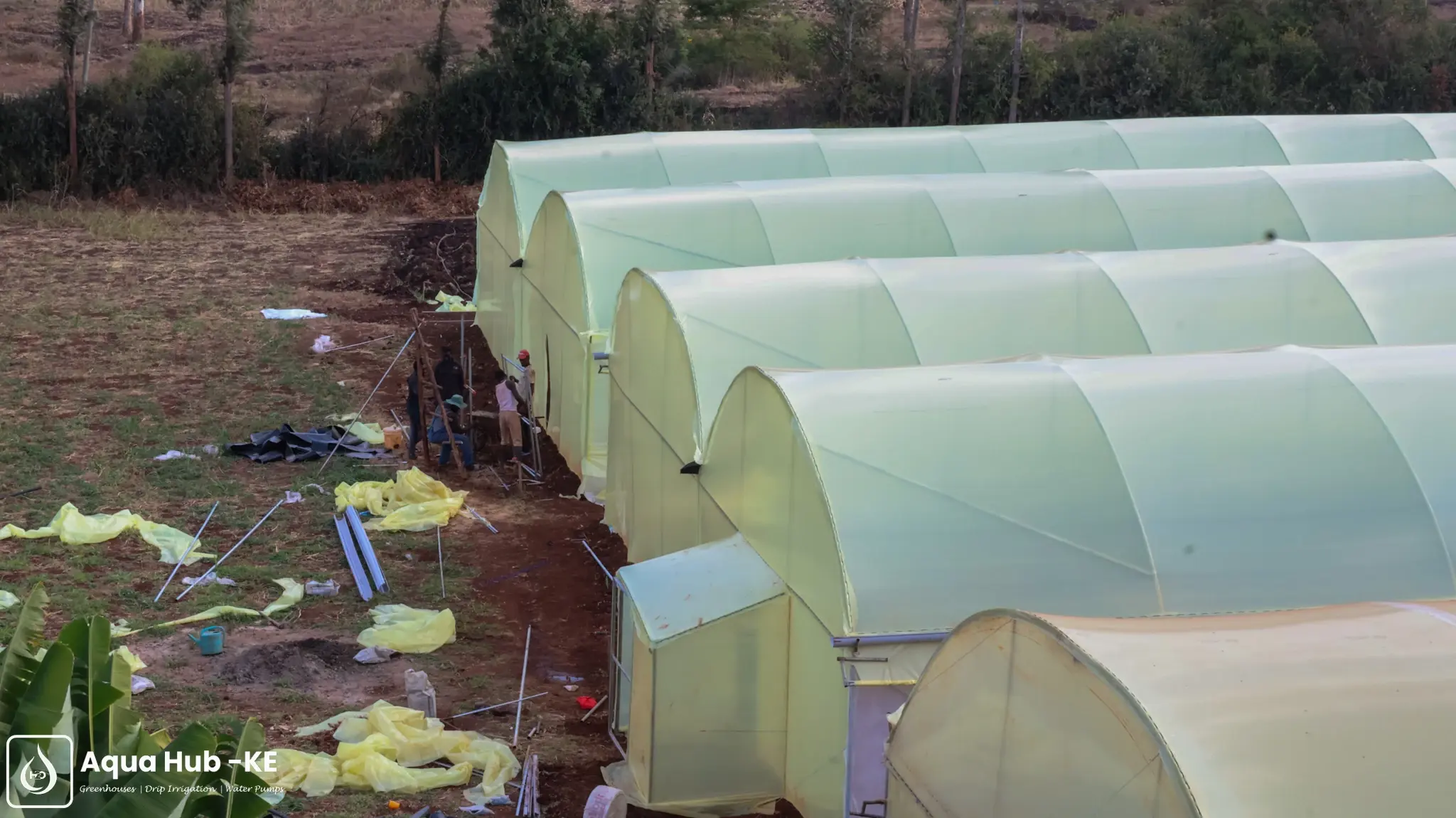
Once the first two greenhouses were complete, our team carried out quality checks on both structures. We checked that the frames were stable and that the polythene and insect net were properly fitted. The roll-up side ventilation and the gutters were checked as well. Everything was in order, and the greenhouses were ready for handover.
10 August 2026
After the quality checks, our team handed the first two greenhouses over to the client. They were then commissioned, and the client has since planted red and yellow capsicum in both.
The third greenhouse was delivered after the client’s later order and is set for cucumber. To support steady production, we also connected the client to an agronomist, so they can meet the demand they already have for capsicum.
THE OUTCOME
Before
The school relied on an inconsistent water supply, creating challenges for daily operations and sanitation.
After
The completed borehole and storage system provides the school with a dedicated water infrastructure solution designed around its daily requirements.
Client Testimonial
COMMON QUESTIONS
FAQs
How long does it take to build a greenhouse?
Building a greenhouse takes from a few days to a few weeks, depending on its size and the state of the site. On this project, installing two 16 m x 30 m greenhouses took 10 days on site.
What size of greenhouse should I build?
The size of greenhouse you should build depends on your budget and the area you want to plant. This project used 16 m x 30 m greenhouses, with a 14 m x 30 m one added later.
Why grow capsicum in a greenhouse?
Capsicum is grown in a greenhouse because it protects the crop from pests and weather and gives the grower more control over growing conditions. This supports a higher yield and better-quality fruit.
What does an insect net do in a greenhouse?
An insect net in a greenhouse keeps insects out of the crop while allowing air to pass through. This reduces pest damage.
How should I prepare land for a greenhouse?
You should prepare land for a greenhouse by clearing it and then ploughing and harrowing the soil. This leaves the ground ready for the layout to be marked out and the frame put up.
Can I add a greenhouse later?
You can add a greenhouse later as your production grows. On this project, a third greenhouse was added after the first two were installed.
Does a greenhouse need maintenance?
A greenhouse needs regular maintenance to stay in good condition. This includes checking the polythene and insect net for tears and keeping the ventilation working.
What does an agronomist do for a greenhouse farmer?
An agronomist helps a greenhouse farmer plan crop nutrition and pest control. This supports steady production, which helps the farmer meet buyer demand.
Have a similar project in mind?
Tell us about your site and we’ll get back to you with a free assessment.