
Siyiapei, Narok County, Kenya
Assorted Vegetable Farming Under Drip Irrigation in Narok
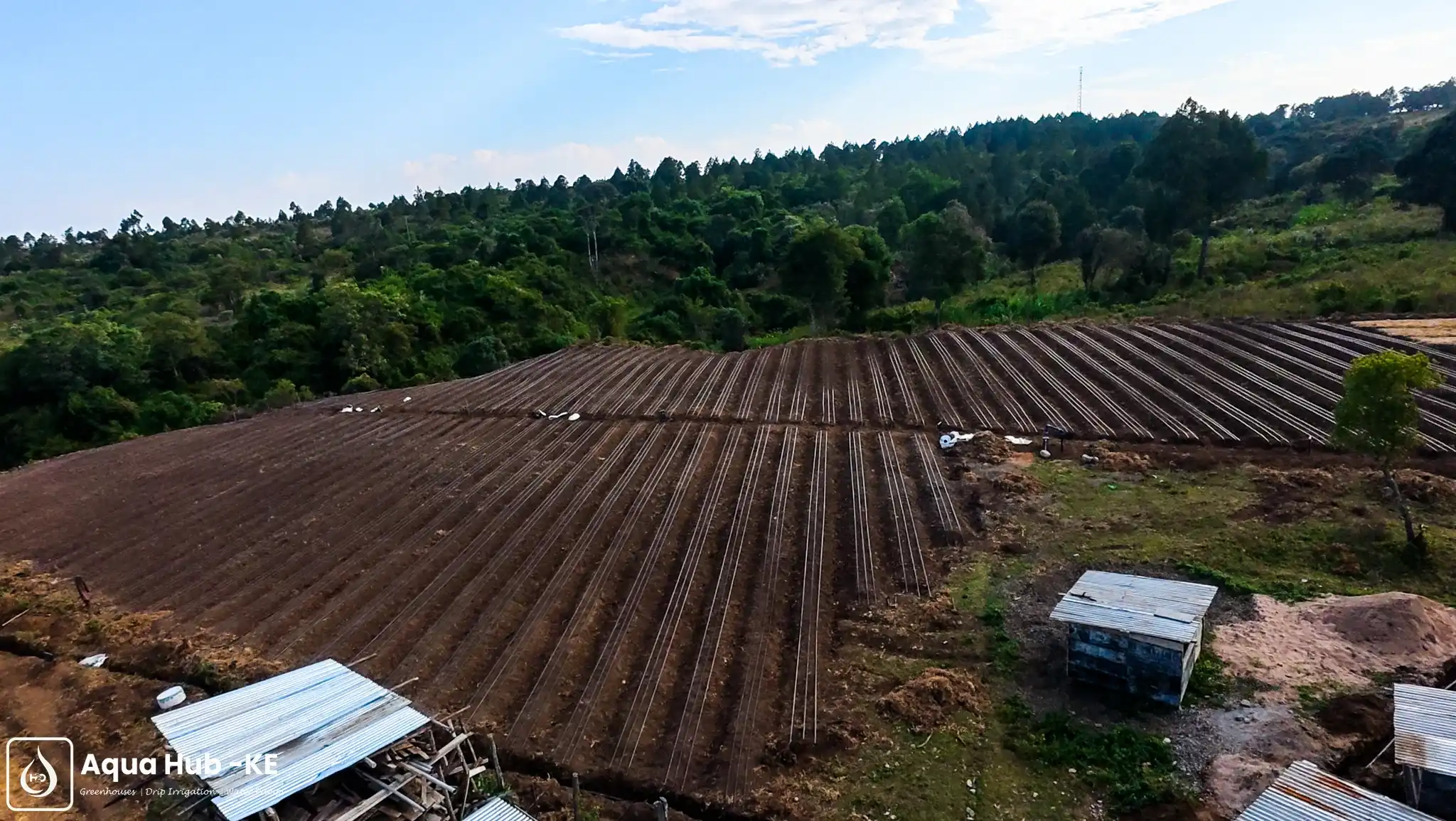
Aqua Hub Kenya’s team installed a drip irrigation system for 3 acres of vegetables in Siyiapei, Narok County. The farmer was mainly focused on growing:
- Sukuma (Kales)
- Spinach
- Kunde
- Managu
- Terere
The drip irrigation system was set up to draw water from a borehole with the water being pumped using solar power to elevated tanks. From here, the water was fed to the drip irrigation system through gravity.
Our team completed the installation within 5 days from the first pipe being laid down to the final testing.
Location
Siyiapei, Narok County, Kenya
Duration
5 days
Completed
2026-07-24
PROJECT AT A GLANCE
What we delivered
The professional technicians from Aqua Hub Kenya delivered a complete drip irrigation system for 3 acres of land. This included the main line and sub-main pipes, drip lines, filters, valves and fittings. The system was connected to the farm’s elevated tanks and laid out to cover the full area. Each bed was fitted with 3 drip lines to allow for adequate spacing for the assorted vegetables.
The challenge
Vegetable crops such as tomatoes, onions and cabbages need steady, even watering. When water is applied by hand or by flooding, some plants get too much and others too little. Water is also lost to evaporation and runoff before it reaches the roots.
For a 3-acre farm, the system needed to use the available supply carefully and cover every row.
Our approach
First, the Aqua Hub Kenya team visited the farm to measure the 3 acres and check the water source. This allowed us to size the system correctly for the site.
From the survey, we recommended a drip system laid out to match the crop rows. Drip irrigation puts water at the base of each plant, so less is lost and the crop gets what it needs. The client was kept informed at each stage.
HOW IT HAPPENED
The process, start to finish
Every Aqua Hub Kenya project follows the same stages. Here’s exactly how this one went, with photos and video from each visit.
June 2026
Our team visited the farm in Siyiapei to carry out a site survey and consultation. We discussed the farmer’s crop plan and water needs, which included sukuma, managu, spinach and terere across the 3 acres. Additionally, we advised the farmer to lay out the beds before the irrigation installation.
The goal was to upgrade to a drip irrigation system, thus increasing water efficiency in the crop irrigation process. This shaped our recommendation, as the system was designed around the crop plan and the water available on the farm.
July 2026
Following the site survey, Aqua Hub Kenya presented a proposal for the drip irrigation project. The proposal set out the scope of work, the materials, the project timeline and the cost.
The client reviewed the proposal and approved the quotation. A payment was then made, and the project was confirmed to proceed to mobilisation and installation.
20 July 2026
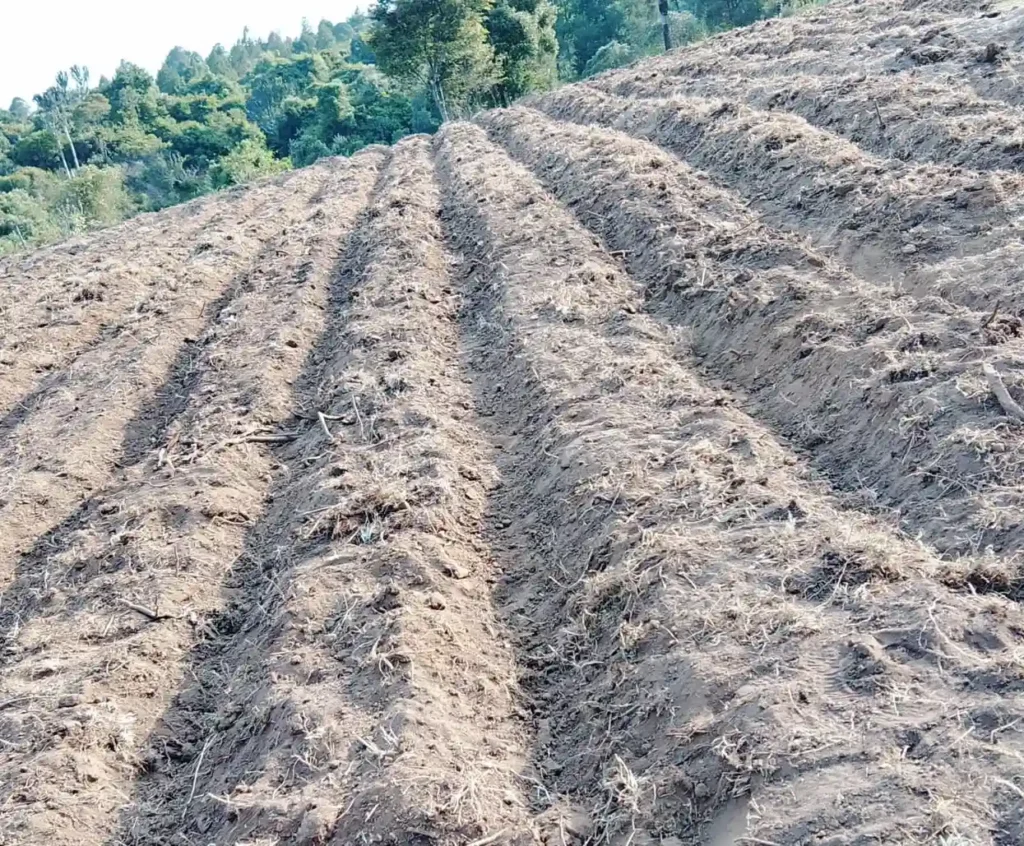
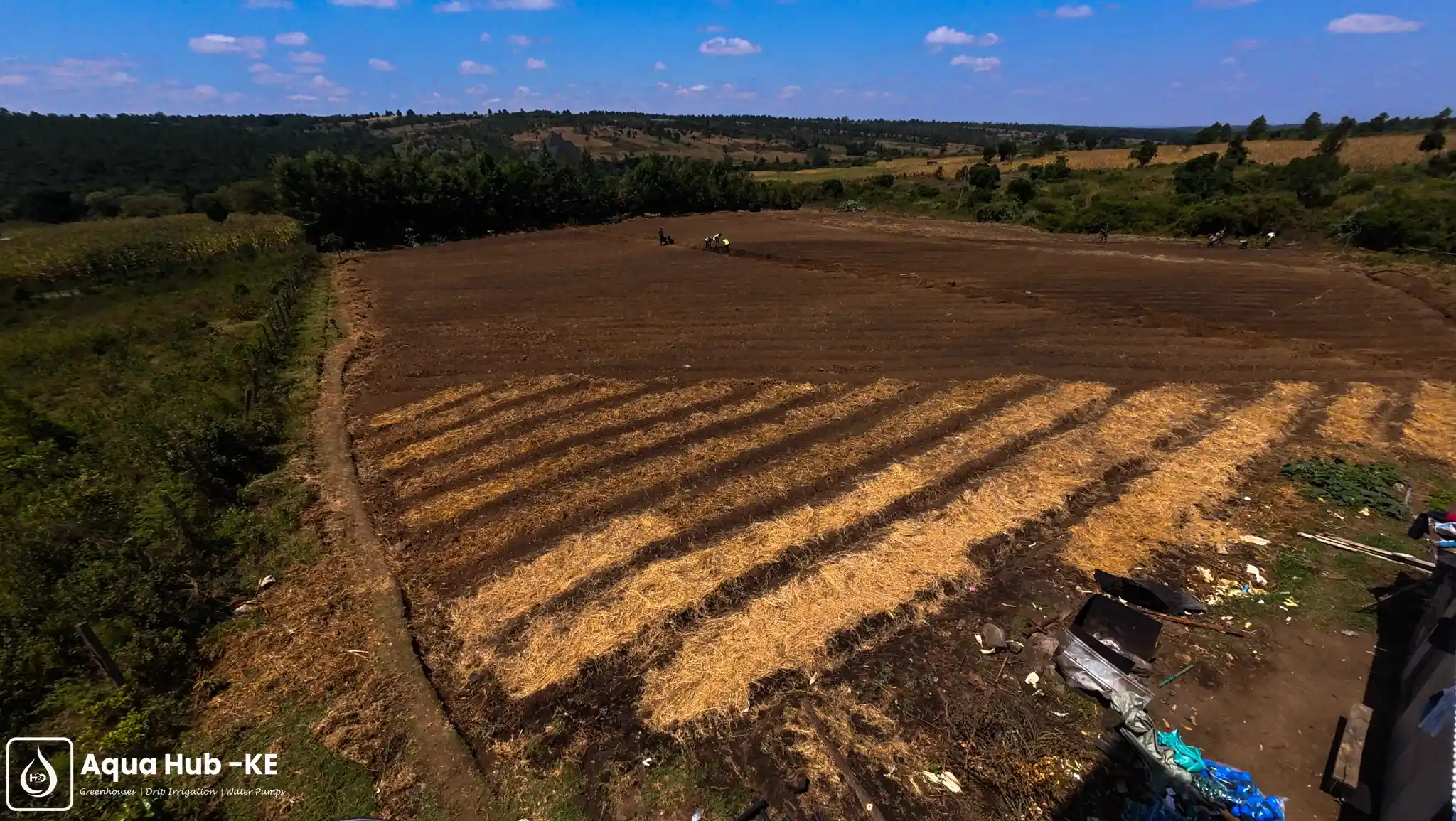
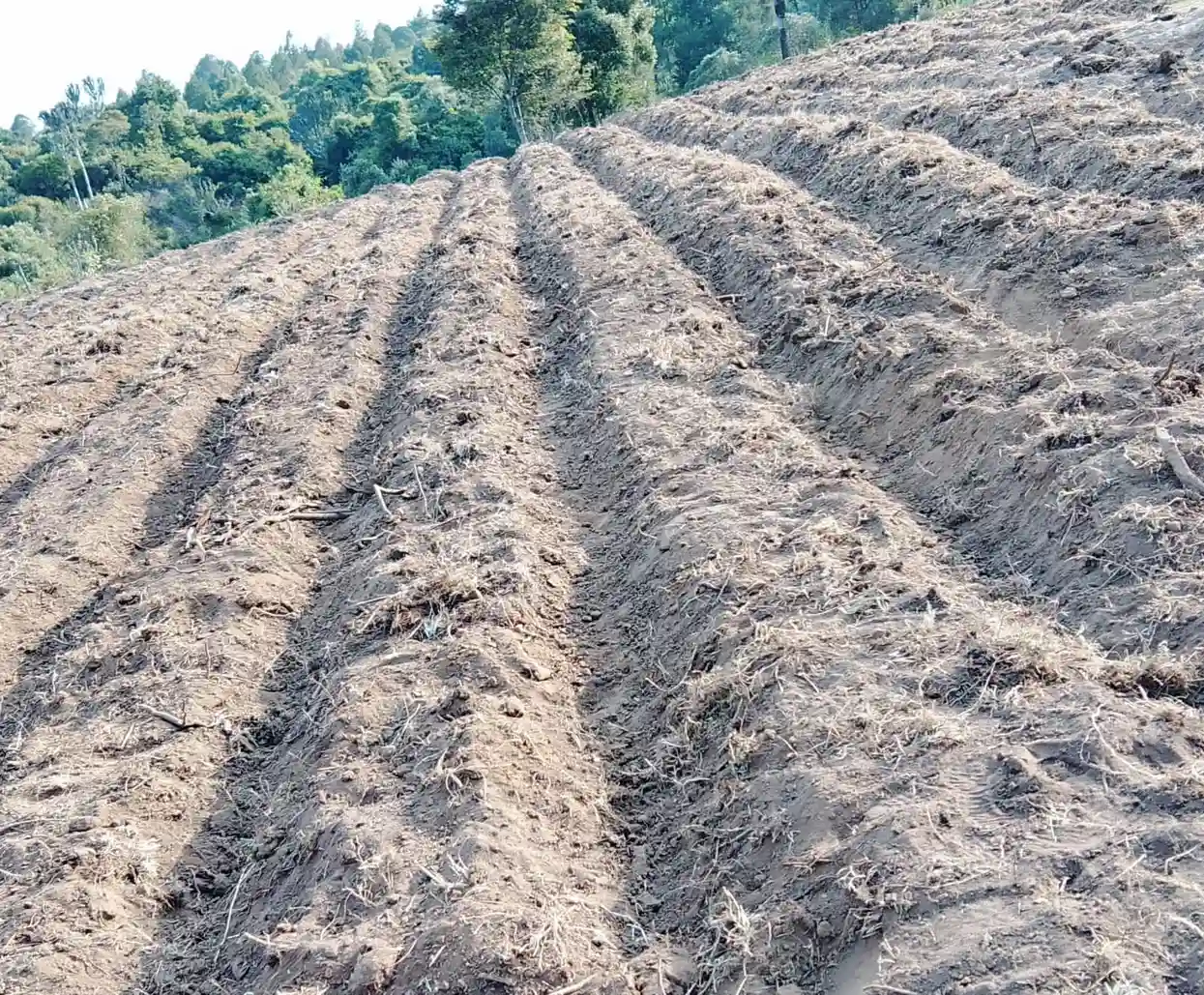
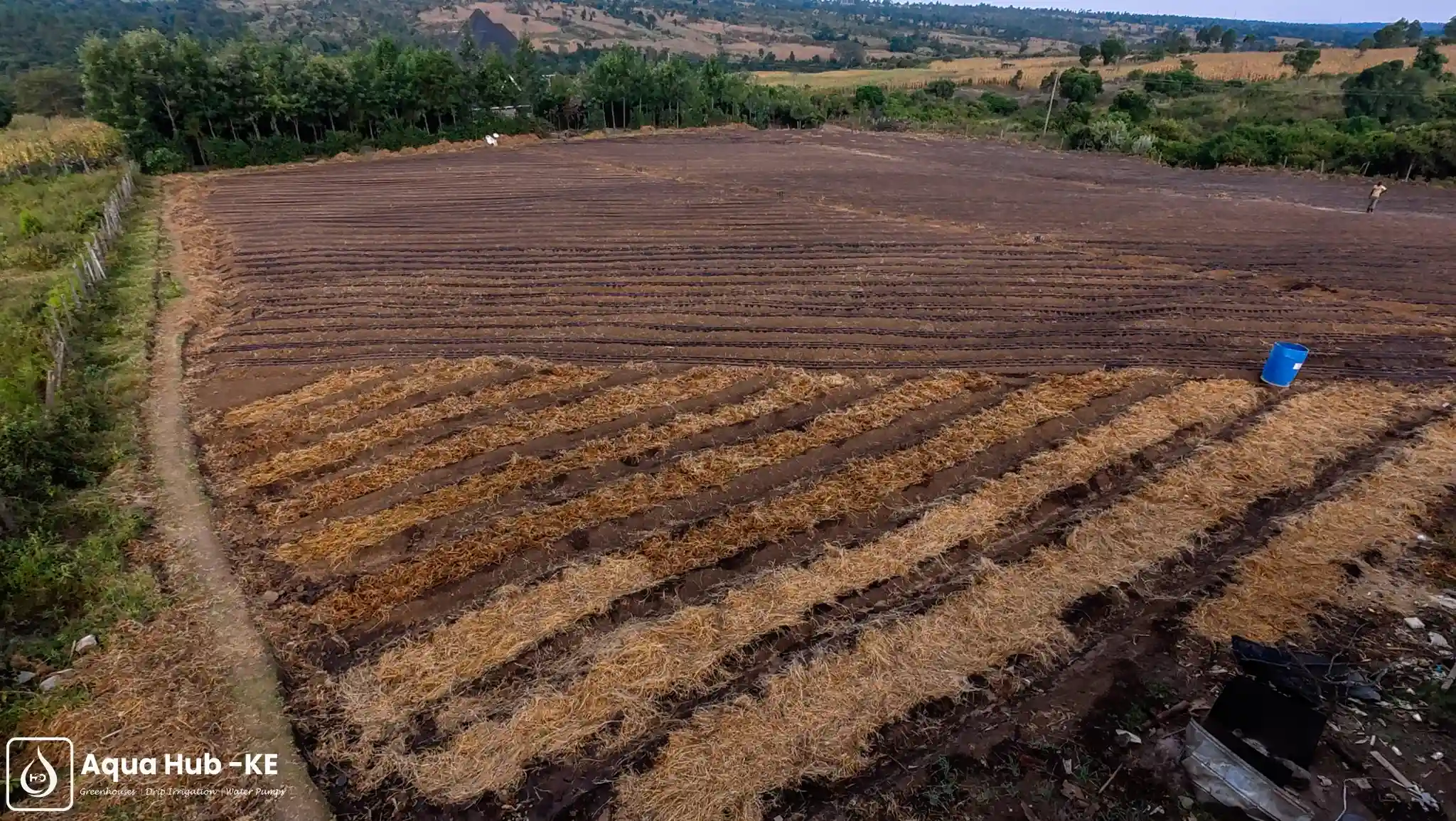
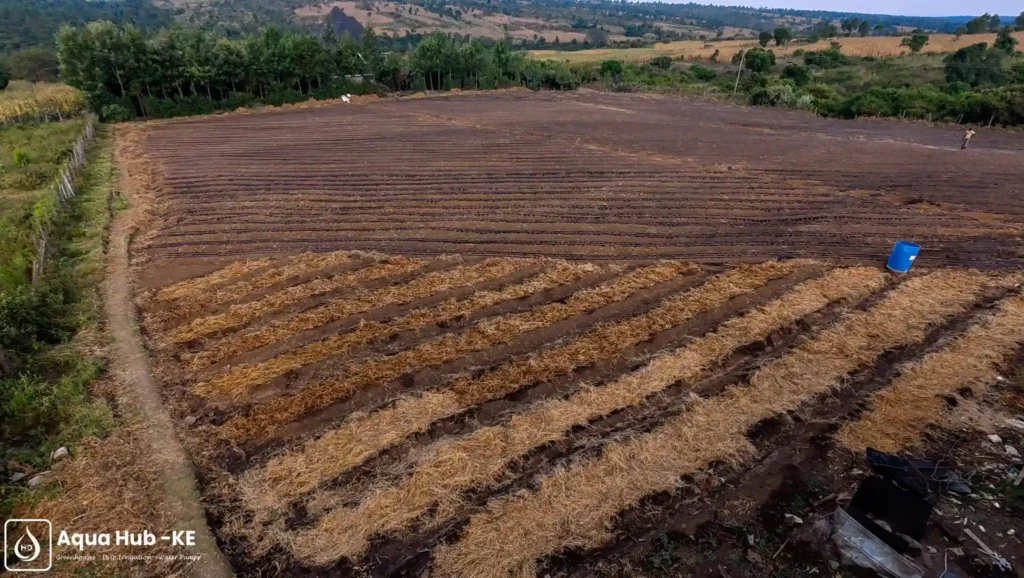
Our first engagement on the project was supervising the bed making process. The team made sure the beds were properly prepared so that the drip lines could be laid correctly.
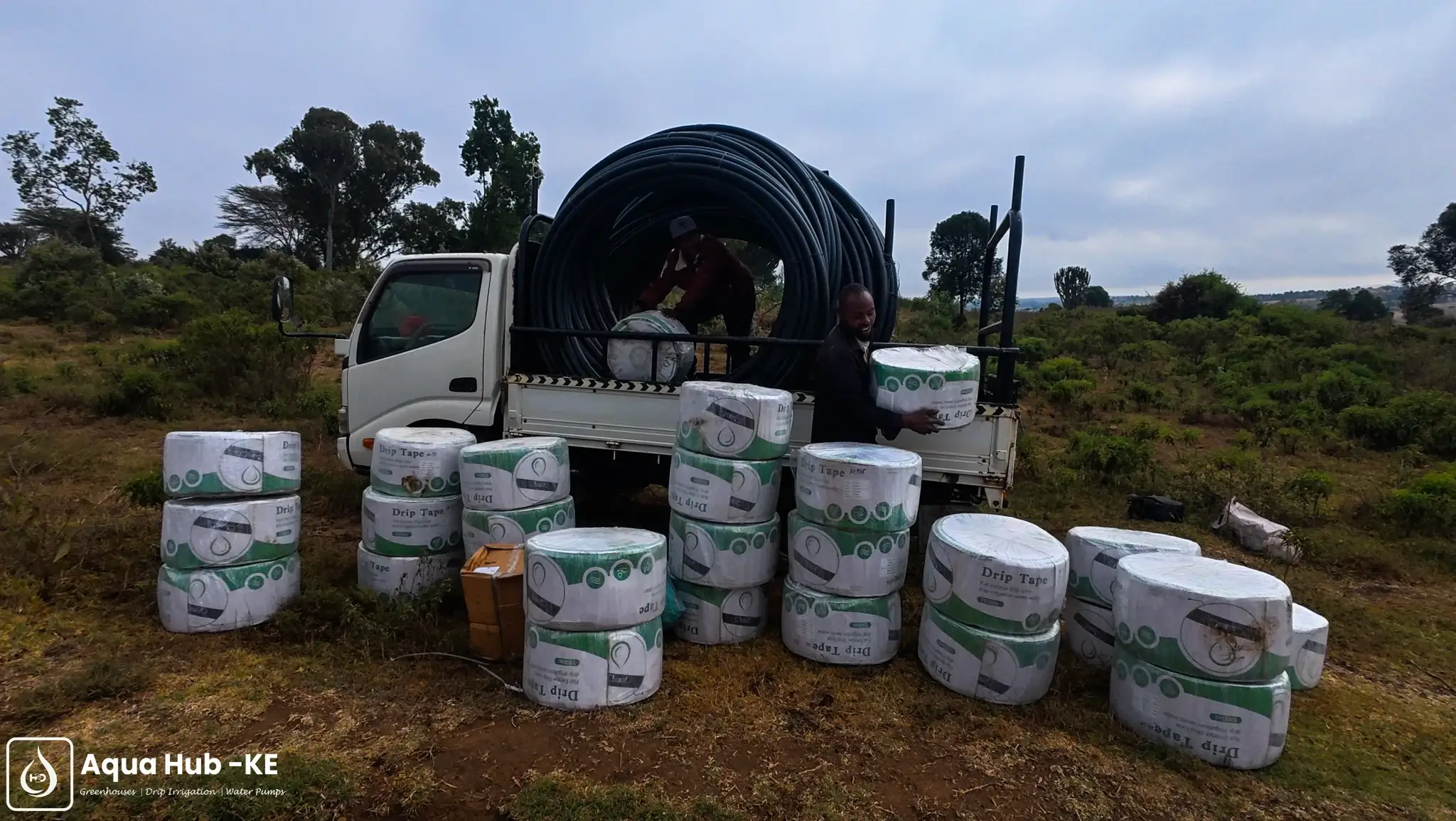
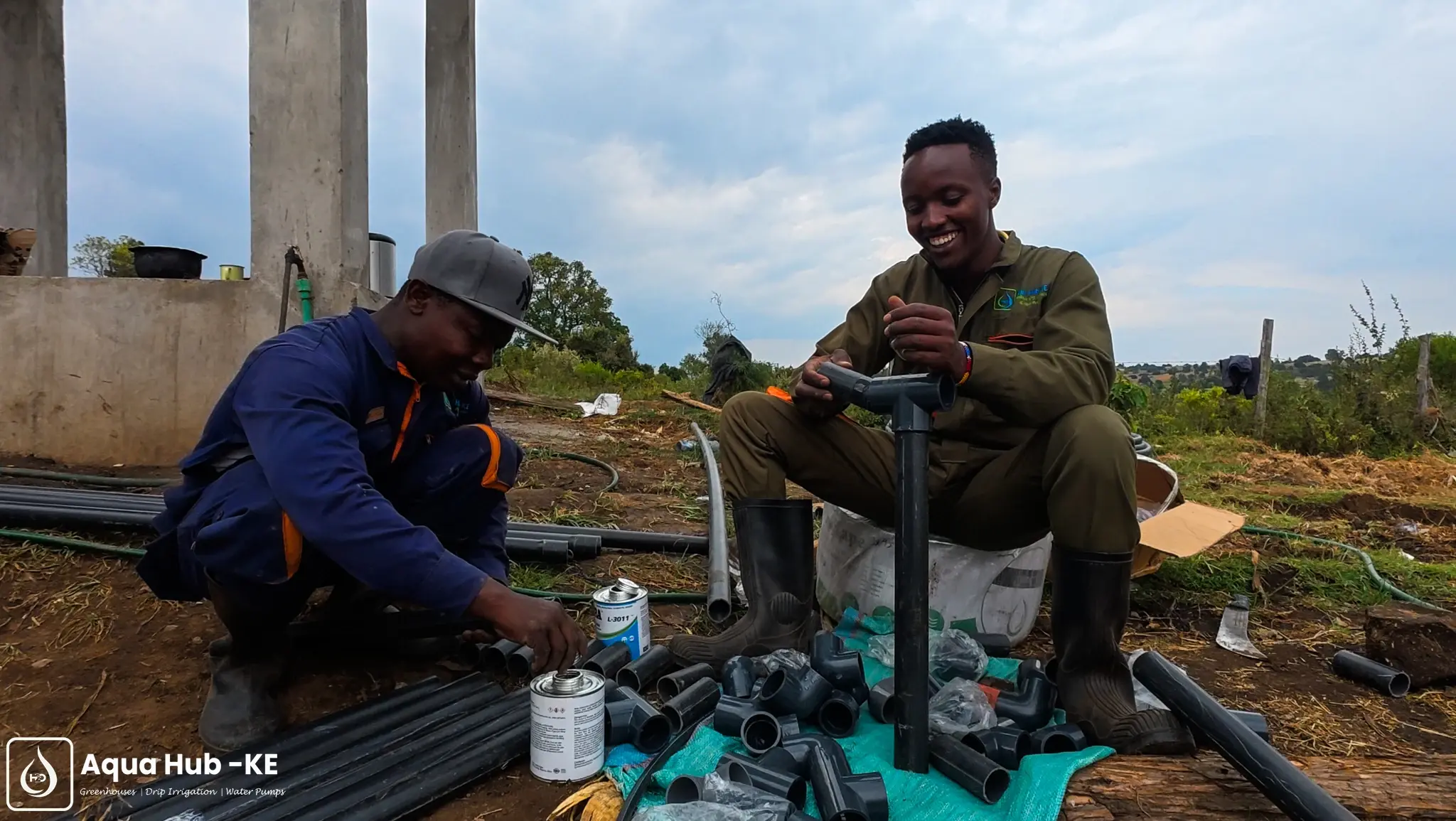
Mobilisation followed. Pipes, drip lines, fittings and filters were transported to the site in Siyiapei. Once the materials were on the farm, the team marked out the route for the main line and confirmed the connection point at the water supply. The layout for the drip lines was then set out across the beds, ready for installation.
21 July 2026
Installation started with the main line. It was laid from the water supply along the route marked out during groundwork. The sub-mains were then connected to the main line and run across the farm to reach the beds.
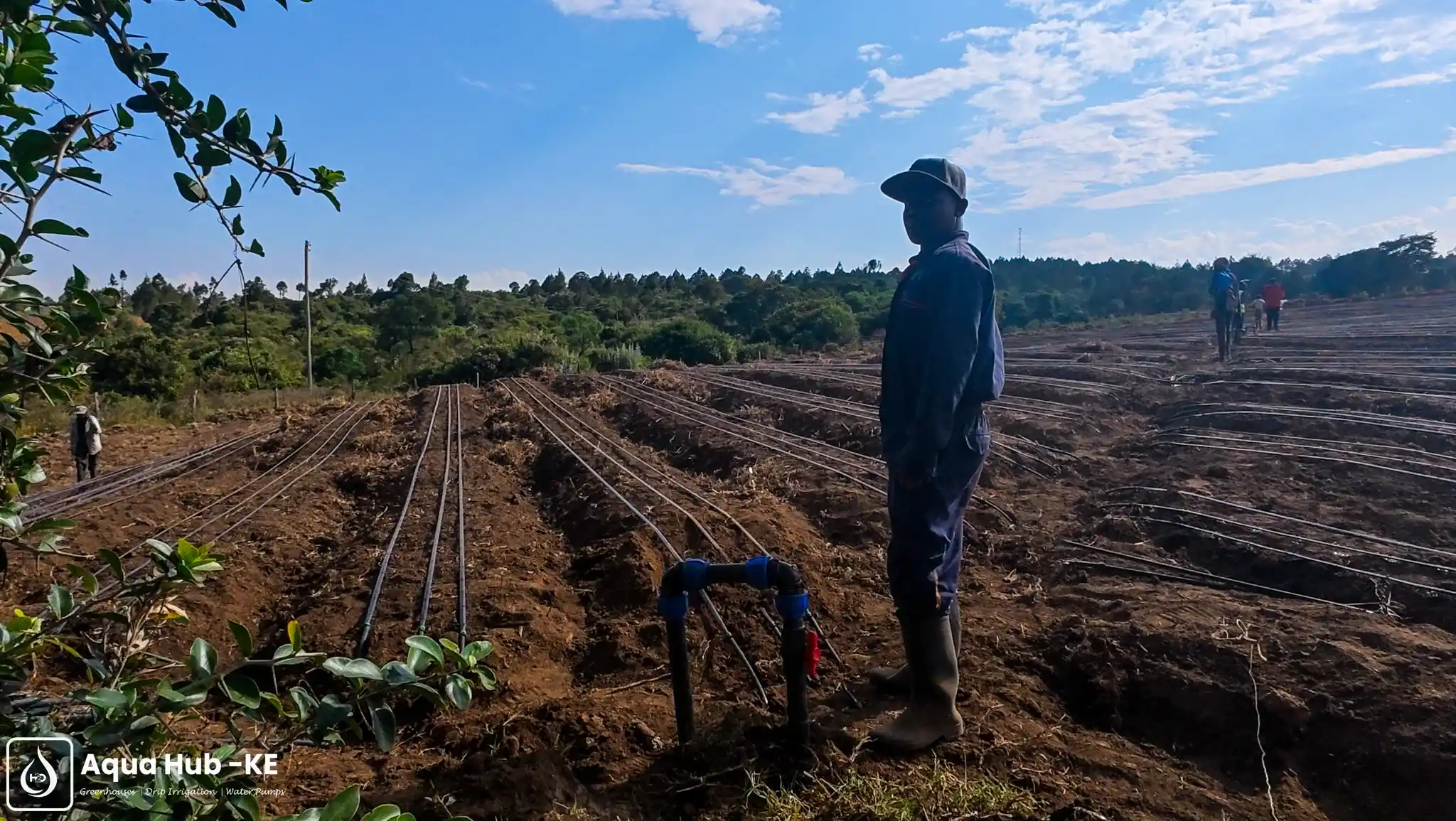
Filters were installed at the water source to keep dirt and debris out of the system. Control valves were fitted on the sub-mains, which lets the farmer manage the flow to each section of the 3 acres.
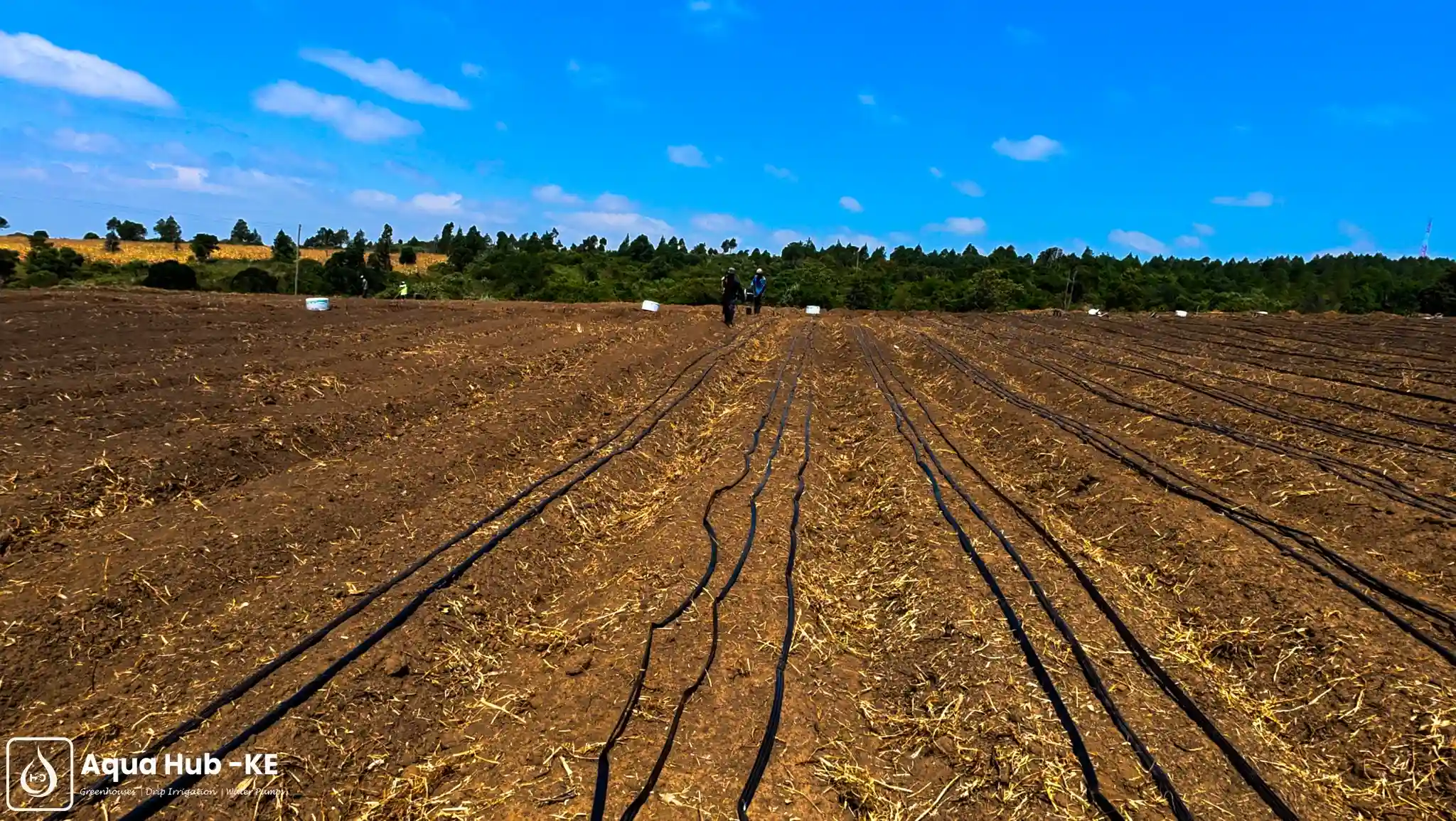
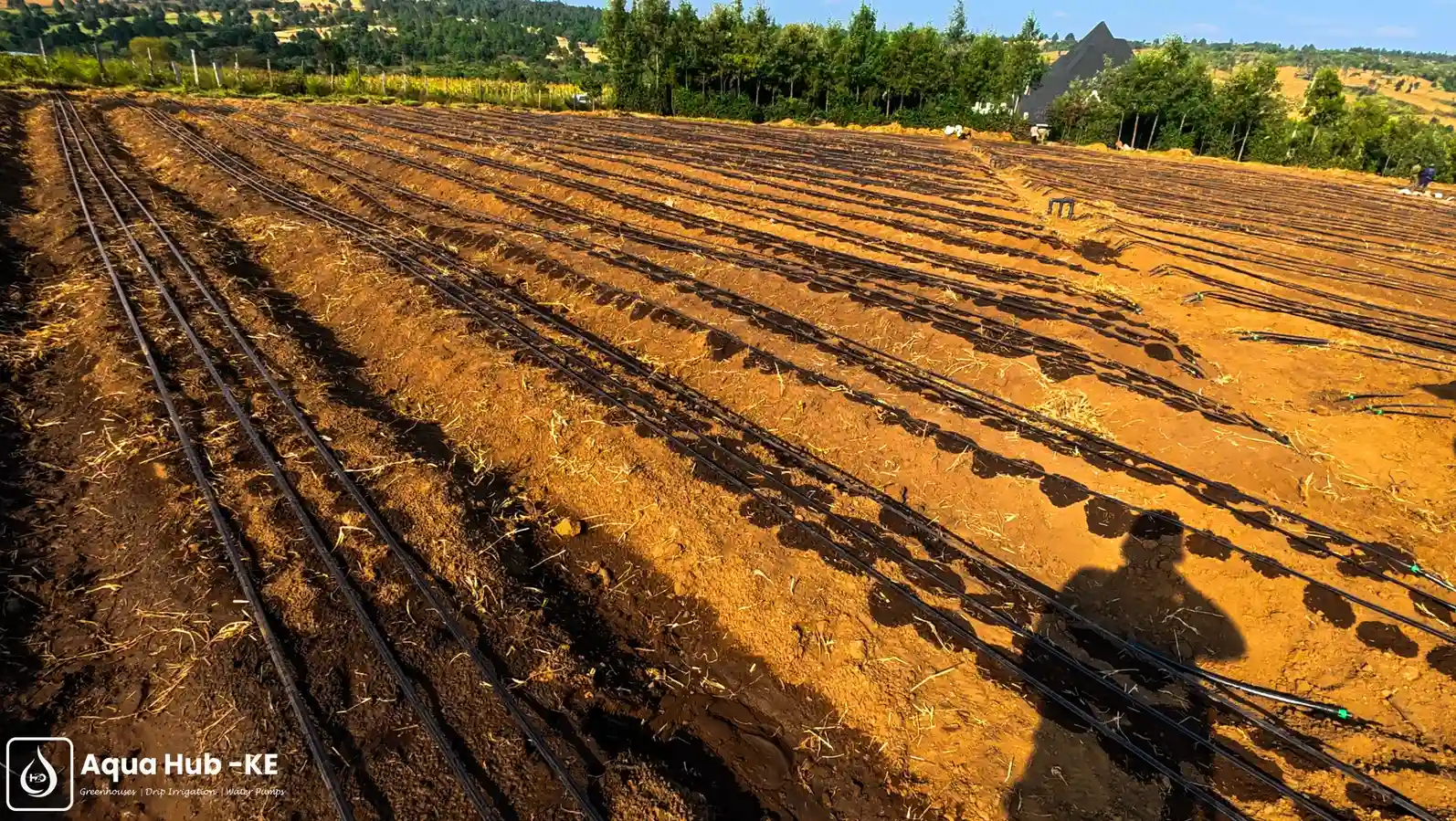
With the mains in place, the drip lines were laid along each bed and pegged down to hold them in position. Each line was then connected to the sub-mains using fittings, completing the layout across the farm.
24 July 2026
Once installation was complete, the whole system was run at once to test it. The team checked the water flow along every drip line to confirm that water was reaching each bed.
The test showed no issues. Water flowed along all the drip lines as intended, and the system was confirmed ready for handover.
24 July 2026
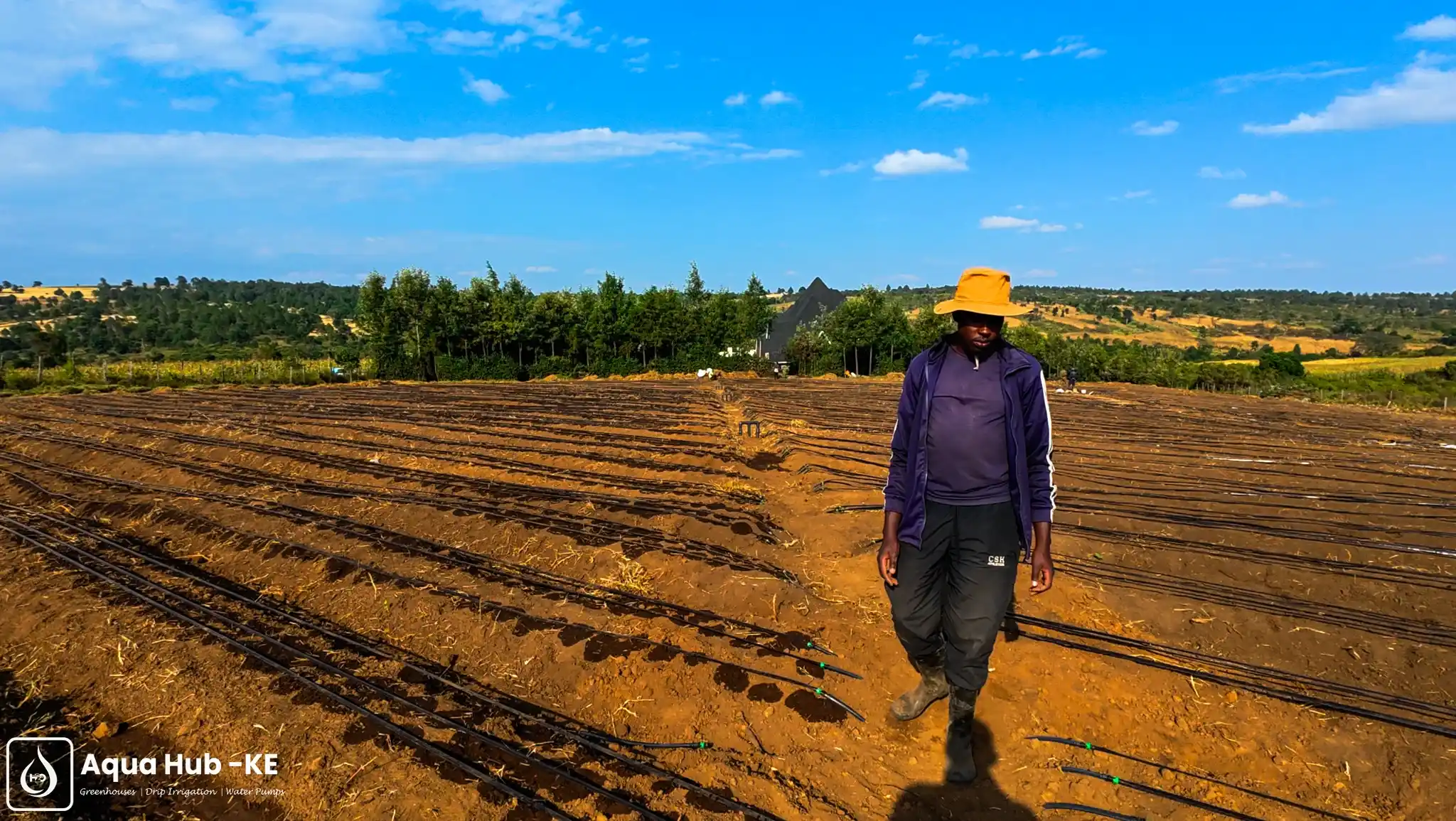
After testing, the team carried out a walkthrough of the installed system. This gave a chance to go over the completed installation, from the main line and sub-mains to the drip lines on each bed, before the project was officially handed over.
With handover complete, the drip irrigation system was commissioned. It is now operational and in use, covering 3 acres of vegetables.
THE OUTCOME
Before
The school relied on an inconsistent water supply, creating challenges for daily operations and sanitation.
After
The completed borehole and storage system provides the school with a dedicated water infrastructure solution designed around its daily requirements.
Client Testimonial
COMMON QUESTIONS
FAQs
How does a drip irrigation system work with a tank supply?
A drip irrigation system works with a tank supply by letting water flow from the tank through a main line, then through sub-mains to drip lines laid along each bed. Filters at the source keep dirt out, and the drip lines release water slowly at the base of each plant. For this to work well, the tank needs to give enough pressure and flow for the area being irrigated. Raising the tank or adding a pump helps where pressure is low.
How much does drip irrigation cost for 3-acres?
The cost of drip irrigation for 3-acres is between KES 450,000 to KES 500,000 depending on the layout of the farm, the type of drip line used, the water source and the site conditions. Pipes, filters, valves, fittings and installation all add to the total. A site assessment is the best way to get an accurate figure, since a quote based on the real measurements avoids surprises later.
Which vegetables suit drip irrigation?
Cabbages, sukuma, managu and terrere as well as a number of other crops suit drip irrigation well. These crops respond to steady, even watering, and drip irrigation delivers water directly to the roots instead of wetting the whole field.
How is drip irrigation installed, and how long does it take?
Drip irrigation is installed in stages: a site survey, a proposal, groundwork, laying the main line and sub-mains, connecting the drip lines, then testing and handover. The time it takes depends on the size of the farm and the state of the site. For example, a 3-acre vegetable farm can be completed in about 5 days once the beds are ready.
How do you maintain a drip irrigation system?
A drip irrigation system is maintained by cleaning the filters regularly, checking the drip lines for blockages or leaks, and flushing the lines from time to time. Keeping filters clean protects the drip lines from clogging, which keeps water flowing evenly to every plant.
Have a similar project in mind?
Tell us about your site and we’ll get back to you with a free assessment.