
Kithimani, Ruai
Button Dripper Installation for Pawpaw Farming in Ruai, Kenya
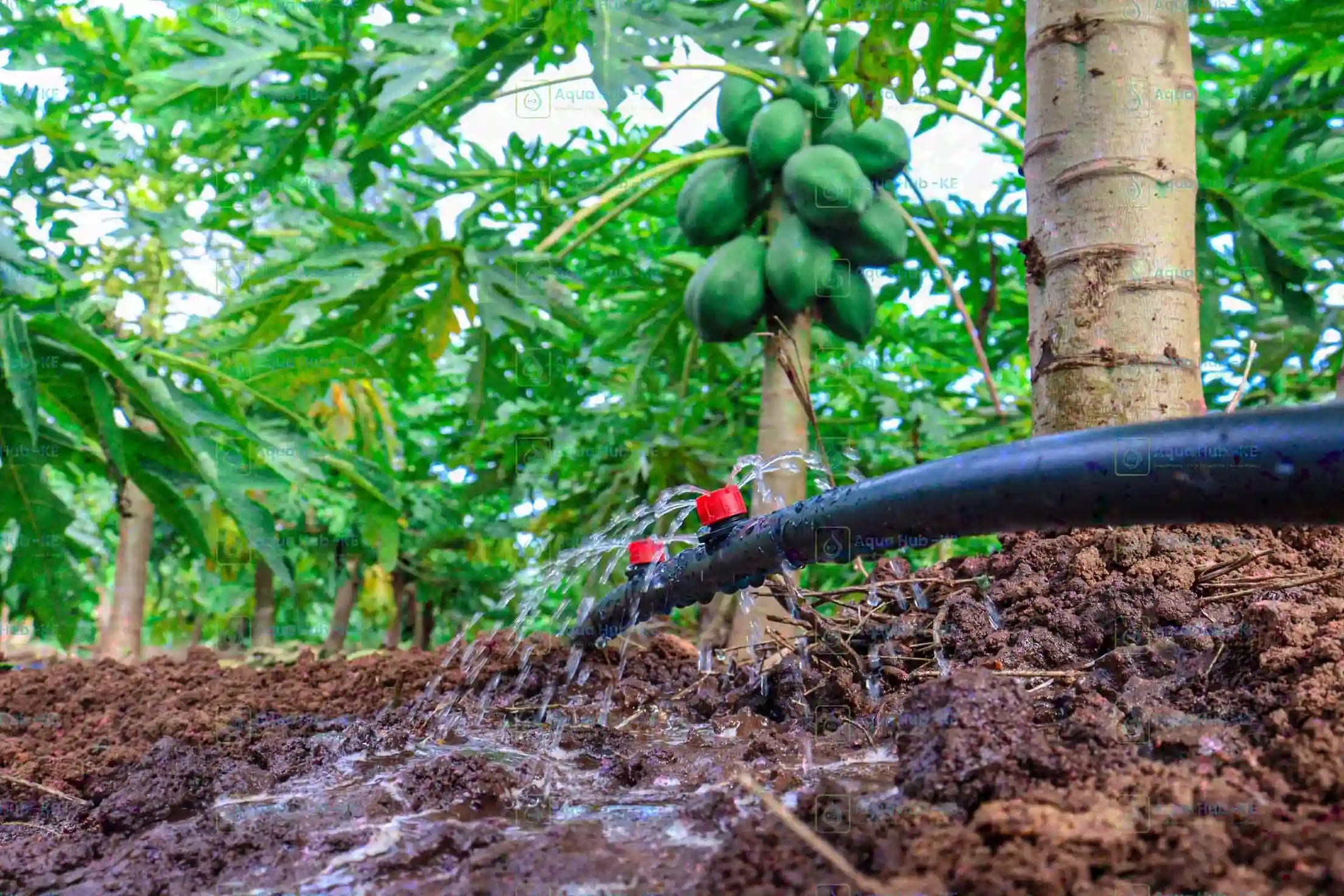
Aqua Hub Kenya installed a button dripper irrigation system for a pawpaw farm in Kithimani, Ruai. The system covers 2 acres of the client’s land, and each pawpaw plant receives water at its base through its own dripper. This gives the plants a steady, controlled supply of water across the whole 2 acres. Our team carried out the installation over about six weeks, from 23 April to 5 June 2026.
Location
Kithimani, Ruai
Duration
6 weeks
Completed
2026-06-05
PROJECT AT A GLANCE
What we delivered
A button dripper system for the client’s pawpaw farm in Kithimani, Ruai, was supplied and installed by our team. The scope covered the drippers and the pipework that carries river water to them, and our team completed the work between 23 April and 5 June 2026.
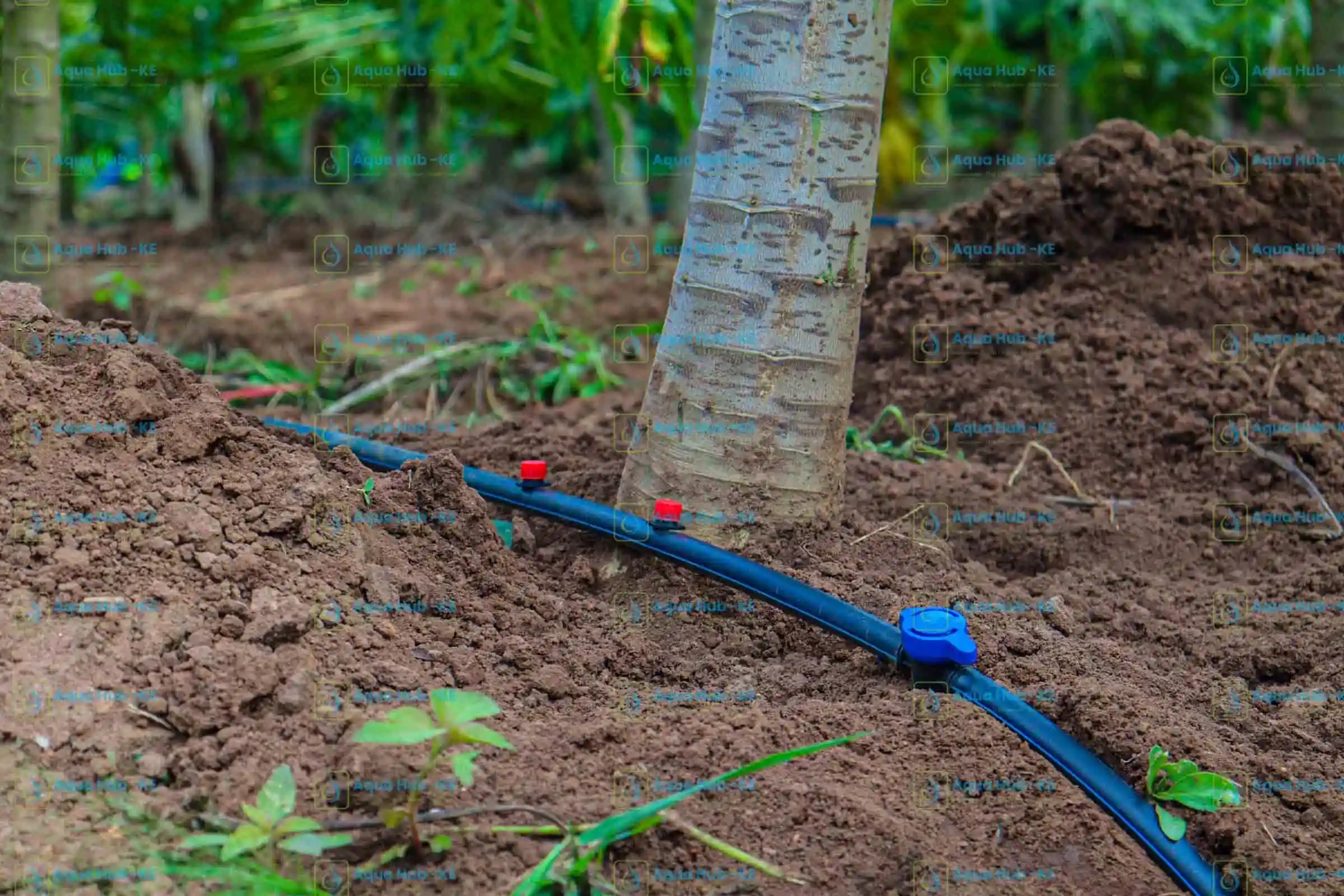
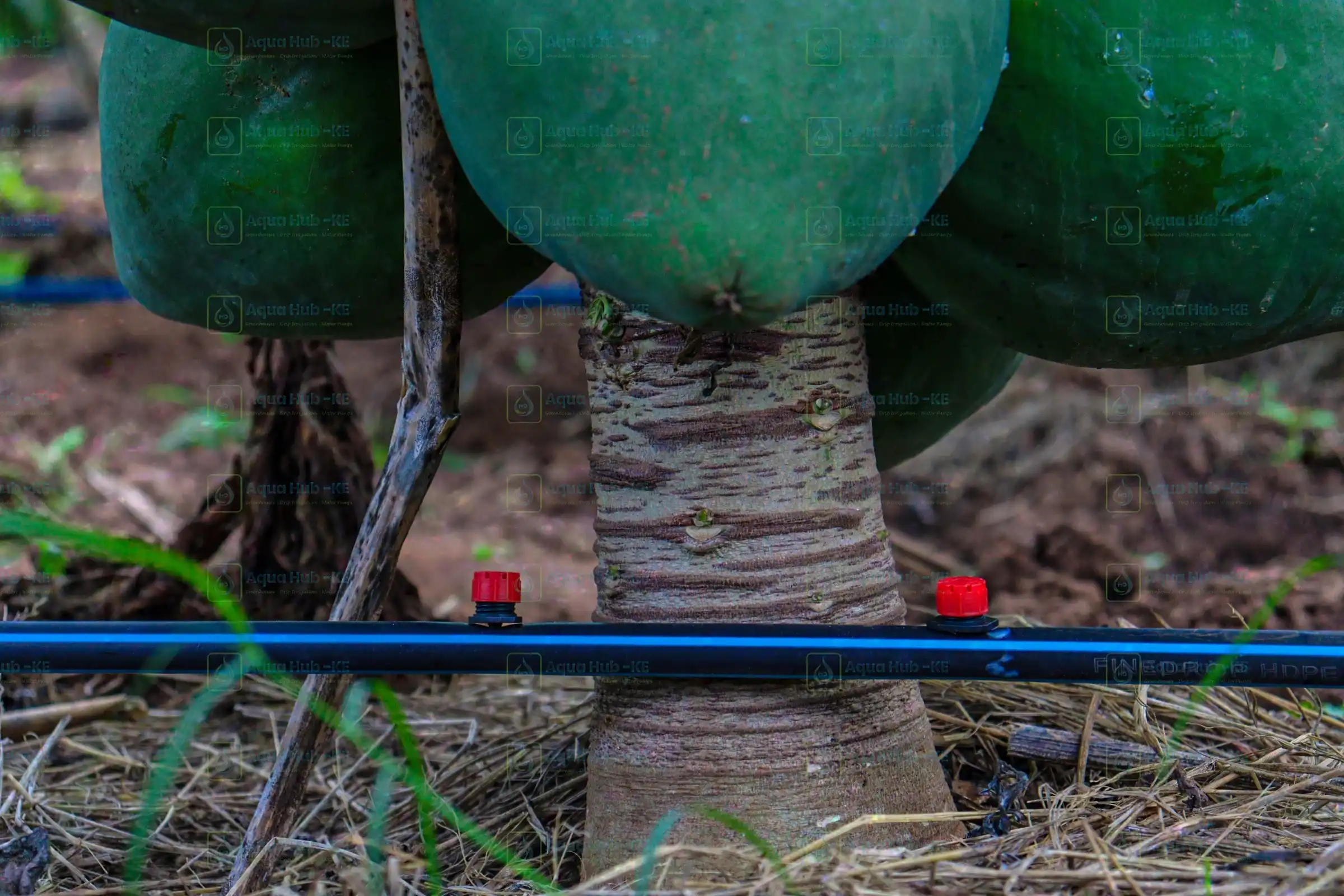
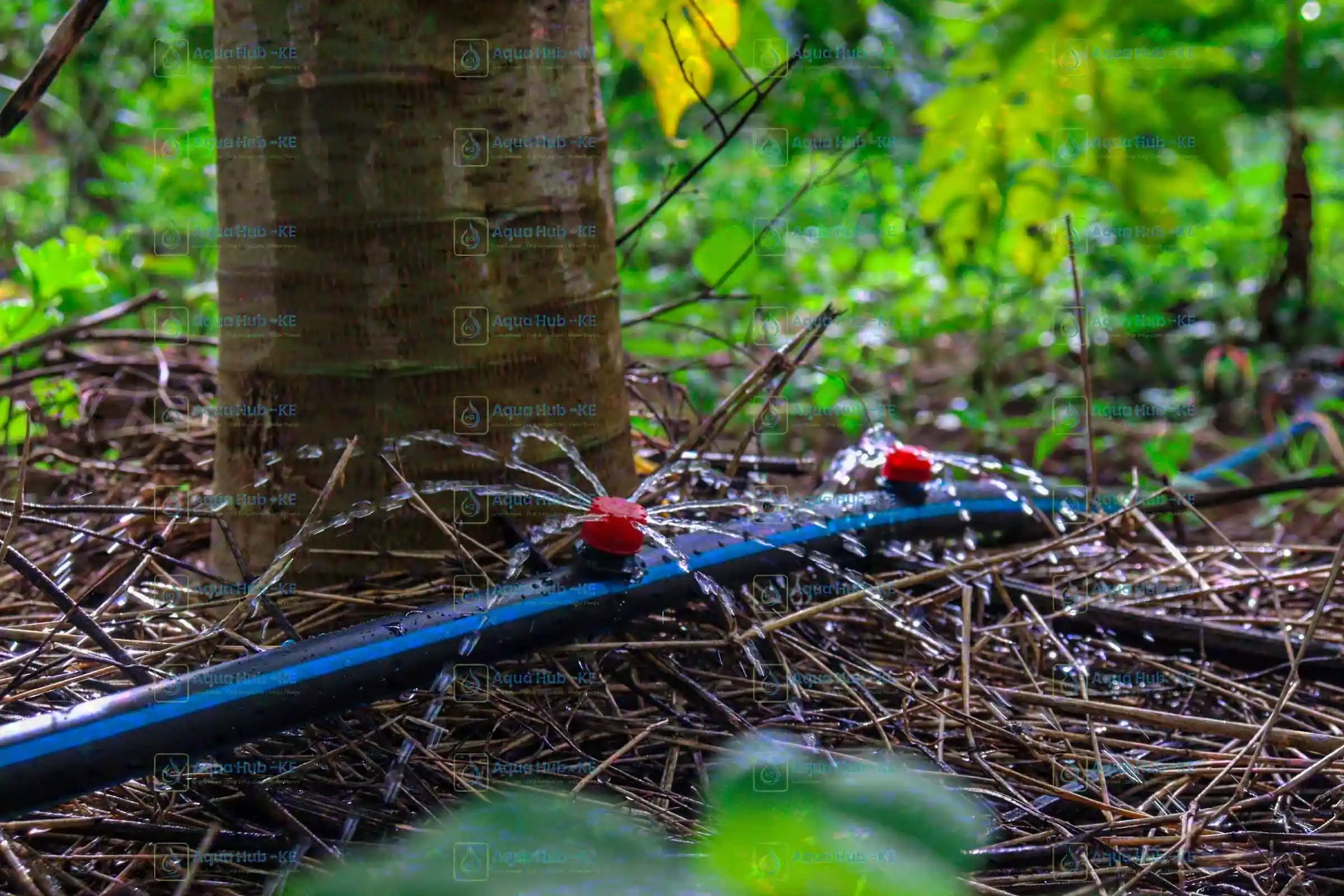
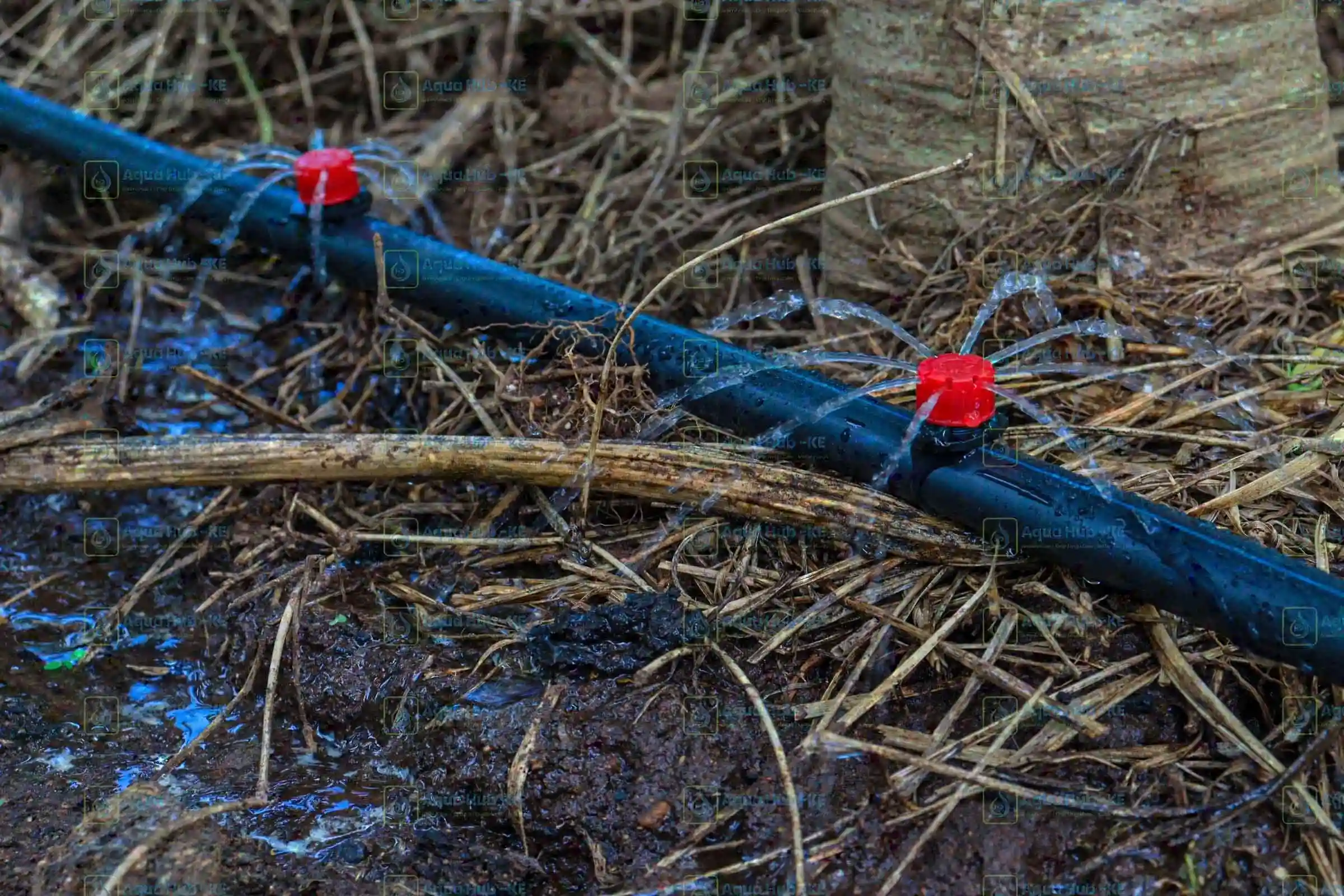
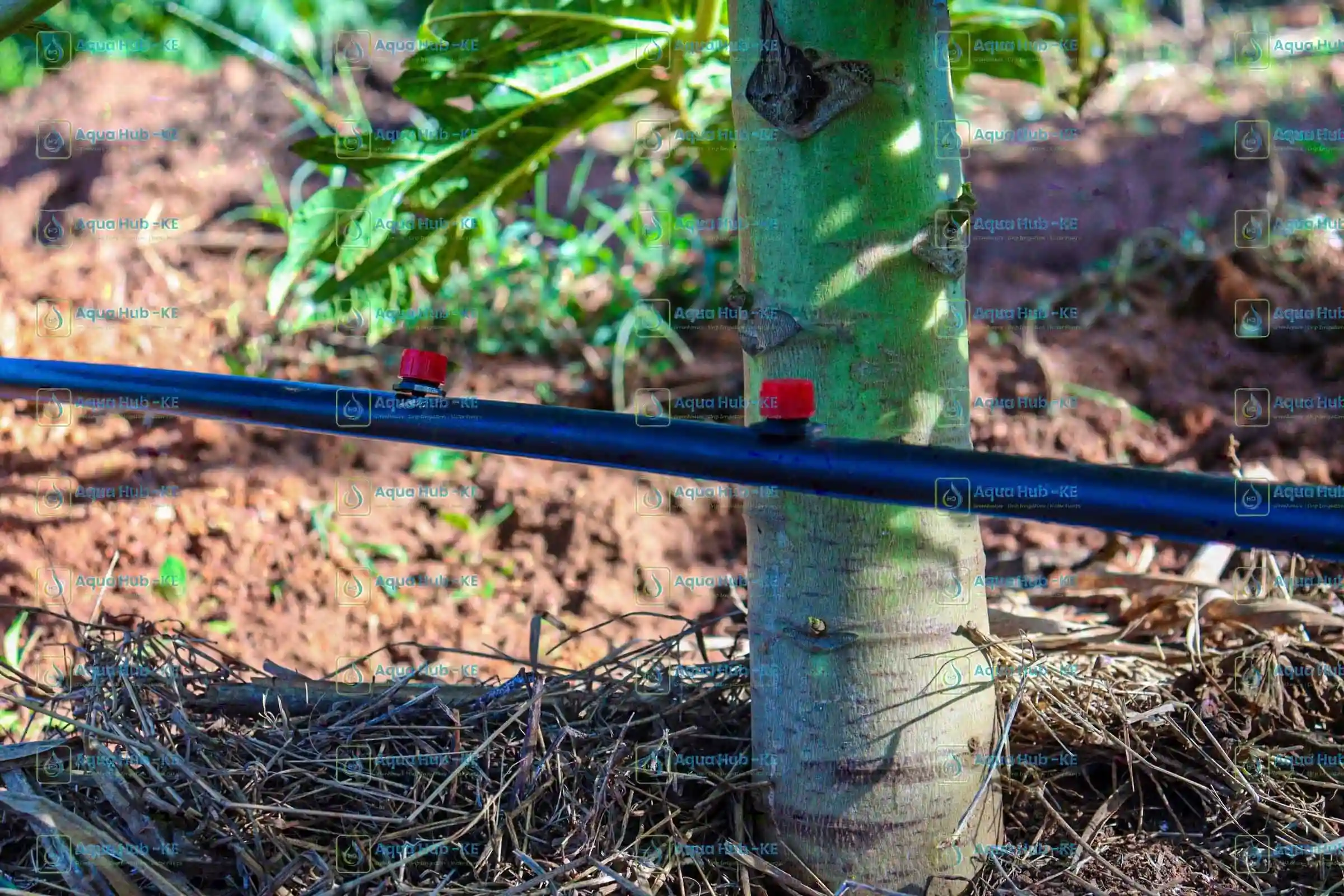
- Button drippers across 2 acres of pawpaw, with 2 drippers for each plant
- Lateral lines carrying water to the drippers
- A filtration unit to clean the water before it reaches them
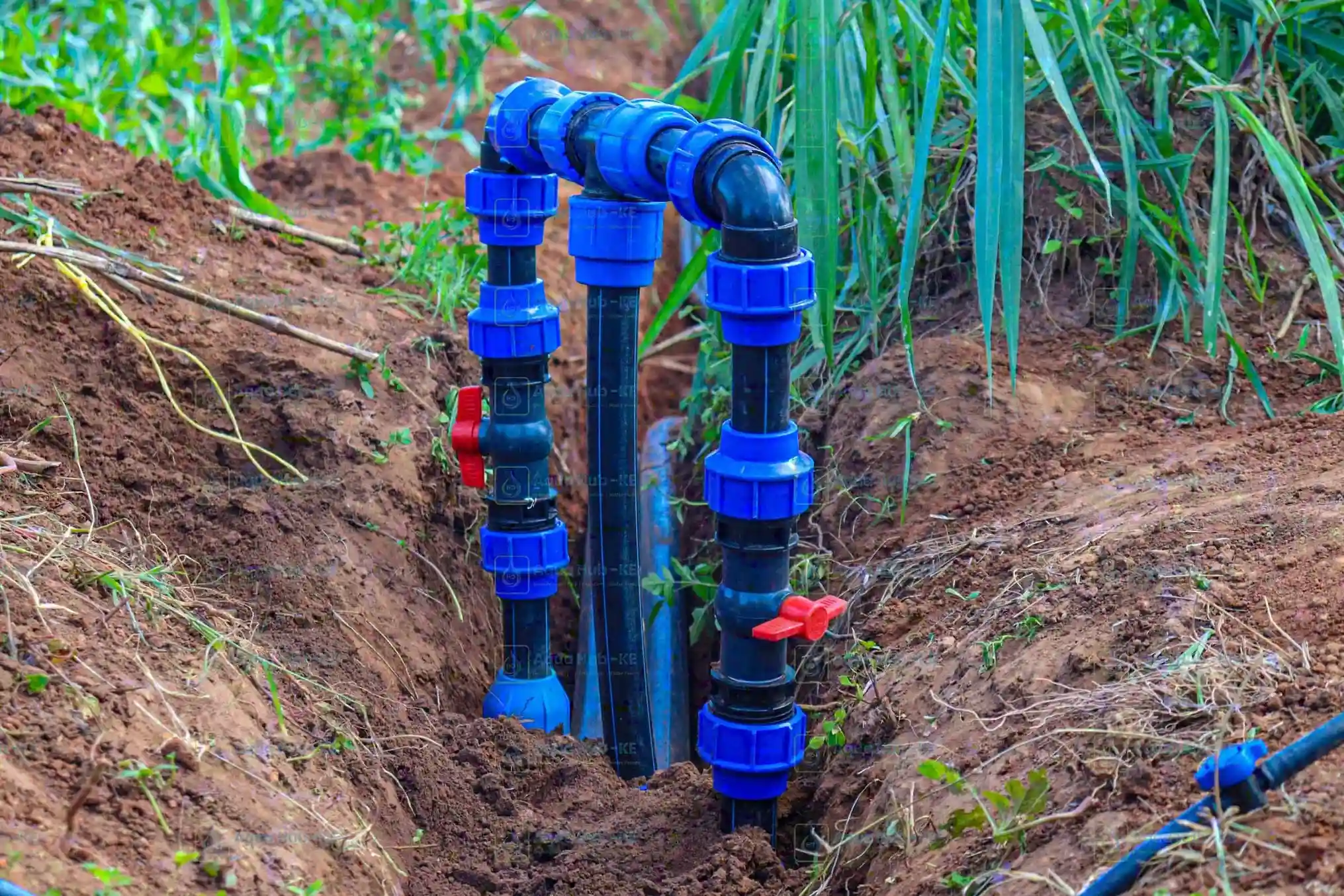
- Mainline and submain pipes bringing the water to the field
The challenge
The client grows pawpaw on 2 acres in Kithimani, Ruai, and needed a dependable way to water every plant across the whole field. Pawpaw plants need steady moisture to grow well, and uneven watering leaves some plants short. A system that failed to deliver water evenly would hold back growth in part of the orchard and waste the client’s pumped water. The water also comes from a river, which can carry silt and other particles that block drip emitters if they are not filtered out.
Our approach
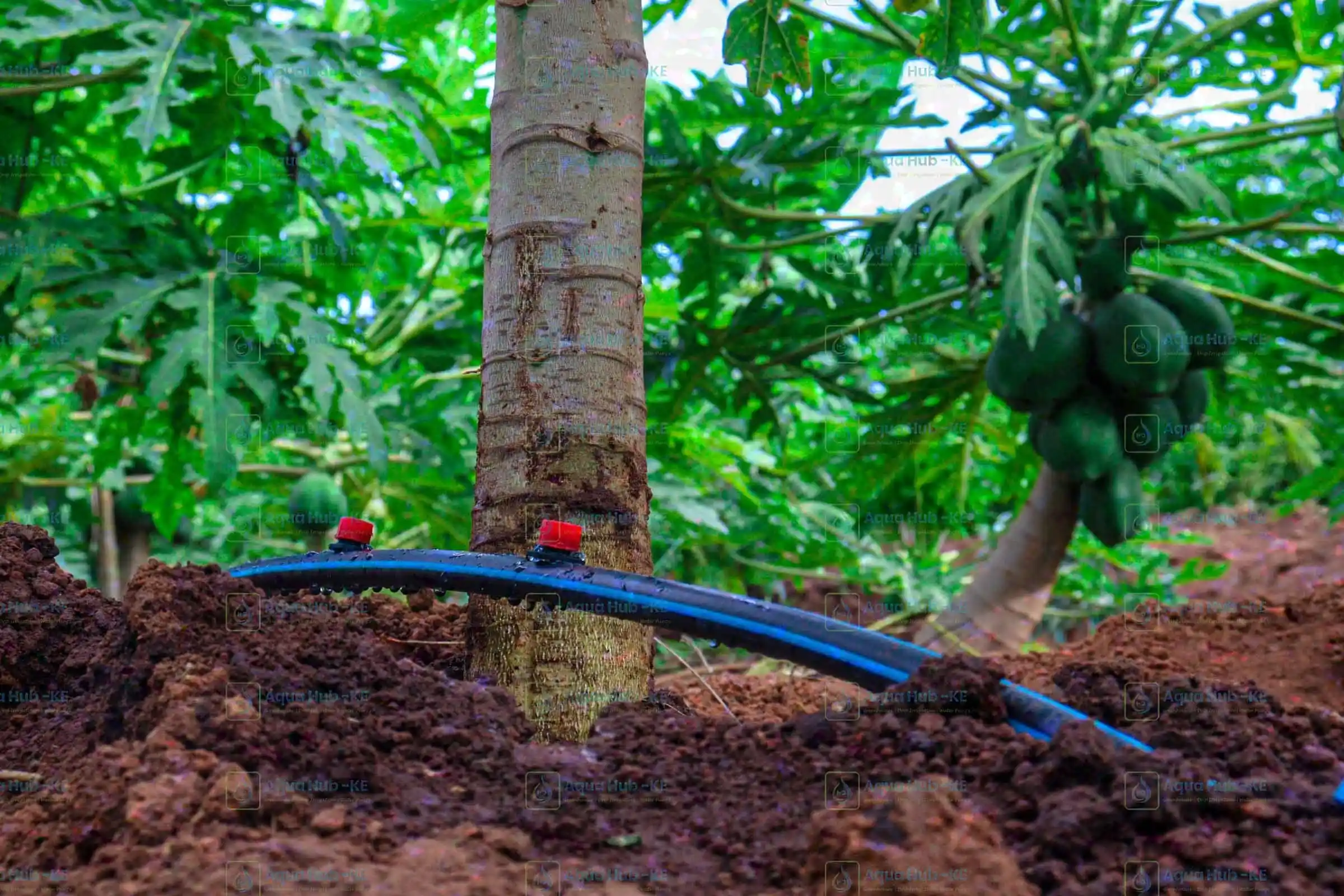
We installed button drippers across the 2 acres and gave each pawpaw plant 2 drippers, so every plant receives water directly at its base. A filtration unit at the head of the system cleans the river water before it enters the lines, which keeps the drippers from blocking. Mainline and submain pipes carry the water to the field, and lateral lines take it to the drippers along the rows. The result is an even, controlled supply of water across the whole 2 acres.
HOW IT HAPPENED
The process, start to finish
Every Aqua Hub Kenya project follows the same stages. Here’s exactly how this one went, with photos and video from each visit.
9th April 2026
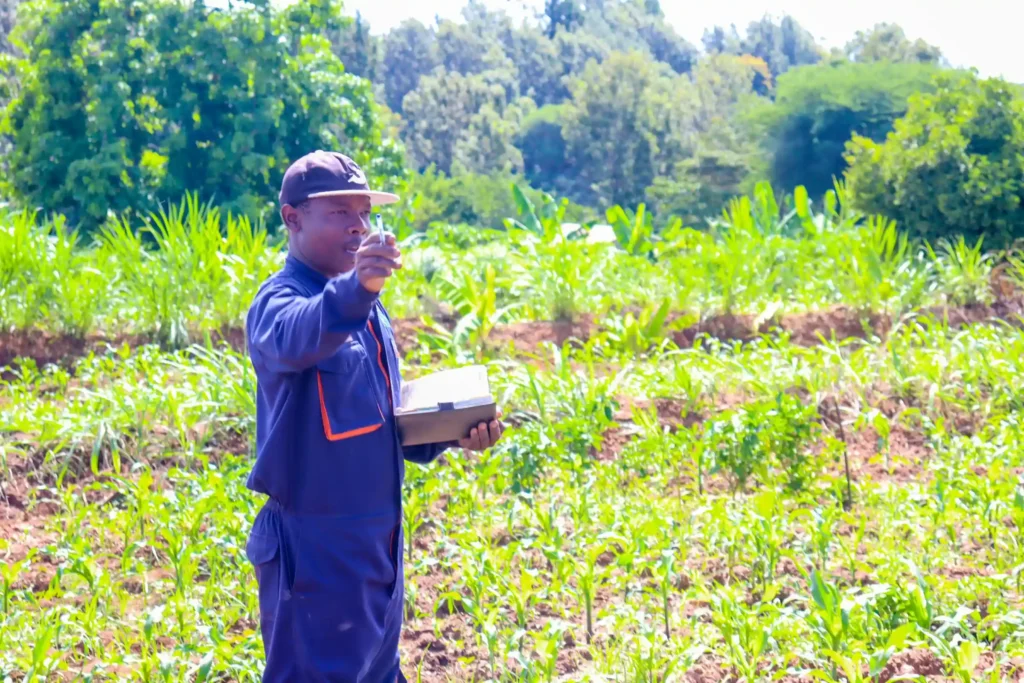
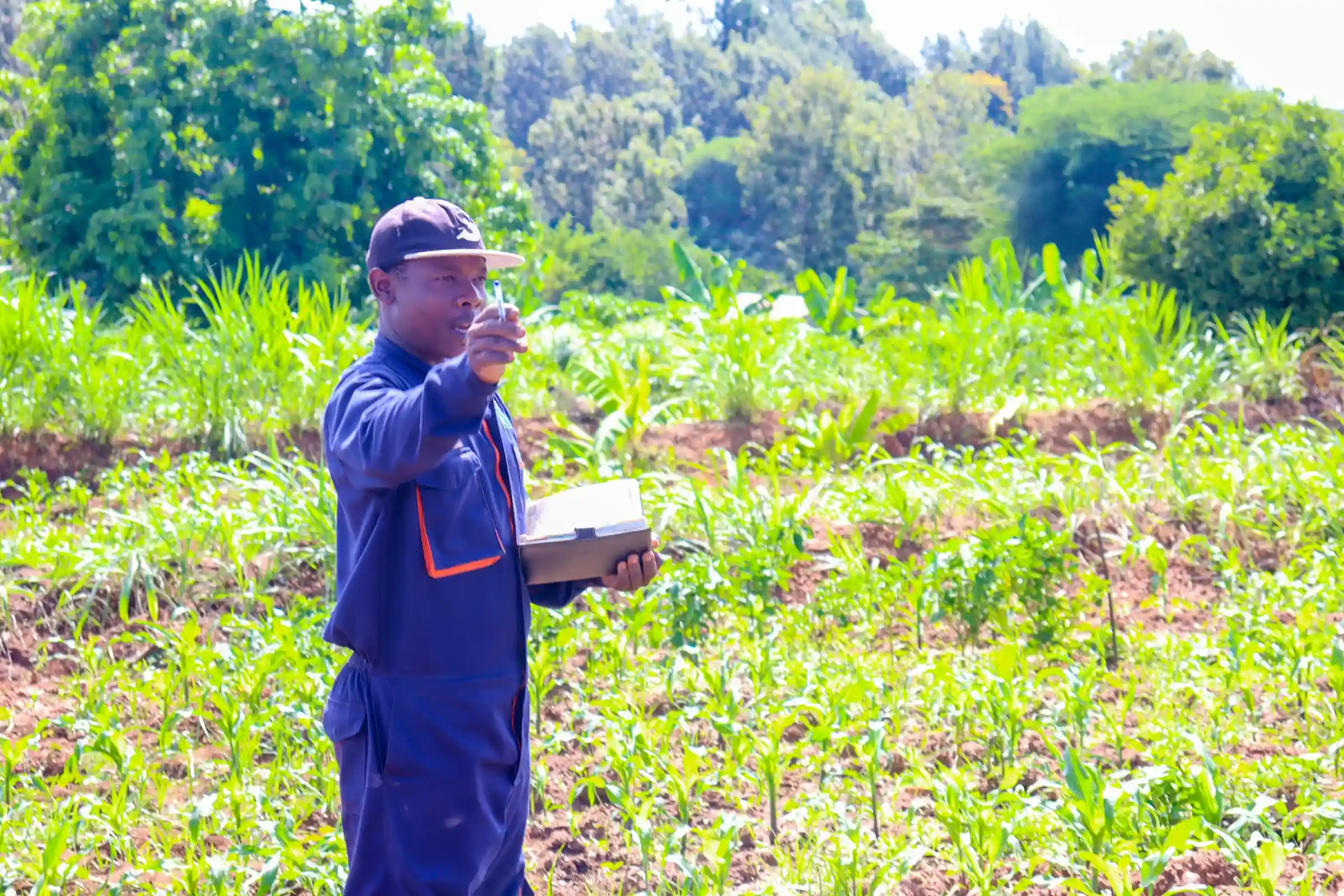
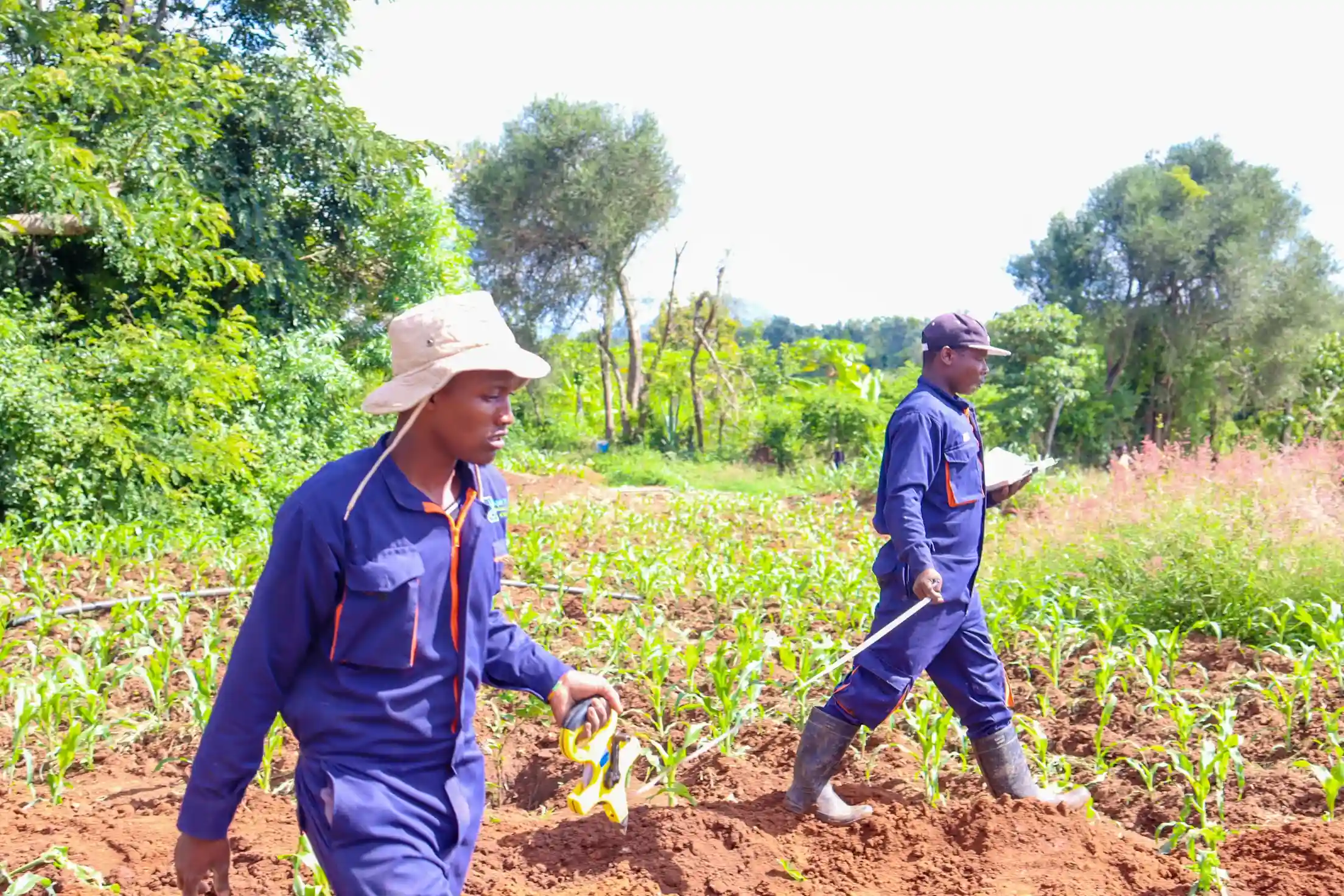
Before the installation began, our team visited the farm in Kithimani to study the site. We looked at the field layout and the spacing between the pawpaw plants, and we checked the slope and the ground across the 2 acres. We also went over where the river water would be drawn and where the pump stood. The client and our team then agreed the dripper layout together, including the 2 drippers for each plant.
10th April 2026
Following the site visit, we sent the client a proposal covering the drippers and pipework, along with the filtration unit. The client asked for changes, so we adjusted the quote before both sides settled on the final scope. The client also supplied the water pumps that draw from the river, and arranged casual labourers to work with our team, which supported the installation across the field.
23rd April 2026
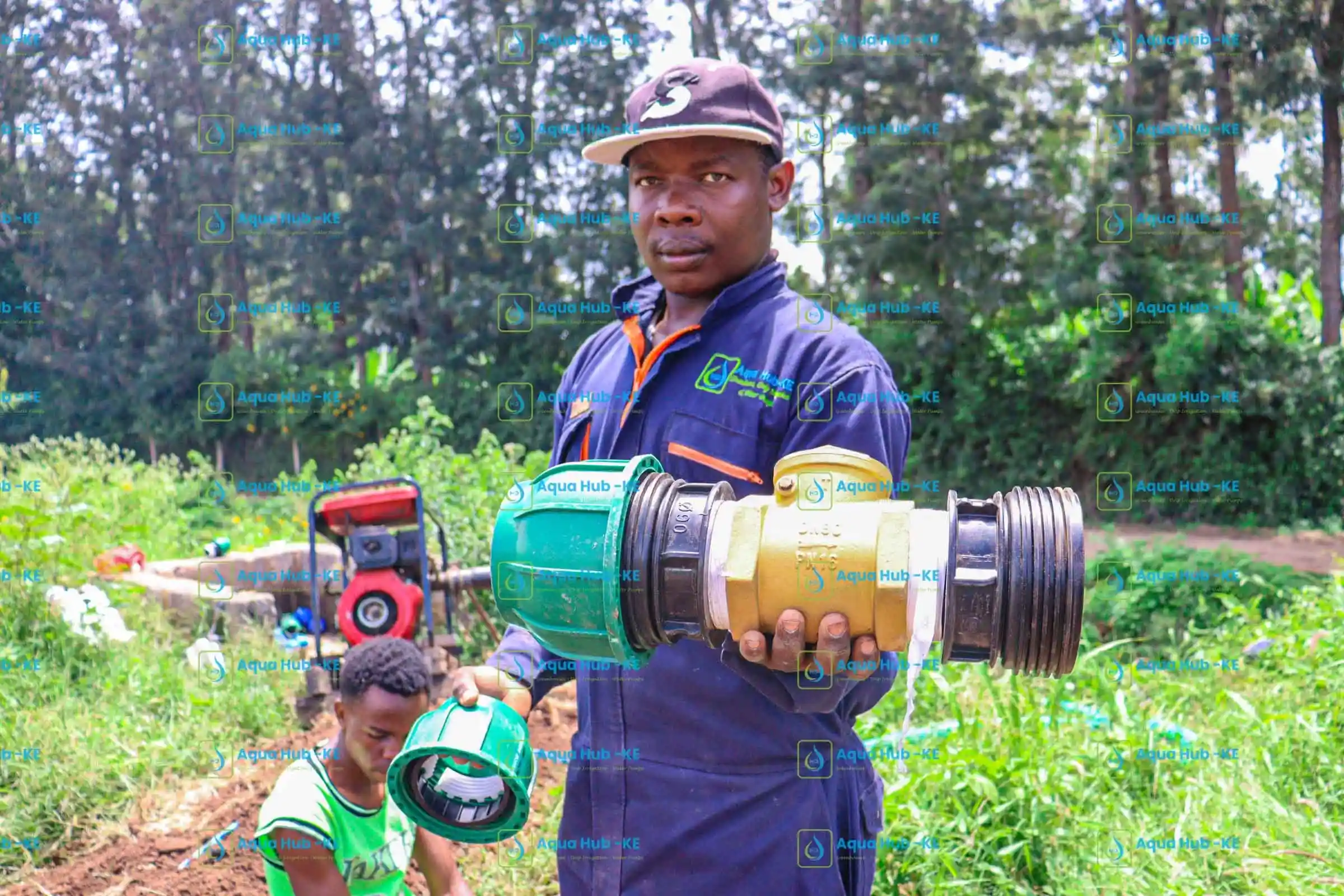
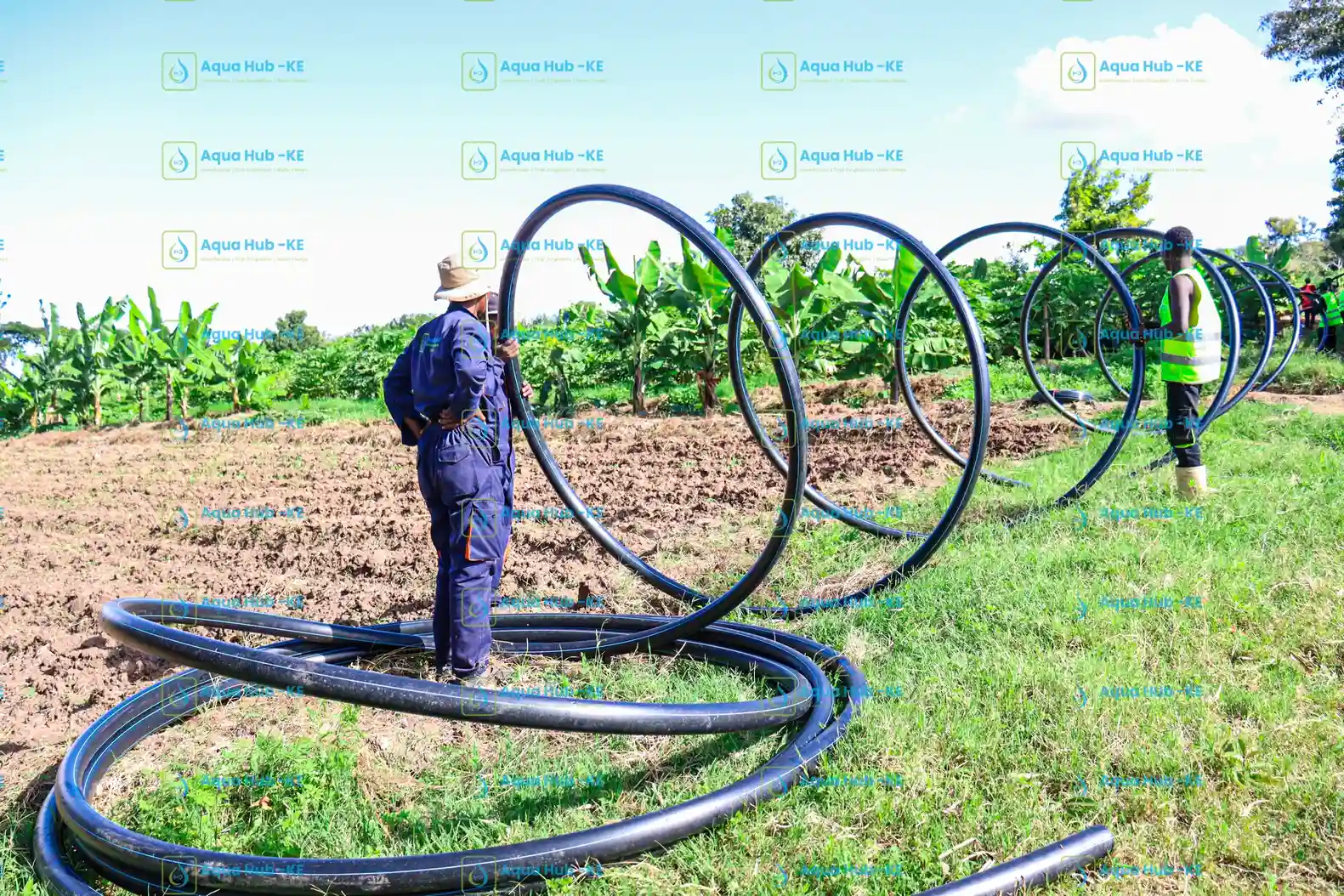
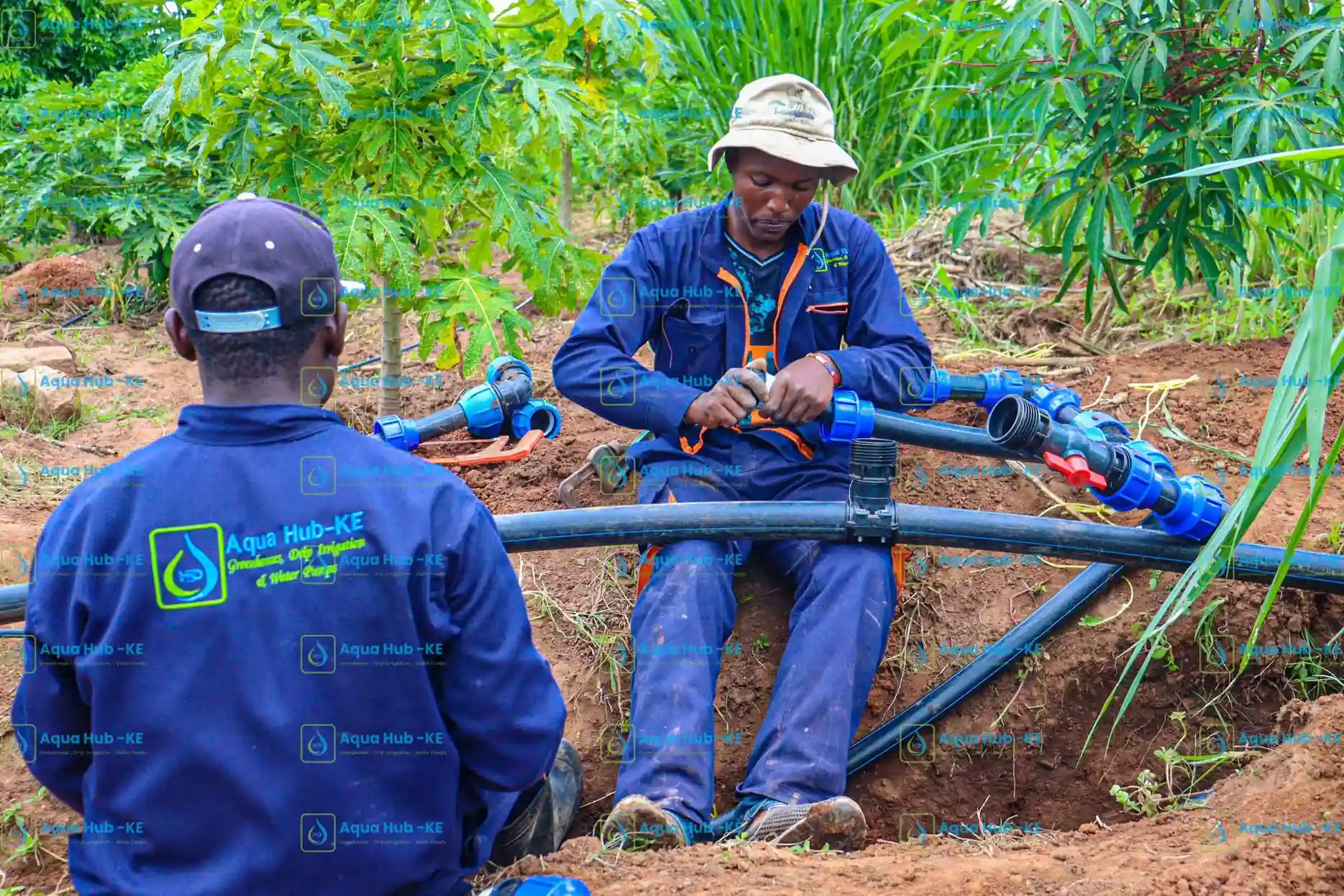
Our team arrived on site on 23 April 2026 with the button drippers and lateral lines, as well as the mainline and submain pipes. We also brought the filtration unit and the tools and equipment for the installation. The casual labourers trenched for the mainline and submain pipes, and marked the rows and plant positions, working under the supervision of our technicians. This left the field ready for the pipework and drippers to go in.”
24th April 2026
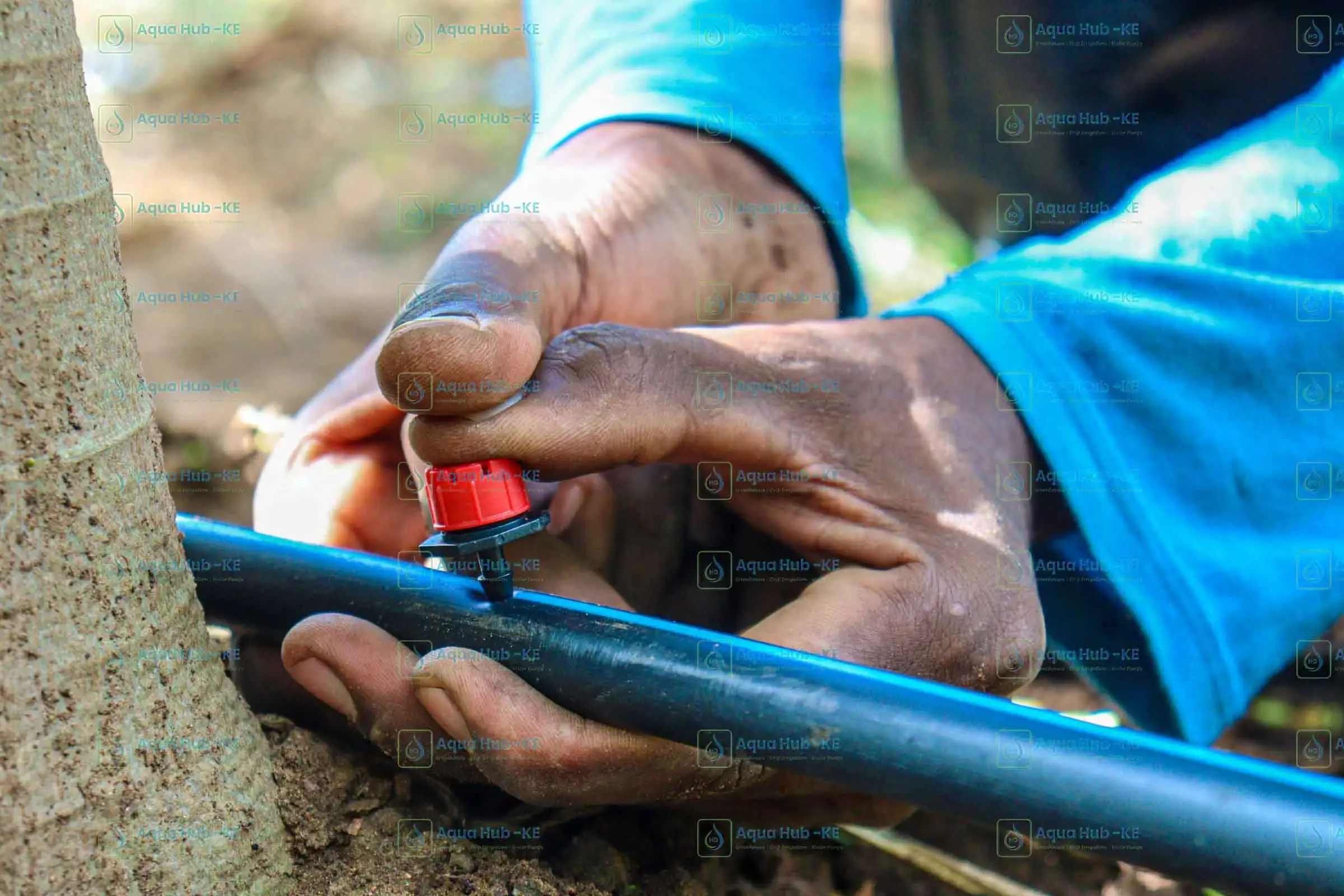
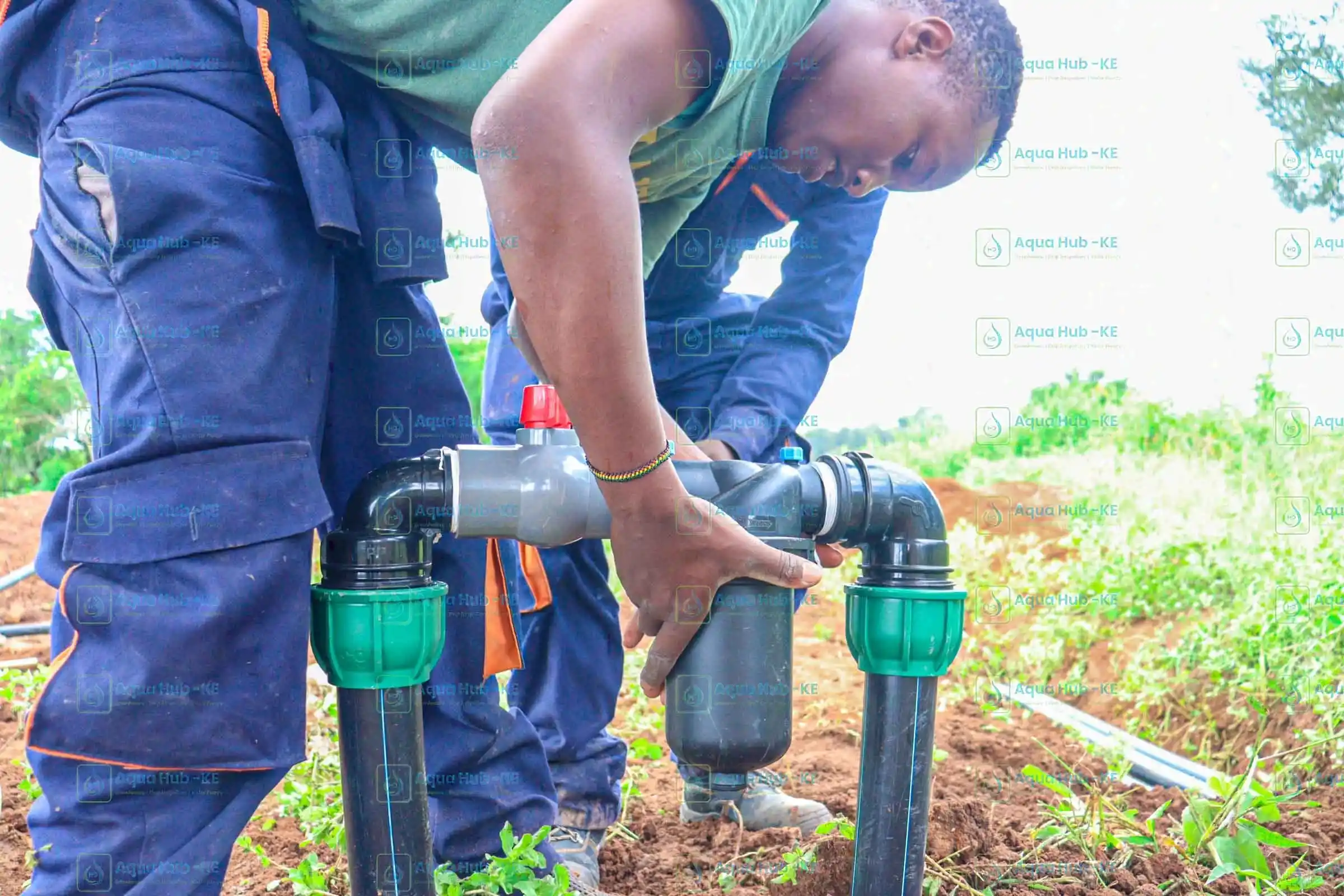
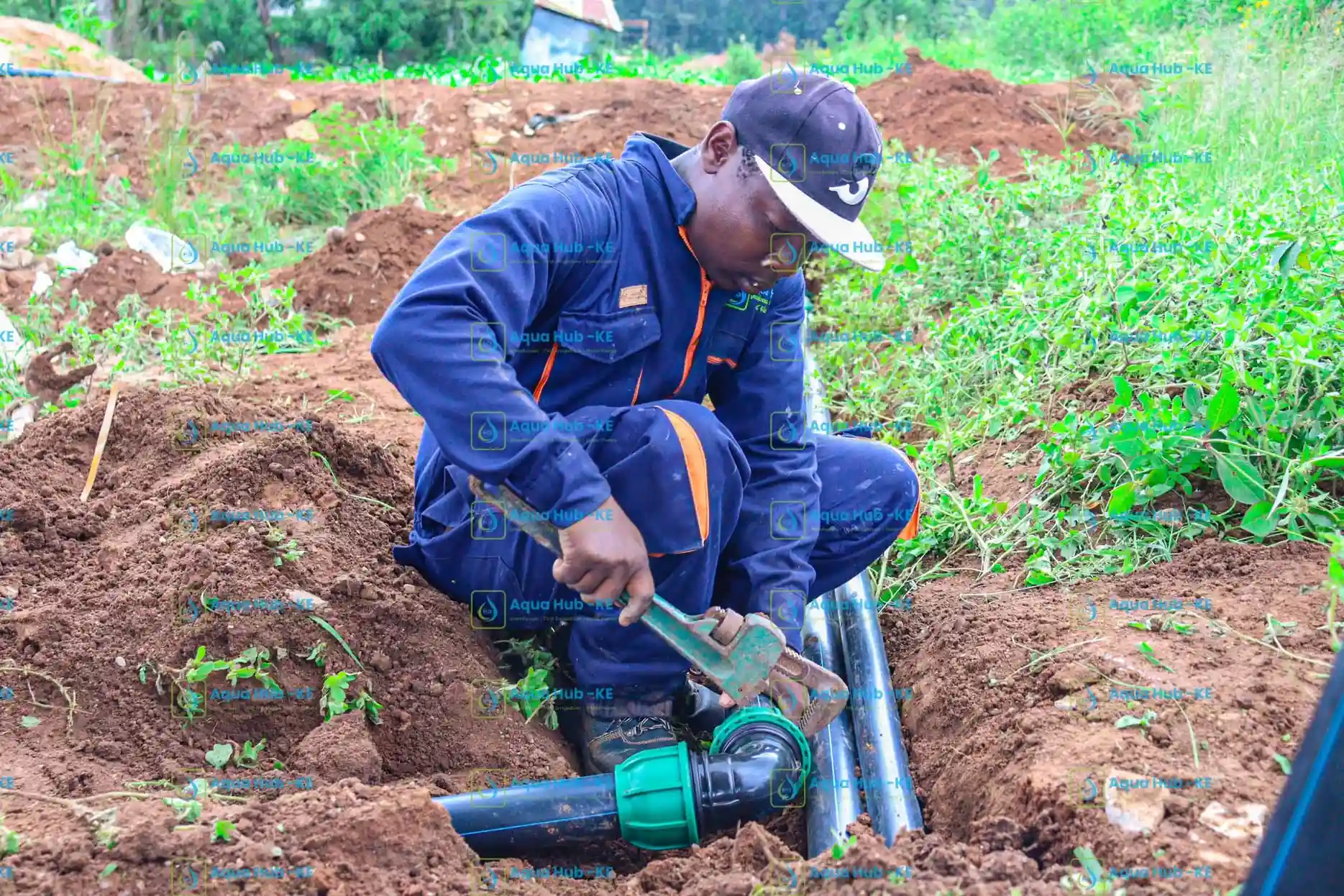
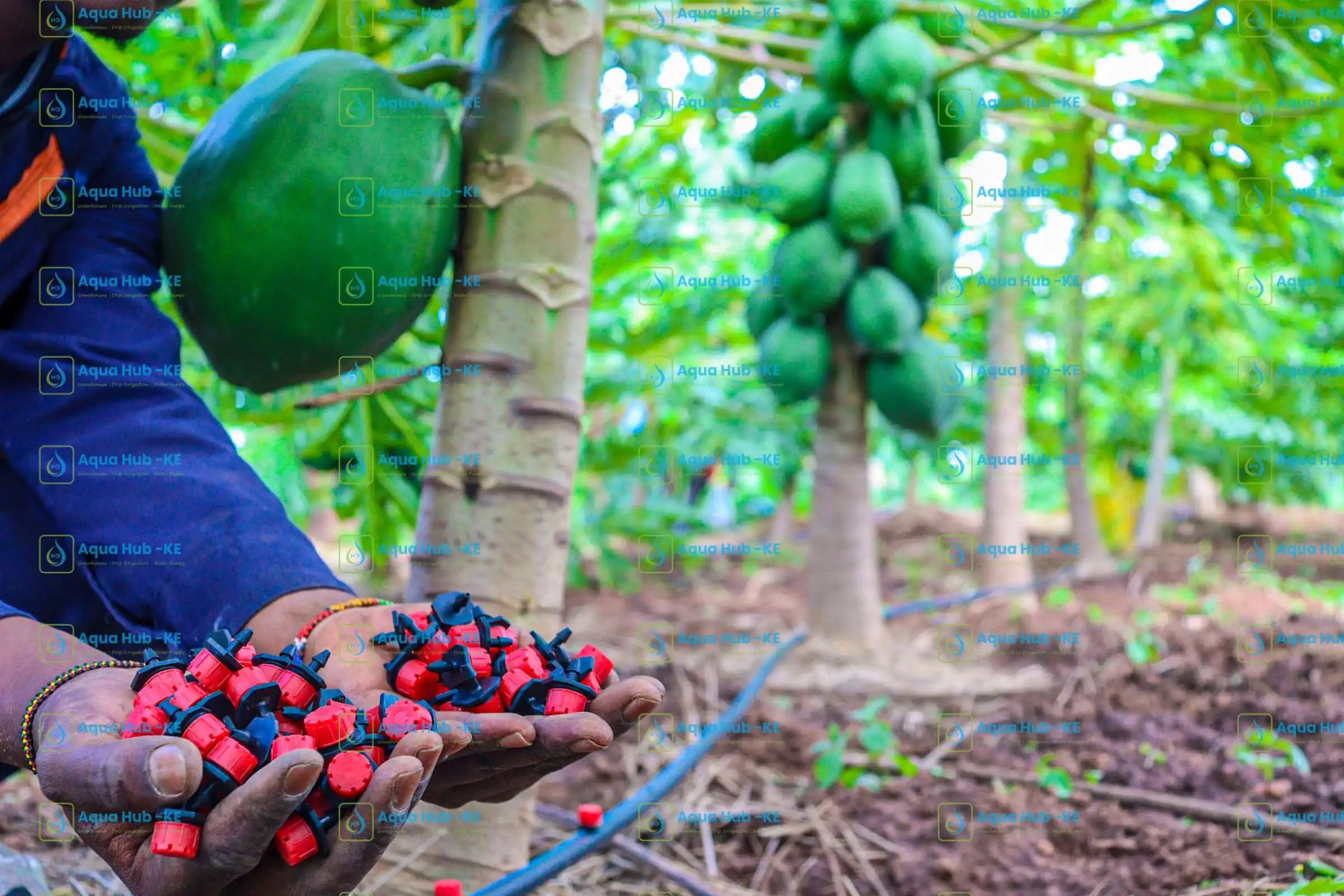
Our technicians began with the filtration unit, which we installed near the field before the mainline so that all the water passes through it first. We then laid the mainline in the trenches and buried it, using fittings to join the pipes. Submain pipes connected to the mainline came next, and laterals laid along each row were connected to the submains. Finally, we fitted 2 button drippers at each pawpaw plant, which completed the system across the 2 acres.
5th March 2026
Once the installation was complete, the system was run with water from the river, pumped by the client’s pumps. We went over the joints and fittings for leaks while the water flowed. We then walked the rows to confirm that both drippers at each pawpaw plant were dripping, and that the water spread evenly across the rows. These checks showed that the system delivered water as planned across the 2 acres
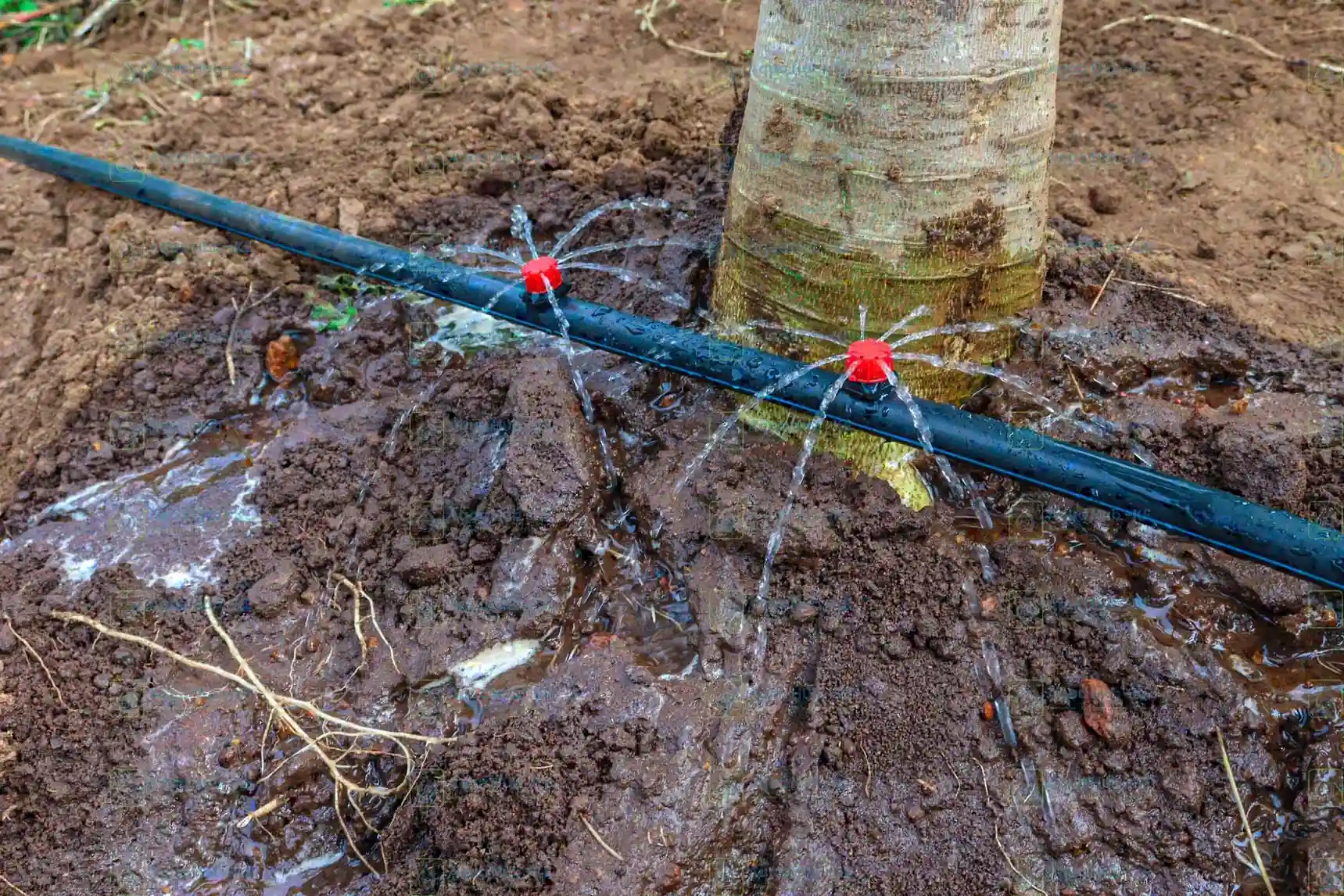
5th March 2026
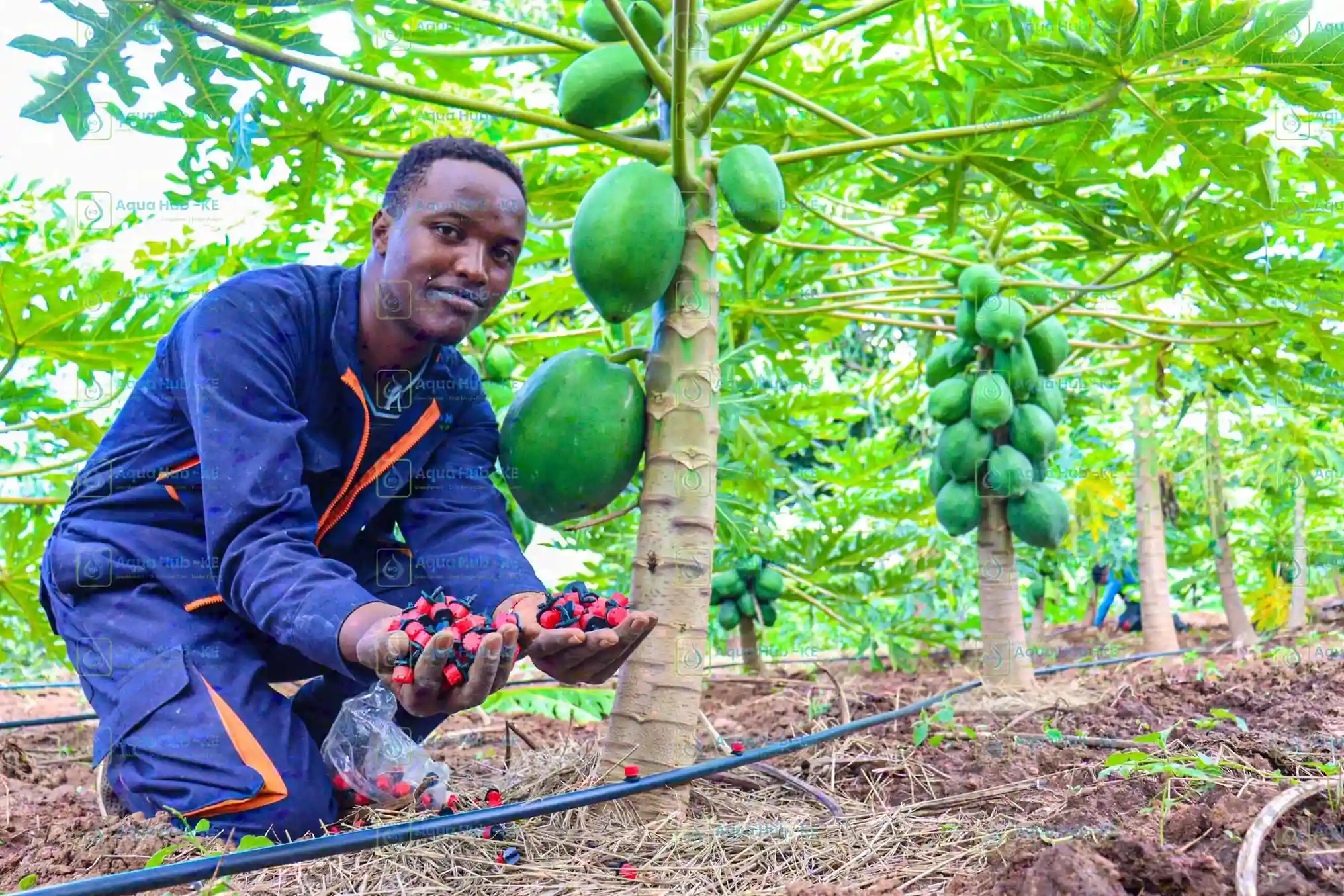
On 5 June 2026, we handed the button dripper system over to the client’s team. We showed them the installation, and the system was running across the 2 acres of pawpaw by the end of the job. With the filtration unit, pipework and drippers in place, the client now has a controlled water supply to every plant in the field.
THE OUTCOME
Before
The school relied on an inconsistent water supply, creating challenges for daily operations and sanitation.
After
The completed borehole and storage system provides the school with a dedicated water infrastructure solution designed around its daily requirements.
Client Testimonial
COMMON QUESTIONS
FAQs
How much does a button dripper system cost in Kenya?
The cost of a button dripper system in Kenya depends mainly on the size of the land and the number of drippers, and it costs KES 13 for each button dripper. Contact us to arrange a site assessment and get a quote for your farm.
What is the difference between button drippers and drip tape?
The difference between button drippers and drip tape is where the water comes out. Button drippers water each plant separately, which suits tree crops such as pawpaw, while drip tape suits closely spaced row crops.
How many button drippers does a pawpaw plant need?
The number of button drippers a pawpaw plant needs depends on its age, the soil and the weather. Two drippers per plant is a common setup, and it spreads the water more evenly around the base.
Can river water be used for drip irrigation?
River water can be used for drip irrigation as long as it is filtered first. Silt and small particles in river water block the drippers if the filter is missing or neglected.
How often should a drip irrigation filter be cleaned?
A drip irrigation filter should be cleaned more often when the water carries more silt, as river water usually does. Check it regularly and clean it whenever the flow drops.
How do you know if a button dripper is blocked?
You can tell that a button dripper is blocked when it stops dripping or the soil under it stays dry. Plants that wilt while their neighbours stay healthy are another sign.
What kind of pump does a drip irrigation system need?
A drip irrigation system needs a pump that delivers enough flow and pressure for the area it serves. The right size depends on the field size and how high the water must be lifted.
How long does it take to install drip irrigation on 2 acres?
Installing drip irrigation on 2 acres can take several weeks, depending on the terrain and the labour available. Trenching for the pipes and fitting each dripper are the slowest parts.
Does drip irrigation save water when growing pawpaw?
Drip irrigation saves water when growing pawpaw because it delivers water at the base of each plant. This cuts evaporation and runoff compared with spraying the whole field.
Have a similar project in mind?
Tell us about your site and we’ll get back to you with a free assessment.