
Kimana, Kajiado County, Kenya
Why the chilli export market advices that chillies should be grown under a shade net
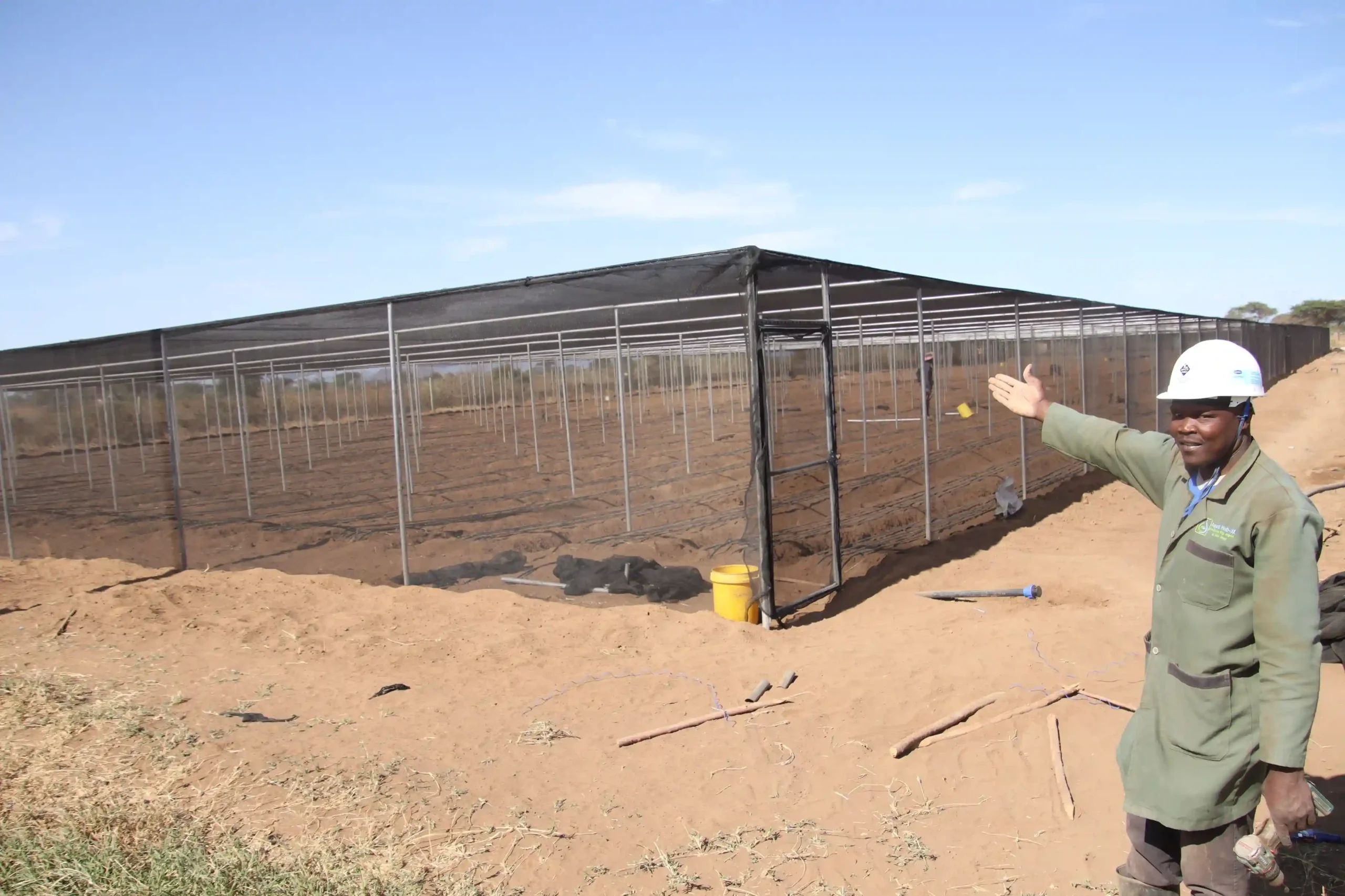
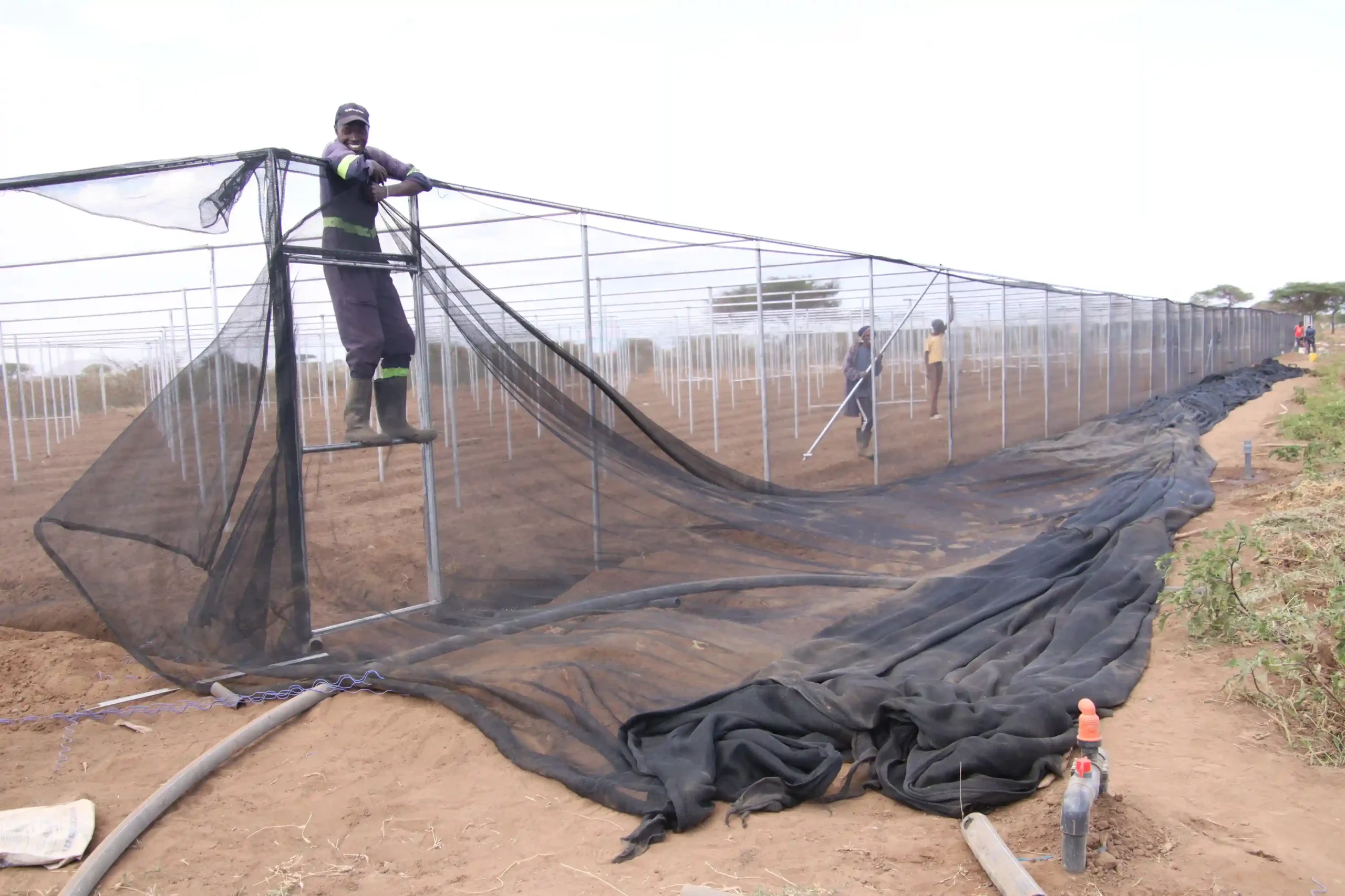
Aqua Hub Kenya installed a shade net structure in Kimana, Kajiado County. The structure was built for chilli farming under shade net, meant for the export market. The size of the shade net is 270m by 35m, which is one of our bigger installations in the region. Growing the chilli under shade net has given the farmer better control over their crop, which is especially useful for someone who is exporting their crop.
Shade net farming is becoming increasingly popular among chilli farmers in the export market. This is largely because of the FCM pest. Aqua Hub Kenya is a top supplier and installer of shade nets in Kenya, offering quality structures at customer-friendly prices.
Location
Kimana, Kajiado County, Kenya
Duration
20 days
Completed
2026-09-20
PROJECT AT A GLANCE
What we delivered
Aqua Hub Kenya delivered a complete shade net structure for the Kimana project. This included metallic galvanized poles and shade netting. Additional fittings were also included to help maintain the structure of the shade net. The netting was fitted to size for the full coverage area.
To complete the project, we had to follow some steps including:
- First, we established the need for site visit
- After the assessment recommendations were drawn up based on market and problem
- Finally, installation of the 270 meters by 35 meters shade house with 55% shading was done.
The challenge
One of the main problems facing chilli farmers in the export market is the False Codling Moth (FCM) pest. This pest often gets their chilli shipment flagged, especially in the EU border. Open field chilli is exposed and FCM gets in easy, damaging the crop just before it is checked by the export buyers.
Additionally, chilli crops in hot areas like Kimana are heavily affected by the heat. High temperatures stress the crop and affect quality. On top of that, open field farming loses a lot of water to evaporation.
Our approach
For the Kimana project, Aqua Hub Kenya visited the farm to establish the needs that the farmer had. This allowed us to know what to recommend based on the specific site.
After the site visit, the team made an assessment. The recommendation was based on the market the farmer was targeting and the problems noted on the ground. The main problem being the FCM pest.
From this assessment, we recommended a 55% shade net for the chilli crops. 55% shade net balances both the heat and pest protection with letting enough sunlight in that chilli crops need.
HOW IT HAPPENED
The process, start to finish
Every Aqua Hub Kenya project follows the same stages. Here’s exactly how this one went, with photos and video from each visit.
Aqua Hub Kenya carried out a site survey at the Kimana farm before any work began. The team went to the ground to measure the land and check the conditions the shade house would need to handle. Kajiado gets hot, and that matters for a chilli crop meant for export.
During the visit, Aqua Hub Kenya also held consultation with the farmer. The goal was to understand the target market and the problem the farmer was facing, which was FCM pest pressure on the crop. This shaped the recommendation that followed.
After the site survey, Aqua Hub Kenya put together a written proposal for the client. The proposal laid out the recommendation, a shade house measuring 270m by 35m, fitted with 55% shade net, built to handle FCM pest pressure on the export chilli crop.
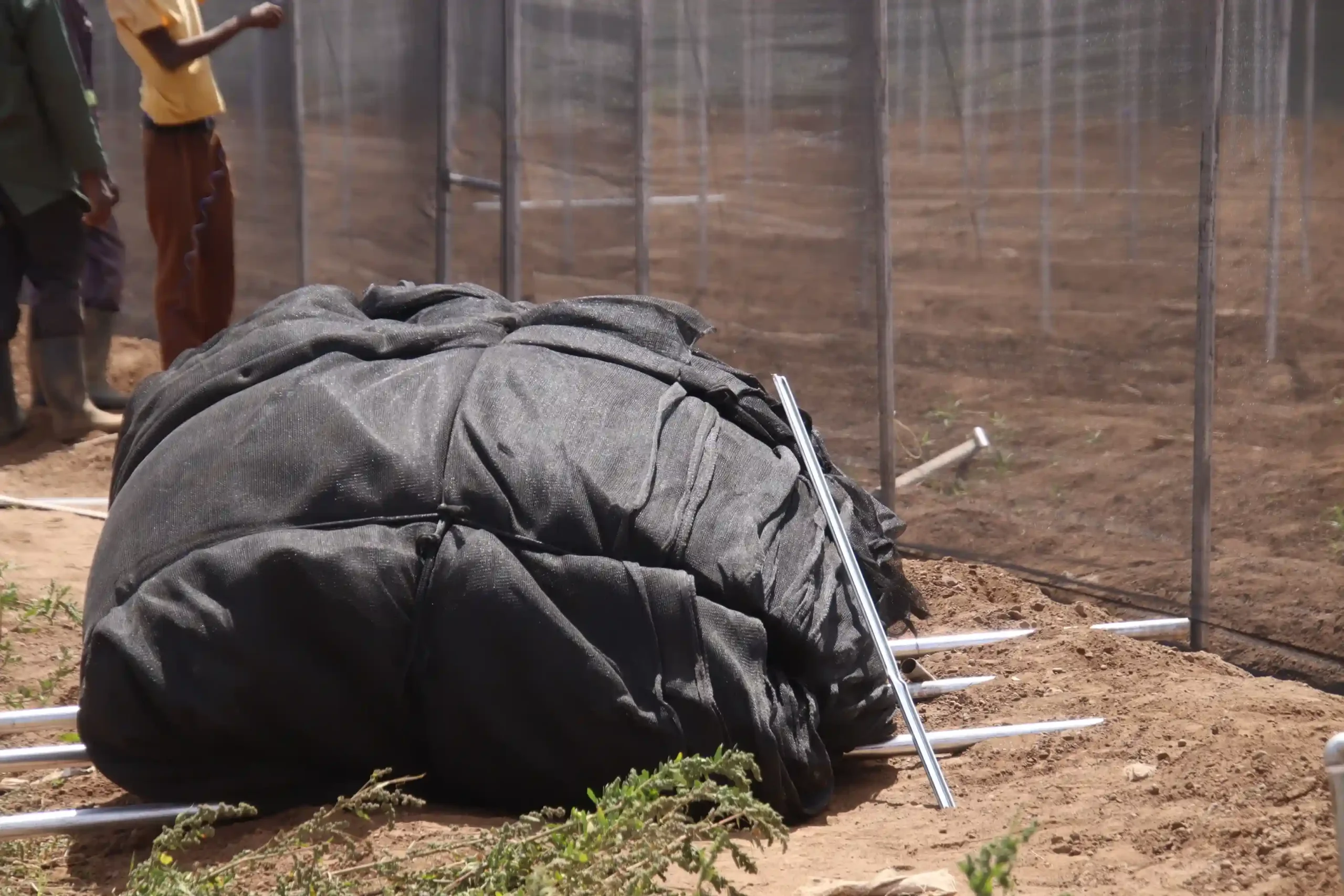
Mobilisation for the project meant getting everything to the site. Poles were transported along with the netting and fittings needed for the full structure.
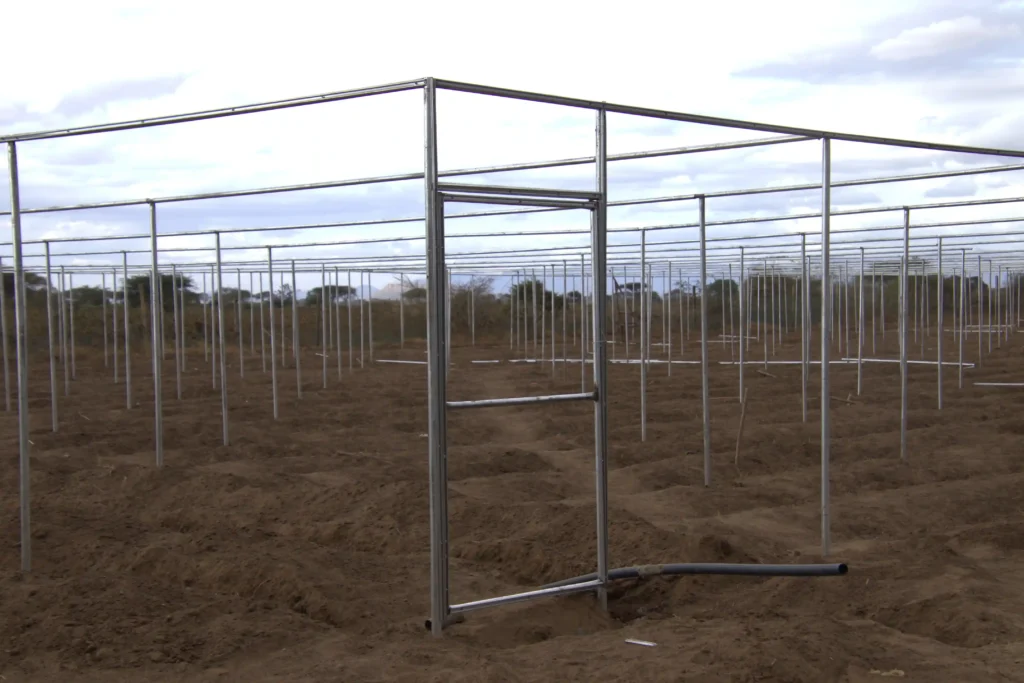
Groundwork followed once materials were on sites. First, holes were dug for the poles and the ground was levelled to prepare for the shade house. This step matters for a structure covering 270 meters by 35 meters, since the poles need solid, even ground to hold up over time.
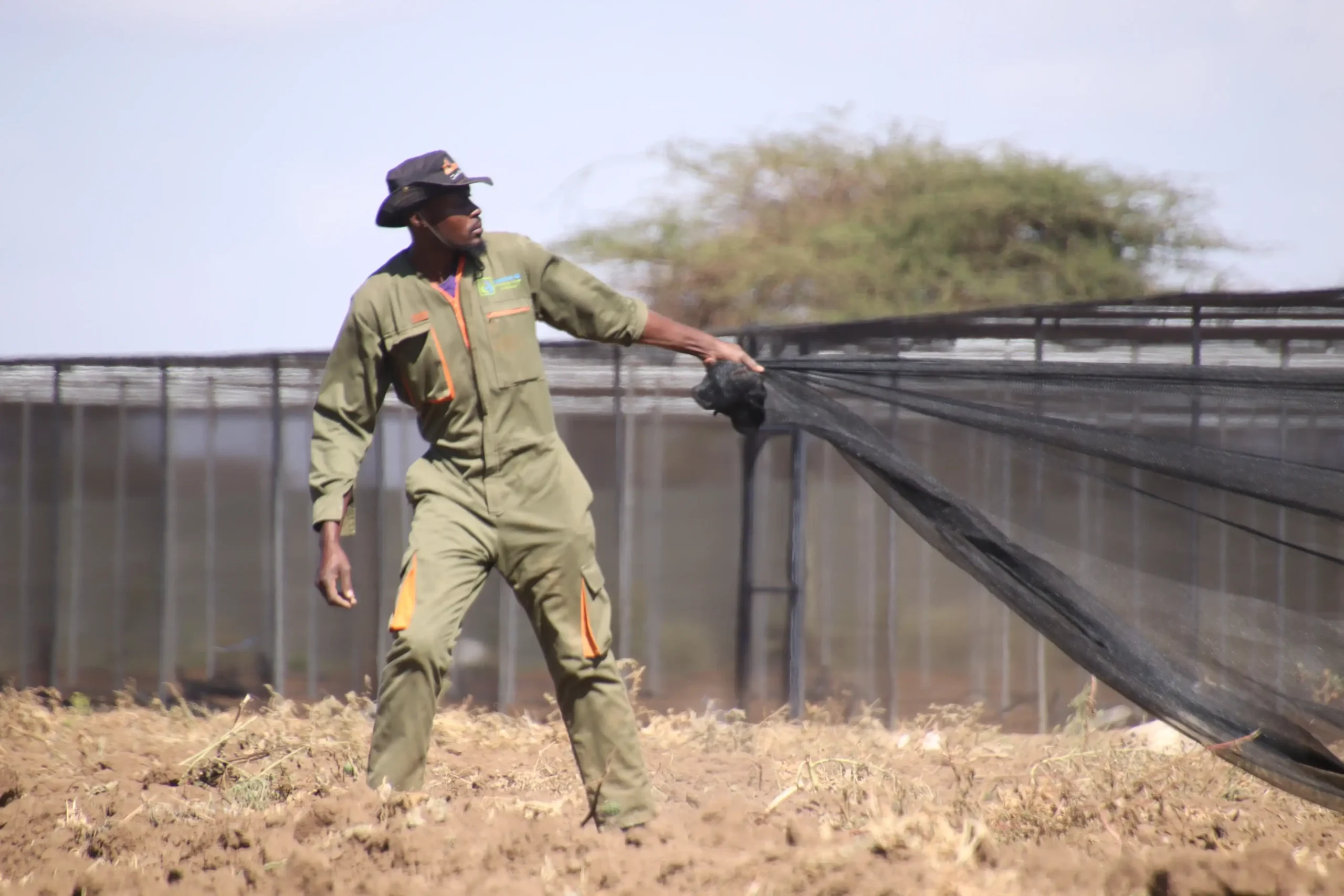
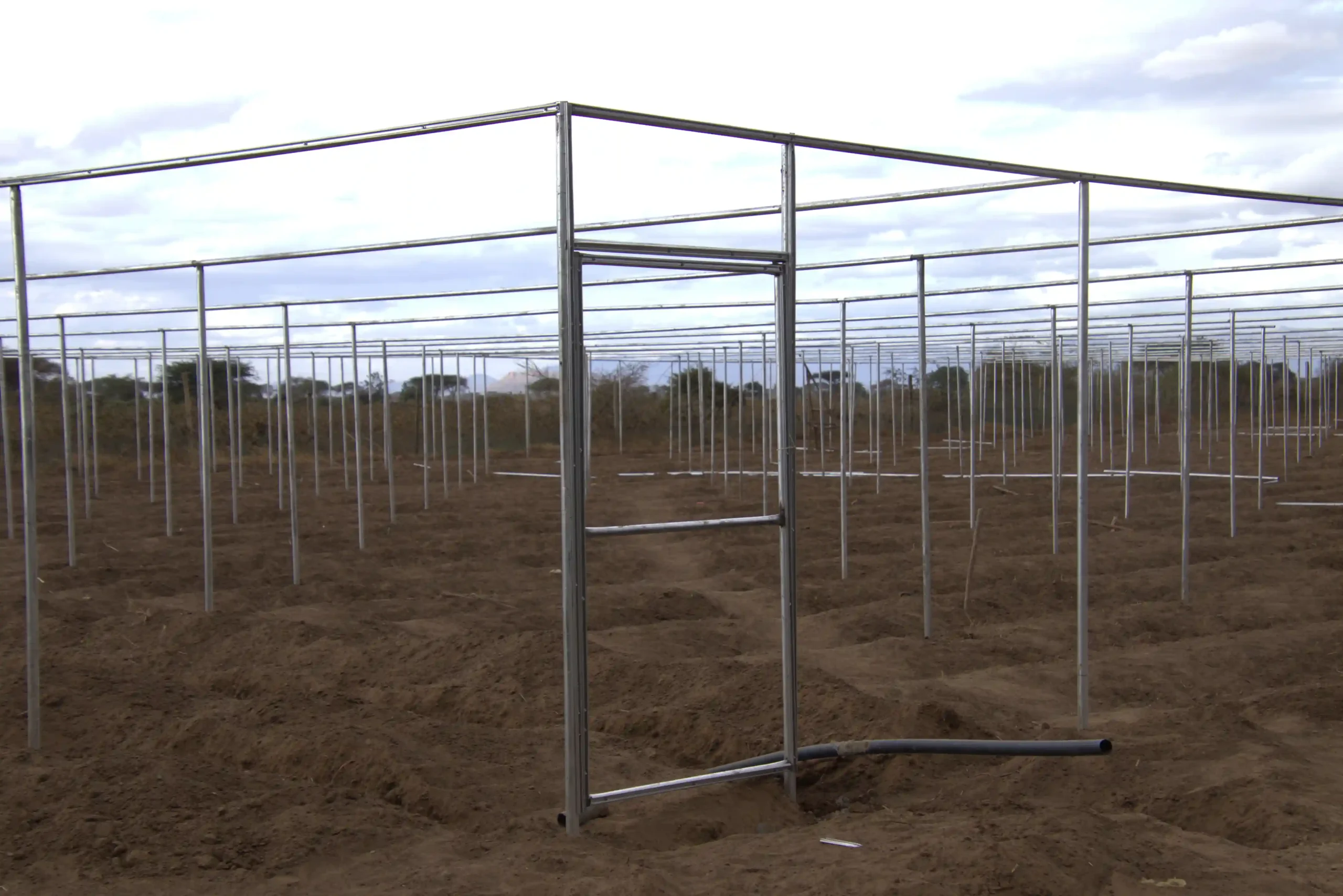
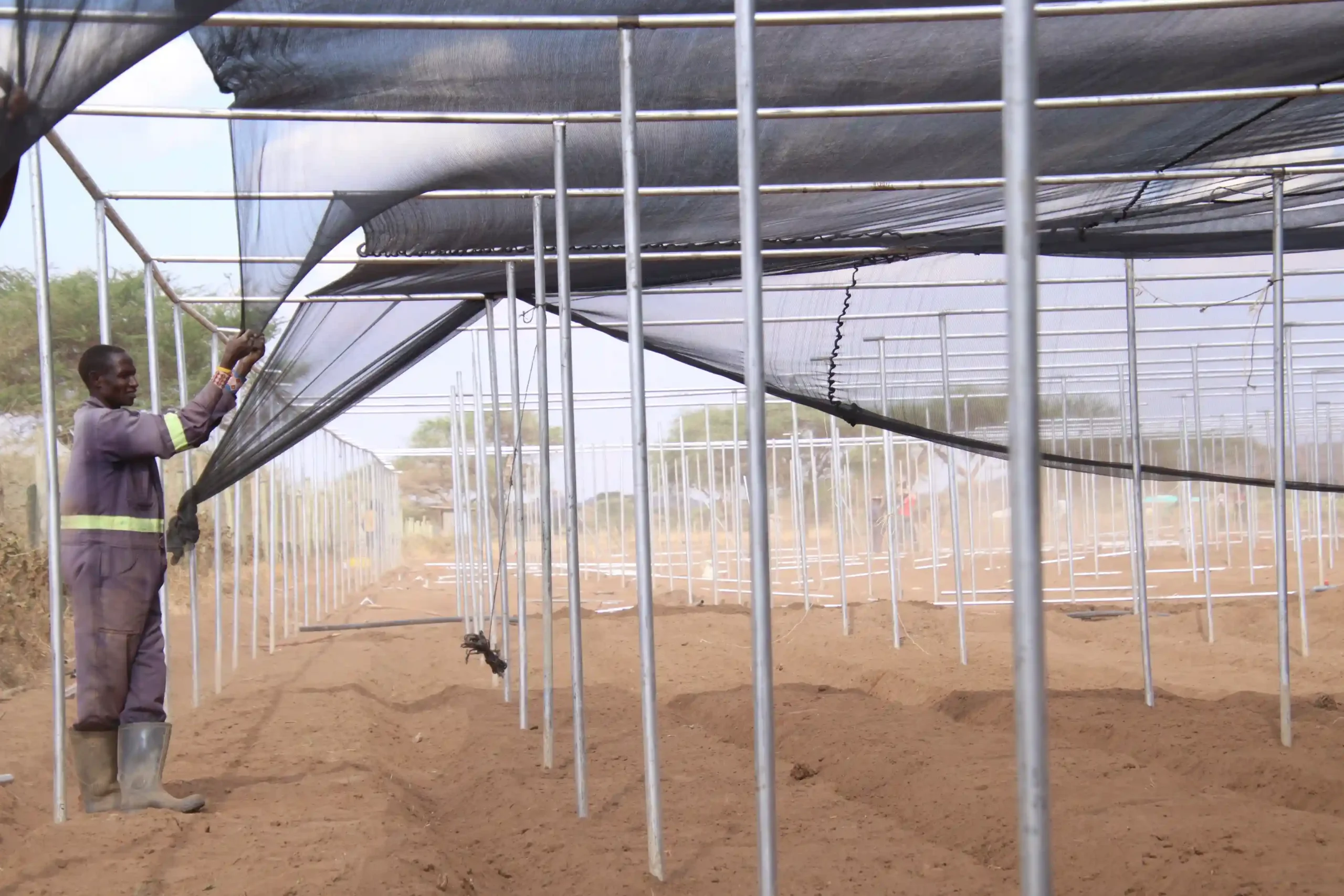
Installation started with the poles. Metallic galvanized poles were erected across the site first, set into the holes dug during groundwork. Once the poles were up and firm, the netting went on next.
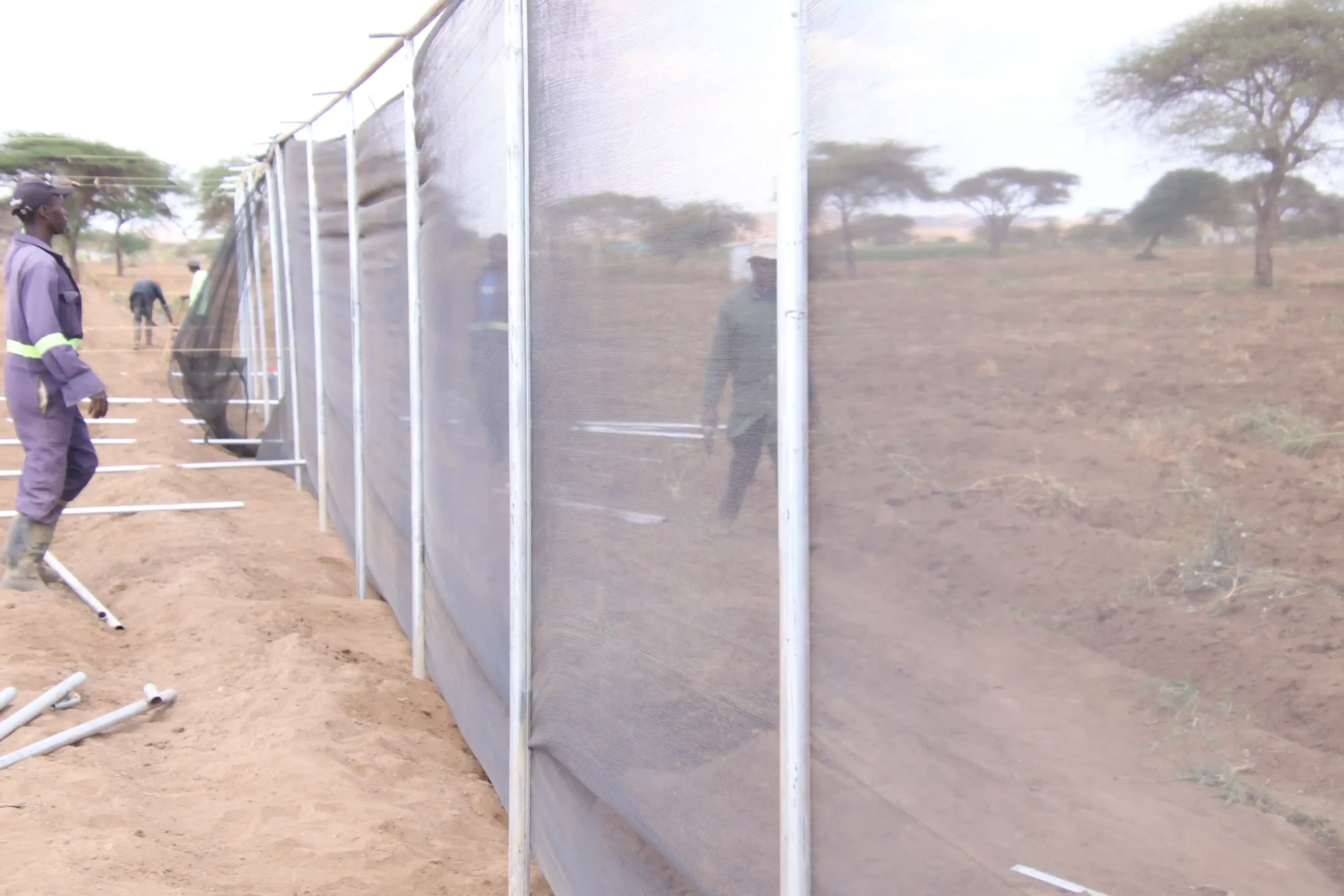
The 55% shade net was fixed to the poles using wires. This holds the netting tight and keeps it in place across the full structure, covering the 270m by 35m area. Wire fixing is a solid method, it keeps the net secure even as the structure takes on wind and weather over time.
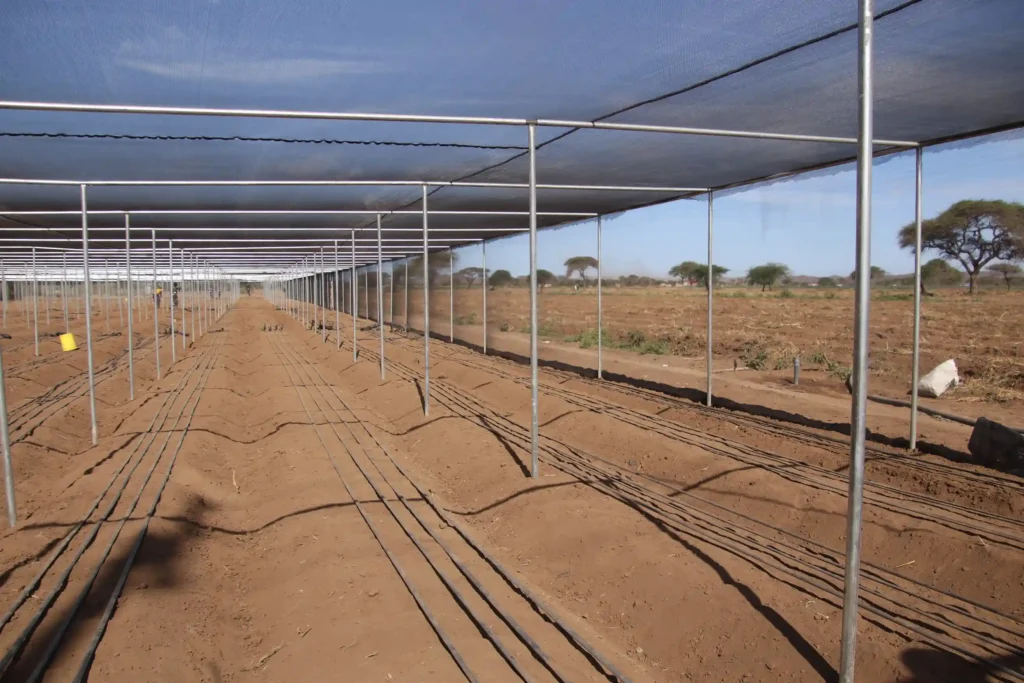
With poles up and netting fixed, the shade house structure was complete. Aqua Hub Kenya handles installation this way on every project, poles first, netting after.
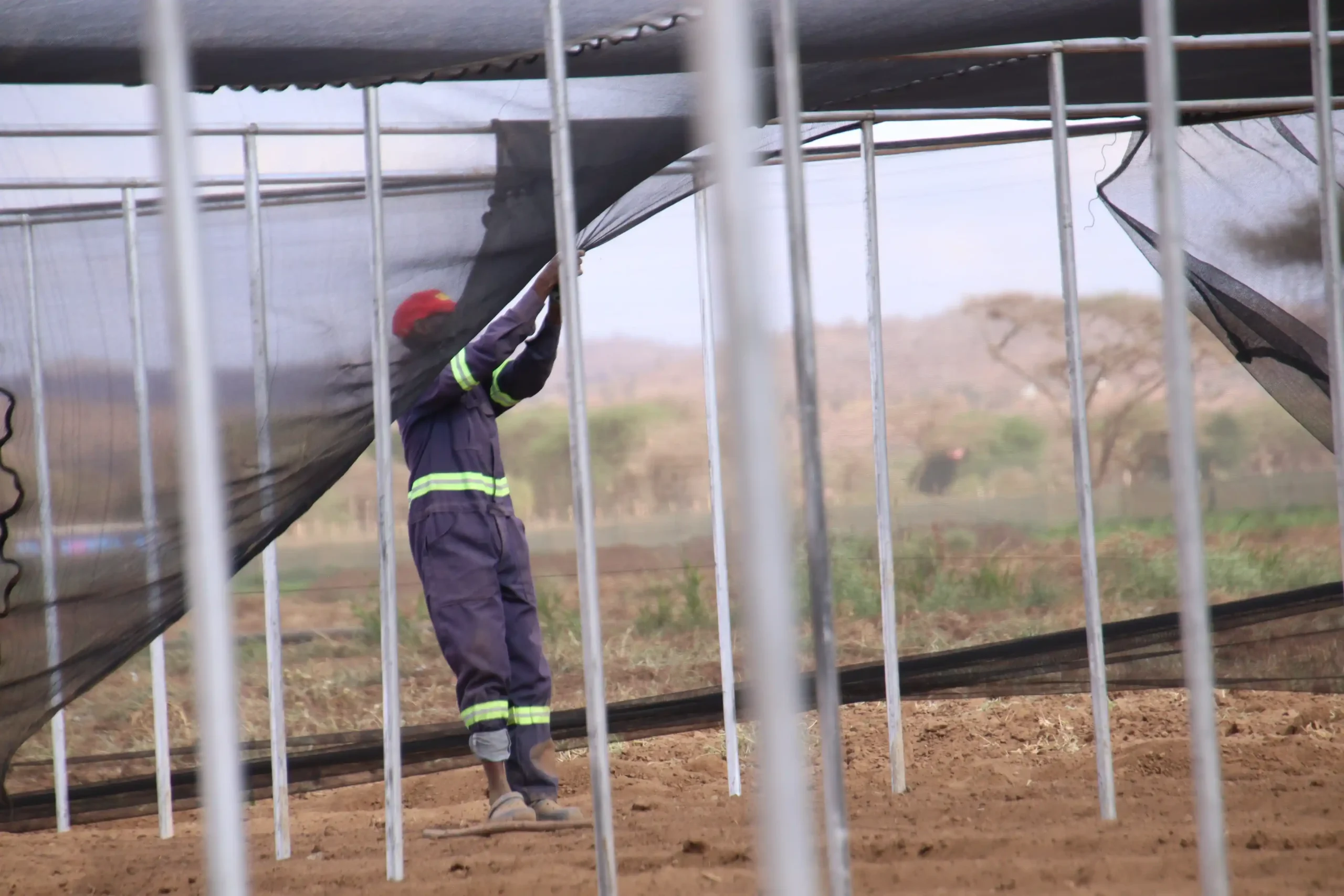
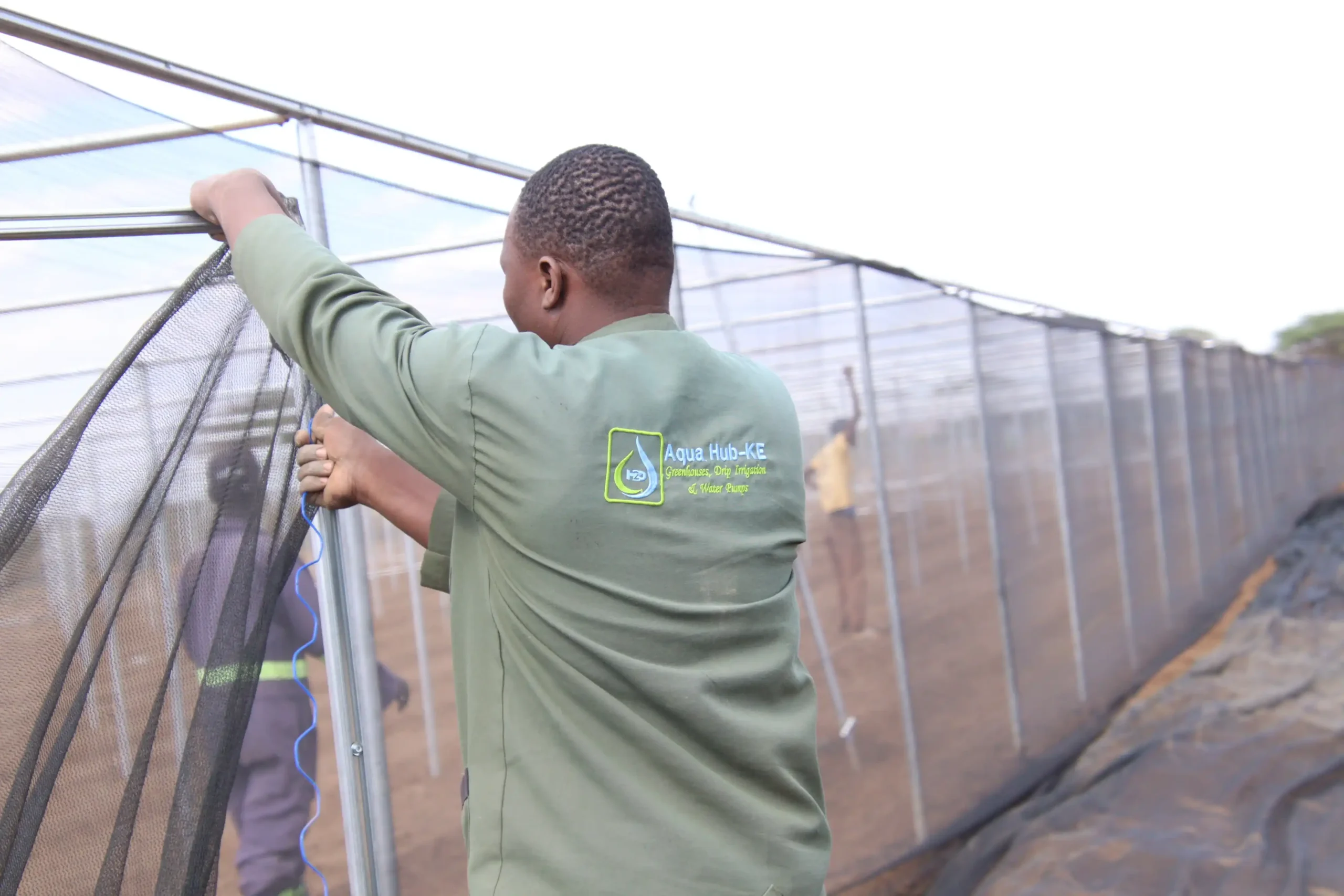
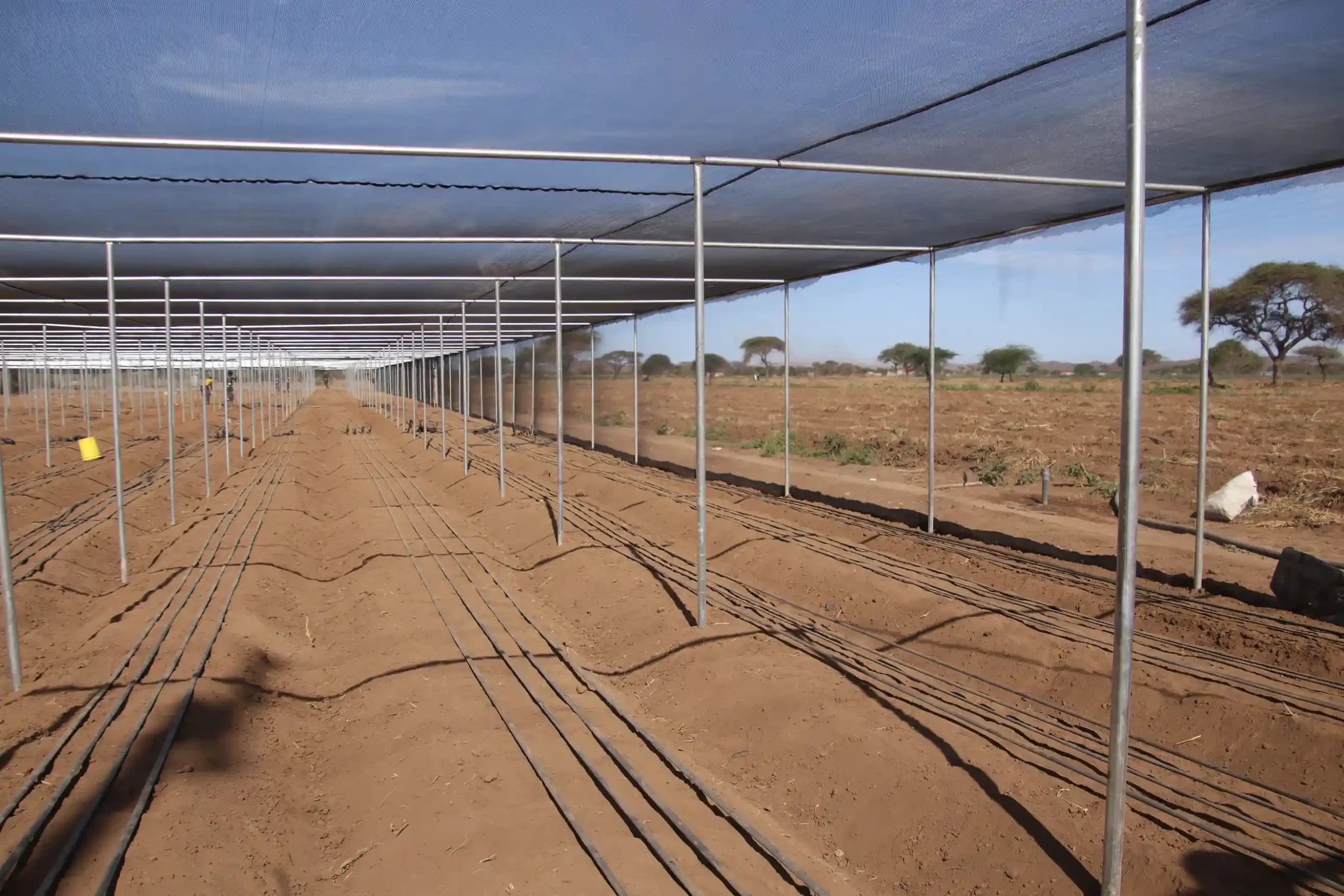
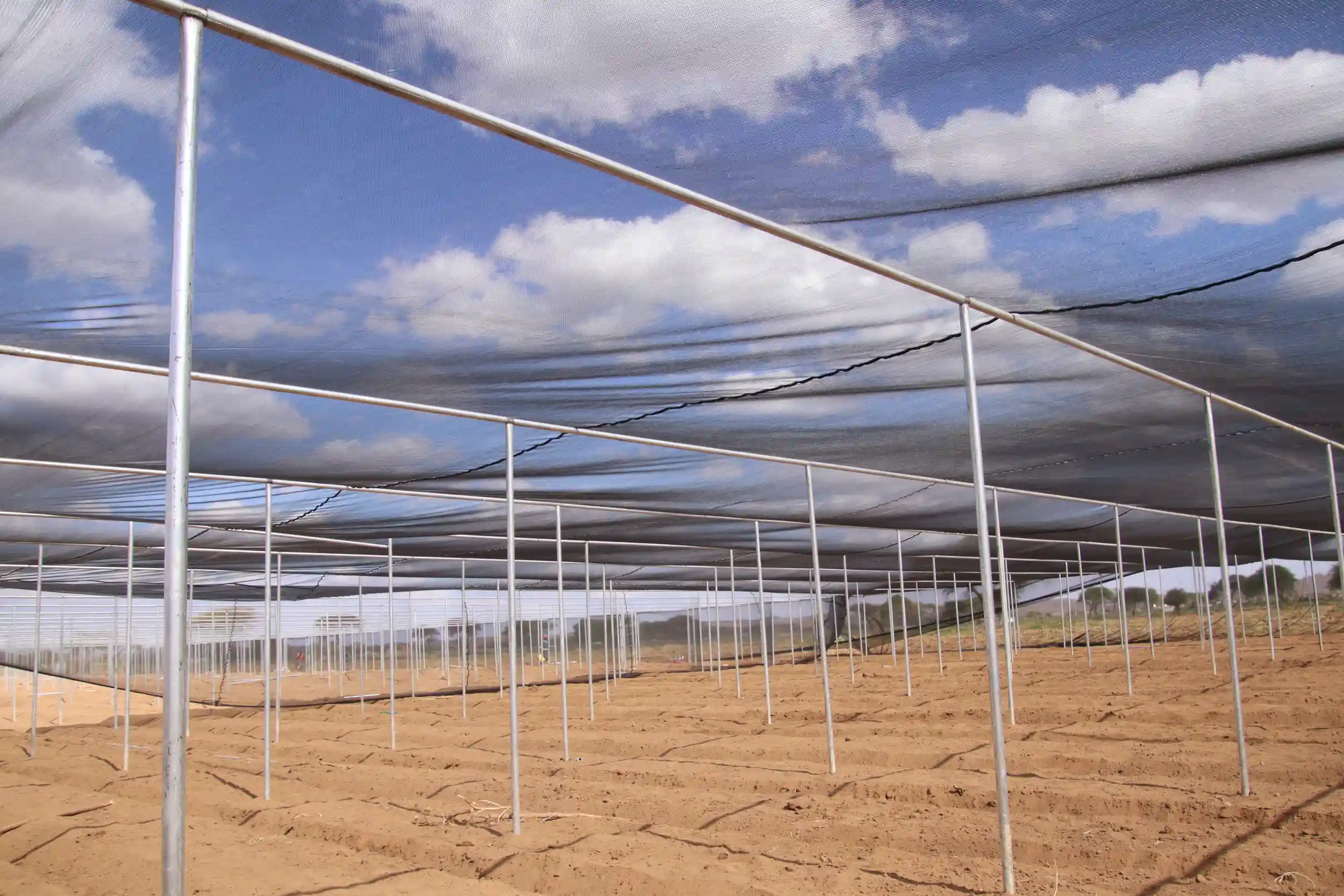
Once the structure was up, the installation team went through it visually. Poles were checked for stability, and the netting was checked across the full 270m by 35m area for tension and fit, making sure there were no gaps at the edges where FCM could get in.
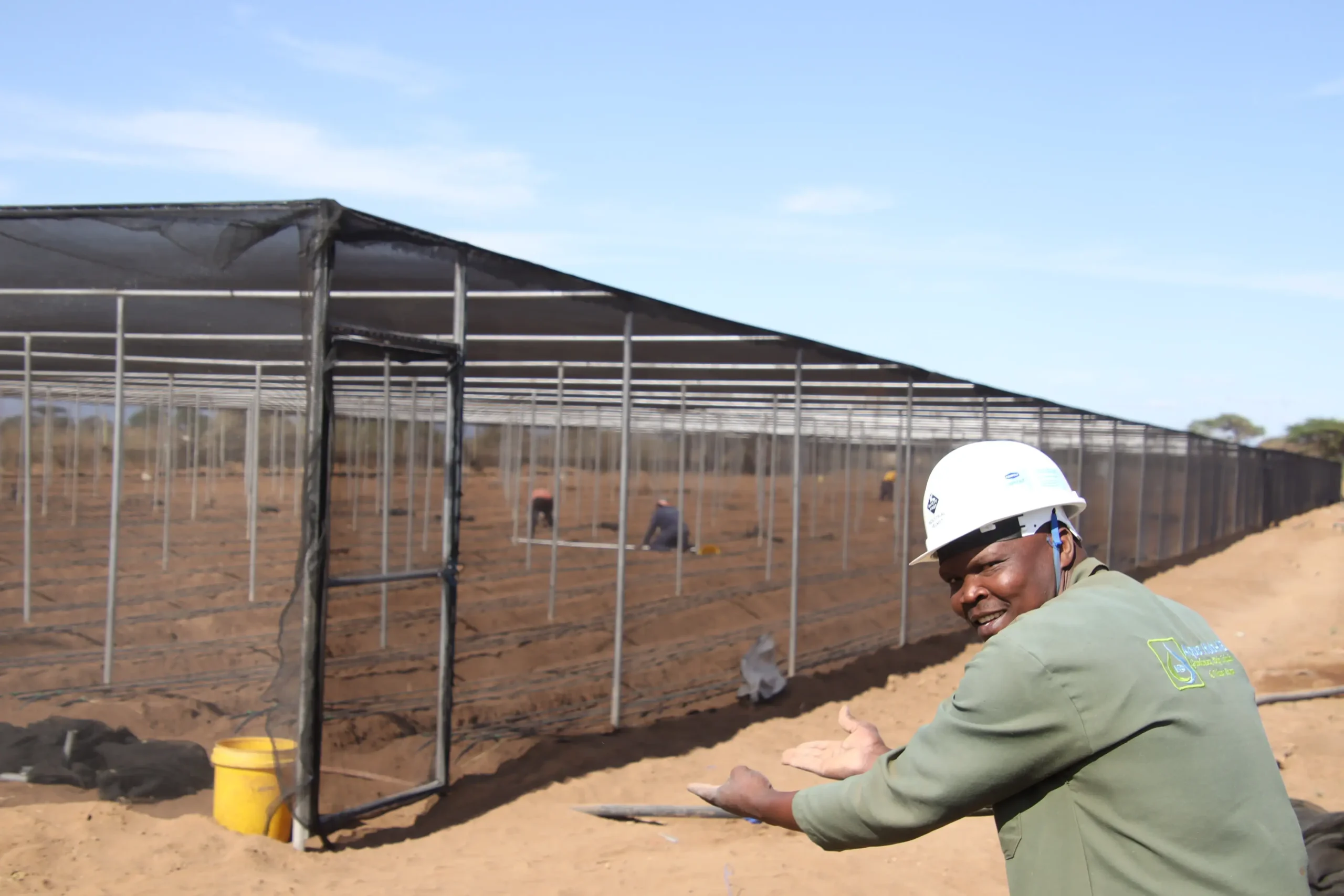
The client then walked the site with the team. This gave a chance to look over the finished structure together, poles, netting, and wire fixing points, before the project was signed off as complete.
That combination, the installation team’s own inspection and the client walkthrough, was how the Kimana structure was confirmed ready before handover.
The walkthrough with the client led into a formal handover. A handover document was signed off, closing out the project and confirming the structure was delivered as agreed.
With handover complete, the shade house structure stands ready at the Kimana farm. The full 270m by 35m structure is up, poles set and netting fixed at 55%, built to handle FCM pest pressure on export chilli. Therefore, the structure is set and ready for chilli farming to begin.
THE OUTCOME
Before
The school relied on an inconsistent water supply, creating challenges for daily operations and sanitation.
After
The completed borehole and storage system provides the school with a dedicated water infrastructure solution designed around its daily requirements.
Client Testimonial
COMMON QUESTIONS
FAQs
Why are chillies grown in shade house
Chillies are grown in a shade house because it protects the crop from pests, especially FCM, while giving better control over heat and water use. Open field chilli is exposed to all of this. A shade house cuts the risk down.
What is FCM
FCM stands for False Codling Moth. It is a pest that affects chilli and other crops, and it is one of the main reasons chilli shipments get intercepted at EU borders. FCM is a serious problem for any farmer targeting export.
Does chilli have market in Kenya
Chilli has a strong market in Kenya, especially for export. Countries like the UK, Germany, and the Netherlands buy Kenyan chilli. Local demand exists too, but export is where the bigger returns are.
Common pest and diseases
Common pests and diseases in chilli farming include FCM, aphids, thrips, and fungal diseases like blight. FCM is the one that matters most for export chilli, since it is closely checked at the border.
Where to buy shade net
Shade net can be bought from agricultural suppliers across Kenya. Aqua Hub Kenya supplies and installs shade net, including full shade house structures like the one built in Kimana.
Sourcing of technicians for shade house installation
Technicians for shade house installation can be sourced through suppliers who also do installation work. Aqua Hub Kenya handles this from site visit through to handover, so the farmer does not need to source labour separately.
Is chilli farming profitable
Chilli farming is profitable, particularly for export. Returns are higher than most local market crops, though profitability depends on managing pests like FCM and meeting the standards buyers require.
Cost of 1 acre chilli farming under shade net
Cost of 1 acre chilli farming under shade net depends on the shade net percentage, the structure type, and the site conditions. Poles, netting, fittings, and installation all factor into the total cost.
Where to find shade net suppliers near me
Shade net suppliers can be found in most major agricultural hubs in Kenya. Aqua Hub Kenya supplies and installs shade net across the country, including in Kajiado County.
What percentage of shade net is best for chilli farming
50 to 55 percent shade net works well for chilli farming. It cuts heat and pest exposure without blocking too much of the sunlight the crop needs.
Can rainwater pass through shade net
Rainwater passes through shade net. The mesh design lets water through to reach the soil, which is one reason shade net works better than fully enclosed structures for some crops.
How long does a shade net structure last
A shade net structure lasts 3 to 5 years, depending on the quality of the net and how well the structure is maintained.
What size of shade house do I need for chilli farming
Size of shade house needed for chilli farming depends on the land available and the scale of production. The Kimana project used a 270m by 35m structure, built for the size of that farm.
How do I control FCM in chilli farming
FCM in chilli farming is controlled through a mix of methods, and shade net is one of the most effective. It creates a physical barrier that keeps the pest away from the crop, which matters most for chilli headed to export markets.
Have a similar project in mind?
Tell us about your site and we’ll get back to you with a free assessment.