
Kakungu, Kitui County
How a Shade House Protects Seedlings from Heat in Kitui County, Kenya
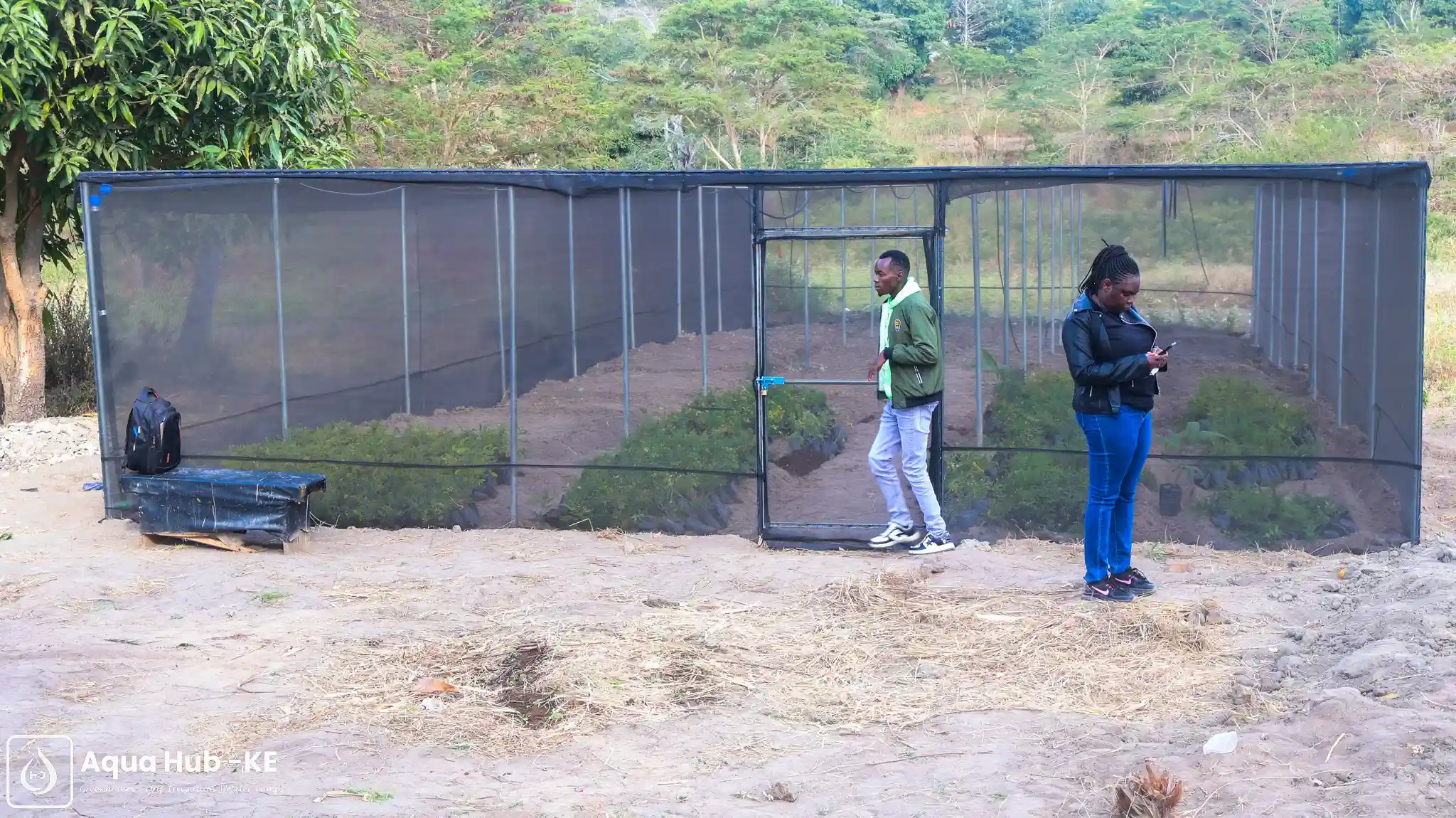
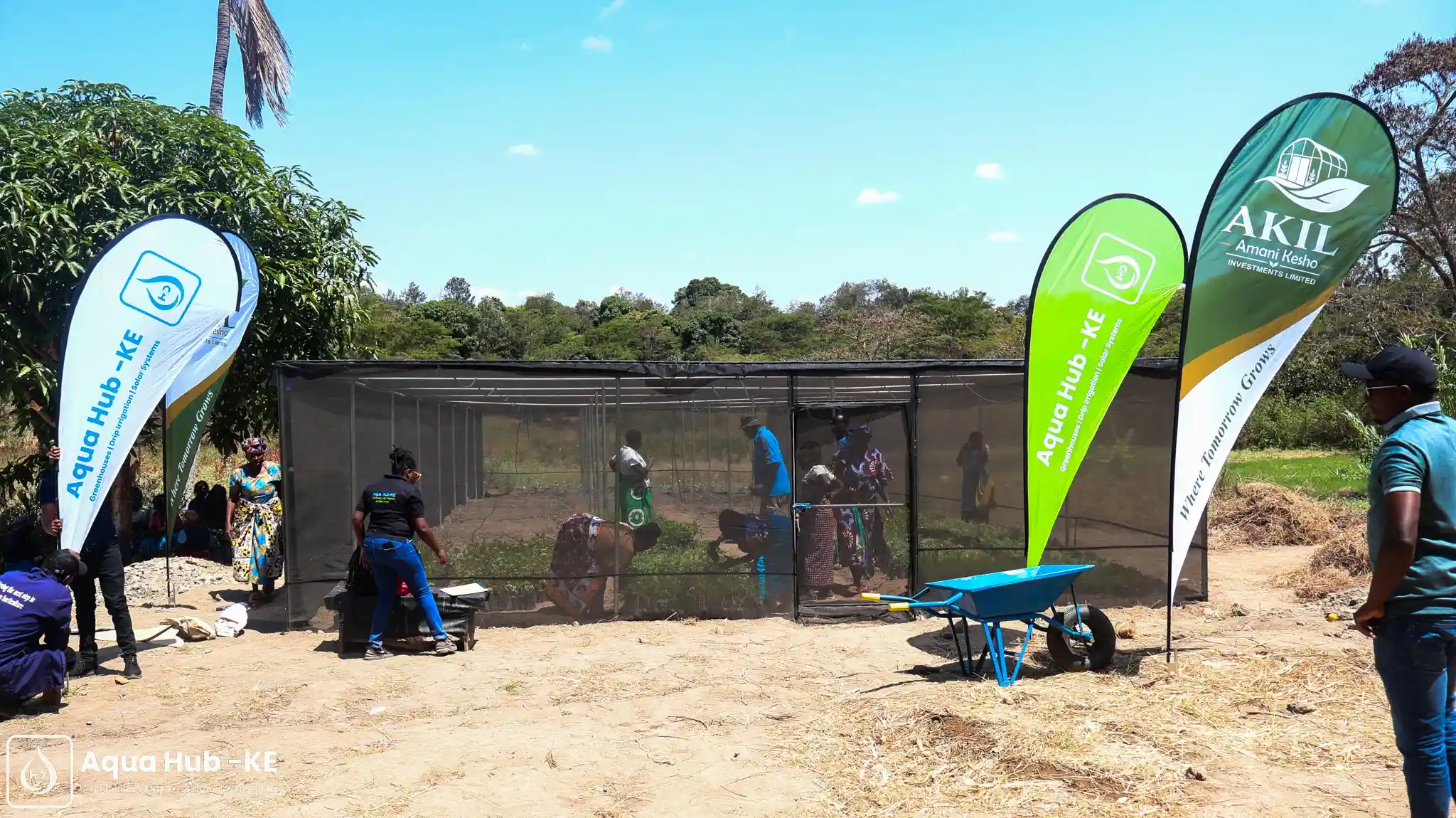
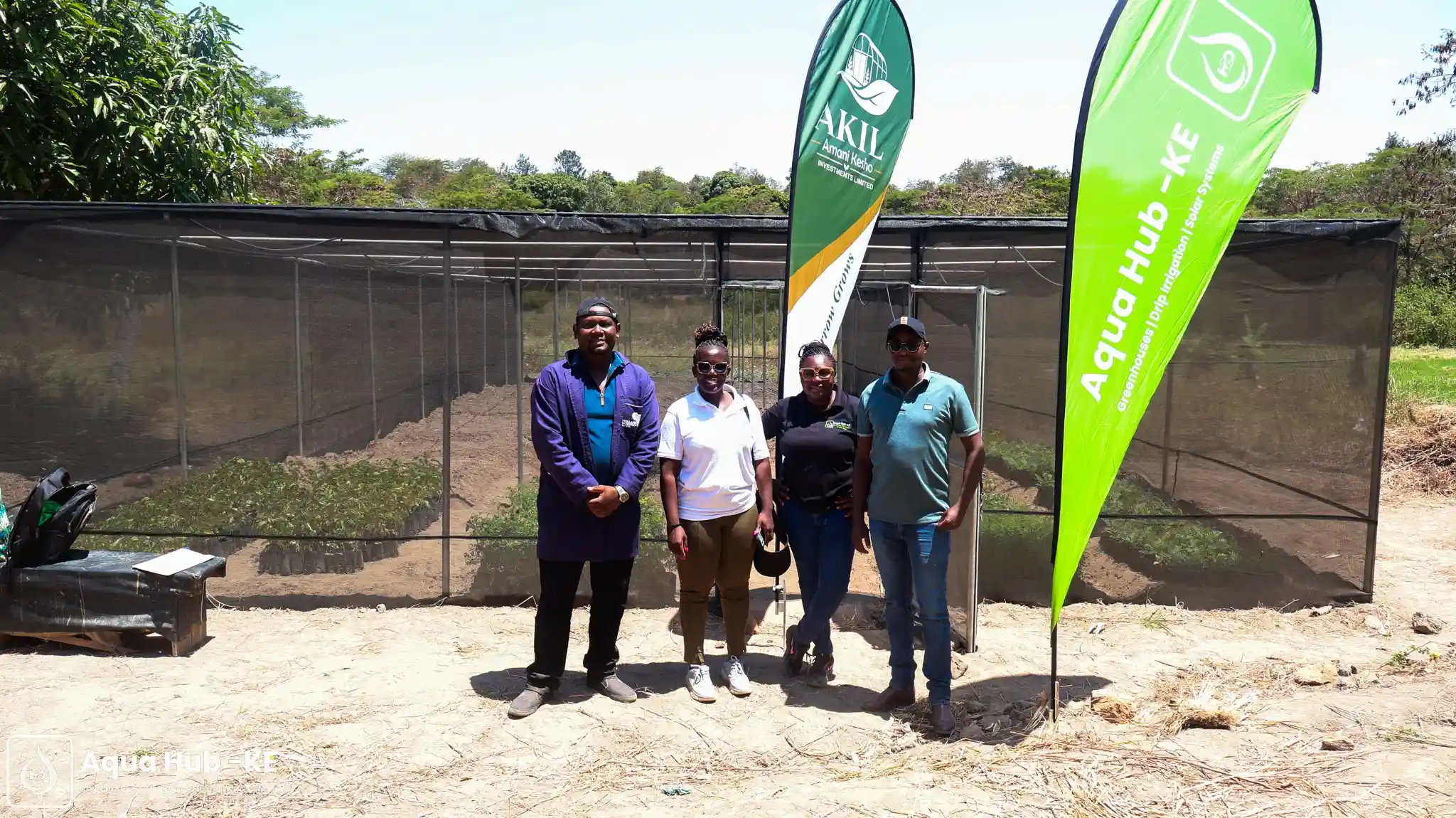
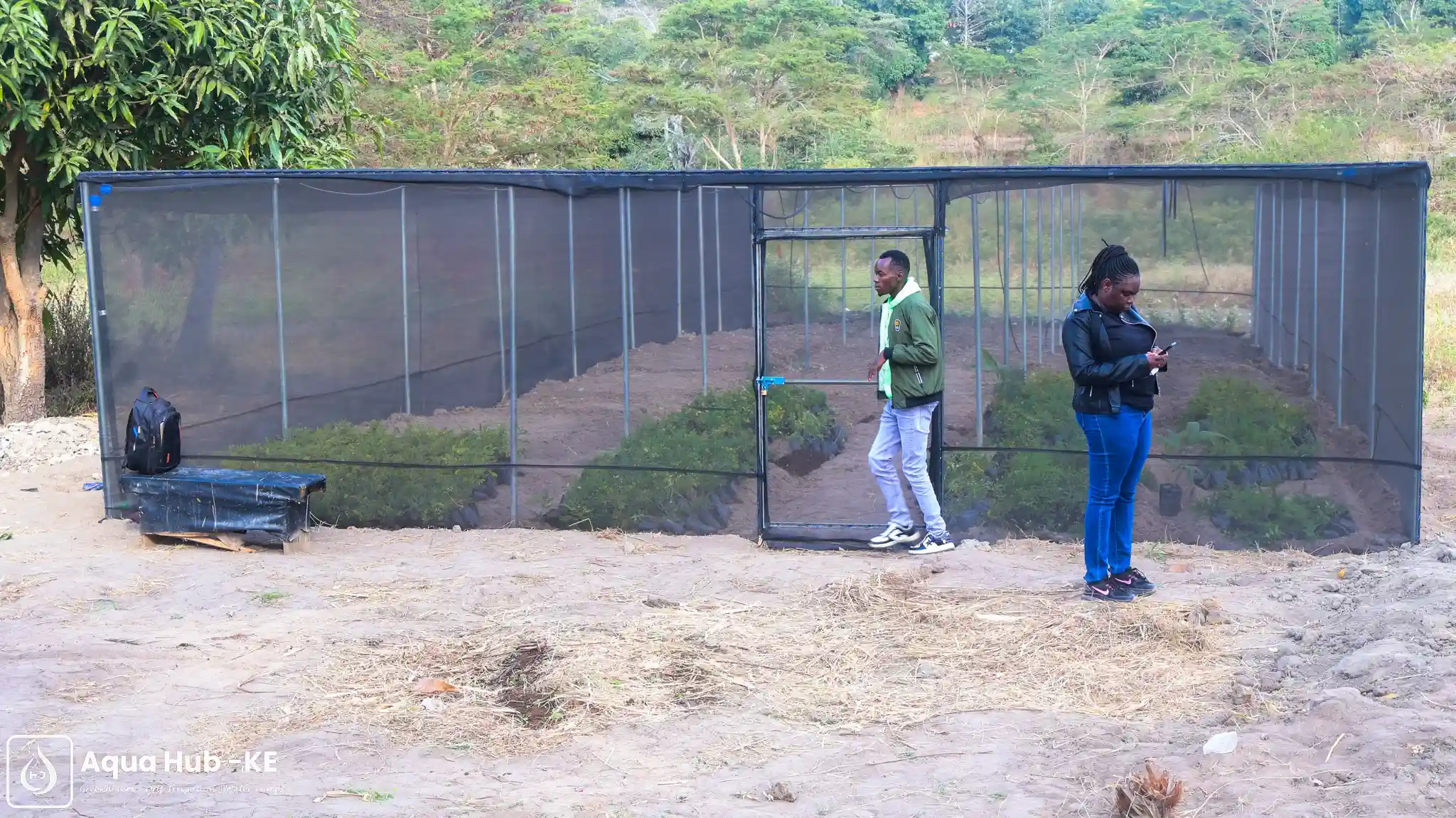
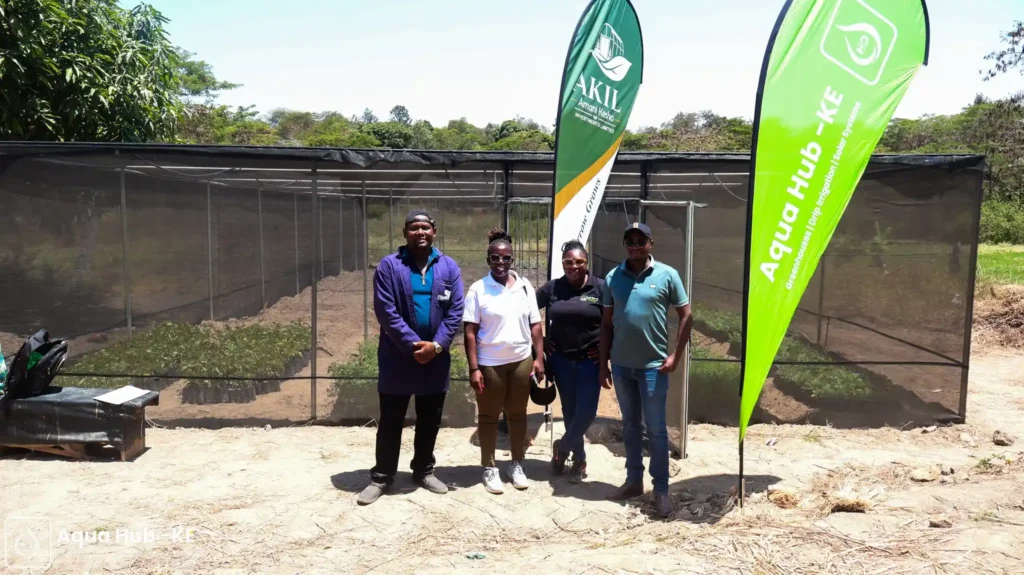
Aqua Hub Kenya built a shade house for seedling propagation in Kakungu, Kitui County. The client wanted to protect the seedlings from heat and sun. The 8 m by 24 m structure has a galvanized steel frame and is covered with UV-treated shade net. We chose a net with 75% perforation so the client can make use of rain water. Our team completed the installation in , from 22nd July to 10th August 2026.
Location
Kakungu, Kitui County
Duration
3 weeks
Completed
2026-08-10
PROJECT AT A GLANCE
What we delivered
A shade house for the client’s seedling nursery in Kakungu, Kitui County, was supplied and installed by our team.
The scope covered the steel frame and the shade net, and we finished the work within a week.
- An 8 m by 24 m shade house for seedling propagation
- A galvanized steel frame
- UV-treated shade net with 75% perforation, chosen so the client can make use of rain water
- Protection for the seedlings from heat and sun
The challenge
The client wanted to propagate seedlings in Kakungu, Kitui County, where strong sun and heat can damage young plants and dry out the soil around them. Seedlings are fragile, and a few days of harsh conditions can set back a whole batch. Without cover, the nursery risked slower growth and lost plants, which would have cost the client time and money. The client needed shelter that kept the heat off without shutting out rain water, which the farm wanted to make use of.
Our approach
We built the shade house on a galvanized steel frame, chosen because it resists rust and holds the net firmly in place. We covered it with UV-treated shade net, which lasts in strong sunlight and reduces the heat and sun reaching the seedlings. We chose a net with 75% perforation so the client can make use of rain water. The 8 m by 24 m structure gave the nursery space for its seedlings, and the installation took 7 days.
HOW IT HAPPENED
The process, start to finish
Every Aqua Hub Kenya project follows the same stages. Here’s exactly how this one went, with photos and video from each visit.
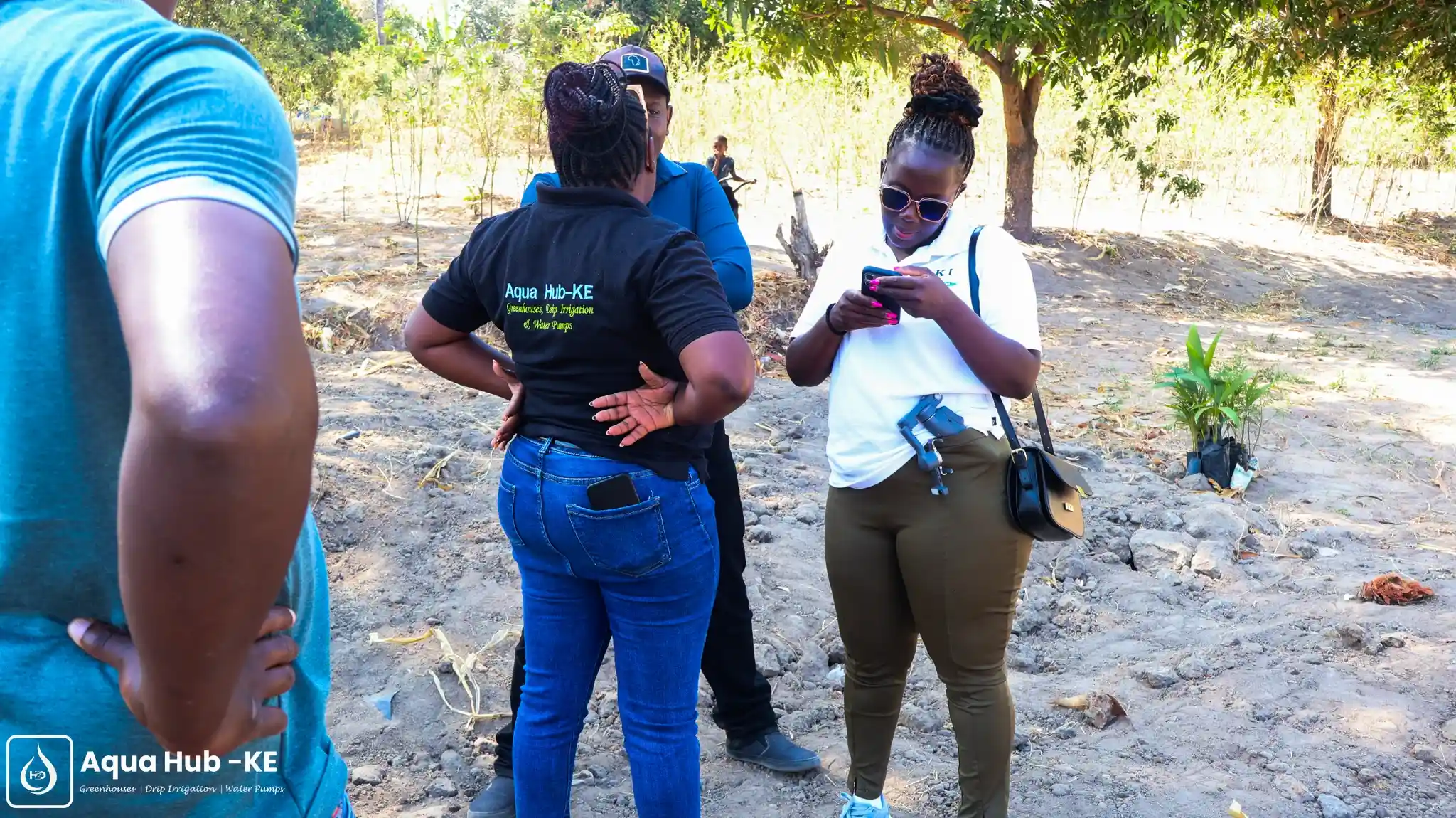
Shortly before the installation, our team visited the farm in Kakungu to look over the site. We checked the space and the ground where the structure would stand, and we noted how exposed the area was to sun and heat, as well as to wind. We then talked the client through our recommendations on the size of the shade house and the type of net. The client took these in, which settled the design before the work began.
After that visit, we sent the client a proposal for the shade house. It set out the 8 m by 24 m size and the galvanized steel frame, along with the specification of the UV-treated shade net. The client agreed to the terms, and we fixed the installation dates. The client also arranged casual labourers to work alongside our team, which helped the work finish within the week.
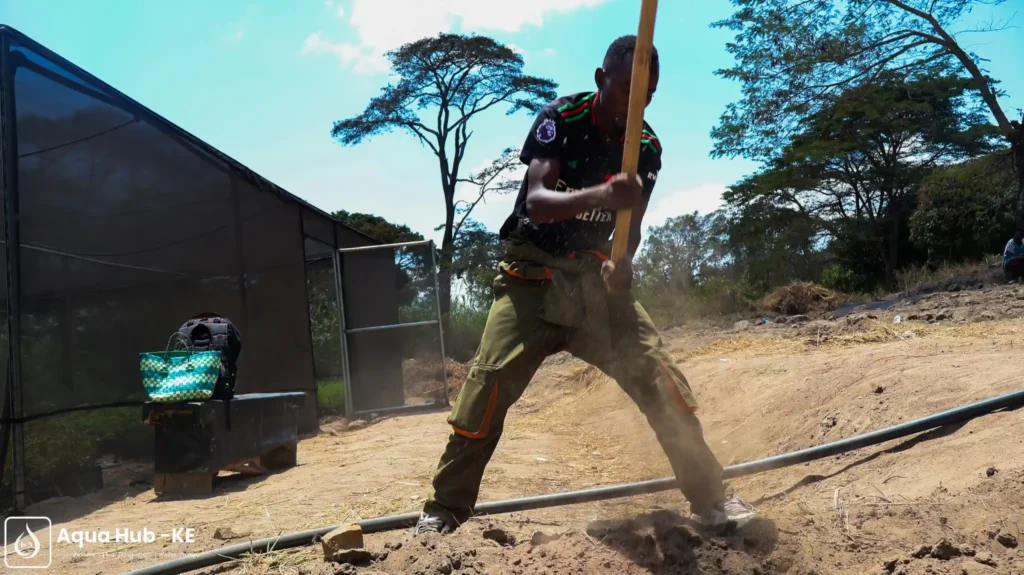
Our team moved the galvanized steel poles and fittings to the site, along with the UV-treated shade net and the tools needed to fit them. We then marked out the 8 m by 24 m footprint on the ground so the structure would sit square. Next, we dug the post holes for the frame. With the casual labourers arranged by the client on hand, the groundwork moved quickly and the site was ready for the frame.”
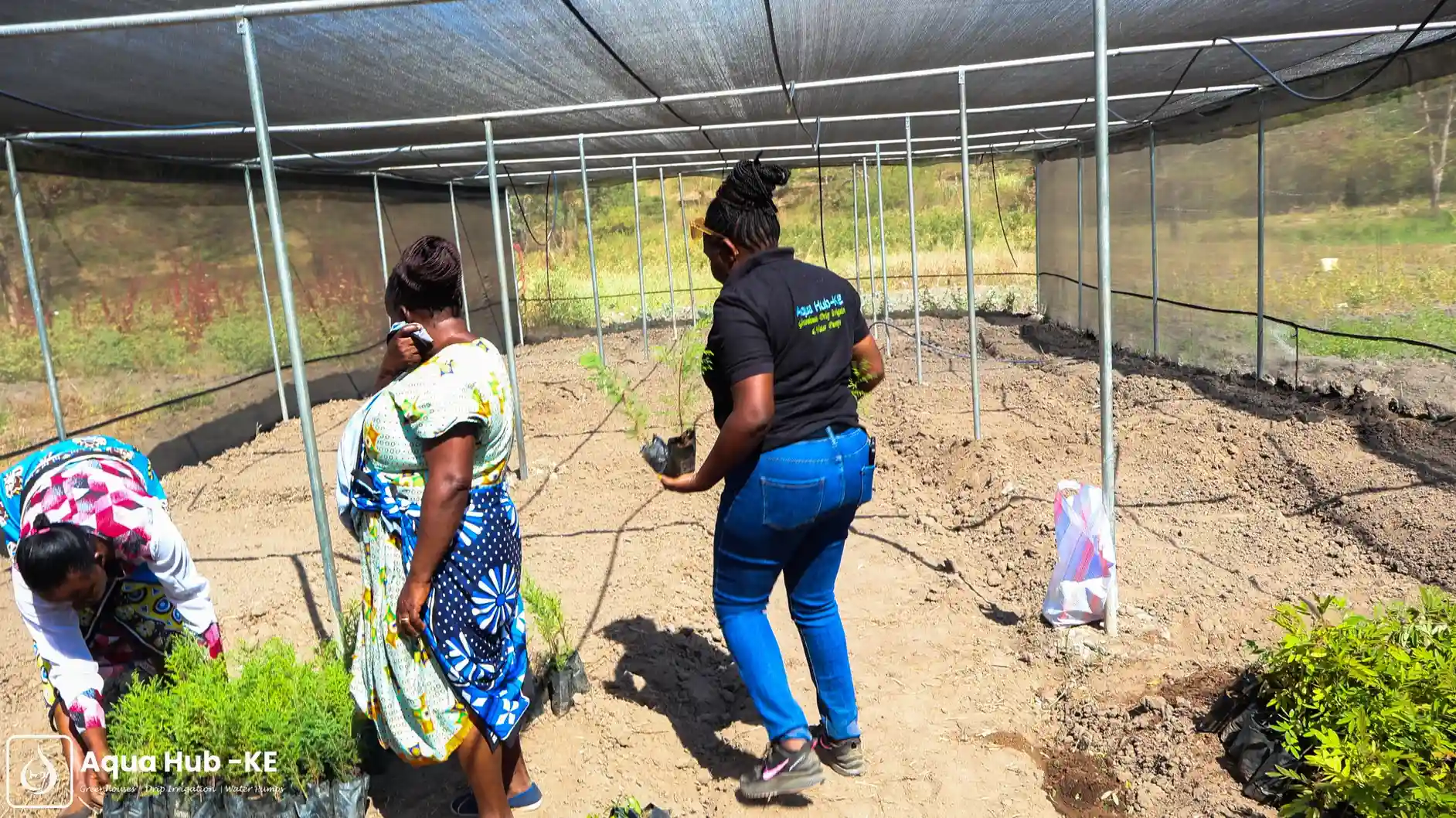
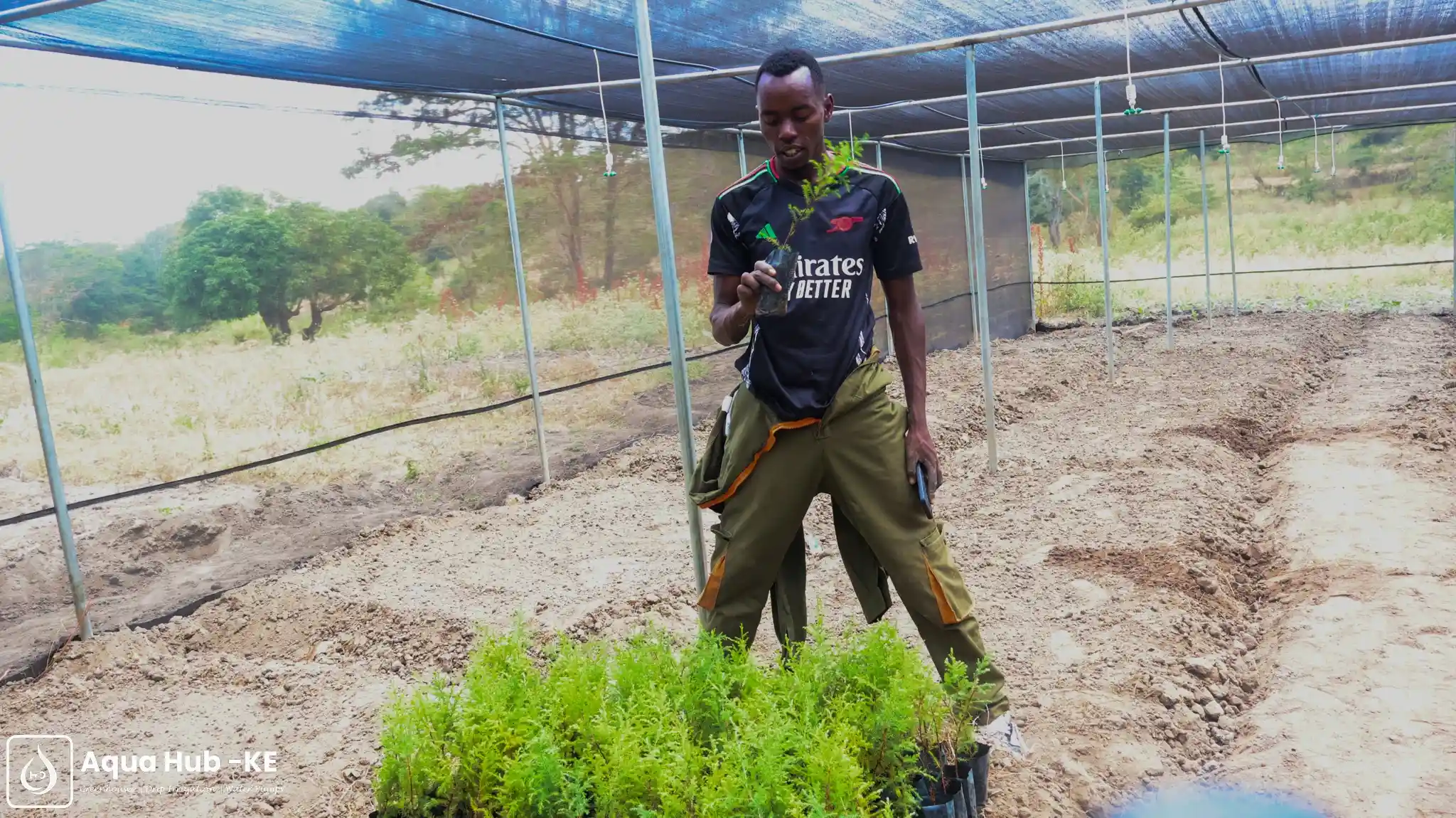
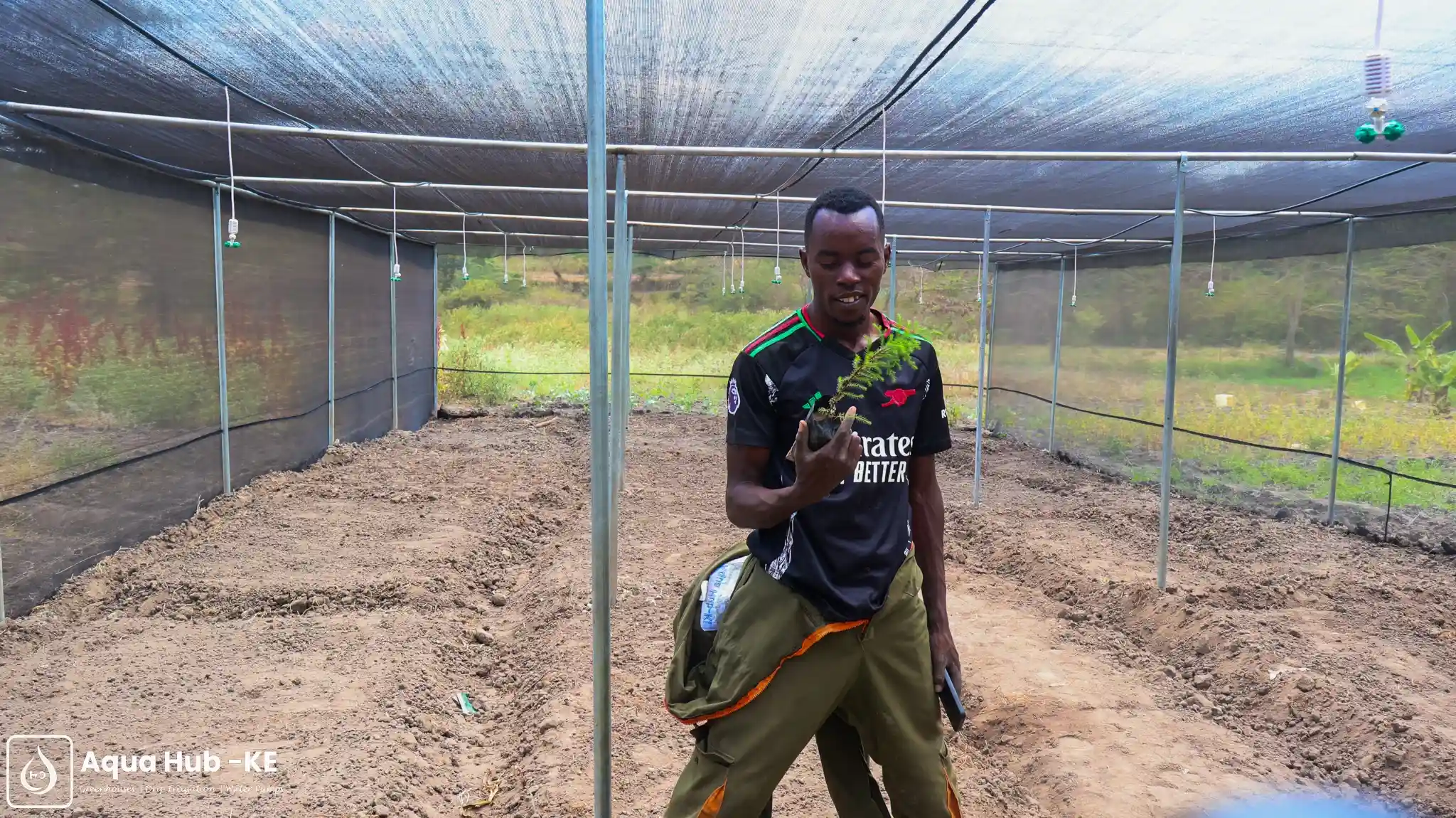
We set the galvanized steel posts in the dug holes and concreted them so the frame stood firm. Cross members and roof supports followed, joining the posts into the full 8 m by 24 m structure. We then stretched the UV-treated shade net over the roof and fixed it along the sides, securing it with clips and wiggle wires. Finally, we fitted a door at the entrance, so the client can walk into the shade house and work among the seedlings.
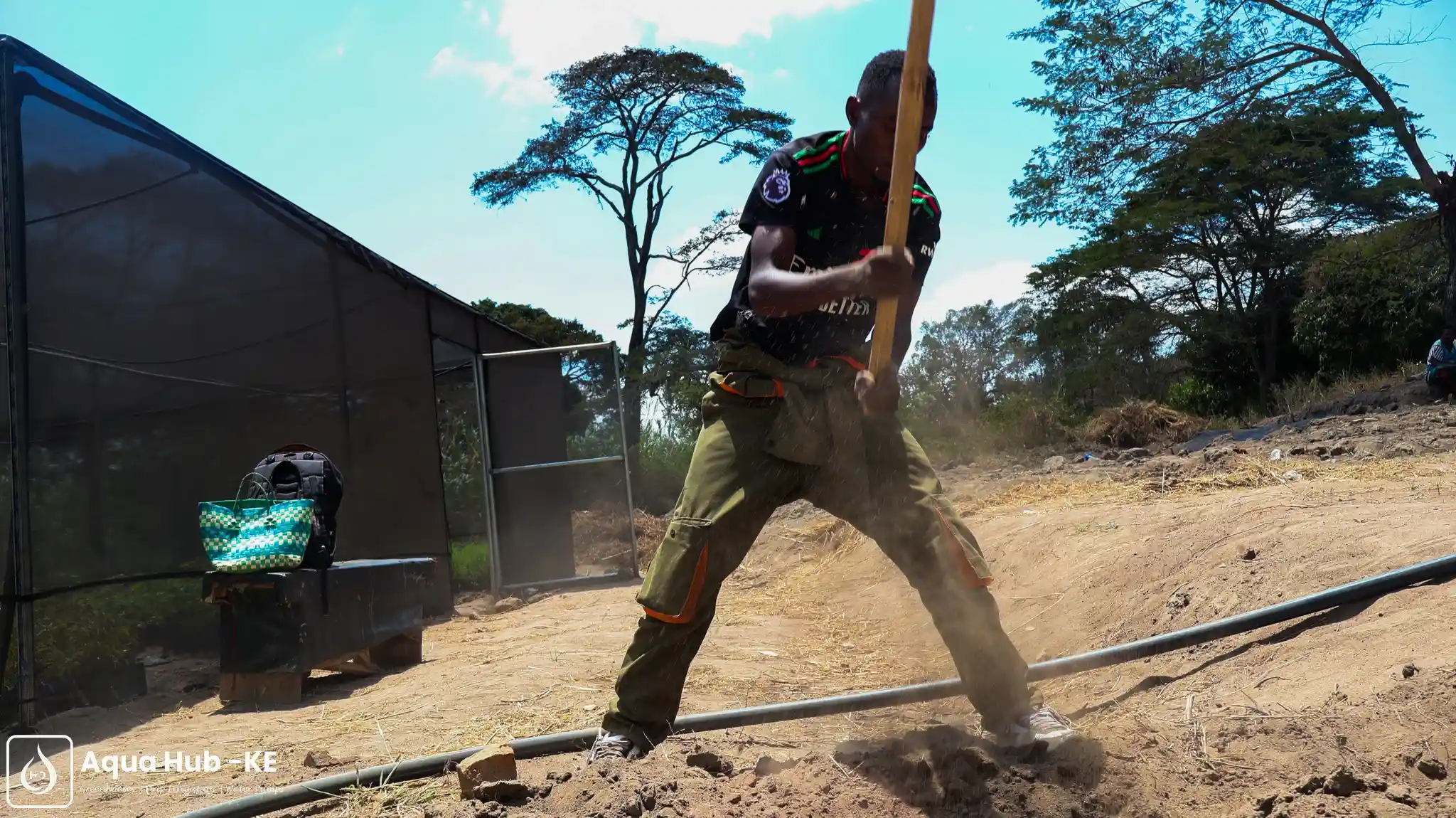
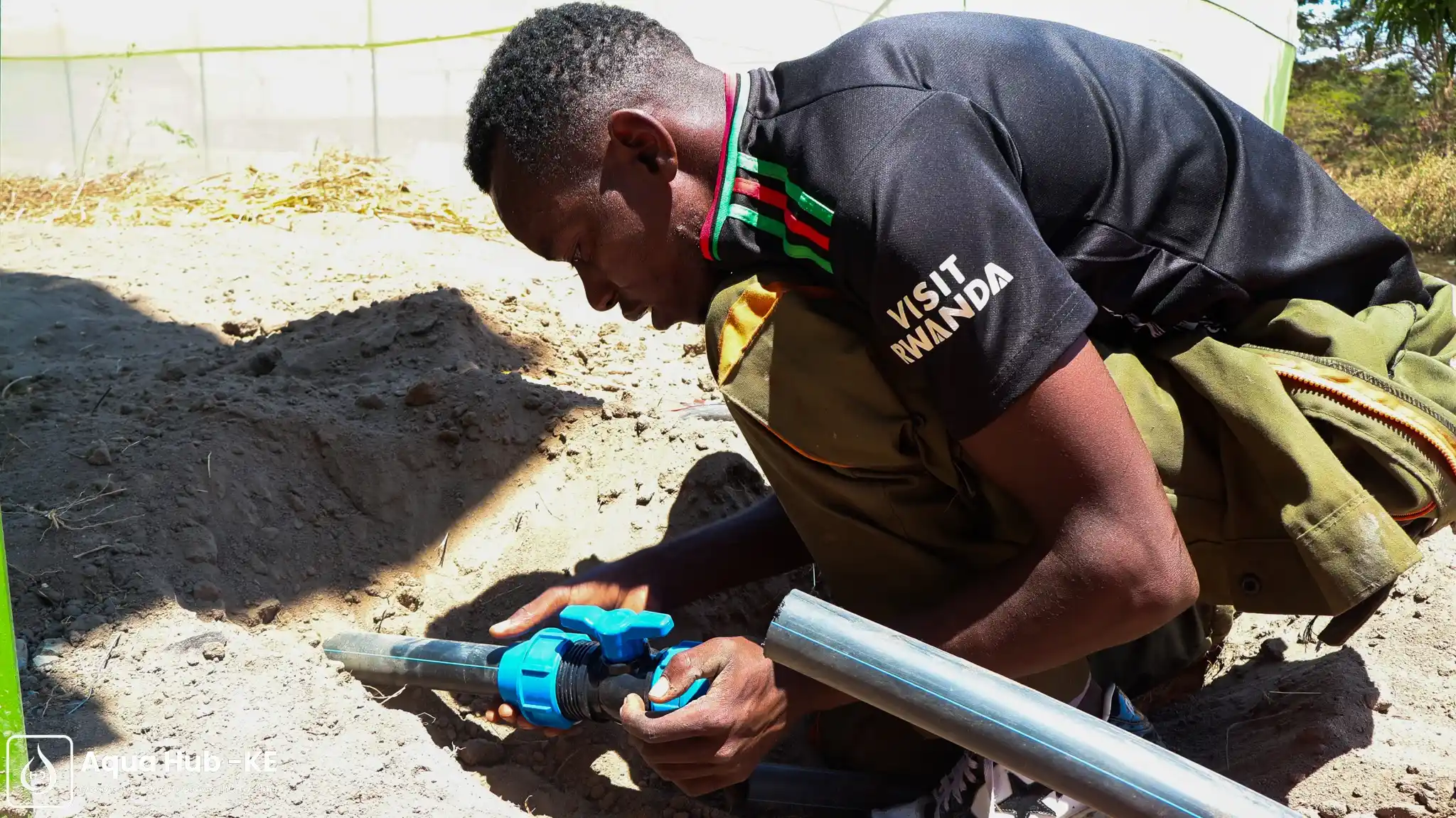
Once the frame was up, we checked that the posts stood upright and firmly set, and that the structure was level and square. We went over the joints and connections to confirm they were secure. We then looked over the net across the roof and sides, making sure it was tight, with no sagging or gaps, and that it was fixed securely at the edges. These checks gave us confidence that the shade house was sound before our team left the site
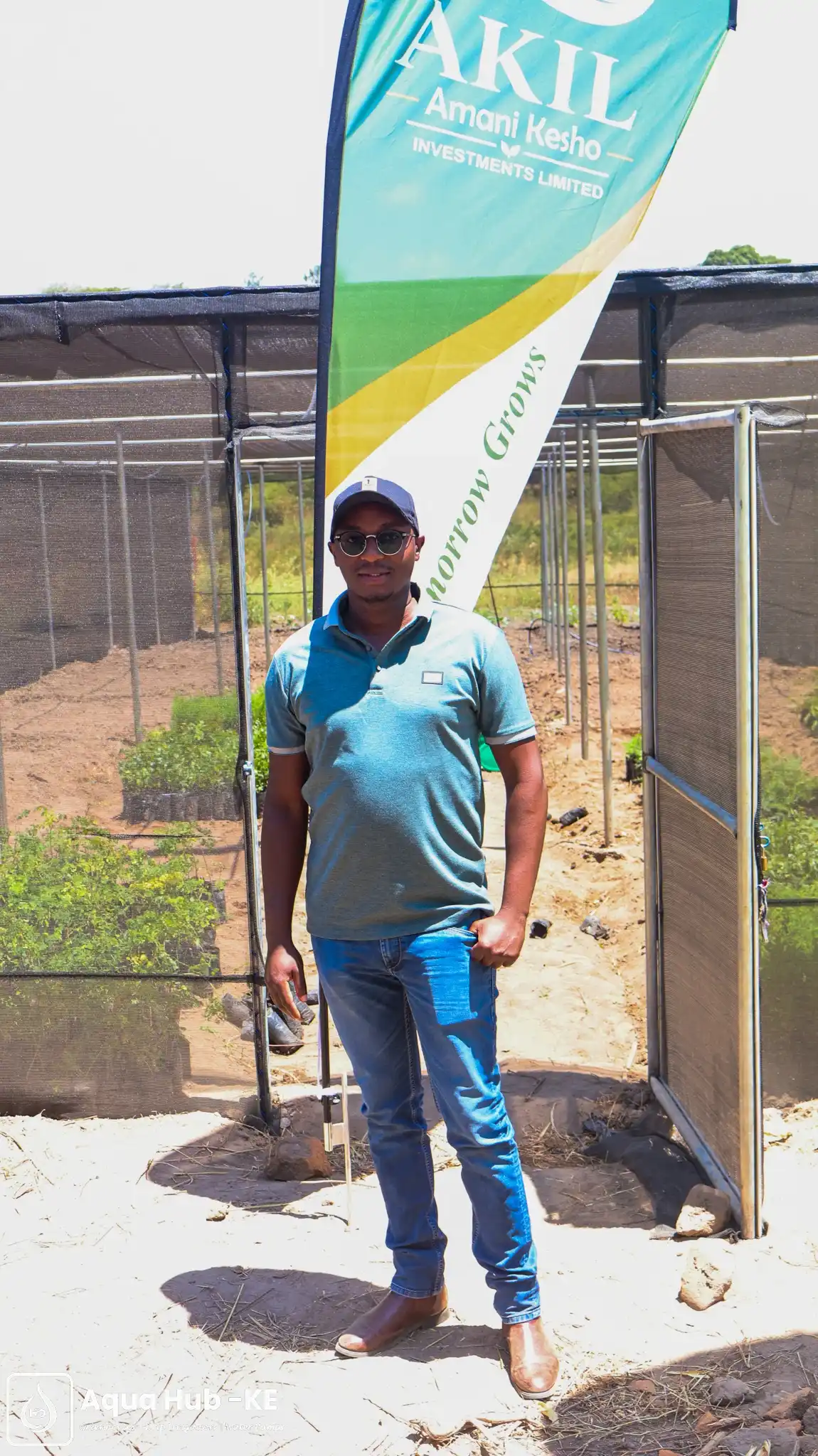
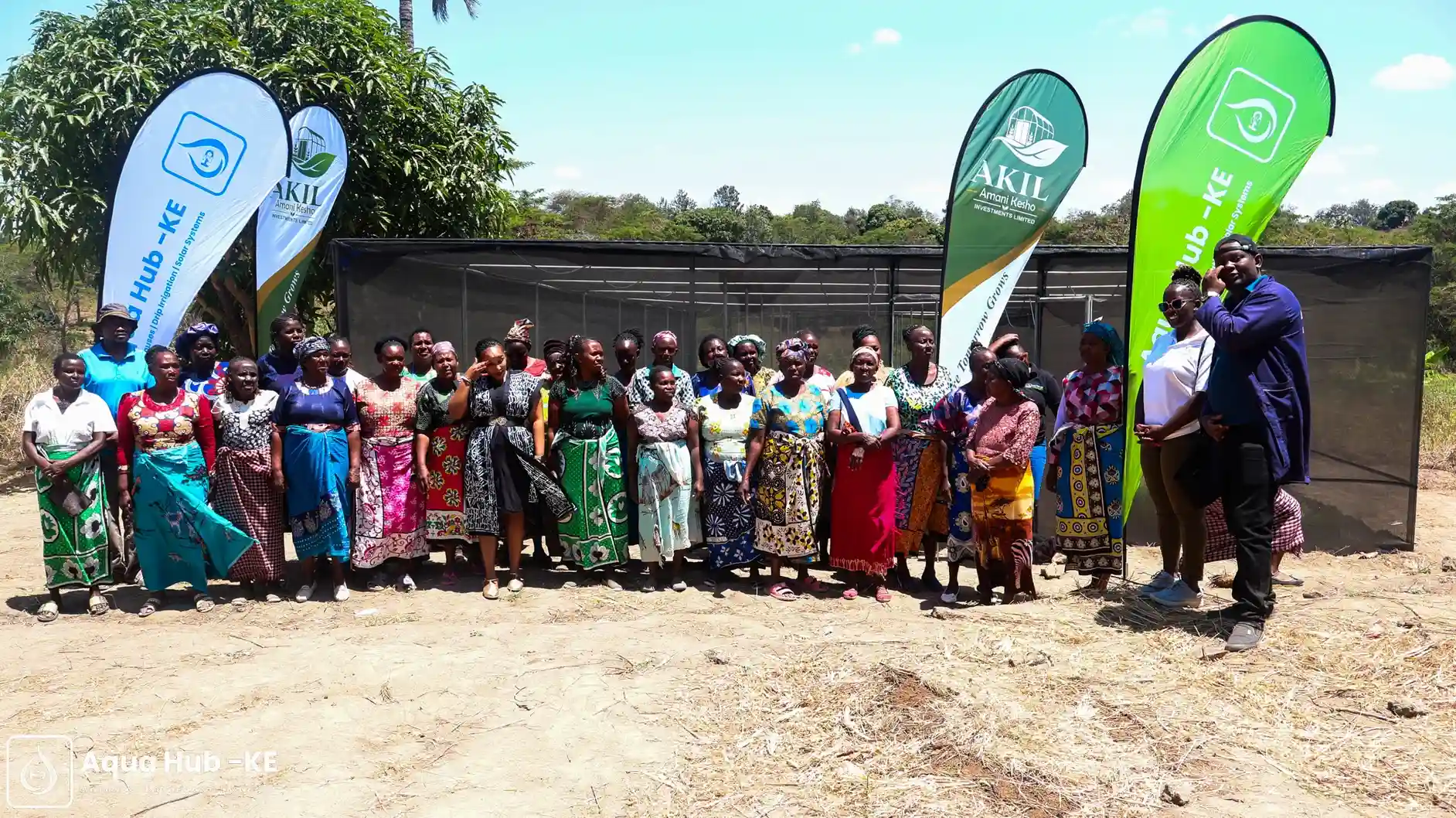
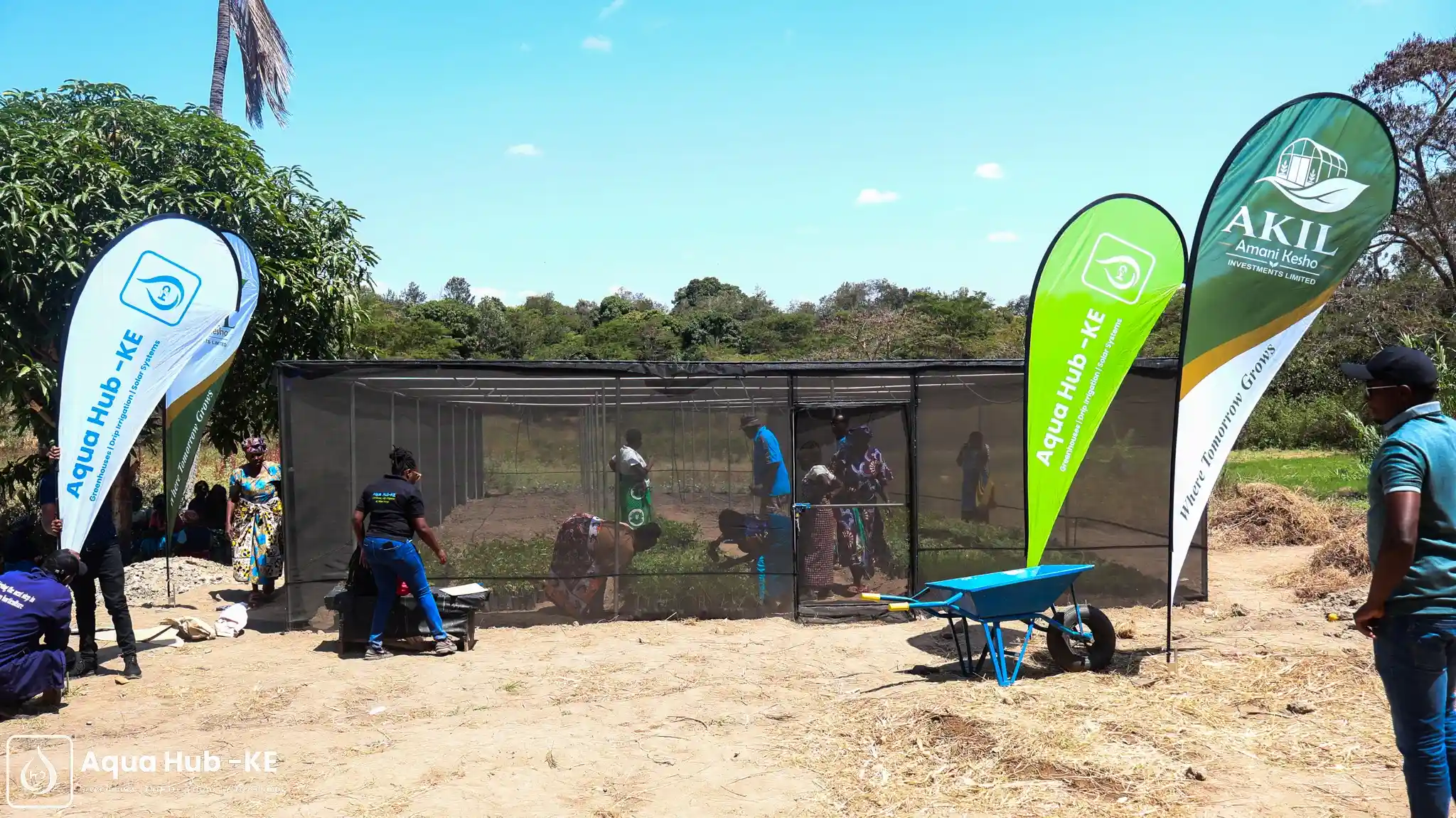
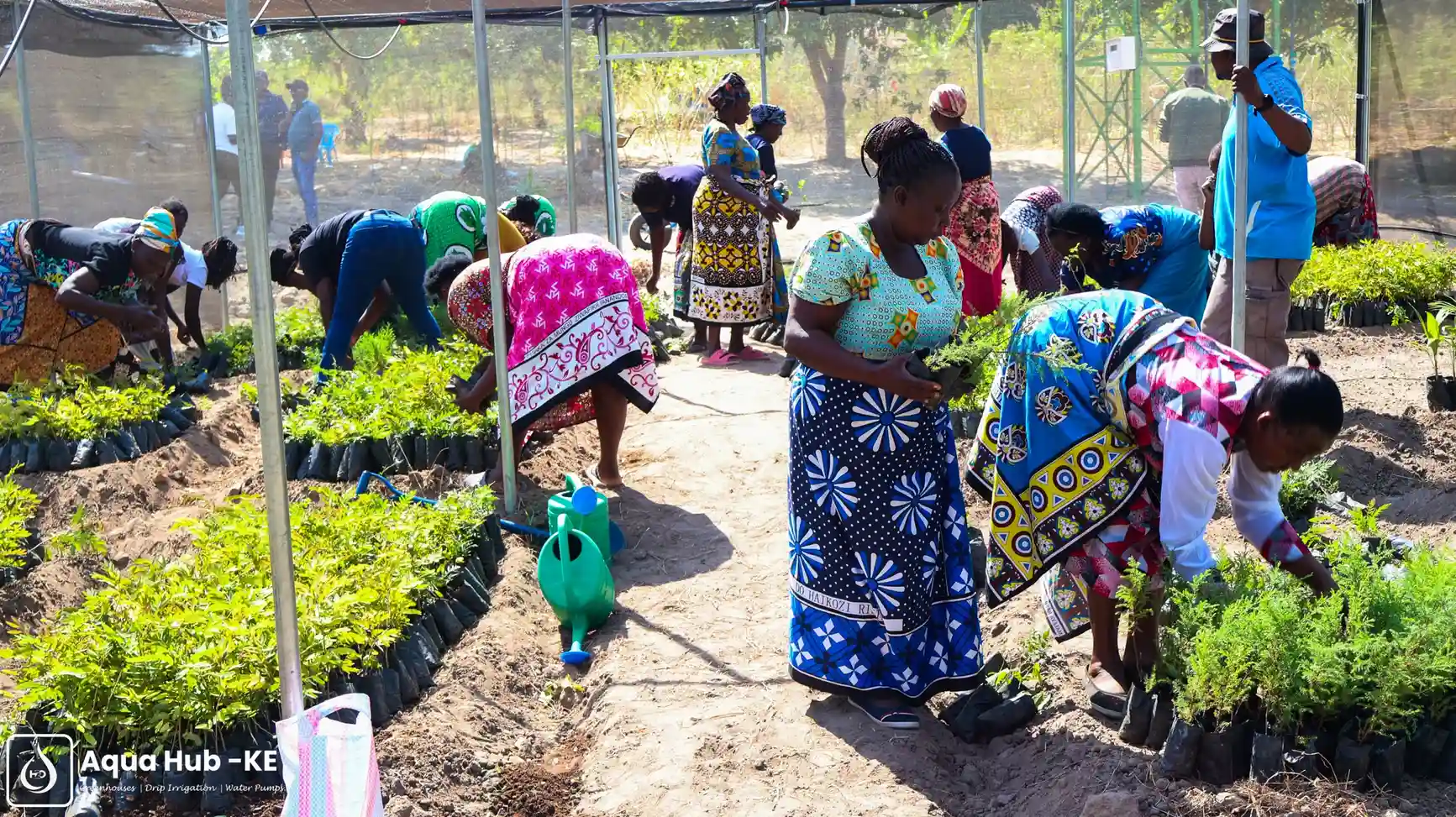
On 28 July 2026, we handed the shade house over to the client’s team. We walked them through the structure, from the frame to the net and the door, and explained how it worked so they knew what to expect from it. With the installation complete, the shade house was ready to receive the client’s seedlings, giving them protection from heat and sun and letting rain water reach the nursery.
THE OUTCOME
Before
The school relied on an inconsistent water supply, creating challenges for daily operations and sanitation.
After
The completed borehole and storage system provides the school with a dedicated water infrastructure solution designed around its daily requirements.
Client Testimonial
COMMON QUESTIONS
FAQs
How much does it cost to build a shade house in Kenya?
The cost of building a shade house in Kenya depends mainly on its size and the frame and net used, and it typically falls between KES 70 to KES 160 per square meter. Contact us to arrange a site assessment and get a quote.
What size of shade house suits a seedling nursery?
The right size of shade house for a seedling nursery depends on how many seedlings you raise and how much space you need to work between them. A structure of 8 m by 24 m suits a nursery that raises seedlings in large batches.
How long does it take to build a shade house?
Building a shade house can take about a week for a structure of 8 m by 24 m. Larger shade houses and difficult ground take longer.
Why is galvanized steel used for a shade house frame?
Galvanized steel is used for a shade house frame because it resists rust and stays strong in sun and rain. This helps the frame last longer than untreated steel.
How long does UV-treated shade net last?
UV-treated shade net lasts longer in strong sunlight than untreated net, and its lifespan depends on the grade of net and how it is looked after. Checking it regularly for tears and loose fixings helps it last.
Does rain water reach seedlings under a shade net?
Rain water reaches seedlings under a shade net when the net is perforated, and the share that passes through depends on the net’s perforation. Tell your installer how you plan to use rain water so they can choose a net to match.
What shade net percentage is best for seedlings?
The best shade net percentage for seedlings depends on the crop and how strong the sun is. A denser net suits seedlings that scorch easily, while a lighter net suits those that need more light.
How do you maintain a shade house?
You maintain a shade house by checking the net for tears and the frame for loose connections. Clearing dust and debris off the net also keeps it working well.
Can a shade house be extended later?
A shade house can be extended later by adding more frame and net, which works best when the first structure is planned with growth in mind. Tell your installer your plans before the build starts.
Have a similar project in mind?
Tell us about your site and we’ll get back to you with a free assessment.