
Ruai, Kenya
How Greenhouses Are Benefiting Capsicum Farmers in Ruai
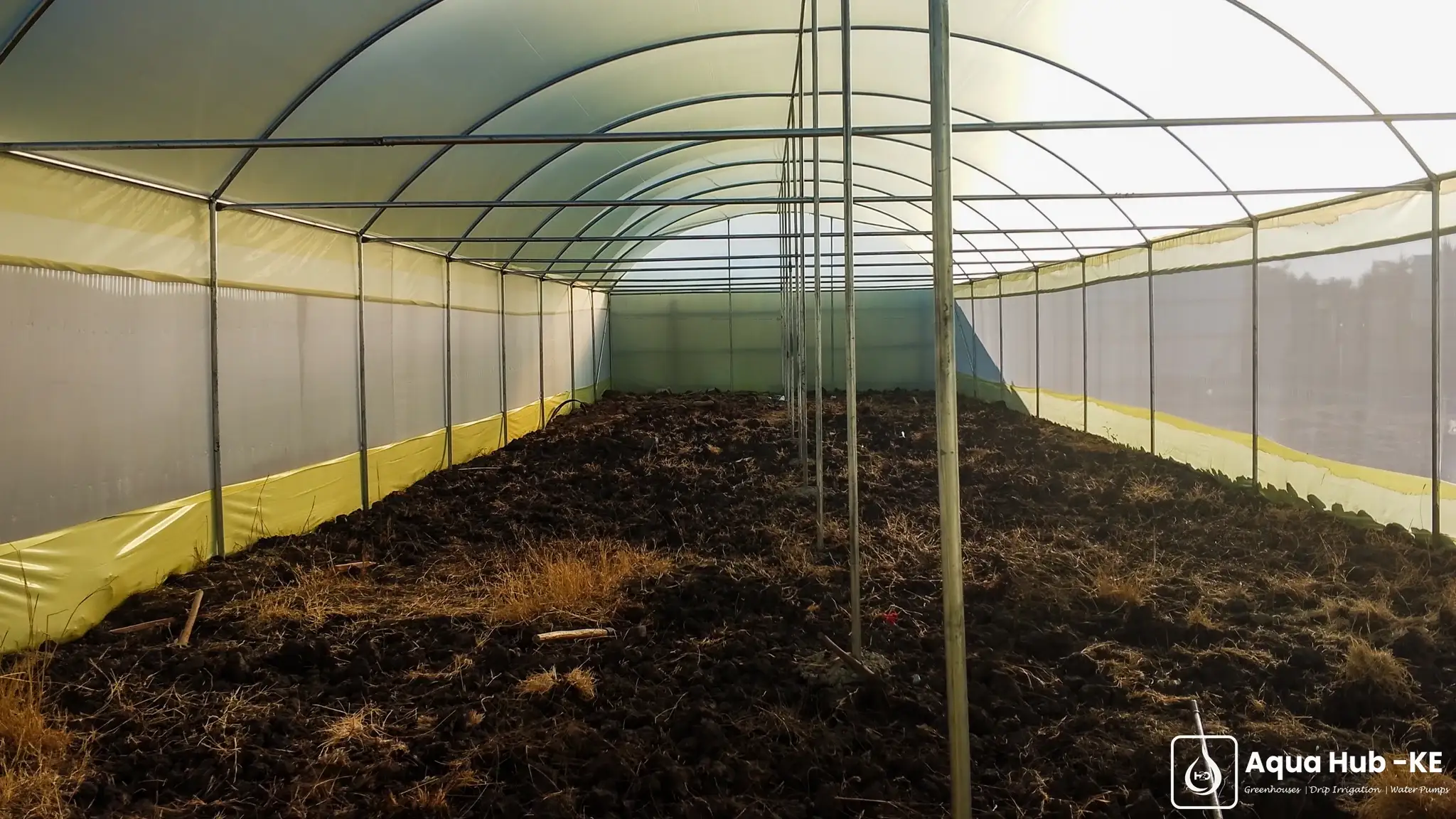
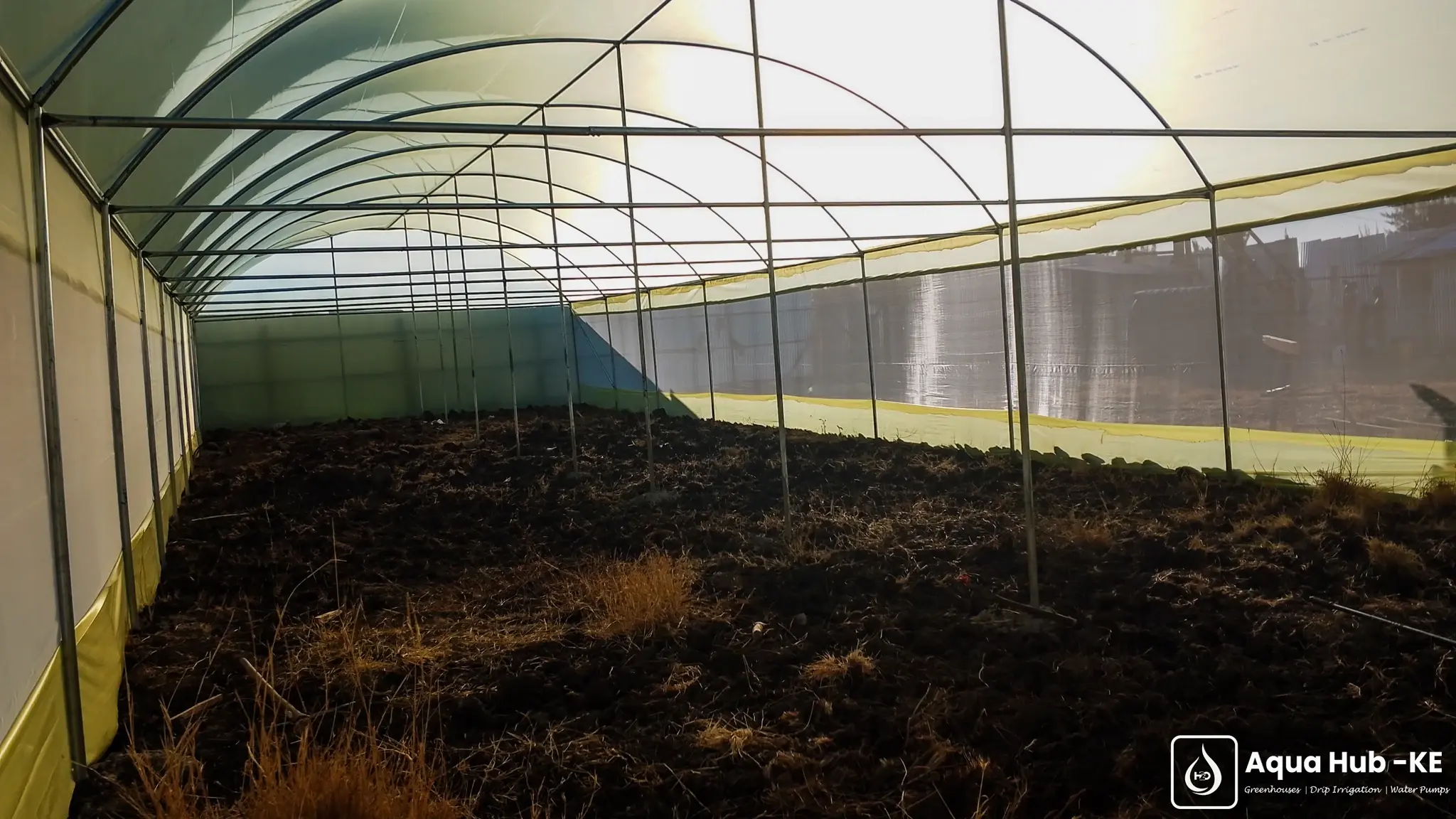
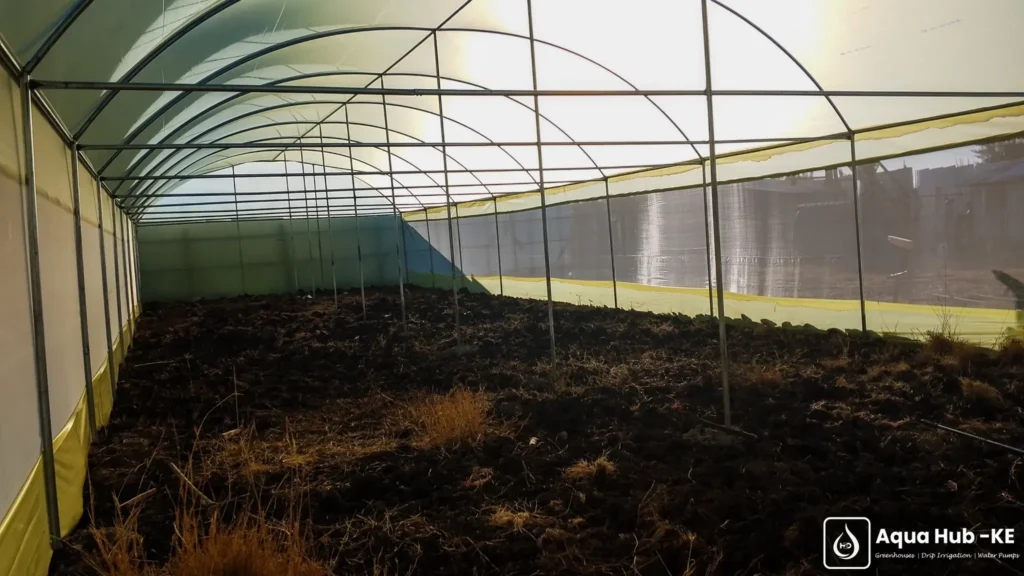
Aqua Hub Kenya installed an 8 m x 30 m metallic greenhouse for capsicum farming in Ruai, Nairobi County. The structure covers 240 square metres and was built with a metallic frame, a polythene cover and an insect net. The farmer wanted to protect the crop from pests, heavy rain, wind and heat, which cause losses in open field capsicum. The insect net keeps pests out of the crop, while the polythene cover shields it from rain and harsh weather. Together, they give the farmer better control over quality and harvest. Our team completed the installation in 7 days.
Location
Ruai, Kenya
Duration
13 days
Completed
2026-09-26
PROJECT AT A GLANCE
What we delivered
The professional technicians from Aqua Hub Kenya delivered a complete 8 m x 30 m metallic greenhouse in Ruai, covering 240 square metres. The scope covered the structure, the cover, the insect net and the access points. After installation, our team carried out quality checks and the work was formally handed over.
Our team supplied and installed:
- Galvanized steel pipe frame
- Polythene cover
- Insect net fitted along the sides
- Roll-up side ventilation
- Doors and entrance
After installation, our team carried out quality checks on the frame, cover, net and ventilation.
The challenge
Open field capsicum is exposed to pests from planting to harvest. Insects feed on the leaves, flowers and young fruit, and a damaged plant produces fewer and smaller capsicums. For a grower, this means a lower yield from the same land and labour.
The answer needed to be a protected growing space that keeps pests away from the crop without constant spraying. It also needed to be a sturdy structure with a durable frame and cover, built correctly the first time so that it lasts.
Our approach
We based our recommendation on the client’s requirements and the main problem to solve, which was pest pressure on the crop. We recommended an 8 m x 30 m greenhouse, sized to the scale of the project. The frame is galvanized steel so that it lasts, and the insect net along the sides keeps pests out. Roll-up side ventilation lets the client manage airflow and temperature inside.
A quote was prepared for the work and the greenhouse was constructed. The client was kept informed at each stage, through installation, quality checks and handover.
HOW IT HAPPENED
The process, start to finish
Every Aqua Hub Kenya project follows the same stages. Here’s exactly how this one went, with photos and video from each visit.
Our team held a consultation with the client to agree what the greenhouse would be. We settled on an 8 m x 30 m structure and confirmed the features the client wanted, which were insect net along the sides, roll-up side ventilation and doors. We also discussed the client’s budget and the timing for the build, so that the proposal that followed matched both.
Following the consultation, our team prepared a proposal for the 8 m x 30 m greenhouse. The proposal set out the scope of the work and the cost. The client reviewed it and agreed, and the project moved forward.
14 September 2026
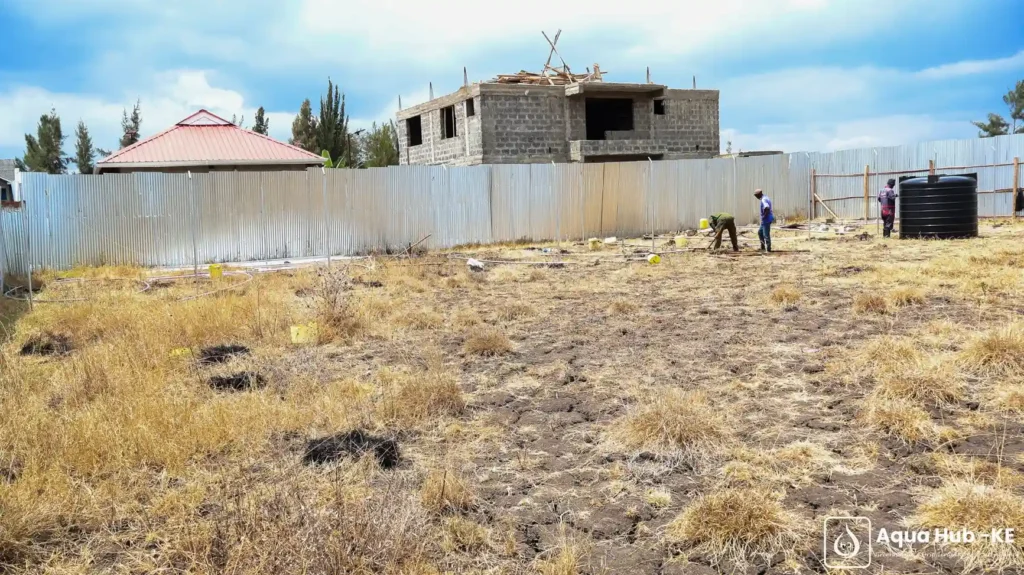
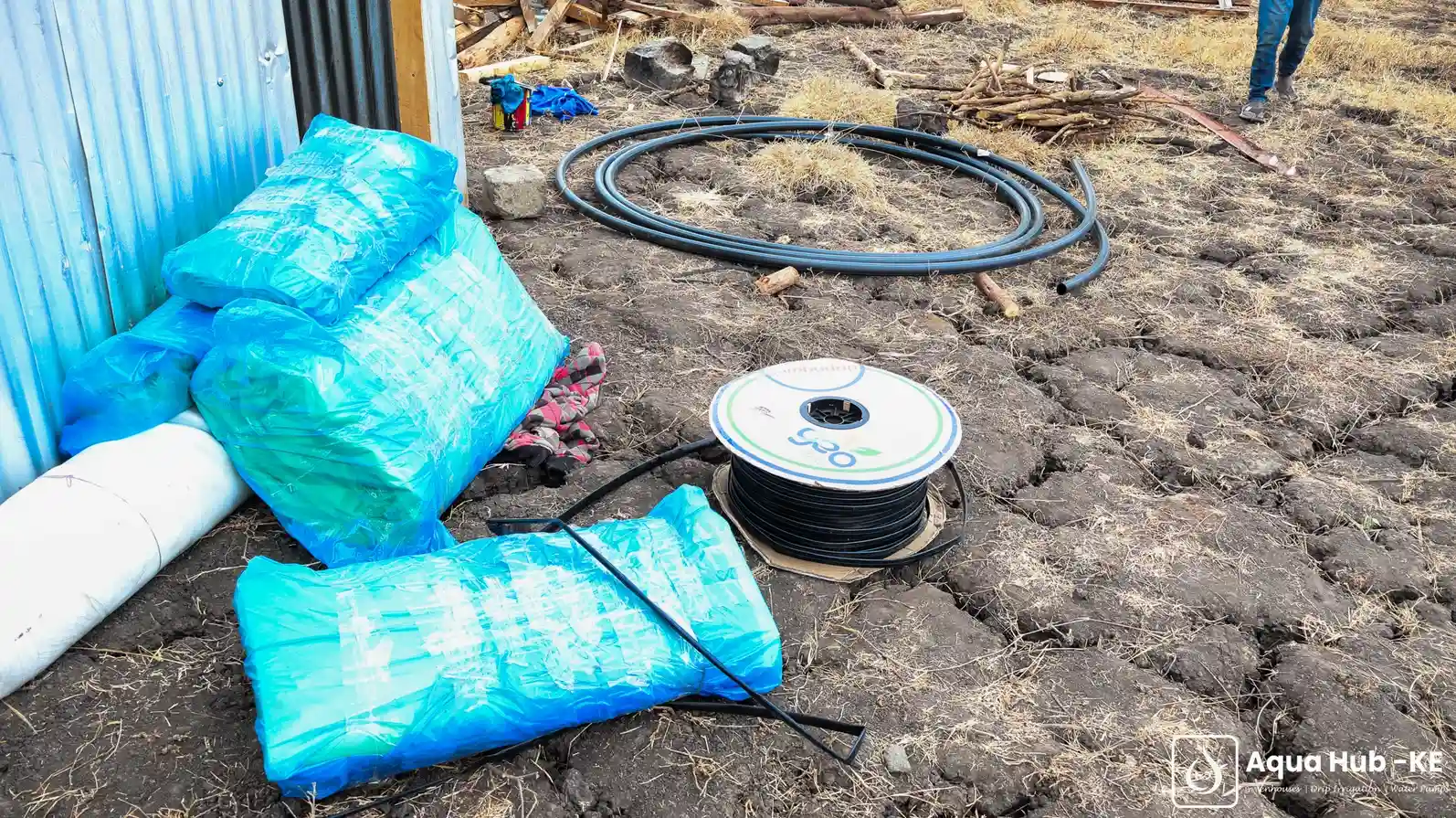
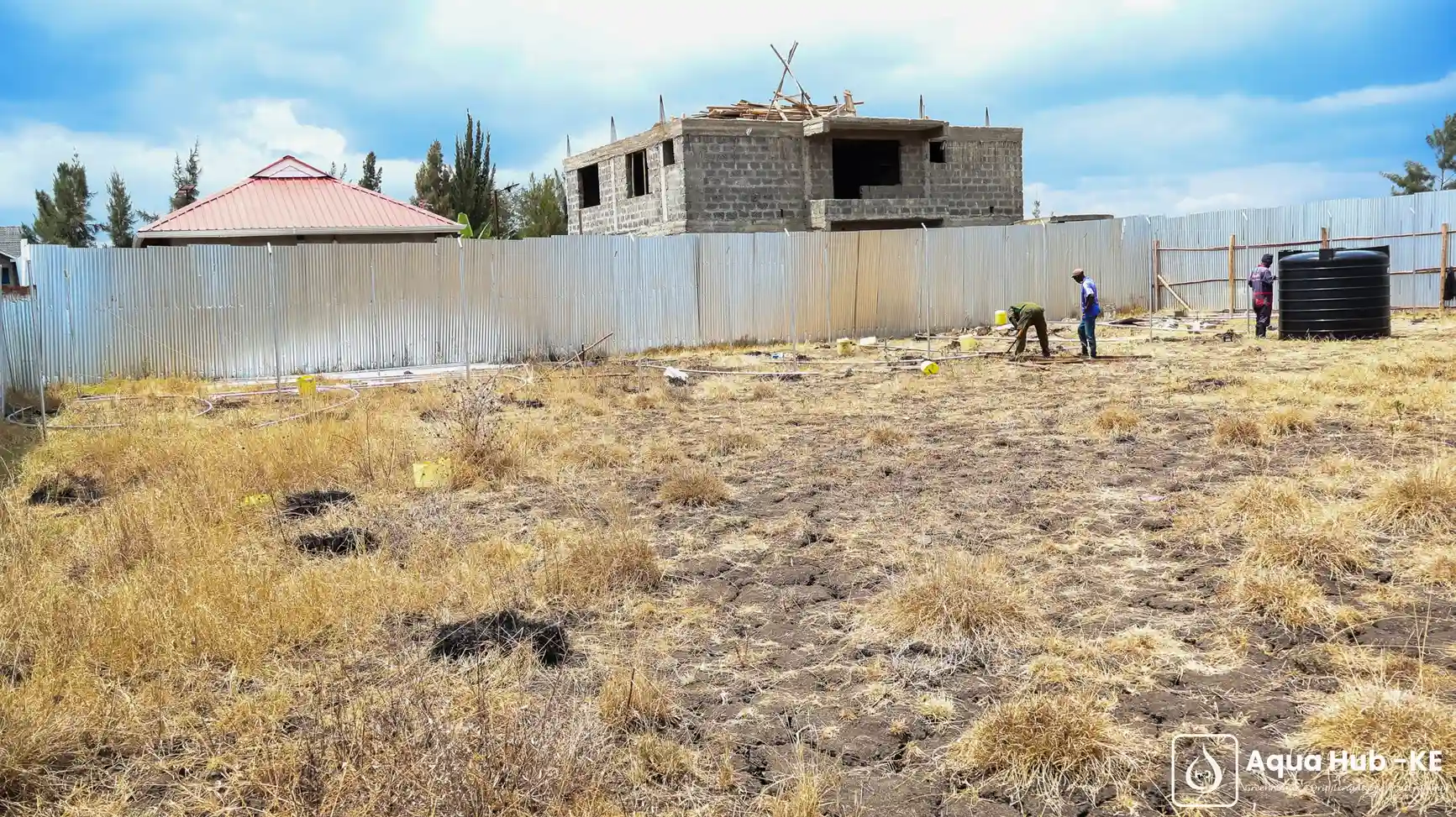
Mobilisation meant getting everything to the site in Ruai. We transported the galvanized steel pipes and fittings, the polythene cover, the insect net, the roll-up ventilation and door fittings, and the installation team with their tools.
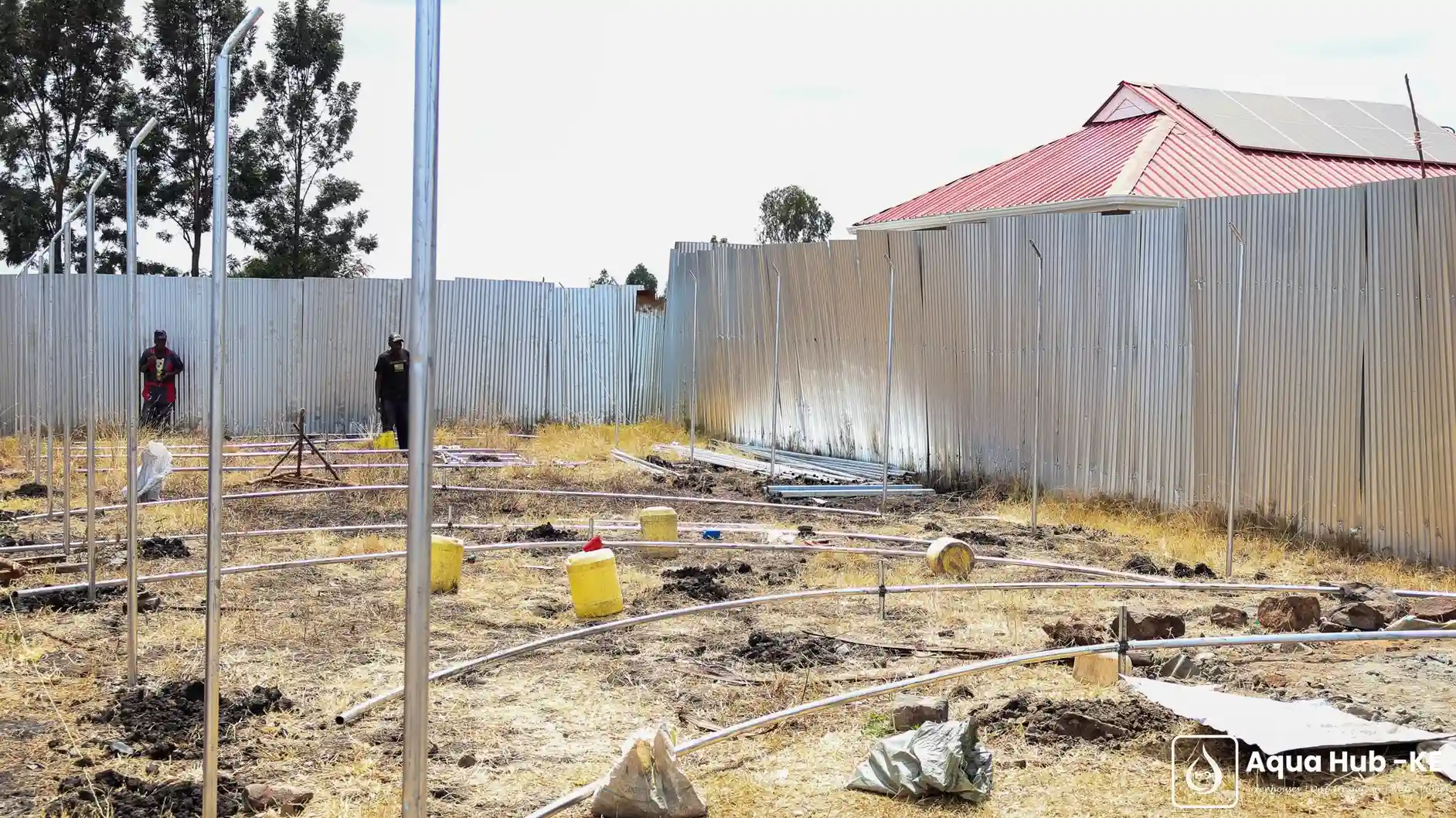
Groundwork followed. Our team marked out the layout for the 8 m x 30 m structure so that the corners and post positions were set before any digging. Holes were then dug for the posts, with our technicians working alongside local labour. This step matters because the frame needs firmly placed posts to prevent them from being dislodged by wind.
15 September 2026
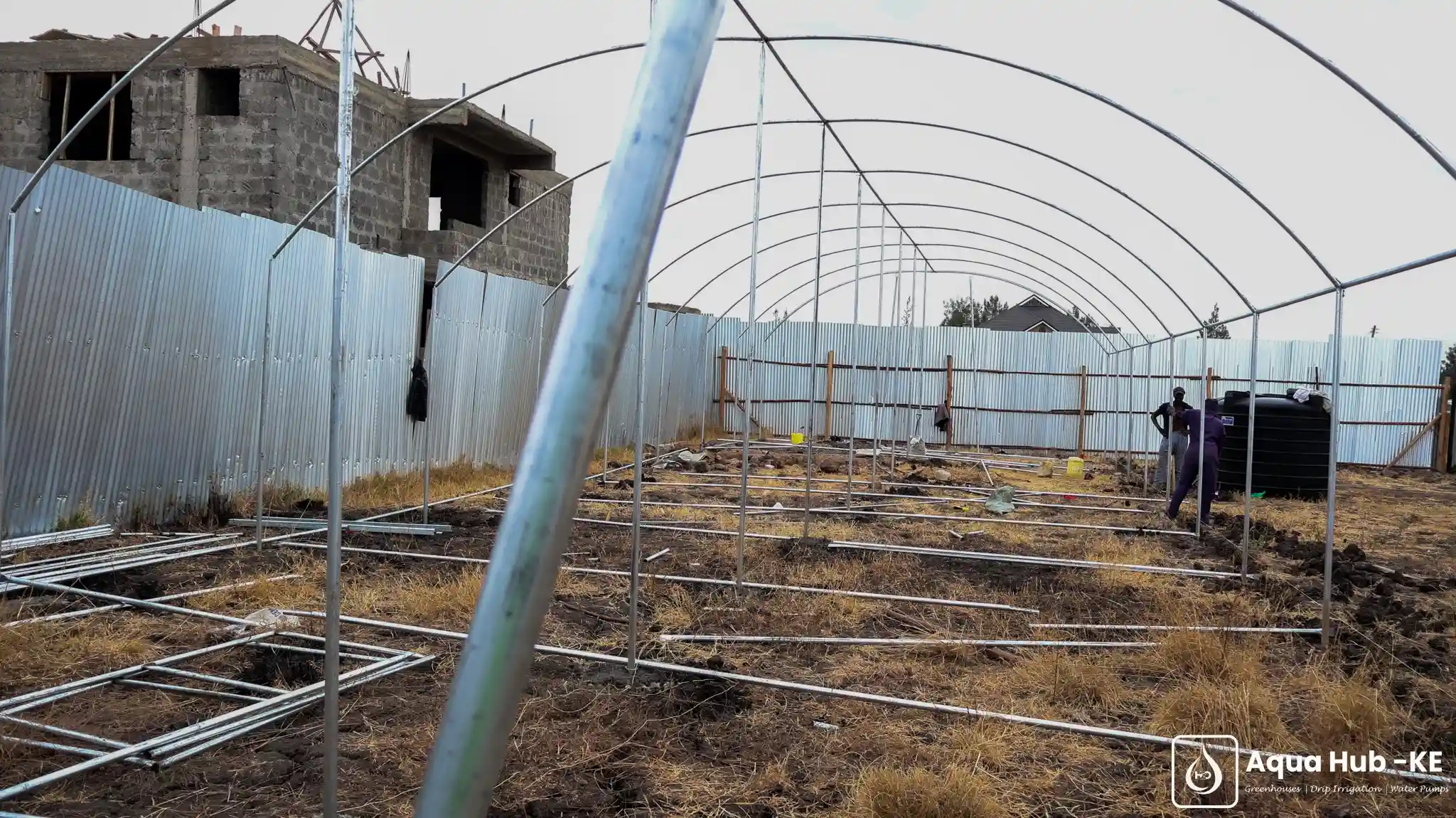
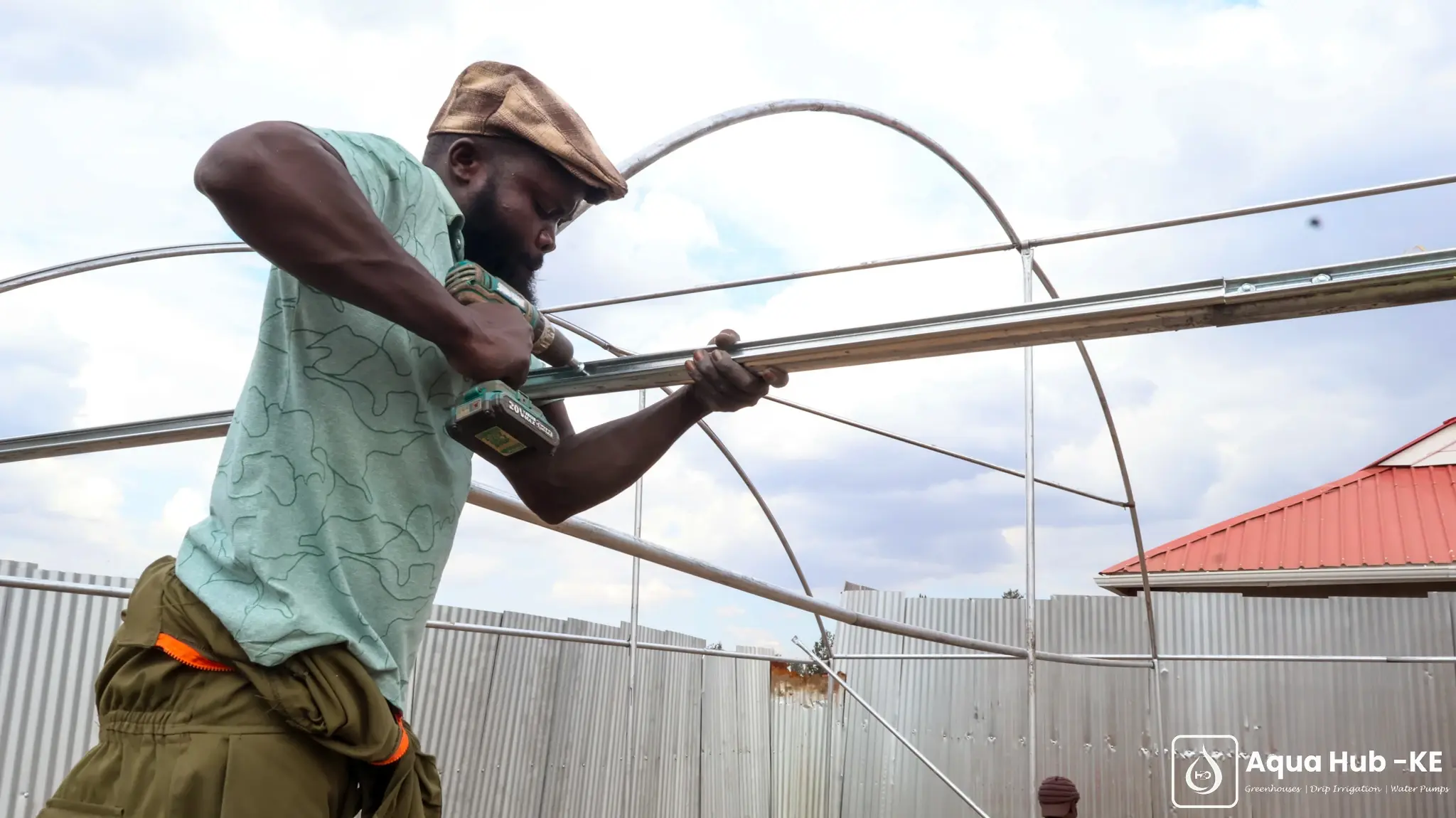
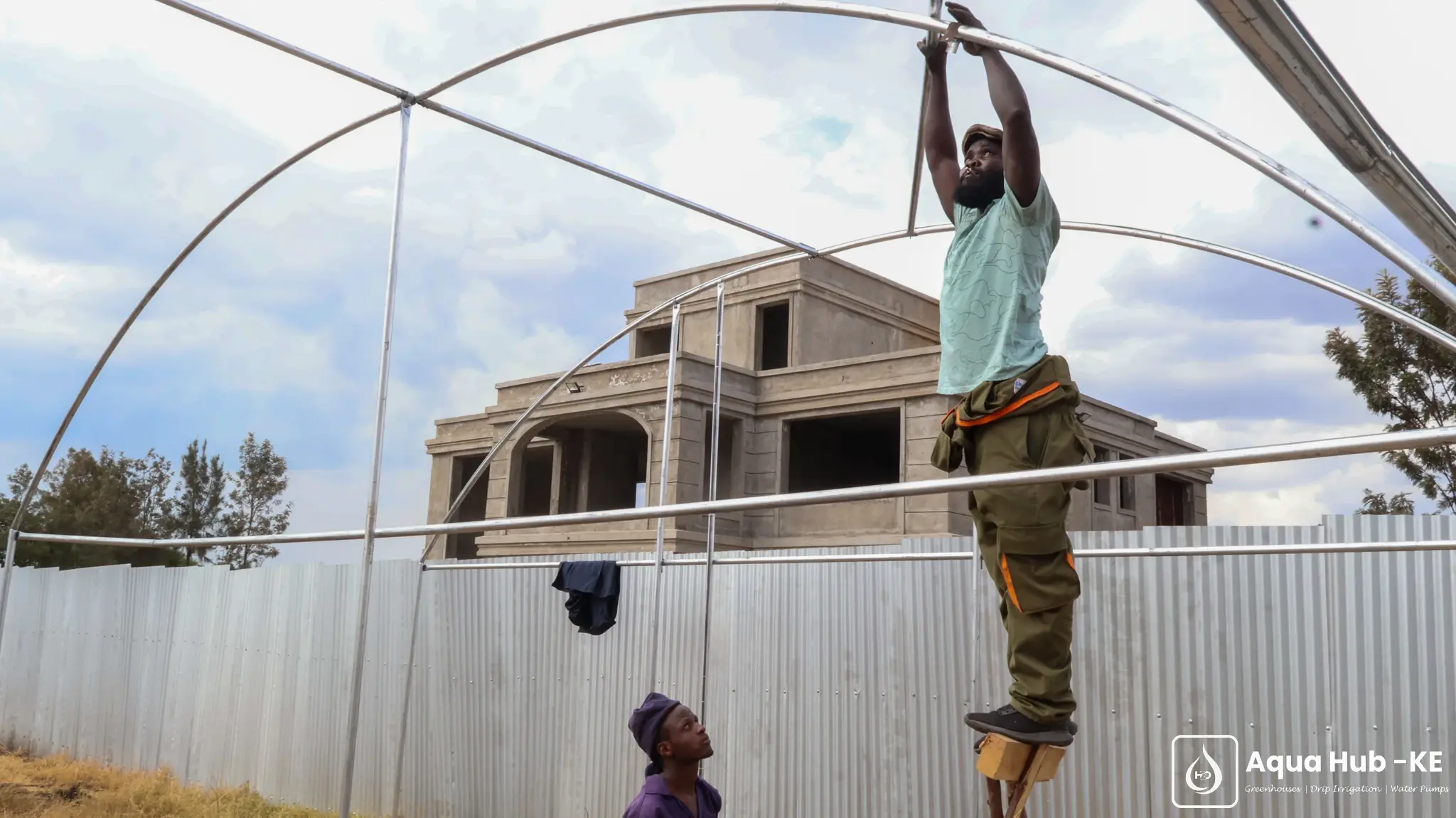
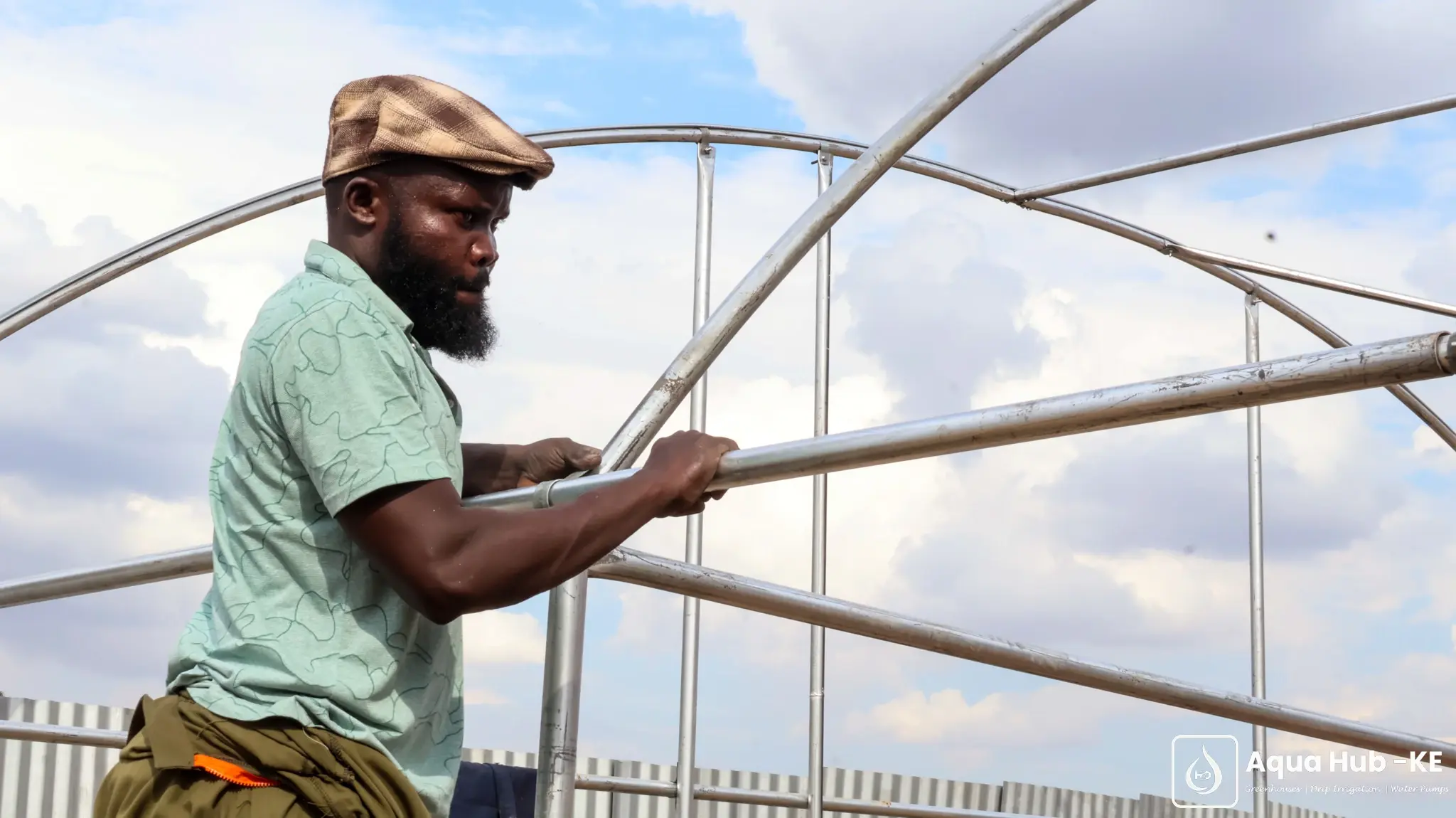
Installation began with the frame. The galvanized steel posts were erected in the holes dug during groundwork, and the arches were then fixed to the posts to form the roof structure of the 8 m x 30 m greenhouse.
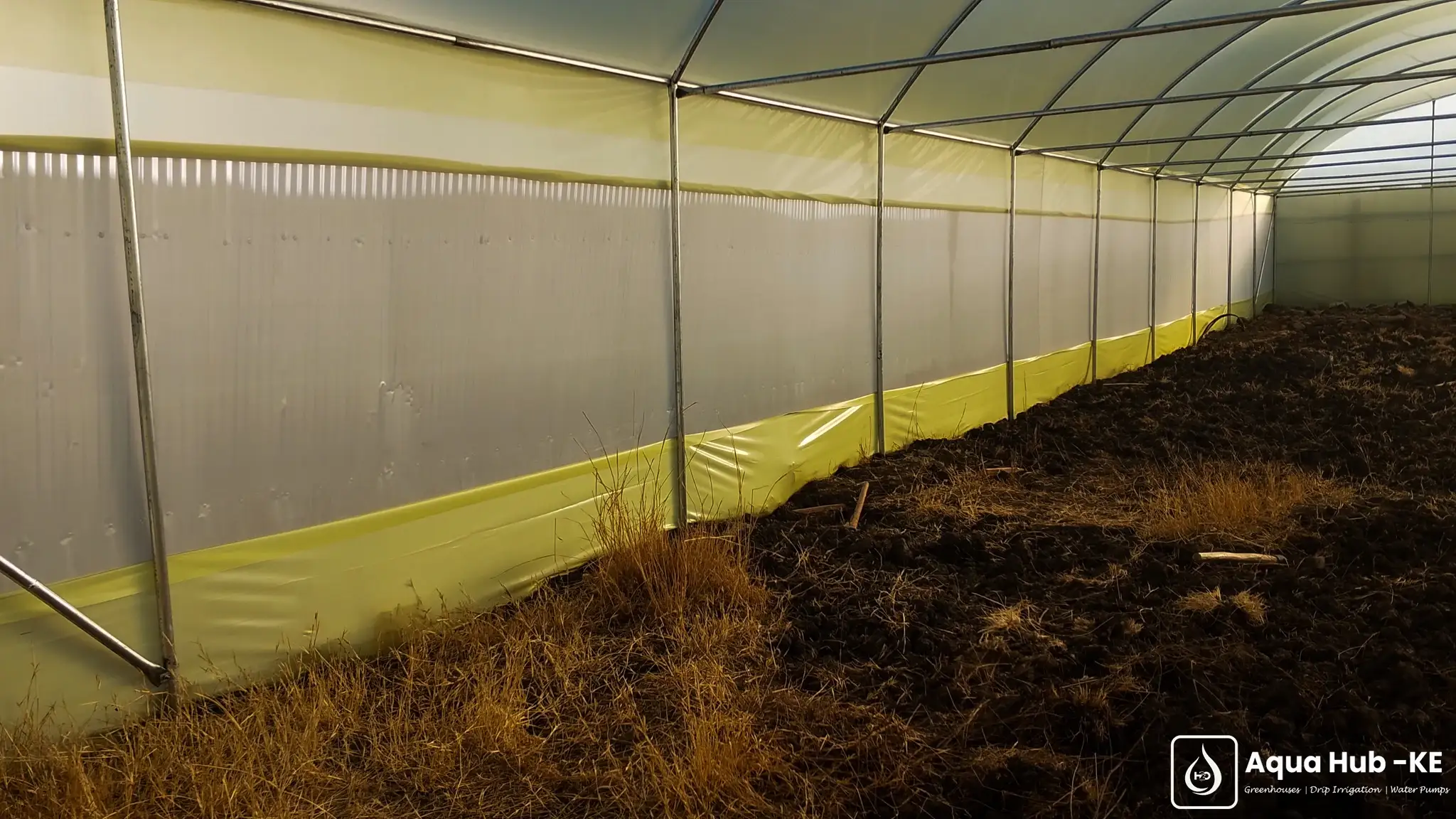
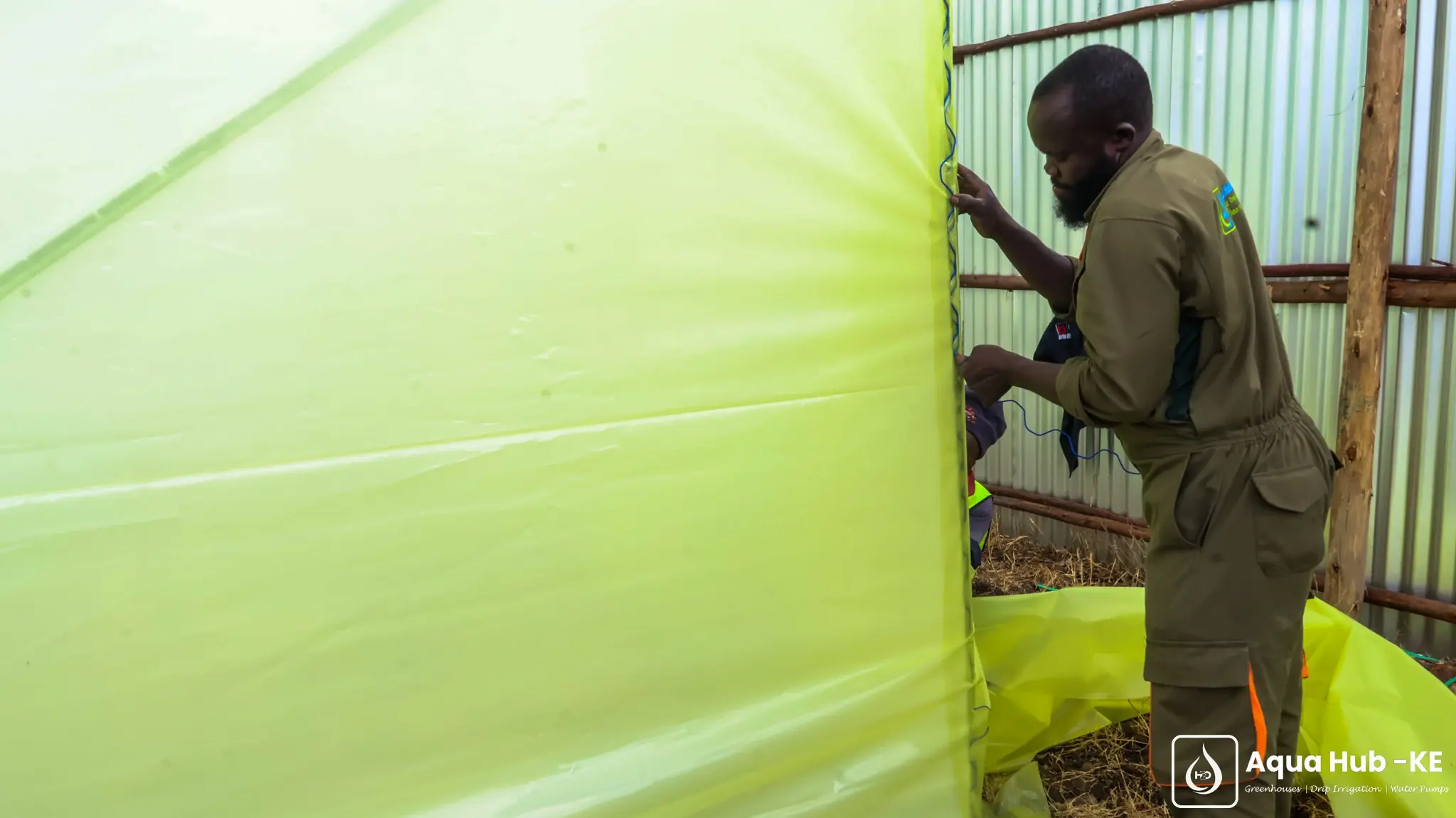
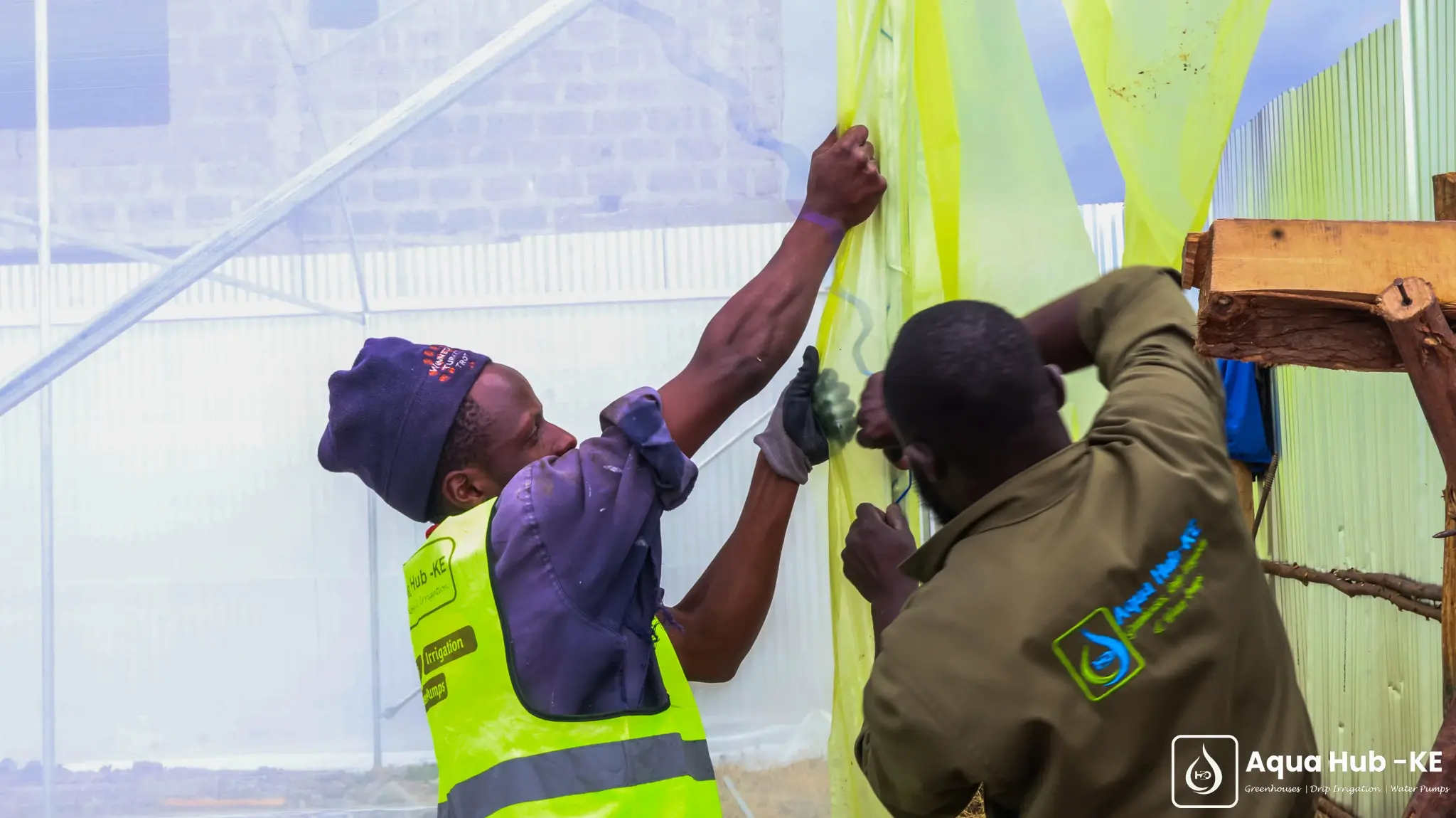
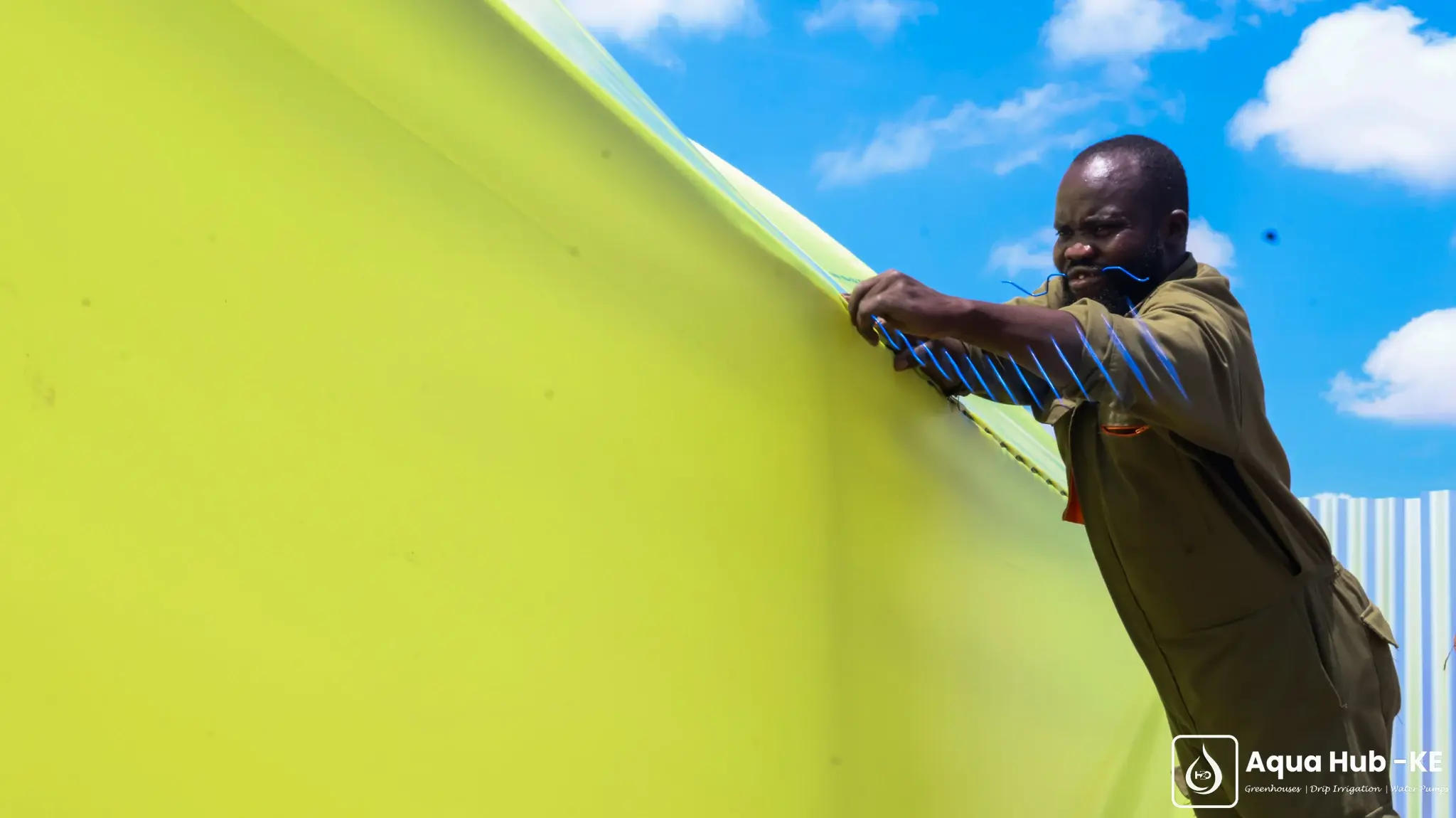
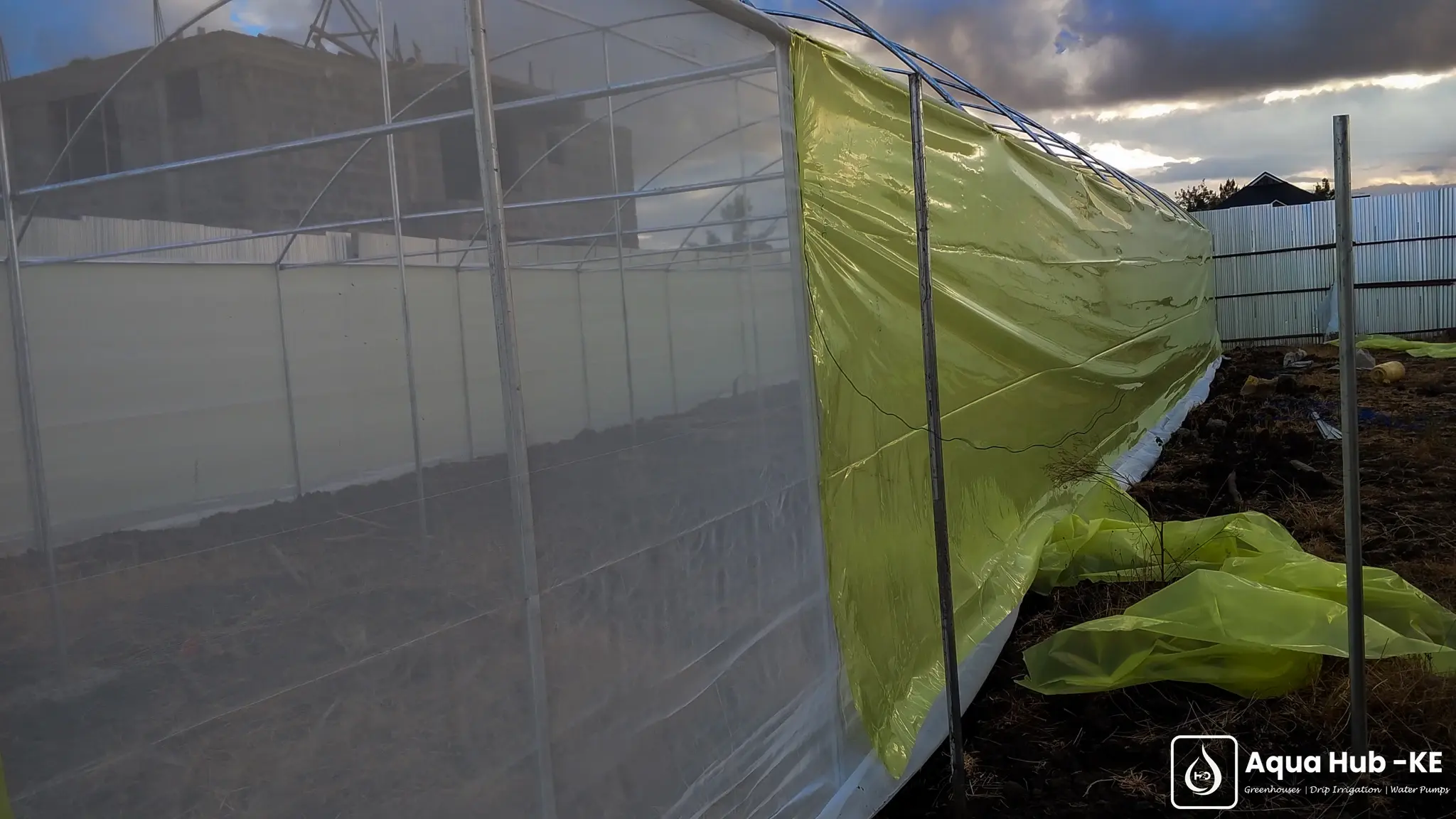
With the frame up, the polythene cover was fixed over the roof and the insect net was fixed along the sides. Both were held in channels with wiggle wire, which keeps them tight and secure against wind. The roll-up side ventilation was then fitted, followed by the doors and entrance.
25 September 206
Once construction was complete, our team carried out quality checks on the greenhouse. We checked that the frame was stable, that the polythene cover was properly fitted, that the roll up ventilation worked as it was supposed to, and that the insect net along the sides was secure. We also checked that the doors worked as they should. The quality checks were completed before the greenhouse was handed over.
THE OUTCOME
Before
The school relied on an inconsistent water supply, creating challenges for daily operations and sanitation.
After
The completed borehole and storage system provides the school with a dedicated water infrastructure solution designed around its daily requirements.
Client Testimonial
COMMON QUESTIONS
FAQs
How much does a greenhouse by Aqua Hub Kenya cost?
A greenhouse by Aqua Hub Kenya costs between KES 150,000 to KES 700,000. The price depends on the size, the frame, the cover and the fittings included, such as insect net, ventilation and doors.
How long does it take to build a greenhouse?
Building a greenhouse takes from a few days to a few weeks, depending on its size and the state of the site. Ground preparation and the number of workers on site also affect the time.
What size of greenhouse should I build?
The size of greenhouse you should build depends on your budget, your land and how much you want to grow. A small greenhouse, such as 8 m x 30 m, suits a grower who is starting out with one crop.
Why grow capsicum in a greenhouse by Aqua Hub Kenya?
Capsicum is grown in a greenhouse by Aqua Hub Kenya because it protects the crop from pests and gives the grower more control over growing conditions. Less pest damage means more healthy fruit from the same plants.
What does an insect net do in a greenhouse?
An insect net in a greenhouse keeps insects out of the crop while still letting air through. This reduces pest damage and cuts the need for frequent spraying.
How long does greenhouse polythene from Aqua Hub Kenya last?
Greenhouse polythene from Aqua Hub Kenya lasts about 3 to 5 years when it is UV-treated and well cared for. Sun, wind and rough handling shorten its life.
Does a greenhouse need maintenance?
A greenhouse needs regular maintenance to stay in good condition. This includes checking the polythene and insect net for tears, tightening fixings and keeping doors and ventilation working.
Can other crops be grown in a greenhouse by Aqua Hub Kenya?
Other crops can be grown in a greenhouse by Aqua Hub Kenya, including tomatoes, cucumbers and leafy vegetables. High-value crops with a long harvesting period usually give the best return under cover.
Have a similar project in mind?
Tell us about your site and we’ll get back to you with a free assessment.