
Gatanga, Muranga
Why Spinach and Kale Farmers in Muranga Choose To Use Drip Irrigation For Crops
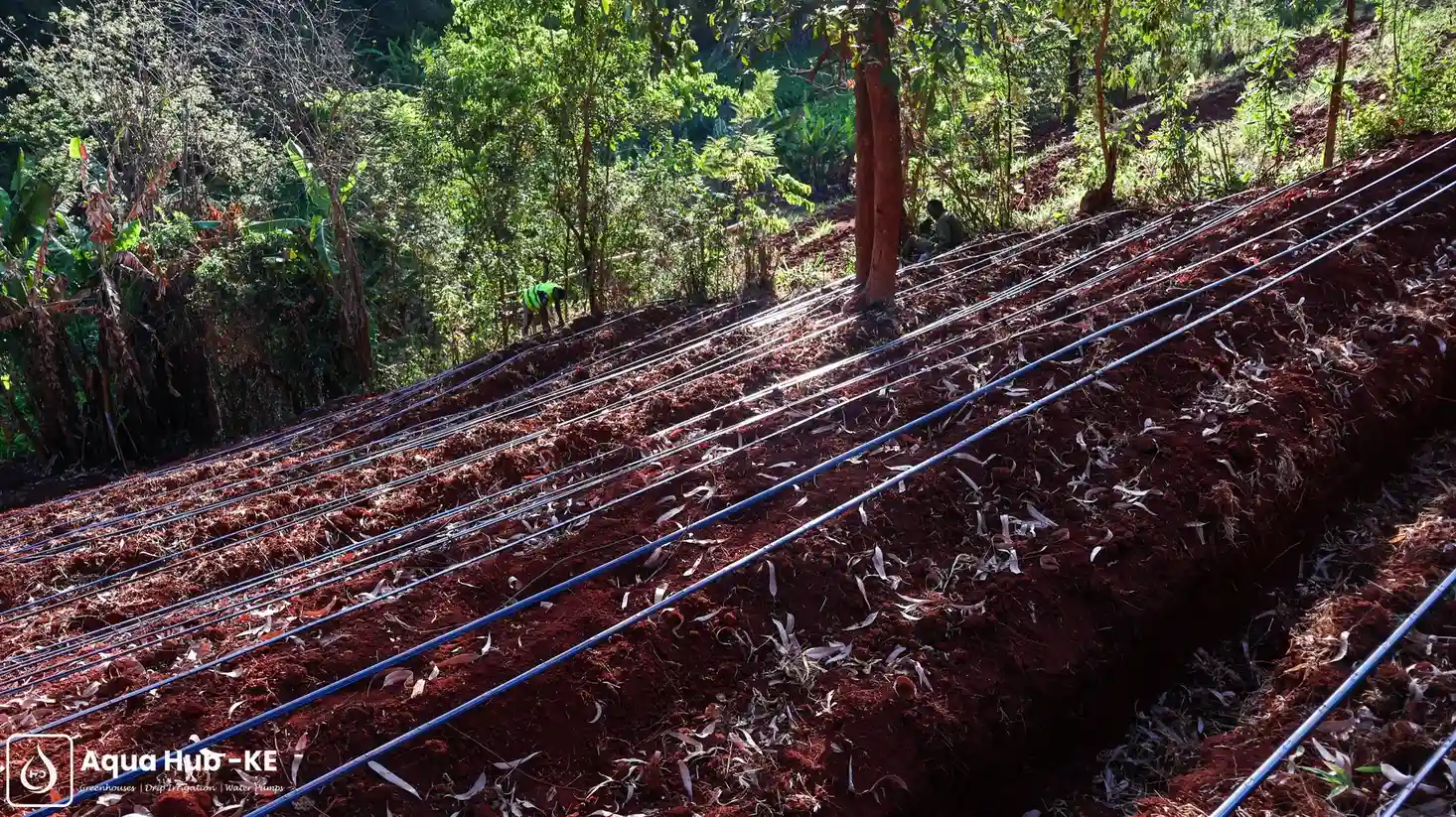
Aqua Hub Kenya installed a half-acre drip irrigation system for spinach and kale farming in Gatanga, Murang’a County. The client wanted to stop wasting water under the previous irrigation methods. Drip lines deliver water slowly to the roots, which cuts losses and keeps the crop evenly watered. Our team completed the installation in 4 days, from 29 September to 2 October 2026.
Location
Gatanga, Muranga
Duration
2 days
Completed
2026-10-02
PROJECT AT A GLANCE
What we delivered
Aqua Hub Kenya installed a half-acre drip irrigation system for spinach and kale in Gatanga, Murang’a County. Our team supplied and installed:
- 50mm HDPE main pipe
- 40mm HDPE submain pipe
- Drip lines
- Valves and fittings
After installation, the work was handed over to the client.
The challenge
Spinach and kale need steady moisture, but many growers water in ways that waste much of it. Water runs off the surface or evaporates before it reaches the roots, and some plants get too much while others get too little.
Growers pay for this through higher water and labour costs. What they need is a way to deliver water to the roots in the right amounts.
Our approach
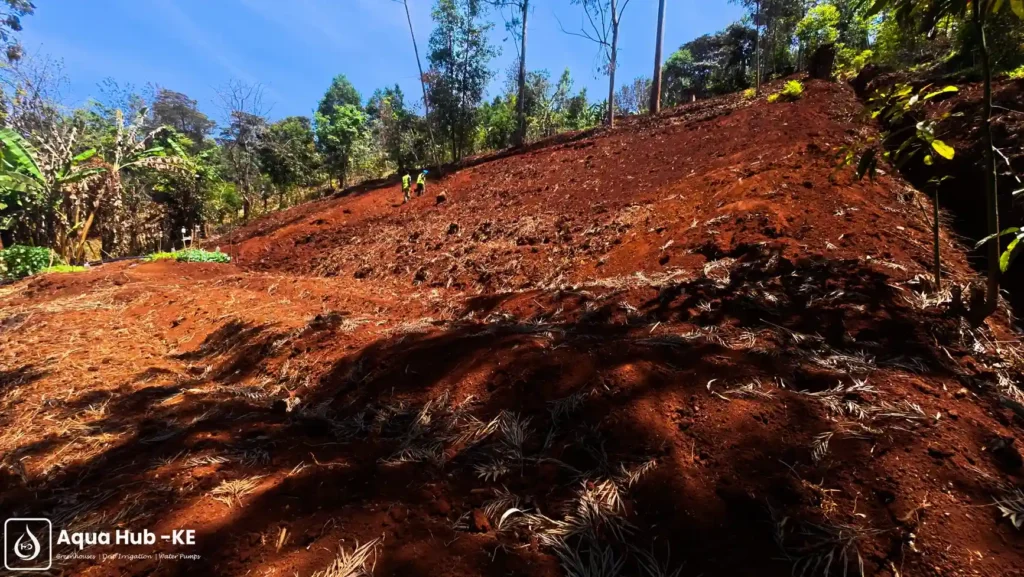
Our team surveyed the site before the work began. The survey showed that the land has a steep slope, so we recommended terraces to go with the system. For the system itself, we recommended drip irrigation to cut water wastage, laid out to match the spinach and kale beds.
The client agreed to the quote beforehand, and installation ran from 29 September to 2 October 2026.
HOW IT HAPPENED
The process, start to finish
Every Aqua Hub Kenya project follows the same stages. Here’s exactly how this one went, with photos and video from each visit.
29 September, 2026
Aqua Hub Kenya technicians visited the farm in Gatanga to assess the half-acre plot where the system would go. The ground fell away steeply, so the team advised adding terraces alongside the drip system. The findings from the visit went into the proposal that followed.
29 September, 2026
After the survey, our team prepared a proposal for the drip irrigation system. It set out the materials to be supplied and the cost of the work. The proposal also noted that the client would supply casual labourers to assist our technicians during installation. The client accepted the quote, which cleared the way for work to begin on 29 September 2026.
30 September, 2026
We transported the HDPE main and submain pipes, the drip lines, the valves and fittings, and the installation team with their tools.
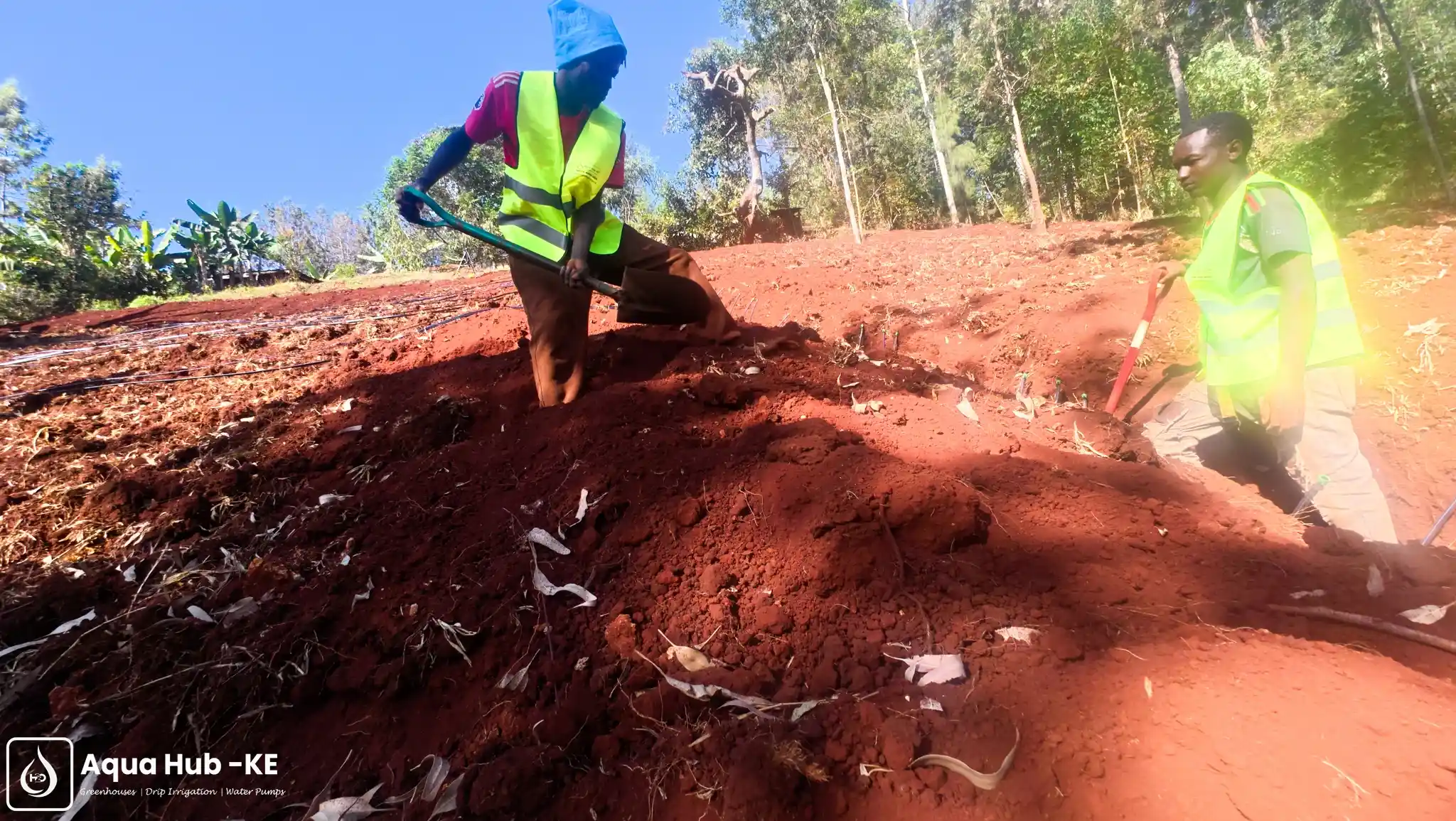
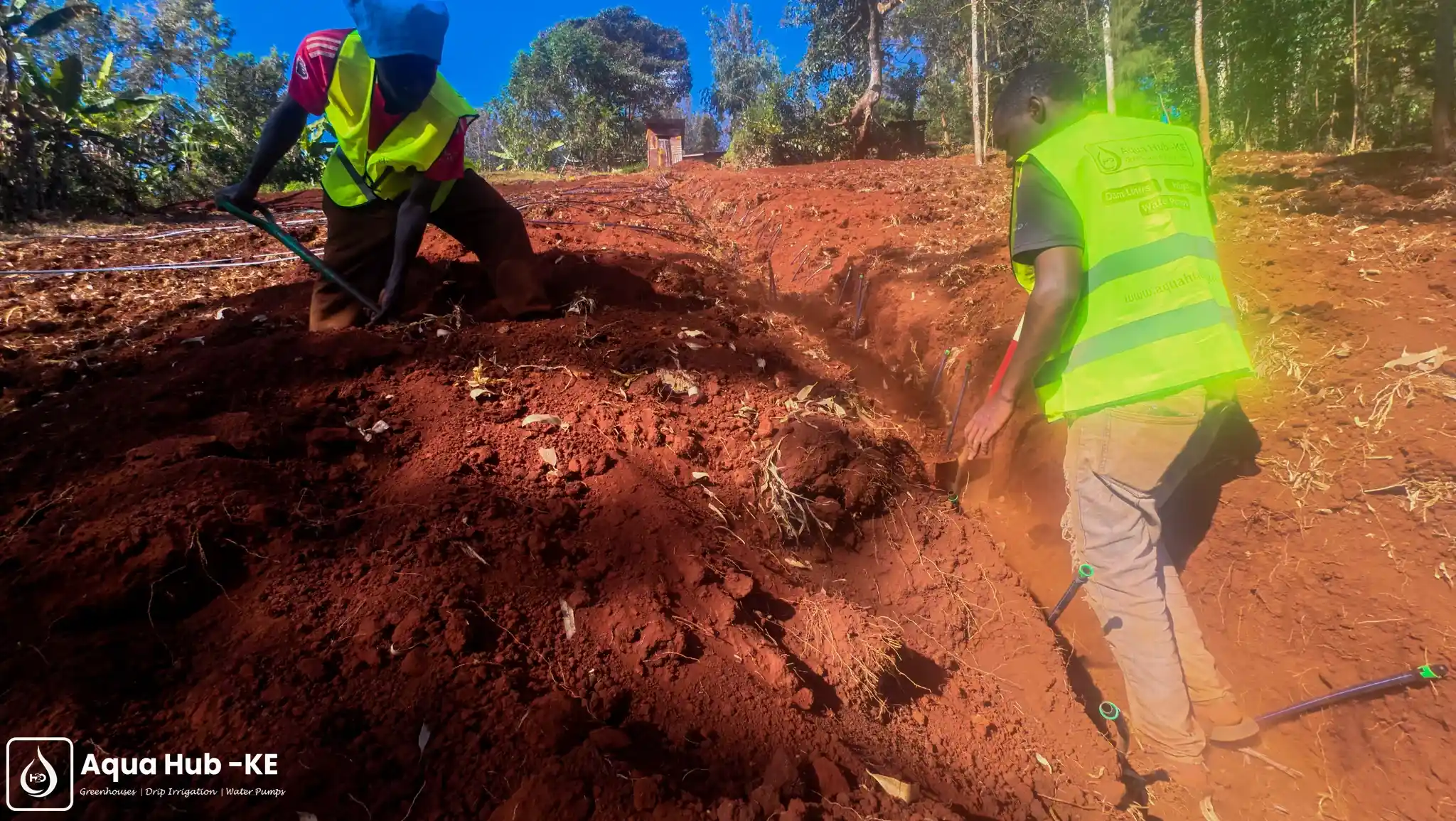
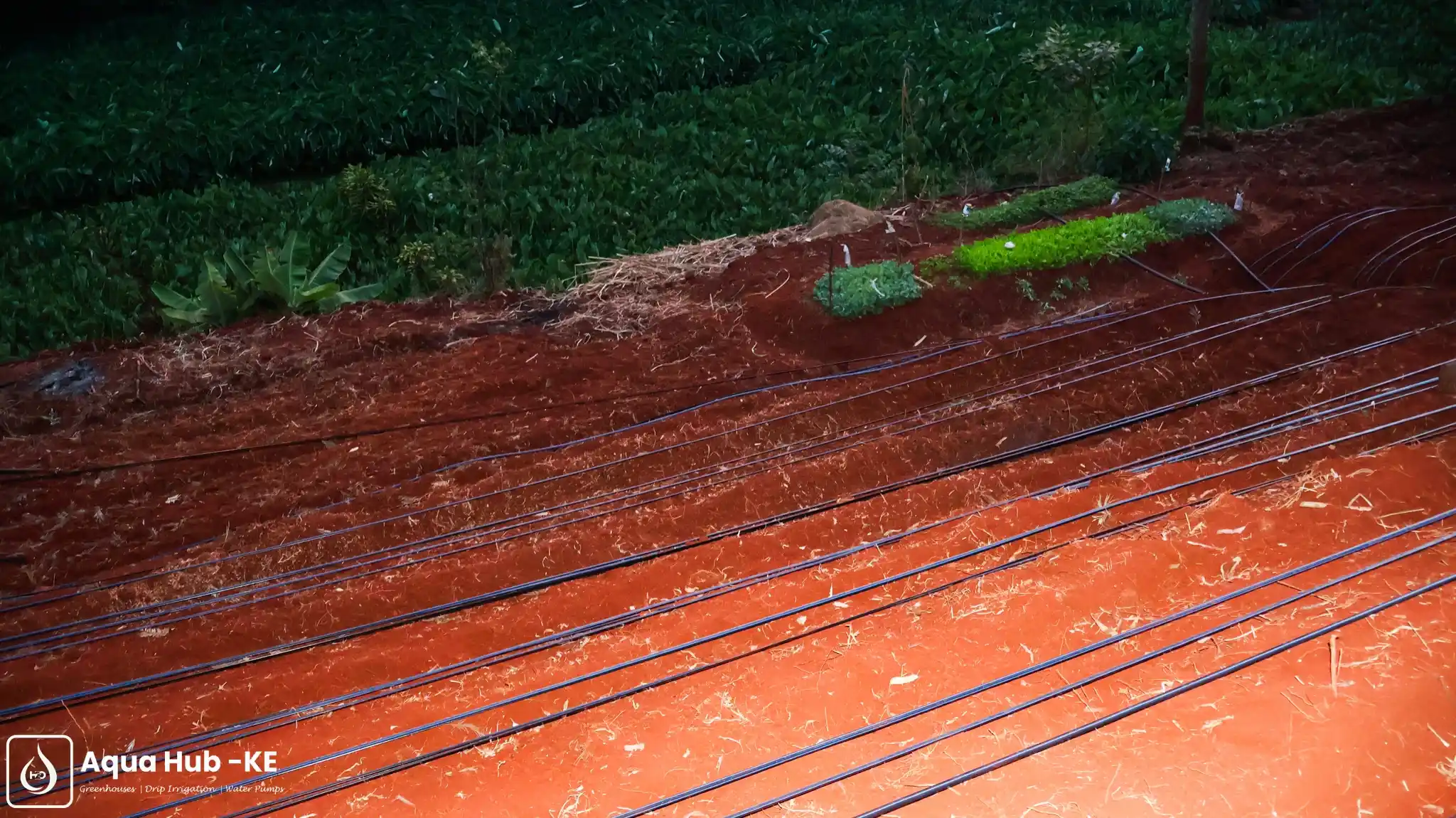
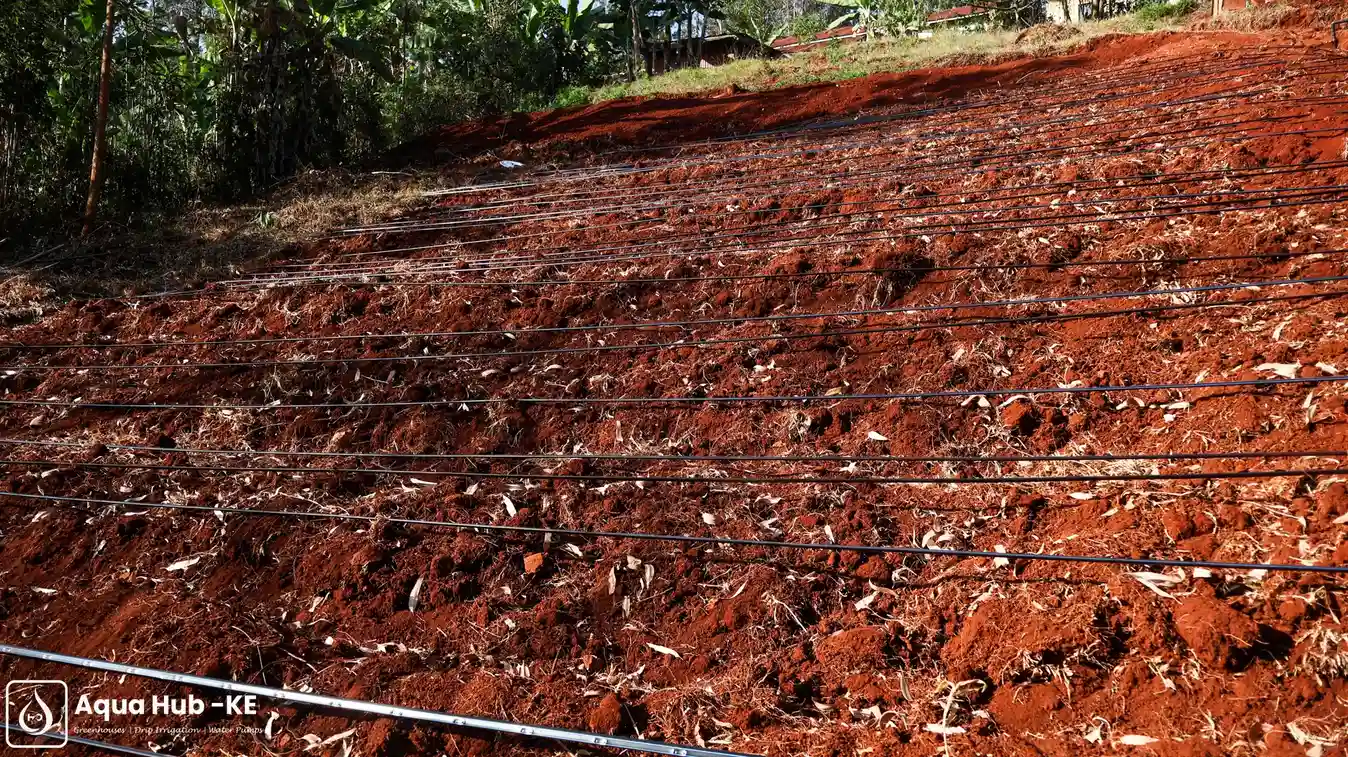
Groundwork came next, carried out by our technicians with the casual labourers the client supplied. Terraces were created on the sloping land to reduce soil erosion. Trenches were then dug for the pipes, and the bed lines were marked out for the drip lines.
1 October 2026
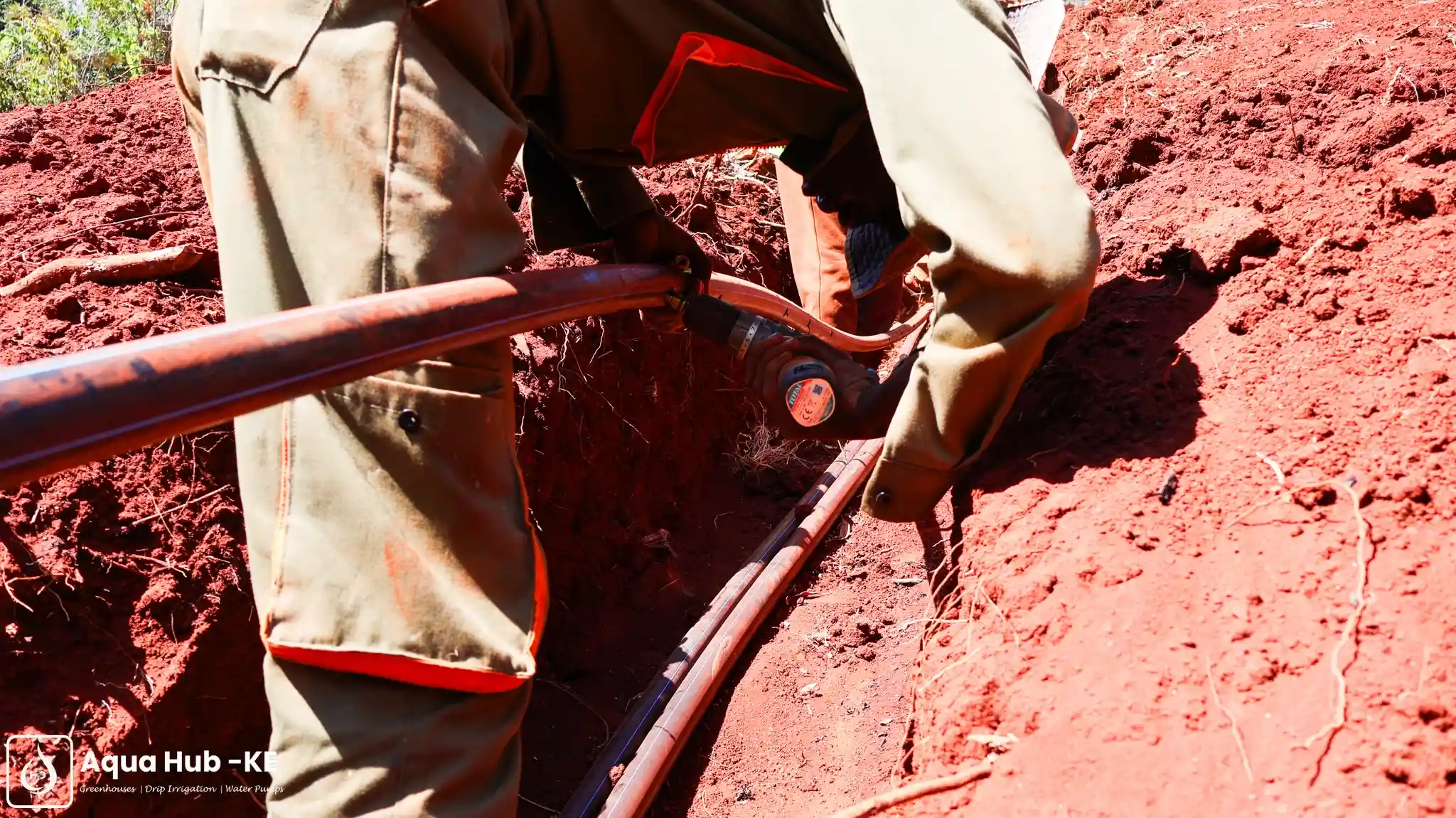
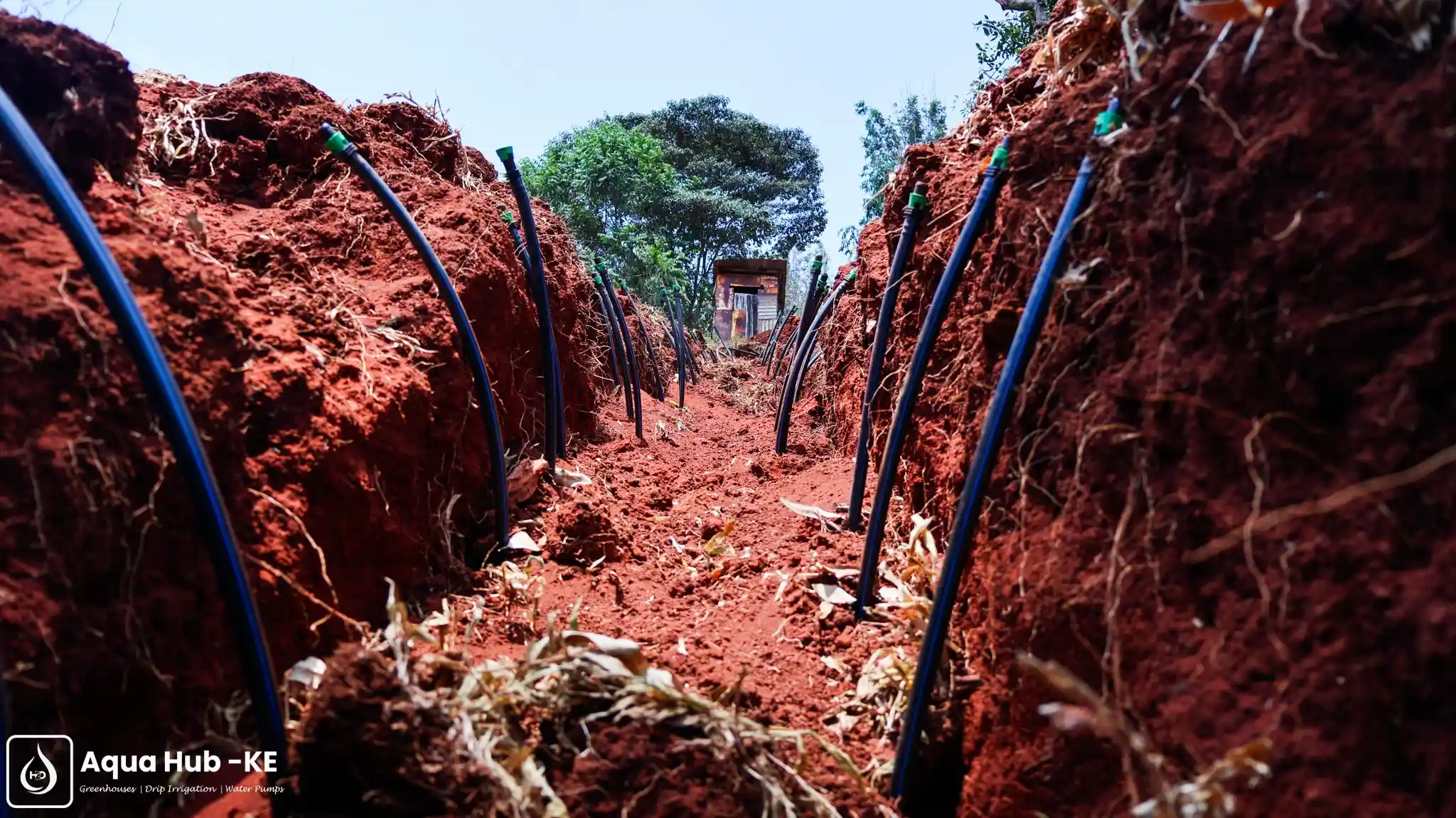
Installation began with the 50mm HDPE main pipe, which was laid in the trenches. The 40mm HDPE submain pipe was then connected to it and run to the beds, and valves were fitted to control the flow. Once the pipes were in place, the trenches were backfilled.
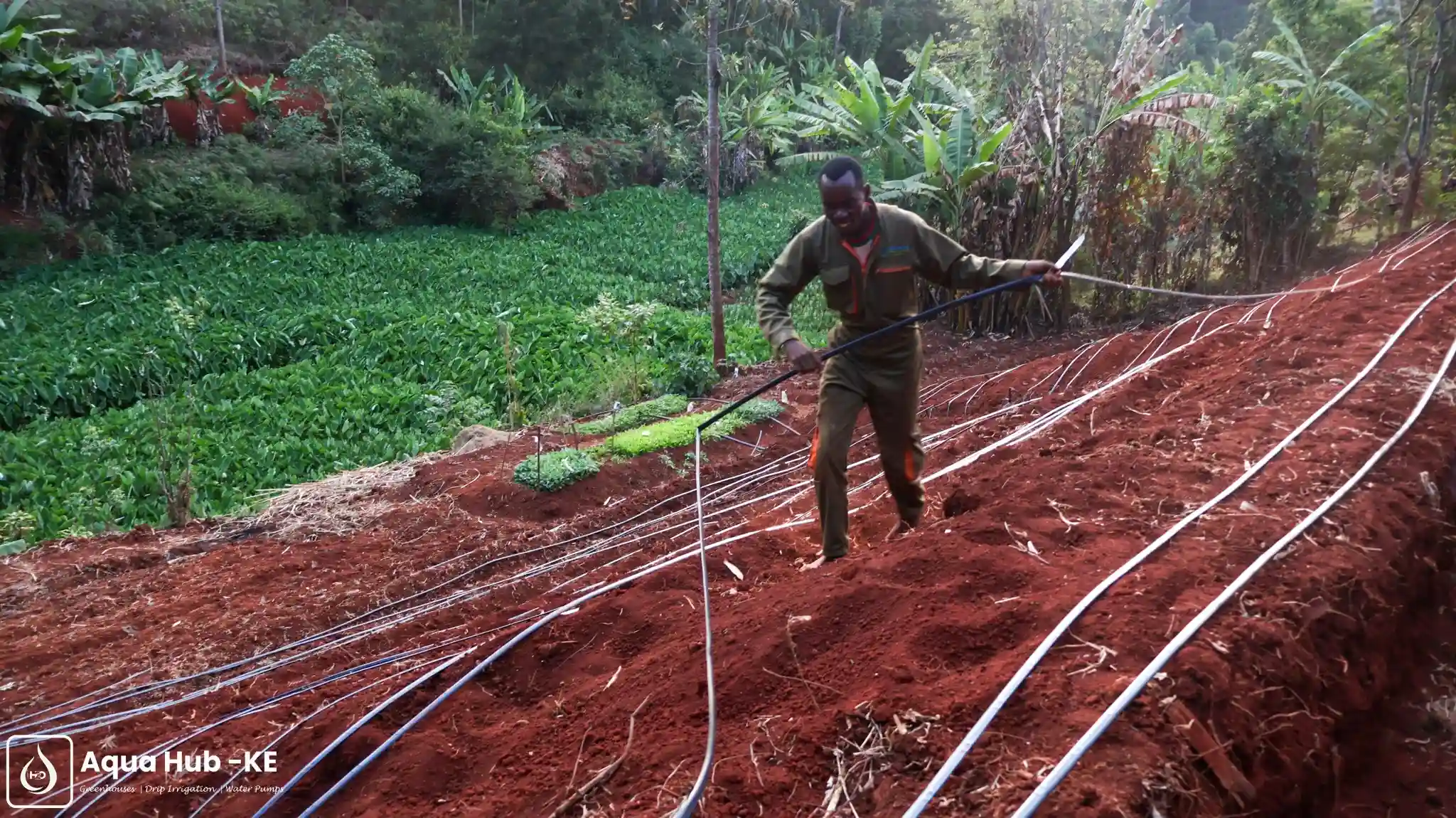
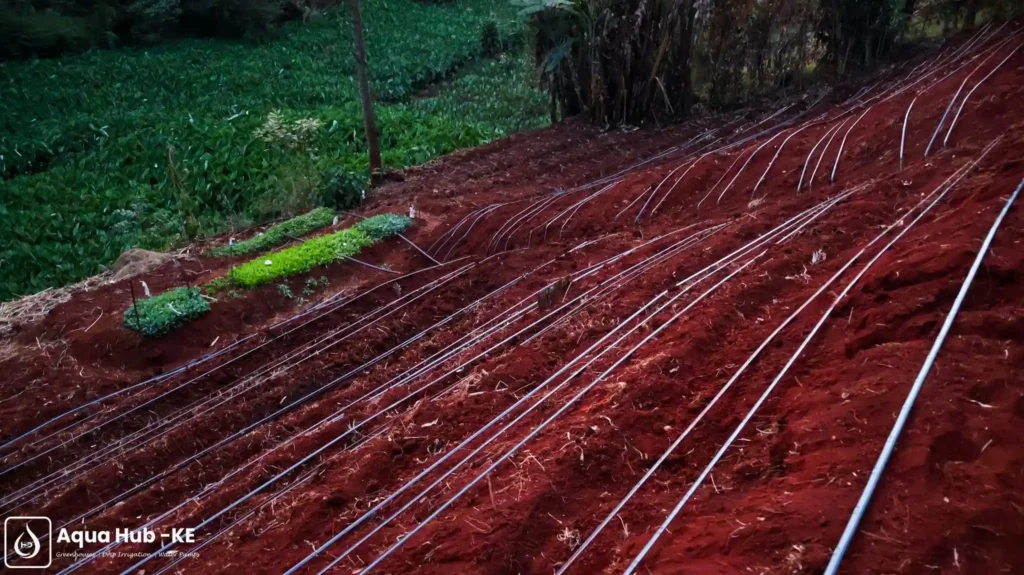
The drip lines were laid along the beds and pegged down to hold them in position. With the pipework and drip lines installed, the system was ready to be connected to a water supply.
2 October 2026
Once installation was complete, our team carried out quality checks on the work. We checked the pipe connections and joints, the fitting of the valves, the layout of the drip lines and the backfilling of the trenches. The checks were completed before handover.
IN PICTURES
Project gallery
THE OUTCOME
Before
The school relied on an inconsistent water supply, creating challenges for daily operations and sanitation.
After
The completed borehole and storage system provides the school with a dedicated water infrastructure solution designed around its daily requirements.
Client Testimonial
COMMON QUESTIONS
FAQs
How much does drip irrigation for half an acre cost?
Drip irrigation for half an acre costs KES 70,000 to KES 90,000. The exact cost depends on the pipe sizes and the layout of the beds.
How long does it take to install drip irrigation?
Installing drip irrigation on half an acre takes 2 to 4 days. The time depends on the layout of the beds and the state of the ground.
Is drip irrigation suitable for spinach and kale?
Drip irrigation is suitable for spinach and kale, since both crops need steady moisture at the roots. Delivering water to the base of the plants also keeps the leaves drier.
How does drip irrigation save water?
Drip irrigation saves water by delivering it slowly to the roots of each plant. Less is lost to runoff and evaporation than with hand watering.
Can drip irrigation work on sloping land?
Drip irrigation can work on sloping land when the beds are laid out to follow the slope. Terraces help by reducing soil erosion and keeping the beds level.
Does drip irrigation need a pump?
Drip irrigation needs a pump when the water source is too low to push water through the lines. Where the source sits on higher ground, gravity can supply the pressure.
How much maintenance does drip irrigation need?
Drip irrigation needs regular maintenance to keep water flowing evenly. This includes cleaning the filters, flushing the lines and checking the drip lines for blockages or leaks.
Have a similar project in mind?
Tell us about your site and we’ll get back to you with a free assessment.