
Blog
Solar Panels in Kenya for Home Use
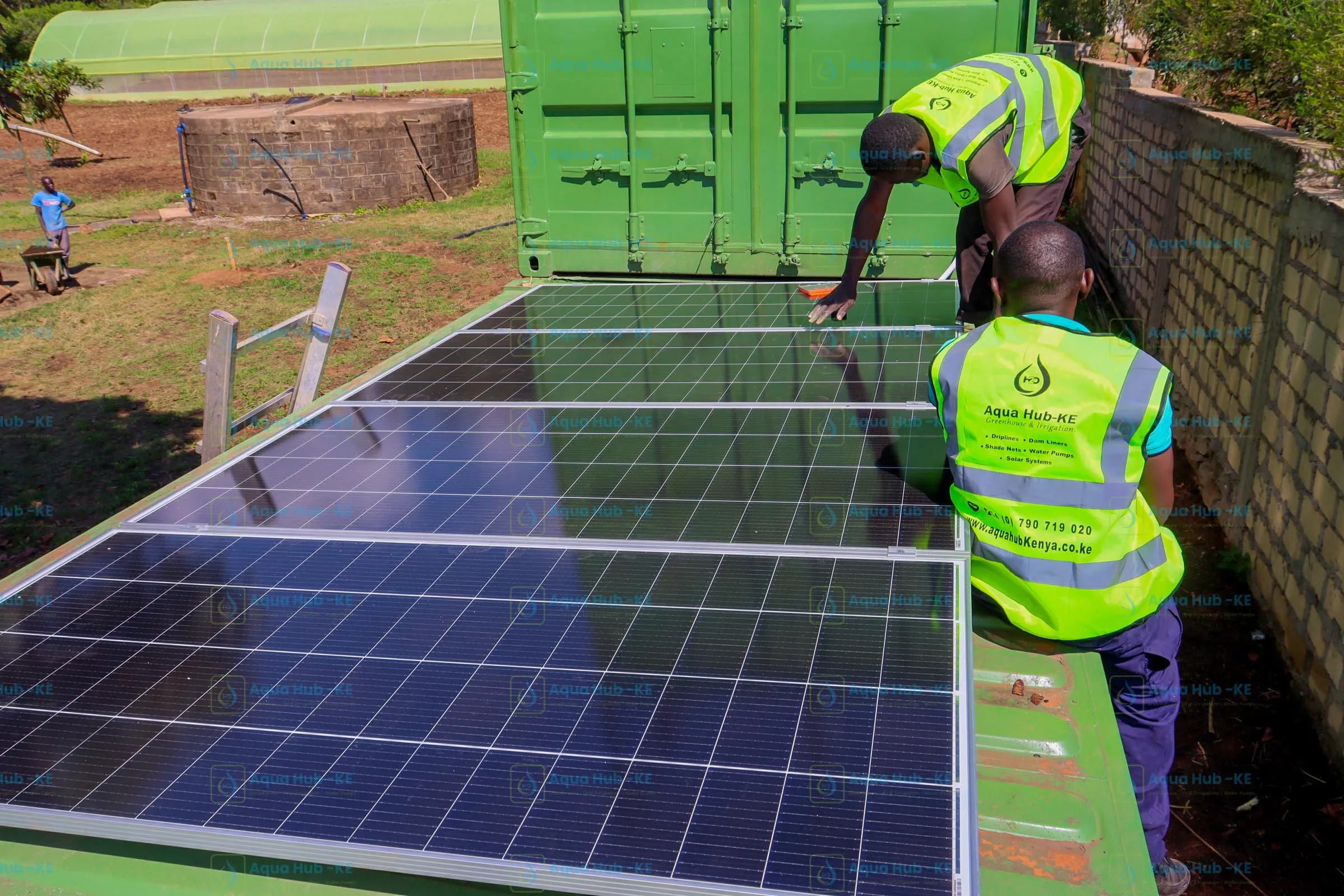
Our solar system installation projects use high-performance photovoltaic modules. We stock high-quality monocrystalline solar panels in Kenya rated at different power capacities to match your energy needs. These solar photovoltaic modules are sourced from leading manufacturers in the world and meet ISO standards. Solar power is much more economical than grid power, with many households seeking to cut costs.
Aqua Hub LTD is a popular dealer in solar solutions in Kenya. We supply and install solar power systems, including quality solar panels, inverters and accessories. We also install solar borehole pumps, solar booster pumps and accessories.
Call 0711138312
Quick Takeaways
- Solar panels cost from KES 3,000 to KES 30,000 or more.
- Submersible pumps are best for boreholes
- Proper sizing is critical for efficiency
- Solar eliminates fuel and electricity costs
- Installation quality determines system lifespan
- Solar is ideal for off-grid farms and communities
How Solar Panels Work
Solar panels turn sunlight into electricity through photovoltaic cells that are made from semiconducting materials such as silicon. When sunlight strikes these cells, it dislodges electrons, generating a flow of direct current (DC) electricity.
An inverter then changes this DC power into alternating current (AC) for use in homes
Solar Power System Components
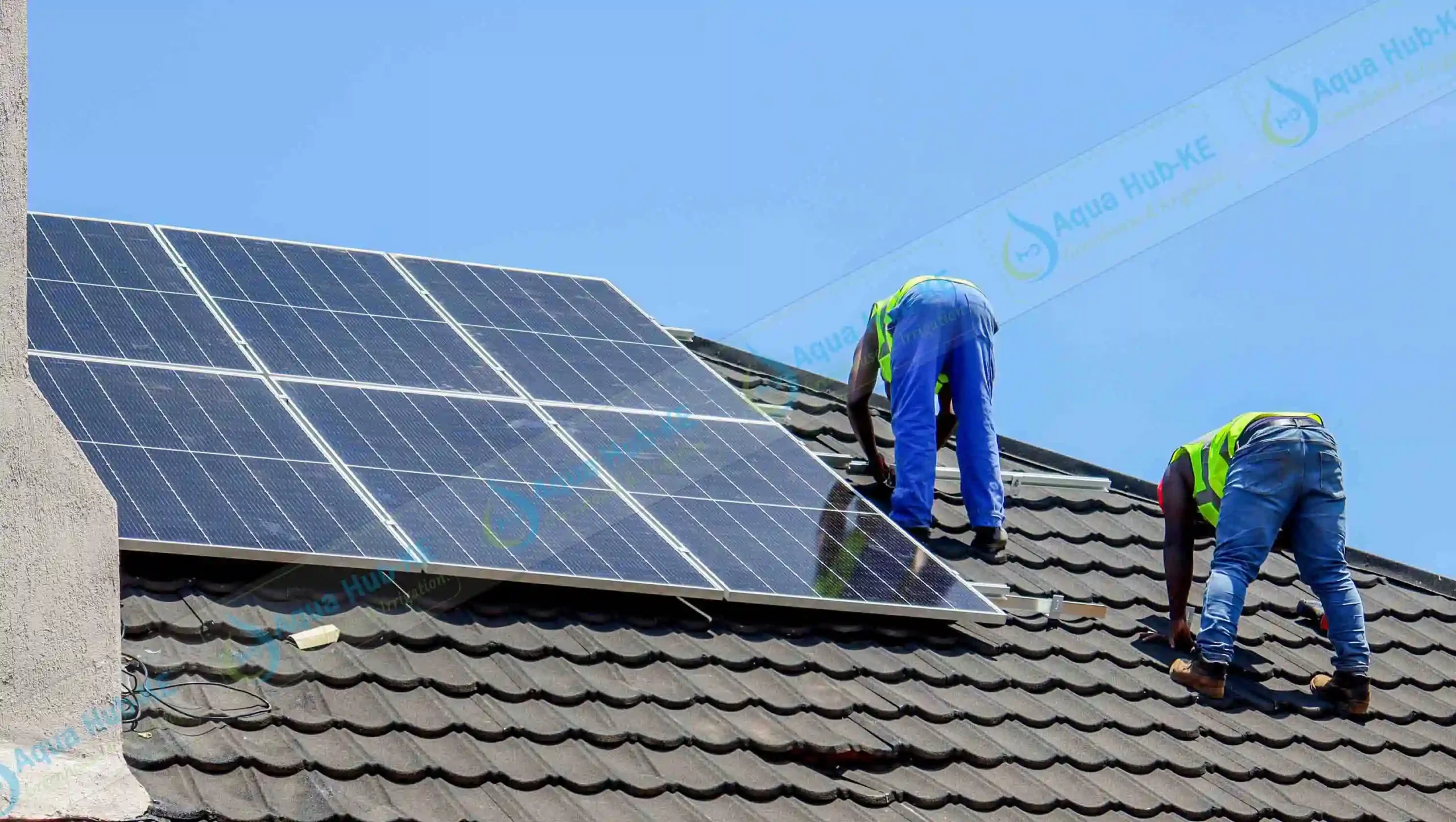
solar panel installation for home power system
- Solar Panels: the Photovoltaic modules that capture solar energy
- Inverter: converts DC current to AC, which is ideal for most household appliances.
- Power Cable: current supply from solar panels to the inverter or appliances.
- Optional battery: stores power for use when solar irradiance is low.
Cost of Solar Panels in Kenya
Costs vary depending on system size and usage.
Solar panels vary from KES 2,500 for 50 W panels to KES 30,000 or more for large 550 W panels.
Factors that affect the Cost of Solar Panels in Kenya
- Type of Solar Panel – Monocrystalline panels are more expensive than polycrystalline panels.
- Panel capacity – cost increases with an increase in wattage size.
- Brand – prices vary depending on the brand.
- Accessories – the cost also depends on the required accessories.
Types of Solar Panels in Kenya
Choosing the right panel matters for efficiency and cost.
1. Monocrystalline Panels
- High efficiency
- Best for limited space
- Higher cost
2. Polycrystalline Panels
- More affordable
- Slightly lower efficiency
3. Thin-Film Panels
- Lightweight
- Less common in Kenya
Solar Water Pumping in Kenya
Solar panels are also used to power solar pumps. Common types of solar-powered pumps include:
1. Submersible Pumps
Installed inside boreholes
Best for deep wells from 30 m to 300 m below the ground.
2. Solar Surface Pumps
- Used for shallow water sources
- Ideal for rivers or tanks
3. Solar Booster Pumps
Used to increase pressure for irrigation and water supply systems.
How to Size Solar Panels for Your Needs
Sizing determines system efficiency and cost. Proper sizing is done as follows:
- Calculate your energy needs: estimate your energy requirements by adding up all the power ratings of your appliances.
- Determine the size of the solar panels by dividing the total daily wattage required by the number of peak sunlight hours. In Kenya, the average peak hours of solar irradiance range from 4 to 6, depending on where you are.
- Next, divide the hourly solar power wattage by the power rating of the solar panels you have to find the number of panels required.
How to Setup and Install Solar Panels
Site Assessment
Site assessment is often done to evaluate the roof integrity, sunlight exposure and orientation.
Mounting Solar Panels
Install mounting brackets on the roof and secure solar panels to the mounting brackets.
Ensure the solar panels are installed to face south.
Wiring the System
Connect panels to inverter and battery.
Testing
Power on the system and test to check power output.
Benefits of Solar Power Systems
- Reduced Energy Bills: Solar power is economical because it relies on free solar energy.
- Energy Independence: You can monitor and control your energy consumption. Grid power often faces rationing, which is a problem.
- Reliability: Solar power provides reliable backup power for households and businesses during outages.
- Environmentally friendly: does not emit carbon or harmful chemicals to the environment.
- Renewable energy depends on the sun, which is always available.
- Cost Saving: Despite being cost-to-buy, it is cost-saving.
- Less maintenance needs: it does not need complex maintenance.
Why Should Solar Panels Face South?
Solar panels are installed to face south to enhance maximum sunlight exposure throughout the day.
Where to Buy Solar Panels in Kenya
Aqua Hub Kenya stocks quality solar panels.
Call 0711138312
Frequently Asked Questions
1. How much does a solar system cost for a home in Kenya?
From KES 50,000 to 800,000 or more depending on size.
2. How many solar panels do I need for my house?
It depends on your energy requirements.
3. Does rain affect solar panels?
No. Solar panels are designed to withstand rain or damage from outside exposure.
4. What is the best type of solar panel?
Monocrystalline panels are the most efficient.
5. Do I need batteries for my solar power system?
Batteries are optional but reliable backup when sunlight is unavailable.
6. How long do solar panels last?
25 years.
7. Can solar work during cloudy days?
Yes, but output reduces.
8. What direction should solar panels face?
South.
9. How to choose a good solar panel?
Assess your energy needs, solar irradiance, roof structure and budget.
10. Where can I buy solar panels?
Aqua Hub Kenya.