

Blog
Greenhouse Misting System in Kenya
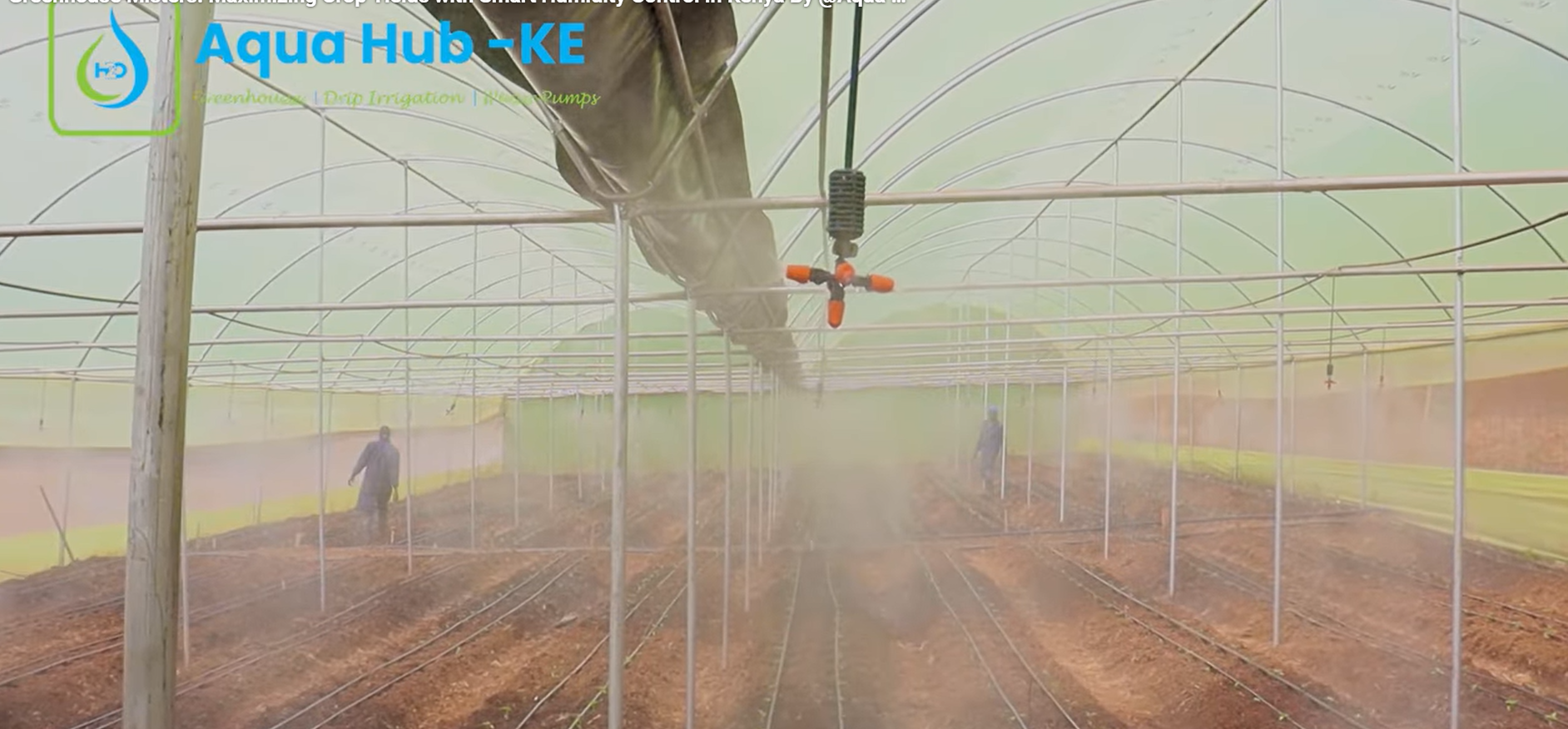
High yields in greenhouse farming, especially for hybrid capsicum and indeterminate tomato varieties, require optimal temperatures. The greenhouse mist system reduces heat by releasing a cool mist effect. Our greenhouse misting system uses 4-way mister heads with a flux of 5.5 l/h and a spray radius of 0.8–1 m to lower temperature by 5–10°C.
Buy quality greenhouse materials and mist systems in Kenya from Aqua Hub. We deal in wooden, metallic and automated greenhouses with misting systems and automatic irrigation.
Call 0790719020
Learn why a greenhouse mist irrigation system is essential for efficient crop production in a greenhouse environment.
Quick Takeaways
- A greenhouse misting system regulates temperature and humidity in greenhouses.
- Misting systems can reduce greenhouse temperatures by 5–10°C.
- Most misting heads use about 5 litres of water per hour.
- Typical nozzle spacing is 1 meter apart for uniform coverage.
- Greenhouse misters in Kenya cost between KES 300 and KES 1,000.
- Filters are essential to prevent nozzle clogging.
How Much are Greenhouse Misters in Kenya?
KES 350 each
What is a greenhouse misting system?
misters for capsicum greenhouse
A greenhouse mist irrigation system is a spray technology that emits very fine moisture droplets inside the greenhouse. The cool mist released absorbs heat, and the temperature drops to an optimal level.
Greenhouse Misting Kit
For complete setup and efficient operation of the greenhouse mist system, you need:
- High-pressure pump: pumps water at high pressure needed for the mister head to generate a mist effect.
- ½” Mainline Irrigation tubing: installed above the plants to supply water to mister heads.
- Pressure regulators: control the pressure in the system.
- 200 mesh water filter: to remove sediments and prevent clogging of the mister nozzles.
- Pipe connectors: Easy Loc tees, elbows and figure 8 ends for PE tubing.
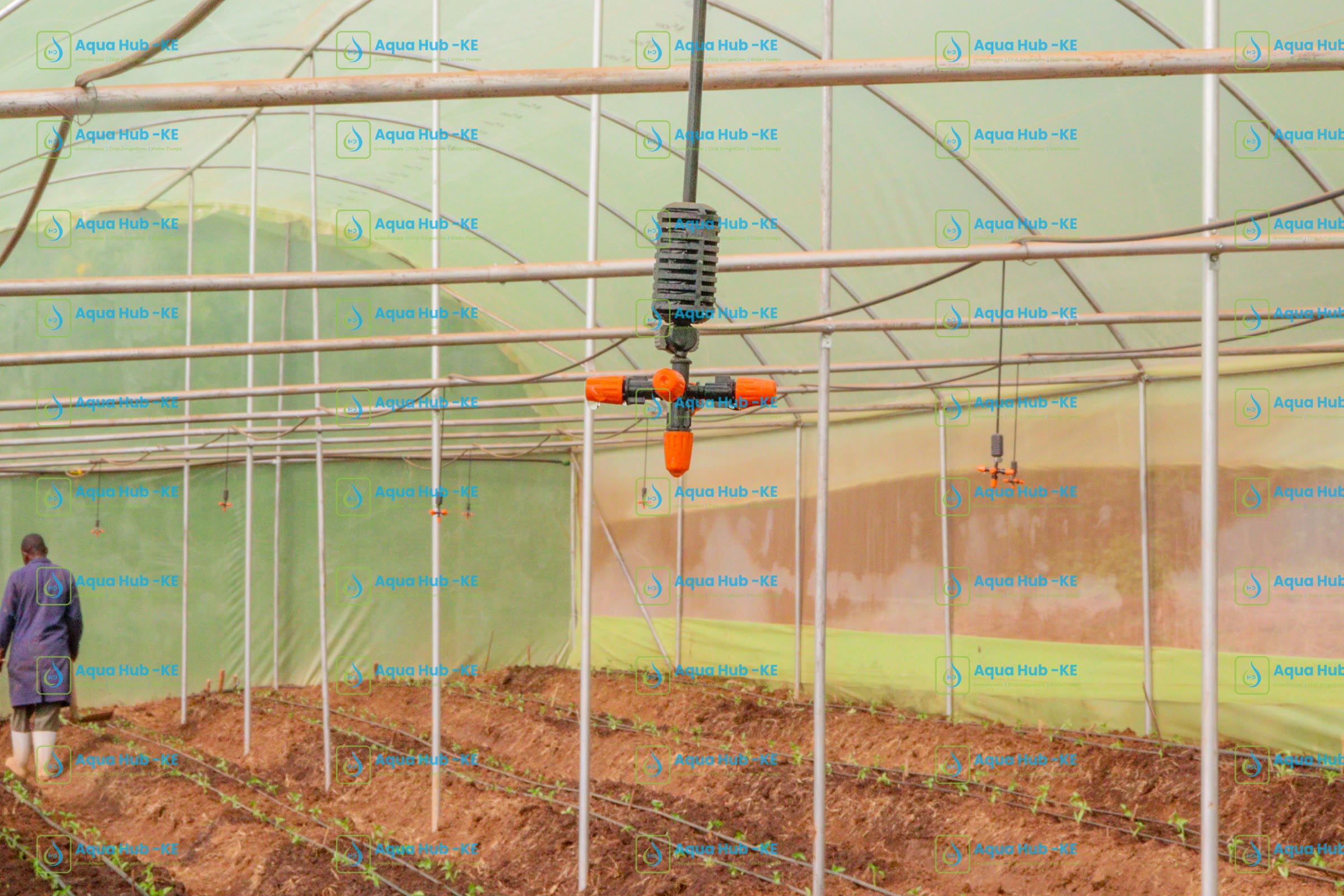
- Misters: for generating mist spray effect. Has 4 nozzles with a flow rate of 5 L per hour each.
How a Greenhouse Works
Greenhouses improve production because of their optimal temperature and humidity that favour plant growth and yield. The design includes greenhouse polythene, which traps sunlight heat, and ventilation that allows air for temperature regulation.
During hot periods, temperatures rise, and if not well regulated, it would cause wilting, slow growth, and flower drop. Therefore, misting systems, greenhouse ventilation nets and insect nets are ideal for greenhouse farming.
How Greenhouse Mist Irrigation Operates
The greenhouse mist system discharges a fine mist-like spray through 4-way misters connected to a pipe suspended near the roof of the greenhouse. The misters have tiny nozzles that break the water into a fine mist.
Types of Greenhouse Misting Heads
Choosing the best mister for greenhouse irrigation depends on the crop and greenhouse size.
1. Two-Way Misters
- Spray water in two directions
- Ideal for narrow greenhouse rows
2. Four-Way Misters
- Cover a wider area
- Commonly used in vegetable nurseries
3. Anti-Drip Nozzles
- Prevent water dripping after misting
- Reduce water waste and fungal problems
Crop-Specific Uses of Greenhouse Misting Systems
Misters are used for cooling during hot seasons in greenhouses that grow:
- Leafy greens – broccoli, spinach and lettuce
- Herbs – ferns, coriander, garlic and chives.
- Capsicum – hybrid capsicum varieties (Passarella, golden sun and California wonder)
- Seedlings – vegetable seedlings such as kale, lettuce, cabbage, Swiss chard, and beetroot.
How to Set Up a Greenhouse Misting System
1: Connect Water Source
Attach the system to a reliable water supply and install a filter.
2: Install Pump
A high-pressure greenhouse misting pump pushes water through the system.
3: Install the PE delivery pipe:
Suspend the PE tubing over the crop support roof structures along the greenhouse ceiling and connect it to the water pump.
4: Install Misting Heads
Make holes in the suspended PE mainline pipe and insert the barbed end of the mister tubing. Space the misters 1 m apart on the mainline pipe tubing.
5: Test System
Start the system to check if the mister heads are working properly. Every mister should release a fine spray.
Essential Equipment for Modern Greenhouse Farming
Beyond misting systems, a modern climate-controlled greenhouse is equipped with:
- Light systems – for optimal light enhancement in light-sensitive crops.
- Heating systems – to enhance temperature during extremely cold nights or seasons.
- Fans – directs air for temperature regulation.
- Moisture sensors – monitors soil moisture for efficient irrigation control.
- Automatic irrigation system – integrates smart controllers and sensors to ensure optimal watering. Start and stop irrigation depending on the moisture level of the soil.
- Automatic misting kit – also uses smart controllers to cool the greenhouse when the temperature exceeds the optimal level.
- Fertiliser injectors – feed fertilisers to crops through automated irrigation systems.
Benefits of Greenhouse Mist Kit
- Maintains ideal humidity levels
- Prevents plant heat stress that could result to wilting.
- Improves seed germination by enhancing moisture access and optimal temperature.
- Supports healthy plant development
How to Manage a Greenhouse Successfully
Effective greenhouse management requires consistent monitoring.
- Maintain humidity between 60% and 80%
- Ventilate during hot afternoons
- Avoid over-misting
- Inspect nozzles regularly
- Clean filters weekly
Many successful greenhouse farmers automate their misting systems using temperature or humidity controllers, ensuring the system activates only when needed.
Troubleshooting Common Problems with Greenhouse Misting System
- Clogged nozzles: clean using vinegar and flush with water.
- Low pump pressure: use the pump with the recommended pressure.
- Uneven coverage: ensure correct nozzle spacing.
Frequently Asked Questions
1. Are misters good for a greenhouse?
Reduces temperatures for optimal growing conditions.
2. How much do greenhouse misters cost in Kenya?
KES 300 – KES 1,000.
3. Do I need a pump for a greenhouse misting system?
Yes. A high-pressure pump ensures water is forced through the misting heads to create fine droplets.
4. How far apart should greenhouse misting heads be installed?
1 M.
5. How much water does a greenhouse mister discharge?
Each nozzle discharges 5 litres per hour.
6. How do I maintain greenhouse misting heads?
Clean nozzles regularly and install fine mesh filters to prevent clogging.
7. What plants do well with misting?
Seedlings, herbs, leafy vegetables, and flowers.
8. Do I need a pump for my misting system?
Yes. A high-pressure pump is required to attain mist discharge.
9. How long should greenhouse misting systems run?
10–30 minutes depending on temperature and crop needs.
10. Where Can I Buy Greenhouse Mist Systems in Kenya?
Aqua Hub Kenya.