
Blog
Irrigation System Installation in Kenya
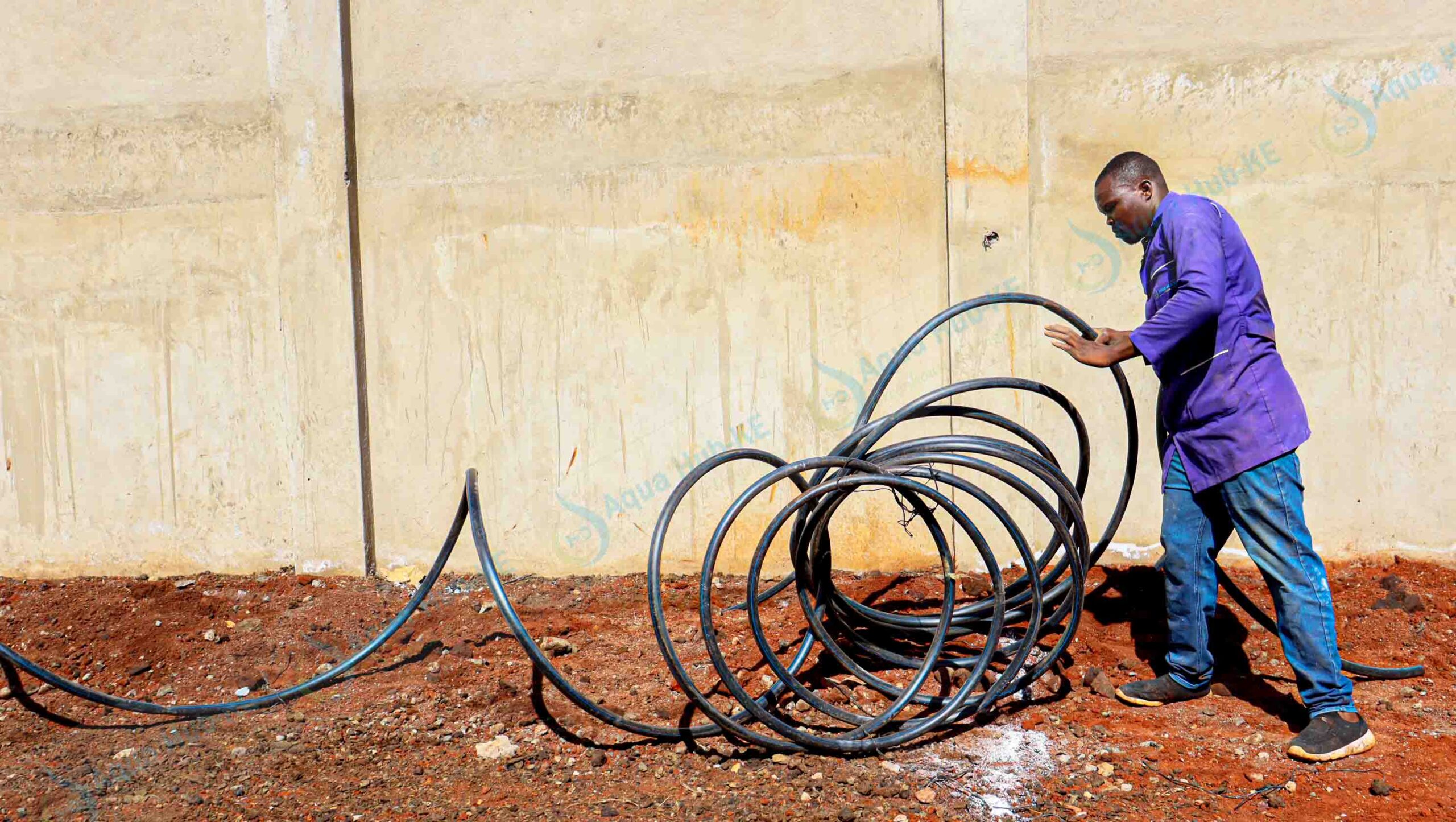
Rain-fed agriculture is highly unreliable; thus, irrigation remains a solution for year-round agricultural production. Aqua Hub LTD is the top irrigation system installation and sales company in Kenya. We supply drip irrigation kits, sprinklers, rain hose system, rain guns, sprayers and button drippers.
Call 0790719020
This comprehensive guide explores the types of irrigation systems, cost and installation in Kenya.
Quick Takeaways
- Drip irrigation is best for high-value vegetables and water conservation.
- Expect to spend between KES 130,000 and KES 185,000 for a standard 1-acre drip installation.
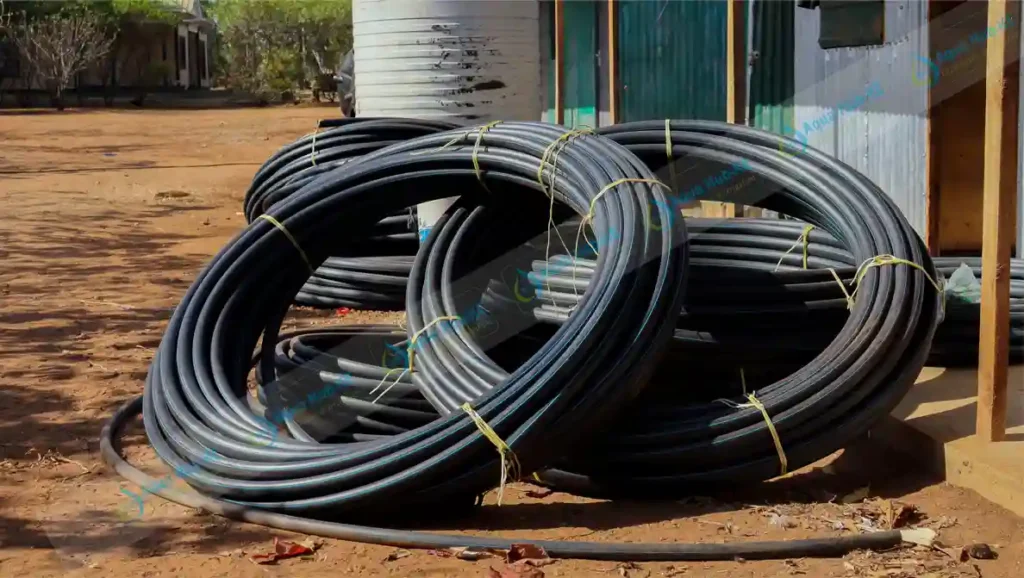
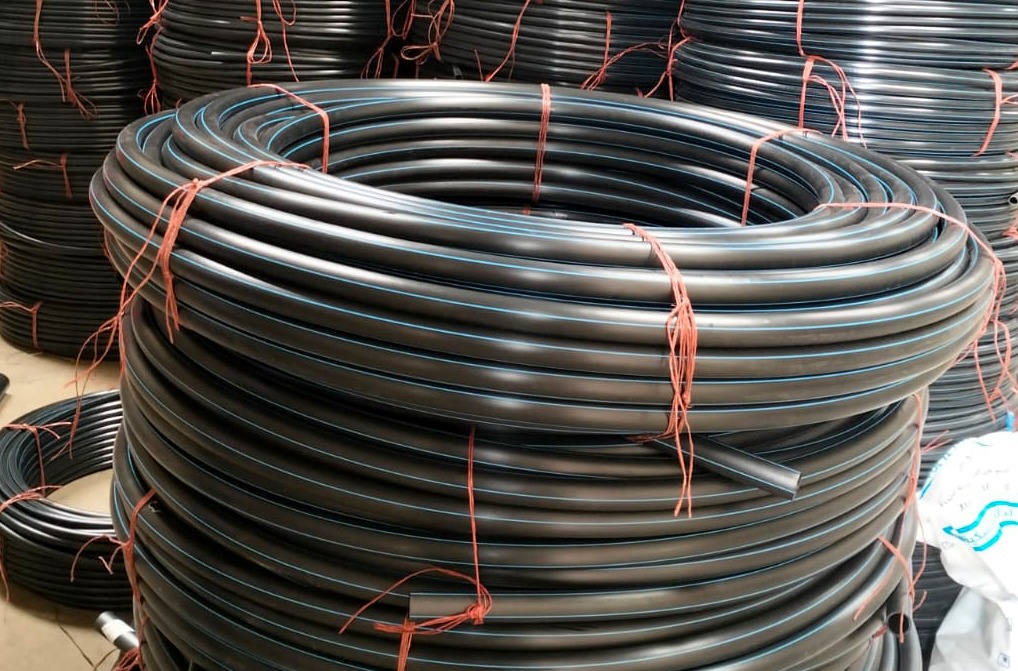
- HDPE pipes are superior to PVC for surface-level installations due to UV resistance.
- Filters are non-negotiable if your water source is a dam, river, or borehole.
Cost of Irrigation System Installation in Kenya
The Cost of irrigation system installation in Kenya varies significantly based on the complexity of the setup and the quality of materials used. The installation cost for a 1-acre drip kit ranges between KES 130,000 and KES 185,000. Cost is inclusive of the mainline, sub-main pipes, driplines, filter, connectors and driplines.
| System Type | Farm Size | Estimated Cost (KES) |
| Drip Irrigation | 1 Acre | 130,000 – 185,000 |
| Sprinkler System | 1 Acre | 65,000 – 120,000 |
| Rain Hose System | 1 Acre | 50,000 – 90,000 |
| Solar Water Pump | Small Scale | 60,000 – 150,000 |
Irrigation Systems for Sale in Kenya
Our irrigation systems are customized based on your farm, water source and topography. We often seek to ensure we give our clients a system that will efficiently water their crops while minimizing costs.
Irrigation Systems for sale by Aqua Hub LTD include:
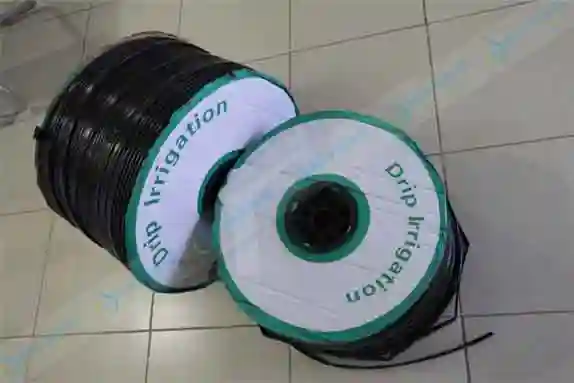
- Drip Kits: drip kits are designed for precise irrigation of crops on root zones. Package includes driplines, HDPE main & sub-mains, laterals and connectors.
- Sprinkler Systems – we have different types of sprinklers including impact, rain guns, flange sprinklers, pop-up sprinklers and micro-sprinklers.
- Rain hose systems – are for irrigation of crops through overhead rain-like sprays. Rain hose pipes connected with mainline HDPE pipe and hose connectors make up the system.
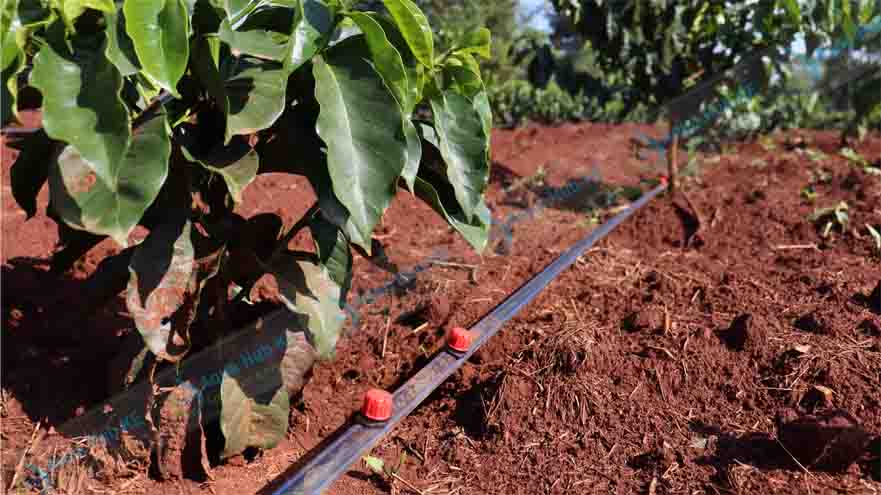
- Button drippers – delivers a precise irrigation effect to row planted fruits and tree crops. complete system consists of mainline pipe and a 16mm PE pipe with button drippers spaced as per the crop spacing.
Types of Irrigation Systems in Kenya
Drip Irrigation
Delivers water directly to plant roots ideal for vegetables and fruits.
Sprinkler Irrigation
Sprays water like rainfall suitable for large fields.
Rain Hose Irrigation
Use hose pipes with laser-punched holes to water crops through smooth fine overhead sprays like rain.
Furrow Irrigation
Uses gravity to distribute water low cost but less efficient.
Center Pivot Irrigation
Automated rotating systems for large-scale farms.
Each irrigation system is often designed for different crops and topography.
Deciding Which Irrigation System to Use for Your Farm
The choice of the irrigation method to use depends on crop water needs, susceptibility to fungal infections and land elevation.
If your crops are growing crops that are vulnerable to leaf rots or fungal diseases, drip irrigation is recommended. For crops with high water needs, overhead sprinklers would be recommended.
Row planted trees and fruits are best watered using button drippers, because they match the spacing and water needs.
For uniformity of irrigation in crops that are not grown in rows or line spacing, overhead sprinklers are ideal. For example, fodder crops such as lucerne or Pakchong grass.
Crops Suited for Different Irrigation Methods
Drip Irrigation System
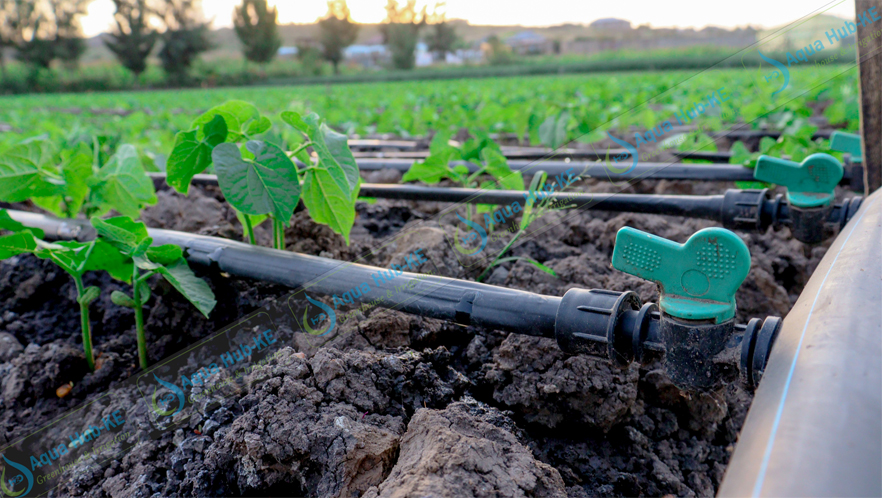
- Tomato – 2 driplines per bed.
- Capsicum – 2 driplines per bed
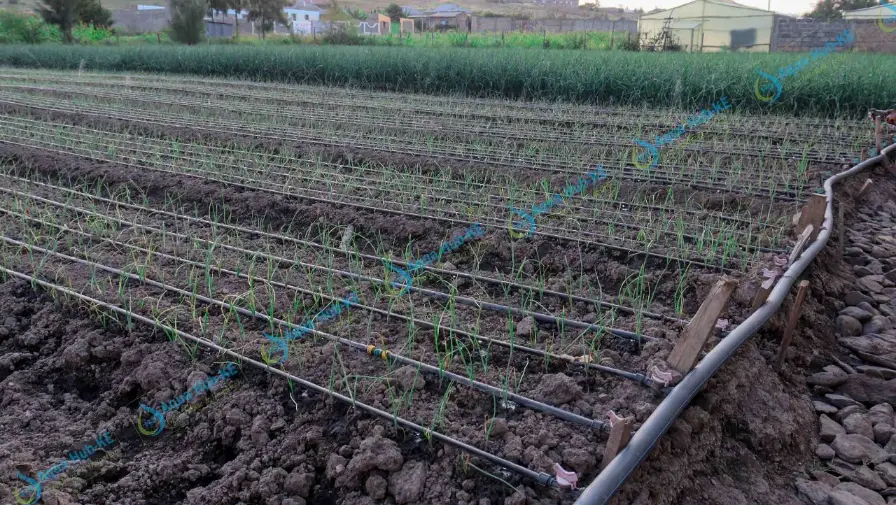
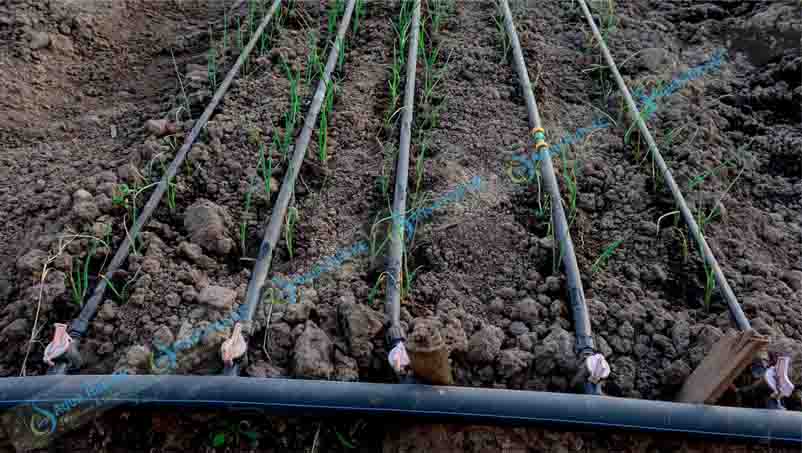
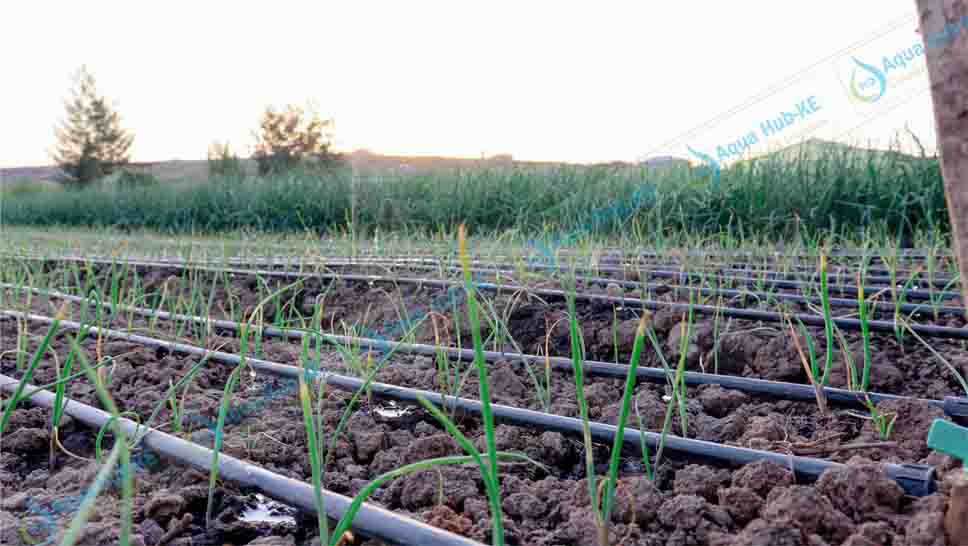
- Onions – 3 or 4 driplines per bed
- Garlic – 3 or 4 driplines per bed
- Strawberry – 2 lines per bed.
- Leafy greens – 2 lines per bed
Sprinklers
- Leafy greens (Spinach, kales, lettuce and cabbage) – impact sprinkers or micro-sprinklers.
- Fodder – impact sprinklers or rain guns
- Wheat – rain guns
- Sugarcane – rain guns and flange rain guns
- Cotton – rain guns
Button Drippers
- Avocado, citrus or apple trees
- Young trees such as cypress, flowers and pine.
- Macadamia
- Coffee trees
Rain Hose irrigation System
- fodder crops
- leafy greens
- Potatoes
Drip Irrigation
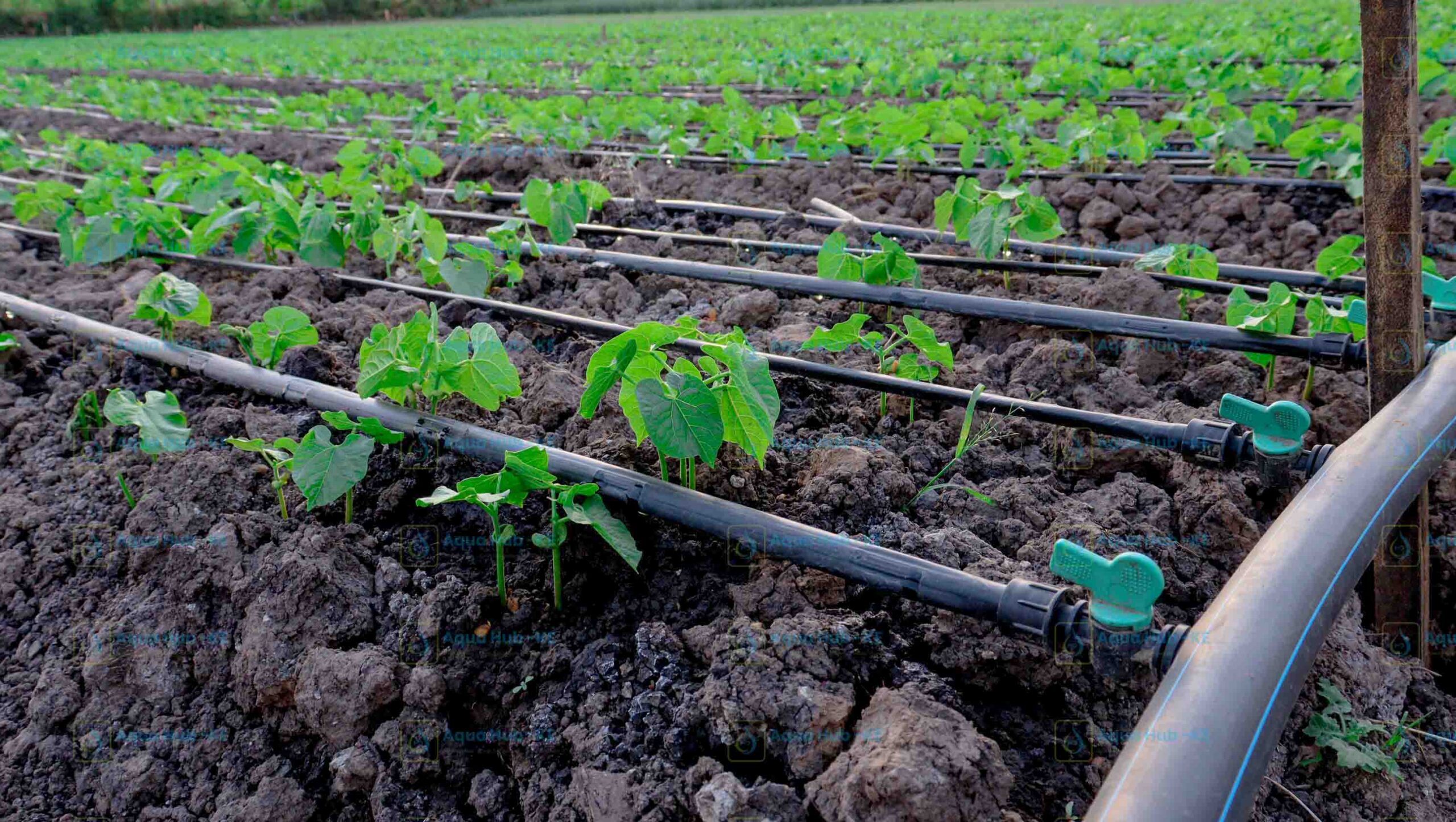
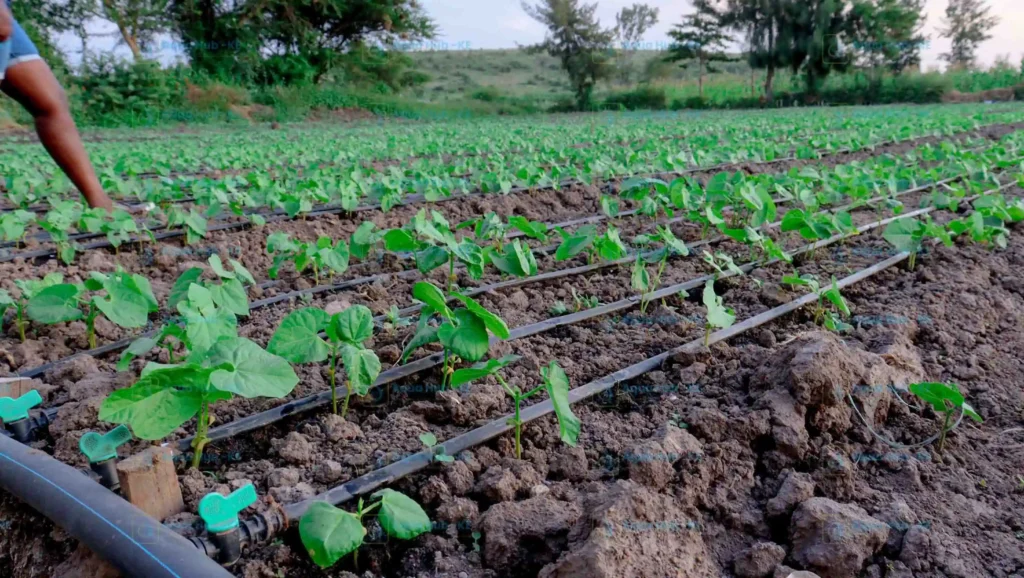
drip irrigation connection
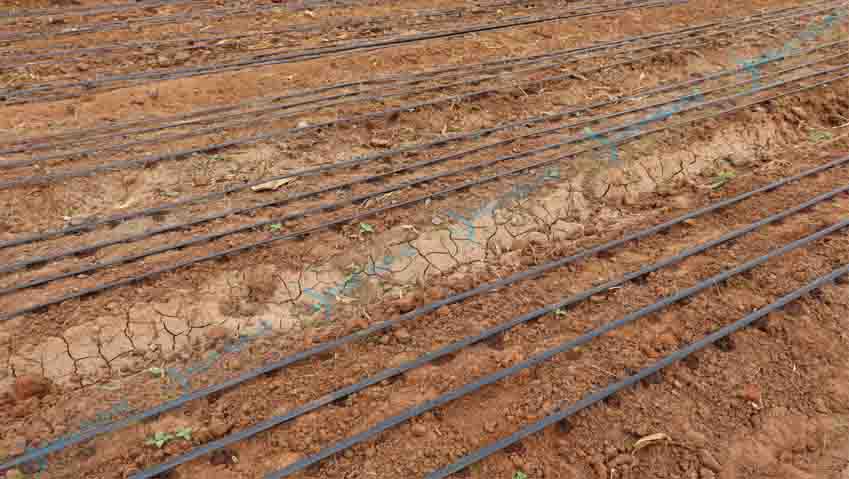
Drip irrigation is the most effective Irrigation System in Kenya. It uses UV-treated driplines with emitters spaced at 15cm, 20cm, or 30cm.
This system is particularly vital for precision farming where fertigation (applying fertilizer through the water) is required to boost yields.
Advantages of drip Irrigation
- Water Savings: Reduces water usage by up to 60% compared to flood irrigation.
- Yield Increase: Consistently provides optimal moisture, leading to 30-50% higher yields.
- Labor Reduction: Once turned on, the system works automatically, freeing you for other farm tasks.
Overhead Sprinkler Irrigation
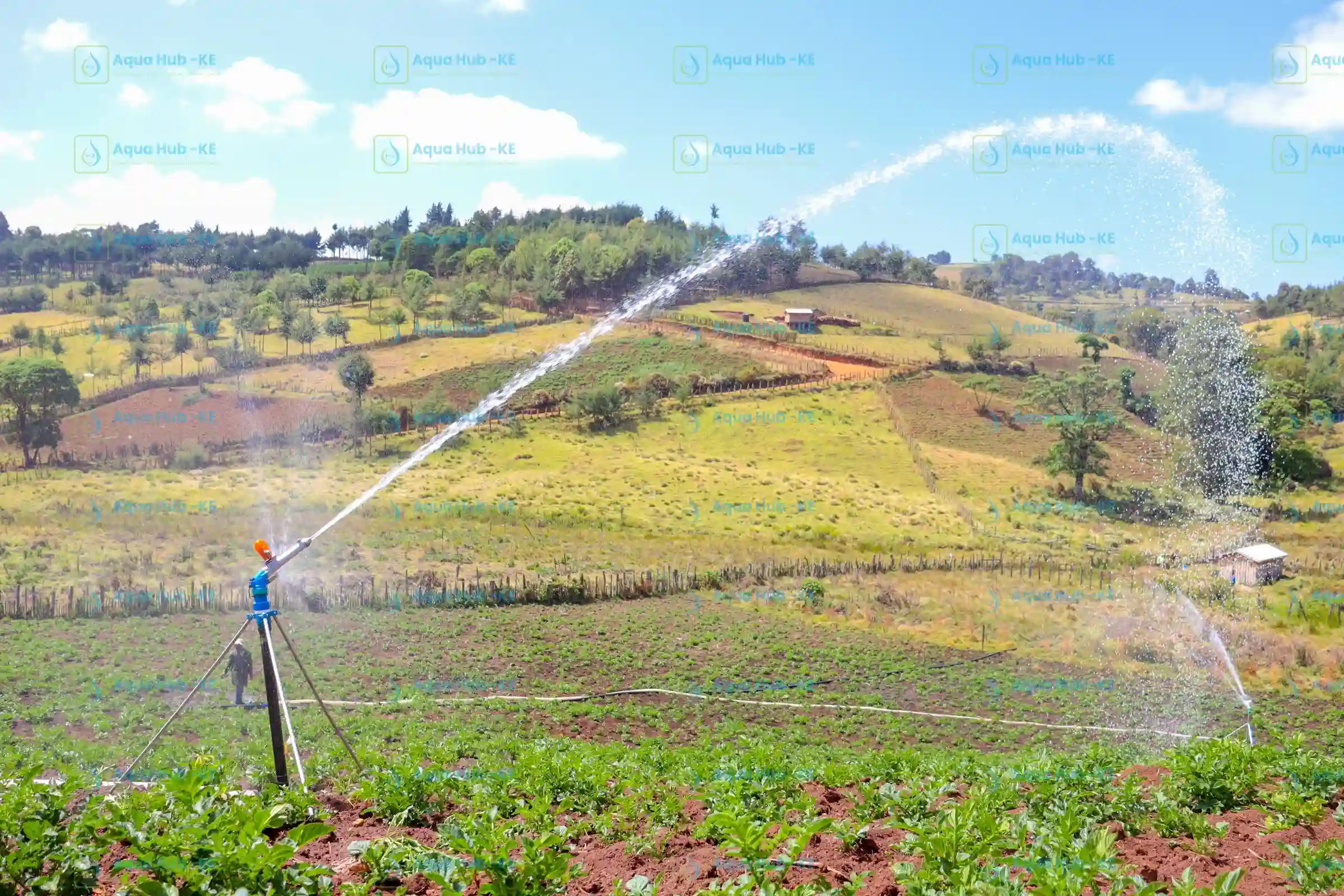
sprinkler irrigation
Overhead sprinkler systems work efficiently for large farms with water intensive crops. Irrigate crops using high water pressure and are reliable for both flat and hilly landscapes.
With the wide range of sprinklers available, you can choose one that matches your crop water needs.
Understanding Irrigation System Installation Process
- Site Survey: for assessment of water availability, slopes, farm size and other aspects used for designing a suitable irrigation system.
- Design: bed making and mapping out the mainline and sub-main layout
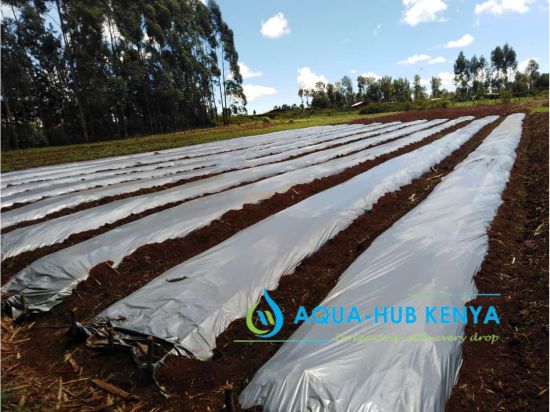
- Trenching: Burying pipes to protect them from farm machinery and UV damage.
- Pipe connection: connection of mainline pipe to sub-mainline, fittings and driplines.
- Testing: After system connection, you open the water flow to test the system.
How to Maintain Irrigation Systems
Your investment only lasts as long as your maintenance routine. To keep your irrigation efficient for a long time, you must:
- Flush the lines monthly to remove sediment.
- Clean solar panels weekly to maintain high pumping efficiency.
- Check for leaks at the joints, especially after weeding or tilling.
Frequently Asked Questions
1. What is the cost of drip irrigation per acre in Kenya?
130,000 to KES 180,000.
2. How long does an irrigation system last?
Depends on the maintenance.
3. Which is better between drip and sprinkler irrigation?
It depends on the crops you are growing. For row spaced and low water crops use drip irrigation.
4. How many drip lines do I need per bed for tomatoes?
2 drip lines per bed
5. Can I use a gravity-fed system for drip irrigation?
Yes. The water tank needs to be elevated 3 m high.
6. What are the types of irrigation systems in Kenya?
Drip, sprinkler, rain hose, furrow and button drip irrigation
7. How long does irrigation system installation take?
2 -3 days for a 1-acre farm.
8. Which irrigation system is best?
Drip irrigation.
9. How do I prevent my driplines from clogging?
Use a quality disc or screen filter and flush your system with treated water.
10. What is best irrigation company in Kenya?
Aqua Hub Kenya.