
Blog
Affordable Greenhouses in Kenya: Cost and Design
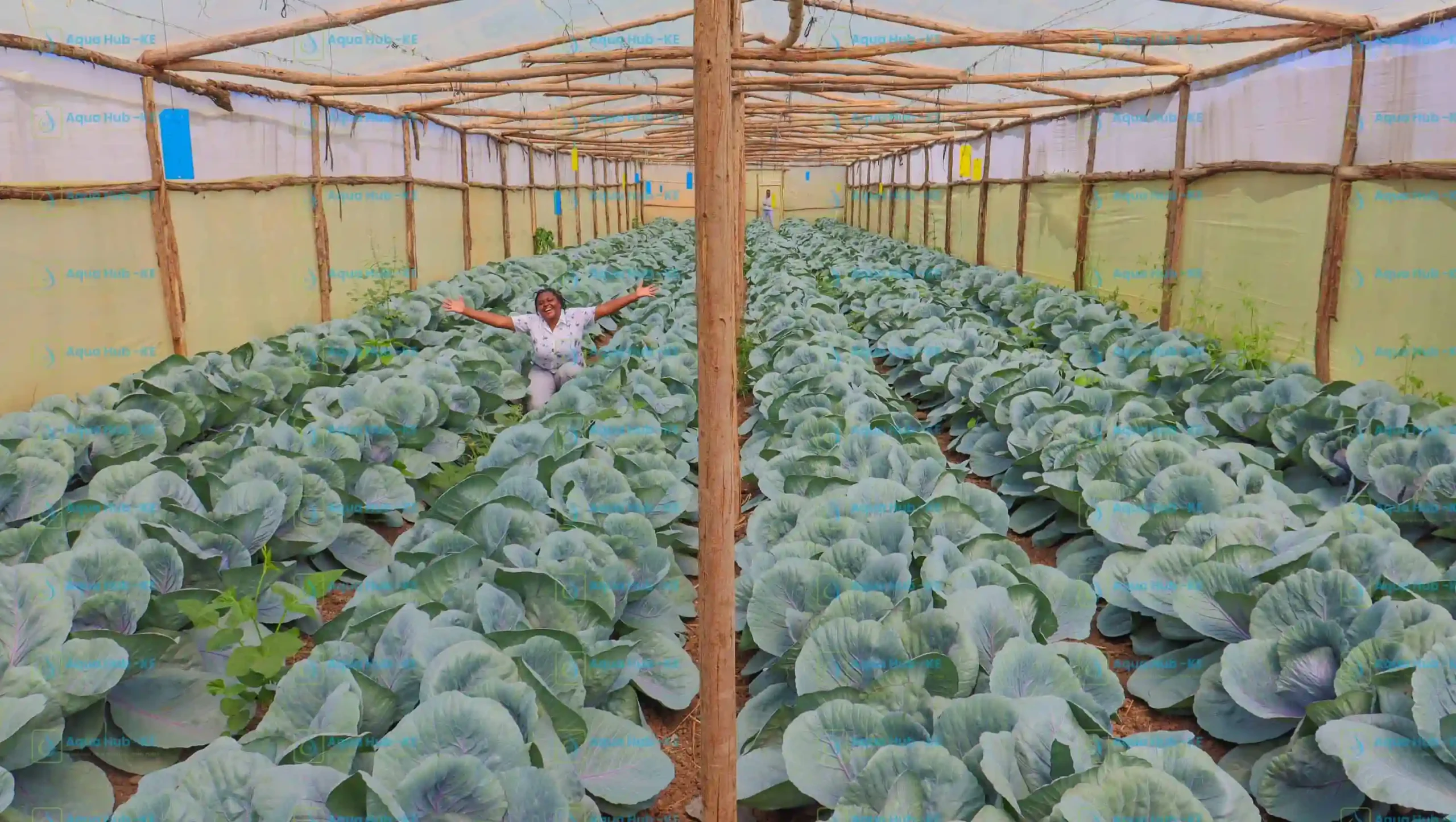
Affordable greenhouses in Kenya from Aqua Hub LTD are dependable for growing green vegetables, herbs, capsicum, tomato and flowers. Smallholder farmers can now boost their produce levels all year without strain on their finances. At just KES 115,000 you can get a greenhouse structure that is big enough to start high value crop production.
Takeaways
- Greenhouse prices in Kenya range from KES 100,000–450,000 depending on materials and size.
- Wooden greenhouses are affordable but less durable; metallic ones have a long lifespan that exceeds 10 years.
- Tomatoes and capsicum offer excellent profitability.
- Drip irrigation reduces water use up to 60%.
- Start small, build experience, then reinvest profits.
How Much Does an Affordable Greenhouse Cost in Kenya?
Greenhouse prices vary depending on size, materials, and design. Below is a realistic price range Kenyan farmers should expect.
Small Greenhouses (8m × 15m)
- Wooden: KES 150,000–180,000
- Metallic: KES 120,000–150,000
- Net house: KES 100,000–130,000
Medium Greenhouses (8m × 24m)
- Wooden: KES 220,000–260,000
- Metallic: KES 180,000–210,000
Large Greenhouses (16m × 30m)
- Wooden: KES 400,000–450,000
- Metallic: KES 350,000–700,000 and beyond.
Affordable Greenhouse Package.
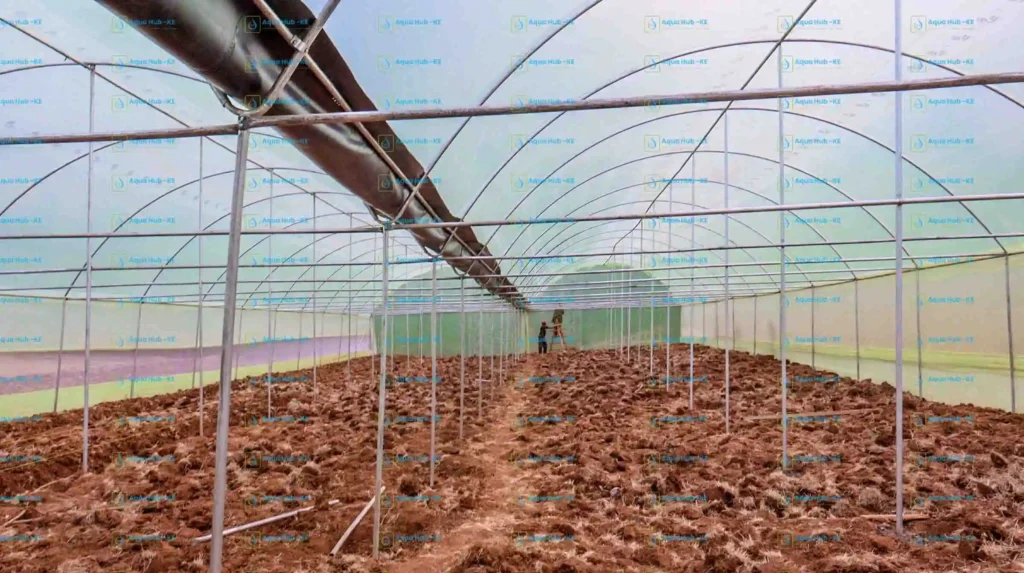
- Wooden / galvanized steel structure – wooden poles or galvanized steel pipes for building the support structure.
- UV treated Polythene Sheet – main covering material that allows sunlight and retains hot conditions.
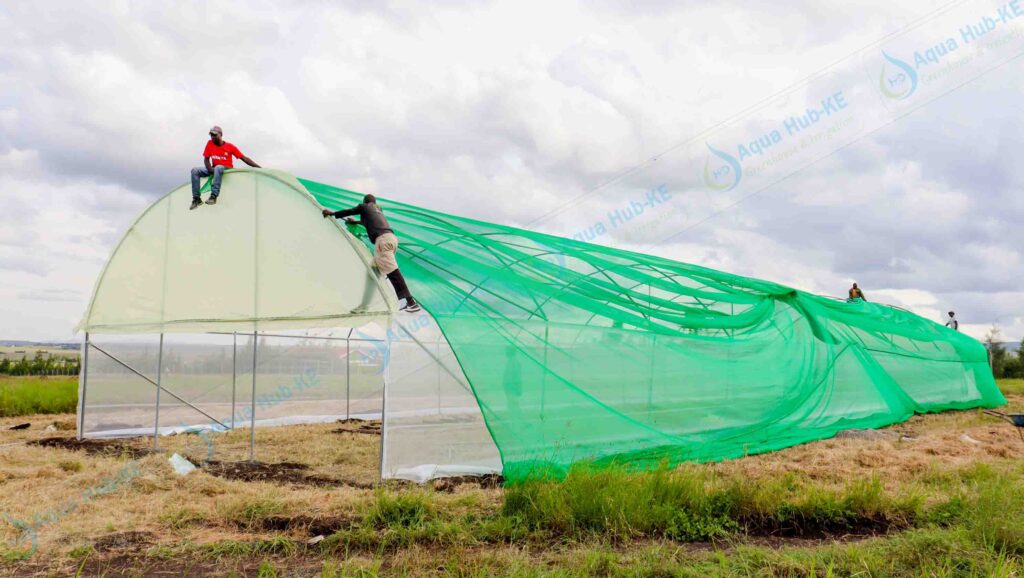
- Insect nets – for temperature control and insect control.
- Steel arches – curved metal pipes for roof support.
- Wires – holds the polythene cover onto the structure
- Nails/ tapping screws – adjoins the steel or wooden poles together.
- Drip irrigation kit – for crop irrigation
Affordable Greenhouse Farming in Kenya
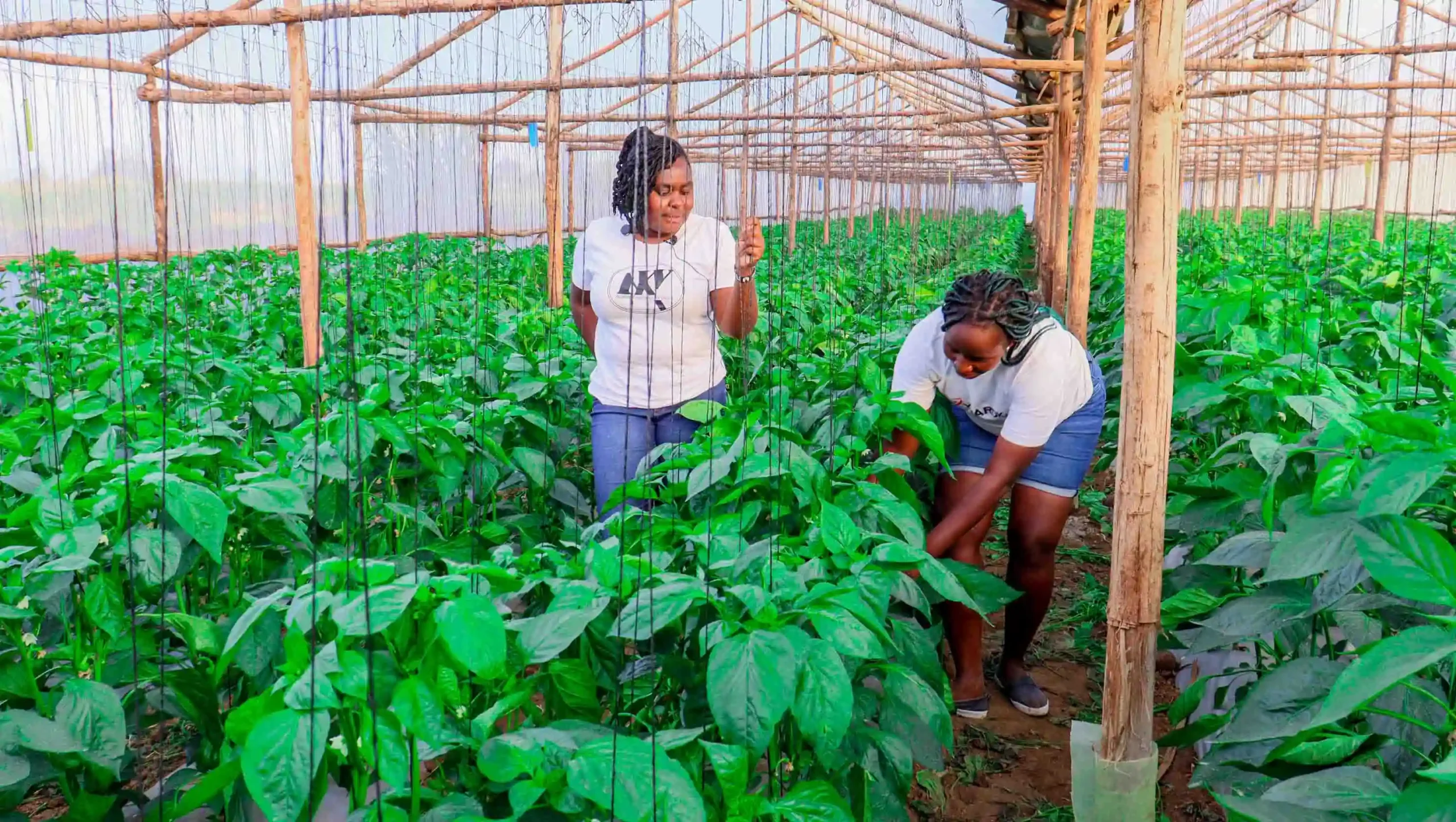
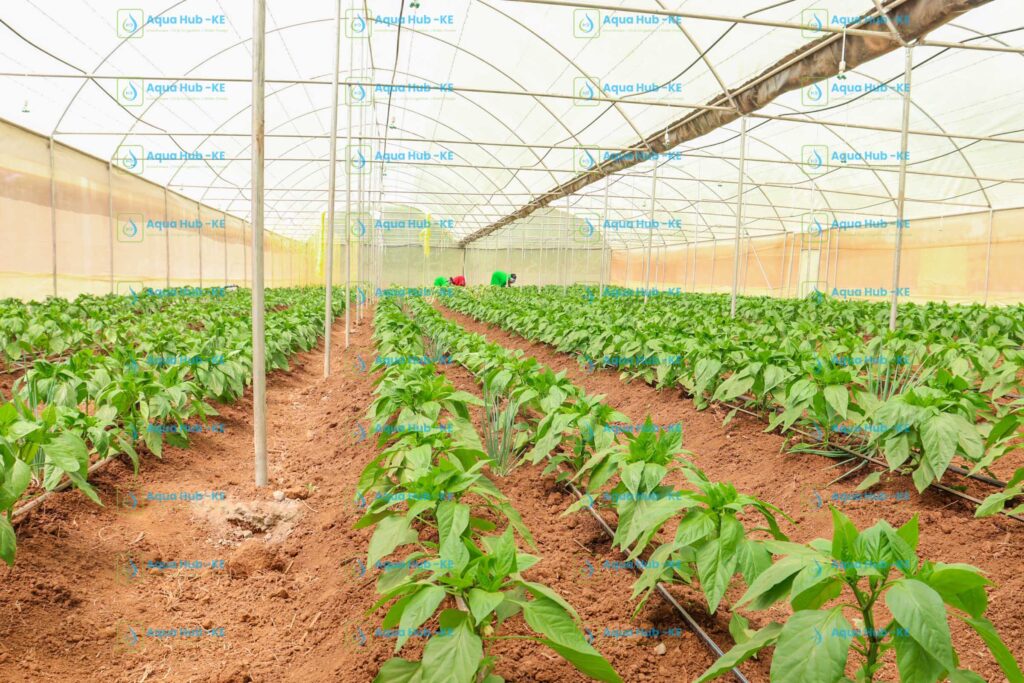
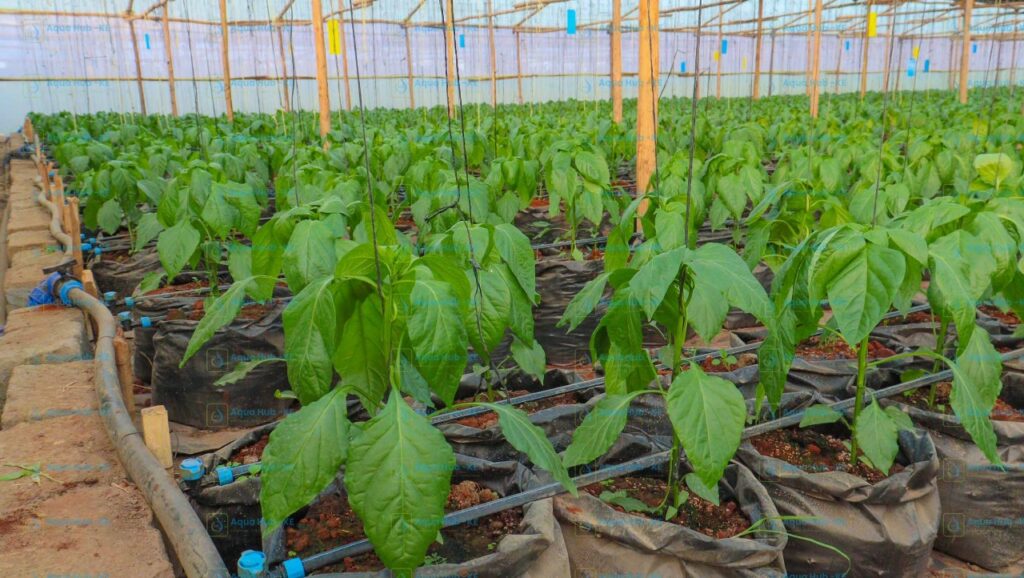
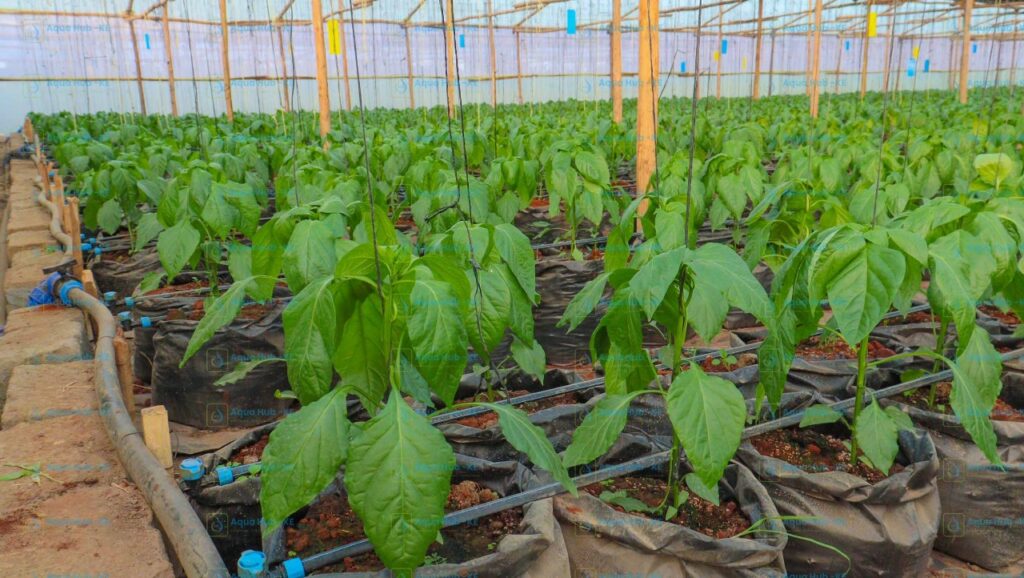
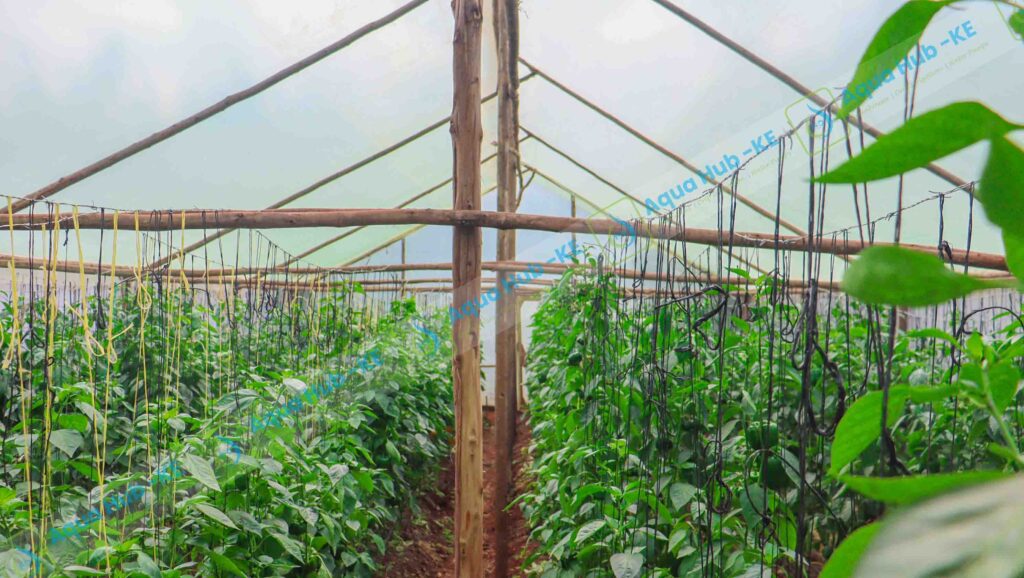
large wooden greenhouse growing capsicum
Greenhouse farming has grown rapidly in Kenya due to its ability to deliver high yields, consistent quality, and year-round production. Unlike open-field farming, which relies heavily on rainfall, a greenhouse gives you control over temperature, humidity, and pests. This consistency allows farmers to target better market prices especially during off-season periods when produce is scarce.
For farmers or individuals who dream of venturing into greenhouse farming, here are the things you must know:
- Suitable Crops – crops recommended for production in greenhouses are hybrid crop varieties. It is advisable to venture into hybrid crops because they are tested for different soils and diseases. For example, indeterminate tomatoes and coloured capsicum are for greenhouse cultivation.
- Pollination – for plants that depend on insects for pollination, the insect net used, or greenhouse design needs to be the ideal one. For instance, it could be ideal to use a special net for strawberries.
- Propagation method – your soil PH and health should be tested to determine whether you should grow directly on soil or grow bags. In case of low PH only, lime could be used to stabilize the soil.
Design of Affordable Greenhouses
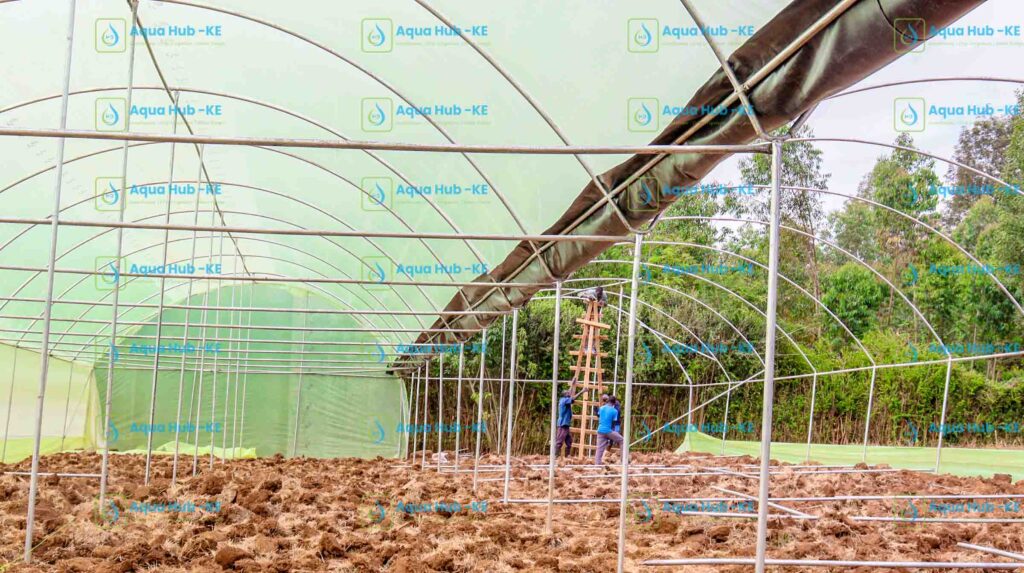
The UV polythene sheet is used as the primary cladding material and temperature controlled by nets. Unlike high tech greenhouse designs, it has no complex conditioning or control devices but just scientific temperature control mechanism.
The common affordable greenhouse designs are those made of wooden structure often gabled or vented in design.
The gabled wooden greenhouses take the shape of a roof while the vented one has unique roof with a ventilation placed on one side.
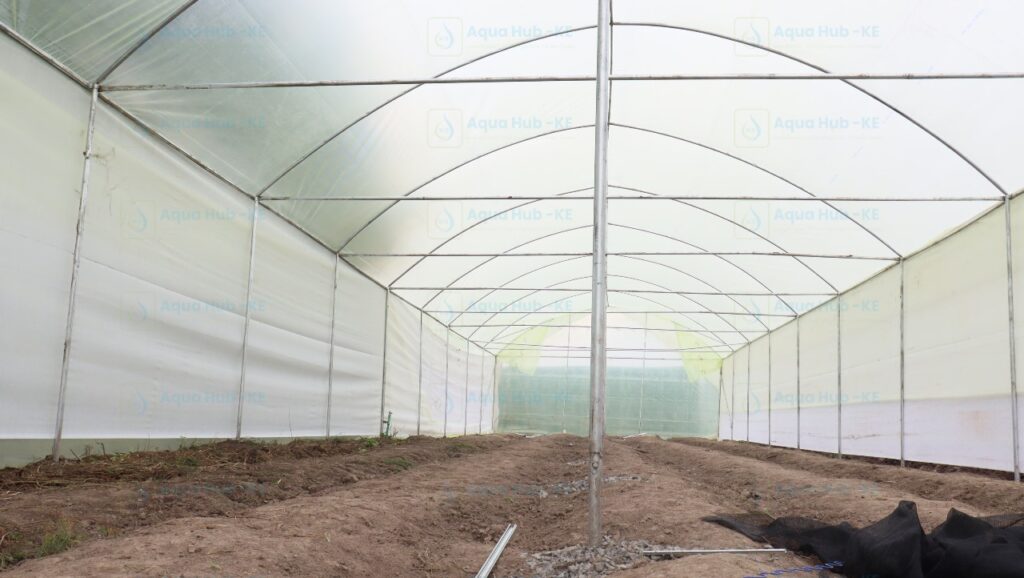
Tunnel vs. Vented Greenhouses
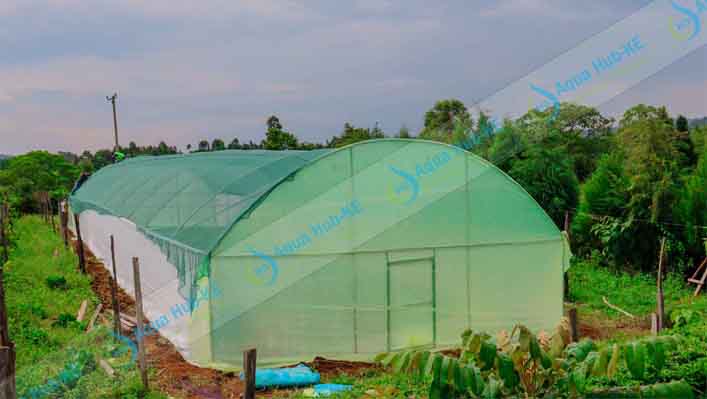
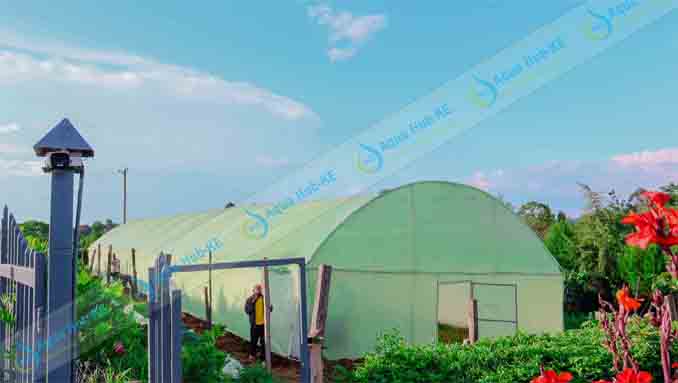
- Tunnel greenhouses are low-cost and good for mild climates.
- Vented greenhouses provide excellent temperature regulation in hot regions.
Types of Affordable Greenhouses
Affordable greenhouses are mostly designed from cheap, readily available structures for example wooden poles. However, the design and structure can also lower the greenhouse cost.
Choice of the right greenhouse is important for success in greenhouse farming. The common affordable greenhouse options available include:
Wooden Greenhouses
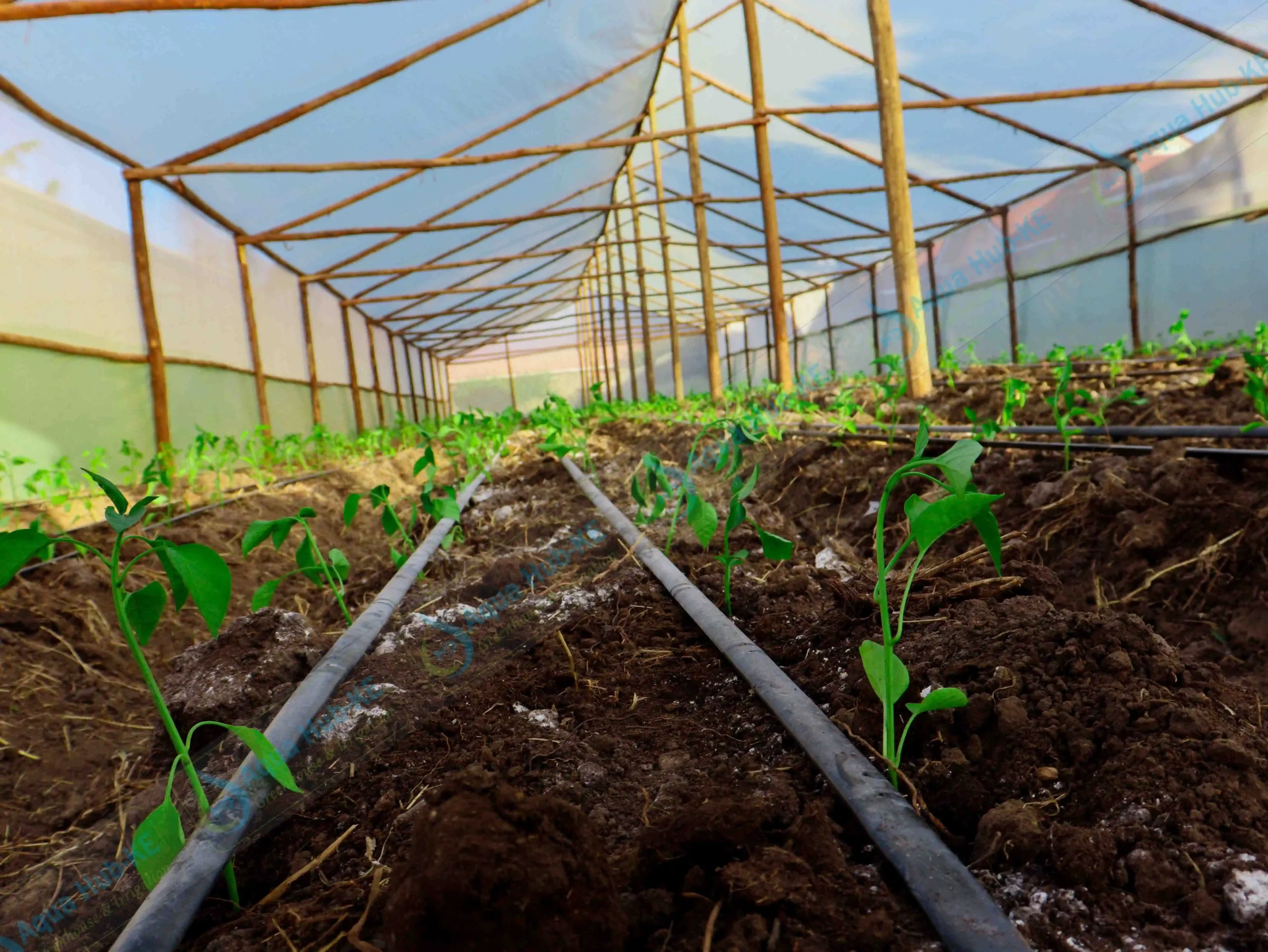
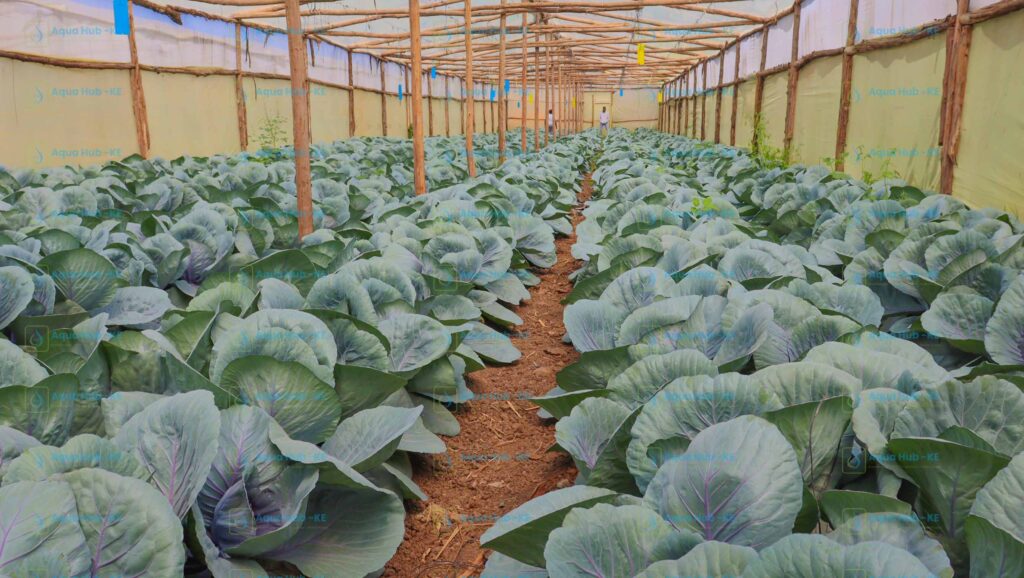
small greenhouses with cultivated capsicum
These are the most affordable greenhouses in Kenya, typically built using treated timber and UV-treated polythene.
Advantages
- Lower initial cost
- Easy to repair using local materials
- Ideal for those venturing into greenhouse farming
Disadvantages
- Shorter lifespan (5–10 years)
- Vulnerable to rot if not properly treated
Metallic Greenhouses
These greenhouses are ideal for farmers looking for durability and reliability.
Pros:
Long lifespan (10–15 years)
Strong, stable frame in harsh weather
Cons:
Higher upfront investment
Net Houses / Shade Houses
Great for crops that need high ventilation such as herbs, leafy vegetables, and nurseries.
Pros:
- Very affordable
- Excellent airflow
- Ideal for hot areas like Makueni, Kitui, Garissa, and coastal counties
Cons:
- Not suitable for cold climates
- Not ideal for crops like tomatoes in cold seasons
Polycarbonate Greenhouses
These are premium greenhouses made with polycarbonate sheets.
Pros:
- Excellent insulation and durability
- High control over growing conditions
Cons:
- Most expensive
- Requires skilled installation
Factors Influencing Greenhouse Prices in Kenya
Size and Dimensions
Larger greenhouses cost more due to additional materials and Labor. Most suppliers offer options ranging from 4×5 meters to 8×30 meters.
Type of greenhouse
Wooden greenhouses are more affordable compared to metallic type because wood is cheaper and readily available.
Greenhouse cover material
UV-treated polythene is the most common cover. The quality and gauge of the greenhouse cover affect the cost of greenhouse.
Additional Accessories and Irrigation Systems
Drip irrigation, ventilation systems, shading nets, and water tanks increase the cost but boost productivity.
Advantages of Starting with affordable Greenhouses
- Low financial strain
- Quick setup
- Ideal for learning greenhouse management
- Suitable for small-scale vegetable farming
Limitations
- Shorter lifespan
- Frequent repairs
- Not suitable for very humid or windy regions
Best Crops for Greenhouses in Kenya
High-value crops that perform well in Kenyan greenhouses include:
- Tomatoes
- Capsicum (bell pepper)
- Cucumbers
- Strawberries
- Spinach & lettuce
- Herbs – basil, mint, coriander
- Flowers – roses, carnations
Tips for Choosing the Best Affordable Greenhouses
Consider Your Budget
Start with what you can afford. Even a small greenhouse can generate enough returns to help you upgrade later.
Evaluating Material Durability
Choose construction materials that can withstand your region’s climate to avoid frequent repairs. Go for UV treated polythene cover, galvanized steel and treated wooden poles in harsh climates.
Compare Irrigation Options
Drip irrigation improves water efficiency and boosts crop growth. Always compare system types and prices before purchasing.
Selecting the Right Greenhouse Size & Design
The main Considerations when choosing the right greenhouse size that matches your needs are:
- Your greenhouse budget
- Water availability
- Crop type
- Market access
- Land size
Recommended Sizes of Commercial and Affordable Greenhouses
- Small farms (⅛ acre): 8m × 15m
- Medium farms (¼ acre): 8m × 24m
- Commercial farms: 16m × 30m
High Value Crop Spacing:
- Tomatoes: 20 cm spacing
- Capsicum: 30 cm spacing
- Cucumbers: 30 cm spacing
Additional Startup Costs Farmers Should Plan For
Besides the investment in the greenhouse structure, a proper greenhouse ready for crop propagation requires:
- Water tank (1,000–3,000 litres): KES 8,000–20,000
- Land preparation: KES 5,000–30,000
- Seedlings: KES 2,000–15,000
- Manure & fertilisers: KES 10,000–25,000 per season
- Pesticides & disease control: KES 5,000–15,000
- Labour: KES 5,000–20,000
Irrigation Systems for Greenhouse Farming
Types of irrigation System
- Drip irrigation (recommended)
- Micro-sprinklers (good for nurseries)
- Fogging/misting systems (premium structures)
Estimate water needs:
- Tomatoes: 2–4 litres/plant/day
- Capsicum: 2–3 litres/plant/day
Why Drip Irrigation Is Essential
Drip irrigation helps you save up to 60% of water and delivers nutrients directly to plant roots.
How Profitable is an affordable Greenhouse?
Tomatoes cultivated in a small 8 m x 15 m greenhouse can produce about 4 -7 tonnes per season. With wholesale price of 70 – 120 per kg the revenue would range between KES 280,000 to KES 700,000. Excluding the cost of inputs let’s say KES 40,000 – 70,000 and labour of KES 10,000 – 20,000 you remain with estimated profit of KES 150,000 – KES 350,000.
The profit margin depends on the management strategies and crops you are growing. Some farmers take only 2 growing seasons to break even.
Maintenance, Challenges & Risks with Greenhouse Farming
Greenhouse farming especially in affordable Greenhouses require consistent management. Here are top challenges:
Common issues
- Pest build-up (whiteflies, mites)
- Humidity-related diseases
- Over-watering
- Temperature spikes
Maintenance tips:
- Ventilate during hot afternoons
- Disinfect regularly
- Replace polythene every 3–4 years
- Monitor plants daily
Keeping Greenhouse Farming Affordable & Sustainable
Sustainable ways to enhance efficient production inside greenhouses.
- Use organic compost to reduce fertilizer costs
- Reuse seedling trays
- Install gutters to harvest rainwater
- Rotate crops to reduce soil fatigue
- Use yellow and blue sticky traps for pest control
Tips for First-Time Greenhouse Farmers
- Start with one greenhouse
- Choose hardy, high-demand crops (tomatoes, capsicum)
- Keep detailed records
- Attend at least one training session
- Build relationships with buyers early
Frequently Asked Questions (FAQs)
What is the average cost of a small greenhouse in Kenya?
A small 8m × 15m greenhouse costs KES 140,000–180,000, depending on material and supplier.
Which greenhouse type is the most affordable?
Net houses and wooden greenhouses are the most affordable options.
How much can I earn from greenhouse tomato farming?
A small greenhouse can earn KES 150,000–350,000 profit per season.
Is greenhouse farming suitable for beginners?
Yes. Start with a small greenhouse and easy to manage crops like capsicum.
What is the lifespan of a greenhouse?
- Wooden: 5–8 years
- Metallic: 10–15 years
Do greenhouses reduce water use?
Yes. drip irrigation reduces water consumption by up to 60%.
Which crops grow best in greenhouses?
Tomatoes, capsicum, cucumbers, strawberries, herbs, and flowers.
How long does a greenhouse take to install?
Most small greenhouses take 3–5 days. it depends on the structure size and type.
Do I need a water tank for greenhouse farming?
Yes, a 3,000-litre tank is recommended for consistent drip irrigation.
Can I use solar pumps in my greenhouse?
Yes. Solar pumps can drastically reduce irrigation costs.