
Blog
Best HDPE Liners for Dams in Kenya
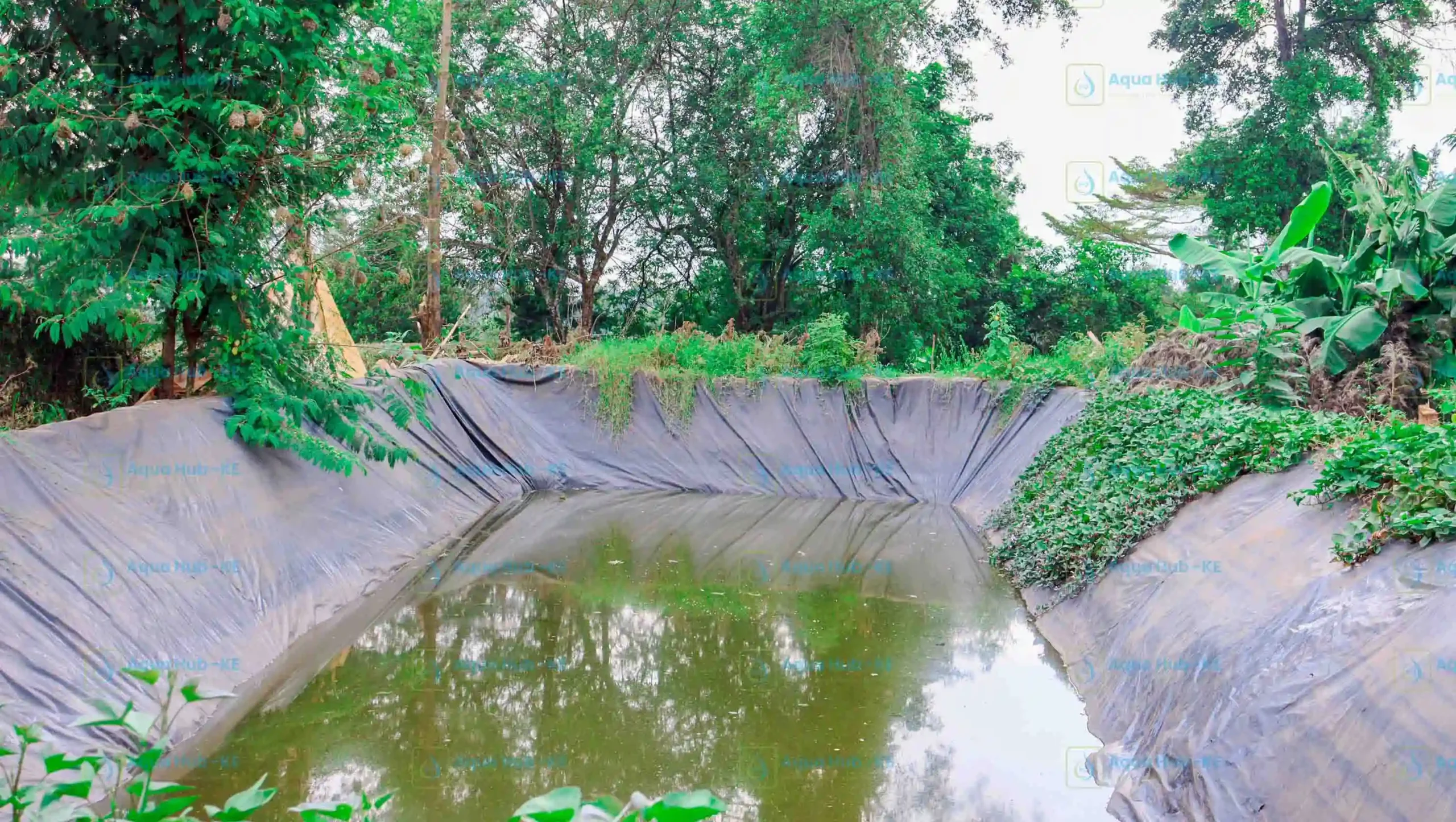
Farmers can now store large volumes of water for production during dry seasons by using our dam liners. We have high-grade HDPE dam liners at different gauges from 0.3 mm to 1 mm. You can buy our dam liners at discounted prices starting from KES 150 to 450 per square metre.
Call 0790719020
This guide will help you understand the reliable dam lining solutions for your water storage needs.
Quick Takeaways
- HDPE is the most reliable material for dam liners in Kenya.
- Ideal dam liner thickness is 0.75–1.0 mm for irrigation.
- Average dam liners prices in Kenya range from KES 150 to KES 450 per sqm.
- Professional installation reduces leakage risks.
- Dam liner tanks are more cost-effective than plastic tanks for large irrigation.
- Proper maintenance extends liner lifespan beyond 20 years.
- Buying from reputable dam liner suppliers ensures quality and warranty.
Dam Water Retention Using HDPE Liners
Water scarcity is a major challenge in the sub-Saharan Africa which affects food production and sustainability. In Kenya alone, about 17 % of the land receives adequate rainfall for domestic and agricultural use. HDPE liners therefore remain one of the reliable solutions for sustainable water storage.
HDPE liners in Kenya reliable solution for preventing seepage in water pans, reservoirs, and dam liner tanks.
Dam Liners for Kenyan Climate
Dam liners are leak-proof geomembrane sheets made from High Density Polyethene (HDPE) material. We use UV treated HDPE Liners for our projects to ensure strength and durability of your water pans.
Types of Dam Liners
Choosing the right material determines durability and performance.
1. HDPE (High-Density Polyethylene) Liners
- Most common material in Kenya
- UV treated for harsh sunlight
- Resistant to chemicals and punctures
- Lifespan: 15–30 years
2. PVC (Polyvinyl Chloride)
More flexible and easier to shape
Suitable for smaller or irregular ponds
Slightly less durable in rocky soils
HDPE Dam Liner Thickness
Dam liner thickness is measured in millimetres (mm) or microns.
| Thickness | Recommended Use |
| 0.3 mm | Small fishponds, temporary storage |
| 0.5 mm | Medium irrigation ponds |
| 0.75 mm | Standard farm dams |
| 1.0 mm | Large commercial irrigation reservoirs |
If your soil contains stones or sharp roots, avoid thin liners. A thicker HDPE liner reduces repair costs and water loss over time. Spending slightly more upfront can save you thousands in water losses during dry seasons.
HDPE Liners: Dam Liner Prices in Kenya
Dam liner prices vary by thickness and supplier:
- 3 mm: KES 150–210
- 5 mm: KES 230–250
- 75 mm: KES 295–330
- mm: KES 340–430
Top HDPE Dam Liner Suppliers in Kenya
If you are looking for a reliable dam liner supplier in Kenya, you are in the right place. Aqua Hub Kenya handles dam liner installation projects across Kenya and East Africa. Our prices and terms of engagement are favorable compared to other irrigation companies.
Call 0790719020
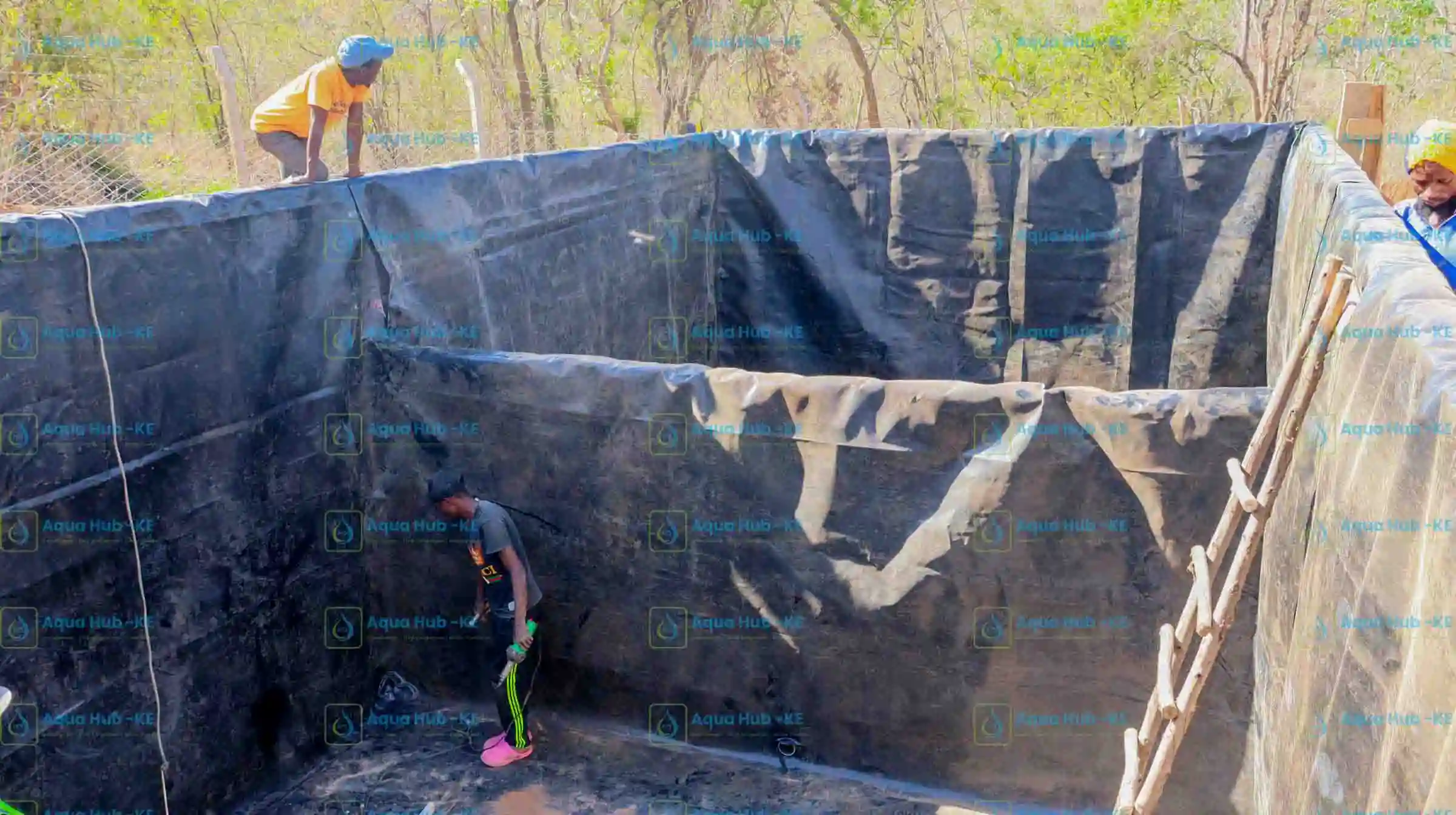
HDPE Liner Installation in a concrete pond
How to Calculate Dam Liner Size
Basic Formula:
Length + (2 × depth) + 1 meter overlap
Example:
If your dam is 20m long and 3m deep:
20 + (2 × 3) + 1 = 27 meters of liner length required.
Repeat for width calculation.
Remember to account for anchoring trenches around edges. Many irrigation farmers forget this step and end up with tight liners prone to tearing.
For large dam liner tanks, consider consulting a professional to avoid underestimation.
Installation Process for Dam Liners
Proper installation determines lifespan of your dam liners.
Steps for Installation
- Excavate and level the dam area
- Remove sharp stones and roots
- Compact soil base
- Lay protective geotextile (optional but recommended)
- Spread liner carefully
- Weld joints
- Anchor edges in trenches
Dam HDPE Liners vs Plastic Water Tanks
Farmers often compare dam liner tanks with above-ground plastic tanks.
| Feature | Dam Liner | Plastic Tank |
| Storage Capacity | Very large | Limited |
| Cost per litre | Low | Higher |
| Space Requirement | Large land area | Compact |
| Installation | Excavation needed | Minimal |
For irrigation farming, lined dams are more economical when storing large volumes for drip irrigation systems.
Plastic tanks are suitable for small kitchen gardens, but big irrigated farms require larger reservoirs.
HDPE Liners for Fish Farming
Fishponds also require protection from underground water seepage and erosion. Many people assume that fishponds are only done in areas with non-porous clay soil. Nowadays, even in dry sandy soil regions such as Mombasa, fish farming takes place. This is possible by reinforcement of fishponds using dam liners.
The common dam liner thickness to use for fishponds is 0.5 mm dam liner. You can also use 0.75mm or 1 mm if the soil is more rocky or hard. For concrete ponds, a 1 mm liner would be appropriate to enhance structural durability.
Advantages of Using HDPE Liners for Fishponds
- Fish safety: pond liners do not harm the fish or aquatic animals. They are chemical free, smooth and food grade.
- Resistant to UV degradation: because the dam liner is UV treated, it will last a longer time.
- Non-corrosive: pond liners are resistant to algae thus cannot affect fish production.
Benefits of Dam Liners in agriculture
- Allows for continuous crop production
- Reduces cost of irrigation. They are less costly than water tanks.
- Sustainable water access is enhanced due to a reliable pool of water.
- No need
- Reduced evaporation losses
Farmers using lined dams often report 30–50% water savings compared to unlined ponds.
Precautions when Handling Dam Liners
Despite the strength and resistance of HDPE Liners, they are still susceptible to
Things to avoid include:
- Dragging heavy equipment across liner
- Letting livestock walk inside empty dams
- Small punctures can be heat-patched easily. Early detection prevents large leaks.
Environmental Benefits of HDPE Dam Liners
Water conservation improves environmental sustainability.
- Reduces groundwater over-extraction
- Supports climate-smart agriculture
- Minimizes soil erosion
By improving water storage efficiency, irrigation farmers can adapt to erratic rainfall patterns caused by climate change.
Frequently Asked Questions
1. What is the best dam liner thickness for irrigation in Kenya?
For medium to large irrigation dams, 0.75 mm or 1.0 mm HDPE is recommended for durability and puncture resistance.
2. How much do dam liners cost in Kenya?
Prices range between KES 150 and KES 450 per square metre, depending on thickness and supplier.
3. How do I calculate the size of pond liner required?
Formula: length = base length + 2(depth) + 1 m overlap
Width = base width + 2(depth) + 1 m overlap
4. Are dam liners better than concrete?
Yes, for large reservoirs they are more cost-effective and flexible.
5. How long do HDPE liners last?
25–50 years.
6. What are the different types of dam liners?
HDPE, PVC and LDPE liners
7. What are the uses of dam liners?
Pond lining, dam lining, concrete tank reinforcement, and sewage wastewater handling.
8. What is the best liner to use for a pond?
High-density polyethylene (HDPE) liner
9. What thickness pond liner is best?
1 mm pond liner
10. Where can I buy dam liners in Nairobi?
Aqua Hub Kenya