
Blog
Solar Dryers for Agriculture in Kenya: types and cost
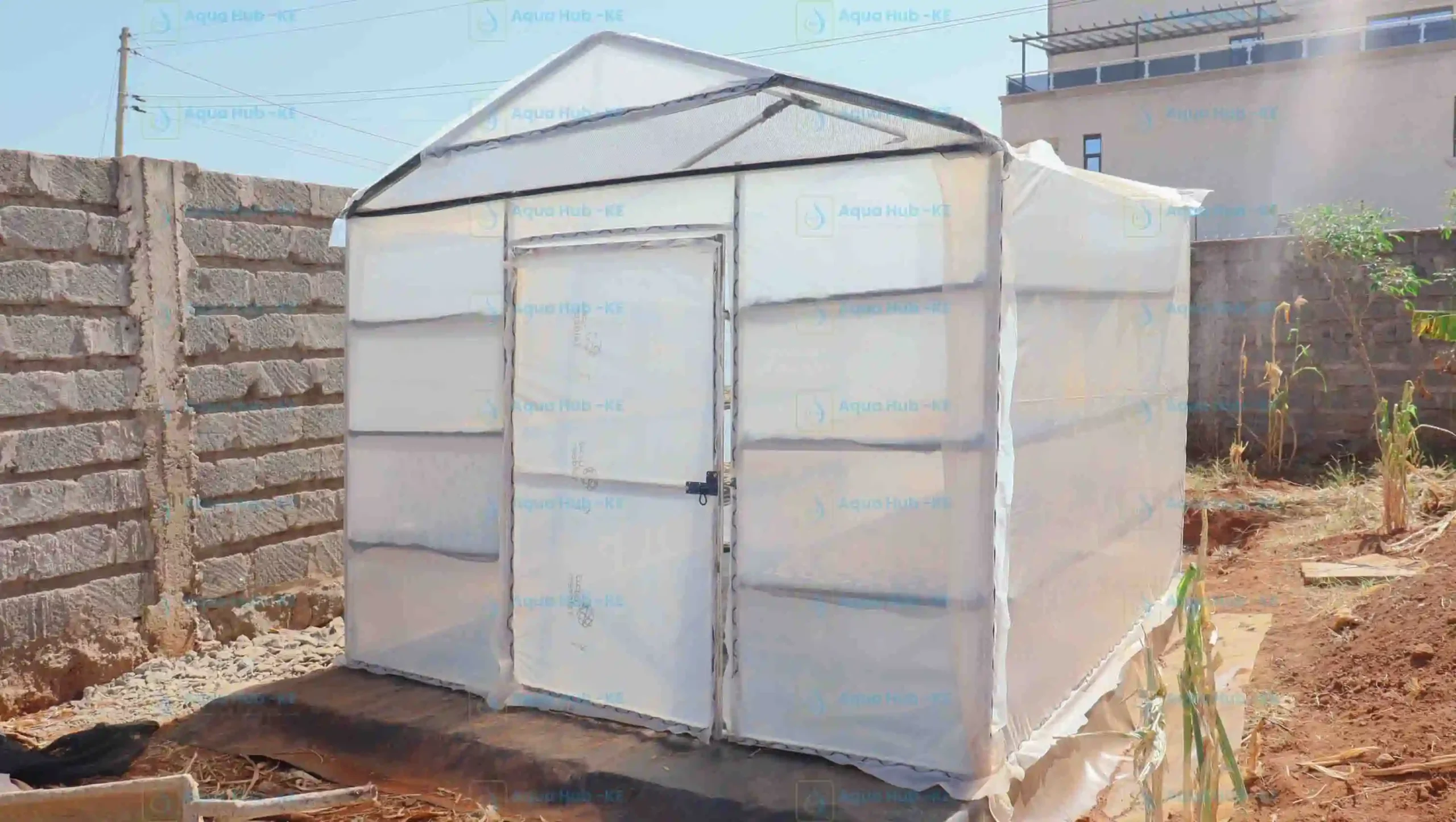
Aqua Hub Ltd designs, fabricates, and installs different solar dryer sizes, custom or standard, as per the needs of various farmers. Our standard solar dryers for agriculture measure 3 m x 3 m x 2 m, 5 m x 8 m x 2 m, 6 m x 6 m x 2 m, 8 m x 15 m, and 8 m x 30 m. Custom agricultural solar dryers have a free range of sizes depending on stability factors.
Solar dryers for Agriculture
Solar dryers are becoming essential tools for farmers who want to reduce post-harvest losses and earn more from their produce. With abundant sunshine across most regions, solar dryers for agriculture offer a low-cost, reliable way to preserve crops such as coffee, grains, fruits, vegetables, and fish.
Cost of Solar Dryers for Agriculture in Kenya
| Size of the dryer (Meters) | Cost (KES) |
| 3 x 3 x 2 | 150,000 – 175,000 |
| 5 x 8 x 2 | 280,000 – 320,000 |
| 6 x 6 x 2 | 280,000 – 330,000 |
| 8 x 15 | 620,000 |
| 8 x 24 | 818,000 |
| 8 x 30 | 824,000 |
Why Solar Dryers are Essential for Agriculture
Post-harvest losses remain a major challenge farmers face in Kenya. 30–40% of agricultural produce is lost due to poor drying and storage facilities. Drying on the sun exposes crops to rain, dust, insects, and bacteria. Solar dryers are the solution to these challenges by controlling the drying conditions.
In addition, the need for value addition to meet local and export standards increases demand for solar dryers.
Advantages of Solar Dryers for Agriculture in Kenya
- Reduced spoilage and mould growth
- Better product quality and hygiene
- Longer shelf life for dried produce
- Higher market prices due to consistent quality
- Reduced dependence on electricity or fuel
For small-scale and commercial farmers alike, solar drying is a practical step toward climate-smart agriculture.
Working of Solar Dryers Explained
The working of solar dryers is based on a simple principle: warm air removes moisture from agricultural products. Sunlight enters the dryer through a transparent cover, heating the air inside. This warm air then flows across the produce, absorbing moisture, and exits through vents.
There are two airflow methods:
- Natural convection, where hot air rises and escapes on its own
- Forced convection, where a fan improves air circulation
This controlled airflow dries produce faster and more evenly than open sun drying while protecting it from contamination.
Types of Solar Dryers for Agriculture in Kenya
Cabinet Solar Dryers
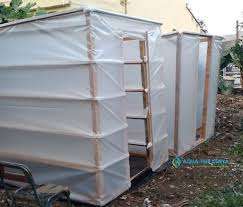
These are small, box-shaped dryers with trays stacked inside. They are ideal for smallholder farmers drying fruits, vegetables, or herbs for home use or local markets.
Best for: Small volumes (10–50 kg)
Advantages: Affordable, easy to operate, low maintenance
Tunnel Solar Dryers
Tunnel dryers are long, semi-cylindrical structures covered with UV-treated plastic. They can handle large volumes and are common in farmer groups and cooperatives.
Best for: Commercial drying of fruits and vegetables
Advantages: High capacity, faster drying, uniform results
Greenhouse Solar Dryers
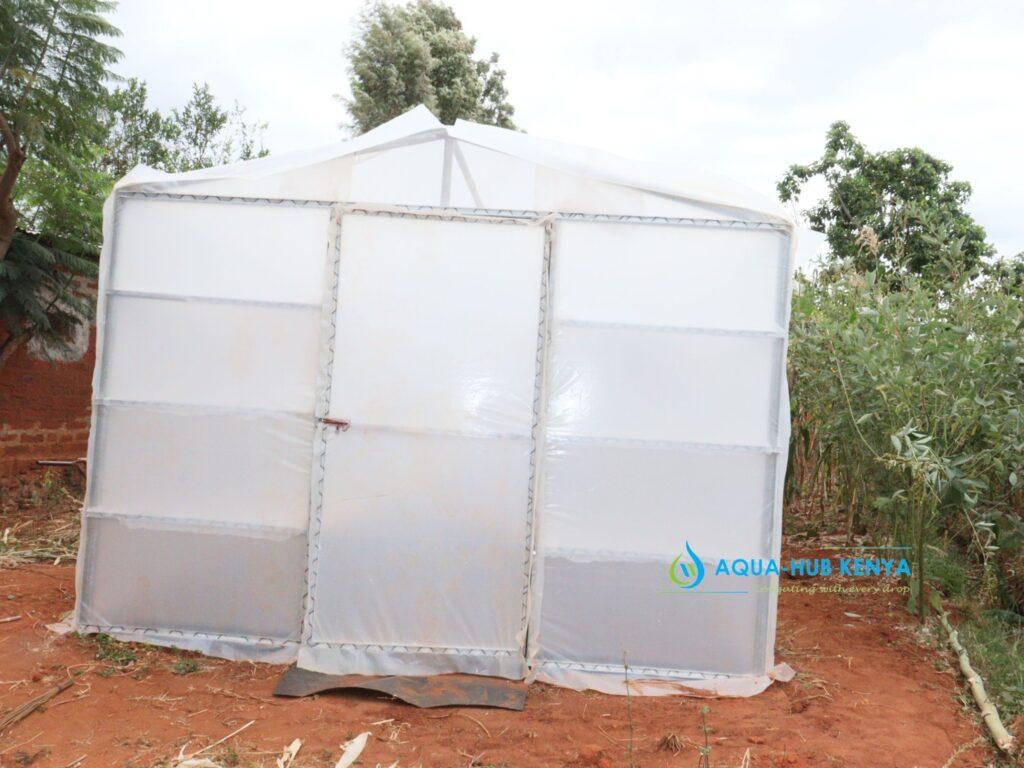
These resemble small greenhouses and work well for continuous drying throughout the year. They are popular among farmers producing dried fruits for export.
Best for: Medium to large farms
Advantages: Better temperature control, higher product quality
Hybrid Solar Dryers
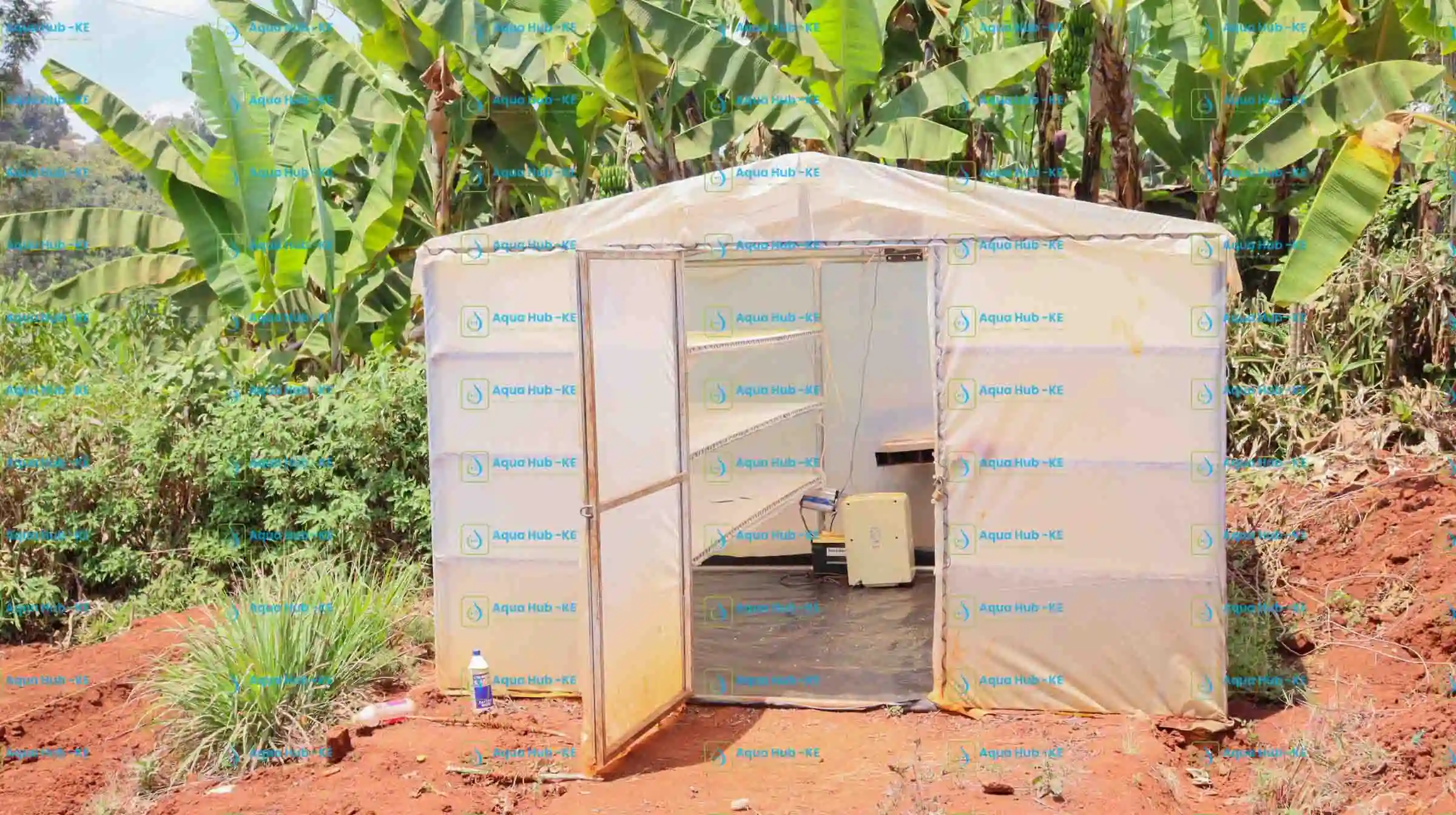
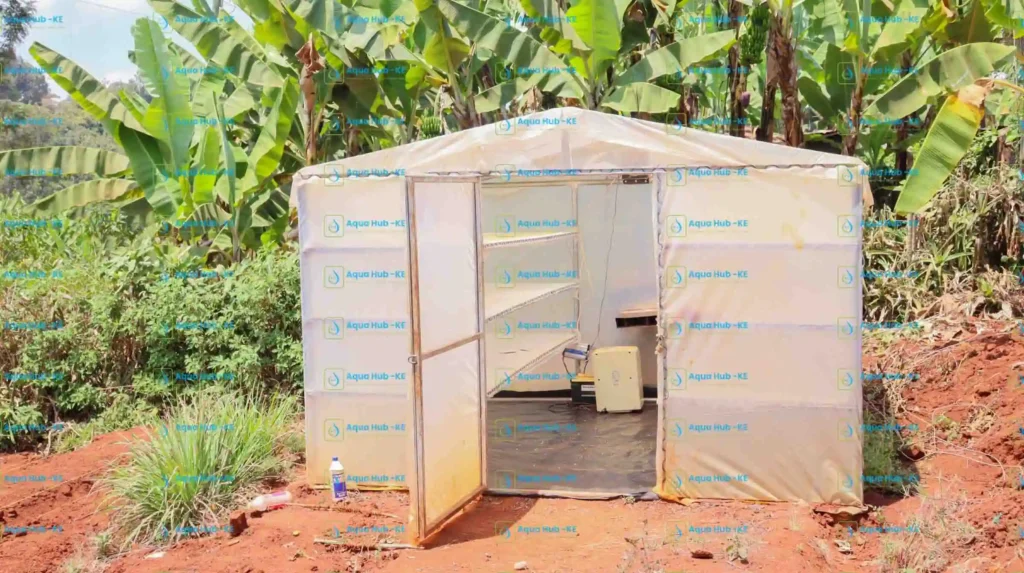
Sample hybrid solar dryer in Murangá
Hybrid dryers combine solar heat with fans, biomass, or backup heaters. They perform well even during cloudy weather.
Best for: Regions with inconsistent sunshine
Advantages: Reliable drying, reduced weather risks
Solar Dryer with Fan: When Is It Necessary?
A solar dryer with fan improves airflow, which speeds up drying and ensures uniform moisture removal. Fans are usually powered by small solar panels and are especially useful for:
- Thick or dense products like fish and coffee beans
- Humid regions
- Large-scale drying operations
While fan-assisted dryers cost slightly more, they often produce better quality dried products and reduce drying time by up to 40%.
Can You Run a Dryer on Solar Power Alone?
Most solar dryers operate entirely on solar energy. Passive dryers rely only on sunlight, while active dryers use solar panels to power fans. No grid electricity is required.
This makes solar dryers ideal for:
- Off-grid rural areas
- Farmers seeking low operating costs
- Environmentally conscious agricultural projects
Solar Drying of Fruits and Vegetables
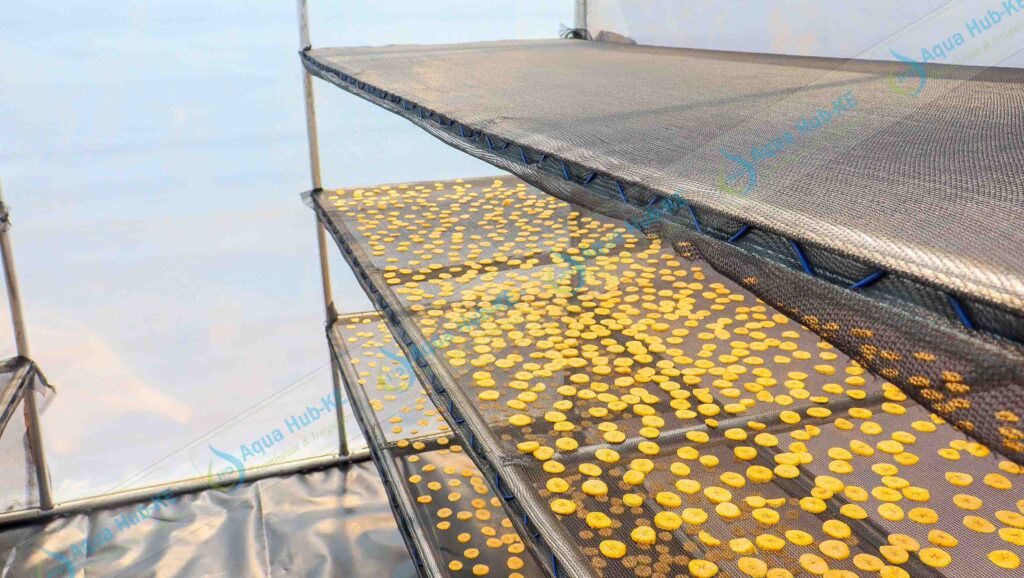
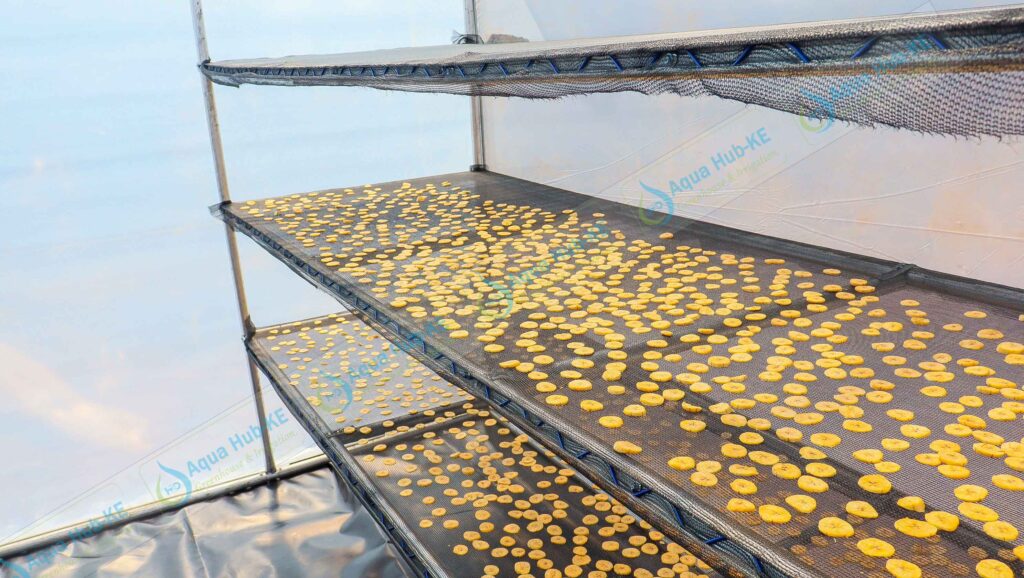
Solar drying of fruits and vegetables is one of the most common applications in Kenya. Mangoes, bananas, pineapples, tomatoes, and leafy vegetables dry well under controlled solar conditions.
- Benefits of solar drying vegetables include:
- Preservation of vitamins and color
- Reduced food waste during peak harvests
- Creation of value-added products like dried fruit snacks
Farmers who package dried fruits properly can access supermarkets and export markets.
Solar Drying of Grains
Grains such as maize, beans, millet, and rice must be dried to safe moisture levels before storage. Solar drying of grains helps farmers prevent aflatoxin contamination and insect damage.
Unlike open sun drying, solar dryers:
- Protect grains from rain and dust
- Prevent grain exposure to insects such as weevils and rodents.
- Dry evenly, reducing cracking
- Improve storage life and market acceptance
This is especially important for regions affected by food safety regulations.
Solar Drying of Fish
Fish dried in solar dryers retain better flavor, color, and nutritional value compared to traditional methods.
Solar dryers reduce fish damage by removing moisture that often causes bacterial growth.
Many fishing communities now use tunnel or hybrid solar dryers for commercial fish processing.
Coffee Solar Dryers
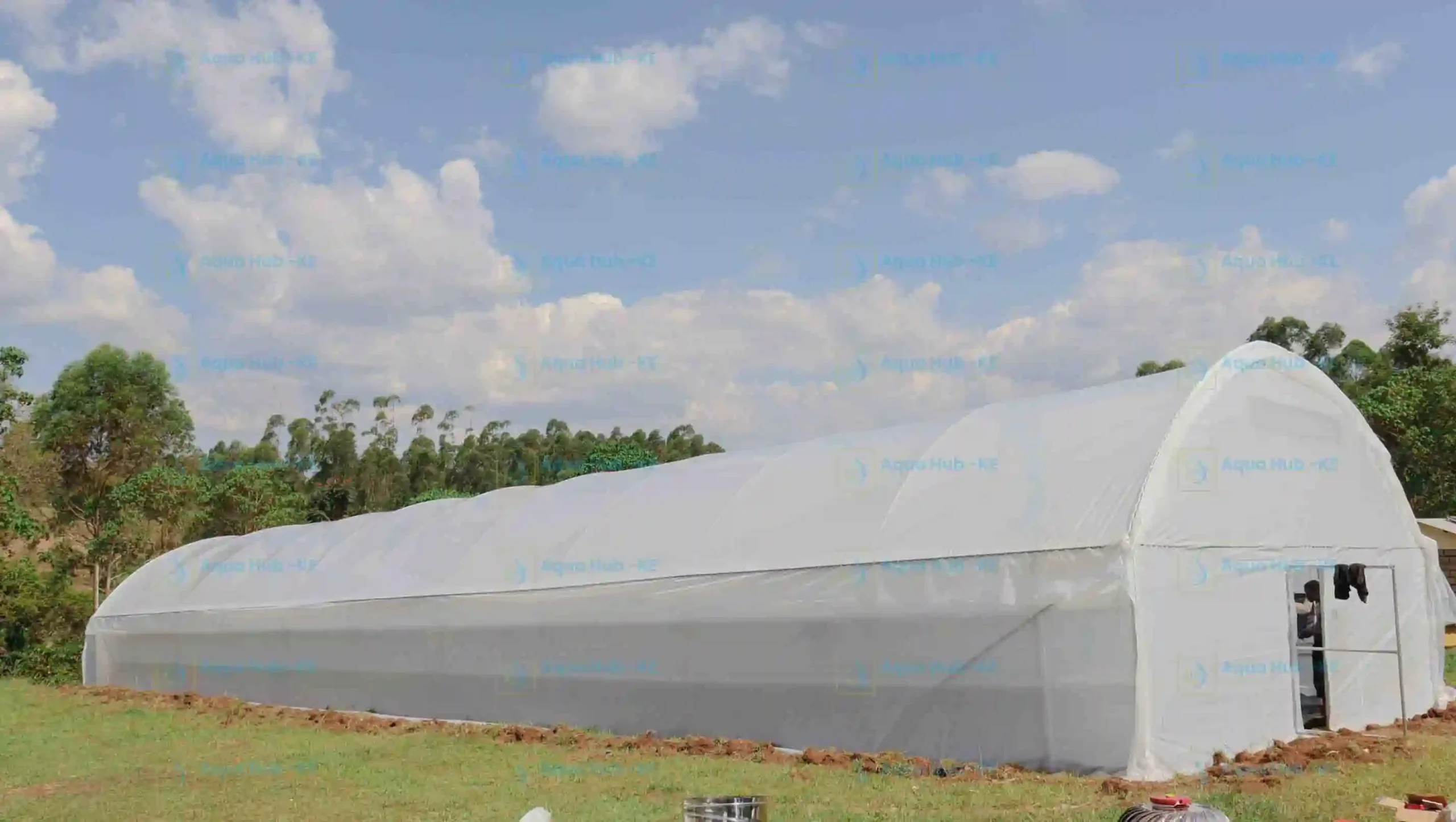
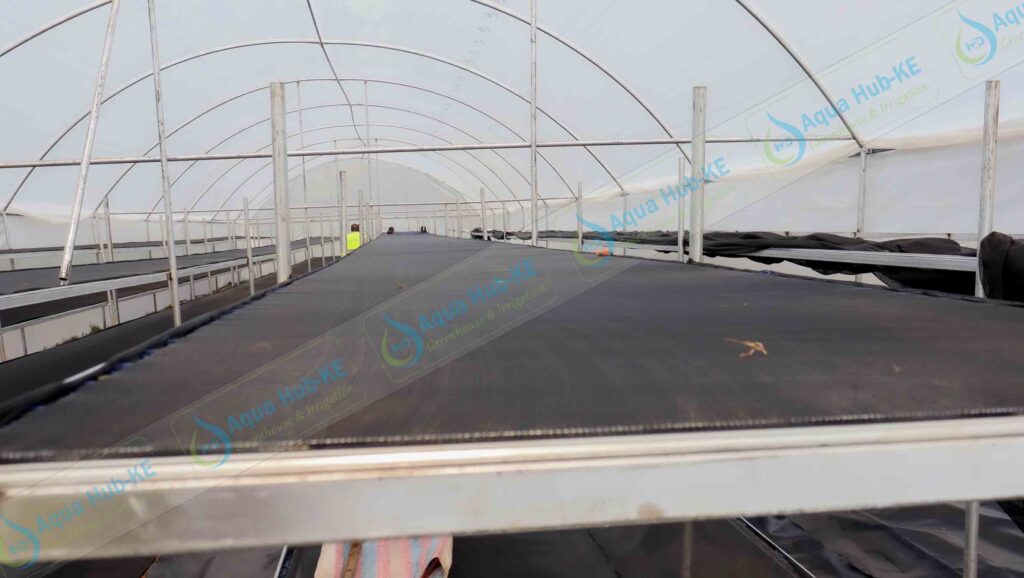
Commercial greenhouse solar dryer for coffee in Bungoma
For coffee farmers, the quality of coffee beans affects market price. Solar dryers improve coffee bean color and taste. Coffee solar dryers provide controlled drying that prevents fermentation defects and mould growth.
Solar dryers are ideal for smallholder coffee and large cooperatives aiming to meet export standard regulations.
Construction of Solar Dryers for Agriculture: What You Should Know
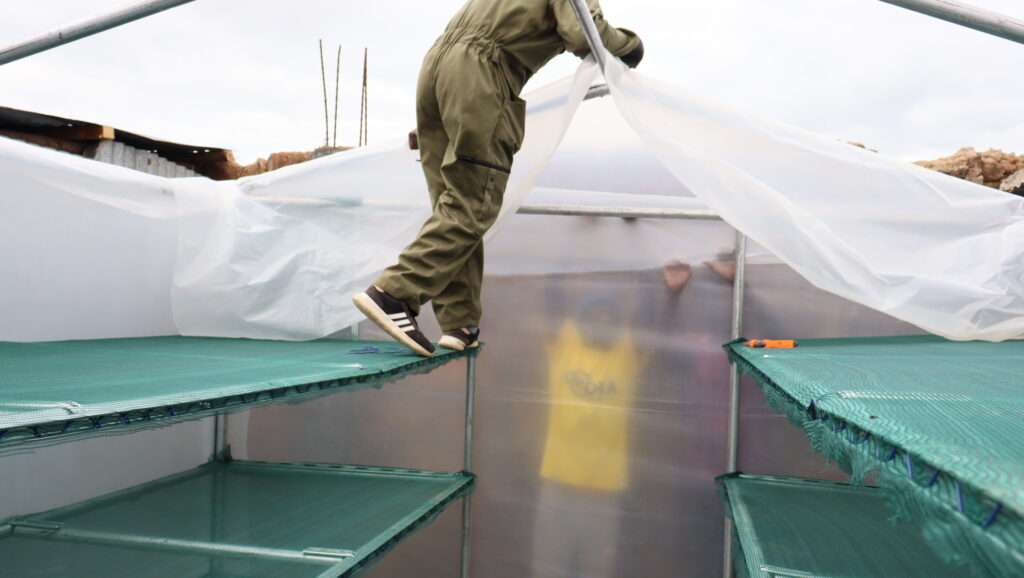
For proper construction and setting up of solar dryers, you need:
- Galvanized Steel metal pipe
- Transparent UV-treated polythene cover
- Mesh drying trays
- Air vents or fans
- Black material (dam liner)
- Cement, ballast and sand – for base concrete.
Solar dryer installation by expert fabricators and dealers is essential for long-lasting and efficient structures. If you need a solar dryer, Aqua Hub Kenya is the recognized supplier
Applications of Solar Dryers
The application of solar dryers goes beyond food preservation. Farmers also use them for:
- Drying medicinal herbs
- Processing fodder and animal feed
- Drying pumpkin seeds, tea, and pyrethrum.
Considerations when buying Solar Dryers for agriculture
Before investing, you should consider:
- Type of crops to be dried
- Daily drying capacity needed
- Available budget
- Local weather conditions
Frequently Asked Questions (FAQs)
1. What is the best solar dryer for small farmers in Kenya?
Simple wooden solar dryers.
2. How long does solar drying take?
1 – 3 days depending on the crop type.
3. Are solar dryers hygienic?
Yes, they protect produce from dust, pests, and rain.
4. Can solar dryers work during cloudy weather?
Hybrid dryers perform better in cloudy conditions.
5. Is solar drying profitable?
Yes, reduced losses and value addition improve farm income.
6. Can I dry maize using a solar dryer?
Yes, solar dryers are effective for safe grain drying.
7. Do solar dryers need maintenance?
Minimal maintenance is required, mainly cleaning and checking covers.
8. Are solar dryers environmentally friendly?
They use renewable energy and has low carbon emission.
9. Can solar dryers be used for export products?
Yes, they meet quality standards when used correctly.
10. Where can farmers buy solar dryers in Kenya?
Aqua Hub Kenya