
Blog
Best Anti-Bird Net for Crop Protection
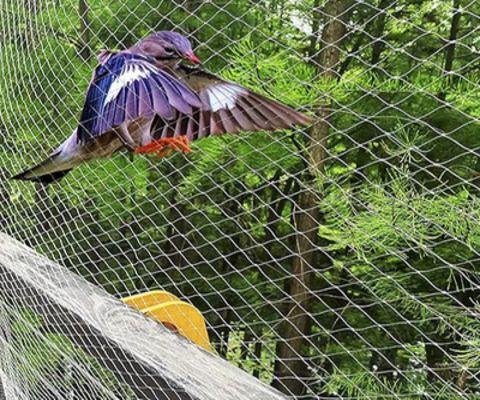
Birds contribute to low annual crop yield, resulting in heavy losses, especially for strawberries, apples and grapefruits. Using anti-bird net materials is a cheap, environmentally safe way to keep birds away from the farm while allowing light and airflow.
Get the right anti-bird net for your crops and experience quality and a high crop harvest. We have green and black bird nets of 4 x 50 m.
Call 0790719020
Anti-Bird Netting
Anti-bird netting is a physical barrier designed to block birds from accessing crops, fruit trees, vegetables, and seeds. It’s usually made from UV-treated HDPE, nylon, or monofilament materials that resist sun damage and weathering, so they last multiple seasons.
Bird Net Price per Meter
Our bird nets are between KES 60 and KES 75 per square metre.
Bird Net Supplier Guide for Farmers
Buy high-quality bird nets from Aqua Hub LTD.
Call 0790719020
Types of Anti-Bird Nets
Anti-bird nets are available in different types categorised as per the type of material they are designed from. The common types include:
- HDPE (High Density Polyethylene): Most common; UV-stabilised and durable.
- Nylon: Flexible and lightweight, often used for fine mesh needs.
- Monofilament: Strong and less visible to birds.
Bird Net Mesh Size
Mesh sizes range from 10 mm for small birds to 30 mm for larger birds.
Consider buying a bird net with a mesh size small enough to exclude notorious predator birds but allow sunlight, rain and airflow.
How Bird Nets Protect Crops
Bird netting is an effective method of reducing crop damage by blocking birds that feed on crops from the farm. The bird knitted mesh surface shields birds and stops them from feeding on ripening fruits, vegetables or cereal crops.
Birds like starlings, sparrows, and pigeons can significantly reduce yields if left free. Netting interrupts their access and reduces losses over the season, leading to more marketable crops and less waste.
Benefits of Bird Netting
- Reduce crop loss: blocks birds from feeding on fruits and seeds.
- Are eco-friendly: No poisons or traps involved.
- Let sunlight & air through: promotes plant health.
- Durable: UV-treated nets can last many seasons.
Best Bird Netting for Fruit Trees
When protecting fruit trees like apples, pears, and cherries, bird nets that are:
- Wide enough to cover the canopy and sides.
- Fine mesh: 15–20 mm stops medium-sized birds.
- UV-treated: For durability in sun.
These nets work well on orchard frames, tripods, or custom supports.
Best Bird Netting for Strawberries and Berries
Strawberries and small berries ripen close to the ground and are attractive to birds. A 20mm mesh net is usually ideal small enough to deter birds but large enough to let pollinators in.
Do Pollinators Get Through Bird Netting?
The right bird netting does not affect pollination. Bird nets of mesh size 20 x 20 mm allow bees to enter thus pollination occurs and fruits sets normally.
Do Birds Get Caught in Bird Netting?
Birds generally don’t get caught if nets are installed properly with tension and without sagging. Loose netting creates gaps where birds can become entangled. Proper installation and periodic checks keep birds safe and crops protected.
Bird Netting Strength and Durability
High-quality bird nets are manufactured from UV-treated HDPE material, which is resistant to degradation by radiation. Bird nets last for 5–8 years.
How to Use anti-bird Net for Crop Protection
- Measure your crop area accurately.
- Choose mesh size based on bird size and crop needs.
- Secure edges with clips, pegs, or ropes to avoid loose sections.
- Combine with poles or frames for larger orchards.
How to Install Bird Netting
Bird net installation would vary with the type of crops you want to shield from birds.
Over Trees and Bushes
- Drape netting over the canopy.
- Anchor edges to ground or support posts.
- Check gaps where birds could enter.
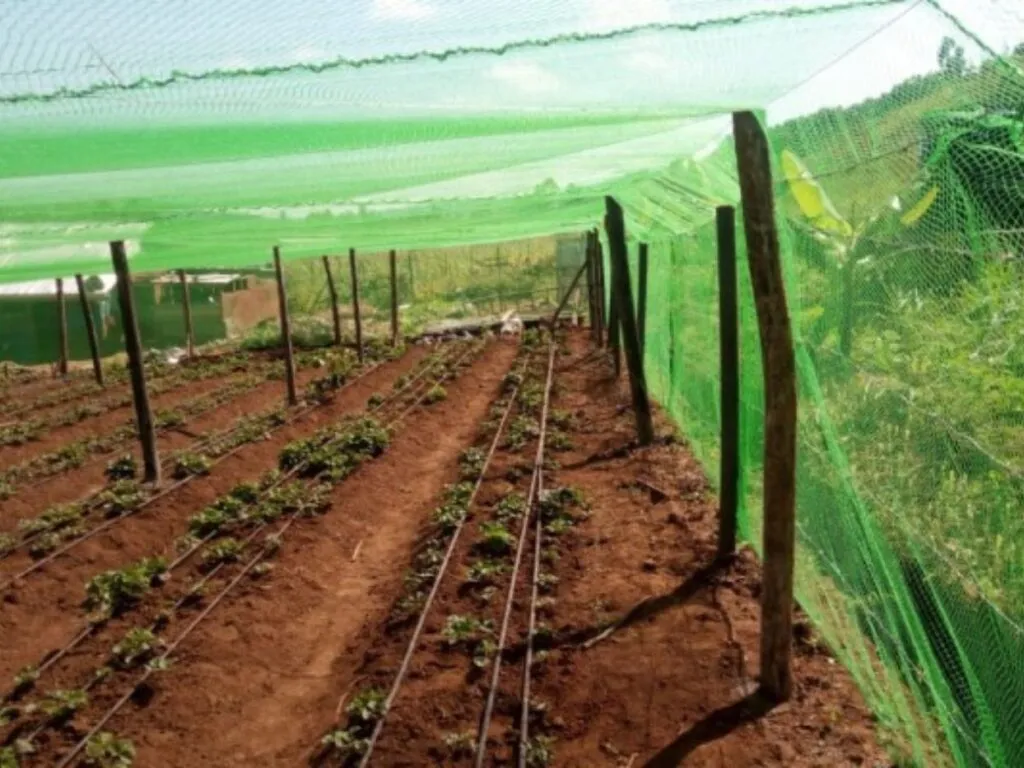
Over Raised Beds and Open Fields
- Use stakes or hoops to elevate netting above crops.
- Allow good airflow and easy access for maintenance.
Concerns with the Use of anti-Bird Net
- Some farmers use a big mesh which still allows small bird species. Know the target birds to deter before you buy one.
- Bird net installation is not done the right way in many farms. In the long run, the nets sag and sometimes detach, allowing bird attacks on crops.
Case Study: Successful Farmers Using Bird Netting
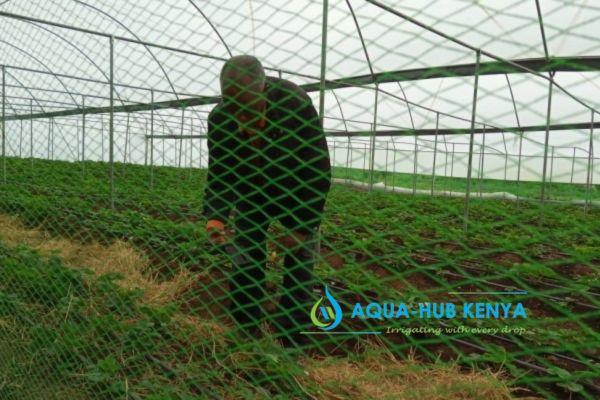
A group of strawberry farmers in Kenya reported a significant increase in yield after installing bird nets in their gardens.
To ensure you get the right net and a reliable bird net structure, contract Aqua Hub to supply and handle installation. We are a top agricultural net dealer in East Africa.
Call 0790719020
Frequently Asked Questions
1. What is the best anti-bird net for fruit trees?
Choose UV-treated HDPE netting with a 15–20 mm mesh.
2. Are bird nets reliable for crop protection?
Yes. Physical barriers like nets significantly reduce crop damage from birds.
3. How much does bird netting cost per metre?
Around KES 60 – KES 75.
4. Can pollinators get through bird netting?
Yes, with the correct mesh size (e.g., 20mm), bees and insects can still pollinate crops.
5. Do birds get caught in bird netting?
Proper installation minimises this risk; loose nets pose the main entanglement issue.
6. How do you install bird netting?
Drape over crops or frames, secure edges, and keep the net taut to prevent gaps.
7. Is bird netting durable?
Yes, high-quality UV-treated nets can last for 4 to 5 years.
8. Where to buy anti-bird nets for fruit trees?
Aqua Hub Kenya sells quality nets.
9. What mesh size should I use for strawberries?
20mm mesh strikes a good balance between bird exclusion and pollinator access.
10. Are there alternatives to bird netting?
Yes. Visual or sound repellents exist, but nets remain the most reliable physical barrier.