
Blog
Cost of Shade Nets in Kenya
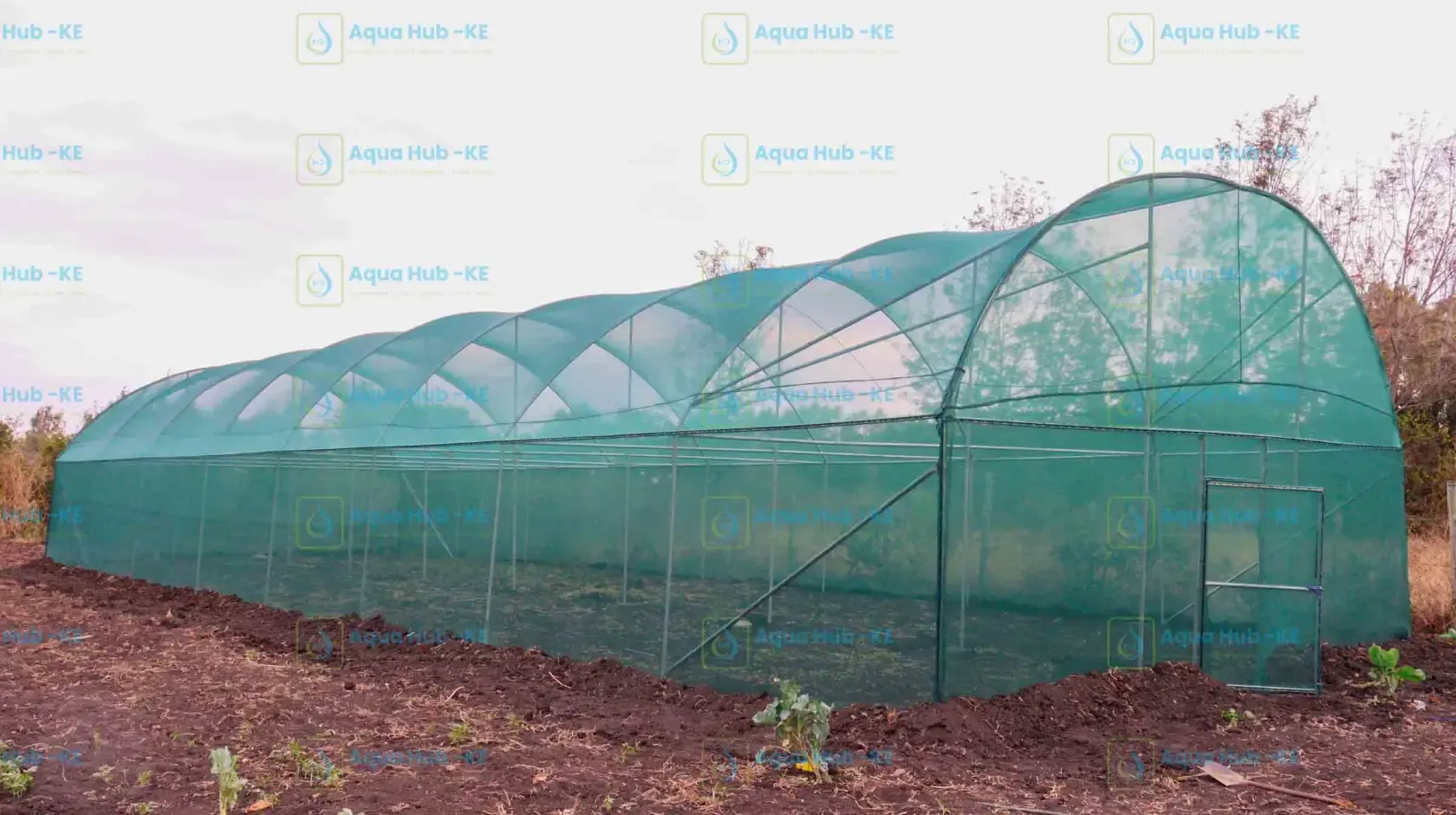
The cost of shade nets in Kenya per square metre varies with filtration: KES 65 for 35%, KES 95 for 55%, KES 130 for 75% and KES 180 for 90%. Our shade nets are customised to your growing needs with UV resistance for durability. Return on investment in shade net farming depends on the crop you grow and the size of the structure. It may take 1–2 growing seasons to recover the cost, assuming you grow high-profit crops like tomatoes or leafy greens.
This guide breaks down the current shade net roll price and guides you on how to choose the right net for your crops.
Do you need shade nets? Call 0790719020
Quick Takeaways
- The cost of shade nets in Kenya is between KES 13,000 and KES 36,000 depending on size and type.
- 50% shade nets are ideal for most vegetables.
- UV-treated nets last significantly longer.
- Proper installation prevents sagging and damage.
- Shade net vegetable farming increases yields and water efficiency.
Why Shade Nets are Becoming Essential in Agriculture
Shade nets regulate the amount of sunlight, moisture, and air that reaches your crops. By reducing sunlight, shade nets cut the evaporation rate; thus, moisture remains in the soil for crop use.
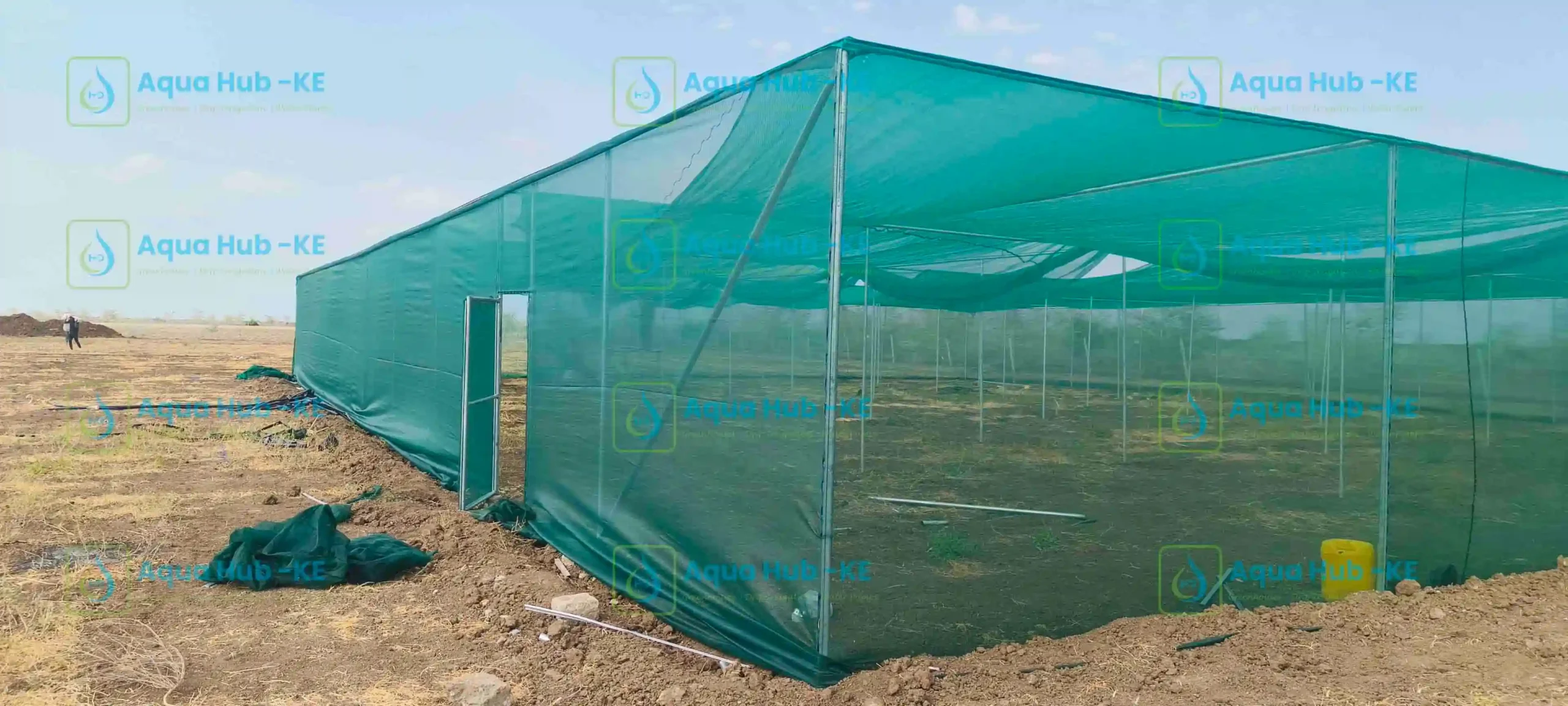
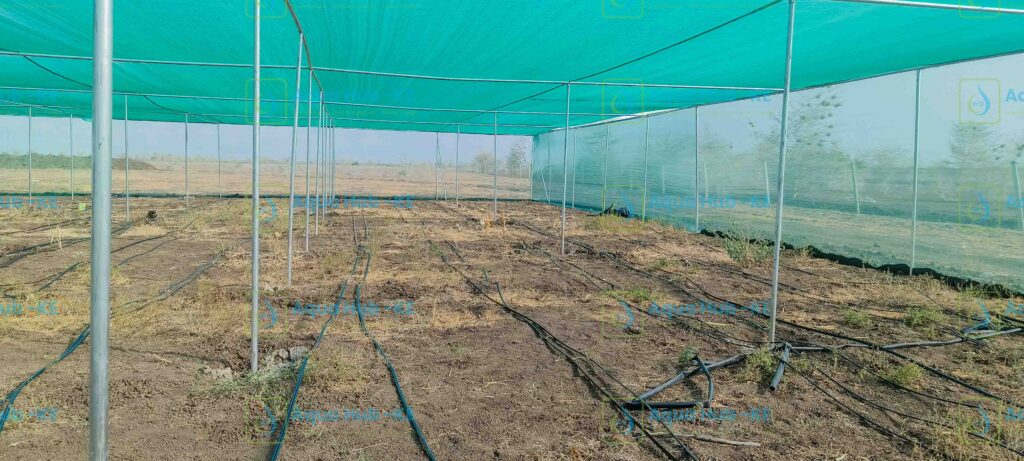
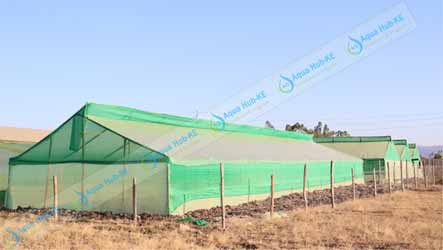
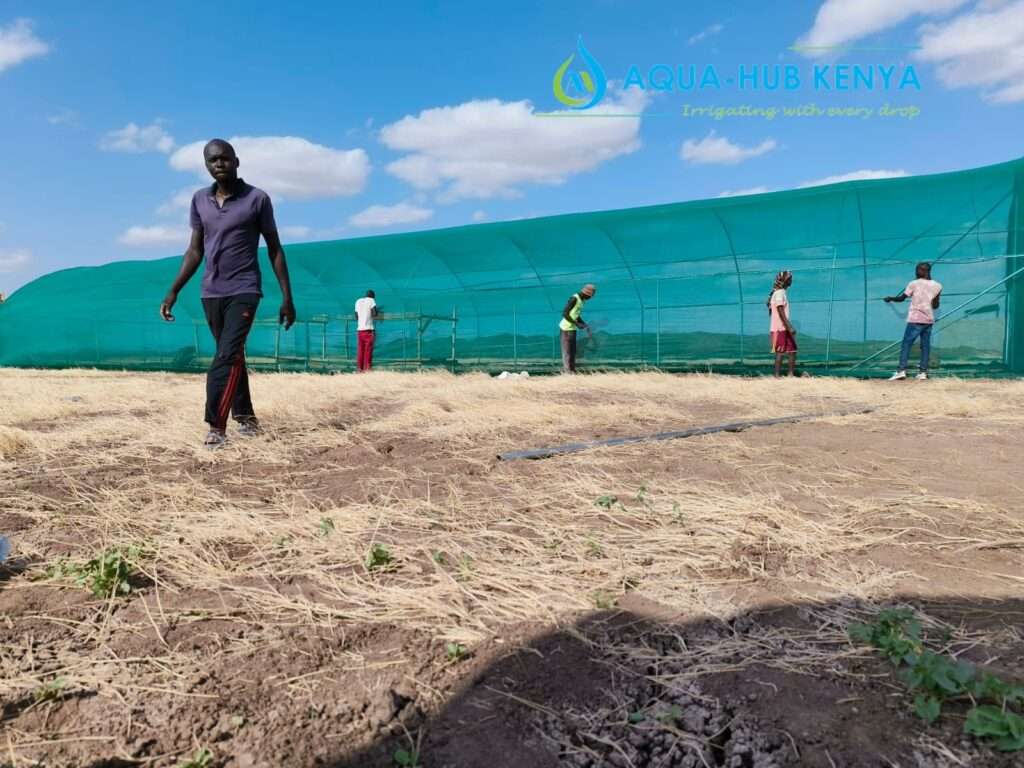
Flat-roofed shade net installed in Garissa
The Price Breakdown: Cost of Shade Nets in Kenya
Shade net cost in Kenya varies significantly depending on the filtration percentage.
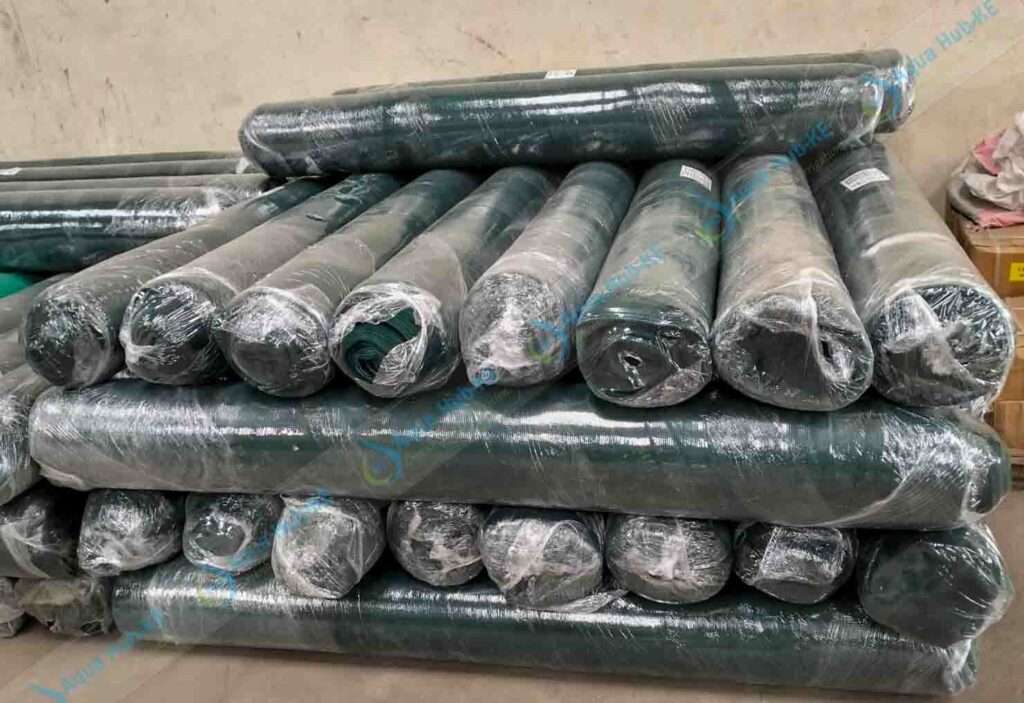
The cost of shade nets ranges from KES 13,000 to KES 37,000 for each 4 by 50 m roll.
The cost breakdown for available shade net filtration levels is as follows:
- 35% shading: KES 13,000
- 55% shading: KES 19,000
- 75% Shading: KES 26,000
- 90% shading: KES 36,000
We sell quality shade nets at standard roll sizes measuring 4 m by 50 m.
Shade Net Percentages Explained: Which One Do You Need?
The most common mistake most farmers make is using the wrong shade net percentage for their crops. Here are the common crop-specific uses of different shade net percentages:
- 35% Shade Nets: lightweight and ideal for heat-tolerant crops that just need a little relief from peak noon sun. They are perfect for tomatoes, capsicum and melons in cooler regions.
- 55% Shade Nets: work best for growing vegetables like tomatoes, cabbages, and spinach. It balances light penetration with temperature control.
- 75% – low light penetration, thus ideal for seedlings, herbs and vegetable production in arid areas.
- 90% Shade Nets: lowest light penetration level. Designed for growing shade-loving ornamentals like orchids and ferns.
Types of Shade Nets in the Kenya
- Knitted Shade Nets (Recommended): designed from HDPE monofilament and are lock stitched. If you cut a knitted net, it won’t unravel. They are elastic, easy to install, and allow for better airflow.
- Woven Shade Nets: Resemble a sack material. They are heavier and less stretchy. While durable, they can unravel if punctured. Less ideal for hot regions like Mombasa or Kilifi.
Shade Net Vegetable Farming in Kenya
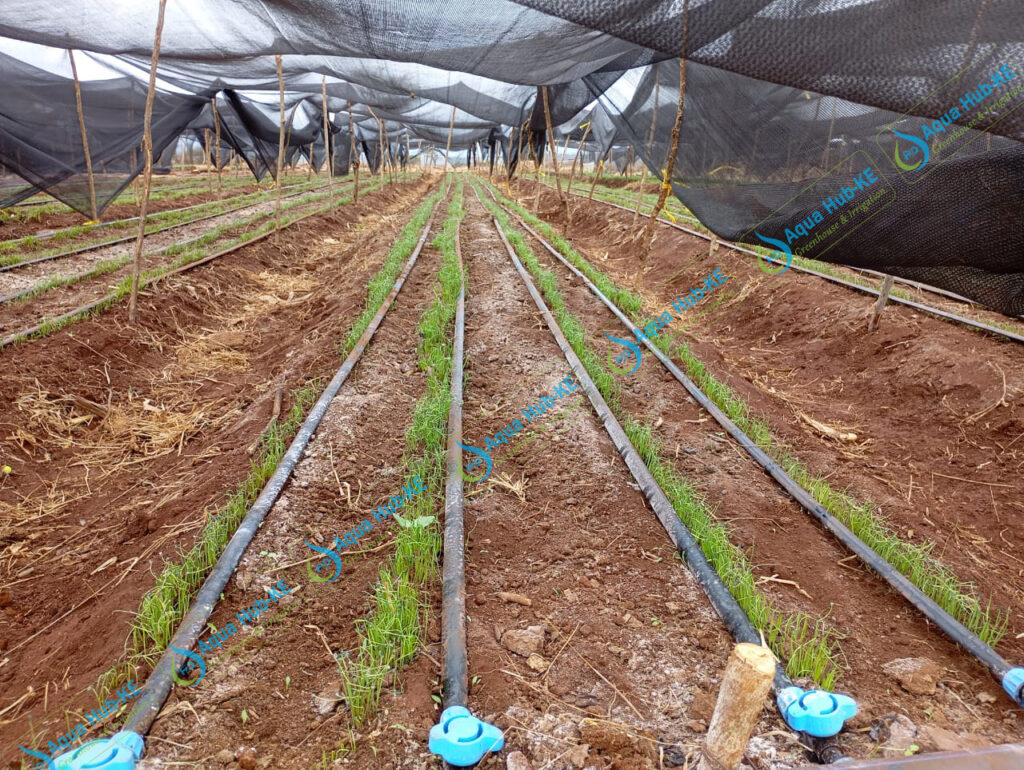
Shade net farming is becoming popular because of water efficiency and quality yield.
Popular vegetables that do well under shade net structures include:
- Lettuce
- Spinach
- Coriander
- Capsicum
- Strawberry seedlings
Benefits of Using Shade Nets for Vegetable Farming
- Moisture retention: shade nets reduce evaporation and lead to optimal growth of vegetables.
- Crop protection reduces the impact of heavy rainfall on delicate seedlings and vegetables.
- Continuous production: due to the optimal climate, you can grow vegetables even in dry conditions.
- Quality yield: due to sufficient moisture, heat and weed control, you harvest fresh and healthy vegetables.
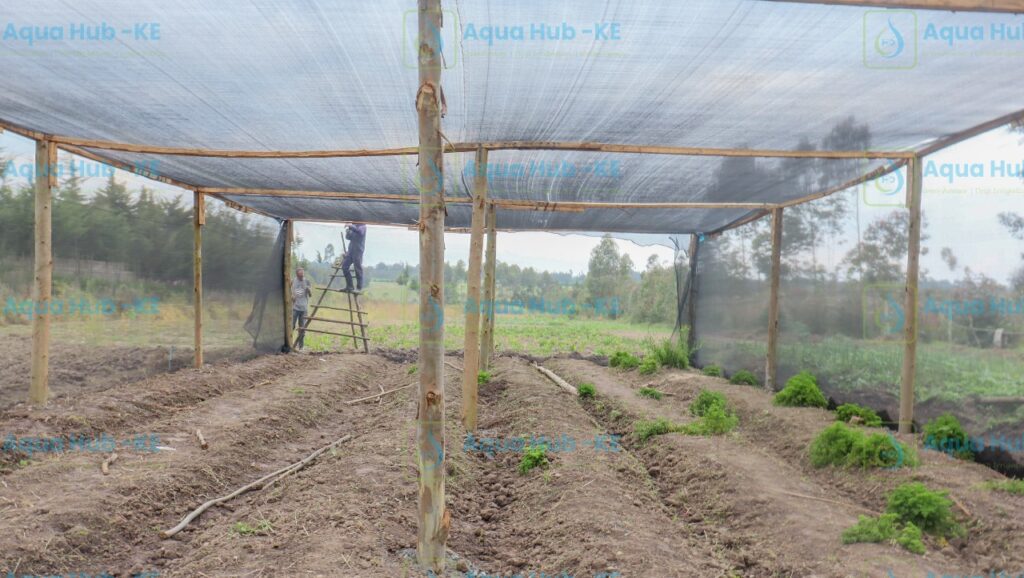
How to Construct a Low-Cost Shade Net House
- Site Selection: Choose a flat area with good drainage. Orientation is key to aligning the structure north-south to ensure even sunlight distribution throughout the day.
- Materials: You will need treated wooden poles (3-4 inches thick) or galvanised steel pipes. You also need high-tensile wire, U-nails (for wood) or tapping screws (for steel), and the shade net roll.
- Frame Assembly: Dig holes 2 feet deep, spaced 3-4 metres apart. Install your posts, ensuring they are at least 2.5 to 3 metres high to allow for air circulation. Connect the tops with timber or wire to create a grid.
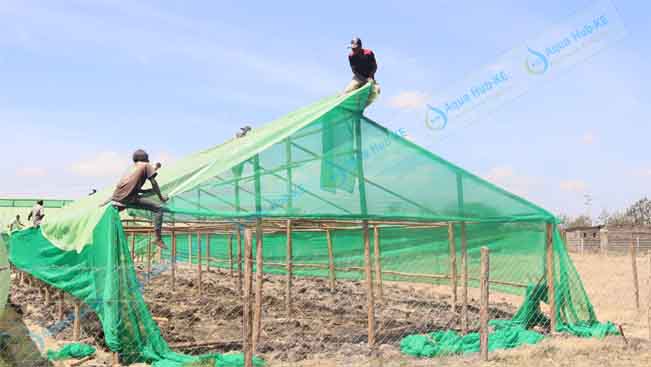
- Net Installation: Lay the net over the top. Do not stretch the net too tight. Secure it firmly to the edges using locking profiles.
Quality Shade Nets in Kenya
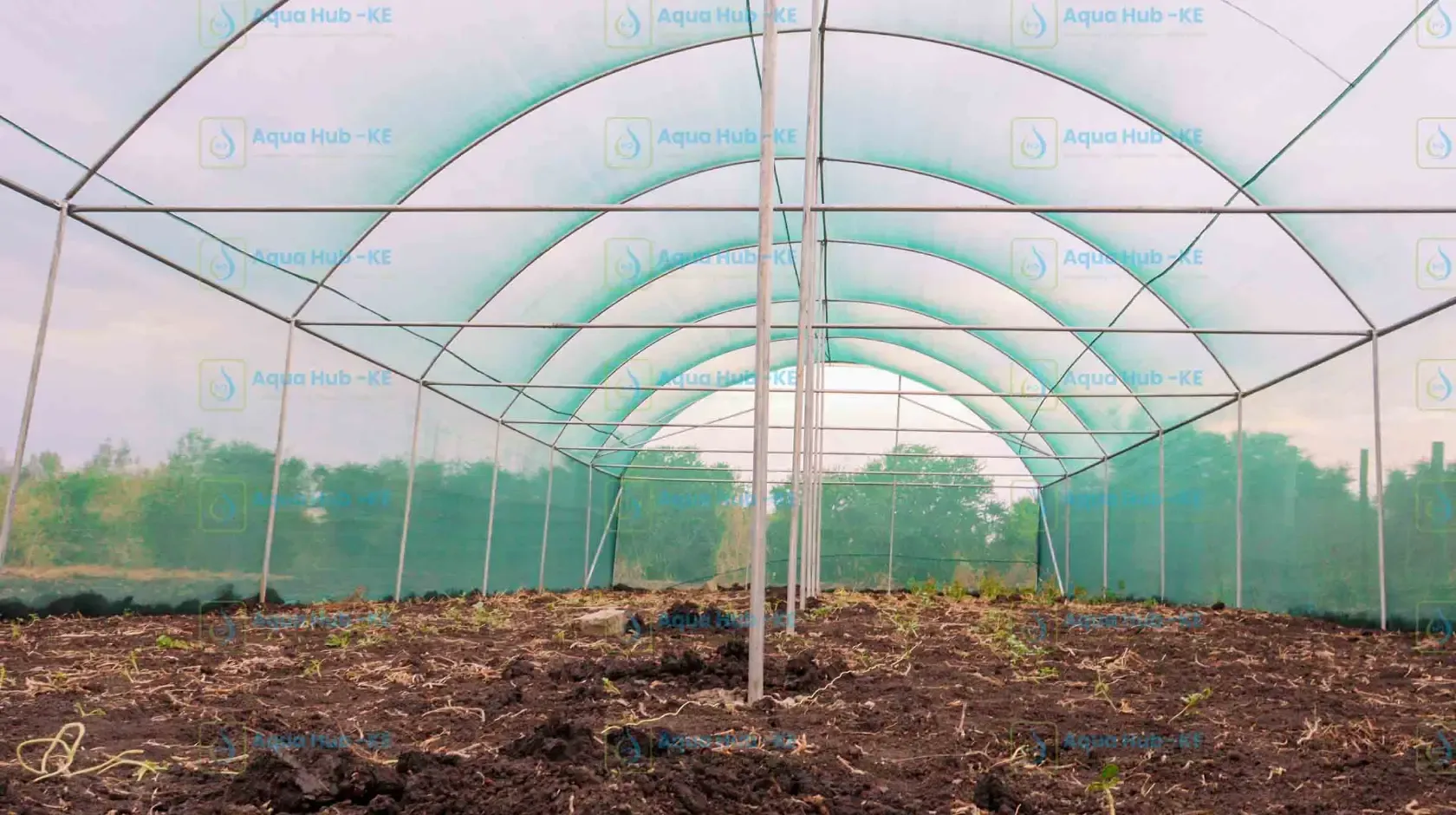
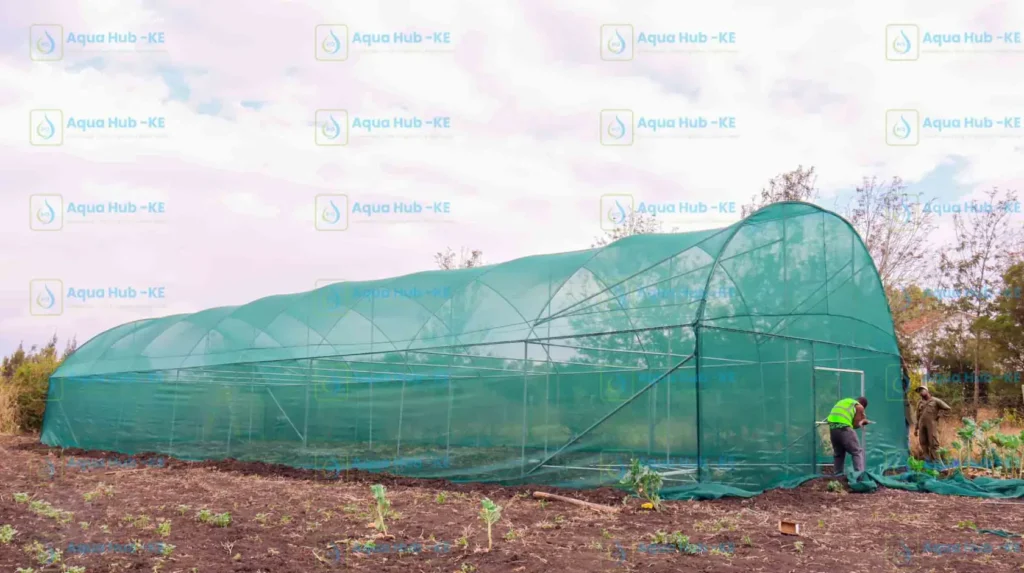
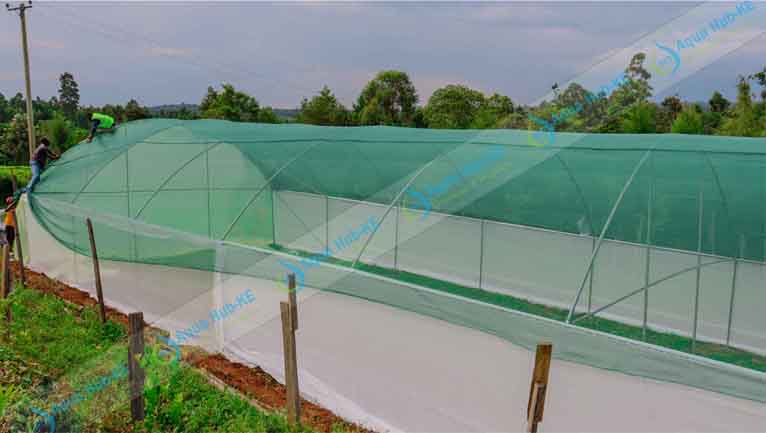
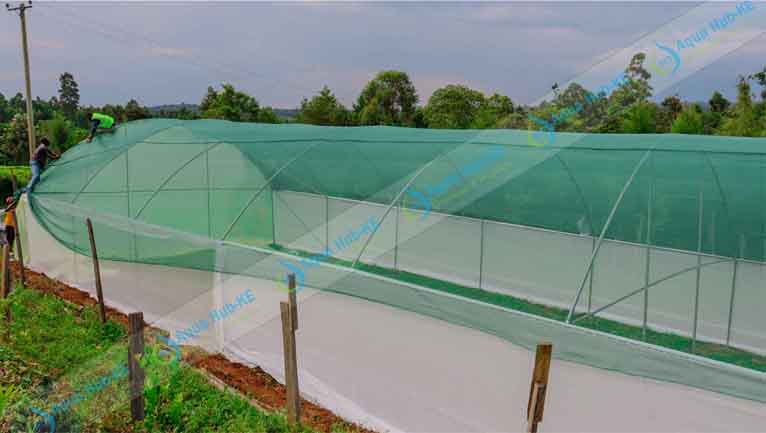
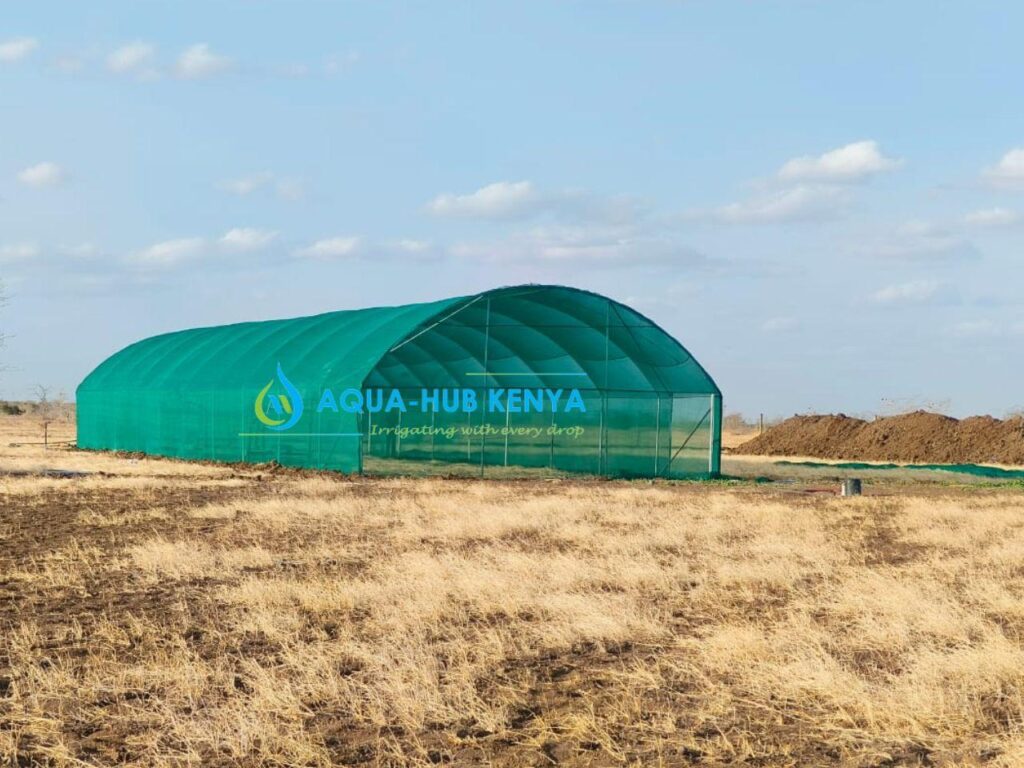
Tunnel shade net structure
The best quality shade nets are affordable at Aqua Hub Kenya. We supply UV-treated shade nets, the recognised standard material for crop protection.
Case Study: Tomato Farming Under Shade Nets
A farmer in Kitengela conducted a side-by-side trial with Anna F1 tomatoes.
- Open Field: Harvested 5 tonnes after 10 weeks. Suffered 25% loss due to bird strikes and sunburn.
- 50% Shade Net: Harvested 5 tonnes over 12 weeks. The harvest period was extended because the plants were less stressed.
- ROI: Although the shade net structure cost KES 120,000 to build, the extra 1.5 tonnes of tomatoes covered the cost in the first season alone. The structure is now pure profit for the next 4 years.
Uses of Shade Nets Beyond Crops
Shade nets are not just ideal for crop production. They have a wide range of uses in agriculture, which include:
- Livestock farming: Dairy farmers use 90% shade nets to reduce heat stress in cows, which directly correlates to higher milk production.
- Water Conservation: Covering a pond with a 75% shade net regulates water temperature and prevents evaporation or excessive water loss.
- Parks: used to provide shade in recreational parks and car parks.
Frequently Asked Questions
1. What is the standard size of a shade net roll in Kenya?
4 by 50 metres.
2. How much does a shade net cost in Kenya?
KES 13,000 to KES 36,000 per roll.
3. What are shade nets used for?
To protect crops from excessive sunlight and wind for maximum production.
4. Which shade net is best for tomatoes?
55% shade net is ideal for tomatoes.
5. What is the cheapest way to shade plants?
Using a shade net.
6. How long do greenhouse shade nets last?
3 – 5 years.
7. Can I use a 75% shade net for tomatoes?
Not recommended. Use 55%.
8. Is shade net suitable for all plants?
No. It is ideal for vegetables, seedlings and herbs.
9. Are black shade nets better than green?
Green is common for crops; black is used for heavy shading applications.
10. Where can I buy shade nets in Kenya?
Aqua Hub Kenya.