
Blog
Drip Irrigation Kit for 1 Acre: 2026 Guide
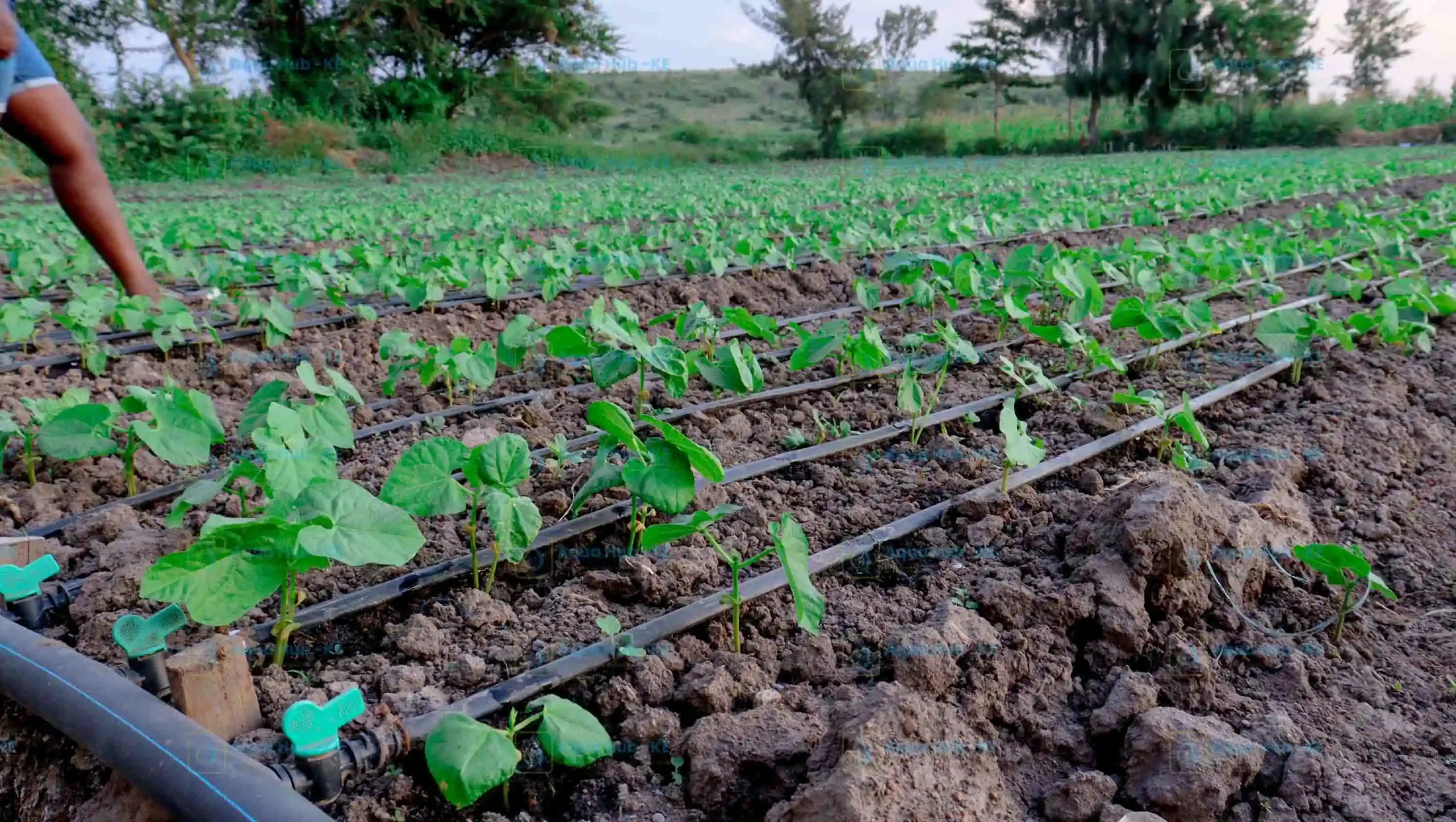
Our drip irrigation kit for 1 acre delivers uniform and sufficient moisture to all crops and in turn boosts yield.
We distribute complete drip irrigation kits for 1 acre and other customisable farm sizes. Our drip irrigation accessories are affordable.
Call 0790719020
Drip Irrigation Kit for 1 Acre: The Benefit over Sprinkler Irrigation
When compared to other methods of irrigation, the efficiency of drip kits is unmatched. Drip kits reduce water waste by 50% compared to overhead sprinklers. It also reduces weed growth, not to mention the zero cost of irrigation because it operates on gravity (no pumping cost).
A drip irrigation kit allows irrigation of delicate crops such as carrots without root exposure. Plants that are prone to fungal infections or leaf rot are ideal to water using drip irrigation. Sprinkler irrigation is not recommended because it requires frequent pesticide use to counter fungal rot.
Drip Irrigation Layout
To effectively water crops using a drip irrigation system, you must have:
- A reliable water source could be borehole water stored in a tank, river water, or dam or well water.
- Well-prepared beds on the farm: for ease of irrigation, crop management, and movement.
- Quality drip irrigation kit: to maintain top irrigation performance for a long time.
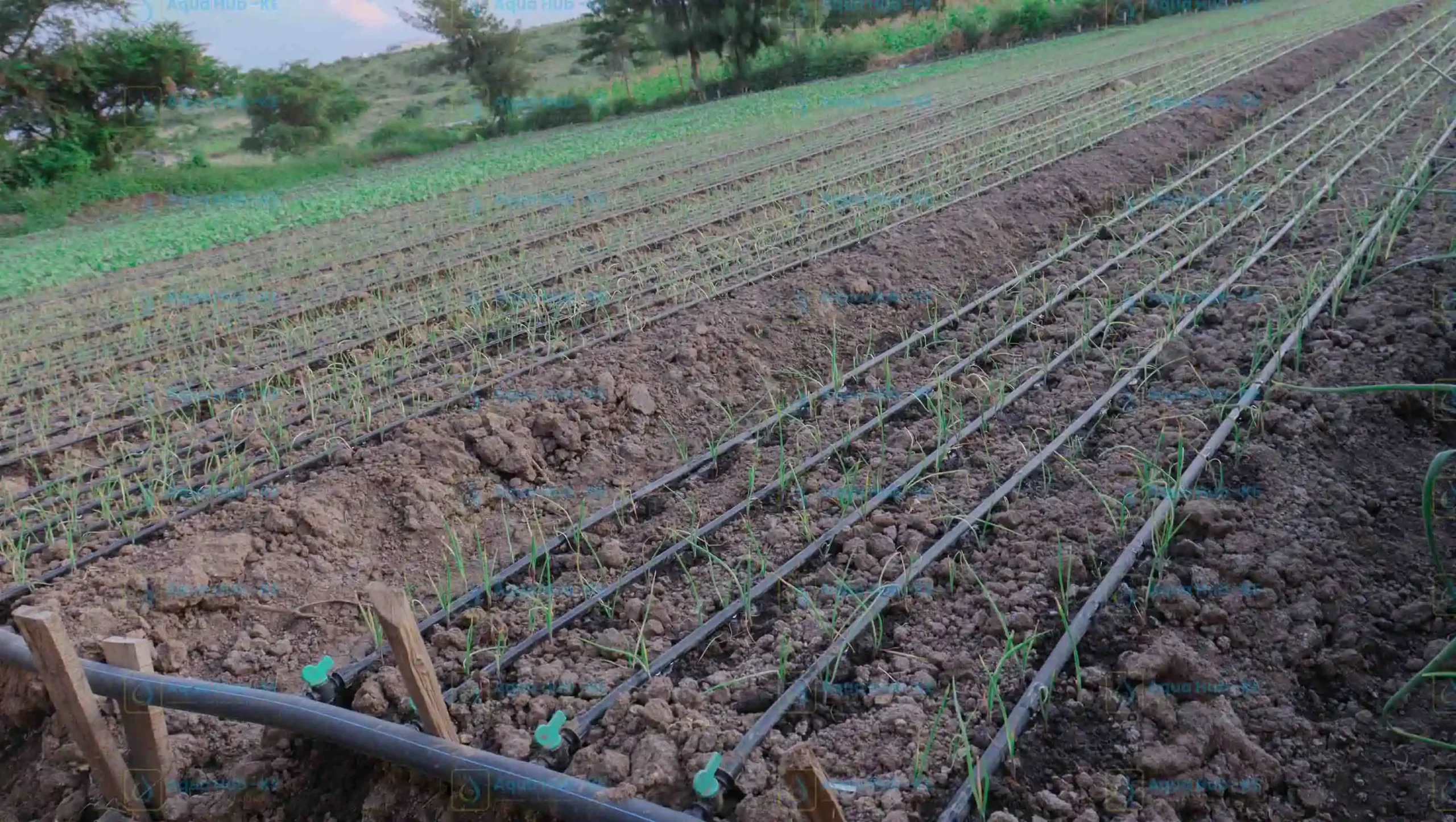
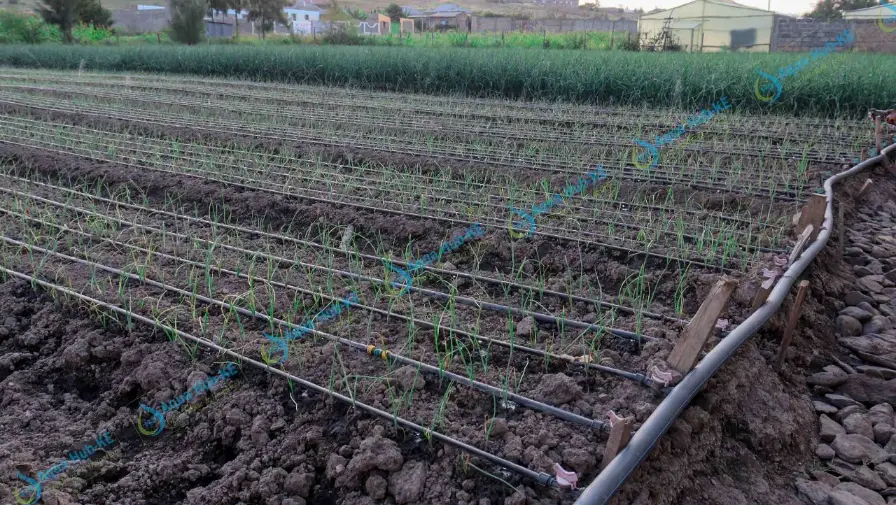
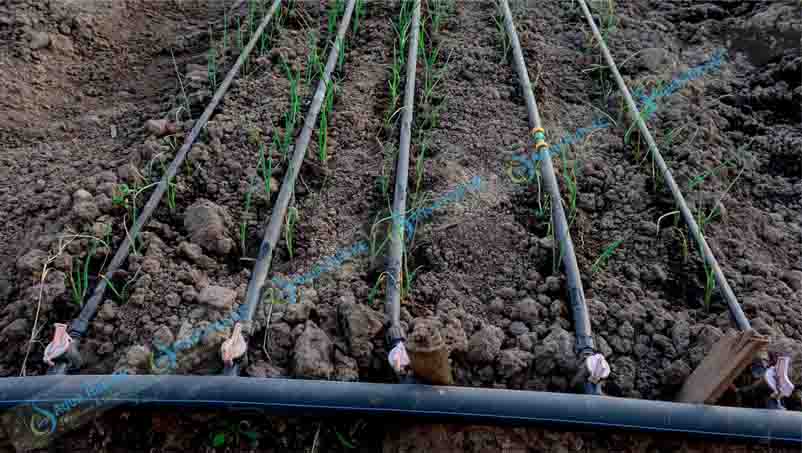
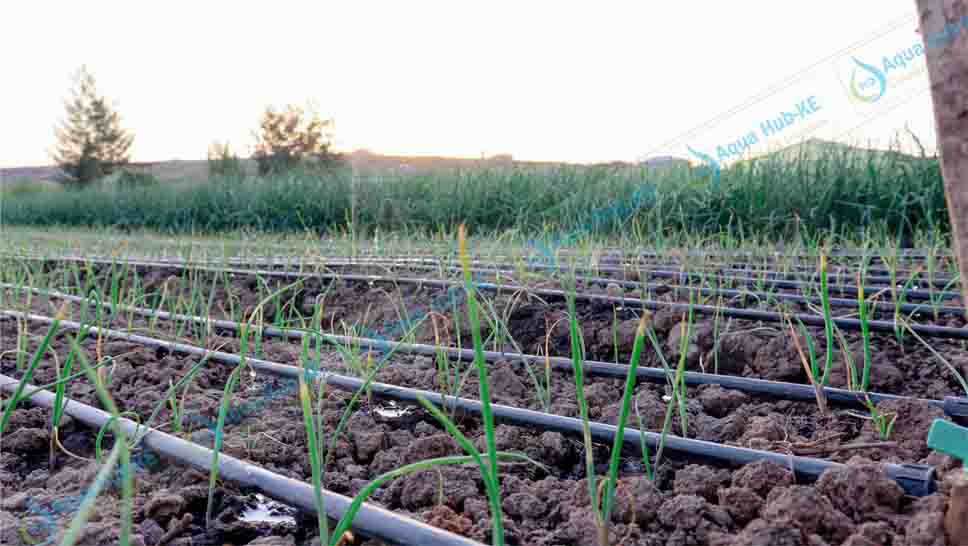
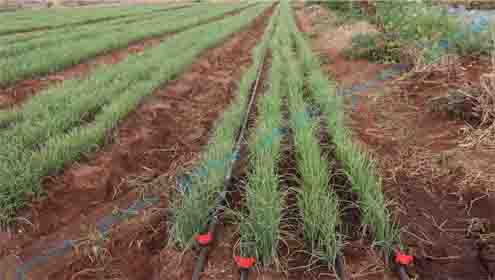
Drip irrigation for onions
Components of a Drip Irrigation Kit
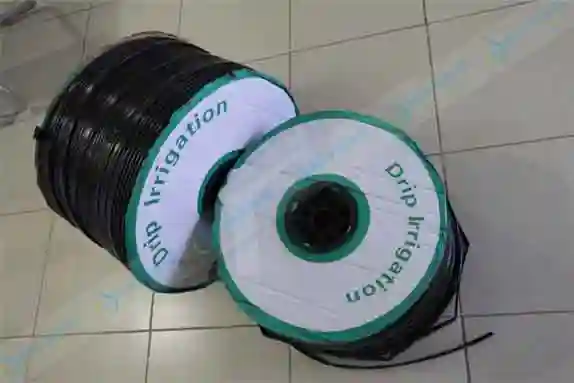
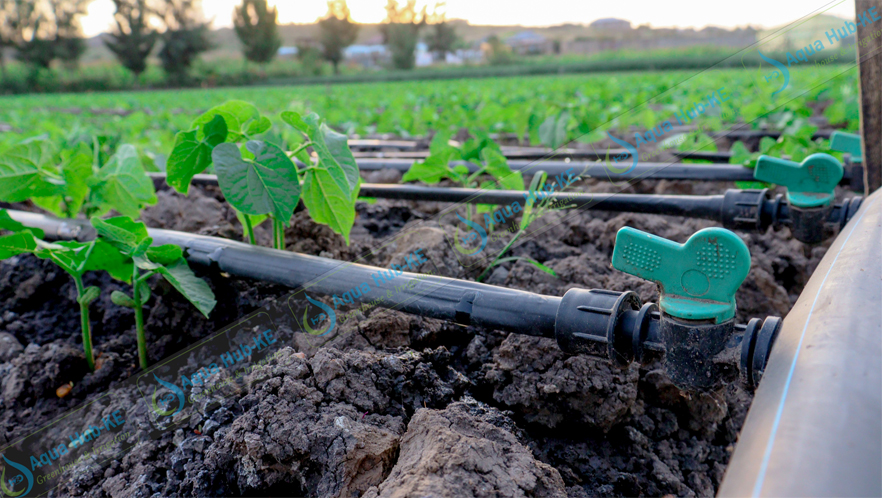
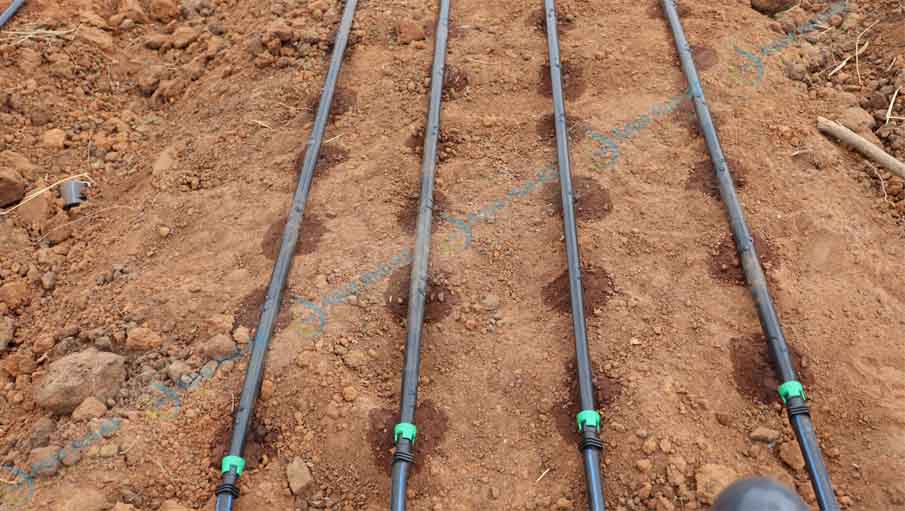
- Drip lines or drip tape – 16mm PE dripline emitter rolls of 100m length.
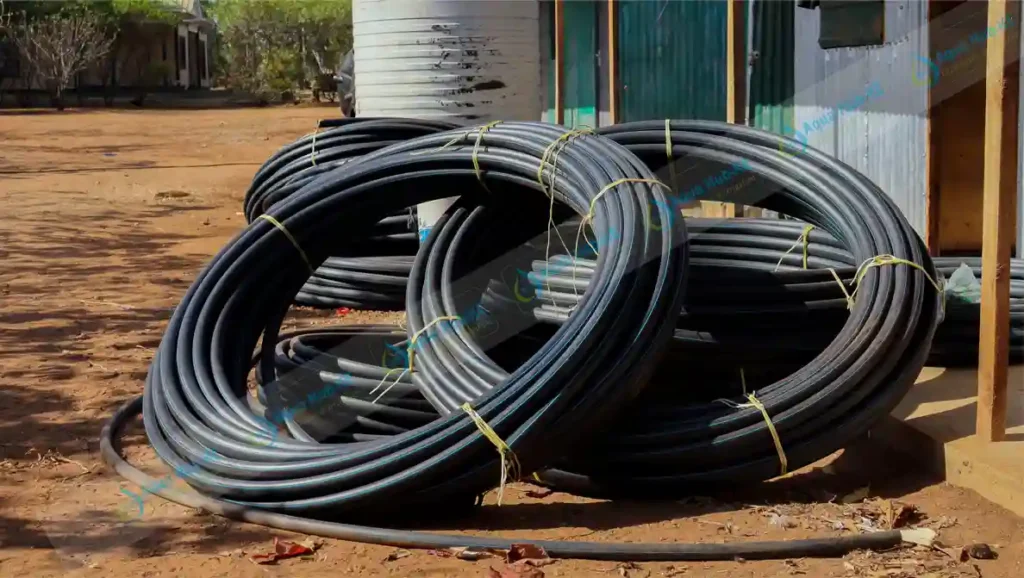
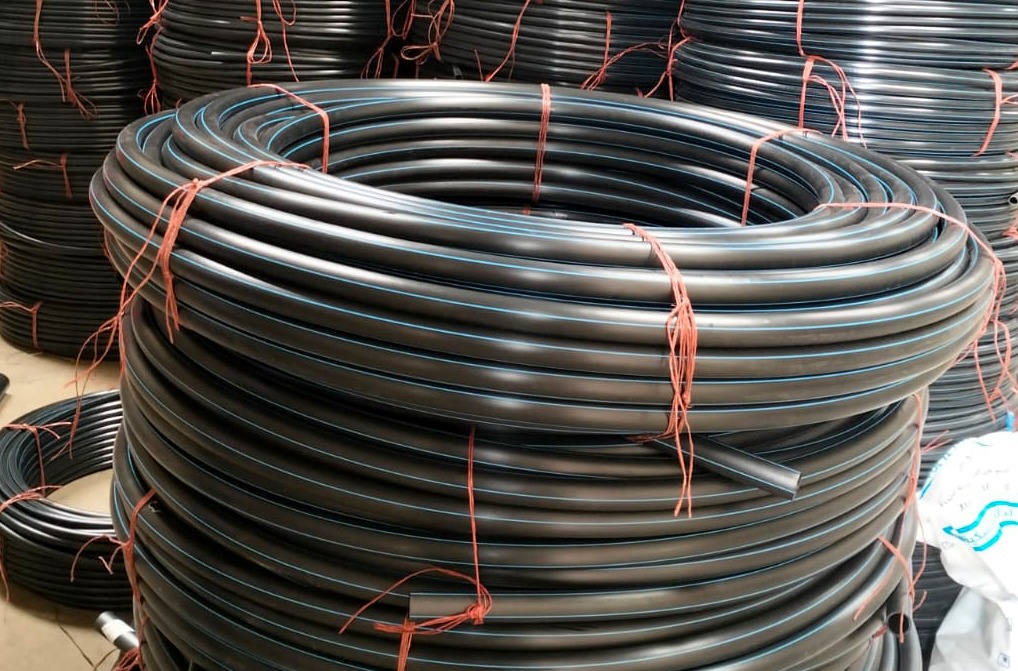
- Main and sub-main HDPE – 2 inches.
- Screen or disc filter
- HDPE Connectors
- Drip connectors
- Pressure regulator
- Ball Control Valve
- Venturi injector (optional)
A high-quality kit should include all the basics that enable simple installation and sustainable operation.
Drip Irrigation Kit for 1 Acre: Cost Overview
| Lines per Bed | Crops Suitable | Cost (KES) |
| 1 line | Melons, potatoes | 75,000 – 95,000 |
| 2 lines | Tomatoes, Sukuma wiki | 95,000 – 145,000 |
| 3 lines | Onions, garlic, herbs | 130,000 – 185,000 |
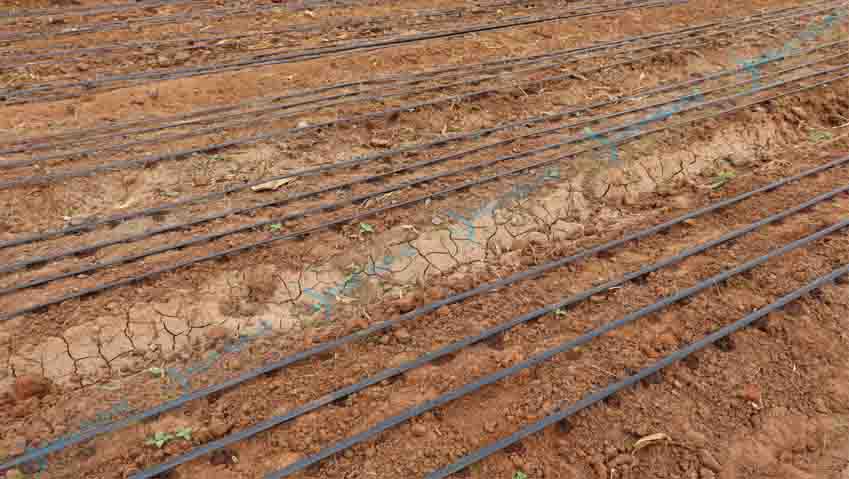
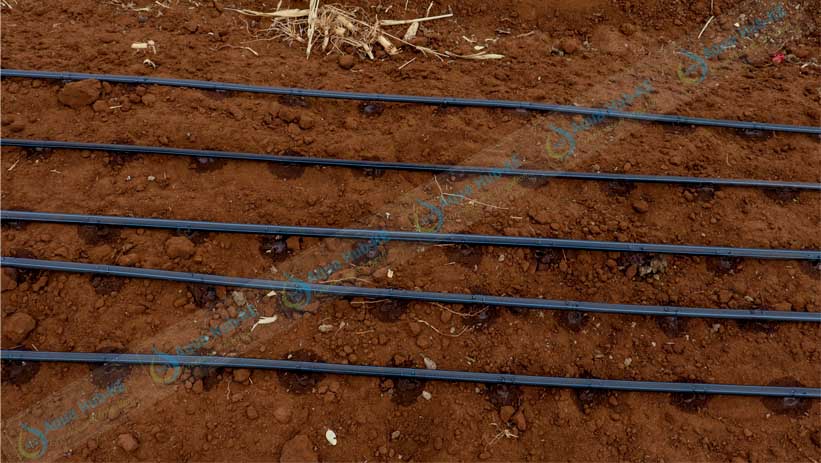
1 line of dripline is often applicable in crops with wide spacing: watermelon, potato, and maize.
2 driplines are ideal for crops with medium row spacing of approx. 50 cm. For example, sukuma wiki, capsicum, tomato, beans and cabbage.
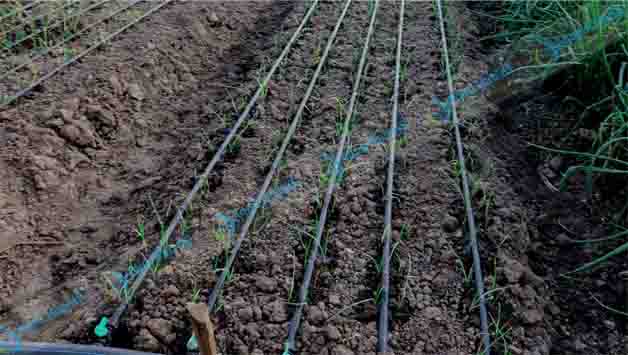
3 driplines per bed is best for close-spaced plants, including onion, garlic, carrots, and coriander.
Choosing the Right Drip Irrigation Kit
The common criteria for evaluating and buying the right drip irrigation system depend on the factors below:
- Crop water needs: mind the water requirements when assessing drip kits for your crops.
- Farm size: drip kits are packaged according to the size of the farm. 1-acre, ½ ½-acre or ¼ ¼-acre drip kits.
- Bed layout: the size of beds determines the number of driplines and fittings to use.
- Water source: if you are using water from the river, it includes a pump and pressure regulator. For raised tank water, there is no need for a pump.
- Farm elevation: for areas with hilly landscapes, the drip kit or dripline used is a pressure-compensated one.
- Type of system – for controlled farming environments such as high-tech greenhouses, automated drip irrigation kits are used.
Crop choice impacts layout, emitter spacing, and overall system design and therefore cost and water usage efficiency.
¼ Acre Drip Irrigation Kit
¼-acre drip irrigation kits are ideal for small-scale farmers with approximately 1024 square metres of land. The cost of a ¼-acre drip irrigation kit ranges between KES 30,000 and KES 40,000.
Coffee Drip Kit: Tips for High-Value Coffee Farms
Drip kit or button drip irrigation is suitable for coffee trees due to its precision and water efficiency.
The coffee drip irrigation kit is inclusive of a normal drip kit but uses button drippers installed on a PE pipe instead of driplines.
Installation
Setup of a drip irrigation kit requires expertise and understanding of pressure needs, crop water needs and reliable accessories. For that reason, Aqua Hub handles drip irrigation installation projects with professionalism by following the steps below:
- Site Survey: upon talking to our team, we often recommend a site visit to confirm farm size, layout and water access, which is important for an accurate quotation of materials.
- Preparation of quotation: as per the site visit, a quote of materials is prepared.
- Payment of drip irrigation kits: you proceed to pay for the drip kits.
- Delivery of drip irrigation kits: We deliver materials prior to the installation date.
- Actual installation: we conduct installation of the drip irrigation system.
- Testing the system: after installation, we test the system to ensure it works properly.
Where to Buy a Drip Irrigation System in Kenya
Aqua Hub Kenya
Call 0790719020
Tips for Maximum Efficiency
Apply nutrients or fertilisers using venturi injectors (fertigation) to enhance efficiency.
Use screen filters for simple drip irrigation and disc filters for large drip systems.
Irrigate in the late afternoon or morning hours to avoid excessive evaporation.
Frequently Asked Questions
1. How much is drip irrigation for 1 acre?
KES 135,000–185,000.
2. How much is a quarter-acre drip irrigation kit in Kenya?
KES 35,000 – KES 45,000.
3. Which pipe is best for irrigation?
HDPE pipe is highly durable and resistant to the effects of sunlight.
4. What is the most common drip line size?
½” size.
5. What is the best drip irrigation kit for onions?
Drip kit of 3 driplines per bed. The dripline should be 15 cm emitter spacing.
6. Is a coffee drip kit different from a vegetable kit?
Coffee drip kits include button drippers instead of driplines.
7. How much is a roll of drip line?
KES 8,000 – KES 9,000 for a 0.3 mm dripline roll.
8. How long do drip irrigation kits last?
3 to 5 years
9. How often should I maintain my drip system?
After every 2 months or in case of clogging.
10. Where can I buy drip irrigation kits in Kenya?
Aqua Hub Kenya.