
Blog
Micro Sprinklers in Kenya
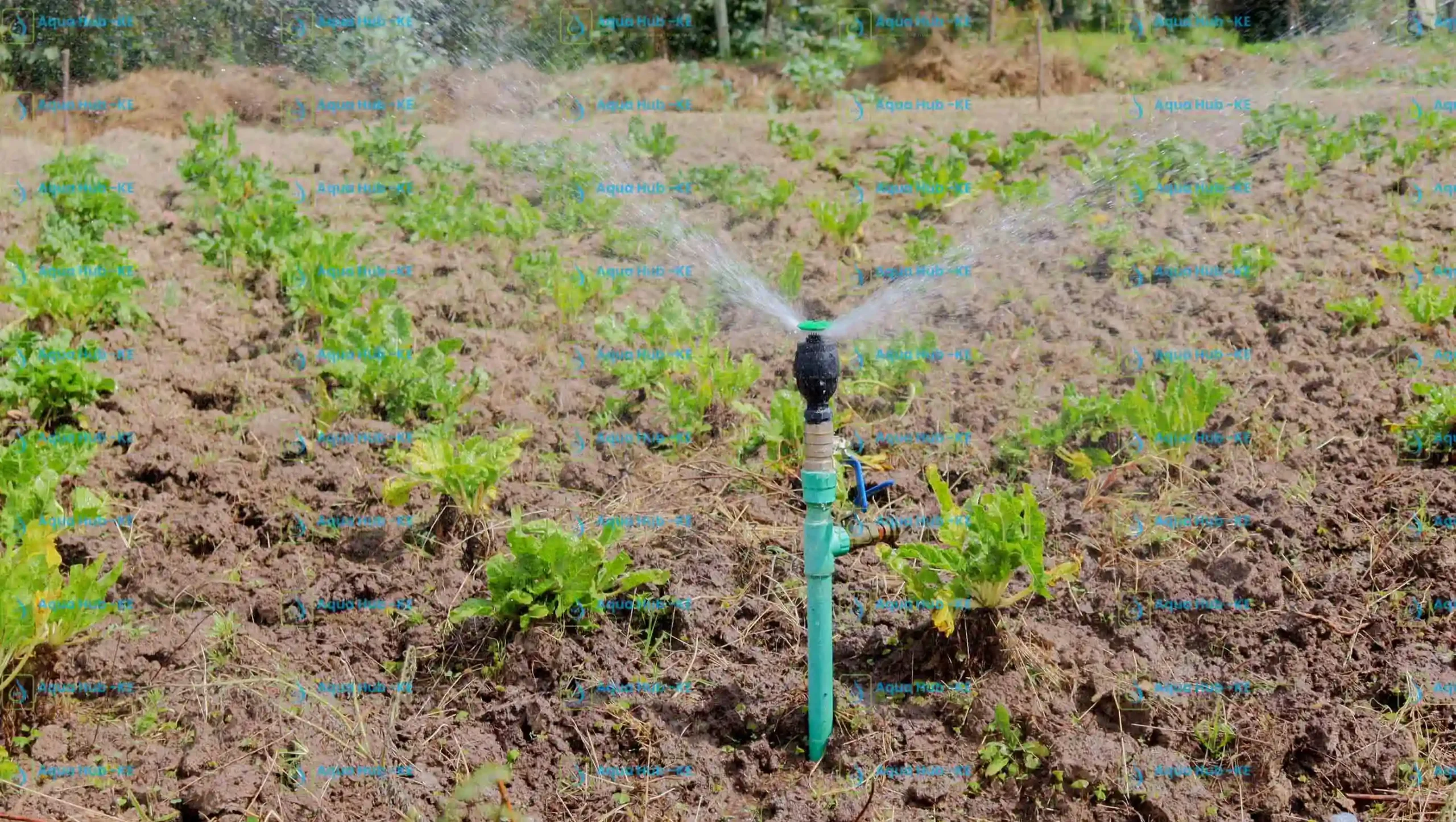
Micro irrigation sprinklers in Kenya are available in different types designed for different crops and coverage. We have ½ ½-inch micro sprinkler heads available at KES 100 – KES 500.
Call 0790719020
Quick Takeaways
- Micro-sprinklers save water and increase yields
- Different types suit different crops and conditions
- Flow rate and pressure are critical for performance
- Filtration is essential to prevent clogging
- Best for orchards, vegetables, and nurseries
- Proper spacing ensures uniform coverage
- Pressure-compensating systems improve efficiency
Cost of Micro Sprinklers in Kenya
KES 100 to KES 500
What Are Micro Sprinklers?
Micro sprinklers are low-pressure irrigation devices that spray water in a fine, rain-like pattern over crops. Unlike traditional sprinklers, they use less water and energy while maintaining uniform coverage.
Components of a Micro Sprinkler System
A complete system includes several interconnected parts that ensure smooth operation. These include main pipes, connectors, risers, spray heads, and filters.
The complete system requirements for a micro sprinkler to work include:
- Mainline pipes – carry water across the farm
- Risers/stakes – elevate the sprinkler
- Nozzles – control spray pattern and flow
- Filters – prevent clogging
Types of Micro Sprinklers in Kenya
Micro Sprayers
These release a gentle spray ideal for vegetables and close-spacing crops.
Bubblers
Fixed irrigation spray heads that deliver water through a full circle stream.
Butterfly Sprinklers
Small and efficient, they are suitable for leafy greens and onions.
Foggers
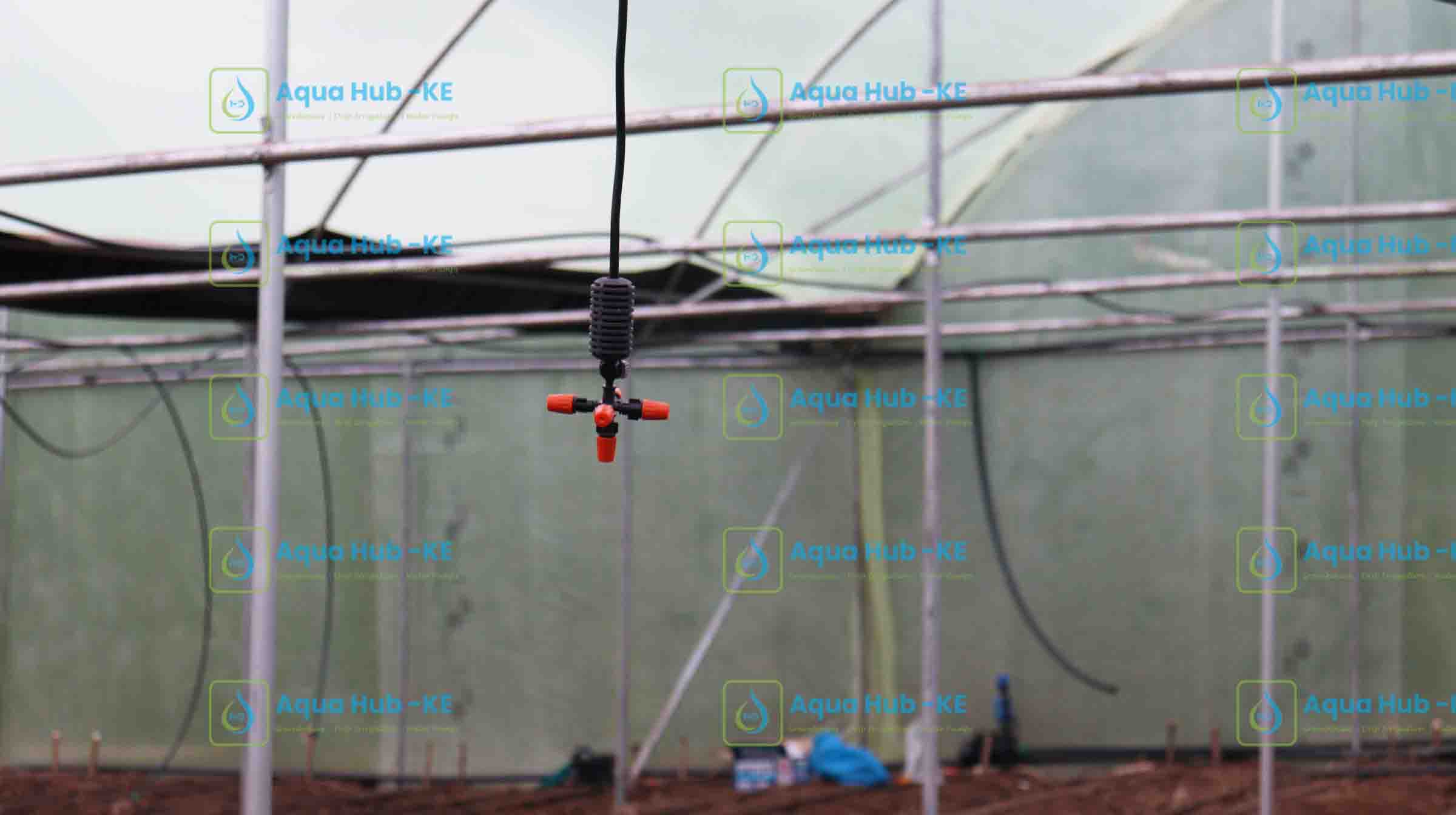
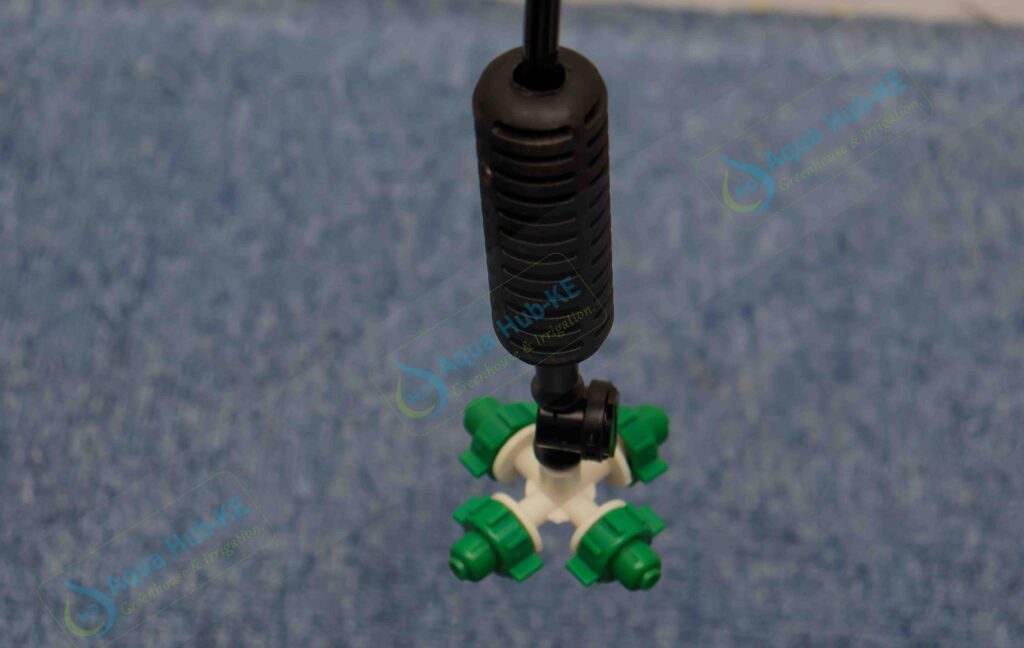
Micro sprinklers for greenhouse climate control
Used for cooling and humidity control in greenhouses.
Fixed vs Rotary Micro Sprinklers
Fixed Micro Sprinklers
- Spray water in a stationary pattern
- Lower cost
- Suitable for small spaces
Rotary Micro Sprinklers
- Rotate while spraying
- Provide wider and more uniform coverage
- Better for orchards
Rotary types are more efficient for fruit trees because they reduce dry spots and improve root zone coverage.
Micro-Sprinkler Spray Patterns
Micro sprinklers come with different spray angles:
- 90° – corners or boundaries
- 180° – edges of fields
- 360° – full coverage
Flow Rates of Micro Sprinklers
Flow rate is a measure of how much water the sprinkler heads discharge per hour.
Most micro sprinklers deliver between 40 to 110 liters per hour.
Low flow rates are ideal for seedlings and young plants while high flow rates w
Pressure Requirements and Pressure-Compensating Micro Sprinklers
Micro sprinklers typically operate at 1.5–2 bars pressure.
Pressure-compensating models:
- Deliver uniform water even on slopes
- Prevent over-irrigation in lower areas
Benefits of Micro Sprinklers
- Sufficient Irrigation Rate – has a quite high flow rate thus sufficient watering.
- Improved crop yields – due to sufficient irrigation, crops thrive easily.
- Uniform irrigation coverage – enhance proper watering around canopies, close spaced crops and trees.
- Reduced labor costs – no much labour needed to operate the system.
- Saves on cost – less costly compared to drip kits.
Suitable Crops for Micro Sprinklers in Kenya
Micro sprinklers are used to water:
- Fruits trees : mangoes, apples, avocados, pixie oranges and coffee trees.
- Vegetables : irrigation of kales, cabbage, onions and carrots.
- Watering Tree Seedlings
- Flower beds
Soil and Climate Considerations
Micro sprinklers perform best in:
- Sandy soils with high infiltration
- Moderate humidity climates
- They are less effective in windy areas, where water distribution becomes uneven.
How to Choose the Right Micro Sprinkler
- Crop type – the water needs for your crops determine which micro sprinkler heads to use.
- Soil type – soil water retention rate determines the type and spacing of micro sprinkler heads.
- Flow rate – consider the flow rate that will match to your crop water needs.
- Farm size – farm size will and layout will affect the number and size of sprinklers needed.
Micro Sprinkler Spacing
They are spaced in accordance with the spray radius. Often take between 2 – 5 m apart
Which Irrigation Filter for Micro Sprinklers?
Micro sprinklers have small nozzles that can clog if your water contains dirt or sand particles. You can use a screen or disc filter in your system to prevent sediment clogging the sprinkler nozzles.
Common Applications of Micro-Jet Sprinklers
Micro jet sprinklers are widely used in:
Orchards
Perfect for mangoes, avocados, and citrus trees.
Greenhouses
Provide humidity and cooling for delicate crops.
Vegetable Farms
Ideal for wide vegetables such as kales, spinach, cabbage, lettuce, and onions.
Their flexibility makes them one of the most versatile irrigation tools in Kenya.
Frequently Asked Questions
1. What are micro sprinklers used for?
They are used for irrigating crops like vegetables, fruits, and seedlings using low-pressure water systems.
2. What is the difference between fixed and rotary micro sprinklers?
Fixed sprinklers stay in one position, while rotary ones rotate for wider and more uniform coverage.
3. What is the flow rate of micro sprinklers?
40–110 litres per hour.
4. Are micro sprinklers better than drip irrigation?
They cover a larger area, making them better for orchards and wider crops, while drip is better for row crops.
5. Which filter is best for micro sprinklers?
Screen Filter.
6. How far apart should micro sprinklers be placed?
2 – 5 meters apart.
7. Can micro sprinklers work without a pump?
Yes, but large ones will require a pump.
8. What crops are ideal for micro sprinklers?
Fruits, vegetables, and nursery plants benefit the most.
9. What pressure do micro sprinklers require?
1.5 to 2 bars.
10. Where to Buy Micro Sprinklers?
Aqua Hub LTD.