
Blog
Cost of Drip Irrigation Per Acre
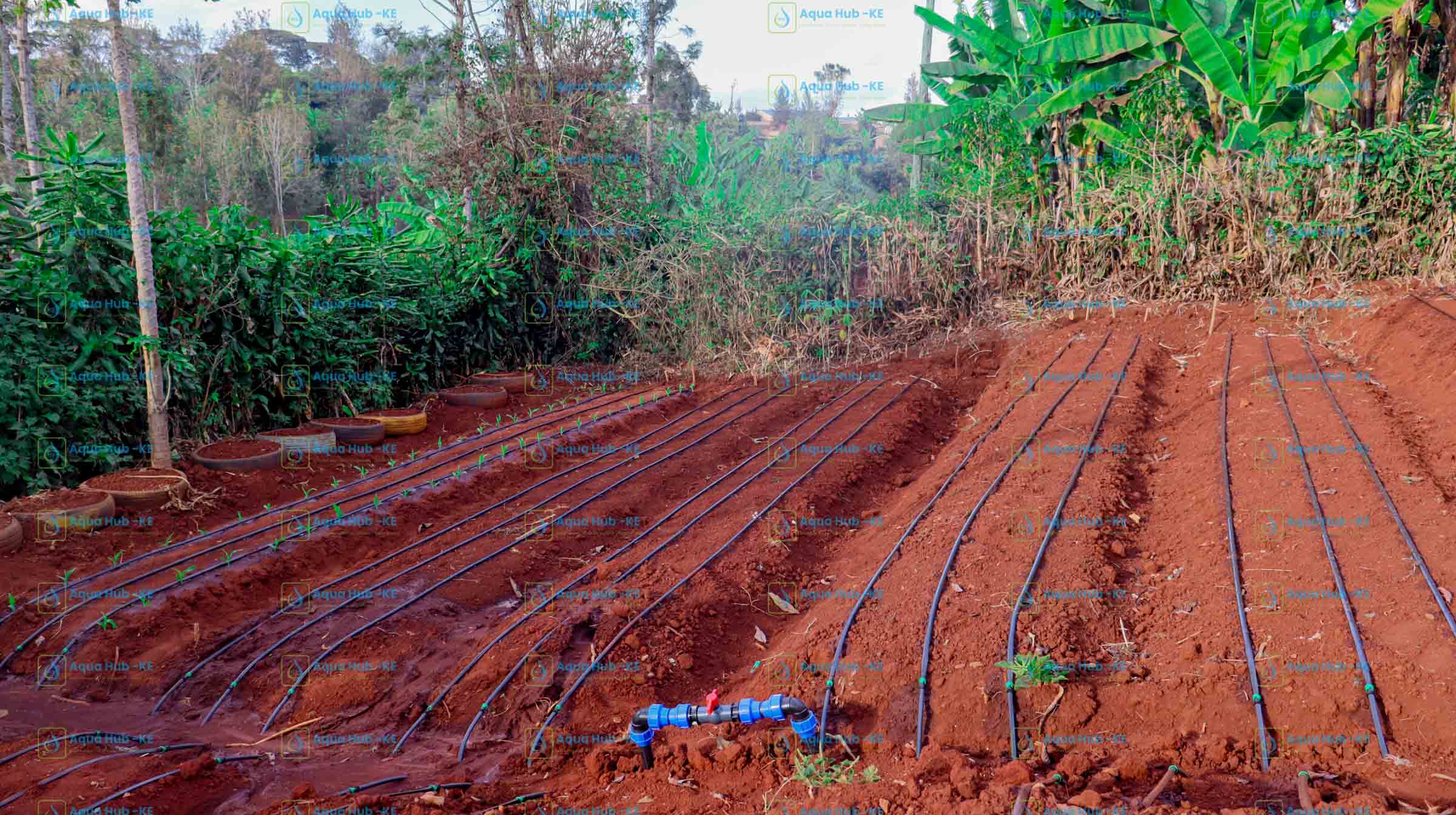
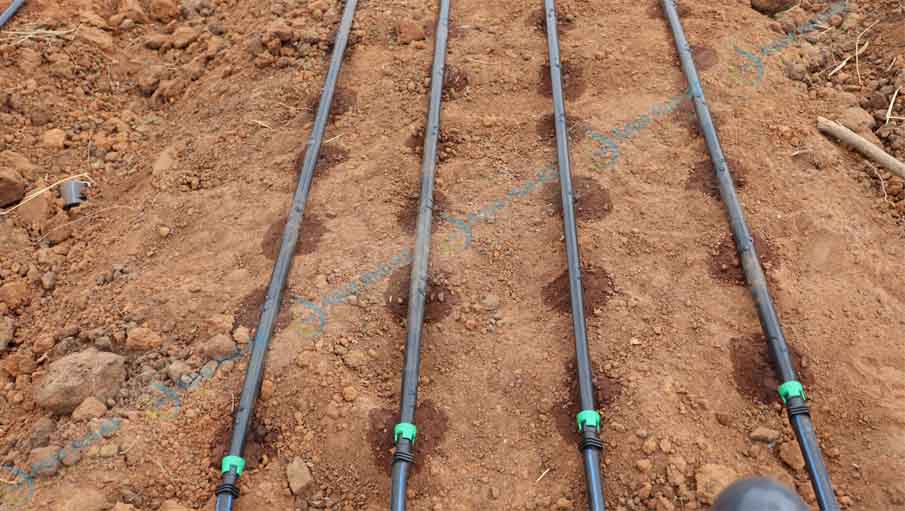
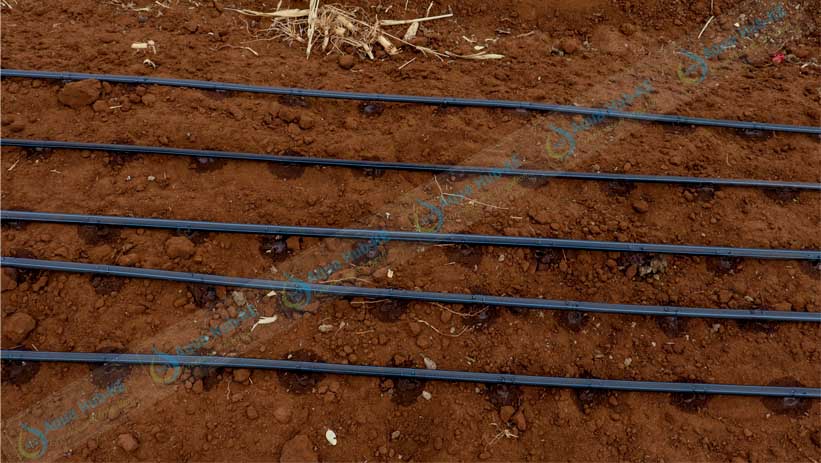
The cost of drip irrigation per acre can vary depending on the crop and type of system. Drip irrigation per acre in Kenya ranges from KES 130,000 to KES 185,000.
Buy a 1-acre drip irrigation system from Aqua Hub LTD. Our irrigation system cost includes installation fees charged according to farm size.
Call 0790719020
Cost of Drip Irrigation Per Acre
| Size/line per bed | 1 Line Per Bed | 2 lines Per Bed | 3 Lines Per Bed |
| 1 acre | KES 130,000 | KES 160,000 | KES 180,000 |
| 1/2 acre | KES 68,000 | KES 75,000 | KES 87,000 |
| 1/4 acre | KES 35,000 | KES 40,000 | KES 45,000 |
| 1/8 acre | KES 17,000 | KES 22,000 | KES 27,000 |
Cost of Drip Irrigation Per Acre for Different Crops
| Crop | Average Drip Cost Per Acre |
| Tomatoes | 135,000 – 160,000 |
| Onions | KES 185,000 – KES 200,000 |
| Watermelons | KES 135,000 |
| Capsicum | KES 135,000 – KES 160,000 |
| Coffee | 150,000 – 250,000 |
Components of a Drip Irrigation System
A standard drip irrigation system includes:
| Component | Function |
| Water tank or source | Water storage |
| Pump | Pushes water through pipes |
| Mainline pipes | Water supply from source to farm sections |
| Drip lines | Online water delivery to crops |
| Filters | Remove dirt to prevent clogging |
| Fertilizer injector | Feeding fertilisers in water for distribution by the system |
| Valves | Control flow and pressure |
| Connectors | Connection of pipes and fittings |
Why Drip Irrigation is Popular in Kenya
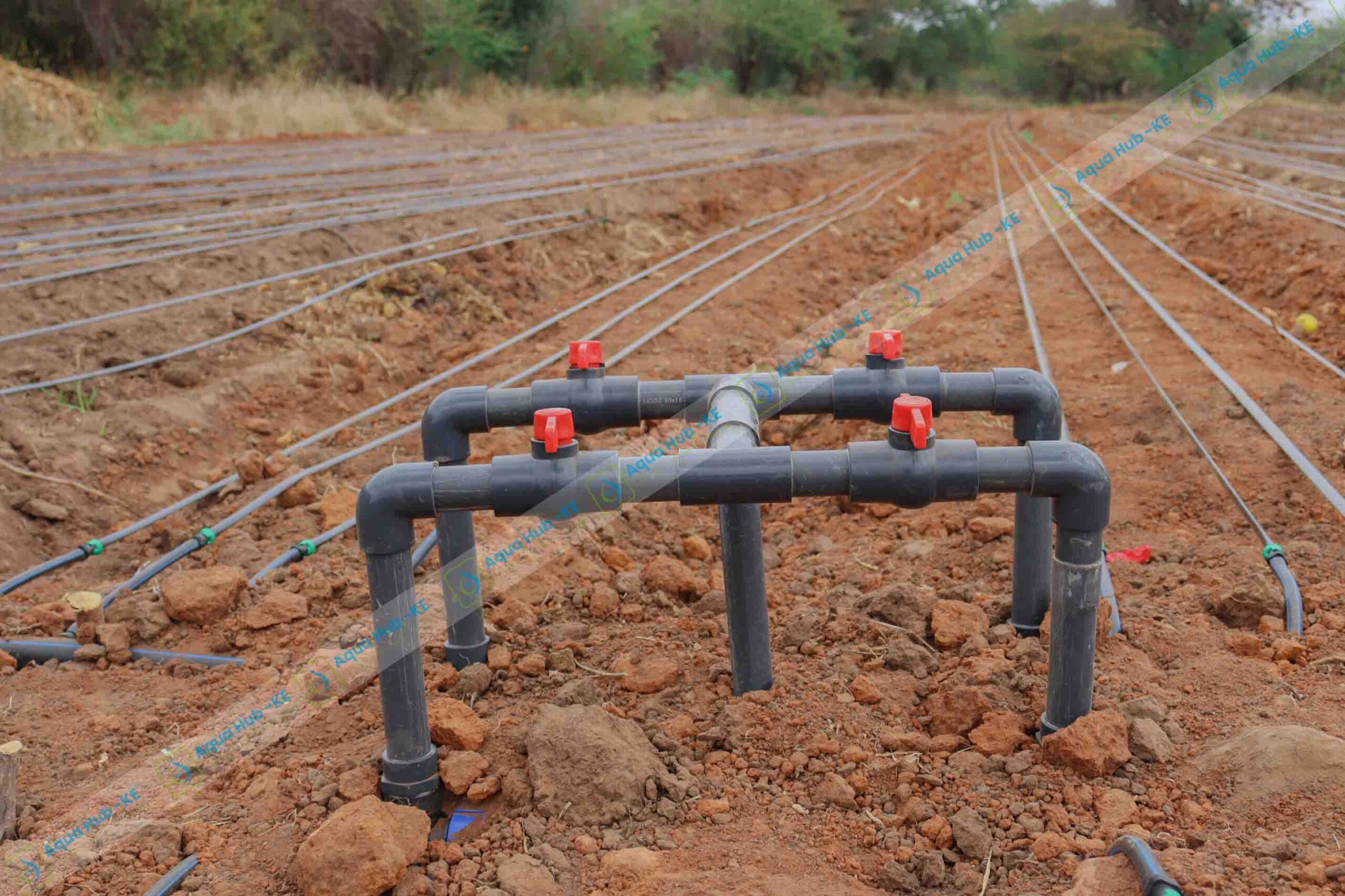
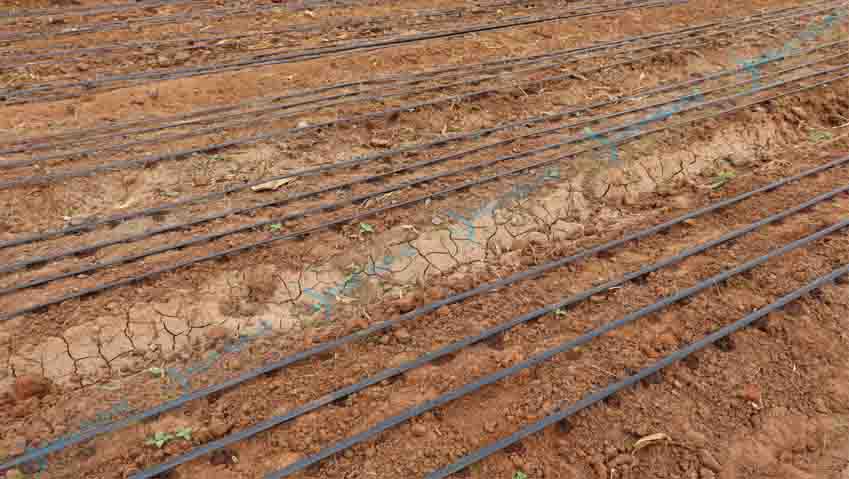
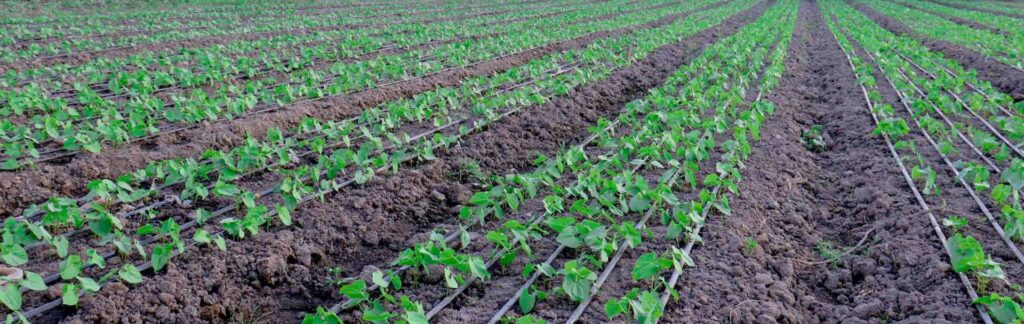
drip irrigation setup in an acre of land
Water Conservation
Drip irrigation can save up to 60% of water compared to flood irrigation.
Higher Crop Yields
Plants receive consistent moisture, leading to better growth and healthier harvests.
Reduced Labor Costs
Once installed, the system requires less manual watering.
Better Fertilizer Efficiency
Fertilisers move directly to the roots, reducing waste.
Climate Change Adaptation
With drip irrigation, continuous production is possible.
Factors That Affect Cost of Drip Irrigation Per Acre
Farm Size
The larger the land, the more the pipes and fittings you need, thus increasing the cost.
Water Source
If you are pumping water from a river, a water pump and pressure regulators add up to the cost.
Type of Crop
Closely spaced crops require more drip lines and emitters. For example, onions take 3 driplines per bed, while capsicum only requires 2.
Terrain
Hilly or sloping land requires the use of pressure regulators and a dripline gauge of 0.4 mm to withstand high pressure.
Automation Level
An automated drip irrigation system will cost more than a basic gravity-operated connection.
Drip Irrigation for Different Crops in Kenya
Different crops have unique irrigation requirements.
Vegetables
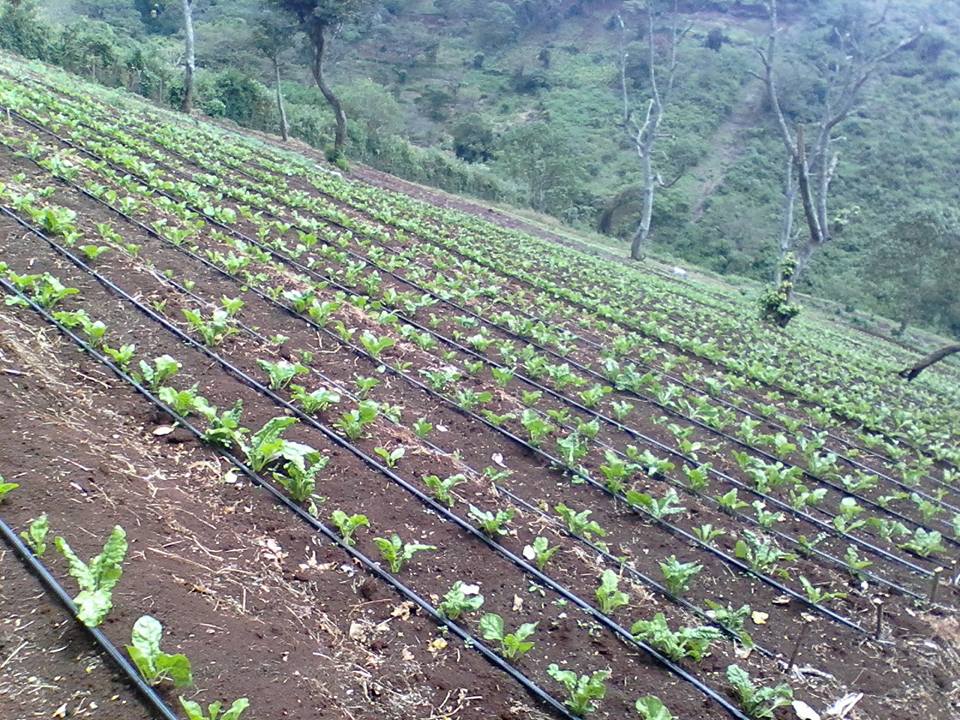
Leafy green vegetables such as spinach, kales and lettuce are irrigated using driplines. Use 20 cm spacing for the dripline to match with the plant spacing.
Tomatoes
Tomatoes grow extremely well when irrigated using a drip system. With precise watering, the tomato yields high-quality fruits with a low risk of fungal rot.
Onions
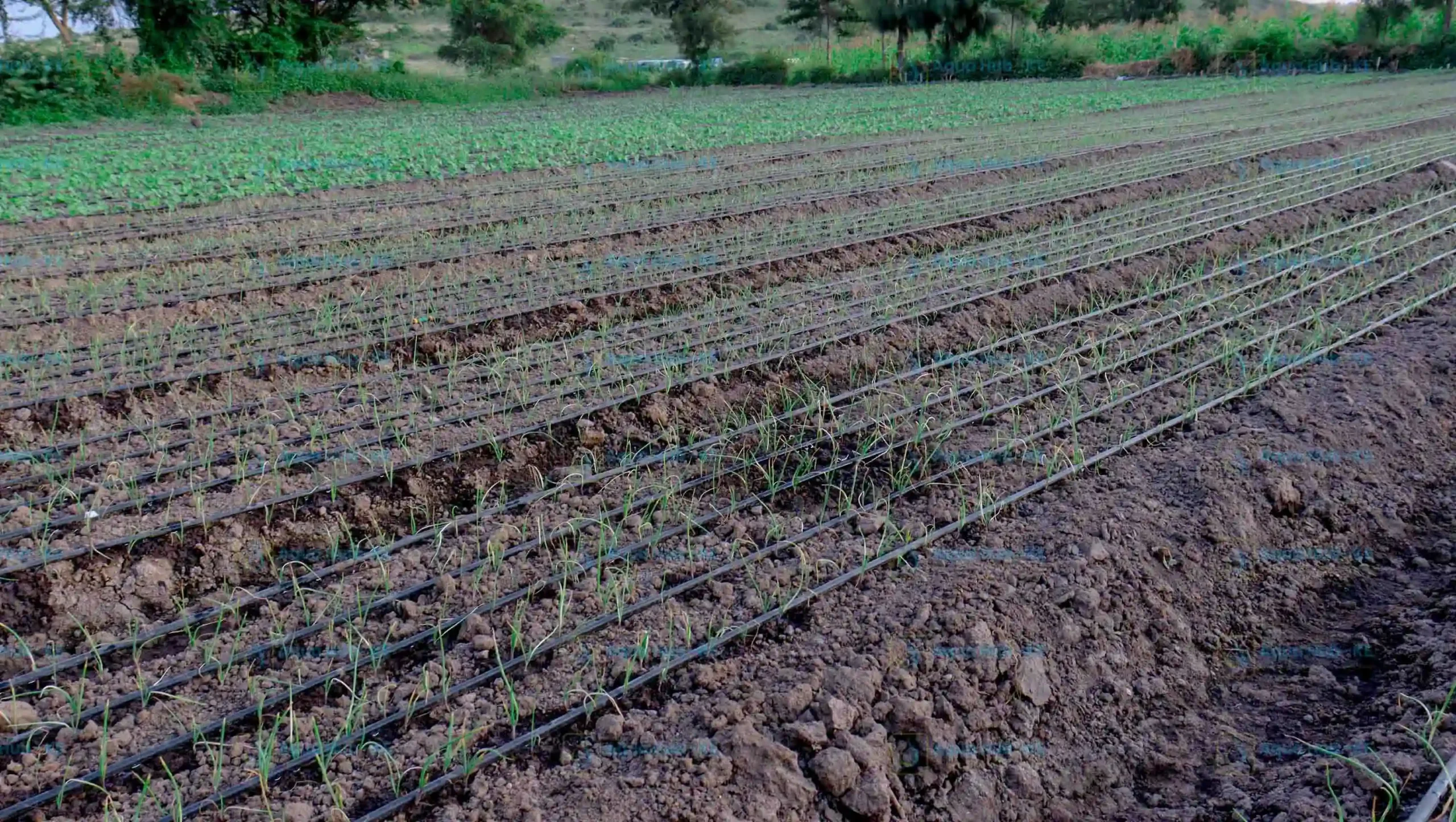
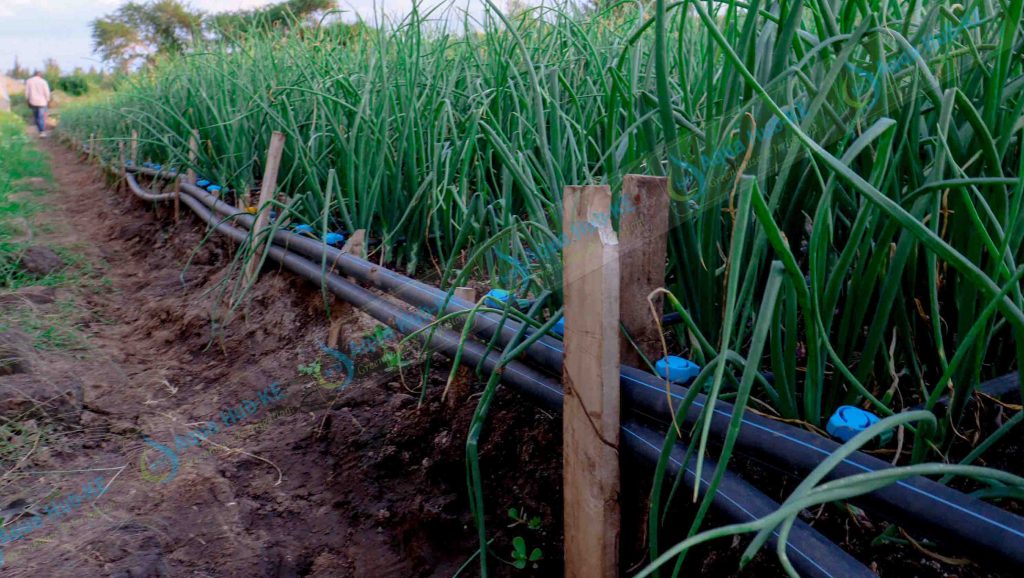
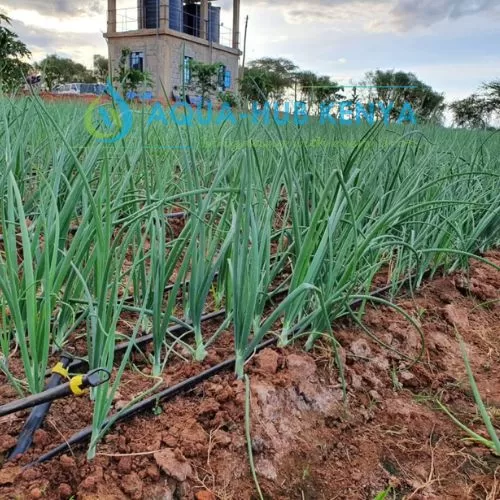
Image showing onions grown under drip irrigation
Onions need precise watering for bulb development.
Drip systems help maintain uniform moisture.
Capsicum
Capsicum is another high-value crop that is grown through irrigation in a greenhouse or open field. The crop requires sufficient controlled watering for higher yield.
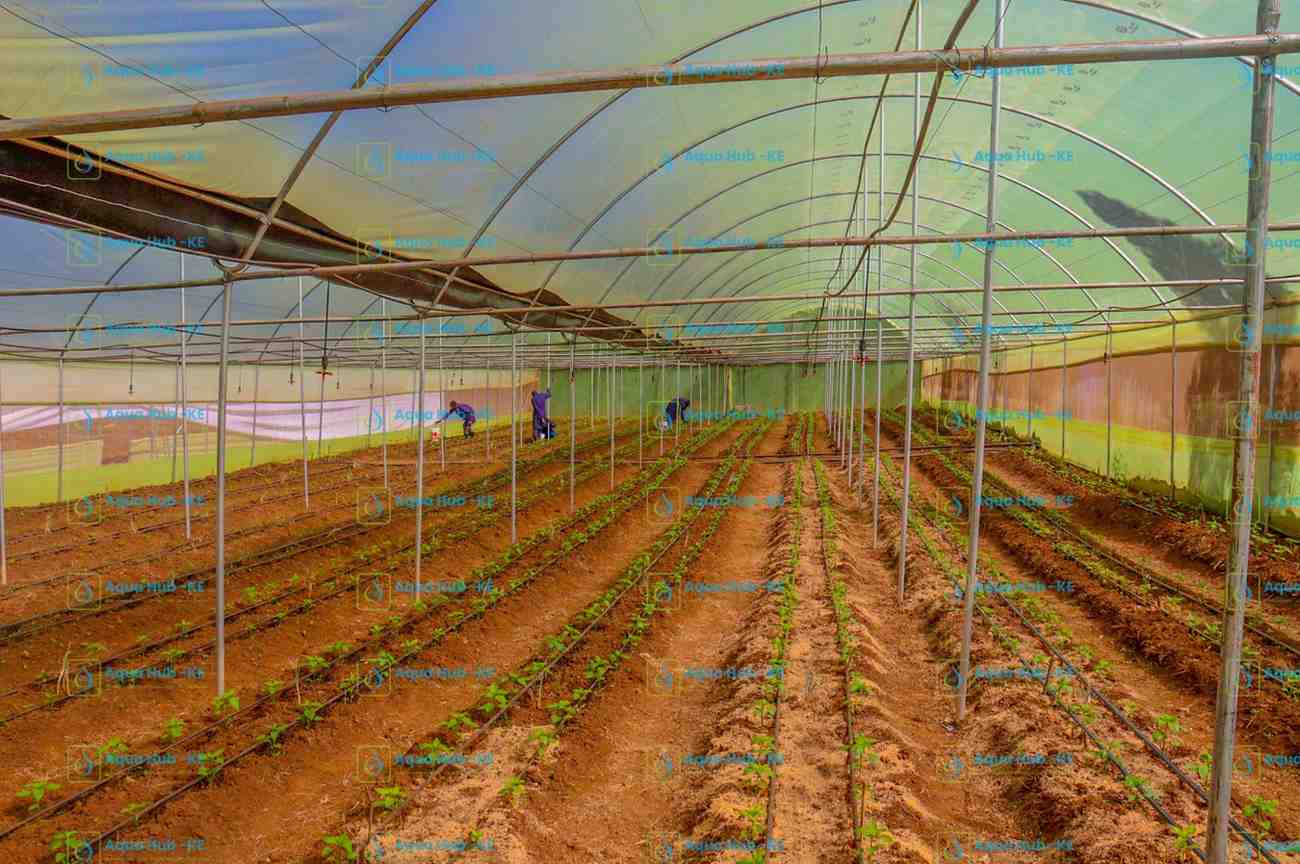
capsicum grown under drip irrigation in a greenhouse
Watermelons
Watermelons require consistent watering during fruit formation.
Farmers often report larger fruits and higher market value.
Coffee and Fruit Trees
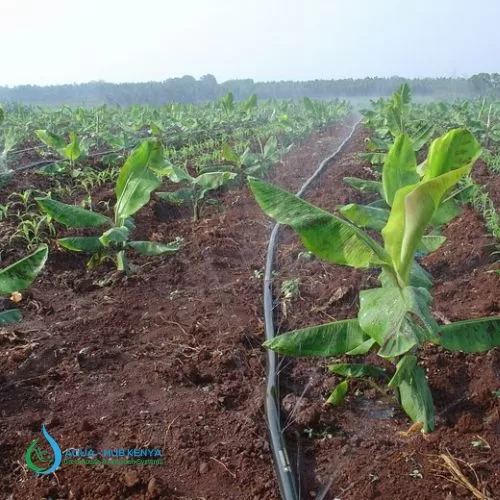
Tree crops benefit from permanent drip systems.
Though installation costs are higher, long-term productivity improves greatly.
Drip Irrigation Installation in Kenya: Steps to follow
- Site survey – for inspection of land elevation, size (dimensions), and water access. All this information is essential for us to prepare a correct quotation.
- Land preparation – removal of vegetation, cultivation of the land and preparing beds.
- Water source setup – tank setup and connection. A tank connector is inserted.
- Pipe installation – making trenches and laying and installing mainline pipe.
- Filter installation – attaching a water filter to the mainline connection near the tank.
- Hydrant connection – water control section with a control valve.
- Connect to the sub-mainline pipe – using a tee or elbow where necessary to connect the mainline to the sub-mainline connection.
- Drip line connection – laying and connecting driplines to the sub-mainline using riser pipe and start connectors.
- Testing the system – opening water connection to flush the system and test if it is working properly.
- Endline connection – using end caps to seal HDPE mainline and sub-mainline pipes. Also close dripline ends with drip-end plugs.
Labor Cost of Drip Irrigation Installation Per Acre
The cost of drip irrigation installation per acre can range from KES 10,000 to 15,000. Cost varies with the type of drip irrigation system and number of driplines per bed.
Cost Comparison: Gravity-Fed vs Pump-Fed Systems
Choosing the right system can save money and improve efficiency.
Gravity-Fed Drip Irrigation
This system relies on elevated water tanks to create pressure.
Advantages
- Lower operating costs
- Simple maintenance
Disadvantages
- Limited pressure
- Less suitable for large farms
Average Cost
- KES 130,000 – 180,000 per acre.
Pump-Fed Drip Irrigation
This setup uses electric, solar, or diesel pumps.
Advantages
- Suitable for larger farms
- Better pressure control
- Supports automation
Disadvantages
- Higher energy costs
- More maintenance
Average Cost
- KES 150,000 – 250,000 per acre.
Tips to Cut Cost of Drip Irrigation
Start Small
You don’t necessarily need to install drip irrigation on the entire acre of land. If your budget is low, you can start with ¼ or ½ acre then expand later.
Use a gravity-powered system.
Set up the tank above 3 m to generate pressure to distribute water in the drip system.
Invest in Solar Pumps
If your drip irrigation requires a pump, buy a solar-powered one because it is economical to operate.
Maintain the drip irrigation system properly
You should often check and clean your filters to prevent clogging.
How to Choose the Right Drip Irrigation Supplier
What to Look For
Product Quality
Ensure the drip irrigation accessories are of high quality. Consider reputable suppliers.
After-Sales Support
Good suppliers provide installation support and training on how to use the system.
Experience
Choose suppliers with proven experience in the industry.
Where to Buy Drip Irrigation Kits in Kenya
Buy drip kits from Aqua Hub Kenya.
Frequently Asked Questions
1. How much does drip irrigation cost per acre in Kenya?
between KES 135,000 and KES 180,000 per acre for a gravity-powered drip irrigation kit.
2. What is the best spacing for drip irrigation?
It depends on the type of crop you are growing.
3. How much pressure does drip irrigation need?
1 – 2 bar.
4. How much water does drip irrigation use per hour?
2 L/H per emitter.
5. How to prevent drip irrigation from clogging?
Use the right water filter.
6. Which crops perform best under drip irrigation?
Tomatoes, onions, capsicum, watermelons, coffee, and fruit trees perform exceptionally well.
7. How long does a drip irrigation system last?
5 – 15 years.
8. Can solar power run a drip irrigation system?
Absolutely. Solar-powered pumps are becoming increasingly popular in Kenya due to lower operating costs.
9. Does drip irrigation save water?
Yes. Drip irrigation saves up to 40% water.
10. Where Can I Buy Drip Irrigation System in Kenya?
Aqua Hub LTD.