
Blog
Rain Hose Irrigation in Kenya: application guide
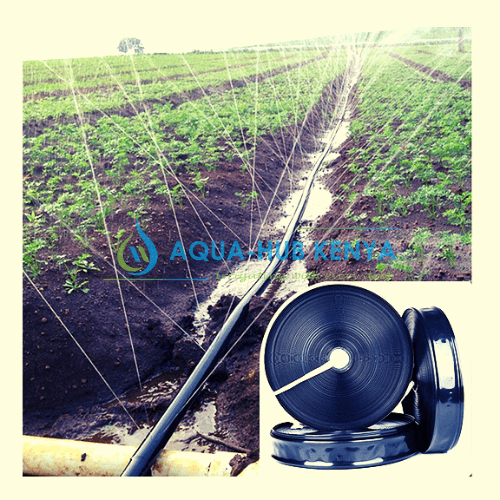
Aqua Hub Kenya supplies affordable rain hose irrigation kits in Kenya tailored to your farm needs. Our rain hose irrigation pipes cost between KES 2,500 and KES 5,500 depending on the pipe diameter size.
Rain hose irrigation is one of the most affordable ways that farmers in Kenya can use to water crops adequately. In this masterpiece, you will learn everything about rain hose irrigation in Kenya, including cost, crop needs, and why you should acquire one.
What Is a Rain Hose Irrigation System?
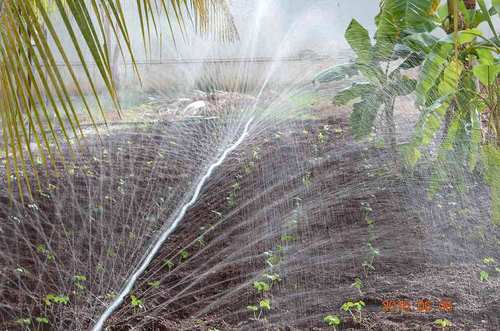
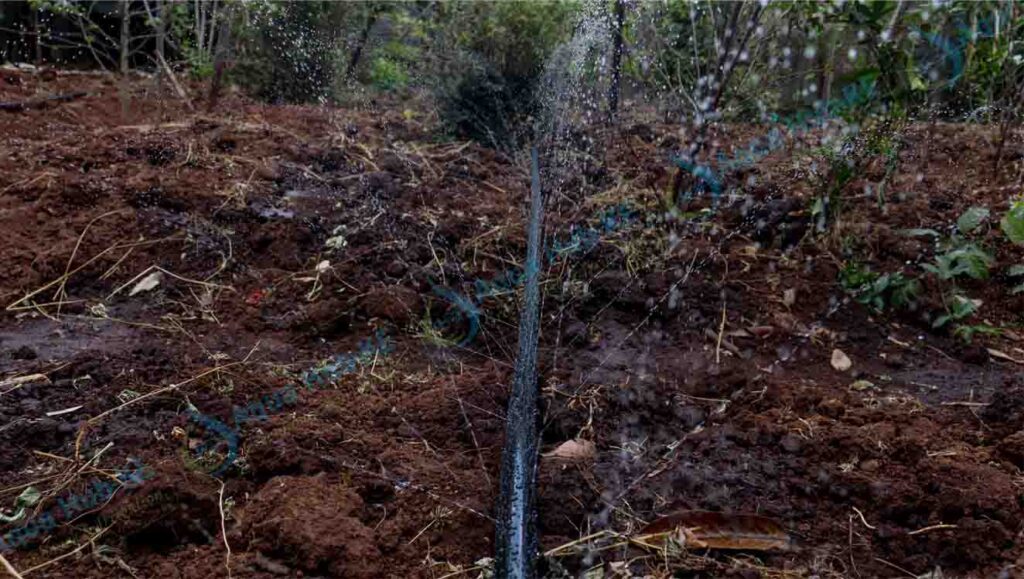
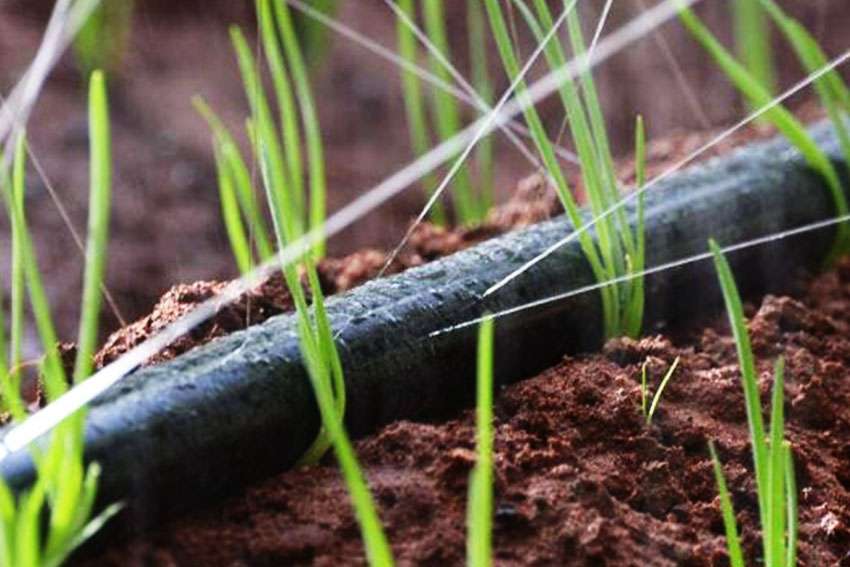
The rain hose irrigation system uses flexible hoses with nano-punched holes that discharge uniform jets of water under pressure. The holes are distributed evenly across the top surface of the rain pipe, thus discharging water sideways and vertically.
How It Works
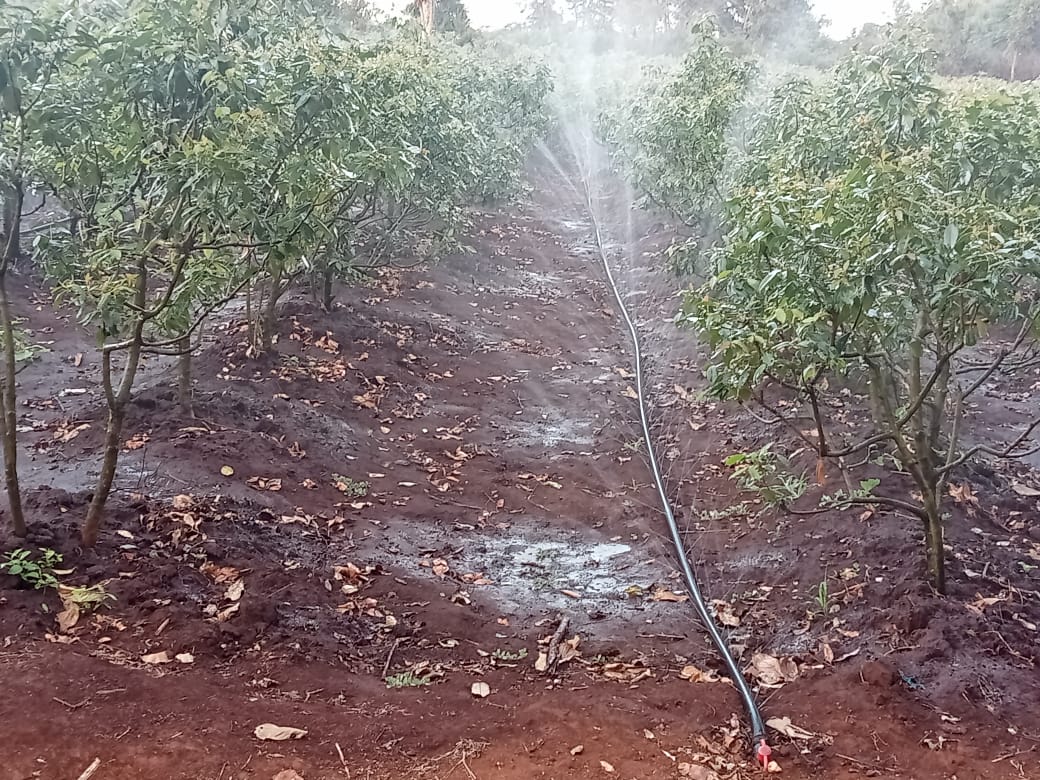
Rain Hose Irrigation
The rain hose system uses perforated rain pipes to disperse water on the farm. In order to achieve maximum irrigation coverage, a high-pressure pump is used. The pump provides the pressure needed to discharge water through the tiny holes of the pipe.
It delivers light but sufficient irrigation, which does not cause surface erosion.
Rain Hose vs Drip Irrigation System
Unlike drip irrigation, which targets the root zone directly, rain hose systems deliver gentle overhead sprays.
It is cheaper to install rain hose irrigation compared to driplines. However, they are less water-efficient than drip irrigation.
Rain Hose Pipe Price in Kenya
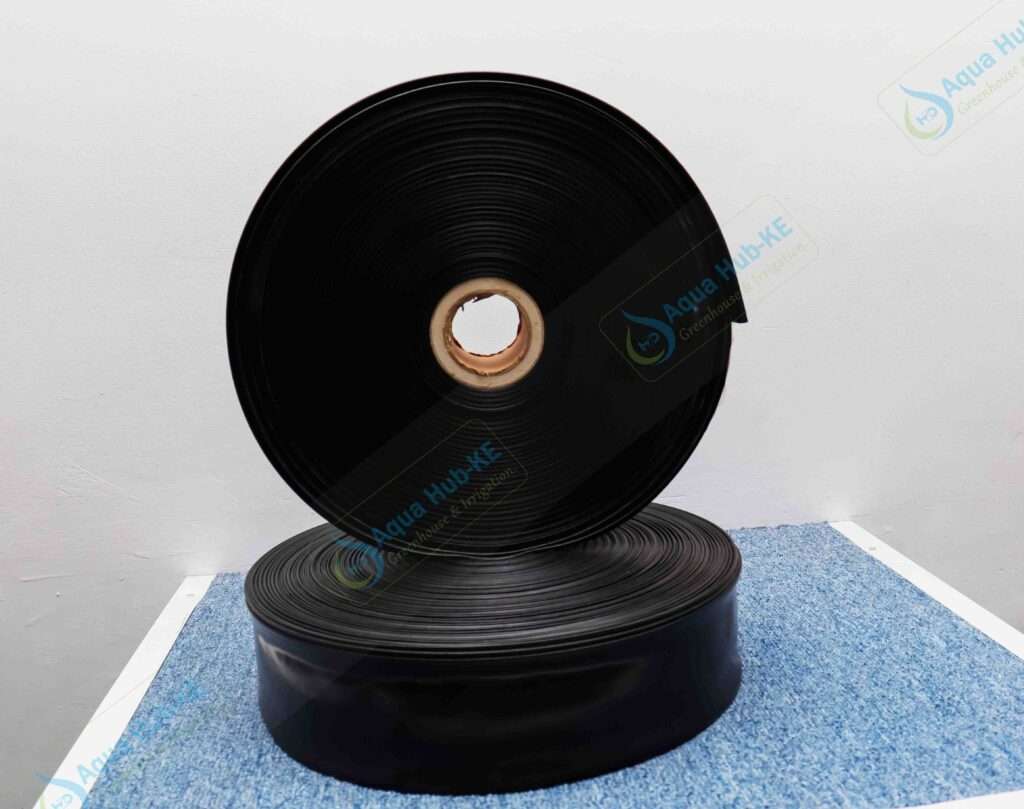
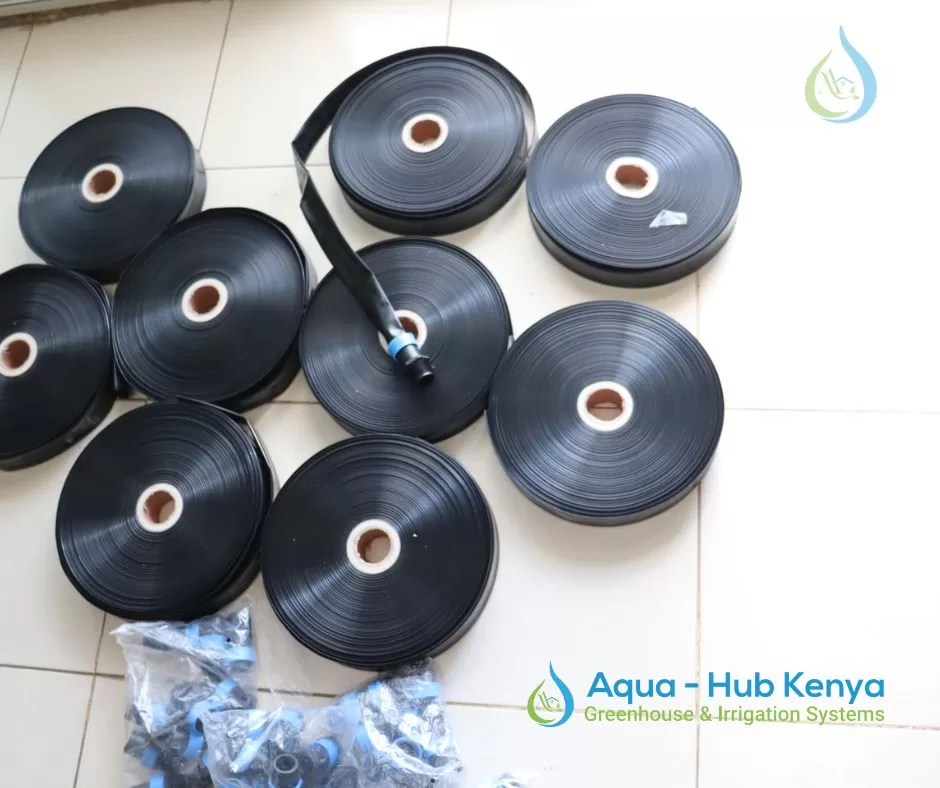
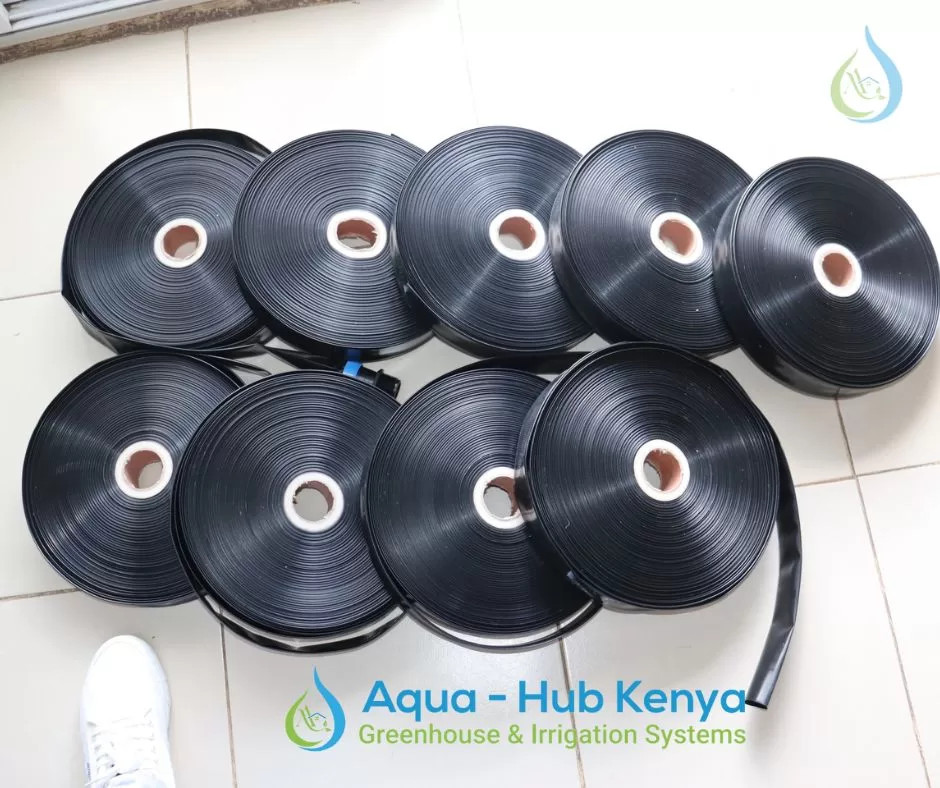
The cost of rain hose pipes in Kenya is according to the pipe diameter. Available rain hosepipe sizes are sold in 100 m rolls for prices listed below:
- 32 mm diameter: KES 2,600–3,400
- 40 mm diameter: KES 4,500–4,700
- 50 mm diameter: KES 5,500 – 5,500
Rain Hose Irrigation Specifications
The flow rate and coverage depend on the diameter of the rain hose pipe used. Below is the detailed flow rate and coverage information as per the pipe diameter.
| Diameter | Flow Rate | Spray Coverage (m) |
| 32 mm (1 inch) | 13 cubic litres/hour | 6 meters |
| 40 mm (1¼ inch) | 16 cubic litres/hour | 8 meters |
| 50 mm (1½ inch) | 22 cubic litres/hour | 9 meters |
Rain Hose Irrigation Kit
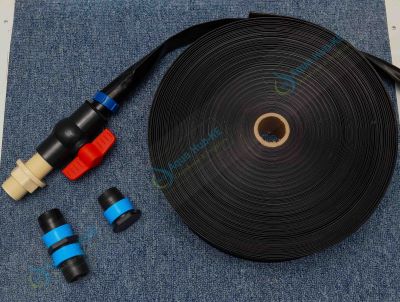
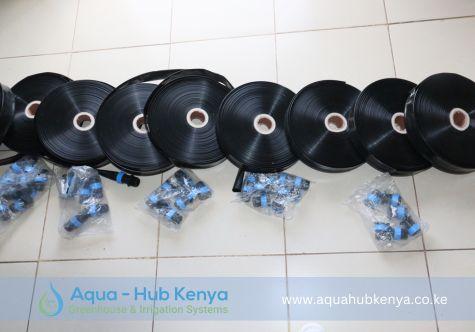
Our rain hose irrigation kits come with all the required pipes and fittings. They include:
- Rain hoses: 32 mm, 40mm or 50 mm
- Mainline HDPE Pipe: for water source to delivery pipe connection.
- Rubber grommets: allow start connectors for rain hose connection on the mainline pipe.
- Starter connectors: mainline to rain hose delivery pipe connection.
- Valves: controls the water flow to different farm sections.
- End Caps: Seals the pipe end and prevents water loss.
- Hose-to-hose connectors: Connect rain hose pipes.
- Pump: for high water pressure supply for the system to work.
Optional Accessories
- Water filtration system
- Pressure regulators
- Pump boost kits
- Spare connectors and clamps
- Extra end caps
Rain Hose Irrigation Fittings
- Starter off takes: Connect rain hose to mainline
- Ball valves: Control water flow
- End caps: Seal hose ends to maintain pressure
- Filters: prevent sediments from clogging rain hose pipe holes
- Pressure Regulators: Control water pressure to ensure uniform water discharge.
Planning Your Rain Hose Layout
Good design improves water efficiency and crop performance.
Measuring Your Field
- Map out your farm in meters.
- Decide direction of rows and hose paths
- Mark water source location
Water Source & Pump
Make sure the water source (tank, dam, borehole) can supply a consistent flow. A pump may be necessary for uphill or distant fields.
Rain Hose Irrigation Spacing
- Individual rain hoses are usually spaced at 1.5 m or more between lines.
- Wider spacing may be used for crops that tolerate more ground coverage.
- Adjust spacing based on hole spacing on the rain hose and spray radius.
The crops to irrigate determine which rain hose pipes to use and the spacing required.
Soil structure is another important spacing factor because it affects how far water spreads before absorption.
How to Install a Rain Hose Irrigation System
- Prepare the mainline: Lay the HDPE main pipe from the water source.
- Connect valves & fittings: Attach starter connectors and mini-ball valves.
- Lay rain hoses: Connect hoses to fittings, following your layout.
- Seal ends: Use end caps to close off hose ends.
- Test system: Run water to flush debris and check for leaks.
Rain Hose Irrigation Crop Application Guide
Rain hose irrigation is versatile and works well for many crops:
Vegetables
Excellent for leafy greens like sukuma wiki, lettuce, kale, and other close-spaced crops.
Fruit Trees & Orchards
Works well for deep-rooted trees like avocado, citrus, coffee, and macadamia when combined with proper spacing.
Nursery Plants
Nurseries benefit from gentle overhead watering that prevents soil compaction.
Pasture & Animal Feeds
Suitable for grass fields and fodder crops due to uniform distribution.
Will a soaker hose work with a rain barrel?
Connecting it directly to a rain barrel (gravity system) often does not produce enough pressure to flow evenly due to low head pressure from the barrel.
How to Ensure it works When Using Rain Barrel Water
- Without a pump, water may only wet the soil near the barrel.
- Adding a small pressure pump can solve low pressure issues.
- Consider drip irrigation lines designed for low pressure instead of using gravity only.
Advantages of Rain Hose Irrigation
Rain hose systems have several benefits:
- Affordable compared to full sprinklers or drip systems.
- Easy to install and maintain.
- Uniform water distribution over field areas.
- Portable and flexible for changing field needs.
- Works under both low and high pressure.
- Has a wide area of coverage. Rain Hose irrigation
- Can cover large areas quickly.
Disadvantages of Rain Hose Irrigation
There are some downsides to be aware of:
- Less efficient than drip irrigation.
- Not ideal for crops prone to fungal infections or leaf rot.
- Does not work effectively in windy conditions. Wind affects the distribution of water.
Comparison to Other Irrigation Methods
| System Type | Cost | Water Efficiency | Ease of Installation |
| Rain Hose Irrigation | Low | Medium | Easy |
| Drip Irrigation | High | High | Moderate |
| Soaker Hose | Low | Low | Easy |
| Sprinkler System | Moderate | Medium | Moderate |
Frequently Asked Questions
1. What is the cost of rain hose pipes in Kenya?
KES 2,500 – KES 5,500 depending on the diameter.
2. How much does a rain hose irrigation kit cost in Kenya?
KES 15,000 – KES 70,000.
3. What fittings are needed for a rain hose irrigation system?
Starter connectors, valves, end caps, and hose connectors.
4. How far apart should rain hose pipes be spaced?
At least 1.5 m, but spacing depends on spray radius and crop type.
5. What is the price of 40 mm rain hose?
KES 4,500
6. What crops are suitable for rain hose irrigation?
Vegetables, fruit trees, pasture, nursery plants, and fodder crops.
7. What are the advantages of rain hose irrigation?
- Affordable compared to full sprinklers or drip systems.
- Easy to install and maintain.
- Uniform water distribution over field areas.
- Portable and flexible for changing field needs
8. Is a pump necessary for rain hose systems?
A pump is recommended for field areas without sufficient gravity head.
9. How often should I irrigate with a rain hose?
Irrigation frequency depends on crop water needs, soil type, and weather conditions.
10. Where Can I Buy a Rain Hose Irrigation System in Kenya?
Aqua Hub Kenya.