
Blog
Dam Liner Installation in Kenya
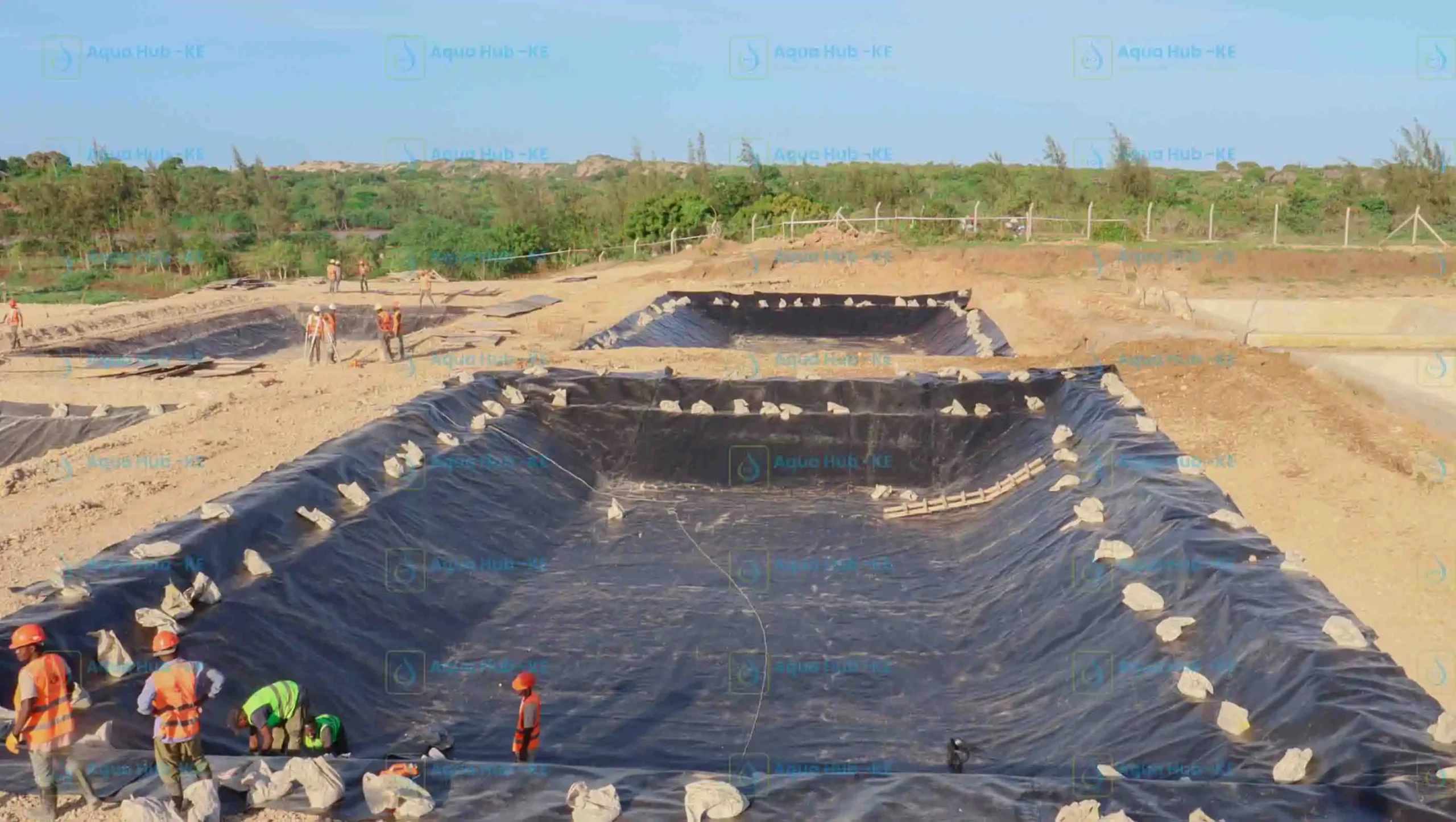
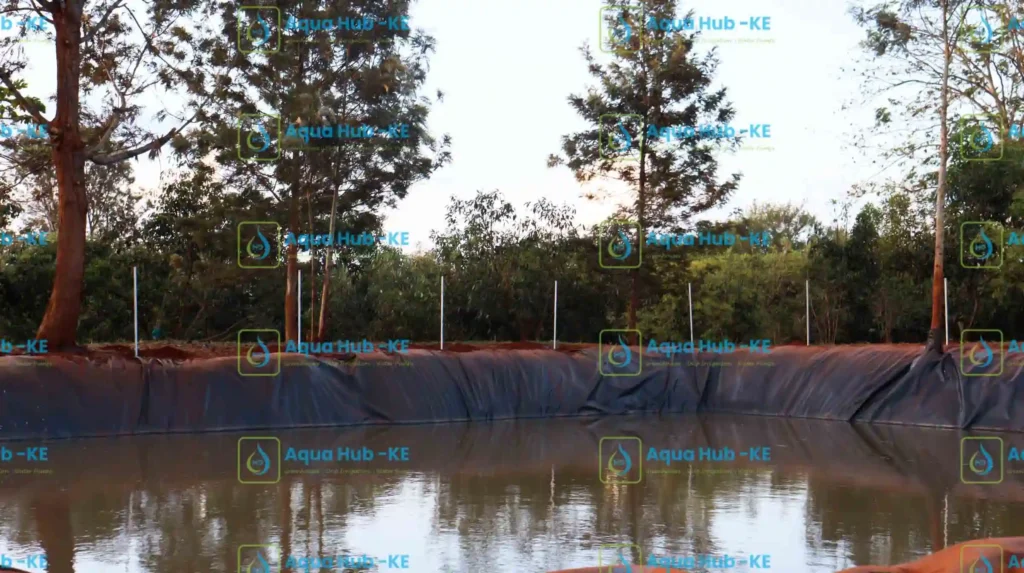
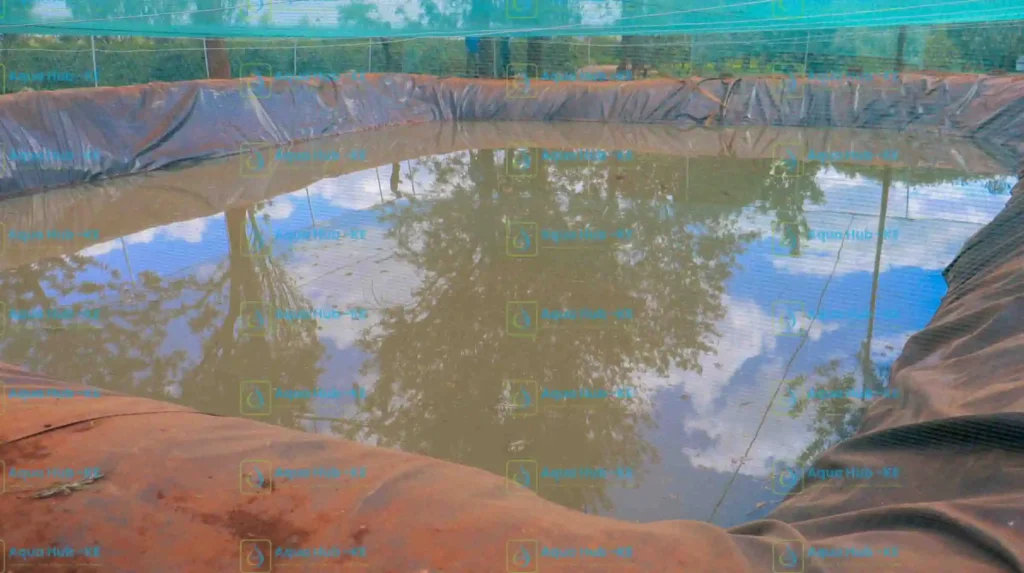
Aqua Hub LTD is a recognised company specialising in dam liner installation in Kenya. We help farmers secure water for future home or farm use when rain fails. Our dam liners are sold in custom sizes for every roll of thickness 0.3 mm, 0.5 mm, 0.75 mm and 1 mm.
In this guide, we explore dam liner installation and suppliers who will help build and secure your water storage.
Call 0790719020
Quick Takeaways
- Dam liners prevent water loss and improve storage efficiency
- Costs range from KES 150–450 per m²
- HDPE is the most durable option
- Proper installation is critical for longevity
- Suitable for farms, homes, and institutions
- Lifespan can reach 30 years
Dam Liner Suppliers in Kenya
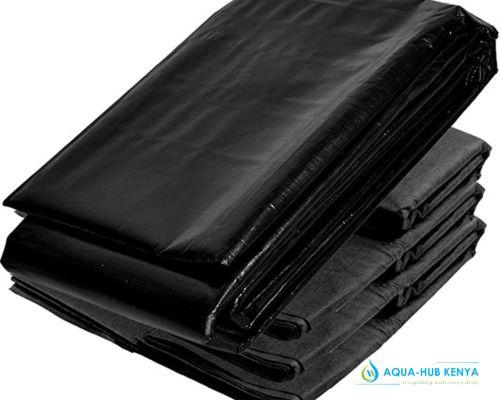
Aqua Hub Kenya has become a widely recognized East African Brand dealing in high quality dam liners. We have high quality UV resistant dam liners that have been rated as industry-standard materials for dam reinforcement and water storage.
Don’t hesitate; reach out if you need a resilient water storage solution. We handle installation from small to complex dams.
Call 0790719020
Cost of Dam Liners in Kenya
| Liner Thickness | Material Cost (KES/m²) | Typical Application |
| 0.3 mm (300 Microns) | 150 – 210 | Light use, temporary ponds, solar dryers. |
| 0.5 mm (500 Microns) | 220 – 240 | Most common for medium farm ponds & fish farming. |
| 0.75 mm (750 Microns) | 310 – 340 | Large reservoirs, rocky soils, or steep slopes. |
| 1.0 mm (1000 Microns) | 380 – 450 | Heavy-duty commercial dams and industrial use. |
Importance of Dam Liner Installation in Kenya
Access to reliable water is now essential for both Kenyan households and farmers. Given the unpredictable weather, collecting and storing rainwater has emerged as the most sustainable method to keep your farm or home water secure during dry spells. Dam excavation alone is not sufficient without a waterproof liner to prevent water loss.
You need dam liners make the ground waterproof and keeps water available for a long time.
Dam Liner Installation: Understanding Dam Liners in Kenya
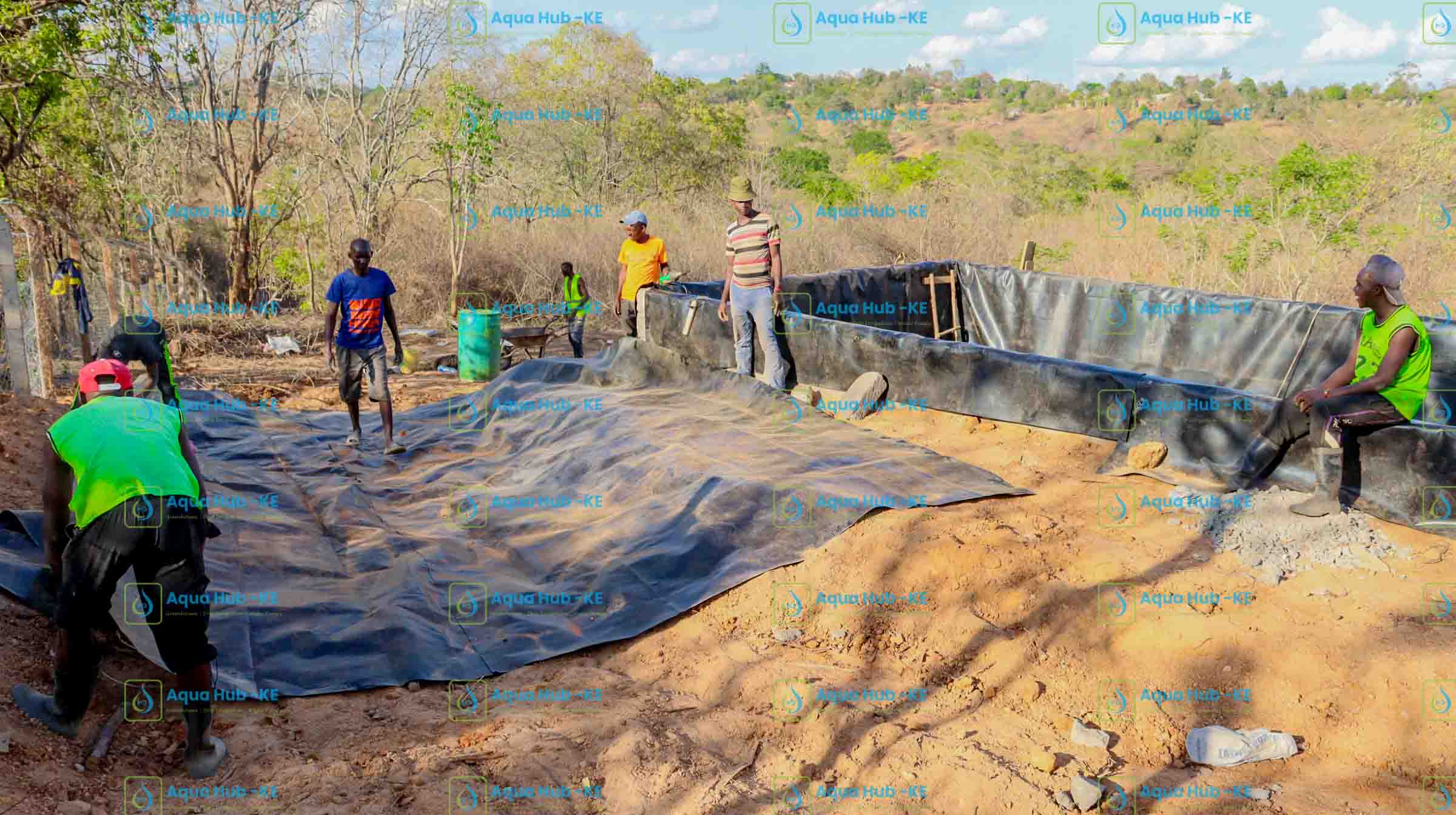
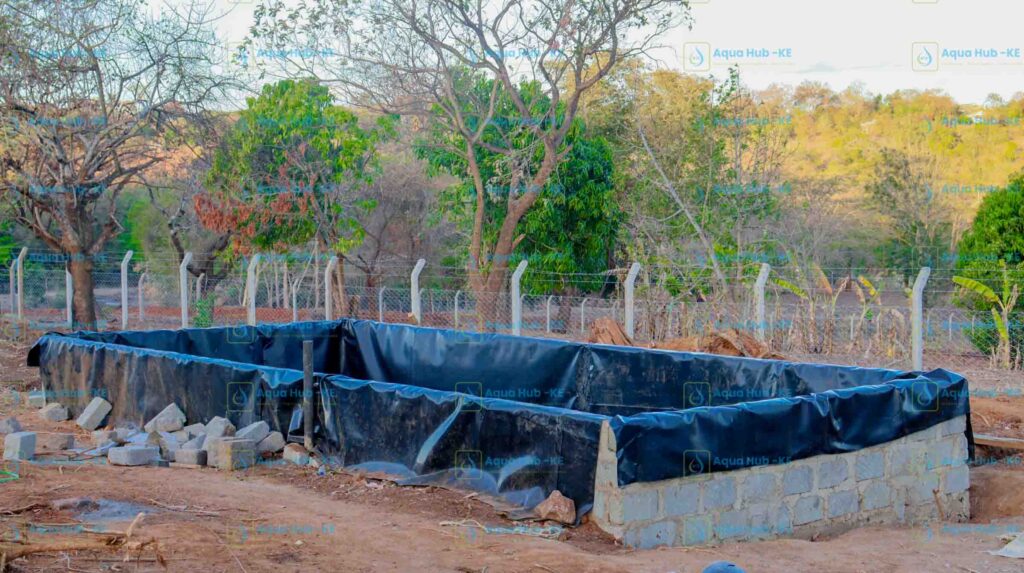
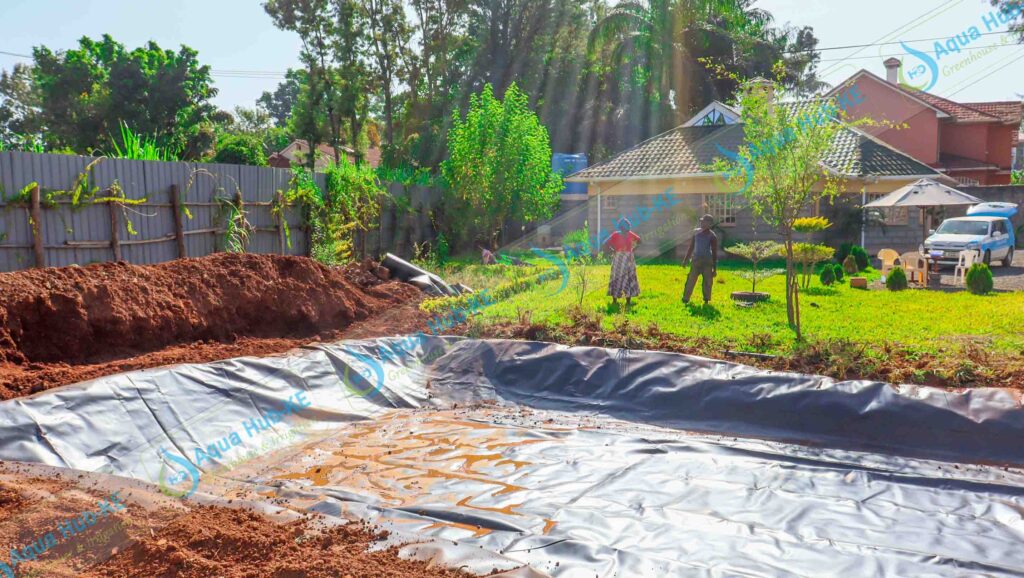
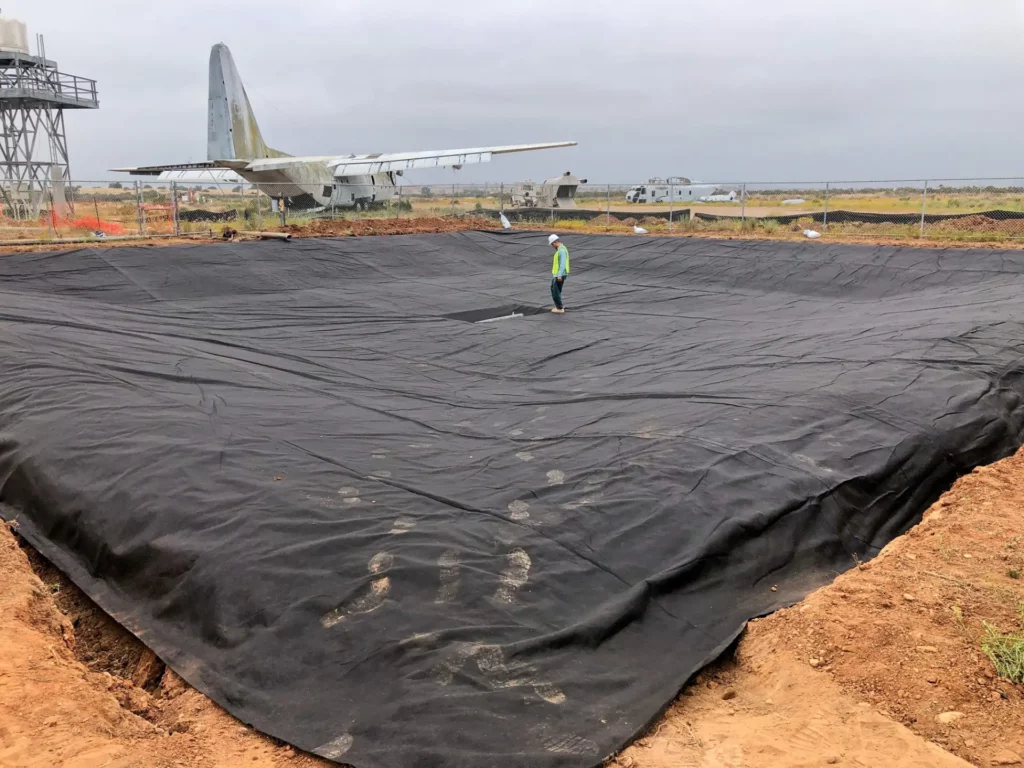
dam liner installation on a underground tank
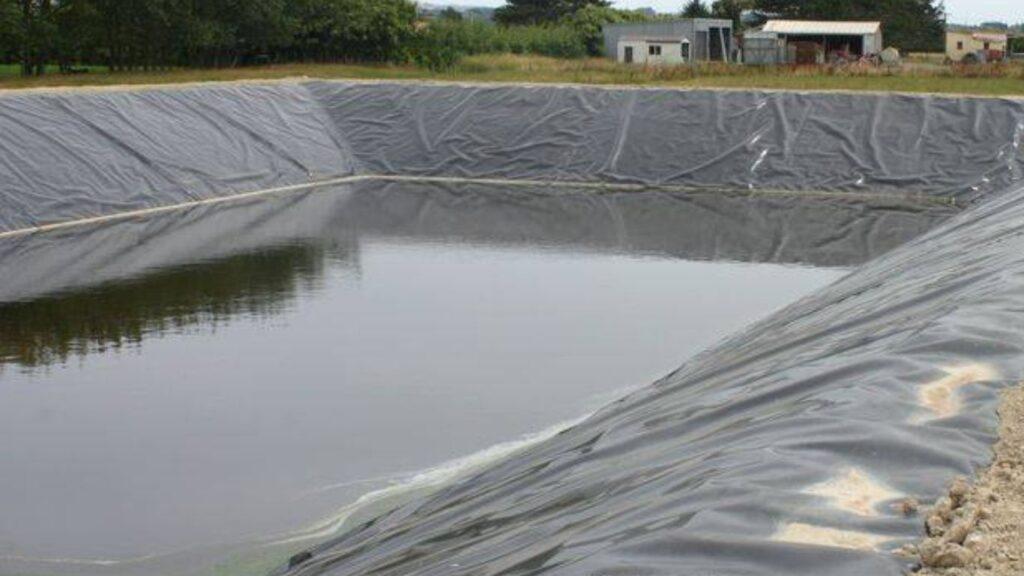
A dam liner is a high-density, waterproof geomembrane typically made from high-density polyethylene (HDPE) or PVC. The primary role of dam liners is to store water by making the soil impermeable.
Dam Liners Used in Kenya
High-density polyethylene (HDPE) liner is popularly used in Kenya because of its excellent resistance to damage. It is manufactured with UV resistance, making it much more resistant to high sunlight effects felt in most parts of Kenya.
Factors Influencing the Cost of Dam Liners and Installation in Kenya
The cost of dam liners and installation in Kenya is determined by two main factors: the thickness (gauge) of the material and the complexity of the site. Prices are typically quoted per square meter.
Installation labor adds an additional KES 100 to KES 300 per square meter. This labor includes welding using hot wedge machine to join pieces of the liner.
Dam Liner Installation: Common Applications of Dam Liners
Dam liners have versatile applications which go beyond home water needs. They include:
- Agricultural Irrigation water storage: Lining water pans allows farmers to have reliable water access for year round irrigation farming.
- Aquaculture (Fish Farming): Liners create an aquatic environment for fish rearing, preventing the water from becoming muddy or leaking away.
- Domestic Water Harvesting: dam liners can be used to secure underground tanks for storage of excess rain or municipal
- Livestock Watering: Pastoralists use lined dams to ensure a consistent water supply for cattle, reducing the need for long-distance walking during droughts.
- Industrial Waste Containment: In mining or manufacturing, liners prevent hazardous waste from leaching into the groundwater.
How to Calculate the Required Liner Size
One of the most common mistakes is ordering the wrong size. You cannot simply use the surface area of the dam; you must account for the depth and the “overlap” needed for anchoring.
The formula used is:
Total Length = Base Length + (2 × Depth) + 1 Meters (overlap)
Total Width = Base Width + (2 × Depth) + 1 Meters (overlap)
For example, if you have a dam that is 10m long, 5m wide, and 2m deep, you will need a liner that is roughly 15m by 10m (10 + 4 + 1 = 15 and 5 + 4 + 1 = 10).
Adding that extra 1 meter ( 0.5 m on each side) is crucial because it allows you to tuck the liner into an “anchor trench” to prevent it from sliding into the water once it gets heavy.
Steps for Dam Liner Installation in Kenya
Excavate the Dam
You can excavate manually using jembes or hire an excavator. Ensure the walls have a slopy elevation of 45 degrees. Vertical walls collapse easily and make dam liner installation complex.
Smoothen the Base
Once excavation is complete, smoothen and levelize the ground to remove sharp obstacles that can damage the liner. You can use a protective layer of sand as an underlay.
Dig the Anchor Trench
The trench is a small ditch, usually 1 foot deep and 1 foot wide, dug about 1 meter from the edge of the reservoir.
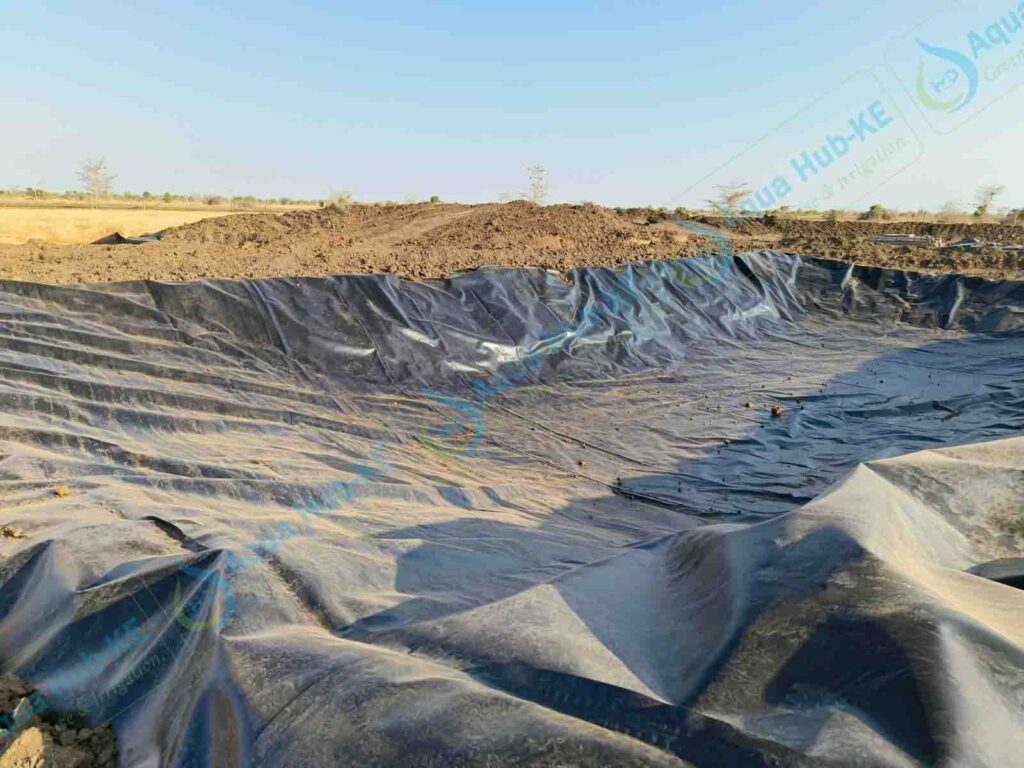
Install the Liner
Spread the liner over the reservoir and once it is in place, tuck in the extension on the trench and cover with soil.
Fill the Reservoir with water
After installation pump water to the dam and monitor the water level after some hours. If the water level remains the same, the liner installation was properly done.
Dam Liner installation: Welding
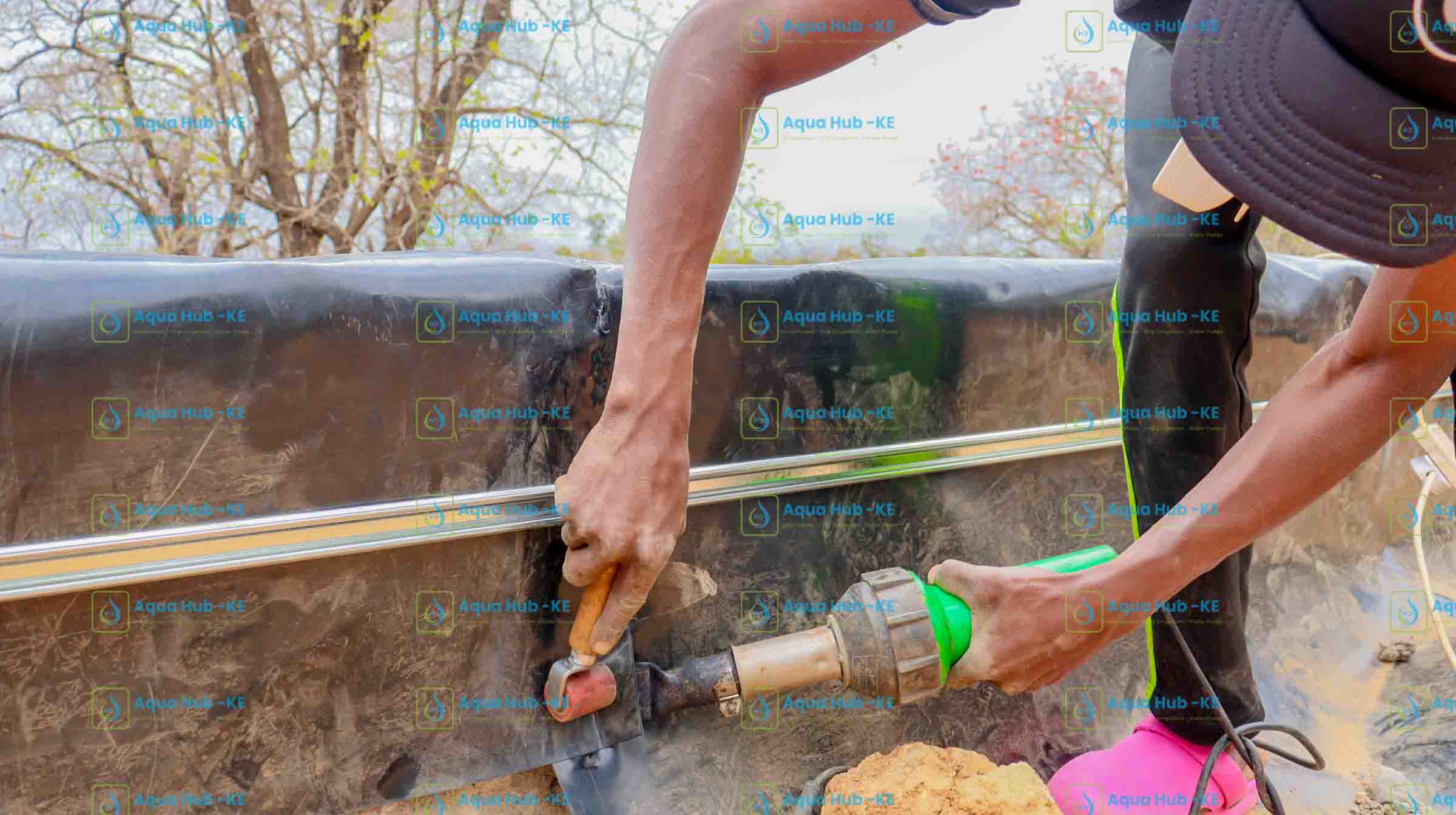
dam liner welding using a hot blower
If your reservoir is wider than 8 metres, you will need to join multiple sheets of liner. This is done through “thermal welding.” For HDPE dam liners in Kenya, there are two main methods:
- Heat Gun Welding: Suitable for small repairs or complex corners.
- Hot Wedge Welding: The machine runs along the seam, melting two layers together to create a joint between Ideal for large dams.
Precautions for Dam Liner Installation in Kenya
-
- Handle the liner with Care. When loading, packing or during installation don’t throw or drag the liner over sharp objects. It can cause punctures which may be hard to detect.
- Temperature Matters: HDPE liners are easier to work with during the heat of the day (between 10:00 AM and 3:00 PM) because the sun makes the material more “pliable” and easier to fold.
- Footwear: Workers should wear soft-soled shoes or work barefoot on the liner to avoid “puncture damage.”
- Wildlife Protection: Once installed, fence the area to prevent livestock or wild animals from falling in or scratching the liner with their hooves.
Economic Impact: Is the Investment Worth It?
Because you are not paying for metered water, you save a lot of income. Over 20 years, the cost of the liner becomes negligible compared to the value of the water it saves.
Frequently Asked Questions
1. How long does a dam liner last in Kenya?
15 to 30 years.
2. Can I install a dam liner myself?
Professional installation is essential for durability.
3. What is the difference between HDPE and PVC liners?
HDPE is tougher, more chemical-resistant, and lasts longer. PVC is more flexible and easier to install in small, oddly shaped ponds.
4. How much does a dam liner cost in Kenya?
KES 150 to KES 450.
5. What should I put under my pond liner?
Layer of sand
6. Are dam liners safe for fish farming?
Yes, they are non-reactive, thus safe for rearing fish and crabs.
7. What size is a dam liner?
0.3mm, 0.5 mm, 0.75mm and 1mm.
8. How do I calculate the size I need?
Use the formula: Total Length = Base Length + 2(Depth) + 1 overlap and Total Width = Base Width + 2(Depth) + 1 m overlap.
9. Can I use a dam liner to repair a leaking concrete tank?
Yes. 1 mm dam liners are used.
10. Where Can I Buy Dam Liners in Nairobi?
Aqua Hub LTD.