
Blog
Drip Kits for Greenhouses | Costs and Installation in Kenya
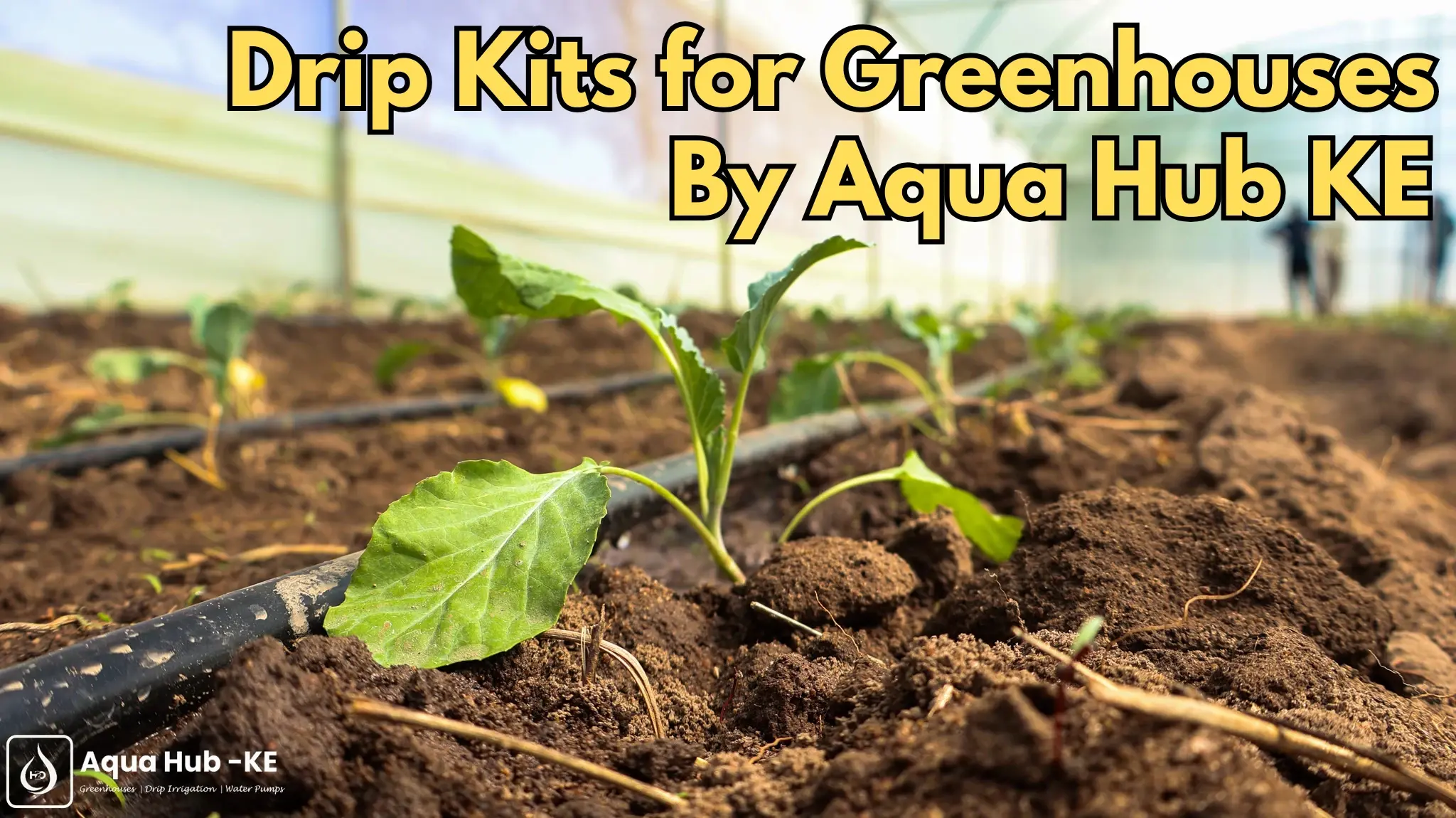
With Aqua Hub’s quality drip kits for greenhouses, you can easily grow vegetables and fruits that generate high yield. We supply greenhouse drip irrigation kits at the most affordable prices in the Kenyan market.
Our greenhouse drip irrigation kits come with 20mm HDPE pipes which are UV treated to resist harsh weather conditions. These pipes cost KES 2,800 per roll in addition to installation cost and further accessories.
If you are interested in starting drip irrigation using our drip kits for greenhouse farming, call 0790719020 or email info@aquahubkenya.co.ke.
What is Included in our Drip Kits for Greenhouses?
Our drip kits for greenhouses consist of different components such as:
- HDPE mainline pipe – lays on the ground surface and transports water from the water source to the greenhouse drip irrigation system.
- Connectors – joins HDPE pipes together or to other fittings.
- Ball control valve – regulates the flow of water in a greenhouse irrigation system. Within our drip kits for greenhouses, the ball valve has an adjustable design giving you control over the flow rate.
- Check valves – prevent backflow of water in the drip irrigation system
- End caps – seals the ends of the pipes to prevent water loss
- Pressure regulator – these are added to our drip kits for greenhouses to help reduce pressure of the system preventing high water pressure from potentially damaging the pipes
- Filtration kit – removes sand and debris in water to enhance smooth operation of the drip lines.
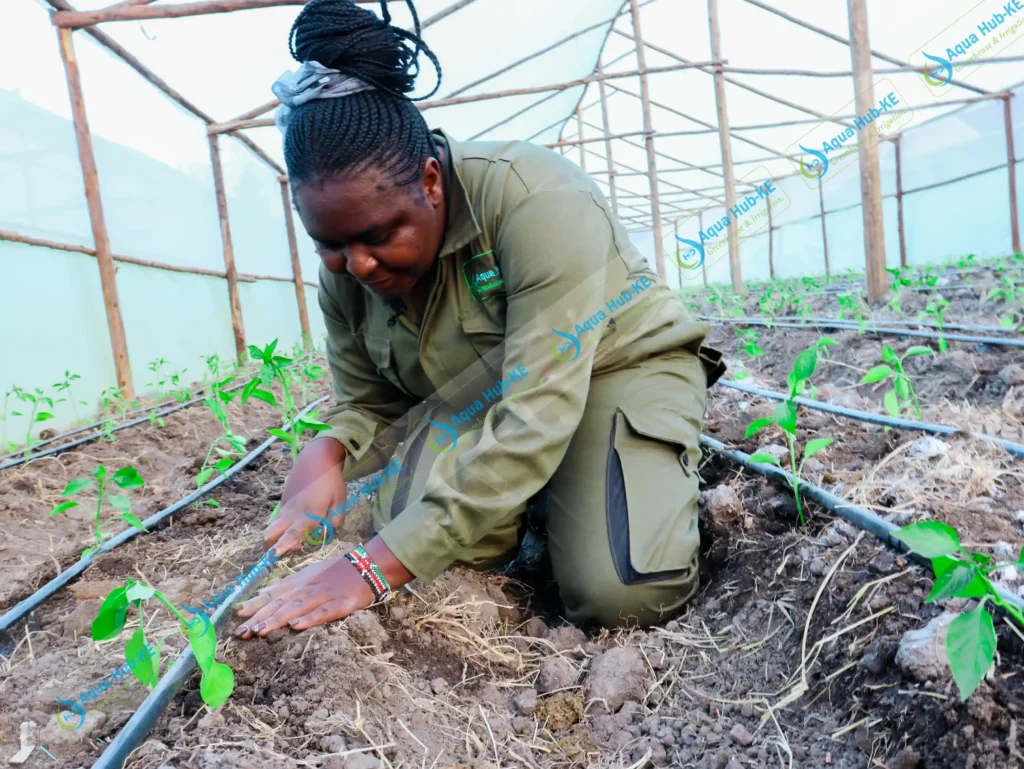
In addition to the list above, optional accessories are also available on request. For example, you can request for a solar-powered pumping system with controller for automated start/stop operations based on preset conditions.
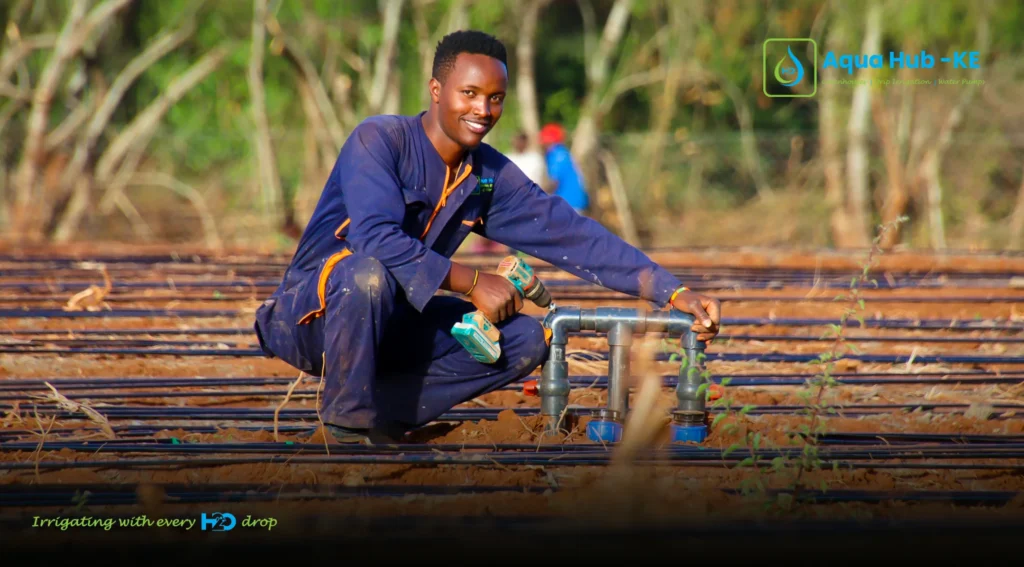
Furthermore, our highly trained technicians offer installation and guidance on how to properly use the newly installed drip kits for greenhouses.
Cost of Drip Kits for greenhouses
Our drip kits for greenhouses retail between KES 80,000 and KES 230,000 per acre. This cost depends on the number of lines placed per bed.
The costs are outlined in the table below.
| Size / Lines Per Bed | 1 Line | 2 Lines | 3 Lines |
| 1 Acre | 65,000 | 95,000 | 130,000 |
| 1/2 Acre | 30,000 | 45,000 | 60,000 |
| 1/4 Acre | 16,000 | 25,000 | 35,000 |
| 1/8 Acre | 10,000 | 15,000 | 20,000 |
How can I choose the best system for my farm?
Choosing the right drip kits for greenhouses matters. There are various factors that should go into your consideration of the different options available in the market. Some of these factors include:
- The source of water – firstly, knowing where the drip kit will get water from determines the type of filter that will be used in the system. This is because different water sources tend to carry different levels of sedimentation. It is vital that you select a filter that properly filters out any debris or sand that could damage the other parts of the irrigation system.
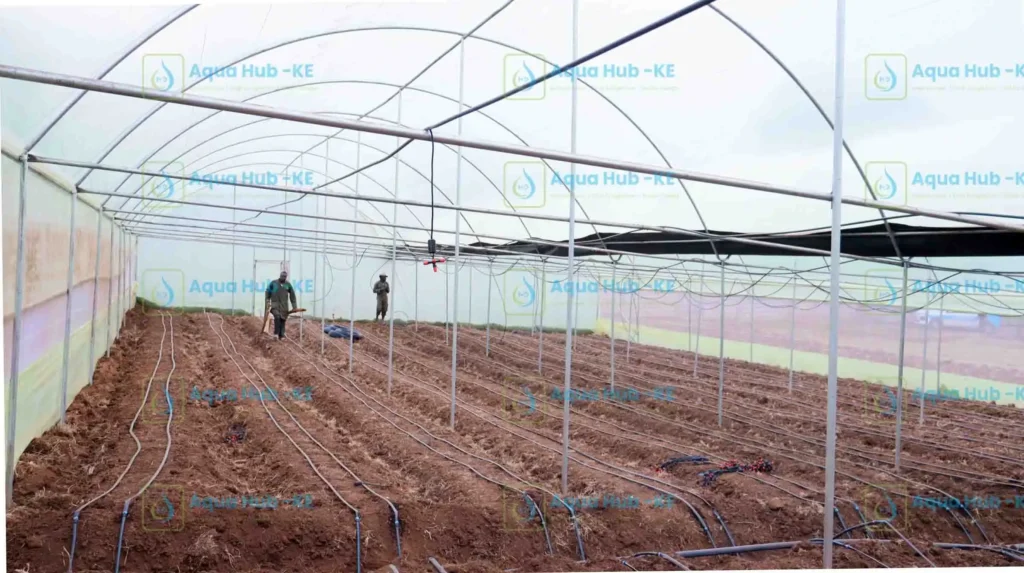
- The design of the greenhouse – before we install our drip kits for greenhouses, the greenhouse’s layout must be subdivided into beds. Drip lines are laid on these beds and thus their structure (whether raised or sunken) will determine the layout we use for you irrigation system
- The size of the greenhouse – knowing how long the greenhouse helps us know the exact length of the pipes and driplines that need to be installed. Additionally, the number of emitters used will depend on this length measurement.
- The type of soil in the greenhouse – an additional key consideration that is often overlooked is the soil type. The water retention level of the soil greatly impacts the choice for the best drip kits for greenhouses. This is because, the flow rate of the irrigation system should be adjusted to ensure that less retentive soils still have enough water for the crops while more retentive options don’t get waterlogged.
These are just some of the factors that go into your choice of drip kits for greenhouses. For additional information and professional guidance on what option best suits your needs, call 0790719020 today.
Why should I choose Aqua Hub for my drip kits for greenhouses?
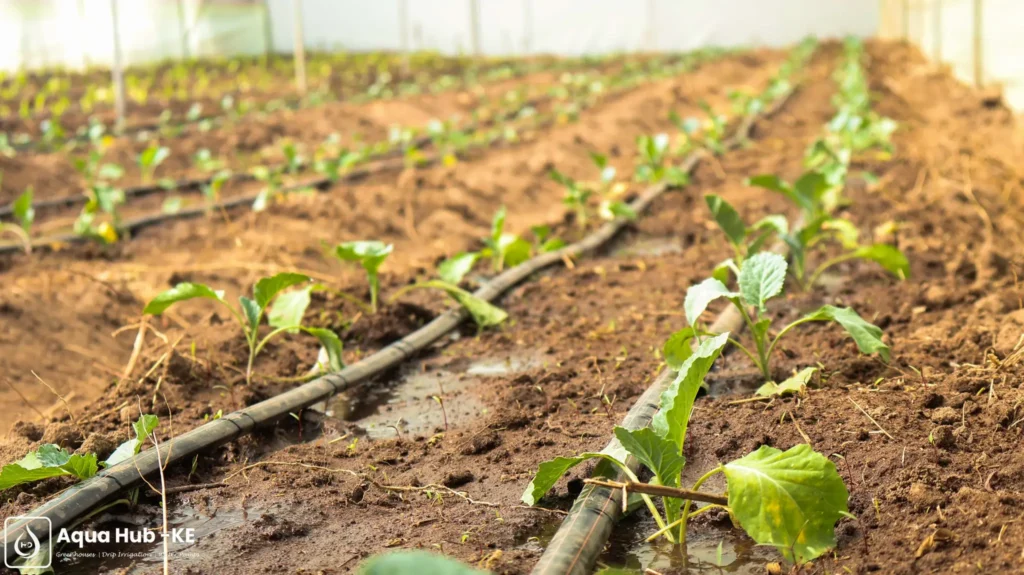
We have years of experience installing drip kits and complete irrigation systems including within greenhouses. Moreover, we offer quality products sourced from the most recognized brands that are known for durability and performance.
In addition to our high-quality products, our technicians have skills and expertise in designing and setting up quality irrigation systems.
Furthermore, once we promise to deliver your product or conduct installation, you are guaranteed that the task will be completed within the given time frame with no delays.
Finally, we offer competitive prices for our drip kits for greenhouses in the market in addition to our installation costs.
To start working with us, contact 0790719020 and talk to our trained personnel on how our drip kits can improve your greenhouse farming.
Benefits of Drip Irrigation in Greenhouse Farming
Greenhouses are specifically designed to give the farmer control over the conditions within which their crop grows in. One of the main factors that goes into farming is crop watering. Since, in most greenhouses, rain-based watering is not possible, drip irrigation has become one of the best alternatives.
Drip kits for greenhouses tend to be one of the best irrigation methods thanks to a number of advantages such as:
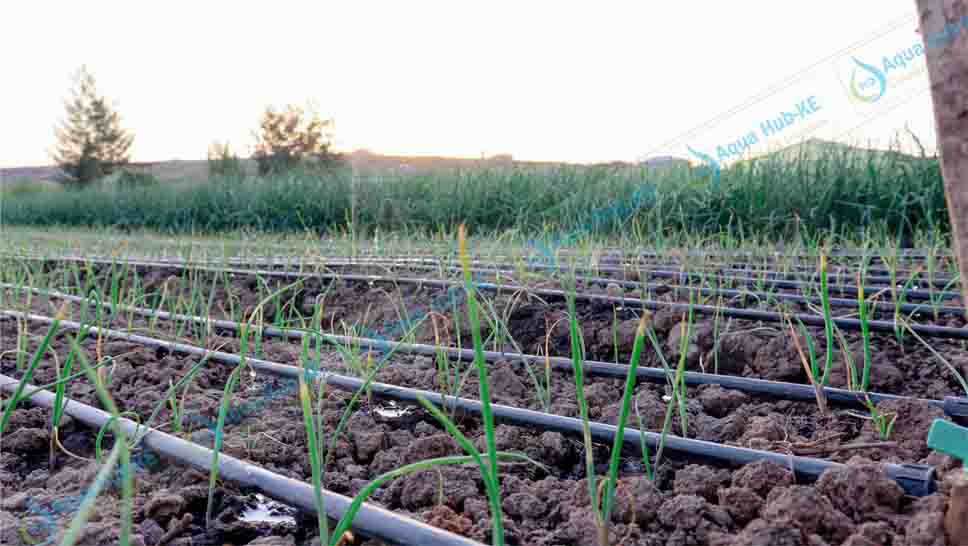
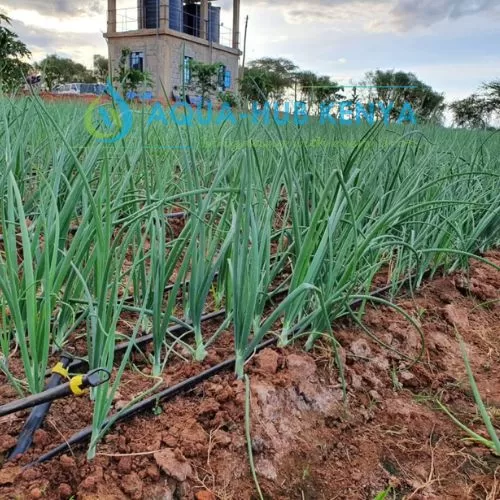
- Since drip systems deliver water directly to the root zone, there is very little water wasted thus saving on water costs.
- Additionally, the water delivery to the base of the crop reduces the risk of crop diseases cause by excessive moisture.
- Moreover, drip irrigation allows you to customize your watering schedule based on the specific needs of the crop. This greatly improves crop yield.
- Finally, drip kits for greenhouses are easy to install and remove allowing you to reuse the drip system. Furthermore, drip kits are adaptable to many different crops.
How to Maintain your Drip Kits for Greenhouses
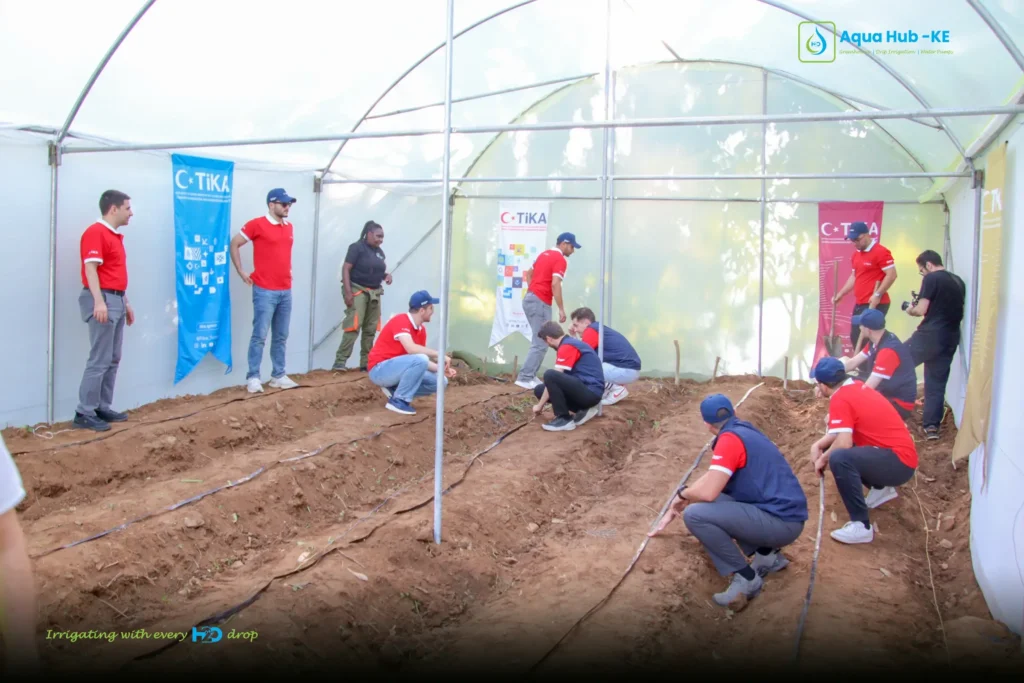
In order to reap the benefits of drip irrigation that we have discussed previously, your drip system must be maintained regularly to ensure that it functions as efficiently as possible.
There are various steps that go into maintaining your drip system e.g.
- Inspecting the system for any signs of leakage in the pipes or clogging in the emitters
- Regularly flushing the system in the direction of the water movement
- Monitor the pressure in the system ensuring it does not drop to low or rise too high
- In case any part of the system breaks, make sure that you replace it promptly.
If you need professional maintenance or have a broken part that needs repair, do not hesitate to reach out to Aqua Hub Kenya by calling 0790719020.
Frequently Asked Questions
What are the different types of drip kits for greenhouses?
The types of drip systems vary based on the design of the drip systems. There are two main types; button drippers and inline emitters.
Button drippers work best for trees and fruit gardens while inline emitters can be used for vegetable gardens, capsicum, tomatoes and a wide variety of other crops.
What kinds of crops can be grown using this system?
The main crops that can be grown using drip irrigation include vegetables, cereals, fruit trees and other cash crops
What are the two types of drip irrigation?
The two types of drip irrigation are surface irrigation and subsurface irrigation
What materials are needed for drip irrigation?
The main materials needed for drip irrigation include:
- A water source
- The main water pipe
- Drip lines
- Emitters or drippers
A water pump may be necessary depending on the type of system used.
How much does an 1-acre drip irrigation kit cost in Kenya?
The cost of a 1-acre drip irrigation kit in Kenya ranges between KES 65,000 – KES 130,000 depending on the number of drip lines laid per bed
What are the disadvantages of drip irrigation kits for greenhouses?
The disadvantages of drip irrigation kits for greenhouses include:
- High Initial setup costs
- High risk of system clogging
- Can result in soil buildup near the root of the plant
- The system requires regular maintenance
How many years do drip irrigation systems last?
Drip irrigation systems can last between 10 to 15 years if they are well installed and maintained.
What time of day is best for drip irrigation?
Early morning is the best time of day for drip irrigation but this can vary depending on crop needs
Which soil is best for drip irrigation?
Drip irrigation is suitable for most soils but works best for sandy and uneven soils.