
Blog
Drip Irrigation Prices in Kenya | Updated 2026 Prices
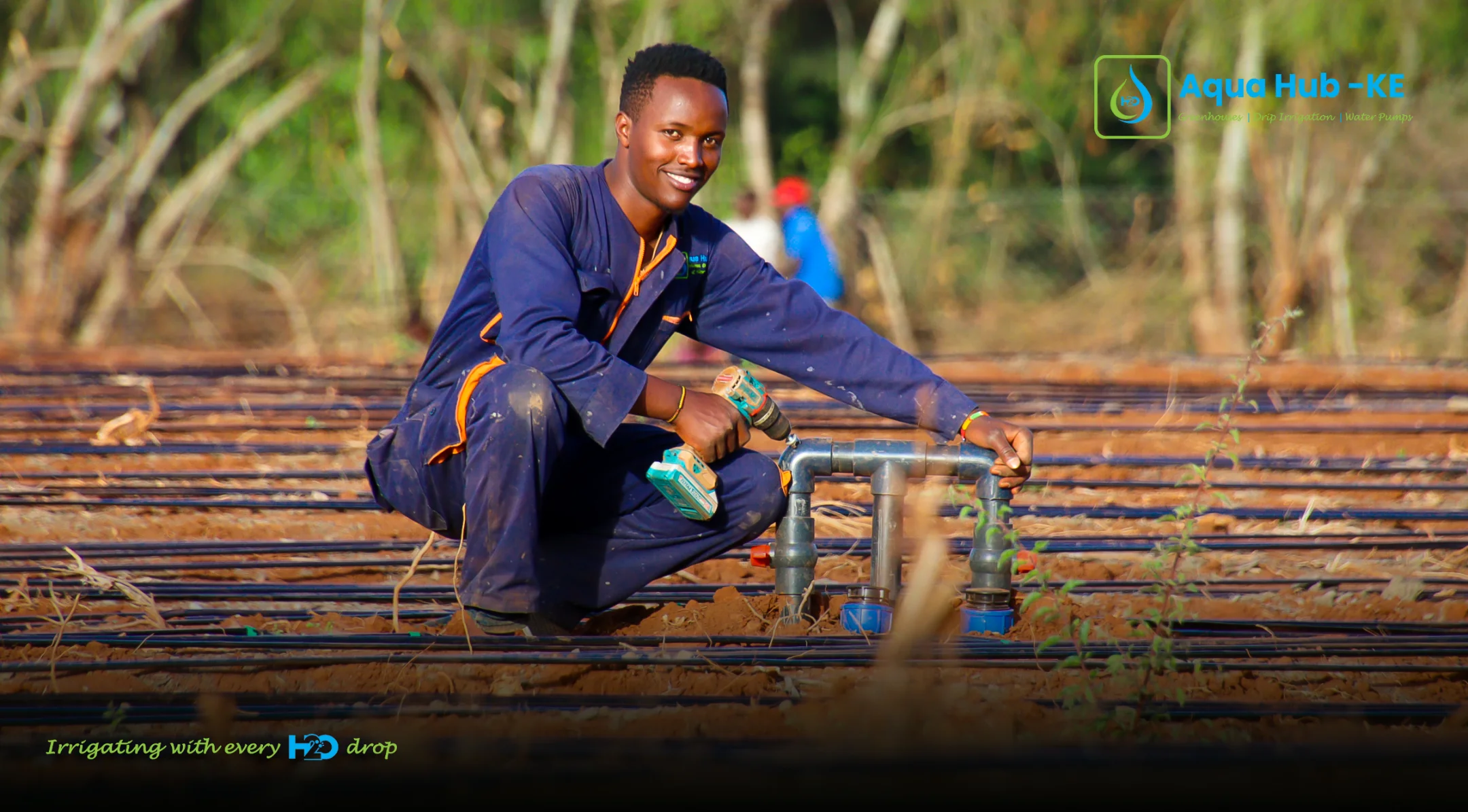
The cost of drip irrigation varies between KES 10,000 – KES 130,000 based on the size of the farm. Additionally, the crop type and the type of the drip system components used contributes to the total cost of the drip line installation.
You can reach out to us through 0790719020 or info@aquahubkenya.co.ke and get a quote for your drip irrigation installation.
Read more to understand what a drip system is, how it works, considerations you should make when selecting a drip system and our installation costs.
What is drip irrigation?
If you are a Kenyan farmer, you have likely heard of drip irrigation before. But, what is it exactly? How much does it cost? And how can you start using it on your farm.
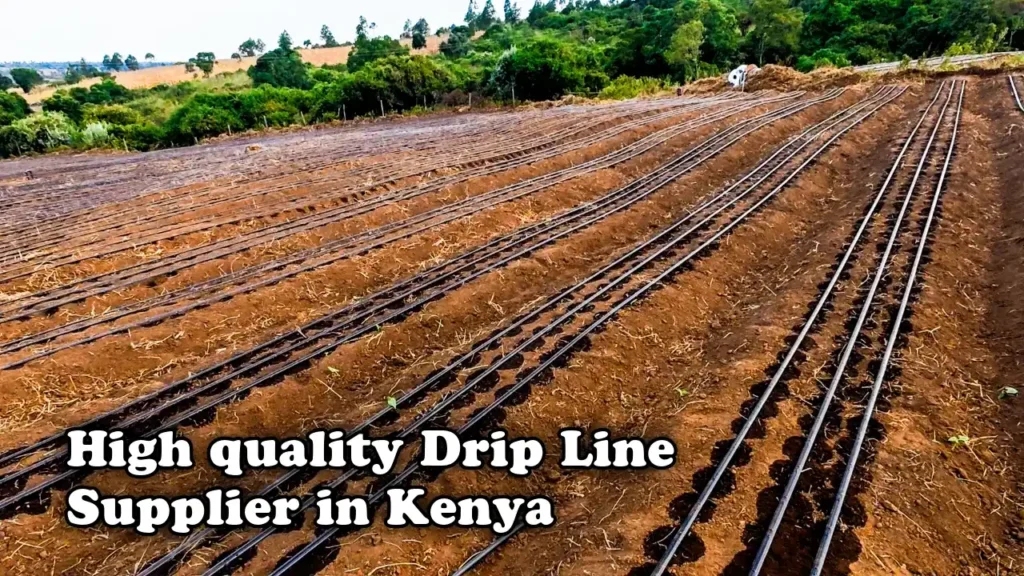
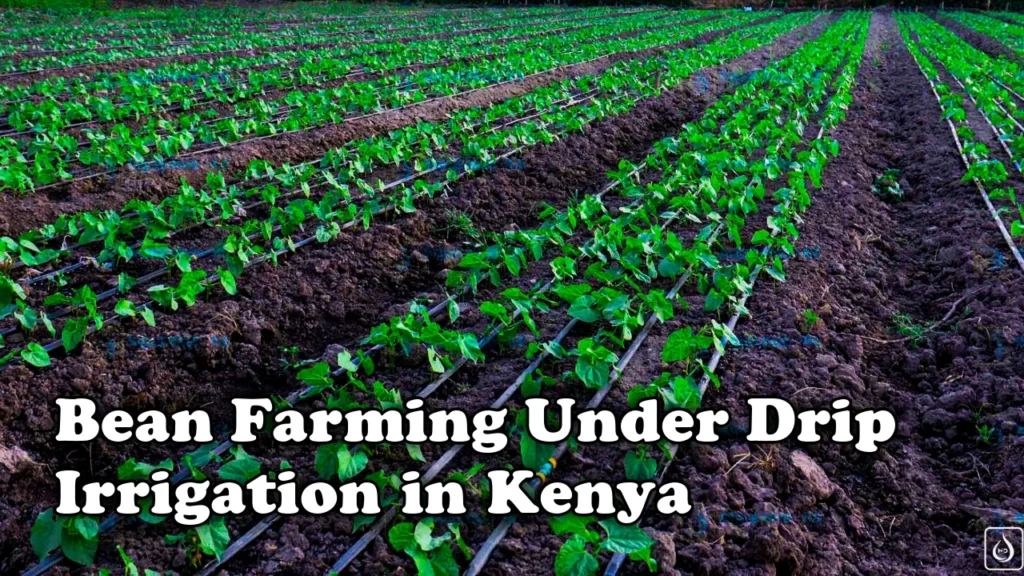
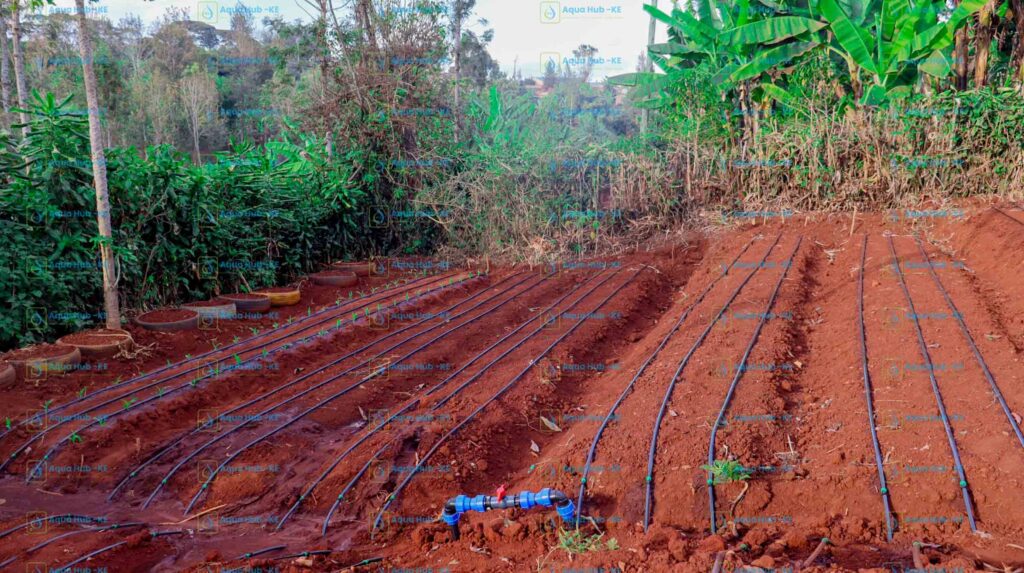
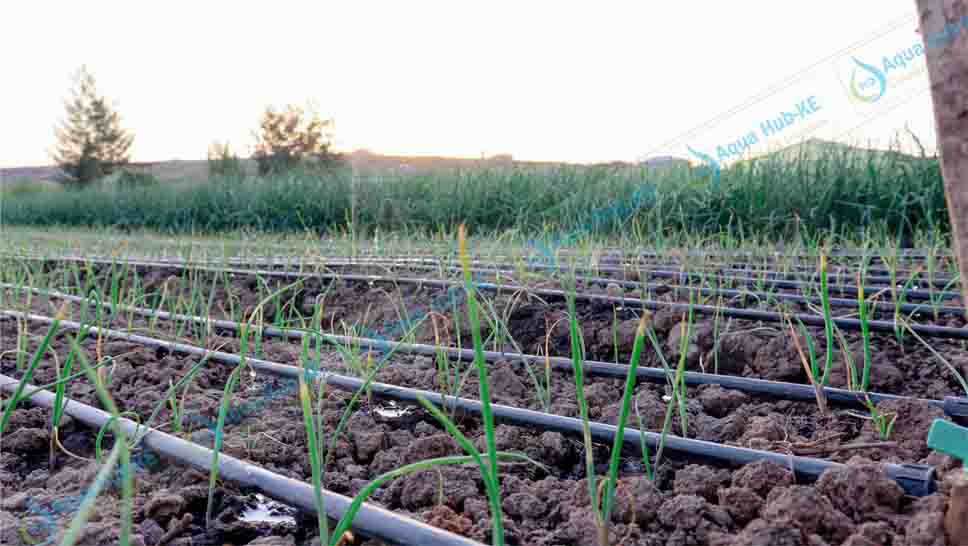
Drip irrigation, also known as trickle irrigation, is a method of supplying water directly to the plants’ roots. Small plastic pipes/tubes with emitters attached to them are used to discharge water slowly to the base of the plant.
You can think of it like giving each plant a straw, ensuring that the plant gets just as much water as it needs. This efficiency is what draws most farmers to using drip systems rather than alternatives such as sprinkler systems.
How does drip irrigation work?
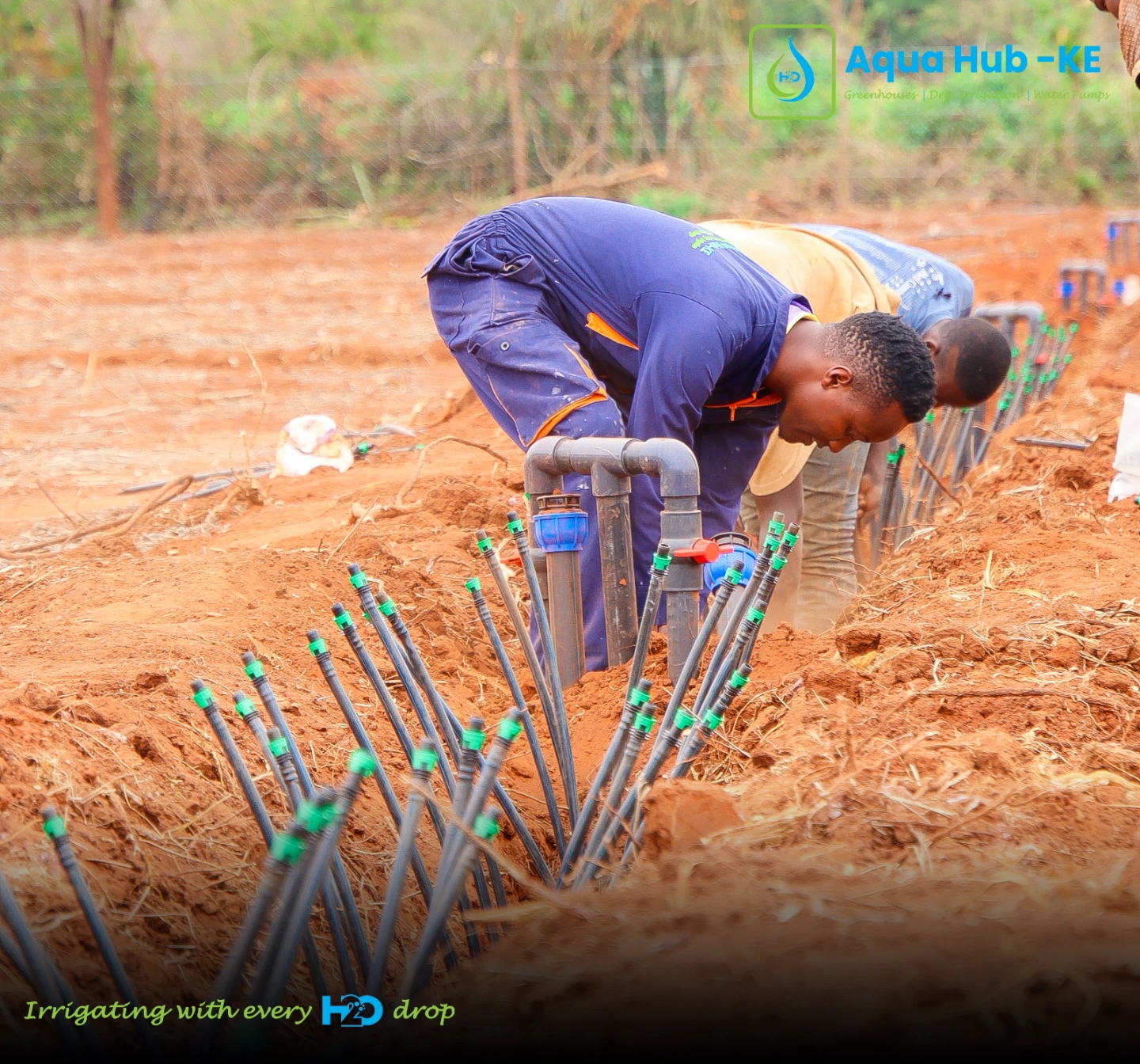
A drip irrigation system consists of the following parts:
- Water source
- Pump
- Main pipes
- Sub-pipes
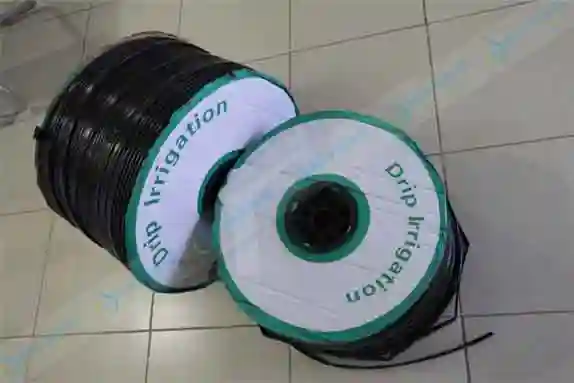
- Drip lines
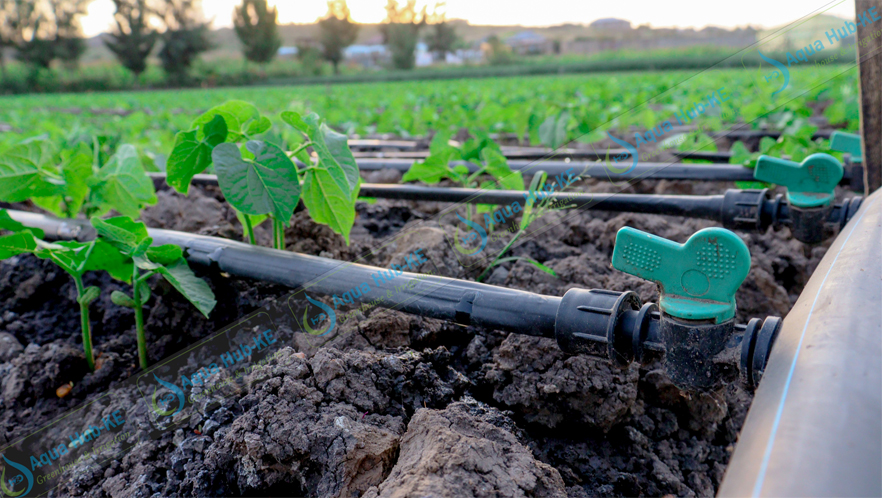
- Drip connectors
- Emitters
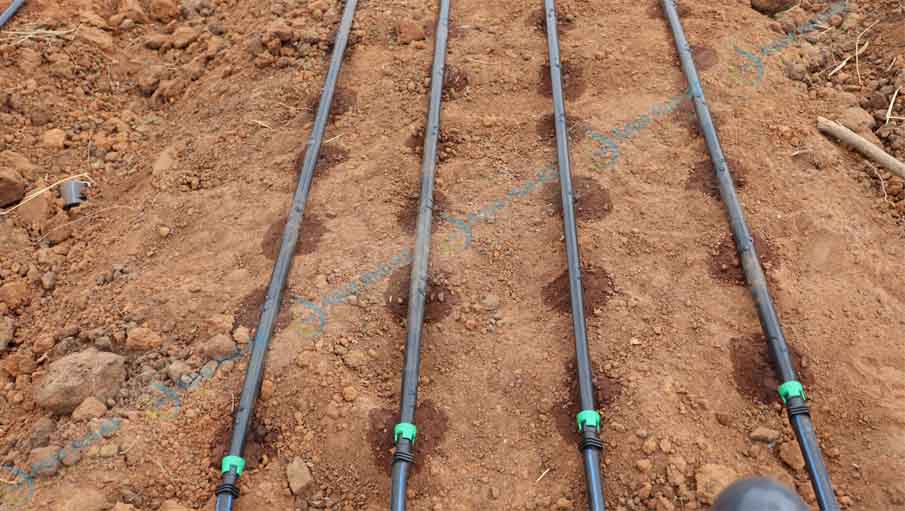
As mentioned previously, drip systems supply water to the base of the plant. Emitters are used to discharge water out of the drip line and onto the soil. This slow drip allows water to soak into the soil, and since the emitters are typically placed right next to the base of the plant, the water supply is direct.
The water flows from a pump or an elevated tank, through the pipes which branch out into smaller tubes. Emitters are connected to these smaller tubes. Filters may also be used to catch any debris that could potentially block the emitters. A drip irrigation system will also have pressure regulators. These pressure regulators ensure the water pressure within the tubes is just enough to effectively transmit water without damaging the pipes. In cases where a crop requires variable amounts of water, optional timers can also be added to the system. These automatically control when and for how long water is released from the source into the drip systems.
The different types of drip kit systems
There are two types of irrigation systems based on where the drip pipes are placed.
Surface Drip Irrigation
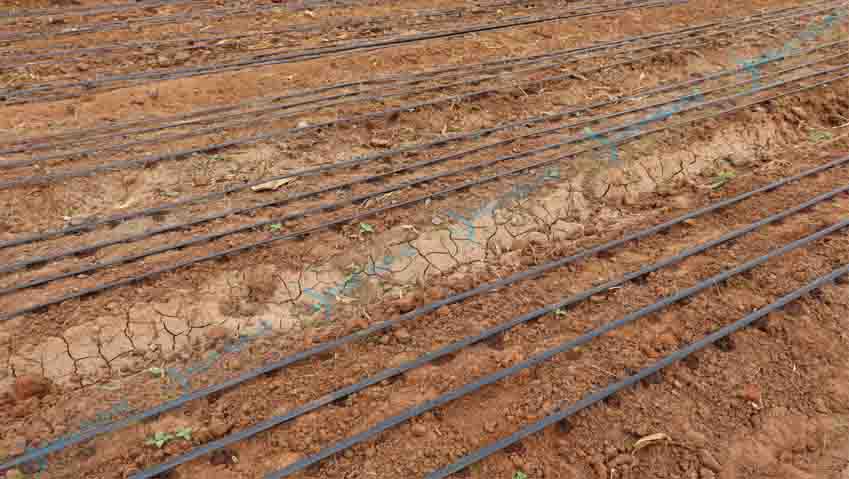
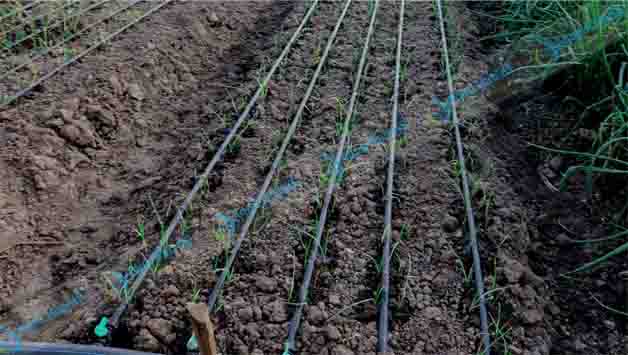
The tubings and emitters in this system sit directly on top of the soil or under a layer of mulch.
Surface drip is mostly used for vegetable gardens, flower beds, orchards and row crops
These drip systems are easy to install and maintain, since one can easily spot clogs and leakages.
Subsurface Drip System
The tubing is buried below the soil surface to deliver water directly to the roots.
Typically used for permanent crops (vineyards, alfalfa lawns).
Zero evaporation loss and pipes are hidden from the surface, thus protecting them. However maintenance can be difficult as the pipes are hidden
Why is drip irrigation useful
Drip irrigation is water efficient
As any experienced farmer will tell you, water is arguably the most valuable resource in agriculture. Selecting an irrigation method that minimizes water loss through evaporation, runoff or percolation is a must. Drip irrigation has proven to conserve up to 60% of water.
Drip line systems are adaptable
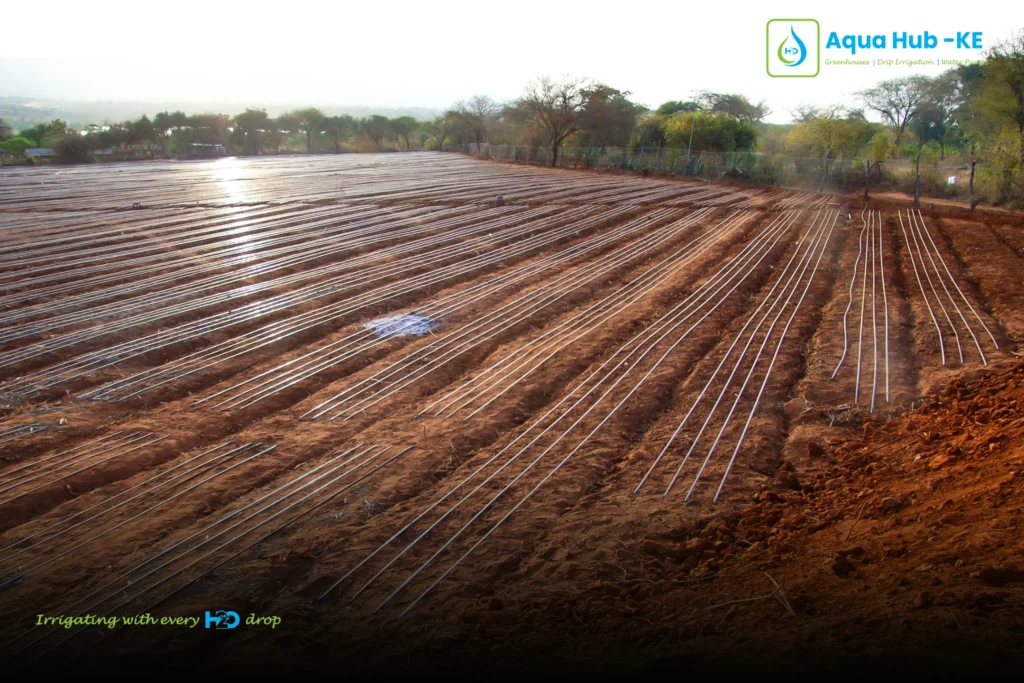
Many farms in Kenya are not flat, instead, the layout has slopes and small hills, humps and random changes in elevation. This kind of uneven terrain can make it difficult to use most irrigation systems. Parts of the land may end up being overwateredd or underwatered. Our drip systems, however, can be laid out in a way that mitigates these issues, ensuring even water distribution
Drip irrigation saves energy
Some drip systems with elevated water sources use gravity to transmit water from the water source to the drip lines. This removes the need for a physical pump, thus lowering the energy cost.
Unlike other irrigation systems that may need to spread water over longer distances, drip systems deliver water over a short distance from the emitter to the plant base. This means that water can be transmitted under lower pressure, thus, less energy is needed for the pumps.
Drip lines can be used in fertigation
Other than water supply, drip systems are also useful when it comes to delivering dissolved fertilizer directly to the crop. This ensures precise delivery, which helps reduce wastage, as well as more efficient fertilization. Drip fertigation requires the fertilizer to be water soluble so that it can be easily pumped without clogging the emitters.
How much does drip irrigation cost?
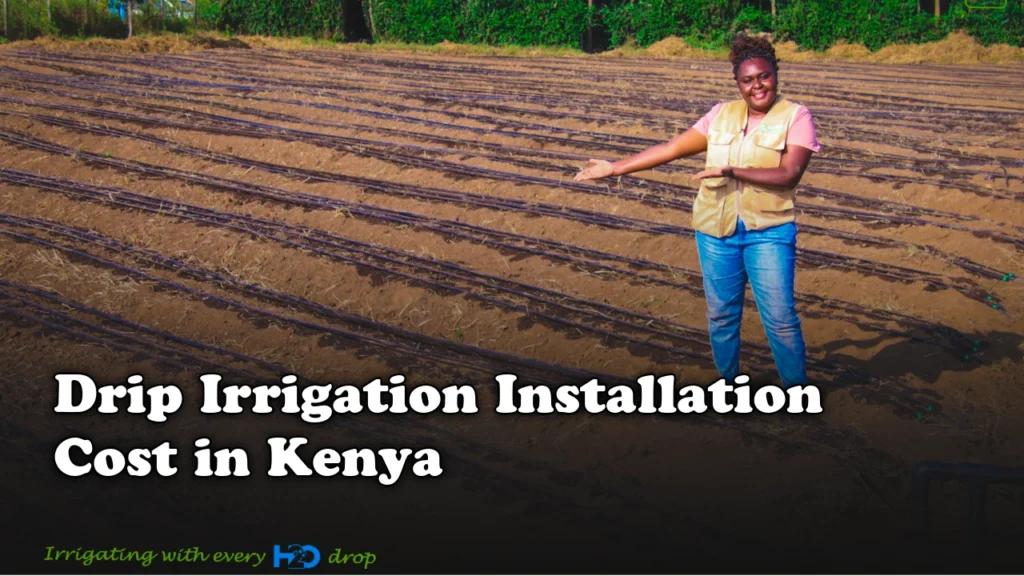
Drip kit prices vary based on the size of the land in addition to the type of crop. At Aqua Hub Kenya, our prices are as follows
| Size of the land | 1 line per bed | 2 lines per bed | 3 lines per bed |
| 1 Acre | 65000 | 95000 | 130000 |
| 1/2 Acre | 30000 | 45000 | 60000 |
| 1/4 Acre | 16000 | 25000 | 35000 |
| 1/8 Acre | 10000 | 150000 | 20000 |
The cost also varies based on the type of crop, the specific components used in the drip system and the level of automation. When you purchase an irrigation system from Aqua Hub Kenya, the total cost will include installation fees.
You can read our article on the 1-acre drip irrigation kit price to get a better understanding of the price breakdown and our different solutions for different use cases.
We also offer low-cost irrigation kits for smaller fields such as kitchen gardens.
You can Contact Us: 0790719020 to get more information on what our drip kit prices are, cost of installation and what solutions we recommend for your specific needs.
Which crops work best for drip system?
The adaptability of drip systems is not limited to terrain. Drip irrigation can be used for a variety of crops, including:
- Tomatoes – Drip pipes ensures precise water delivery directly to the crop preventing diseases caused by excessive moisture
- Garlic – Using drip irrigation for garlic farming helps maintain consistent soil moisture
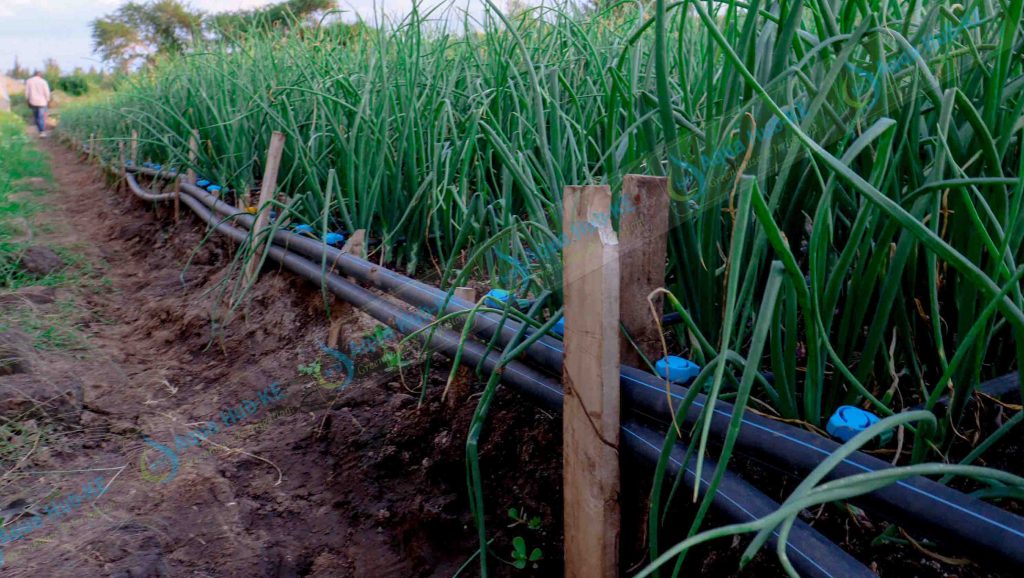
- Onion – In onion farming, the use of drip irrigation ensures efficient row-by-row watering
- Vegetables – Most vegetables work great with drip irrigation as they need an irrigation method that is suitably spaced
While drip laterals is suitable for a large number of crops, choosing the right crop is only part of the equation. Additional factors that impact the effectiveness of drip irrigation systems include soil type, climate, crop spacing and system design. Crop spacing is especially important as this determines the number of drip lines that you can have on a single bed. Before selecting drip irrigation as you irrigation method of choice, or even selecting a drip irrigation kit, it is important to consider these factors.
How do I get started with drip irrigation?
We know that getting started with drip irrigation can seem overwhelmin with all the different cmoponents and caveats that you need to be mindful of. Don’t you worry though, we’ve got you.
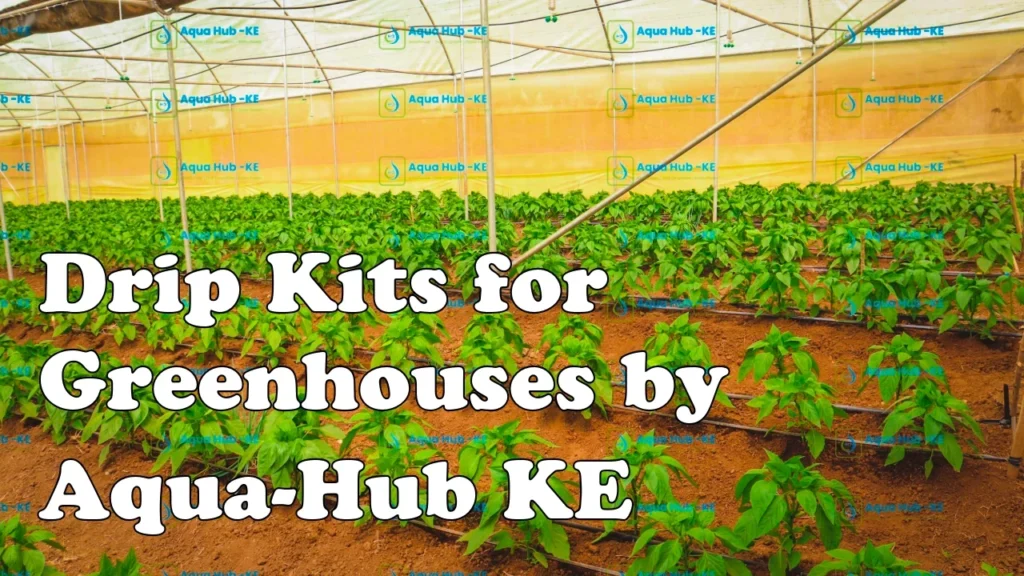
If you are more the “Do it yourself”type of farmer, you can start with our drip kits. This kit contains everything you would need to get up and running with your drip irrigation system. This includes emitters and fittings to top-quality HDPE and PVC pipes. We will guide you on which kit is best for your use case.
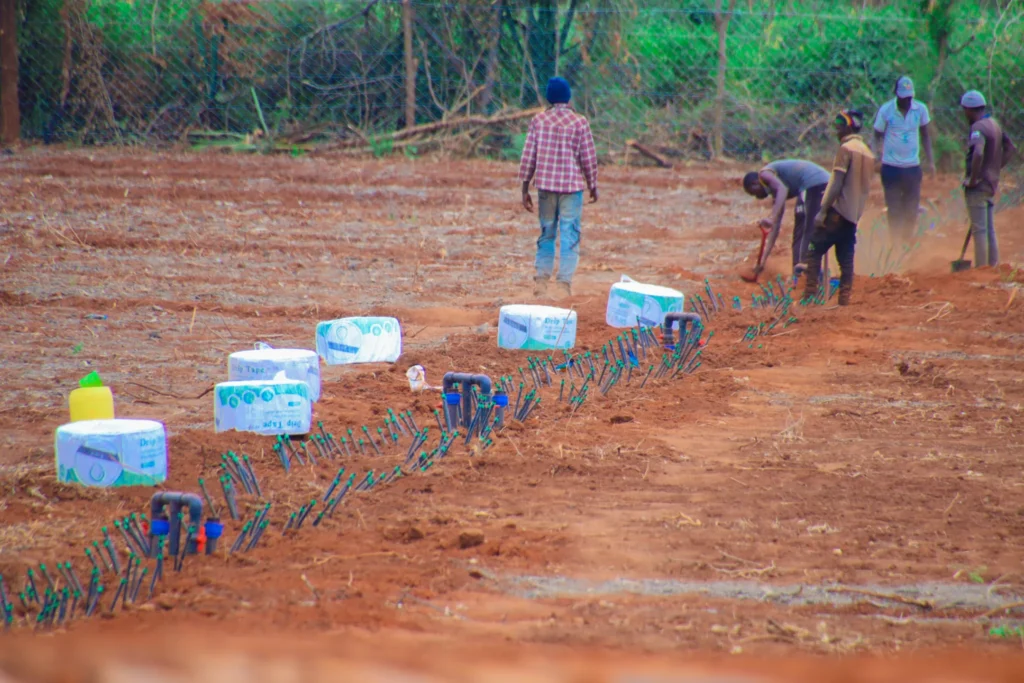
After you have gotten your drip irrigation kit ready, check out our step-by-step guide on the best approach to connecting drip lines
While it’s possible to install your drip lines yourself, the process comes with a lot of possible points of failure that you need to be mindful of. If you want to get your drip system up and running in the shortest time possible, Contact Us: 0790719020 and get a quote today.