
Blog
Best Dam Liner Suppliers in Kenya 2026
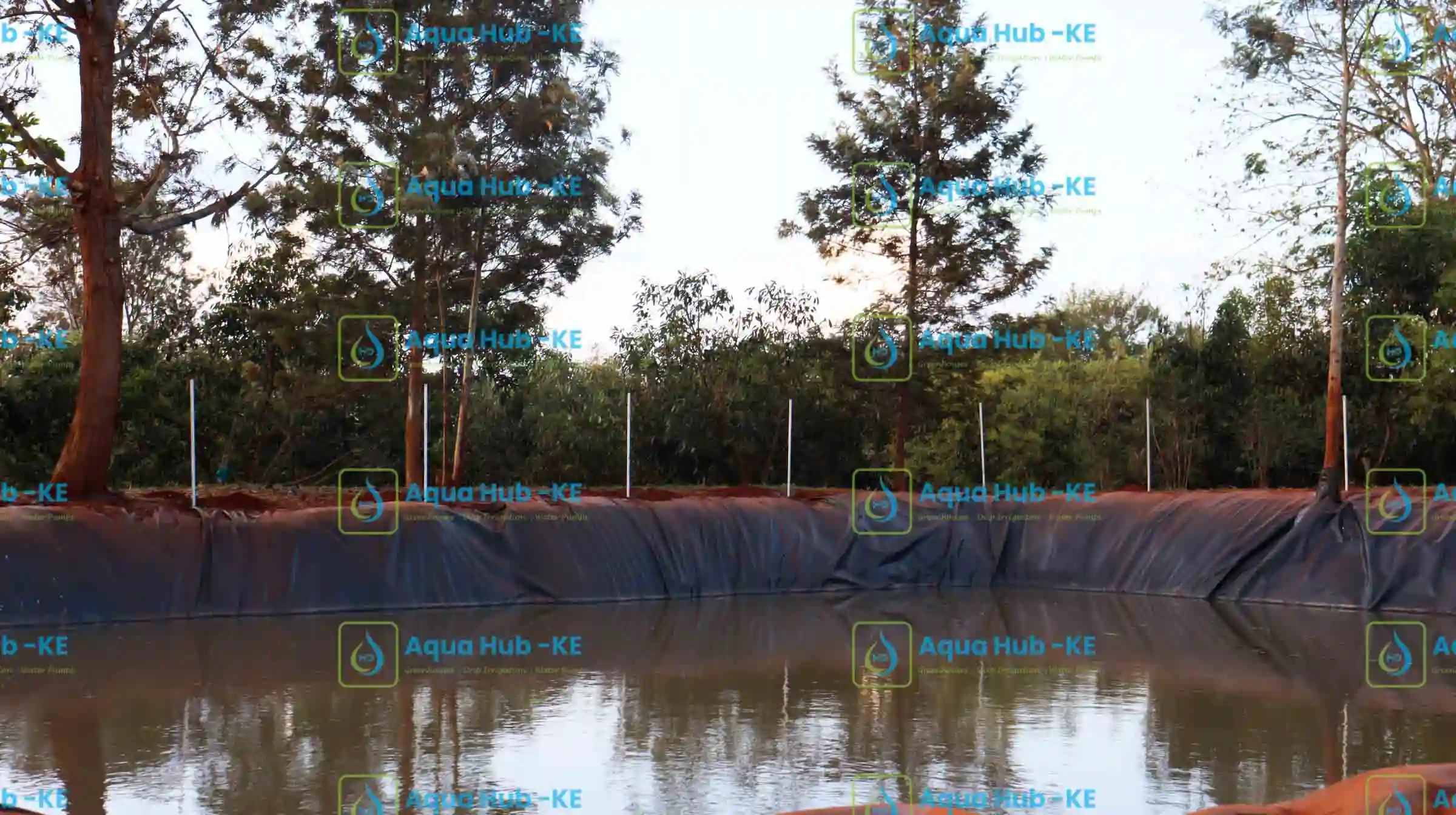
Dam liner suppliers in Kenya. We offer flexible prices for liners available in roll thicknesses of 300, 500, 750, and 1000 microns. These liners are industry-made using HDPE material with a blend of UV additive to boost durability. The cost of dam liners at Aqua Hub and most other suppliers in Kenya range from KES 160 to KES 420 per square metre as of 2026.
If you need a reliable water source for irrigation, home or animal needs at low cost, try Aqua Hub Dam Liners. We offer affordable charges for installation services and also give discounts for bulk purchases.
Call 0790719020
Key Takeaways
- The cost of dam liners in Kenya depends on thickness, size, and installation.
- HDPE is the most durable and popular dam lining material.
- Proper measurements prevent costly material shortages.
- Installation quality determines long-term performance.
- 750–1000 microns is ideal for medium to large dams.
- Lined dams significantly reduce water loss and improve reliability.
Water Storage Dam Liners from Top Suppliers in Kenya
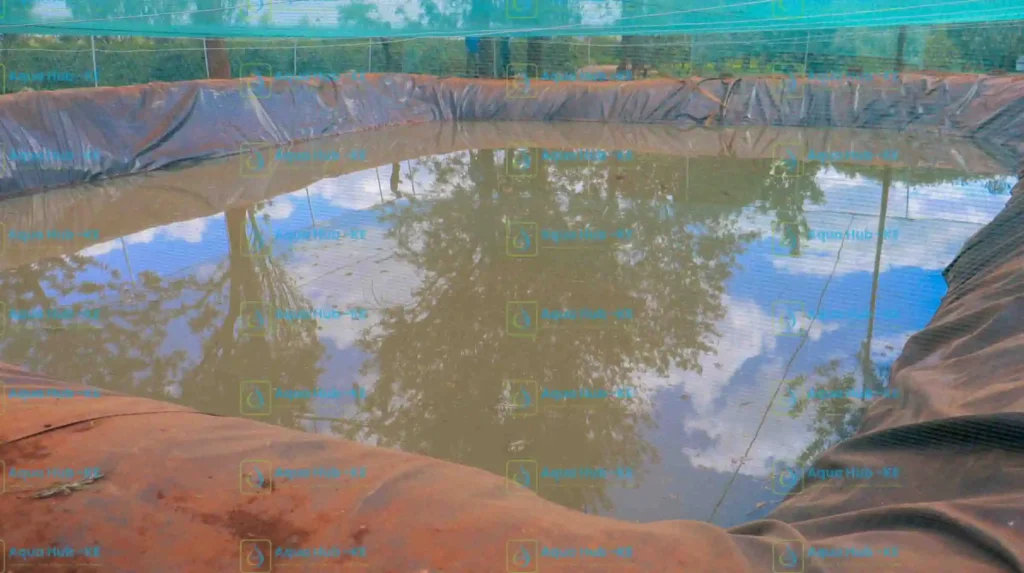
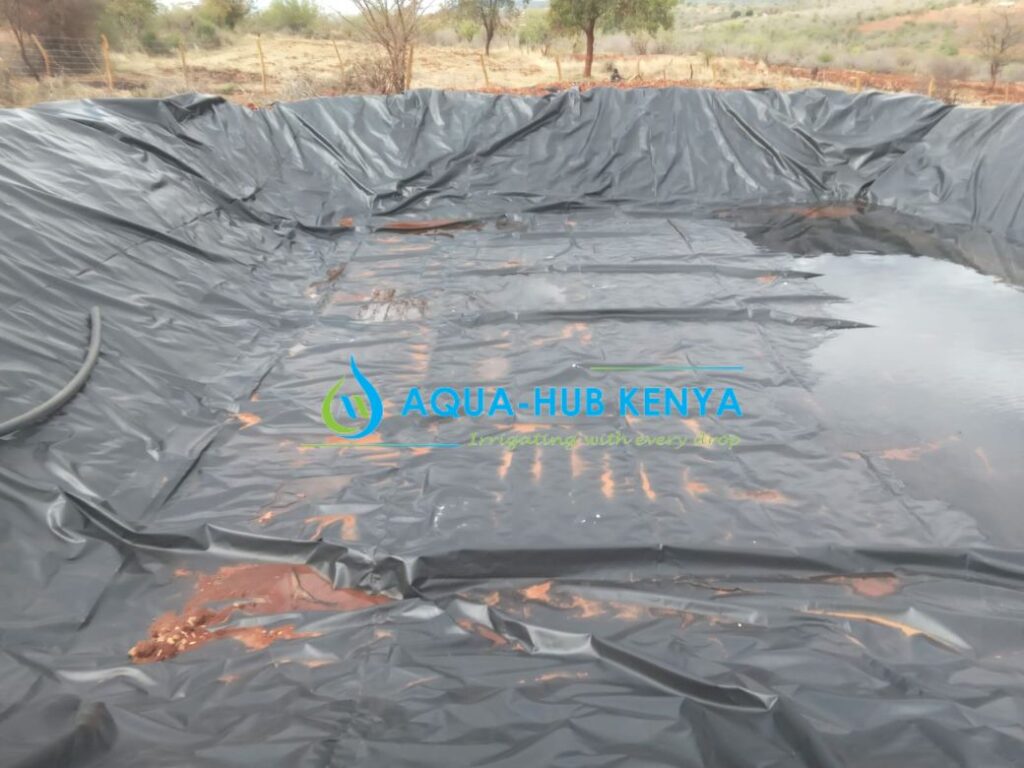
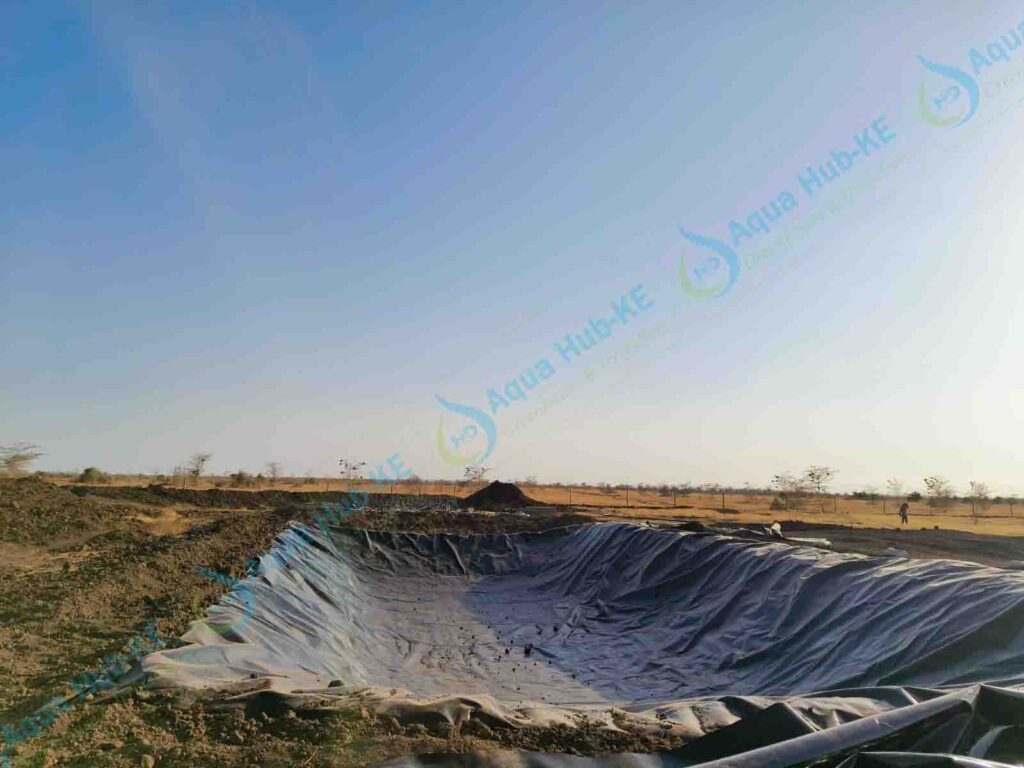
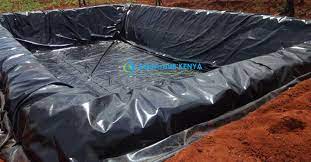
dam liner holding water in a pond
Arid and semi-arid Lands (ASAL) regions in Kenya experience low rainfall which cannot support agriculture or livestock use. These areas also contain permeable sand soils that drains water faster.
To address this challenge, dam liners are used to hold water in ponds or dams of porous soil surface.
Cost of Dam Liners in Kenya
The cost of dam liners varies according to thickness size. Common thickness sizes we stock are sold at the prices shown below.
| Dam Liner Thickness Size | Price (KES) |
| 0.30 mm | 160 |
| 0.50 mm | 230 |
| 0.75 mm | 310 |
| 1.00 mm | 380 |
Note: Prices are subject to change from time to time.
Other Charges You Will Incur
- Site excavation
- Geotextile underlay
- Installation Labor
- Transport
Standard Dam Liner Sizes
Roll Size
The standard roll size of dam liners is 8 m by 100 m.
Thickness (gauge)
Dam liners vary in thickness (gauge), each designed for different project needs.
Common Dam Liner Thickness sizes are:
- 300 microns (light use)
- 500 microns (small ponds)
- 750 microns (medium irrigation dams)
- 1000 microns (large reservoirs)
How Dam Liners Work
Dam liners create a waterproof barrier that makes dams or ponds reliable water source throughout the year.
Dam Liners Applications in Kenya
- Reinforcement of farm irrigation ponds
- Livestock Water Storage Dams
- Fishpond lining
- Concrete tank lining purposes
- Water treatment plant
- Sewage waste containment
Best Dam Liner Suppliers: Industry-Recommended Dam Liners
Our dam liners are manufactured from high-density polyethylene material. This is the industry-recognised material that we use in our projects.
Features of Dam Liners
- UV resistance: designed to withstand UV degradation
- Durable: dam liners are hard and can last for up to 50 years.
- Chemical resistance: does not corrode easily and is thus used to handle corrosive waste.
- Flexible nature: spreads easily due to their flexible material type.
Types of Dam Liners: Which One Matches Your Water Needs
The right dam liner depends on the type and scope of your project. The common recommended use case scenario varies with the gauge of the liner.
0.3 mm liner
Lowest thickness gauge with highly flexible material. Designed for small water reservoirs and light home water storage needs.
0.5 mm liner
Type of dam liner material with 500-micron thickness. Commonly used in most irrigation ponds and domestic reservoirs.
0.75 mm liner
750-micron dam liner designed to offer high strength in large dams.
1 mm dam liner
High density thickness dam liner for commercial projects. Used for critical projects such as concrete tanks, dams, septic tanks and water treatment plants. Due to their resilience, they are used in cases where environmental and human safety is a concern.
How to Calculate Dam Liner Measurements
For proper dam liner installation, correct measurements should be taken to ensure you have the liner that fits well. If you are not sure of your dam’s measurement, we require that a site visit be done.
The measurements taken are for the base length, width and depth of the dam.
Basic Formula
Total liner length = Base length + (2 × depth) + 1 m overlap
Total liner width = Base width + (2 × depth) + 1 m overlap
Overlap allowance is essential for ground
Dam Liner Suppliers in Kenya: What affects Dam Liner Choice
Soil texture
For rough soil texture, a high-thickness dam liner is recommended. On the contrary, a soft soil surface requires a low-density liner.
Climate Conditions
Areas with intense UV radiation need thicker, UV resistant dam liner materials. For areas with saline water, HDPE UV-treated liners are used.
Dam Size
The size of the dam determines the dam liner to use. For large dams, 1 mm dam liners are best.
Large dams may require factory-welded panels, affecting pricing.
How Dam Liners are Improving Farming in Arid Regions
Farming in hot regions could be challenging, provided irrigation requires a lot of water. Most farmers cannot afford to drill water and rely on the little rainfall or costly municipal water.
Dam liners can help farmers in dry regions by storing rain or water from nearby rivers for use when drought persists.
Lined dams also reduce contamination from surrounding soils, improving water quality for fish farming.
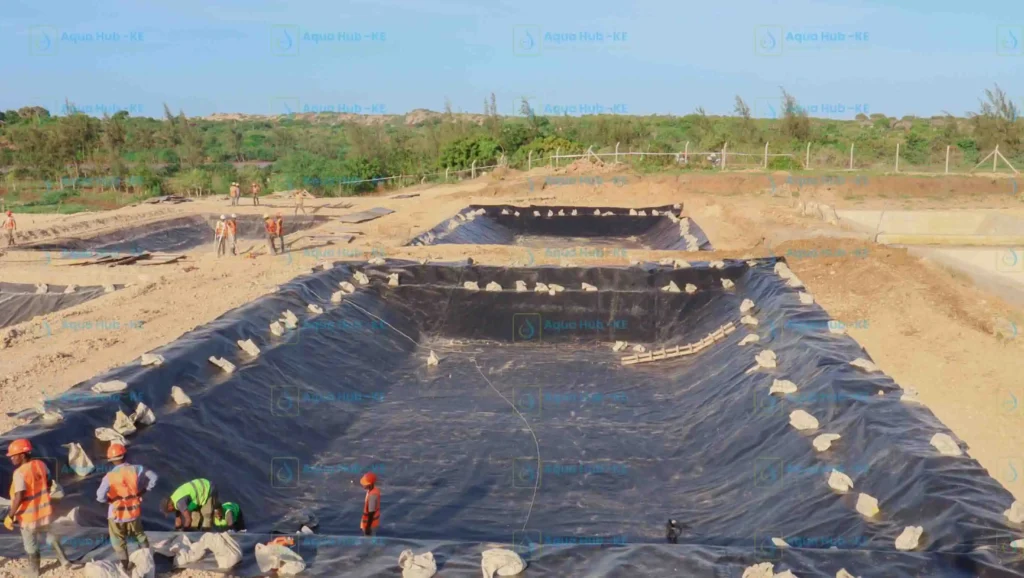
Dam Liner Suppliers: How to Line a Dam
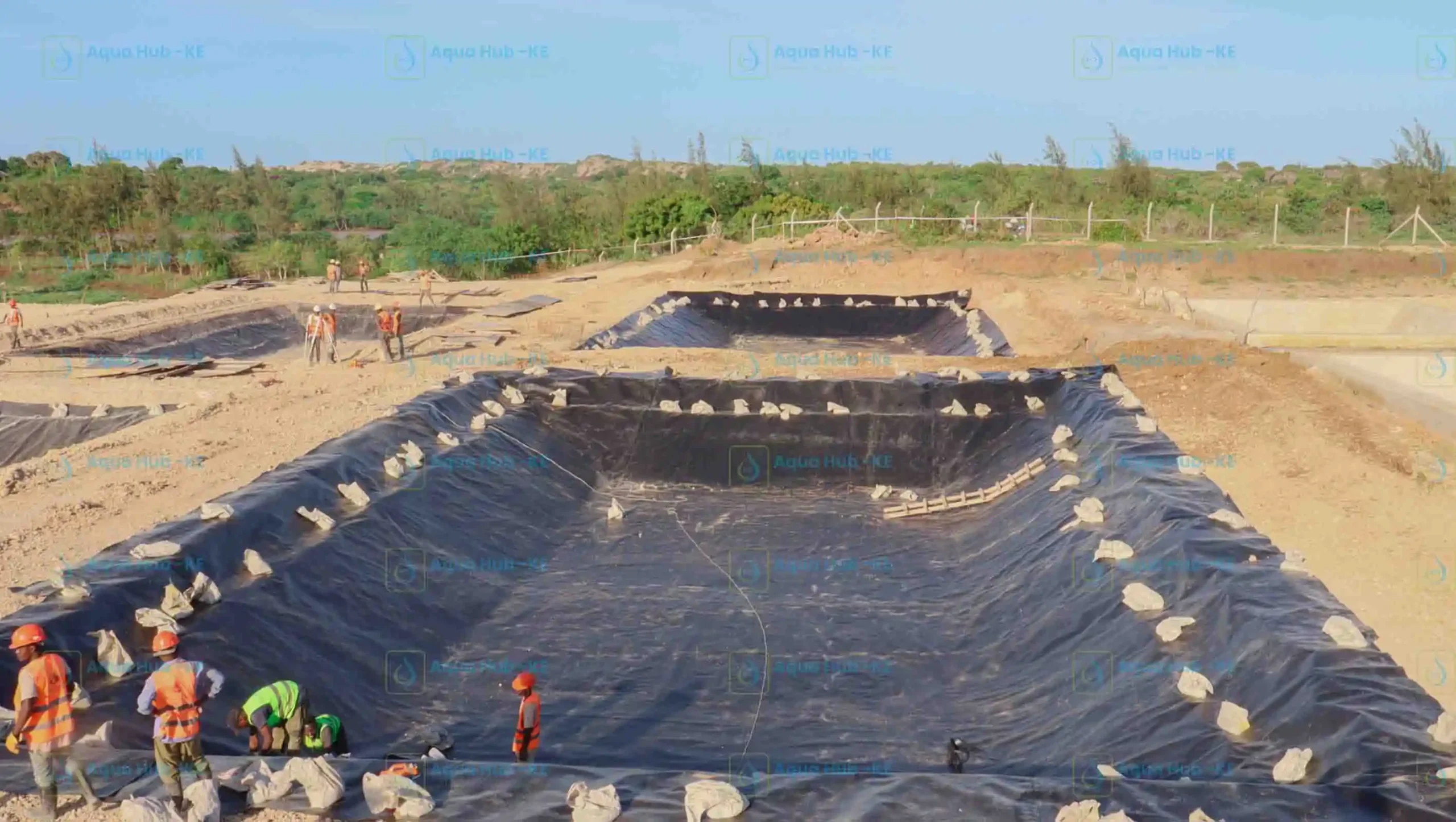
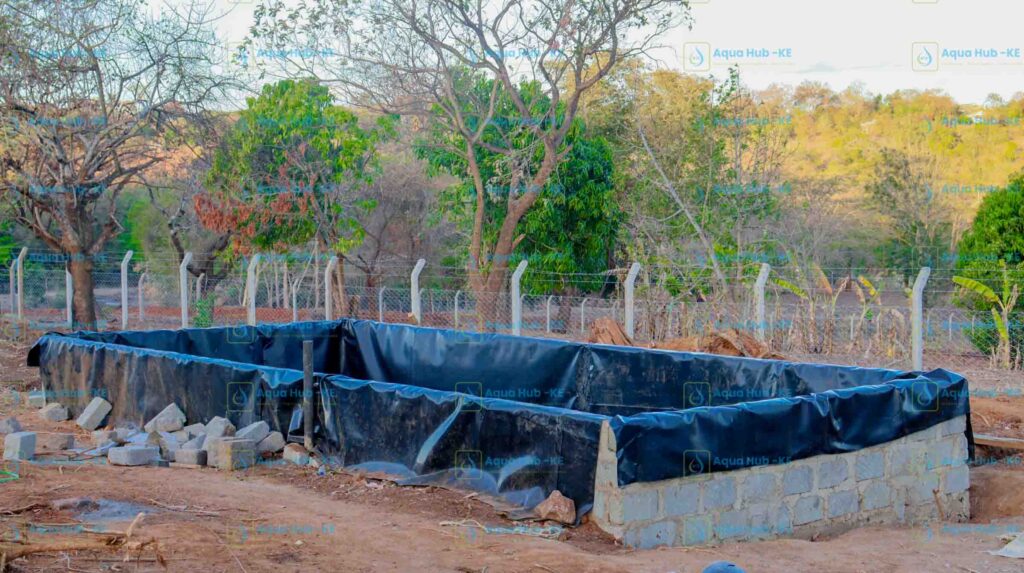
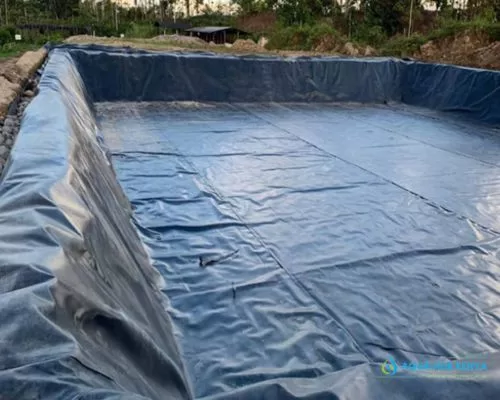
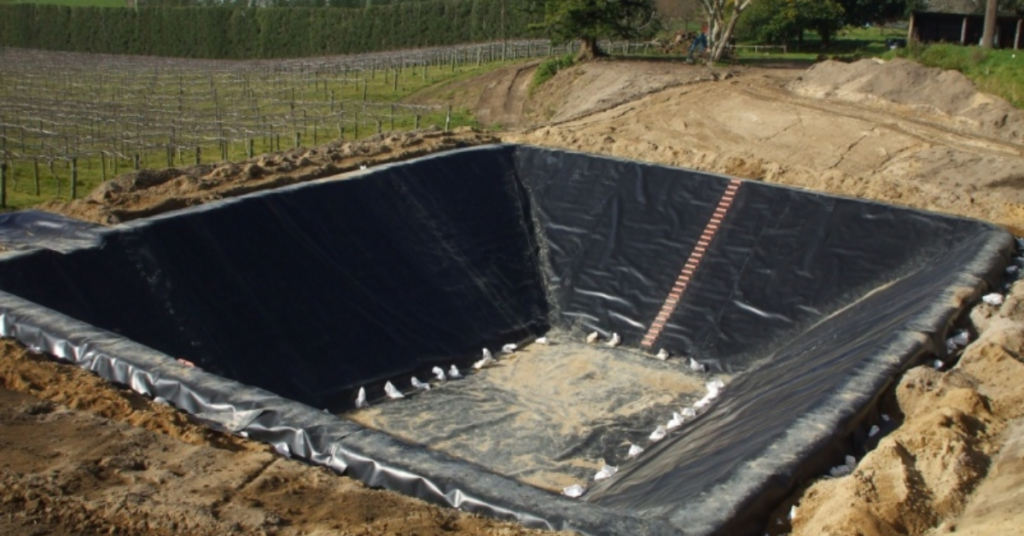
Dam liner installed in excavated dams
Understanding how to line a dam properly ensures durability.
- Site Preparation
- Remove sharp objects
- Compact the soil
- Shape slopes evenly
- Install Geotextile Underlay
This protects the liner from punctures.
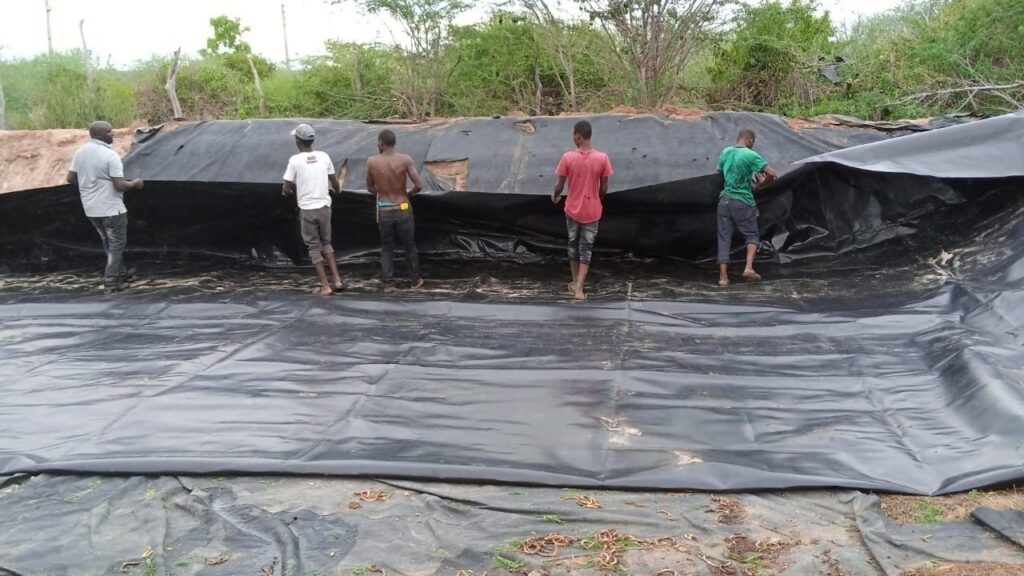
- Lay the Liner
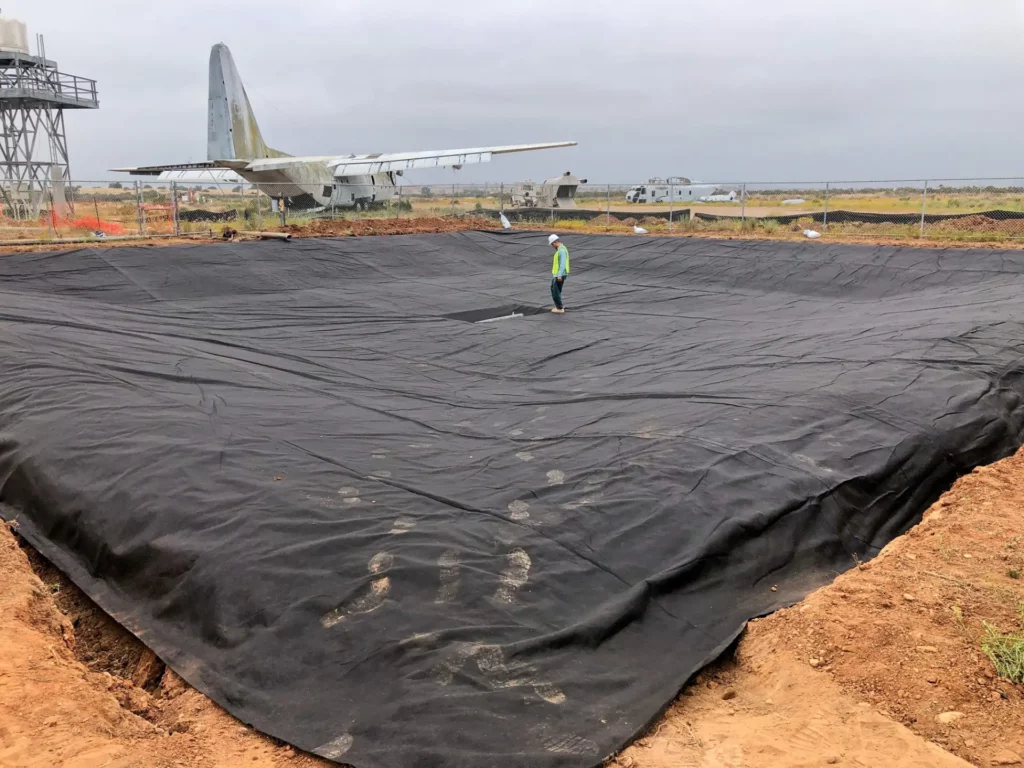
Carefully spread the liner across the dam basin.
- Anchoring
Dig anchor trenches around the perimeter to secure edges.
- Seaming & Welding
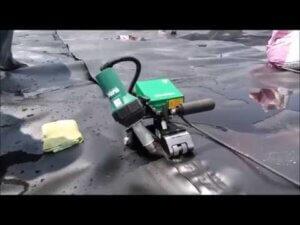
HDPE liners require heat welding for watertight seams.
Common Mistakes to Avoid When Installing the Liner
- Using thin liner for large dams
- Skipping underlay
- Poor seam welding
- Incorrect measurements
- Ignoring slope stability
Choosing the Right Liner for Your Project
Small Ponds
500 microns may suffice for small livestock ponds.
Medium Irrigation Dams
750 microns offers strong resistance.
Large Commercial Farms
1000 microns or thicker HDPE is ideal.
Advantages of Dam Liners
The advantages of dam liners go beyond preventing leaks:
- Reduces water loss by seepage
- Improves water storage efficiency
- Enhances crop production by making irrigation farming sustainable.
- Supports fish farming productivity
Dam Liner Suppliers in Kenya: Recommended Maintenance
- Inspect edges regularly
- Repair punctures immediately
- Prevent livestock from stepping on liner edges
- Keep vegetation controlled
Top Dam Liner Suppliers in Kenya
Aqua Hub Kenya.
Call 0790719020
Frequently Asked Questions
1. How much are dam liners in Kenya?
KES 150 to 450 per square metre.
2. How to tell if a pond liner is leaking?
750 microns is widely recommended for irrigation dams.
3. How do I calculate dam liner measurements?
- Length = base length + 2(depth) + 1 m overlap.
- Width = base width + 2(width) + 1 m overlap.
4. How long do dam liners last?
20 – 50 years.
5. What to put down before a pond liner?
Underlay Material.
6. What are the different types of dam liners?
HDPE, PVC and LDPE liners.
7. Can I install a dam liner myself?
Dam Liners require technical installation.
8. What is the purpose of a dam liner?
To prevent water from seeping to the ground thus reducing risk of water shortage.
9. How to repair a dam liner?
By patching the worn-out part using welding blower or by using repair tape.
10. Where Can I buy Dam Liners in Kenya
Aqua Hub Kenya.