
Blog
Dam Liner Installation for Farm Water Ponds
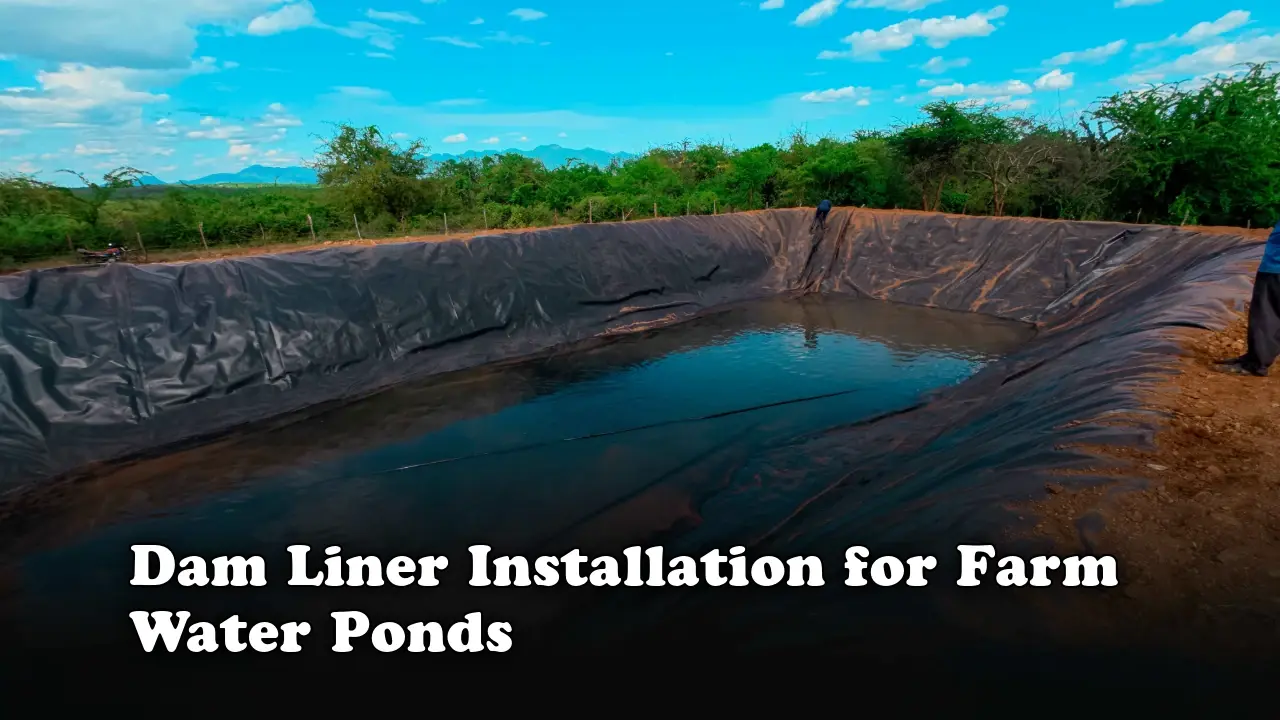
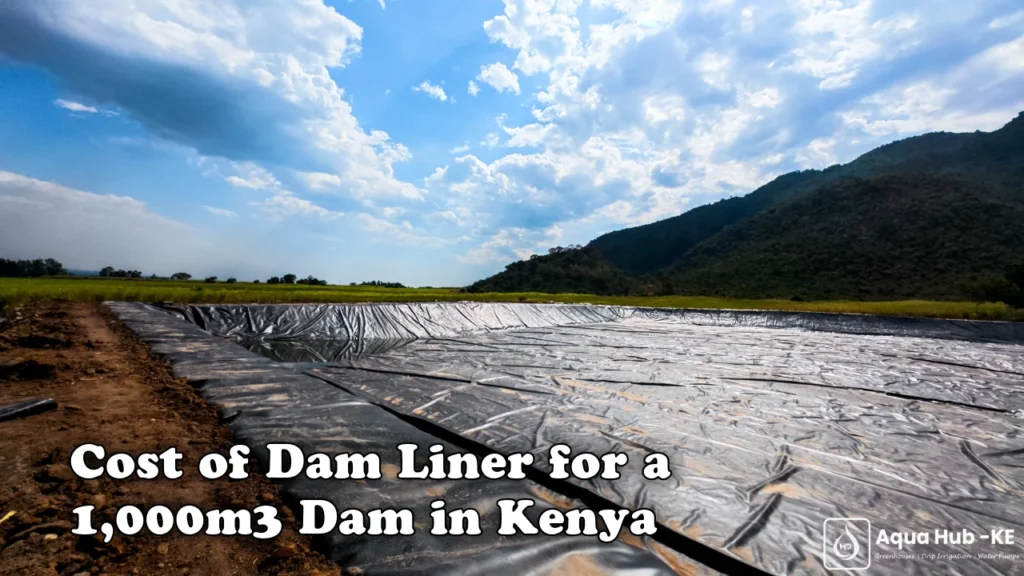
Dam liner installation for a farm water pond starts with a liner that costs KES 210 to KES 430 per square metre at Aqua Hub Kenya, depending on thickness.
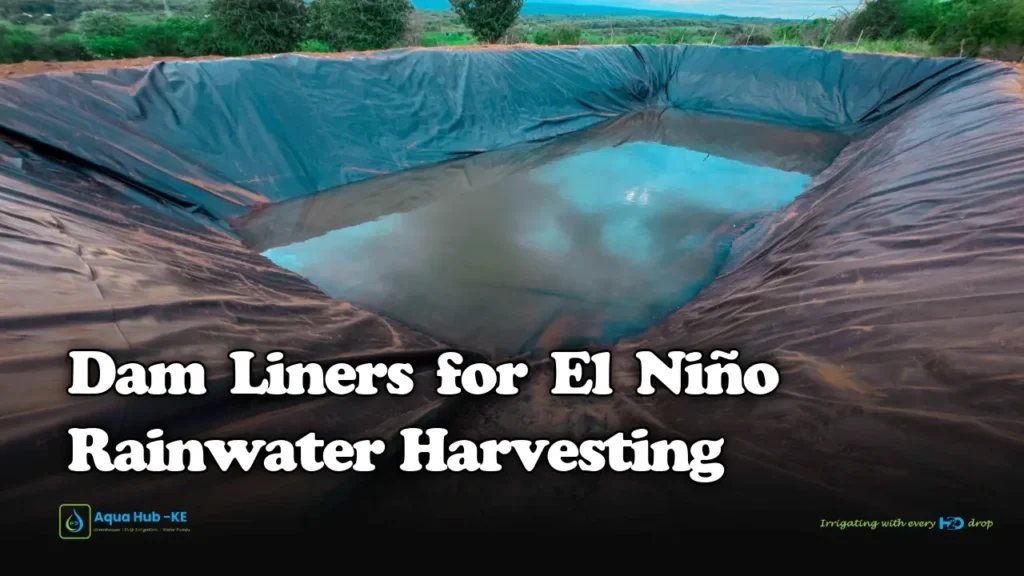
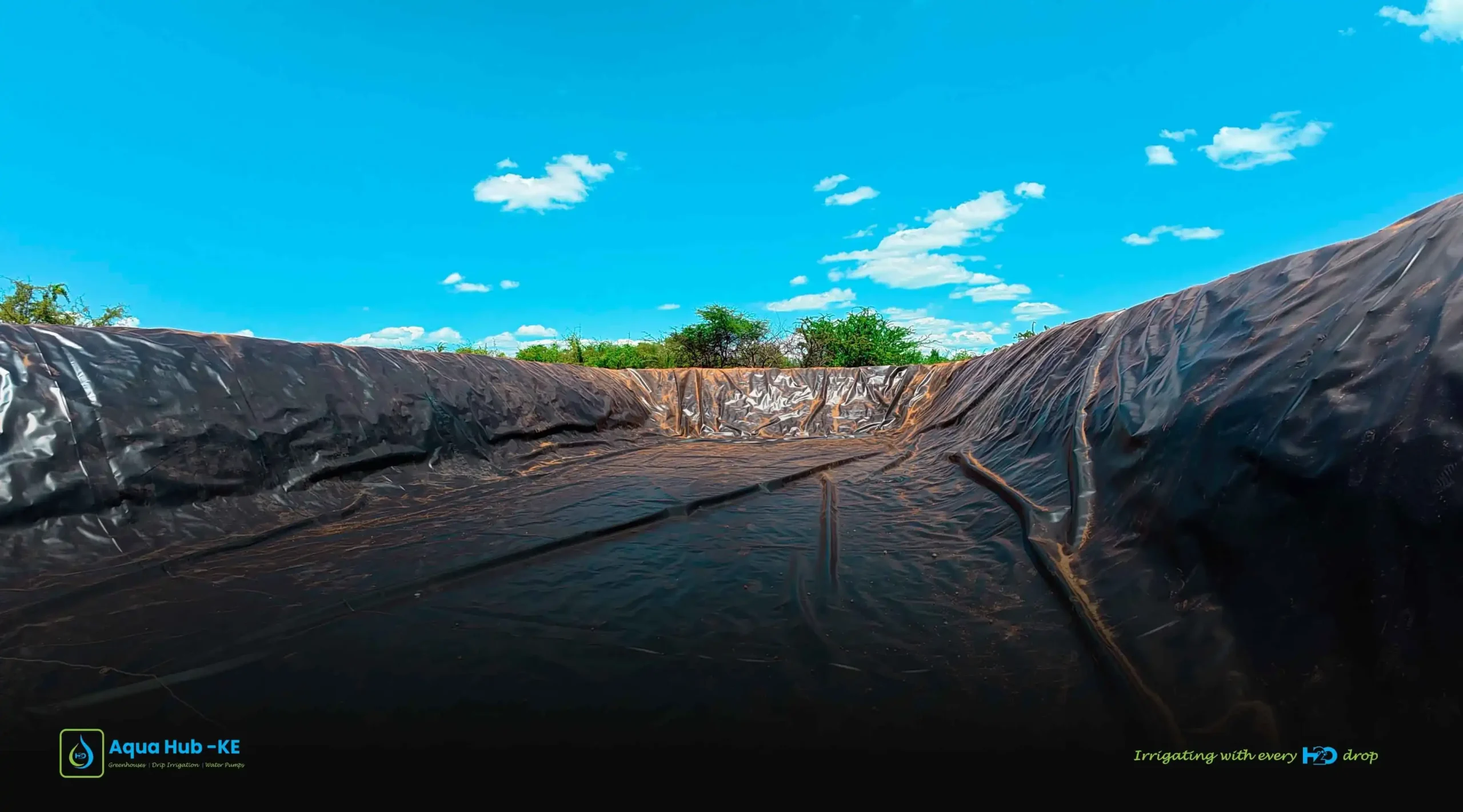
A farm water pond that leaks loses water through the soil, and an open pond also loses water to the sun. A plastic liner stops the seepage, so the pond holds the water you collect during the rains for use in the dry months. Correct dam liner installation matters as much as the liner itself, because a stone left under the sheet or an edge buried too shallow can cause leaks later.
Aqua Hub Kenya supplies dam liners in four thicknesses and sends its technicians to fit them on your farm. Before you order, our team checks the measurements of your pond, which means the liner you buy matches the size you need. Call +254790719020 to talk through your pond and book a time for the work.
Cost of Dam Liner Installation by Aqua Hub Kenya
The liner price depends on thickness, and the total depends on the size of your pond. Aqua Hub Kenya prices liners per square metre, so the first job is to work out the area. The area depends on the length, width, depth and slope of the sides, and our team calculates the exact quantity from these figures. A deeper pond or steeper sides use more liner than a shallow pond with the same floor, so correct measurements before the order help you buy the right quantity.
As an example, a dam of 25 × 20 × 2 m needs 680 square metres of liner. The cost of the liner for that dam, by thickness, works out as follows:
| Liner thickness | Liner for a 25 × 20 × 2 m dam | Price per square metre |
|---|---|---|
| 0.3 mm | KES 142,800 | KES 210 |
| 0.5 mm | KES 163,200 | KES 240 |
| 0.75 mm | KES 231,200 | KES 340 |
| 1 mm | KES 292,400 | KES 430 |
The charge for installation depends on the size of the pond and the condition of the site. Prices can also change with the order, therefore call +254790719020 for a quote and for the exact price of your job.
Preparing the Pond Before Dam Liner Installation
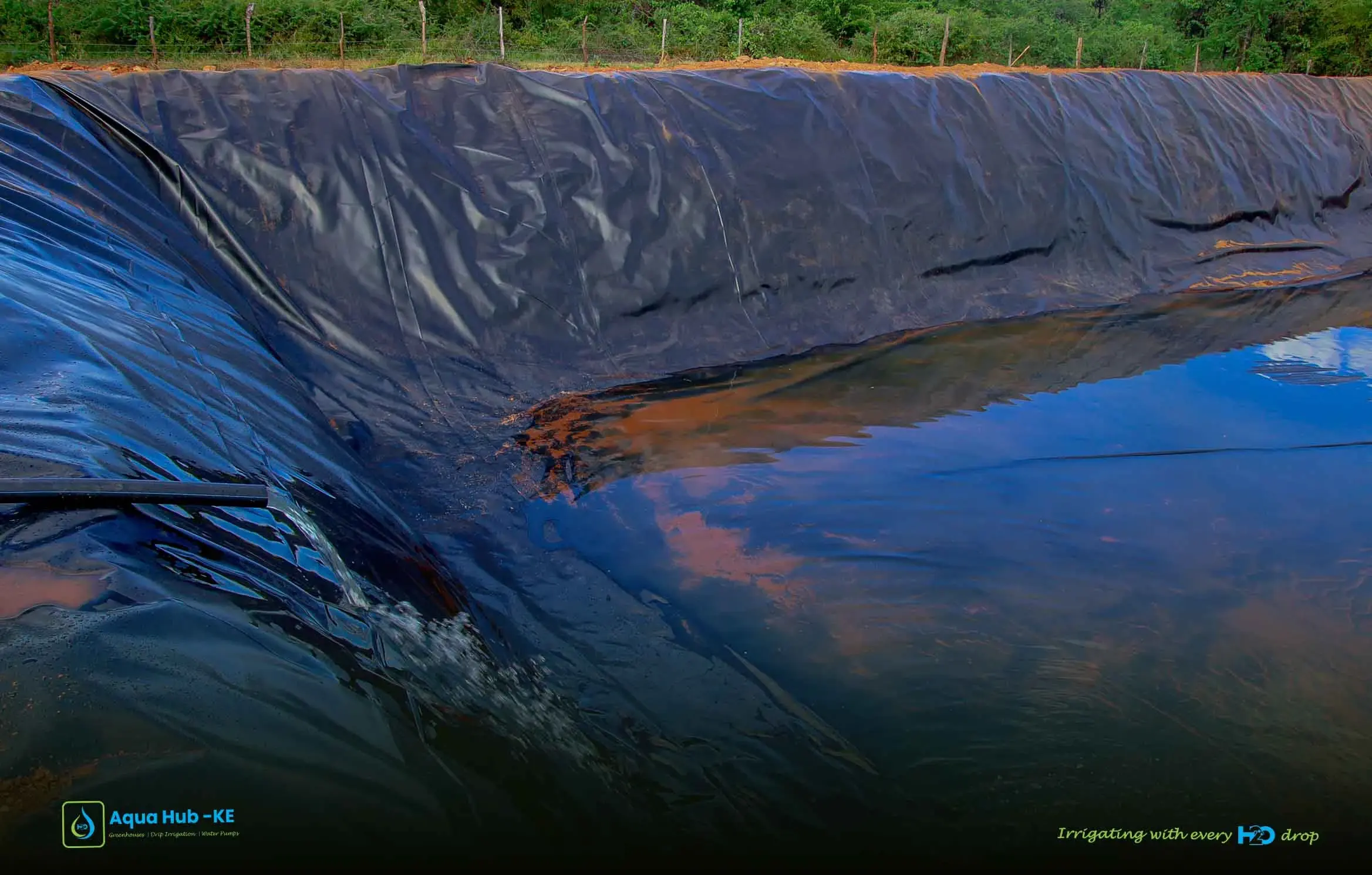
The liner rests directly on the floor and sides of the pond, so the soil must be firm and smooth. Stones and hard roots can puncture the sheet once the weight of the water presses on it. For this reason, preparation is the stage that decides whether the pond stays watertight.
A pond ready for lining has:
- A floor and sides free of stones and hard roots
- Soil that is level and compacted, so the sheet rests on firm ground
- Sides with a slope that the soil can hold without crumbling
- A narrow trench cut along the rim, where the edges of the liner will be buried
If you dig a new pond, prepare it in the dry season, when the soil is firm and easy to compact. Smooth the corners and the joins between the floor and the sides as well, because sharp bends put extra strain on the sheet. If you line an existing pond, empty it first and remove the mud and plant growth from the base. Besides that, fill any holes or cracks with soil and compact them before the liner goes in.
Dam Liner Installation Steps from Aqua Hub Kenya
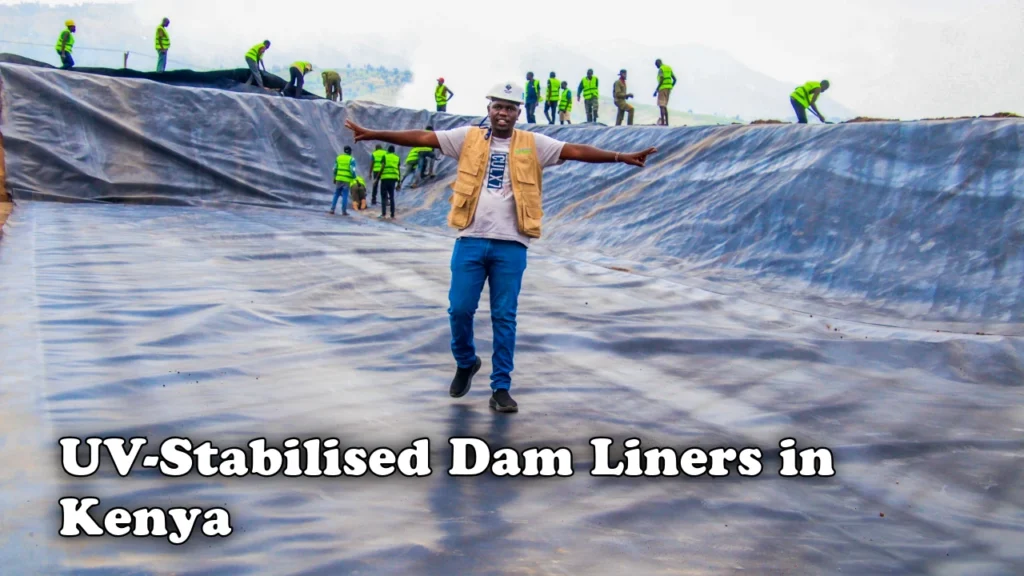
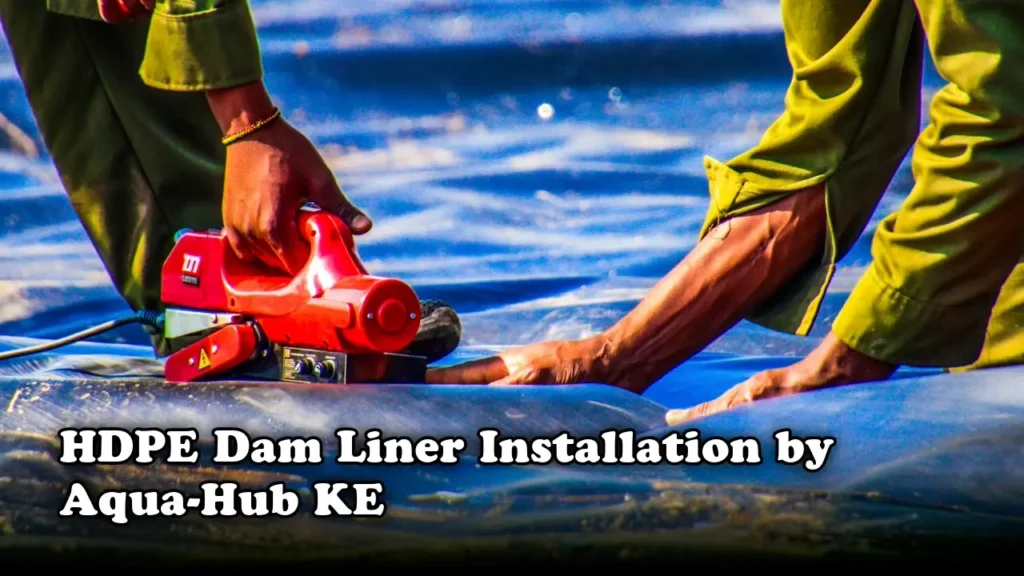
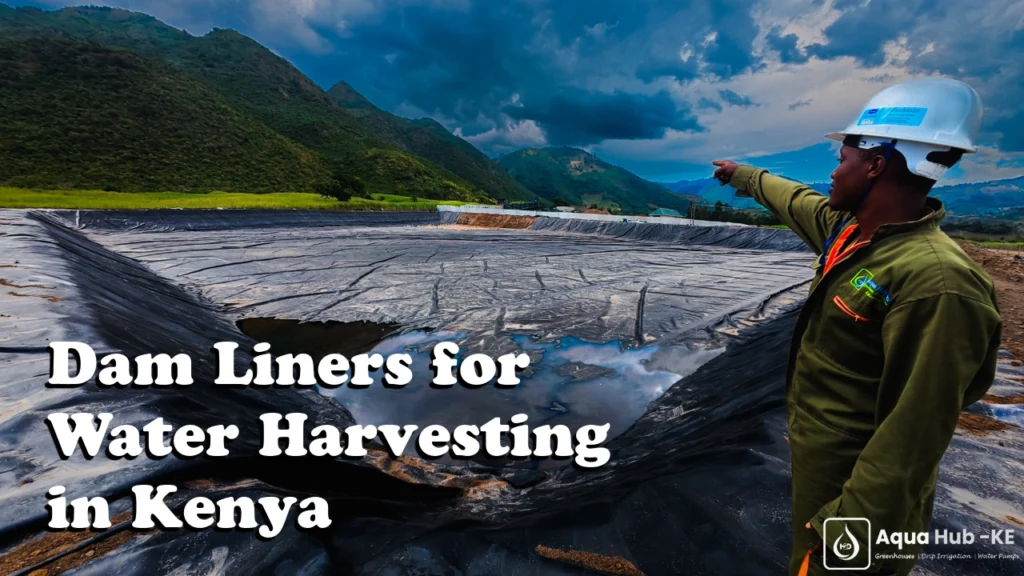
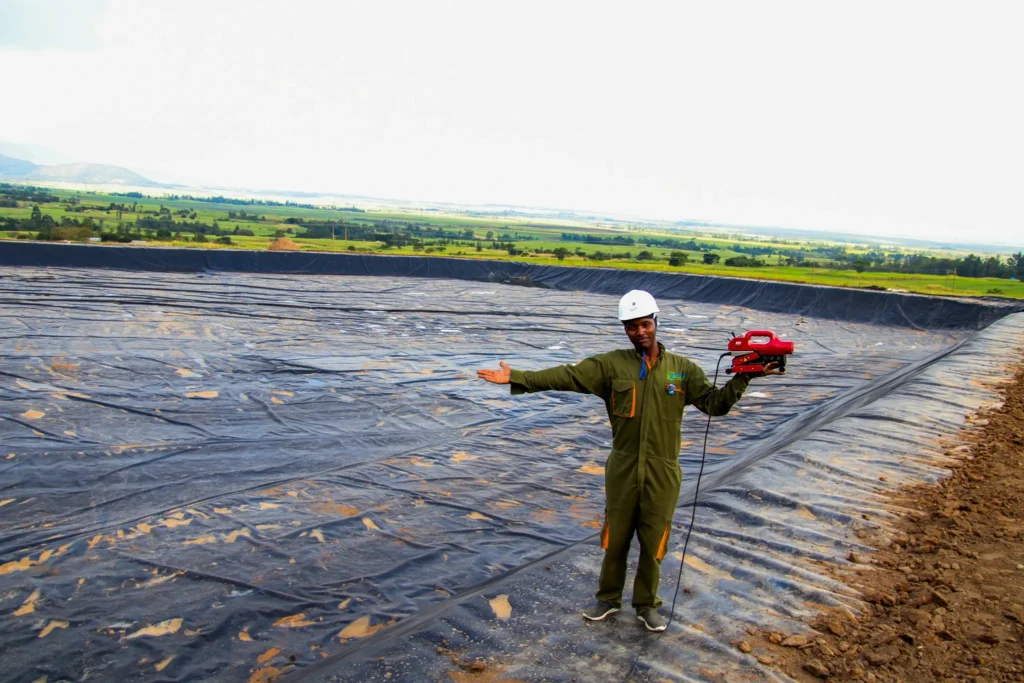
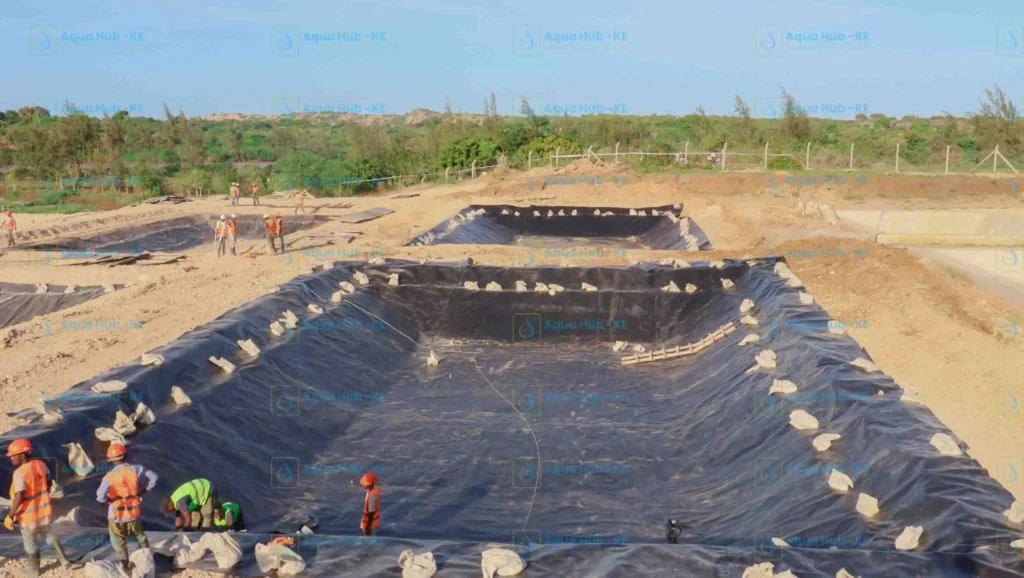
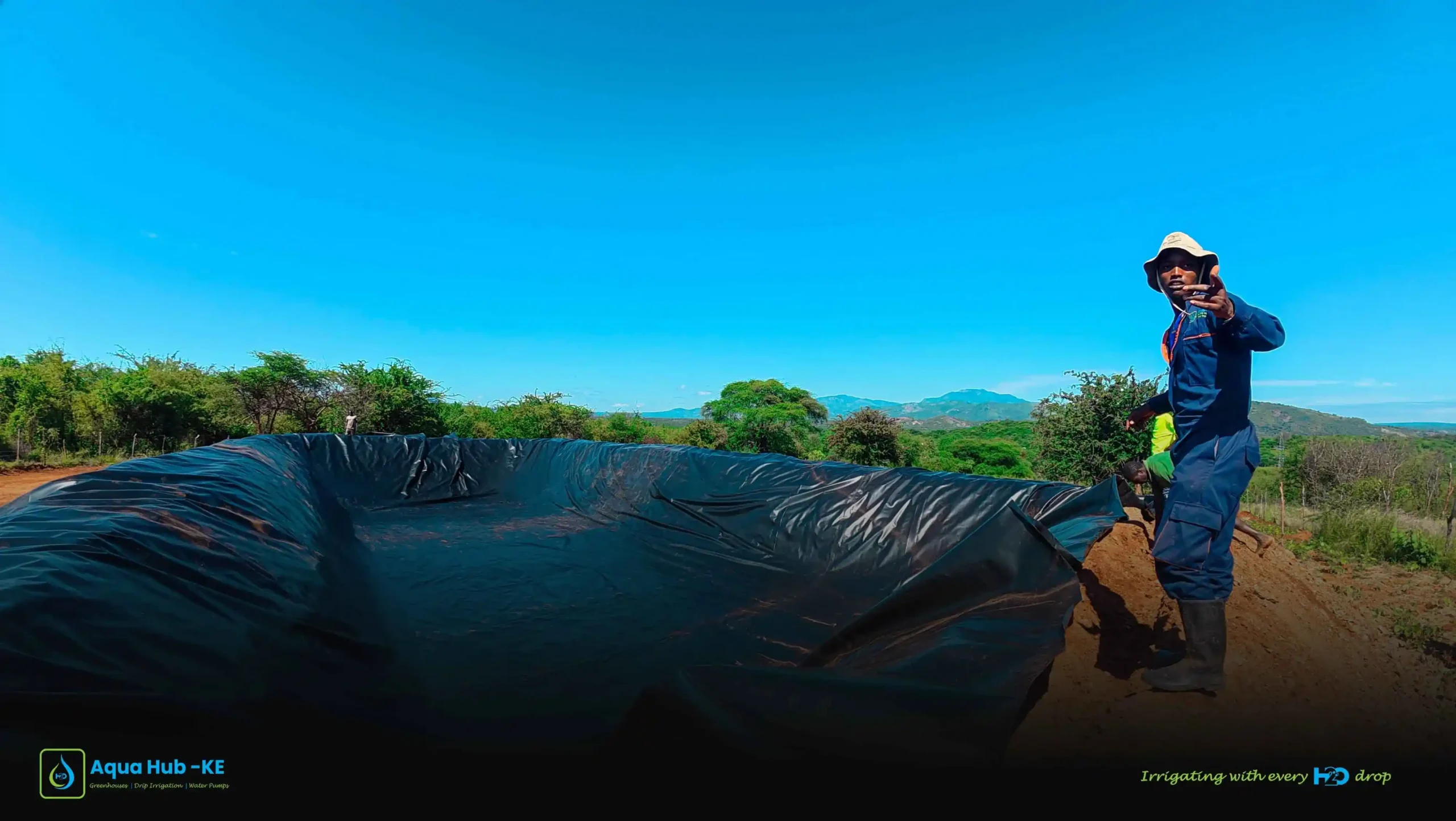
On site, Aqua Hub Kenya’s technicians fit the liner in these stages:
- To begin with, our technicians clear roots and stones from the floor and sides of the pond.
- Next, they level the surface and compact it so the sheet rests on firm ground.
- Once the surface is ready, they dig an anchor trench along the rim.
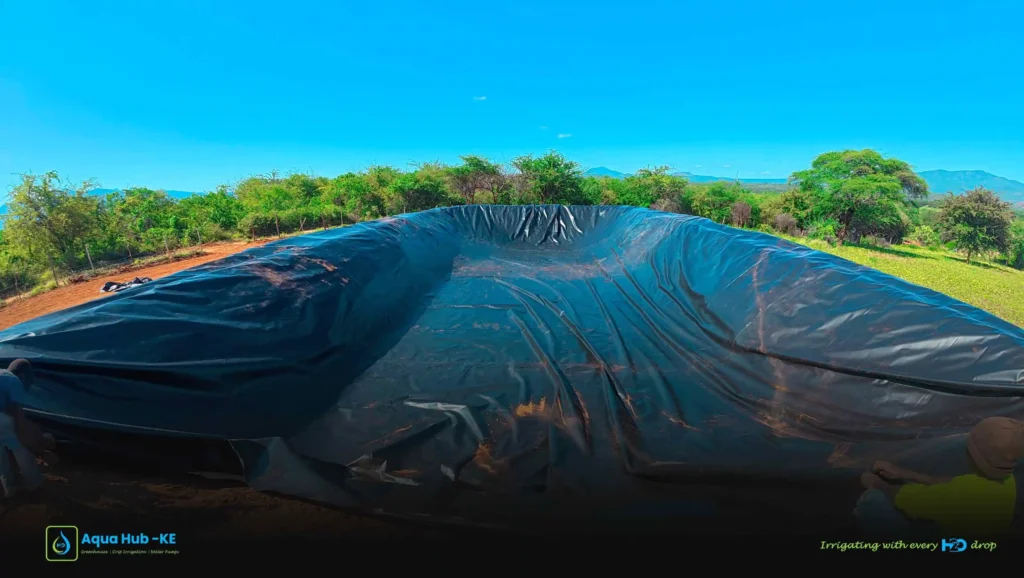
- Afterwards, they spread the liner over the pond and leave it a little loose, so it can follow the shape of the soil.
- Subsequently, they place the edges in the trench and cover them with soil.
- Finally, they inspect the liner before the pond is filled with water.
To book dam liner installation for your pond, call +254790719020 or email info@aquahubkenya.co.ke. After the work, fill the pond slowly and check the edges as the water rises. The first fill also shows whether any part of the liner needs attention.
Thickness Options from Aqua Hub Kenya
Aqua Hub Kenya’s liners come in four thicknesses: 0.3 mm, 0.5 mm, 0.75 mm and 1 mm. All four carry the same sun protection, as our page on UV-stabilized dam liners explains, so thickness does not change how the liner resists the sun. Stabilized liners last longer in open sun than liners without this protection.
Thickness therefore depends on the pond and the ground. A thicker liner suits:
- Large ponds that hold a lot of water
- Stony or rough ground
- Ponds where animals drink
- Sites where the liner will stay exposed to the sun for long periods
A thinner liner suits a small pond with a smooth, well-prepared base. If you are unsure which thickness to choose, call +254790719020 with the size of your pond, and our team will recommend one. You can also read more about pond liners on the Aqua Hub Irrigation website.
Mistakes That Cause Leaks After Dam Liner Installation
Leaks after dam liner installation usually trace back to the preparation or to the way the edges are secured. The common mistakes include:
- Leaving stones or roots under the sheet, which can puncture the liner when the pond fills
- Burying the edges in a trench that is too shallow, so the liner slips down as the water rises
- Stretching the liner tight across the pond, which strains the sheet when the water presses on it
- Letting animals walk on the exposed edges of the liner
A lined pond also has slippery sides. Therefore, fence the pond wherever children or animals can reach it, and keep a rope or a ladder nearby in case someone falls in.
Maintenance of Lined Farm Ponds
A lined pond needs little work, but it still helps to check it often. A liner stops seepage, but it does not stop evaporation, so a pond in full sun still loses some water between rains. Shade over part of the water surface reduces this loss, and a deeper pond loses less water to the sun than a shallow one with the same volume. A simple routine for the pond includes:
- Walking the rim after heavy rain to check that the buried edges are still covered with soil
- Removing branches and other debris from the water before they settle on the liner
- Keeping animals away from the edges
- Watching the water level, because a sudden drop between rains points to a leak
You can use the stored water for crops through irrigation systems such as drip lines. Aqua Hub Kenya’s website Greenhouse in Kenya has a page on drip irrigation kits that explains the options for different farm sizes.
Why Choose Aqua Hub Kenya for Dam Liner Installation?
Aqua Hub Kenya sells the liner and sends technicians to fit it, so the same company answers for both the material and the work. Moreover, the team checks the measurements of your pond before you order, which helps you avoid buying too little or too much liner.
Our guide to dam and pond liners explains the steps from measuring the site to testing for leaks. You can also ask for advice on thickness before you buy. Farmers can call +254790719020 to discuss the size of your pond and the exact price of the job.
Frequently Asked Questions
How much does dam liner installation cost?
Dam liner installation starts with the liner, which costs KES 210 to KES 430 per square metre depending on thickness. The installation charge depends on the size of the pond, so call +254790719020 for a quote.
How do I prepare a pond floor for a liner?
Clear all roots and stones from the floor and sides of the pond. Then level the surface and compact it so the soil is firm. Finally, dig a trench along the rim where the edges of the liner will be buried.
Which liner thickness suits a farm water pond?
A farm water pond with a smooth base and a small volume of water can use a thinner liner. A larger pond or stony ground requires a thicker one. All four thicknesses carry the same sun protection, so the choice depends on strength.
Can I fit a liner myself?
You can fit a liner yourself on a small pond, but a mistake in preparing the base or burying the edges can cause leaks.
How does a liner stay in place at the edges?
A liner stays in place because its edges are buried in an anchor trench along the rim and covered with soil.
Is the liner safe in direct sunlight?
UV-stabilized liners are made for ponds in open sun. The sun protection is the same in every thickness.
How do I check a lined pond for leaks?
Fill the pond slowly and mark the water level on the side with a stake. Check the mark over the next few days and see whether the level drops faster than evaporation would explain. A steady drop points to a leak, so inspect the edges and the floor.
Can animals drink from a lined pond?
Animals can drink from a lined pond, but fence the edges so they do not walk on the liner or slip into the water.
Where can I read more about liners from Aqua Hub Kenya?
You can read about the thicknesses and the installation steps in the Aqua Hub Kenya guide to dam and pond liners. The Aqua Hub Irrigation website also has a page on pond liners.
Final Thoughts from Aqua Hub Kenya
A liner turns a leaking pond into one that holds water through the dry months, and the result depends on careful preparation and a buried anchor trench. A thicker liner suits larger or rougher ponds, while a thinner one suits small ponds with a smooth base. Regular checks of the edges and the water level keep the pond in good condition.
Liners at Aqua Hub Kenya cost KES 210 to KES 430 per square metre, depending on thickness, and the installation charge depends on your pond. Call +254790719020 or email info@aquahubkenya.co.ke to book dam liner installation and to get the exact price for your job.