
Blog
Dam Liners for Water Harvesting in Kenya
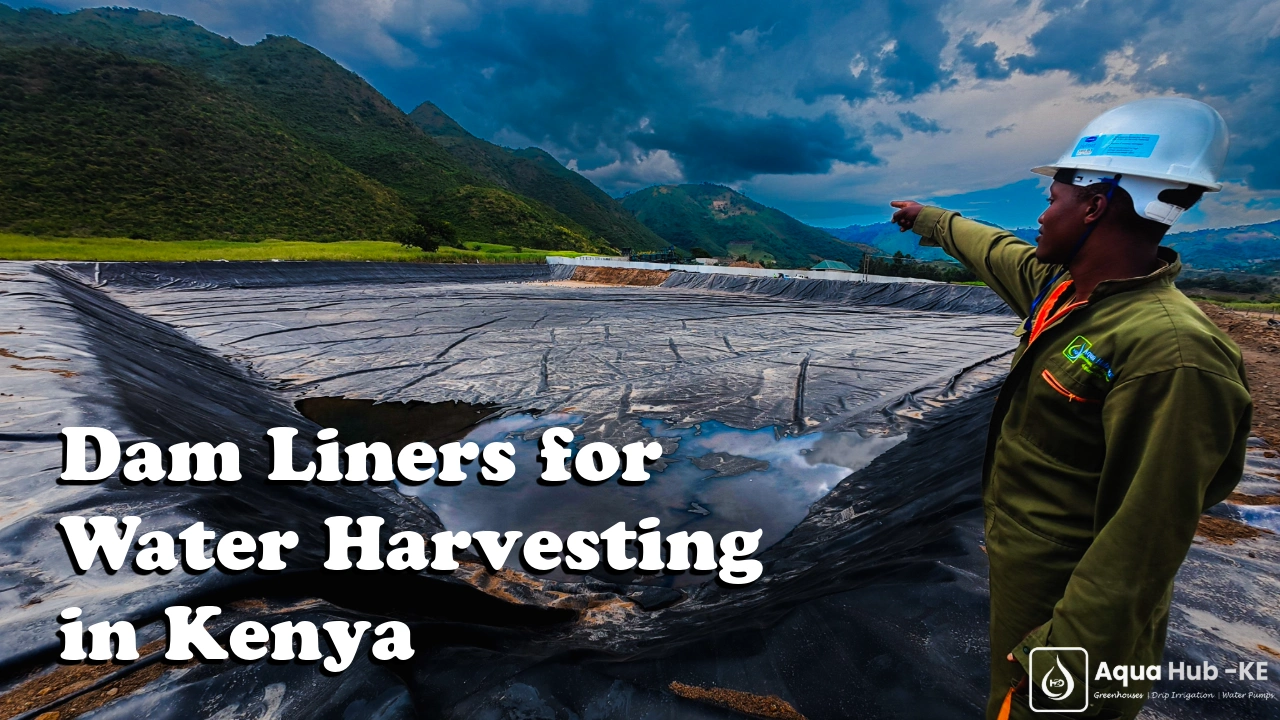
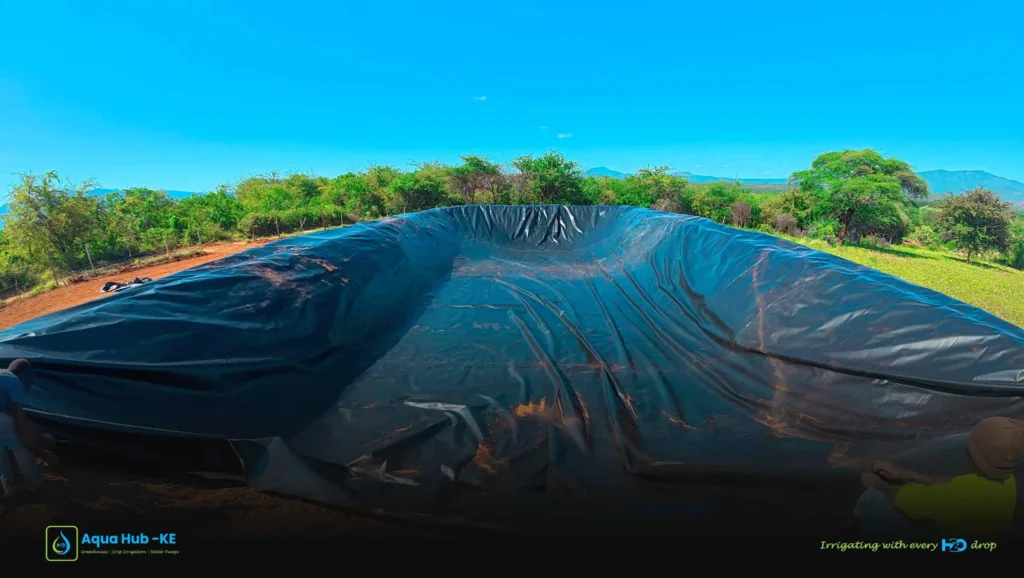
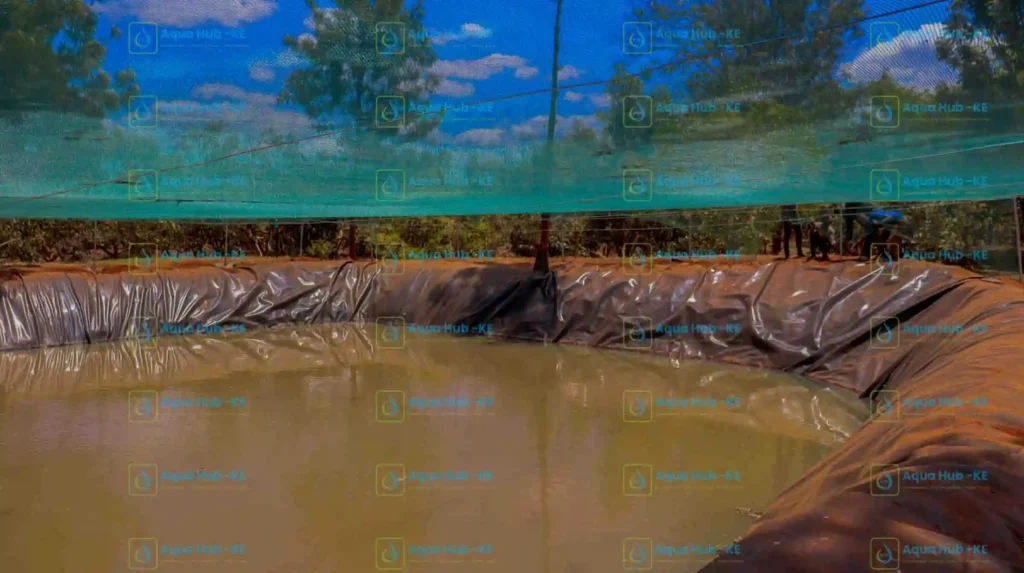
Dam liners for water harvesting in Kenya are one of the most practical investments a farmer can make. They turn a simple earth dam or dug pond into a reliable, long-lasting water source. They can hold water through dry seasons instead of losing it to seepage and evaporation.
At Aqua Hub Kenya, we supply dam liners in four thickness, priced from KES 190 per square metre. We supply and install across Kenya, from small farm dams to large commercial water reservoirs.
Call Aqua Hub Kenya via telephone on 0790719020 or email info@aquahubkenya.co.ke to place an order or get a quote for your project.
What Are Dam Liners for Water Harvesting?
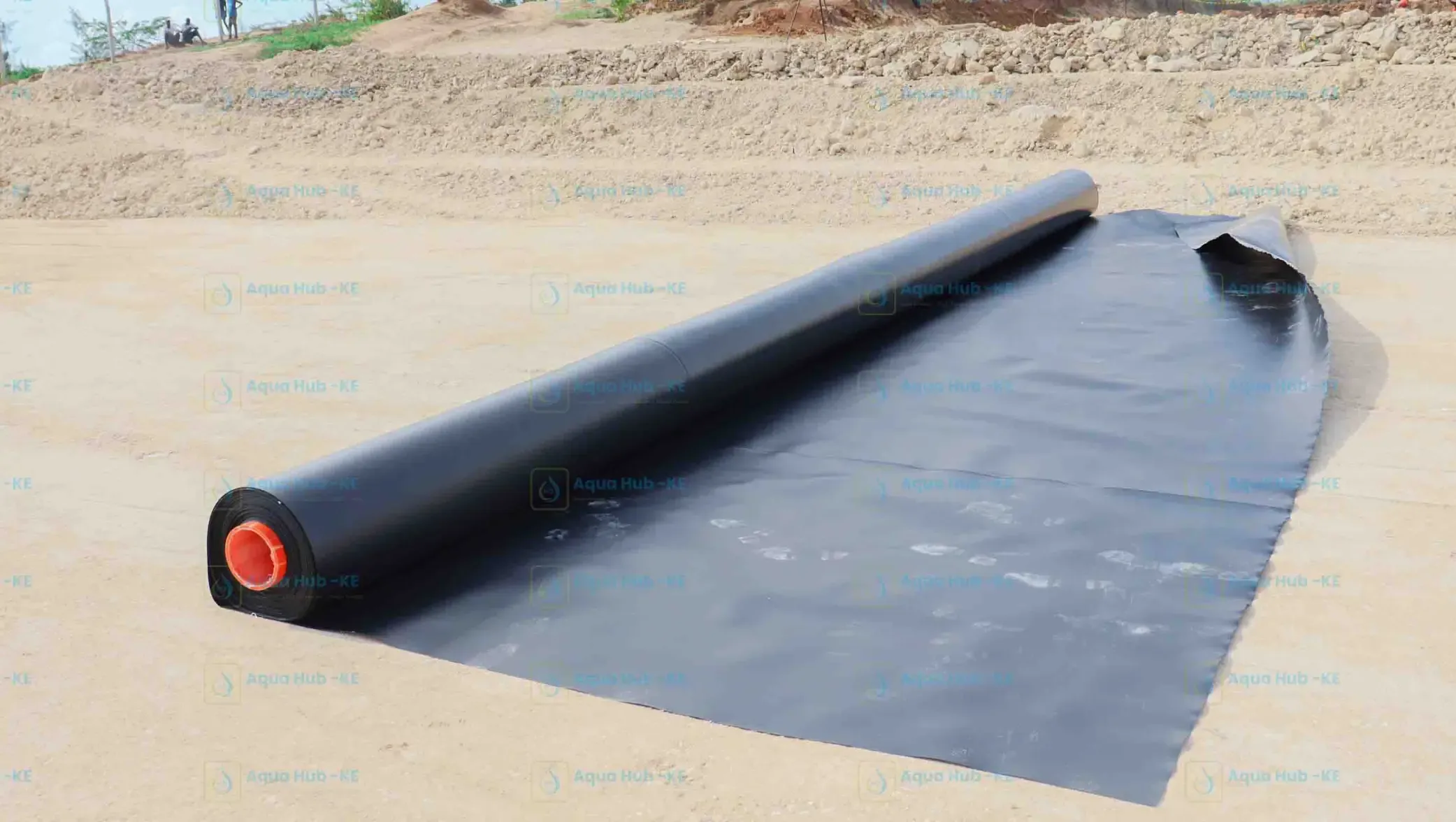
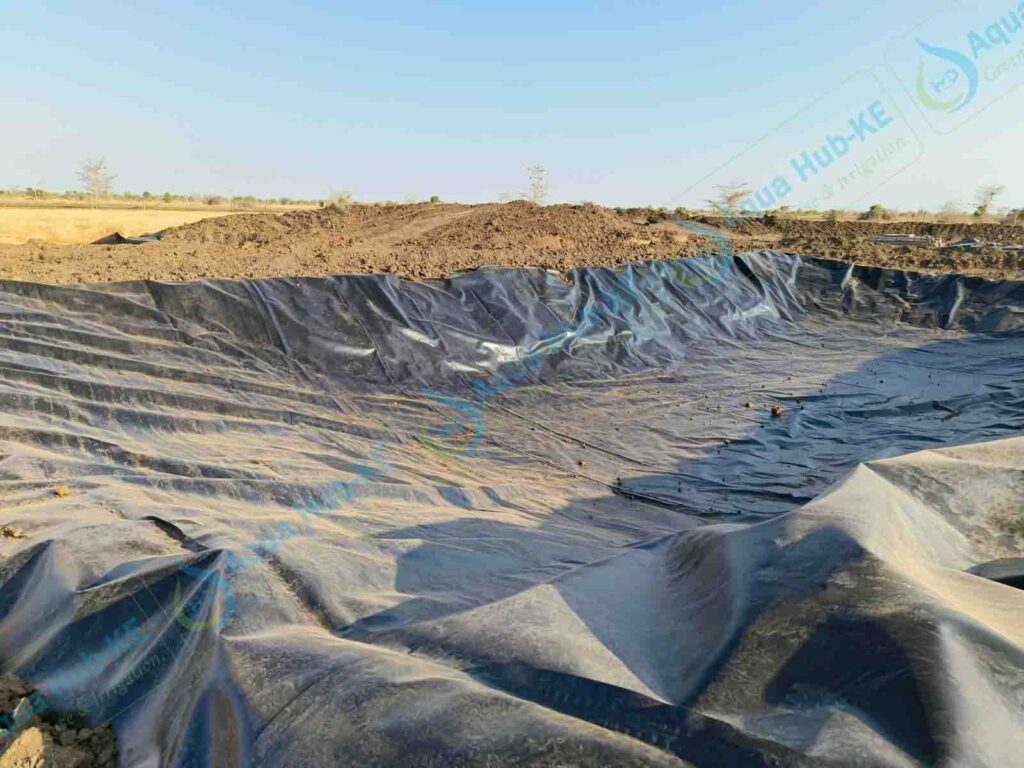
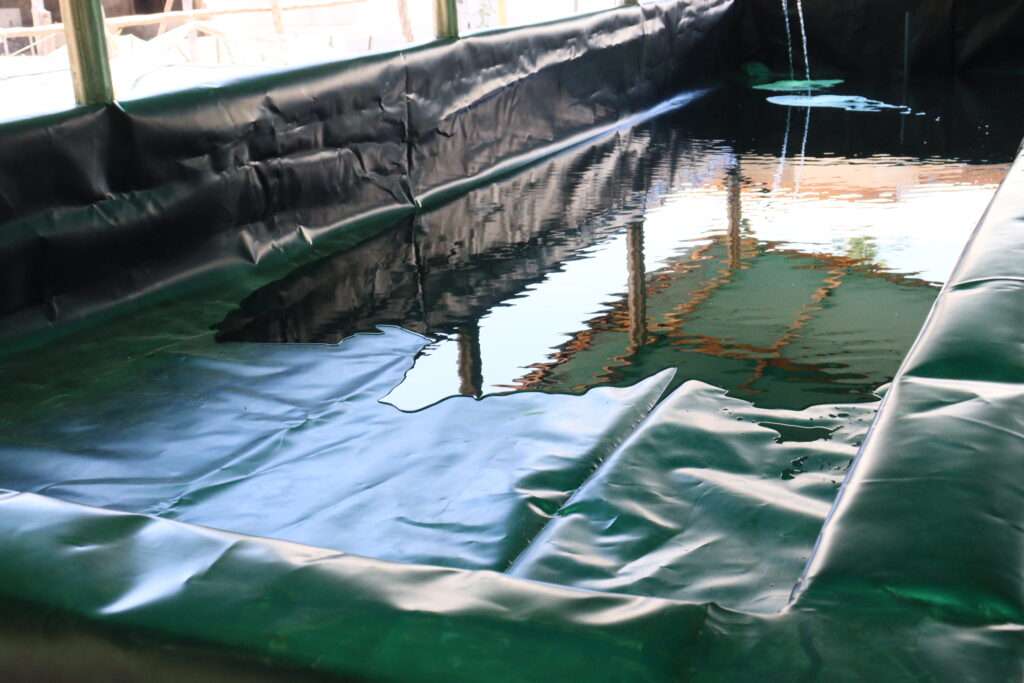
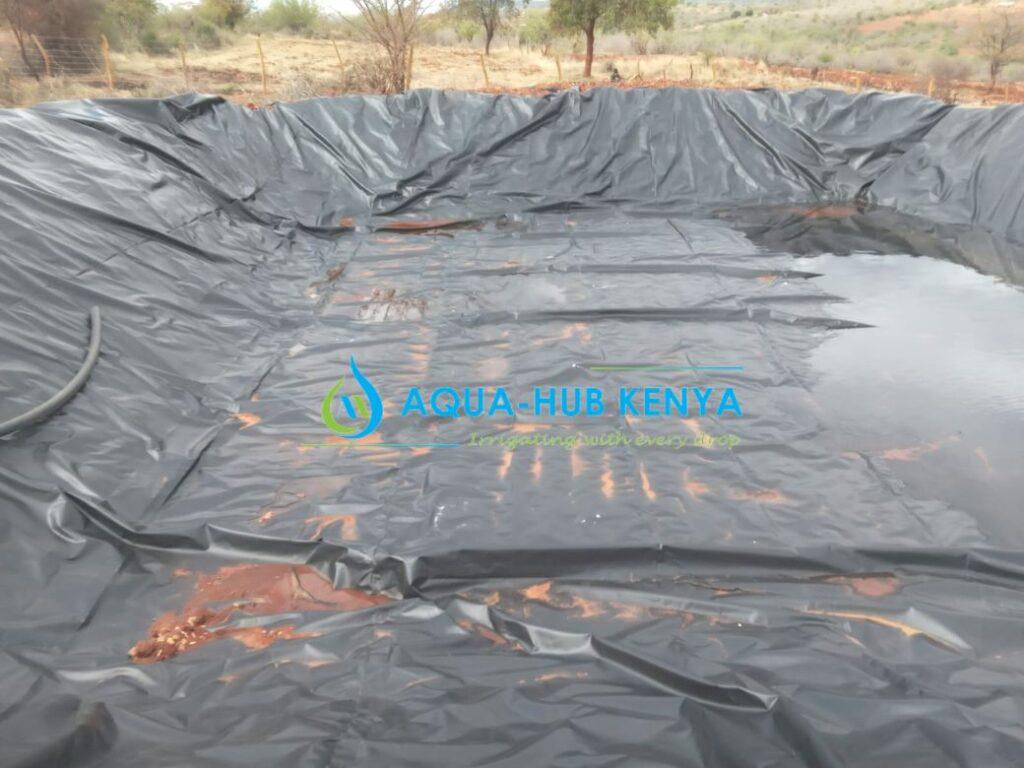
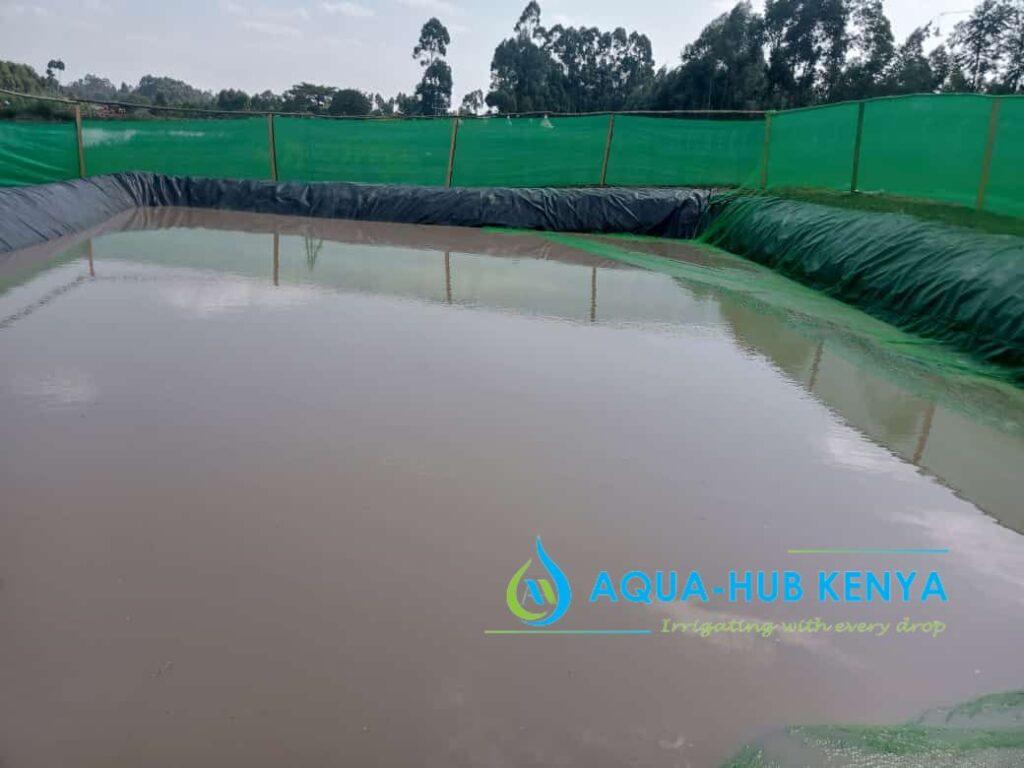
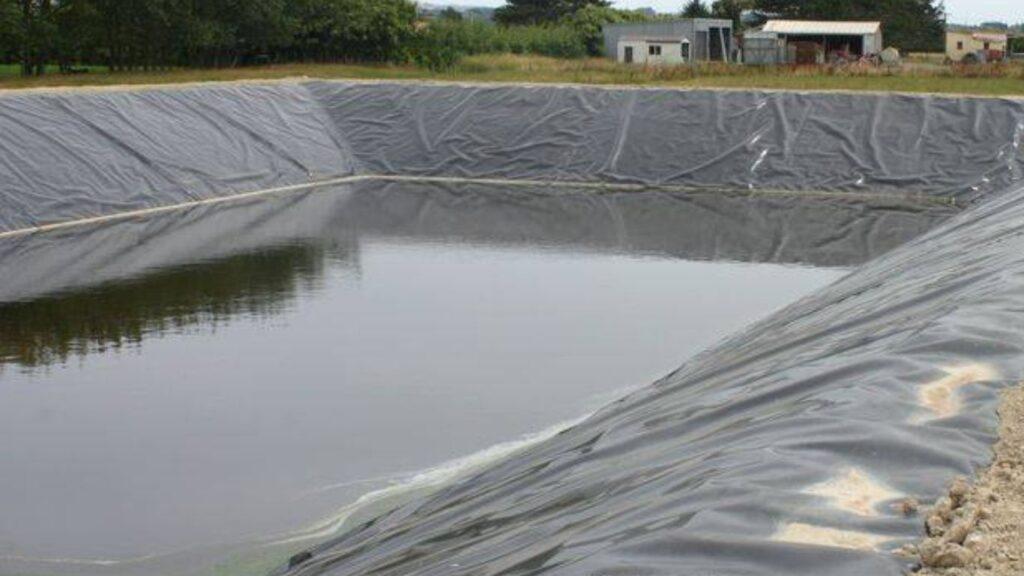
A dam liner is a thick, flexible sheet made from High-Density Polyethylene (HDPE). It is laid inside a dam, pond, or reservoir to create a waterproof barrier between the stored water and the surrounding soil.
Without a liner, water seeps into the ground continuously. In Kenya’s sandy and murram soils, an unlined dam can lose 30 to 60 percent of its stored water to seepage within days of filling.Therefore, a properly installed dam liner for water harvesting is necessary as it reduces those losses to near zero.
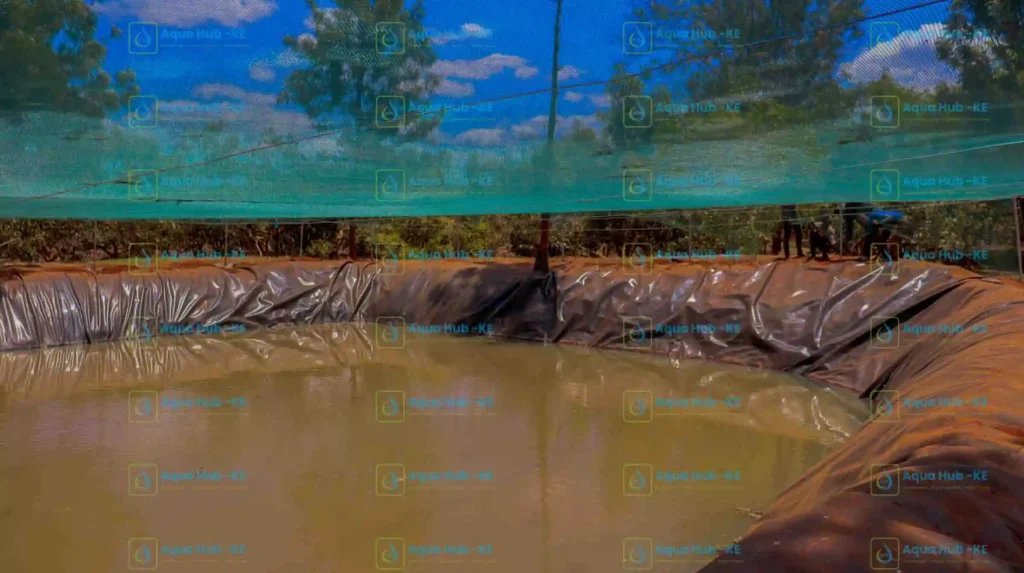
Dam liners are UV-treated, meaning they resist breakdown from prolonged sun exposure. They are black, which also helps reduce algae growth by blocking light from reaching the water below the surface. And they are non-toxic, making them safe for irrigation water, livestock drinking water, and aquaculture.
Water Sources You Can Harvest with a Dam Liner
Dam liners for water harvesting in Kenya work with most water sources, such as:
- Rain water harvesting – this is the most common application. Firstly, farmers excavate a dam on a low-lying part of the land. Then, rain water naturally collects during the rainy season. Consequently, the dam is filled during the rains, then used for irrigation through the dry season.
- Rivers and streams – farmers near rivers or seasonal streams can use dam liners for water harvesting from these sources. Initially, water is diverted or pumped frmo the river during high-flow periods into the lined dam. Next, it is stored for use when river levels drop. This approach works particularly well in areas with seasonal rivers.
- Borehole and spring water storage – farmers with boreholes or natural springs sometimes use a lined dam as a holdign reservoir. The borehole or spring pumps water into the dam and a continuous rate. Then, the farmer can then use the water in the reservoir for irrigation. This is more effecient than pumping directly to the field as a smaller pump can fill the dam slowly and the water is used later for irrigation.
Dam Liner Thickness Guide for Water Harvesting in Kenya
Choosing the right thickness for your dam liner depends on the size of your project. Aqua Hub Kenya supplies four thickness options.
| Thickness | Price per m² | Best For | Lifespan |
| 0.3mm (300 microns) | KES 190 | Small dams up to 200m² on flat, smooth surfaces free of stones | 5 to 10 years |
| 0.5mm (500 microns) | KES 215 | Medium dams of 200 to 1,000m² with slightly rough or murram surfaces | 10 to 15 years |
| 0.75mm (750 microns) | KES 295 | Large dams over 200m² where the surface has rocks or stones | 15 to 20 years |
| 1mm (1,000 microns) | KES 340 | Any size project on rough, stony, or rocky ground | 20 to 30 years |
Welding costs for joining liner sheets are seperate and depend on the size of your project. To get an estimate on what the total cost of your dam liner installation will be, call Aqua Hub Kenya on 0790719020.
How to Calculate the Size of Dam Liner You Need
The liner needs to cover the full base and all four sides of your dam. Additionally, the dam needs extra material to anchor into the banks at the top. A simple way to calculate the liner dimensions is as follows:
- First, take the length of the dam (L)
- Next, take the width of the dam (W)
- Then, take the depth of the dam (D)
- Finally, calculate the liner size using the formula Length = L + (2*D) + 1 and Width = W + (2*D) + 1
For dams with irregular shapes or cylindrical tanks, the calculation changes. Call Aqua Hub Kenya via +254790719020 and our technician can walk you through how to get an accurate sizing for your dam.
How Dam Liners for Water Harvesting are Installed
Site Preparation
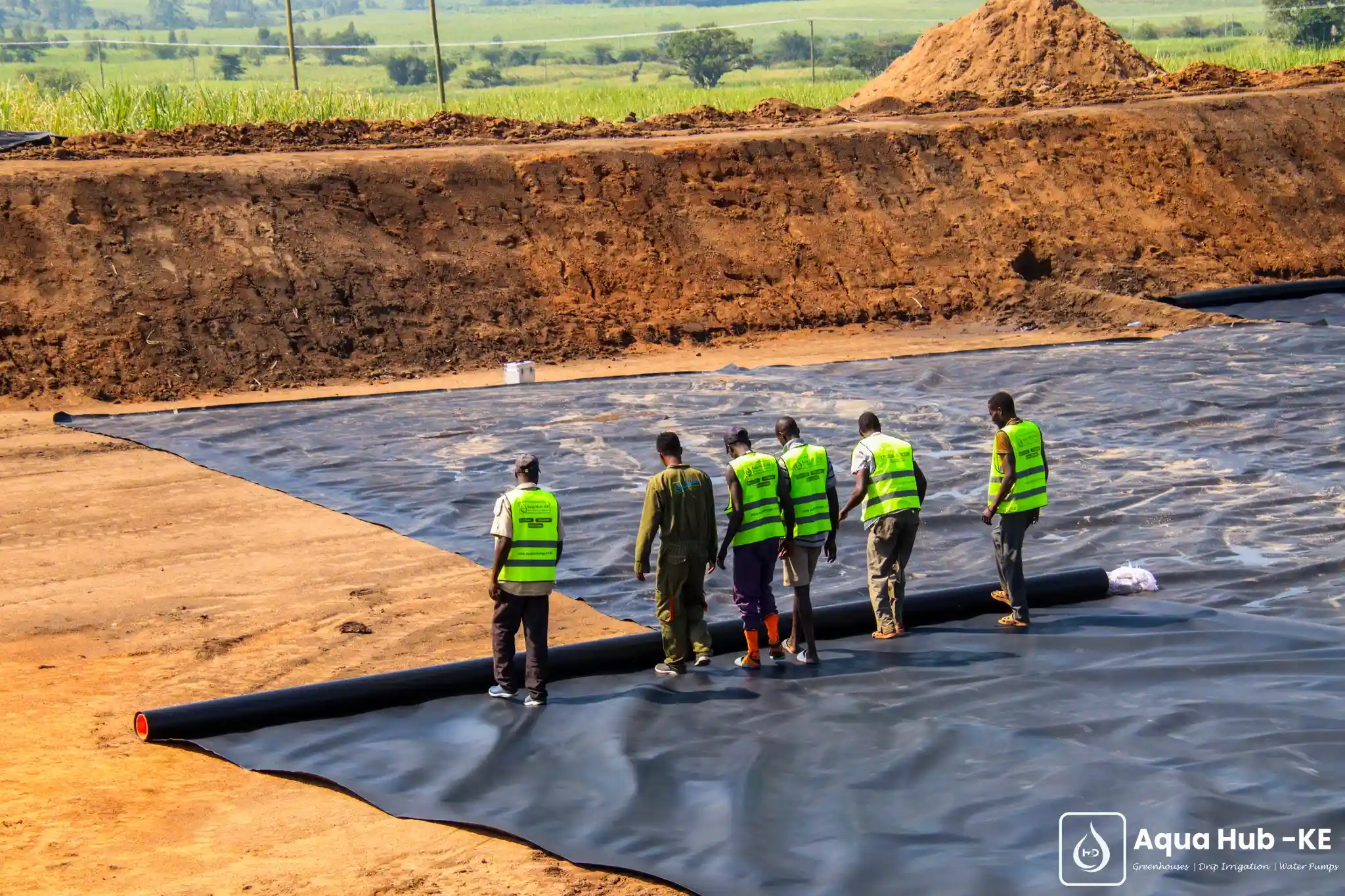
The dam excavation must be complete before the liner goes in. Afterwards, the base and sides should be as smooth as possible. Then, remove any stones, roots or sharp objects that could puncture the liner from below.
Laying the Liner
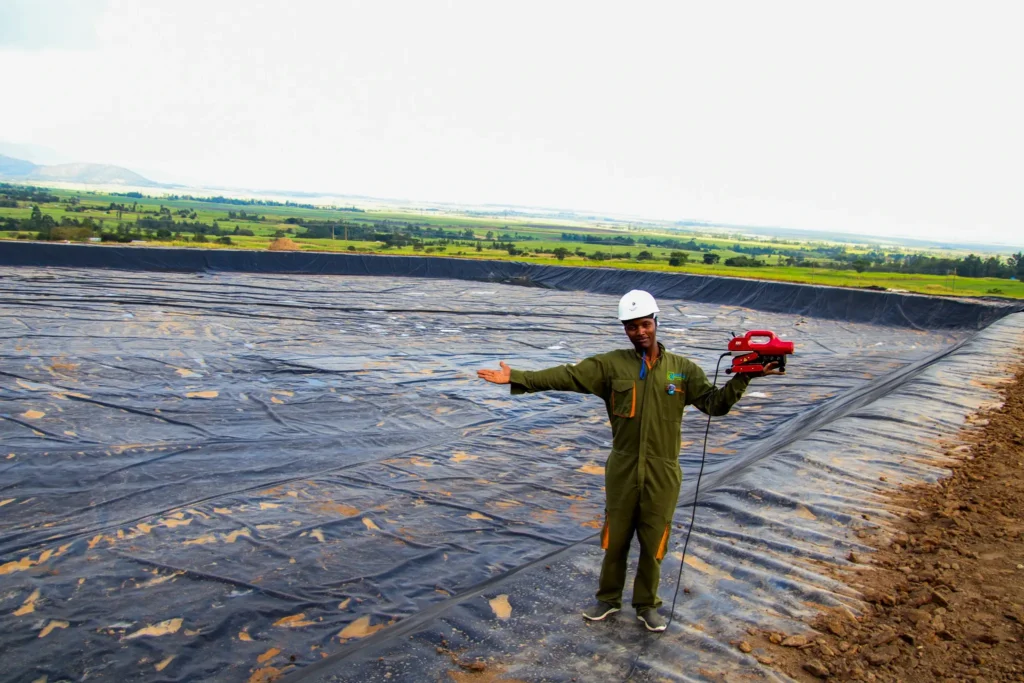
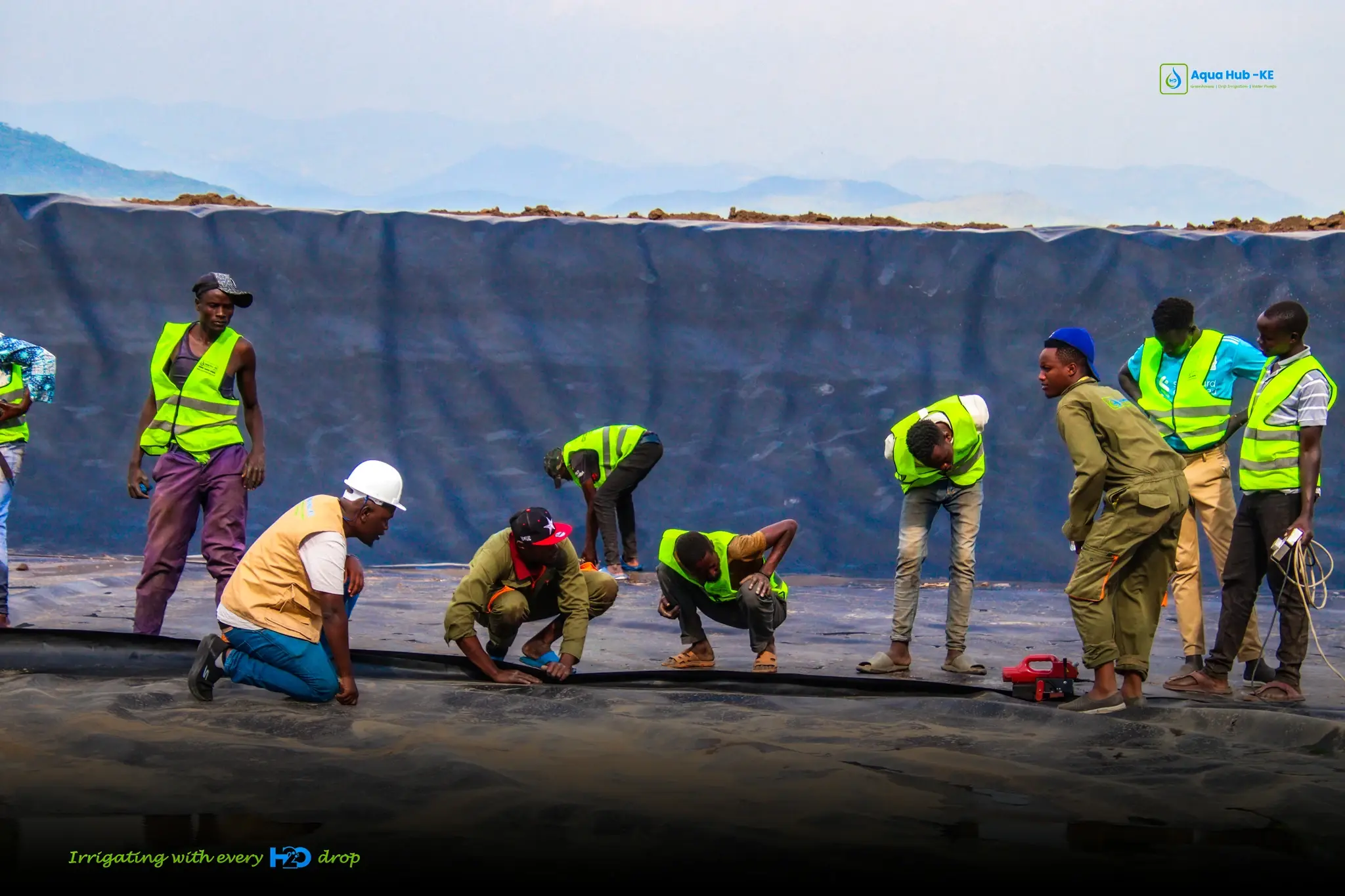
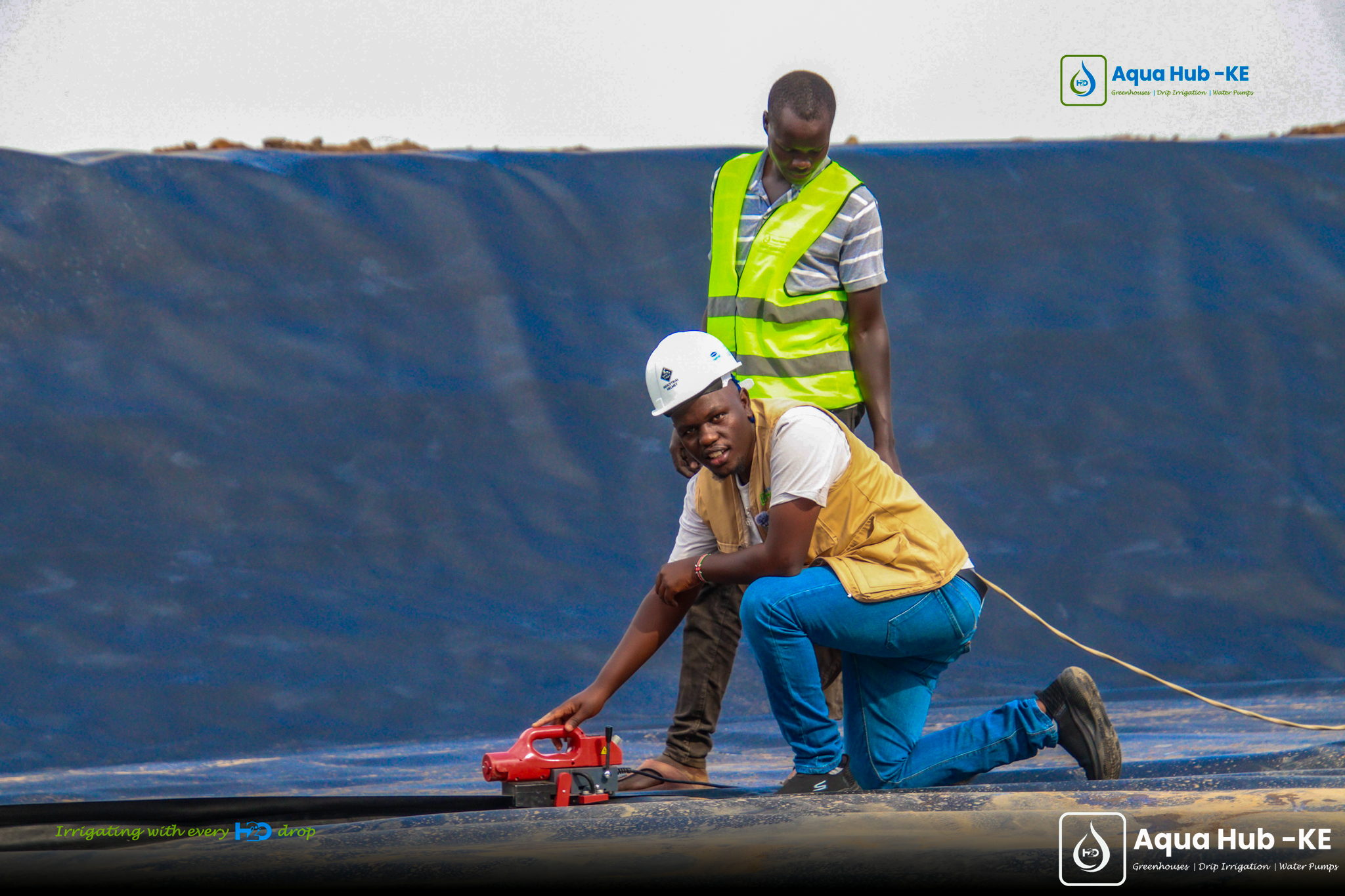
After the site has been properly prepared, the liner sheets are rolled out and positioned inside the dam. On larger projects, multiple sheets are used and welded together on-site. This is done using a hot-wedge welding machine.
Anchoring the Edges
Thereafter, our team will pull the edges of the liner and anchor it into a trench dug around the top perimeter. The trench is typically 30 to 50 centimetres deep. Finally, the soil is backfilled over the liner to hold it in place.
Filing and Inspection
Once anchored, the dam can be filled. Initially, we will fill it slowly to check all seams and the liner surface for weak points or leaks. A properly installed liner should sit flat against the base and sides without ballooning or lifing.
Maintaining a Water Harvesting Dam Liner in Kenya
Dam liners for water harvesting in Kenya require very little maintenance once installed. However, there are a few practices that can extend their lifespan such as:
- Keep the edges anchored, If any part of the liner starts pulling away from the anchor trench, repair it before the next filling cycle.
- Avoid driving vehicles or heavy machinery near the dam banks.
- Remove sharp debris from around the dam perimeter regularly.
- For small punctures or tears, you can call our professional team to fix it using +254790719020. They will use special HDPE liner patch kits to repair the section. Therefore, you do not have to fully replace the liner.
Connecting a Lined Dam to Your Irrigation System
A lined water harvesting dam is most useful when it feeds directly into an irrigation system. The most common setup in Kenya is a pump drawing water from the lined dam and feeding it into an irrigation system.
If you are planning to harvest water into a lined dam and connect it to an irrigation system, call Aqua Hub Kenya. We can supply and install the full setup including irrigation systems (drip irrigation and sprinklers) in addition to pumps.
Who Uses Dam Liners for Water Harvesting in Kenya
- Vegetable and Horticultural Farmers – farmers growing tomatoes, capsicum, onions, kale and other vegetables where there is unreliable rainfall benefit from dam liners. This is because a well-sized dam can allow them to extend the growing season.
- Greenhouse Farmers – greenhouse irrigation runs on a consistent daily schedule. A dam can provide a reliable water source regardless of whether it has rained recently. Therefore, many greenhouse farmers in Kenya now combine a dam liner for water harvesting with greenhouse farming.
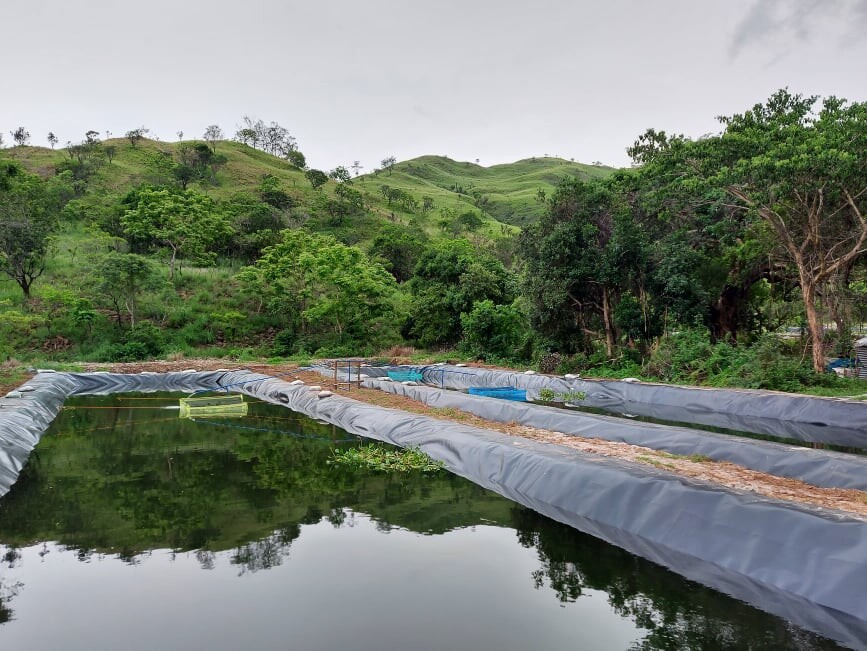
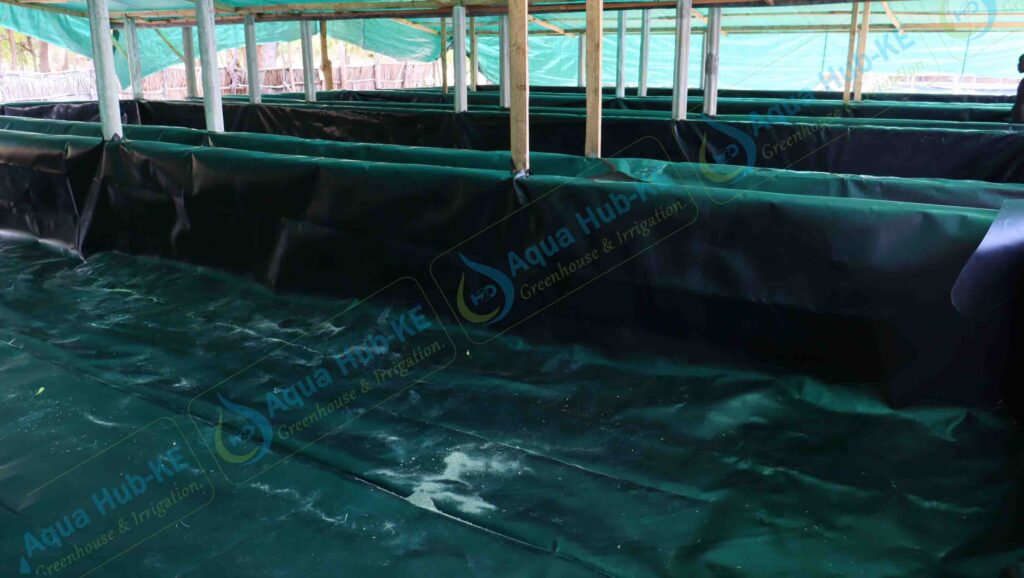
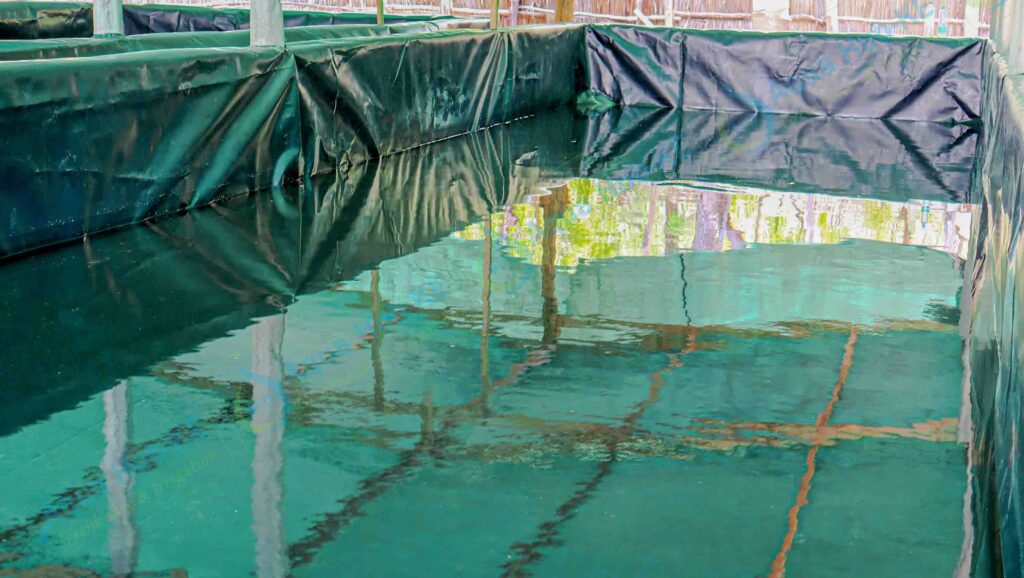
- Fish farmers – fish pond liners use the same HDPE material as dam liners. However, they are specifically tested for aquaculture safety. Farmers setting up fish farming systems use Aqua Hub Kenya’s fish pond liners to ensure their pond is waterproof and their fish are safe.
- Livestock Farmers – animal husbandry needs large volumes of water daily. A dam can provide a relaible water source for dry seasons without depending on a borehole.
Buy Dam Liners for Water Harvesting From Aqua Hub Kenya
Aqua Hub Kenya supplies and installs dam liners for water harvesting in Kenya countrywide. We have the best dam liners for farmers looking into water harvesting for crops and fish farming. We also provide professional installation and guidance on how to select the best liner for your needs.
You can call Aqua Hub Kenya on +254790719020 or email info@aquahubkenya.co.ke to learn more about our available dam liner thicknesses and cost of installation.
Frequently Asked Questions
What is the cost of a dam liner in Kenya?
The cost of dam liner in Kenya ranges from KES 190 to KES 340 depending on the thickness of the liner
What is a dam liner?
A dam liner is a waterproof sheet that is placed inside a water reservoir to prevent water from seeping into the soil thus conserving it.
How to calculate dam liner size?
To calculate a dam liner size, you must follow the formula below
- First, take the length of the dam (L)
- Next, take the width of the dam (W)
- Then, take the depth of the dam (D)
- Finally, calculate the liner size using the formula Length = L + (2*D) + 1 and Width = W + (2*D) + 1
Where to buy dam liners in Kenya?
You can buy dam liners in Kenya by calling Aqua Hub Kenya at +254790719020 or emailing info@aquahubkenya.co.ke.
How long do dam liners last?
A dam liner can last anywhere between 10 to over 30 years depending on its quality
Can I put a new pond liner over an old one?
Yes, you can put a new pond liner over an old one, but you must cut large holes or slits in the bottom and sides of the old liner first.