
Blog
HDPE dam liner installation by Aqua Hub Kenya
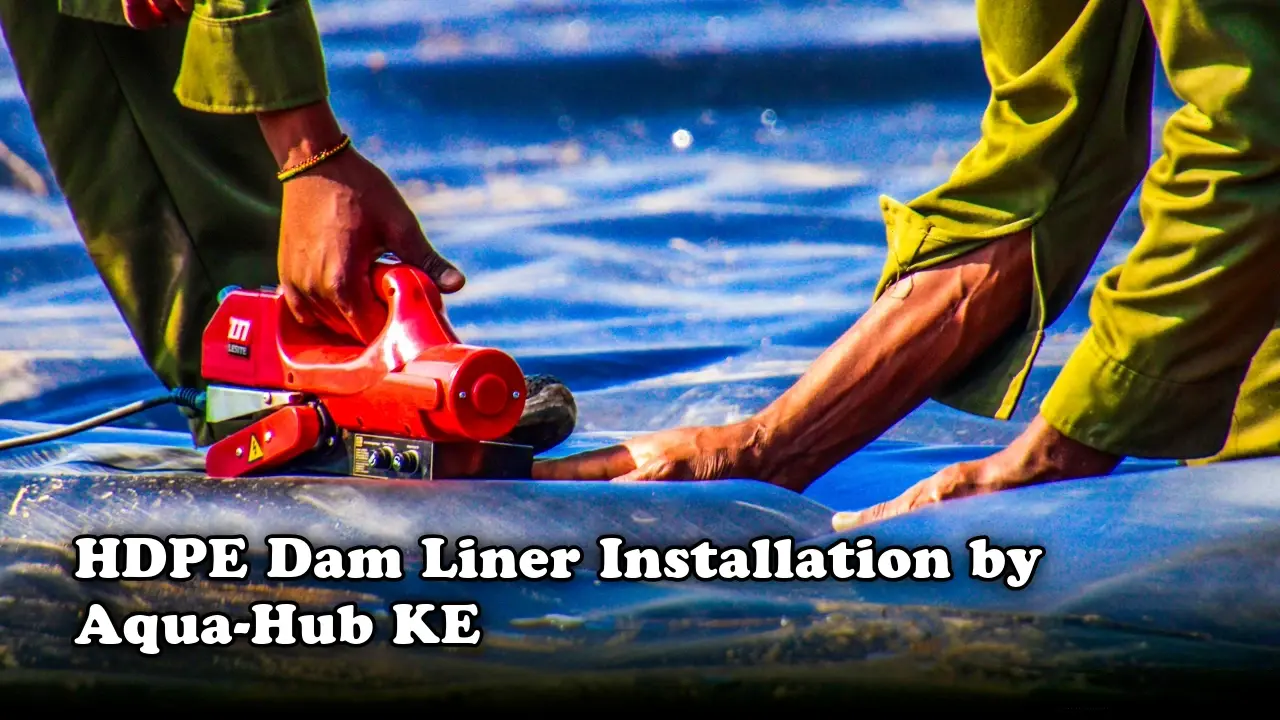
HDPE dam liner installation from Aqua Hub Kenya starts at KES 225 per square metre for a 0.3 mm liner, which covers both the liner at KES 210 and the installation at KES 15.
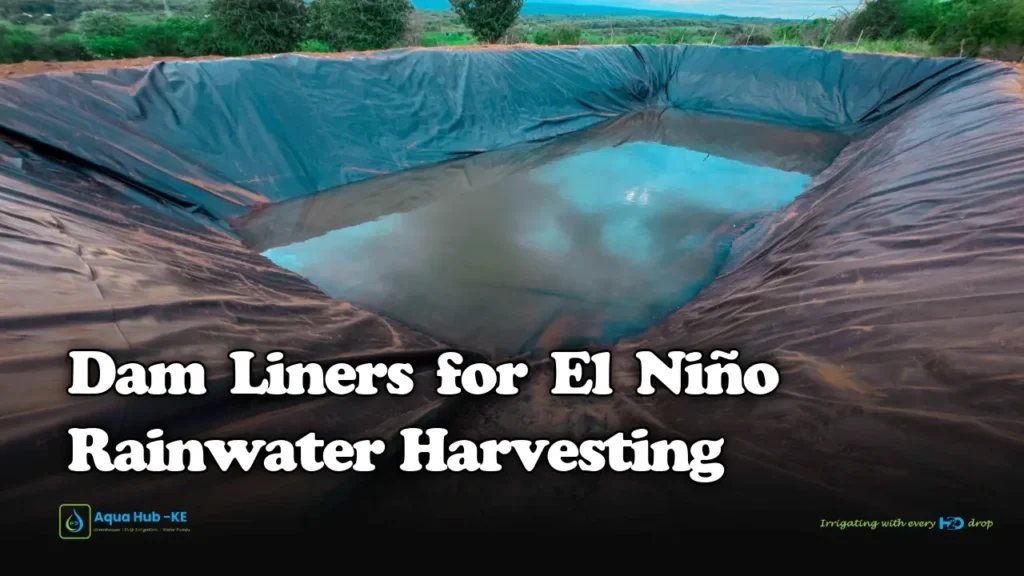
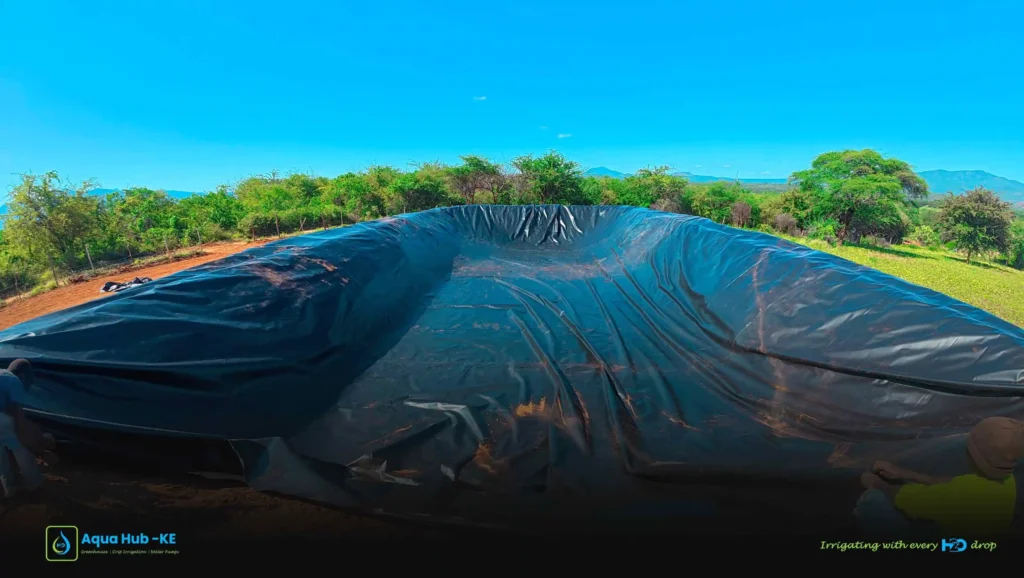
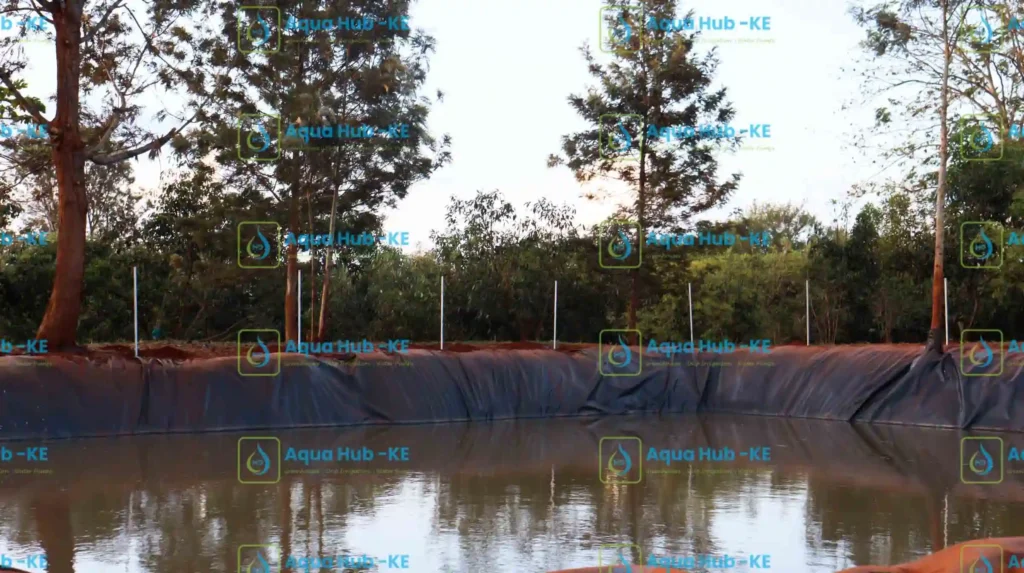
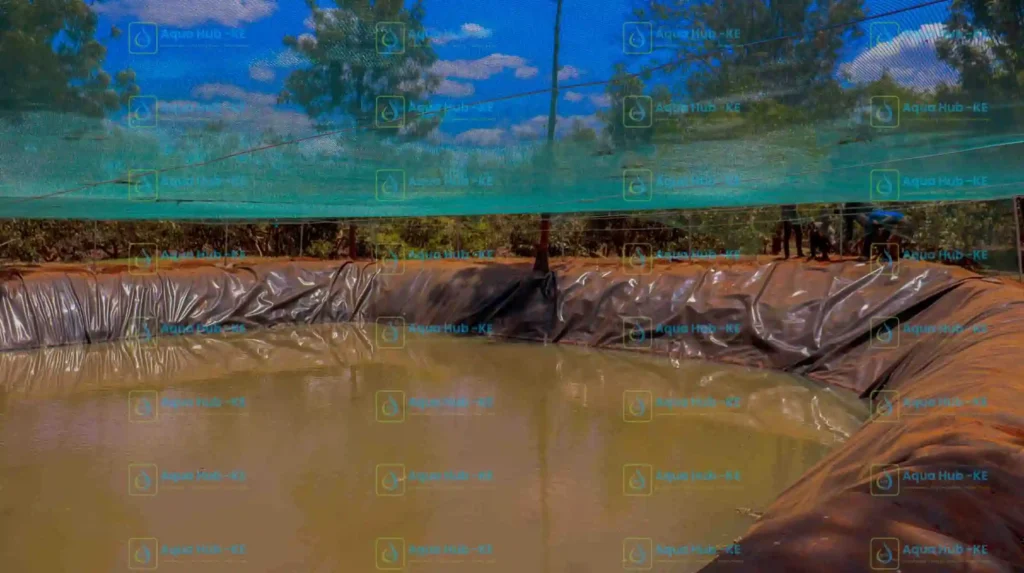
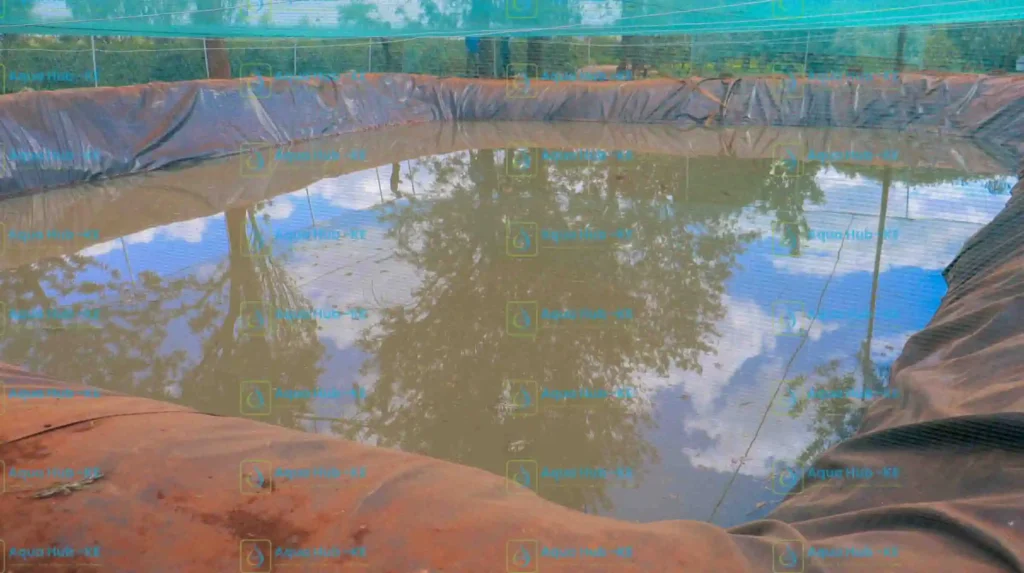
A dam that loses water through the soil wastes the rain or the pumped water you stored in it. An HDPE liner covers the floor and walls of the dam and stops water from seeping away. Proper HDPE dam liner installation also matters, because a poorly laid or weakly joined liner can leak even when the material is good.
Aqua Hub Kenya supplies HDPE dam liners in four thicknesses and installs them on your farm. Share the size of your dam by emailing info@aquahubkenya.co.ke or calling +254790719020, and our team will recommend a liner.
What does HDPE dam liner installation cost at Aqua Hub Kenya?
The price depends on the thickness of the liner and the area it must cover. The table below shows the cost per square metre for each thickness, with the liner and the installation priced separately:
| Liner thickness | Liner per square metre | Installation per square metre | Total per square metre |
|---|---|---|---|
| 0.3 mm | KES 210 | KES 15 | KES 225 |
| 0.5 mm | KES 240 | KES 25 | KES 265 |
| 0.75 mm | KES 340 | KES 30 | KES 370 |
| 1 mm | KES 430 | KES 50 | KES 480 |
Your total depends on how many square metres of liner your dam needs. As an example, 500 square metres of 0.5 mm liner, installed, costs KES 132,500. For an exact quote, send the dimensions of your dam to info@aquahubkenya.co.ke or call +254790719020.
Why farmers line their dams with HDPE from Aqua Hub Kenya
Soil in many areas lets water through, especially sand and loose ground. A dam dug in such soil may hold water for only a short time. However, a liner closes the gap between the water and the soil. Farmers choose HDPE liners for these reasons:
- Water stays in the dam instead of seeping into the ground
- You can build the dam in soil that would otherwise not hold water
- Stored water lasts longer through the dry season
- The material is flexible, so it follows the shape of the dam
Where lined dams are used
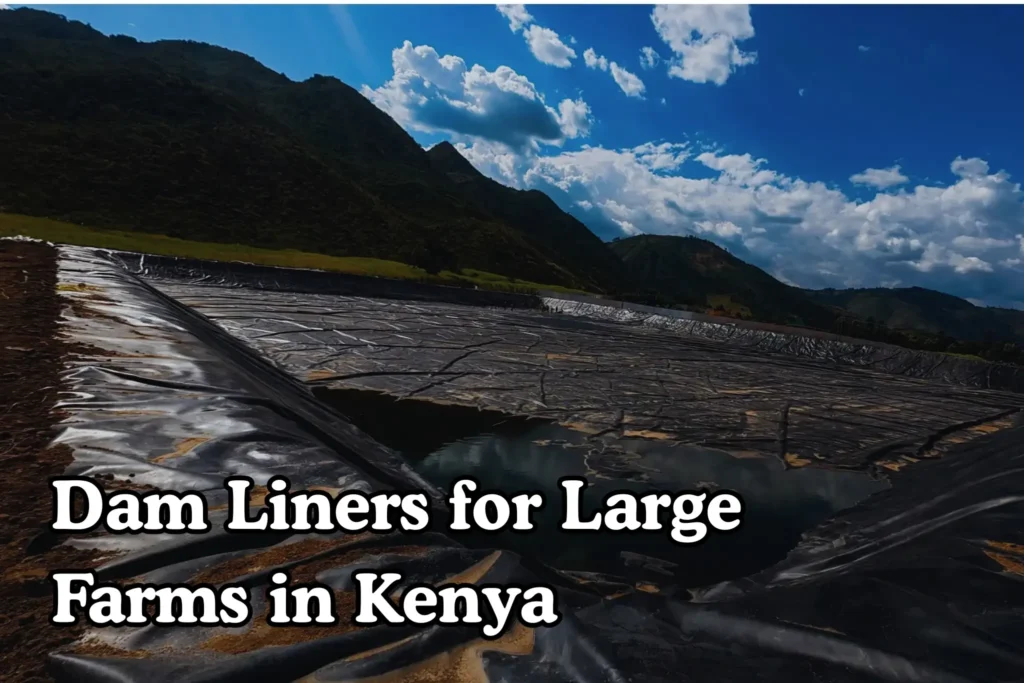
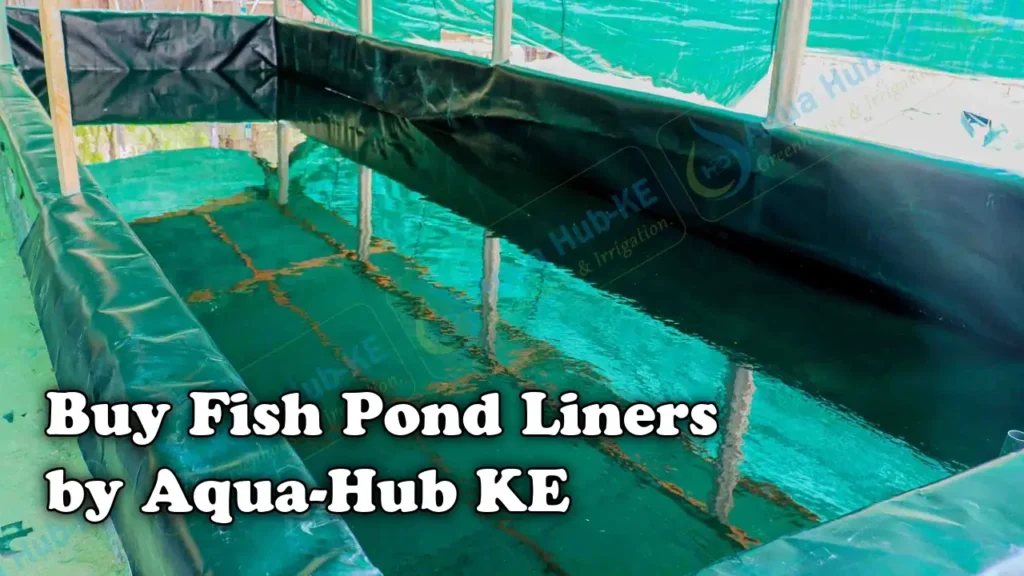
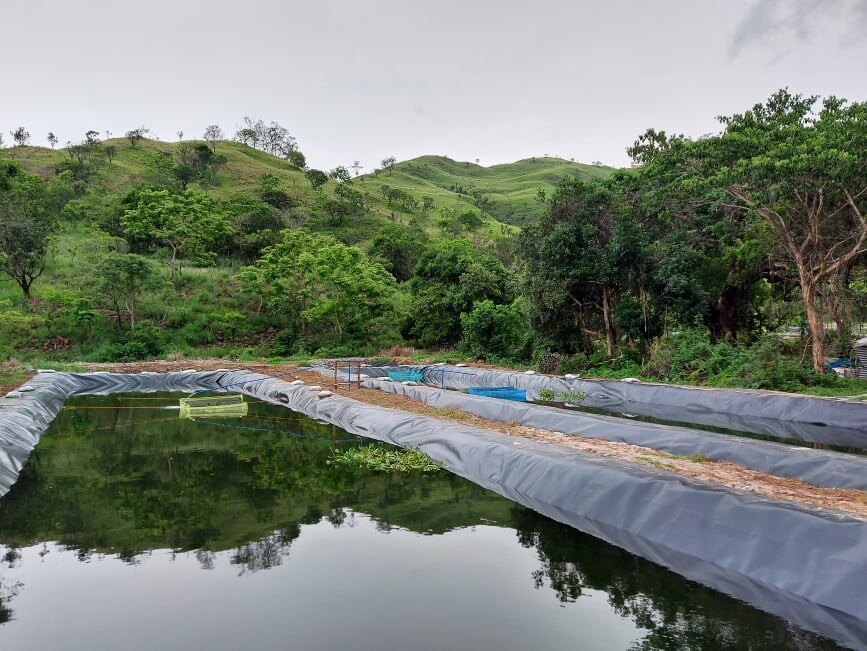
Lined dams serve several purposes on a farm. They store water for irrigation and livestock, and they also hold water for fish ponds. In each case, the aim is to keep as much of the water as possible for use.
Choosing the thickness for HDPE dam liner installation with Aqua Hub Kenya
Thicker liners cost more per square metre and generally resist damage better. The right thickness depends on how long the dam must last and how you plan to use it. These are common uses for each thickness we supply:
- 0.3 mm, for small dams and short-term water storage
- 0.5 mm, for small and medium farm dams with moderate use
- 0.75 mm, for larger dams and longer service
- 1 mm, for large dams and heavy use on rough ground
Tell us the size of your dam and how you plan to use it by calling +254790719020, and our team will recommend a thickness. If the ground is stony or livestock will have access, a thicker liner is the safer choice.
Working out how much liner your dam needs with Aqua Hub Kenya
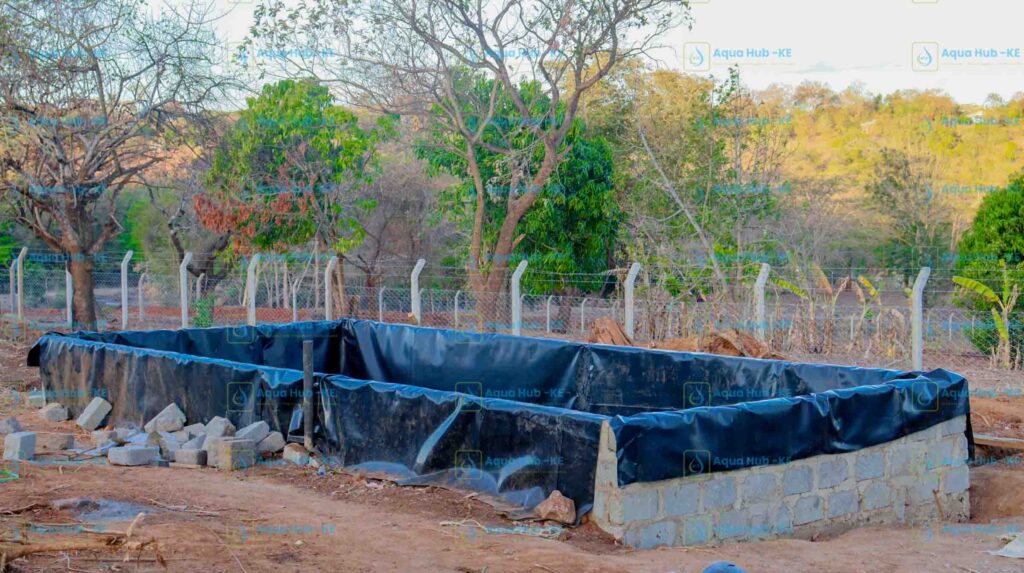
The liner must cover the floor and the walls of the dam, with extra material at the top edge. We fix this extra length into a trench around the dam, and it holds the liner in place. A liner that is too short pulls away from the edge once water fills the dam.
Measuring the dam
First, measure the length and width of the floor, then measure the length of each sloping wall from the base to the top edge. Next, add the width of the trench and a small allowance at every side. Our team can take these measurements on your site and confirm the total area.
Using the area to find the cost
After that, multiply the total area in square metres by the total price per square metre for your chosen thickness. This gives the cost of the liner and the installation together. Our team will confirm the final figure after the site visit.
Preparing the dam for HDPE dam liner installation with Aqua Hub Kenya
The ground under the liner must be smooth and clean. Sharp stones and roots can puncture the liner when the water presses against it. As a result, good preparation protects the liner for the long term.
Clearing and shaping the dam
We remove all stones and roots from the floor and walls. Then we shape the surface so that the slopes are even and free of sharp edges. We also firm up soft patches, because uneven ground can cause the liner to stretch or tear when the water presses on it. Therefore, careful preparation is as important as the liner itself.
Digging the anchor trench
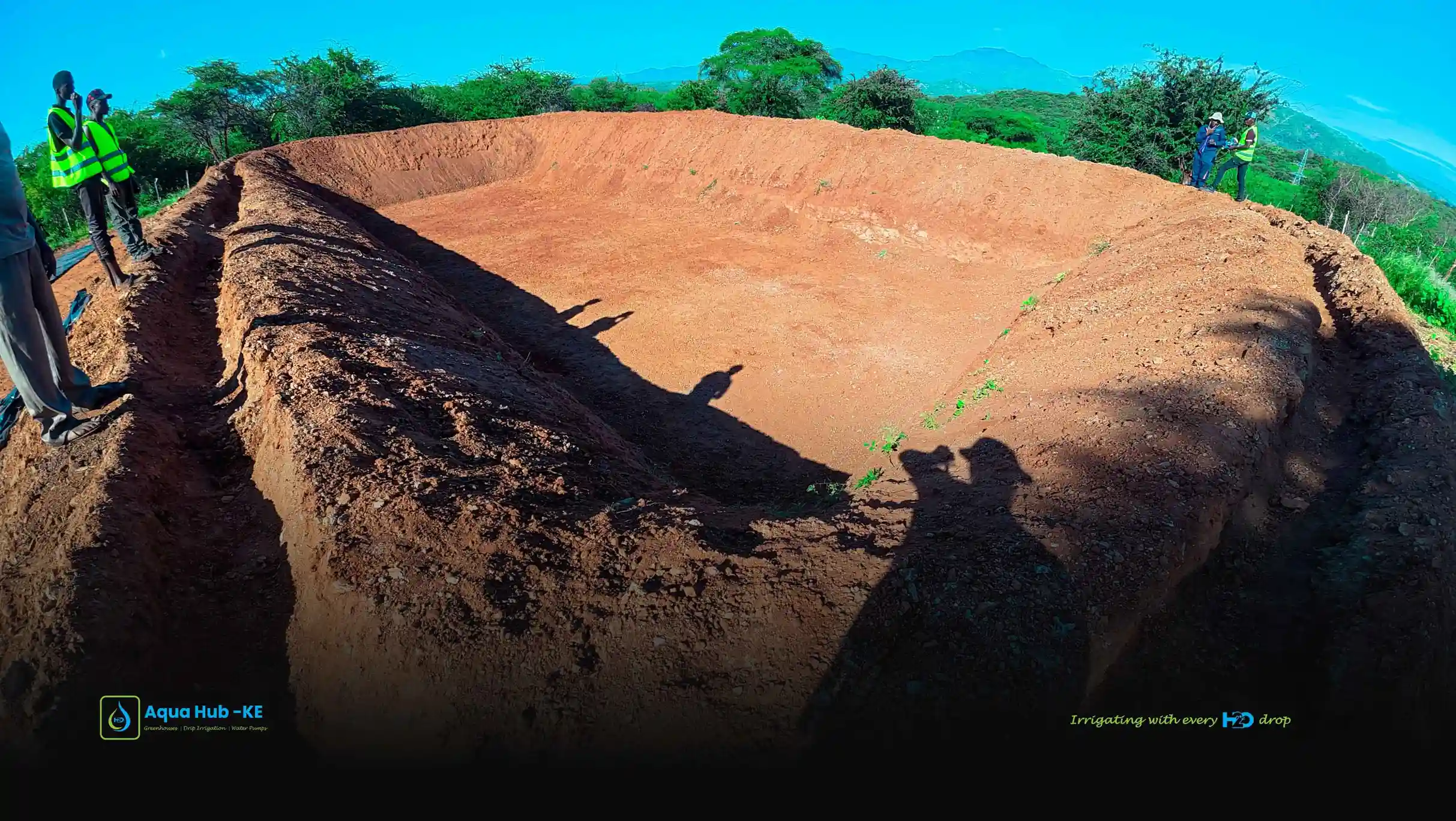
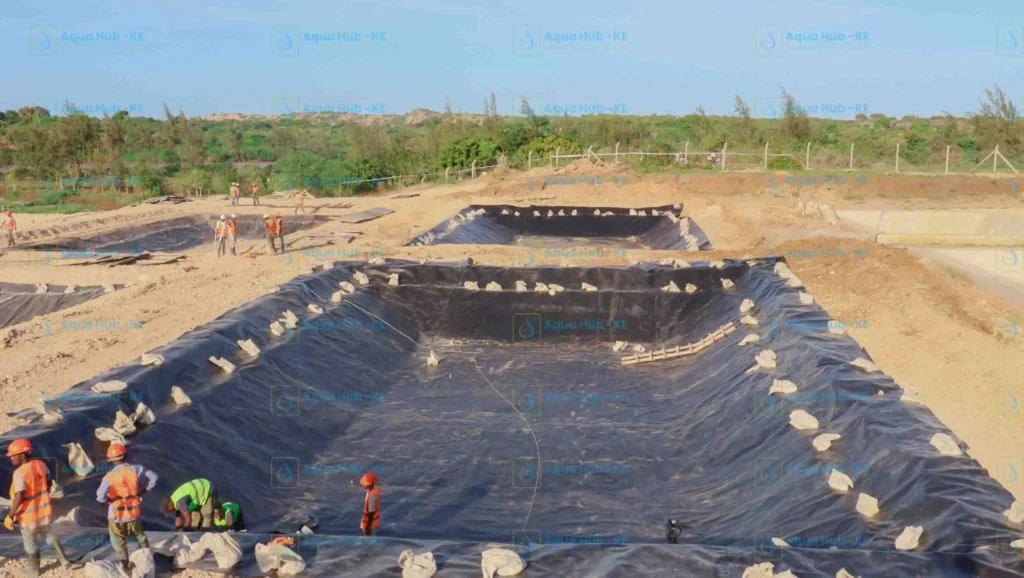
We dig a trench around the top edge of the dam. Then we lay the edge of the liner into it and cover it with soil, which holds the liner firmly. This prevents the liner from sliding down into the dam when water fills it.
Step-by-step HDPE dam liner installation by Aqua Hub Kenya
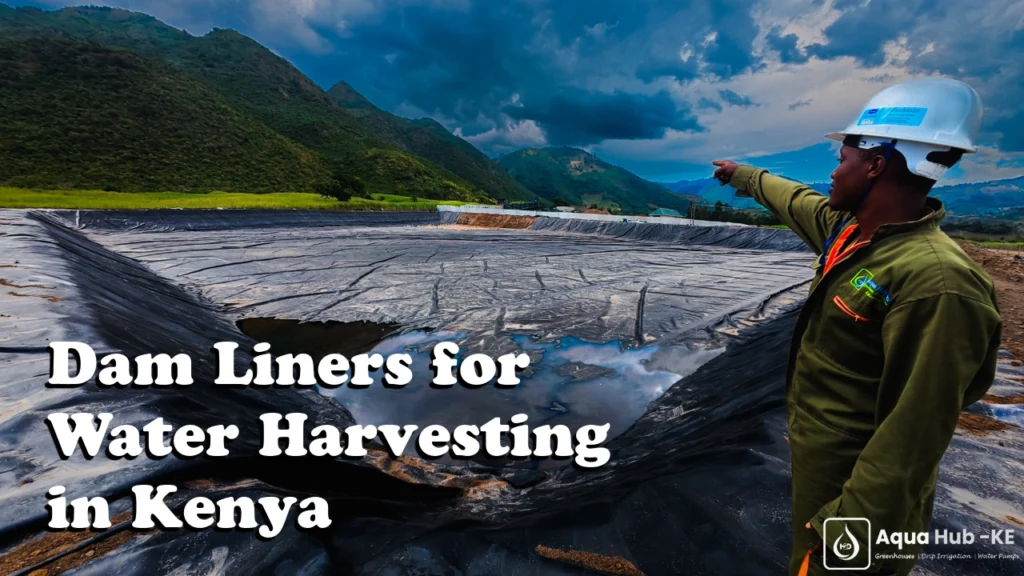
Once the dam is ready, the work follows a set order. Aqua Hub Kenya’s technicians install the liner in these stages:
- Prior to lining, our technicians check the floor and walls for stones and rough patches
- They then unroll the liner sheets and position them across the dam
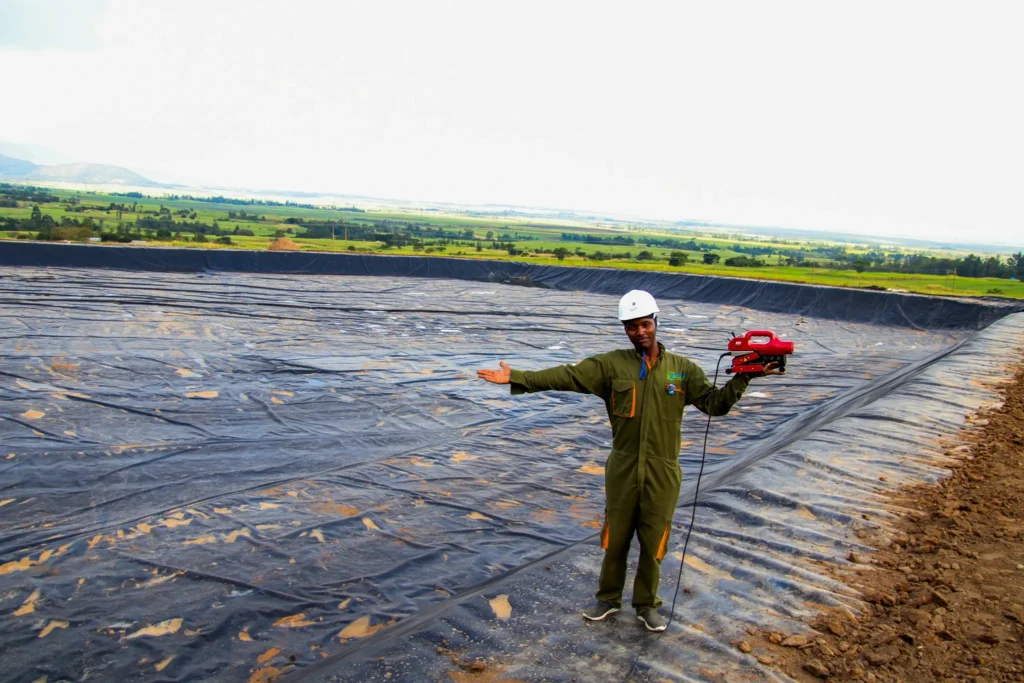
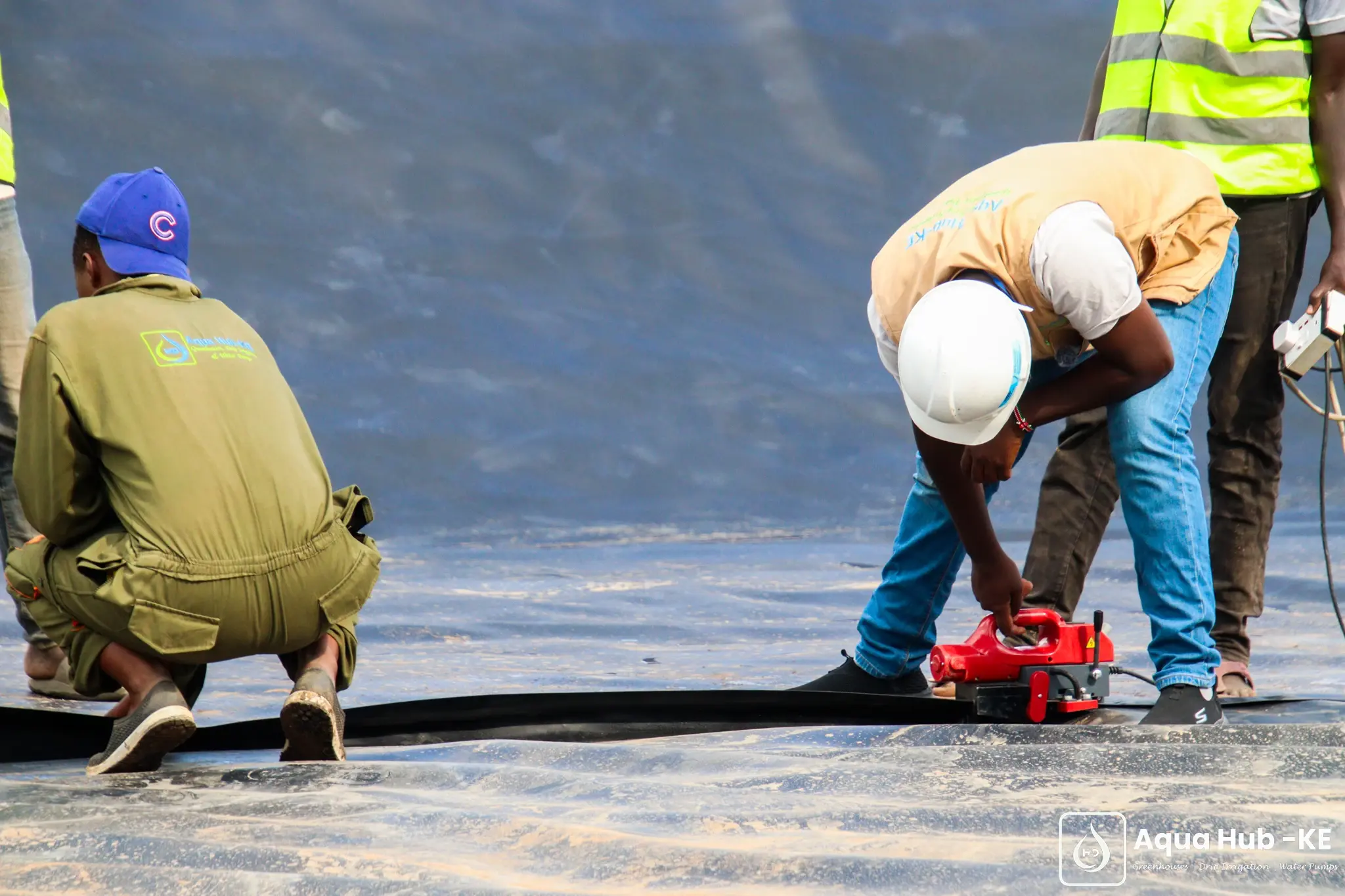
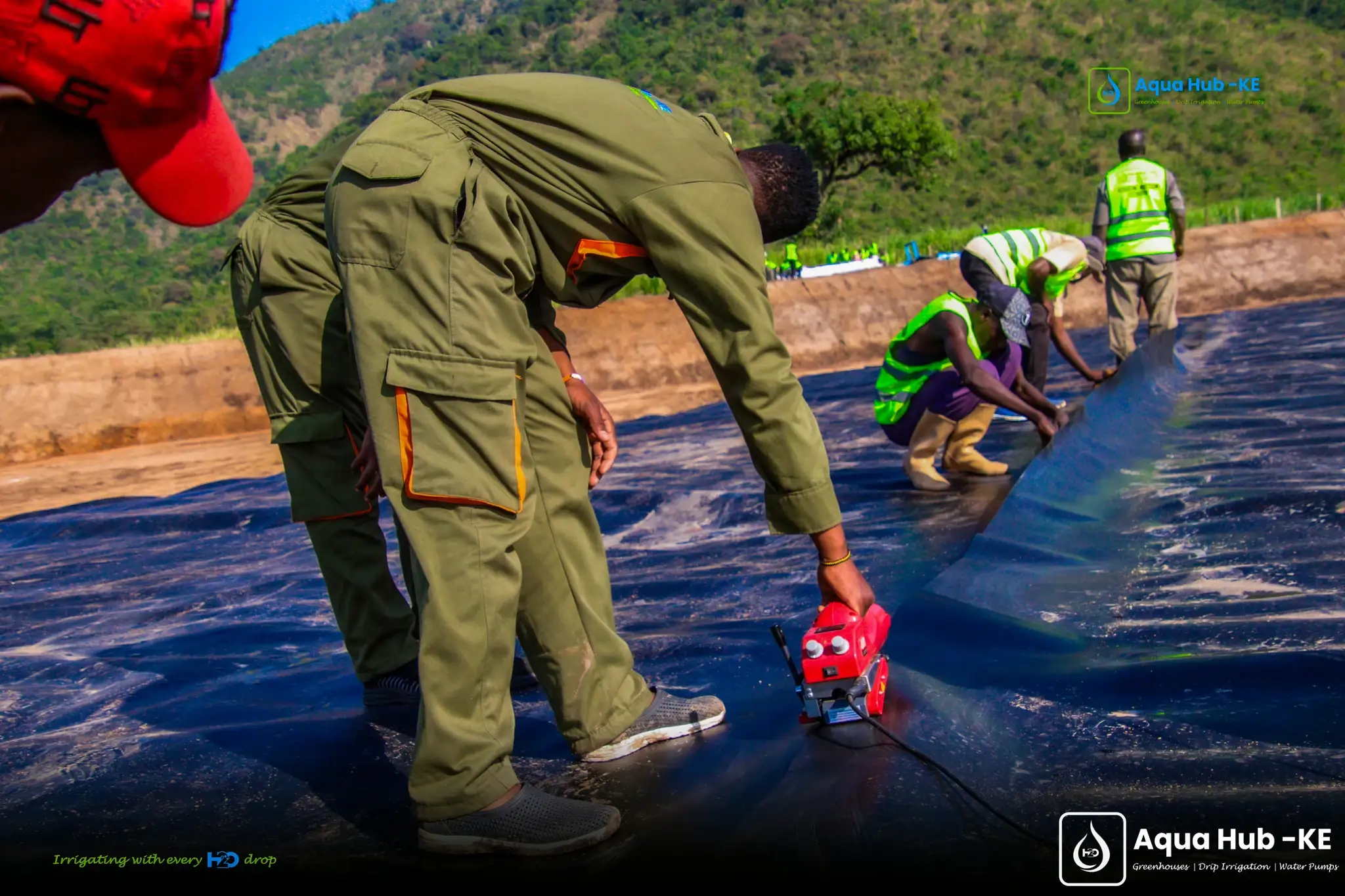
- With the sheets in place, they weld the joins together to form one sealed surface
- Once welding ends, they test the seams for leaks
- Following the tests, they fix the edges into the anchor trench and cover them with soil
- To finish, they fill the dam gradually and watch how the liner settles
To book installation, call +254790719020 or email info@aquahubkenya.co.ke with your location and the size of your dam.
Why the welded joins decide how well an Aqua Hub Kenya liner performs
A dam liner consists of sheets, and the joins are the parts most likely to fail. Welding fuses the sheets into a continuous surface, and a good weld is as strong as the sheet itself. In contrast, poor welds leave gaps that let water through.
For this reason, we test the joins after welding, before water fills the dam. Skilled workers and proper equipment give the best result. Ask any installer how they weld and test the seams before you agree to the work.
Protecting your Aqua Hub Kenya liner after installation
A liner lasts longer when you look after it. Protection steps such as these keep it in good condition:
- Keep sharp objects and heavy equipment away from the walls
- Fence the dam, so that livestock do not walk on the liner
- Avoid emptying the dam completely for long periods, since sun can damage an exposed liner
- Inspect the edges and the trench regularly
- Repair any small tear as soon as you notice it
For this reason, report any leak early. A small leak is much easier to repair than a large one. If you notice a drop in the water level that is not explained by use, email info@aquahubkenya.co.ke so that our team can advise you.
Why choose Aqua Hub Kenya for HDPE dam liner installation?
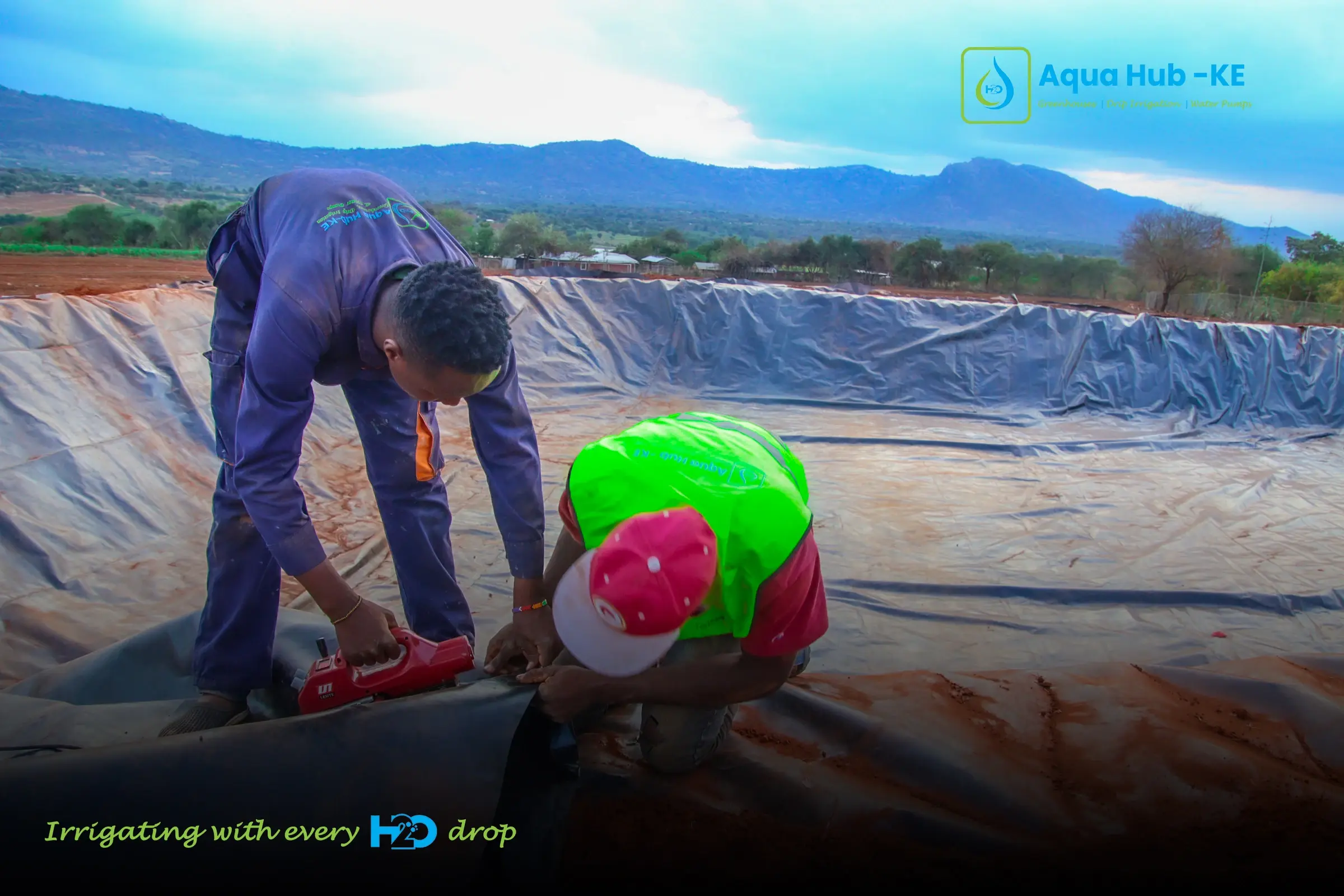
A dam liner is a large investment, so the choice of thickness matters. Aqua Hub Kenya supplies four liner thicknesses, from 0.3 mm to 1 mm, and states the price of each one clearly. This lets you match the liner to your dam and your budget, instead of accepting a single option.
The same team supplies the liner and installs it, which means the welding and fitting follow a consistent standard. Describe your dam and your plans for it by calling +254790719020, and our team will recommend a liner.
Frequently Asked Questions
How much does HDPE dam liner installation cost in Kenya?
HDPE dam liner installation in Kenya costs from KES 225 to KES 480 per square metre in our range, with the liner and installation together. Call +254790719020 or email info@aquahubkenya.co.ke for the exact price of your dam.
What is an HDPE dam liner?
An HDPE dam liner is a flexible plastic sheet that covers the floor and walls of a dam. It stops water from seeping into the soil.
Which liner thickness should I choose?
The thickness depends on the ground and on how long the dam must last. Thicker liners cost more and resist damage better.
How do I calculate how much liner I need?
Measure the floor and the sloping walls, then add the trench and a small allowance at every side. Multiply the total area by the price per square metre.
Why is an anchor trench needed?
An anchor trench holds the top edge of the liner in place. It stops the liner from sliding into the dam when water fills it.
How do you join the liner sheets?
Welding joins the sheets and fuses them into one continuous surface. Our team tests the seams for leaks before water fills the dam.
Can I line a dam in sandy soil?
You can line a dam in sandy soil, and this is one of the main reasons farmers use liners. The liner stops the water from draining through the sand.
Can livestock walk on the liner?
Livestock should not walk on the liner, because hooves can damage it. Hence, it is important to fence the dam to protect the liner.
How do I fix a small tear in the liner?
Repair a small tear as soon as you find it, before it grows. Contact our team for advice on the repair.
Final Thoughts on HDPE dam liner installation by Aqua Hub Kenya
A well-installed liner keeps the water you store, which makes your dam useful through the dry months. Choosing the right thickness and preparing the ground both matter, while good welds add to the life of the liner. With regular checks and quick repairs, the dam serves your farm for many seasons.
HDPE dam liner installation from Aqua Hub Kenya starts at KES 225 per square metre, with the liner and installation together. Call +254790719020 or email info@aquahubkenya.co.ke to get the exact price for your dam.