
Blog
Greenhouses for Capsicum Farming in Kenya
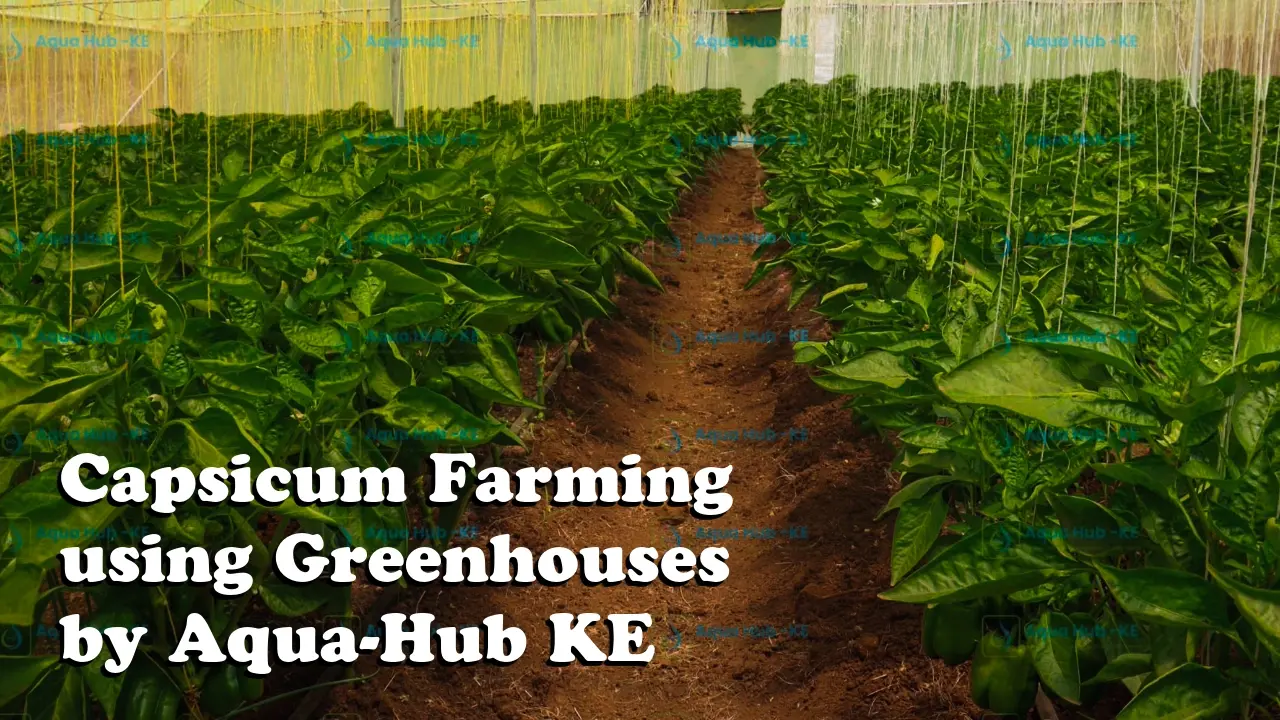
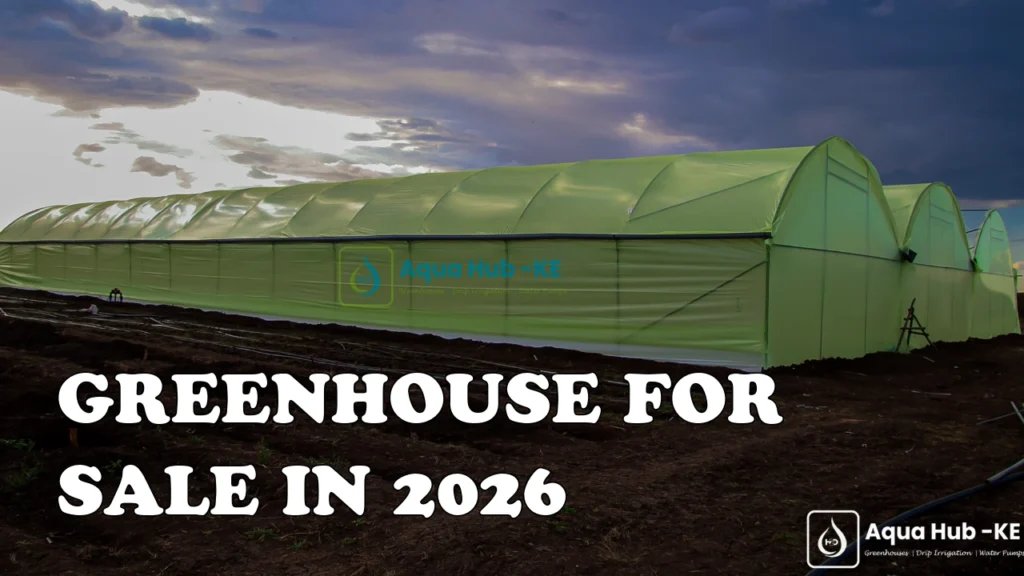
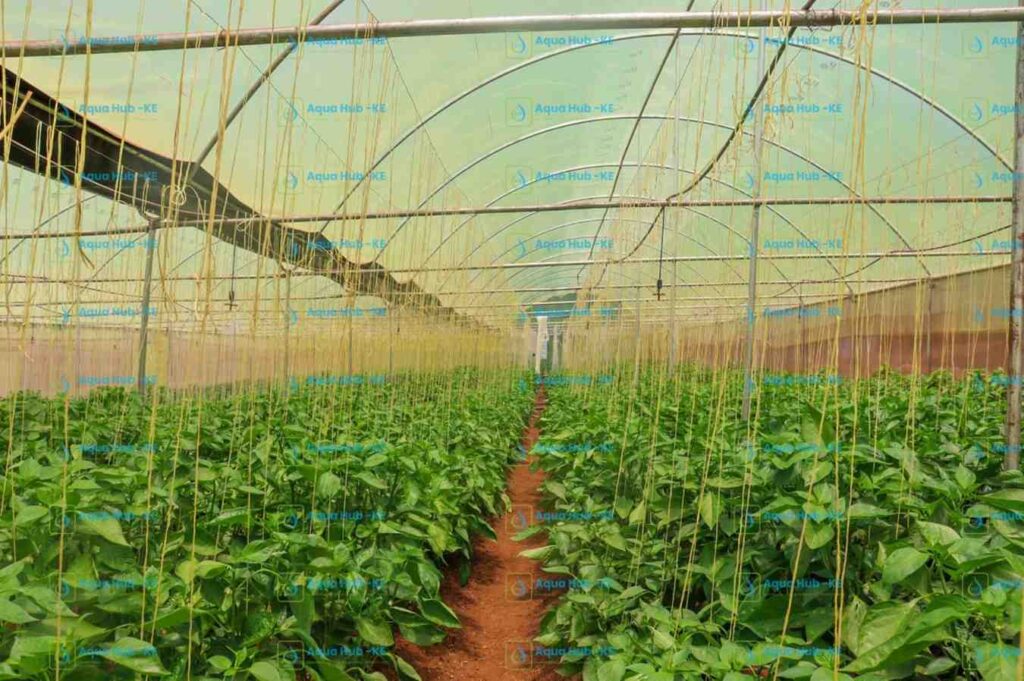
Greenhouse farming of capsicum in Kenya has grown significantly over the last few years. Capsicum, also known as sweet pepper or bell pepper, is one of the highest-value vegetable crops in the country. It fetches consistently good prices in local markets, supermarkets, and export markets, and it performs far better in a protected environment than in open field conditions.
The cost of setting up a greenhouse for capsicum farming in Kenya ranges from KES 160,000 for a small wooden structure to KES 380,000 for a large metallic greenhouse.
If you want a quote or want to know which setup suits your land and budget, call us on 0790719020 or email info@aquahubkenya.co.ke.
Quick Takeaways
- Greenhouse farming of capsicum in Kenya produces between 30 and 60 tonnes per acre per season, compared to 8 to 15 tonnes in open field conditions
- Both wooden and metallic greenhouses work for capsicum, but metallic structures are the better long-term investment for commercial production given their 15 to 25 year lifespan
- Capsicum is best propagated in 50-cell or 72-cell seed trays filled with coco peat, not garden soil, and takes 4 to 6 weeks to reach transplant size
- Aqua Hub Kenya offers the best greenhouses for capsicum farming in Kenya.
Why Capsicum Grows Better in a Greenhouse
Capsicum is a warm-season crop that is sensitive to both cold and excessive heat. In open field conditions in Kenya, those two extremes are difficult to avoid. Highland areas like Eldoret, Nyahururu, Nyandarua and Meru can drop to temperatures that stress capsicum plants and slow fruit development. Lowland areas like Machakos and the Coast can get too hot for the plant to set fruit consistently.
A greenhouse creates a buffer. The polythene cover traps warmth during cool nights and moderates temperature during hot days when ventilation is managed well. The result is a more consistent growing environment that capsicum responds to well.
Additionally, capsicum is highly susceptible to various bacterial and viral diseases spread by a number of pests. Open field farming exposes the crop to all of these. In contrast, a greenhouse with insect-proof netting on the sides removes the main entry point for disease vectors and gives you far more control over pest management.
To start greenhouse farming for capsicum today, call +254790719020 to get recommendations on the best greenhouse options and a quote.
Setting Up a Greenhouse for Capsicum Farming in Kenya
Choosing the Right Greenhouse Type
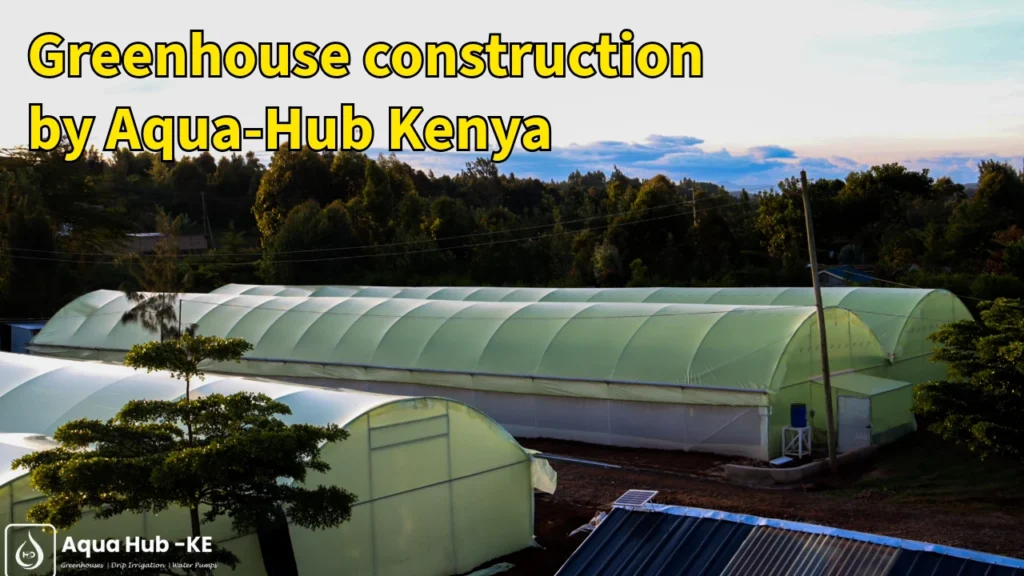
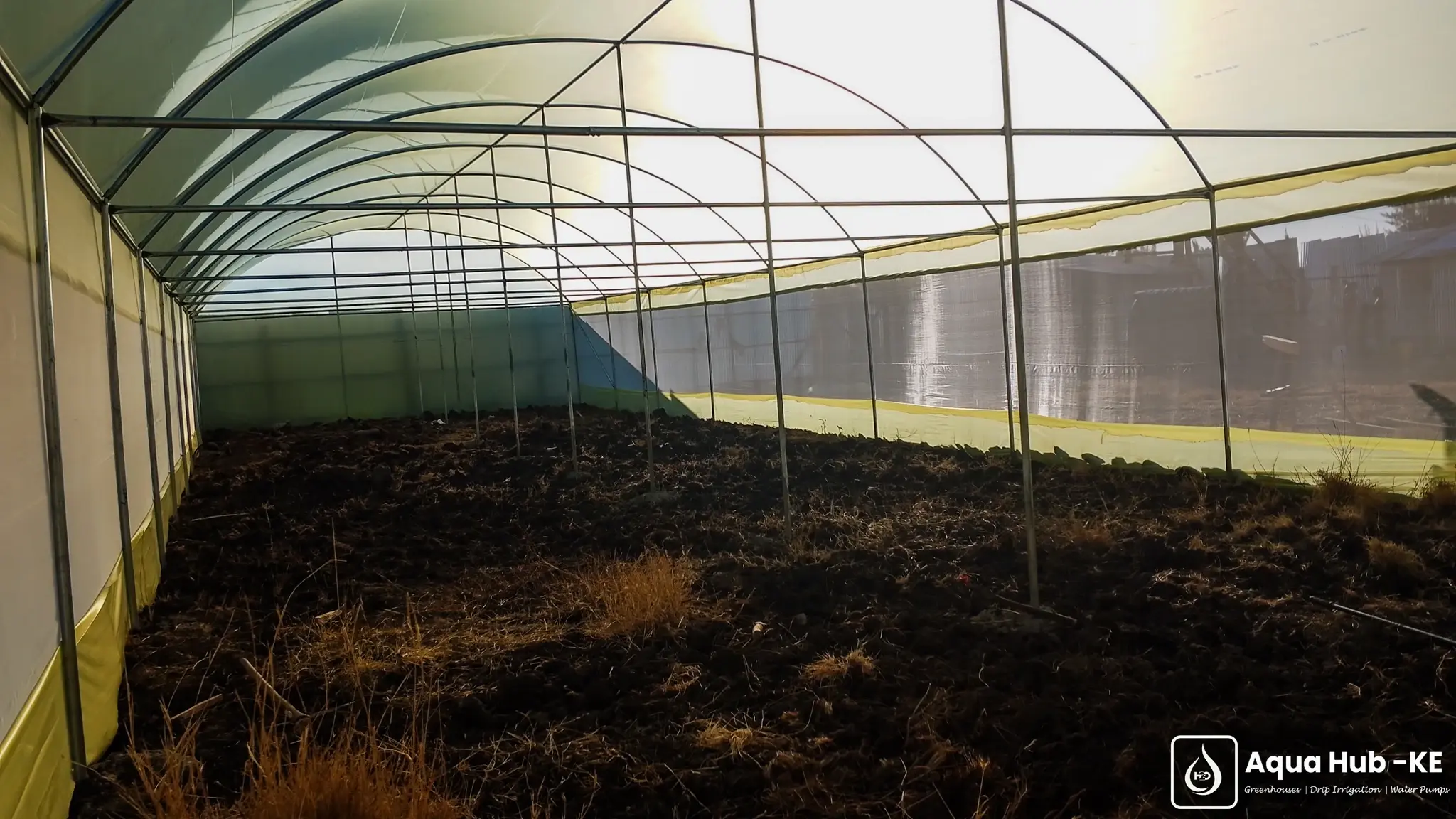
Both wooden and metallic greenhouses work for capsicum farming in Kenya. The choice depends on your budget and how long you plan to farm.
- Wooden greenhouses are the more affordable starting point. They use treated timber poles as the main frame and are covered with UV-stabilised greenhouse polythene on the roof and insect netting on the sides. A wooden greenhouse for capsicum farming costs less upfront and is practical for first-time greenhouse farmers who want to test the production model before committing to a larger investment.
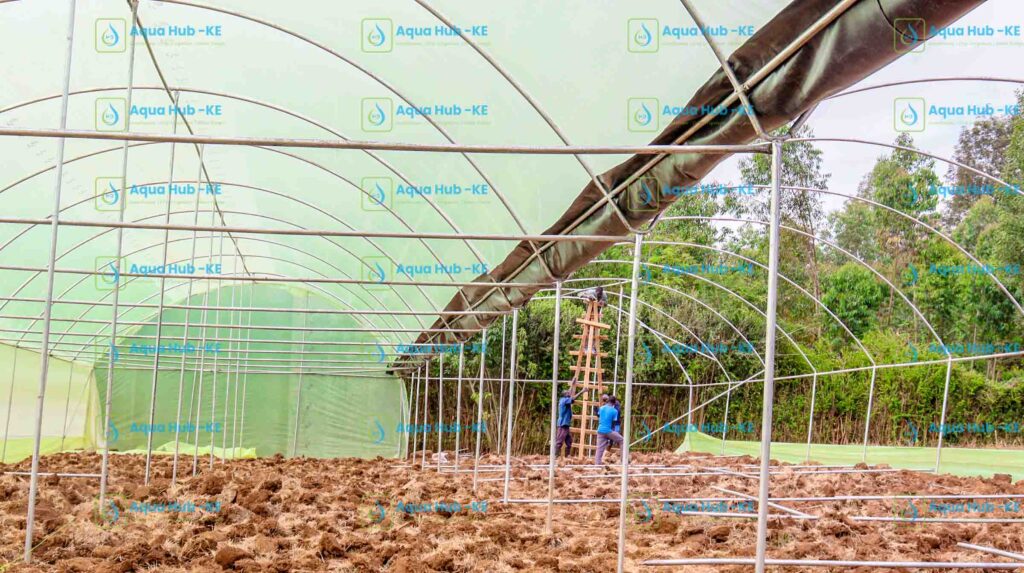
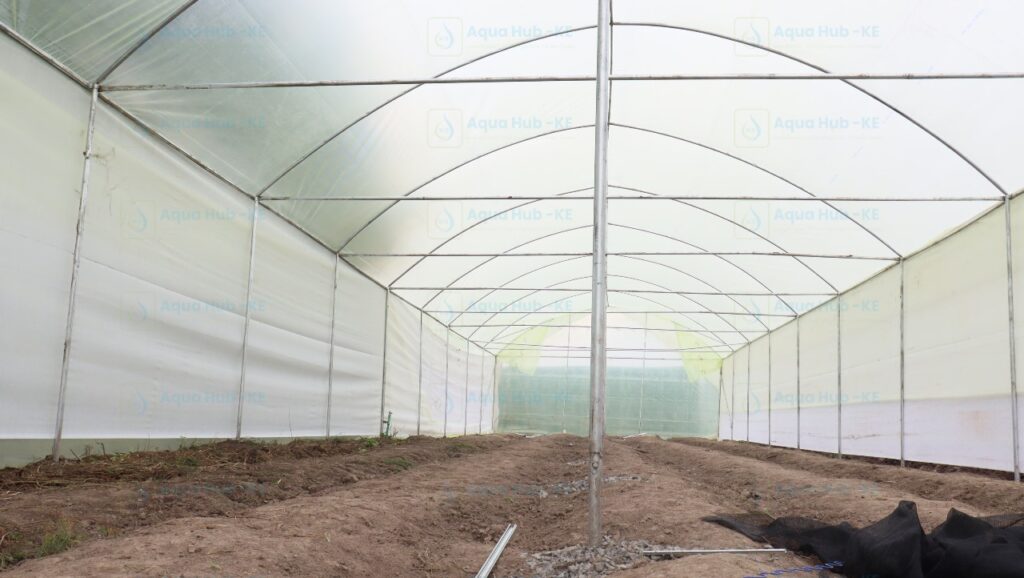
- Metallic greenhouses use a galvanised steel pipe frame. They cost more upfront but last significantly longer, between 15 and 25 years compared to 5 to 10 years for a wooden structure. The larger clear spans of a metallic greenhouse also give you more usable planting area with no internal posts interrupting the rows.
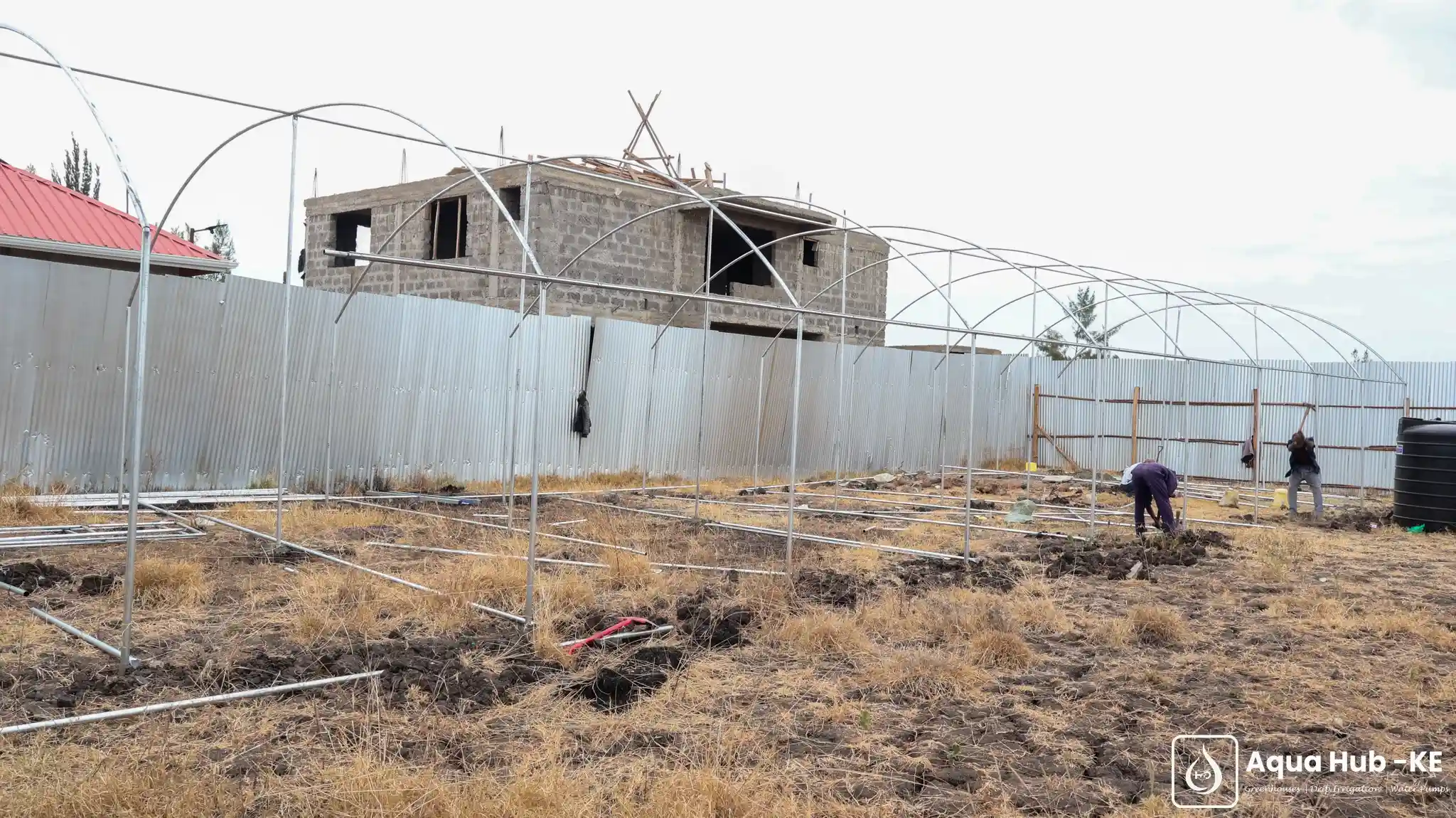
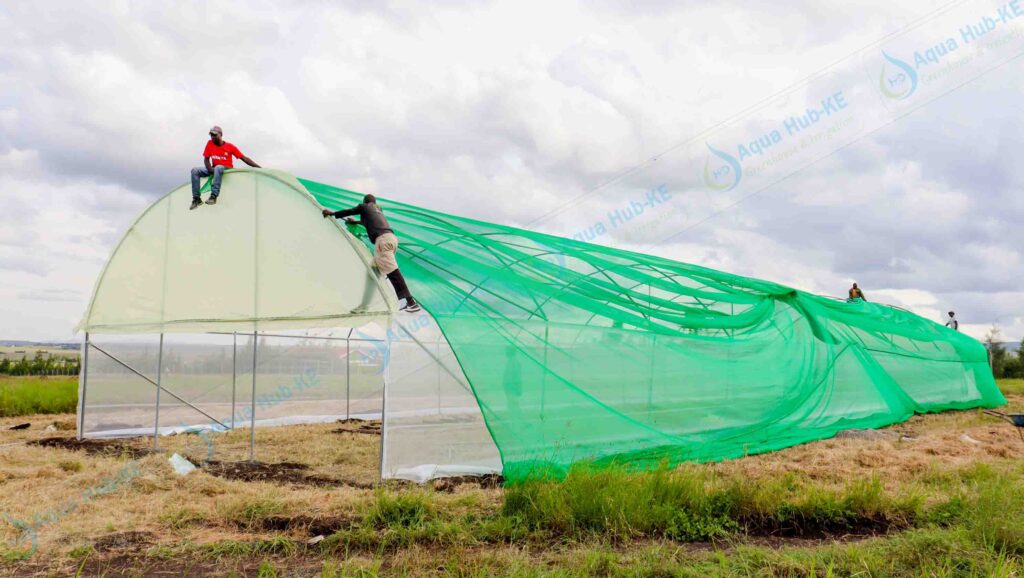
Metallic greenhouse frame installation in Ruai
For capsicum farming at a commercial scale in Kenya, a metallic greenhouse is the more practical long-term investment. For a first greenhouse or a smaller operation, a wooden structure gets the job done.
Greenhouses for Capsicum Farming Costs
Capsicum plants in a greenhouse are spaced at roughly 50cm between plants and 1 metre between rows. This gives each plant enough room to develop and allows adequate airflow between plants, which reduces fungal disease pressure.
| Greenhouse Size | Approximate Plants | Wooden Price (KES) | Metallic Price (KES) |
| 8m x 15m | ~240 plants | 160,000 | 255,000 |
| 8m x 30m | ~480 plants | 190,000 | 310,000 |
| 16m x 30m | ~960 plants | 230,000 | 380,000 |
| 16m x 60m | ~1,920 plants | 380,000 | 670,000 |
Call Aqua Hub Kenya via telephone on 0790719020 for pricing on custom sizes and information on additional costs like installation and accessories.
How do you use Greenhouses for Capsicum Farming?
Starting Capsicum Seedlings for Greenhouse Farming
Greenhouse farming of capsicum in Kenya starts in the nursery, not in the greenhouse bed. Capsicum seeds are sown in seed trays filled with coco peat and growin to transplant size before going into the greenhouse. From sowing to transplanting typically takes 4 to 6 weeks.
The right seed tray for capsicum propagation in Kenya is a 72-cell or 50-cell tray. Aqua Hub Kenya supplies seed trays alongside our greenhouses for capsicum farming. Reach out to us via +254790719020 or email info@aquahubkenya.co.ke to learn more about our solutions to help with your capsicum farming.
Irrigation for Capsicum in a Greenhouse
Capsicum needs consistent soil moisture but does not tolerate waterlogged roots. Too much water causes root rot. In contrast, too little can cause flower drop and blossom end rot on the fruit. Getting the moisture balance right is easier with irrigation systems like drip irrigation.
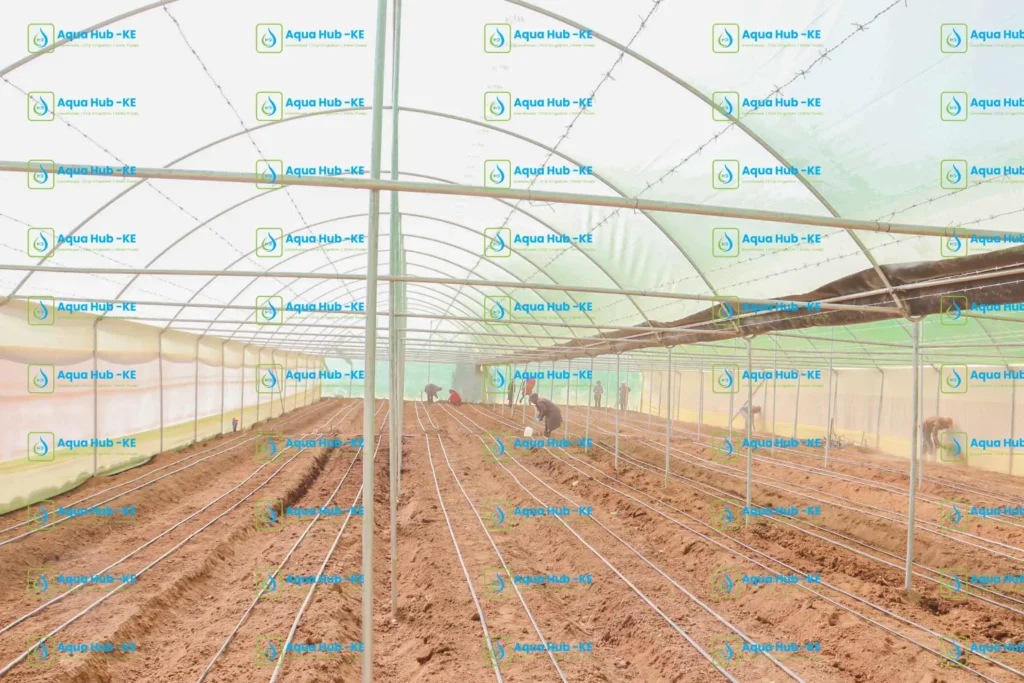
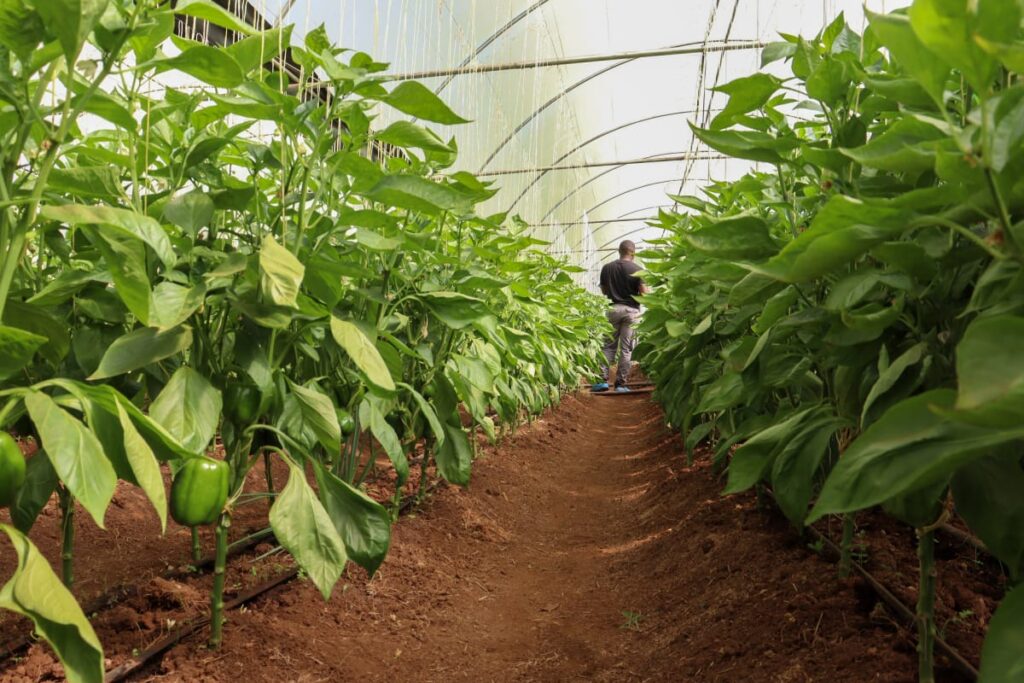
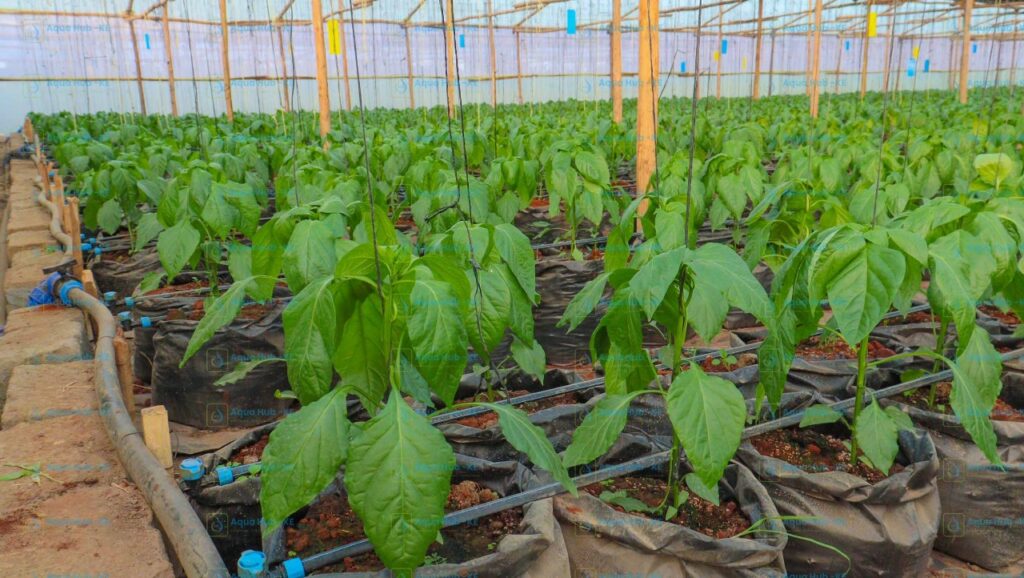
Drip irrigation delivers water directly to the root zone of each plant through a network of drip lines and emitters. It keeps the leaves and stems dry, which is important for capsicum because wet foliage encourages fungal diseases. It also allows precise control over how much water each plant receives, which matters for the consistent fruit sizing that premium markets in Kenya require.
Many greenhouse capsicum farmers in Kenya now connect drip irrigation to a solar pump, eliminating the daily cost of running an electric or petrol pump. This is particularly practical for farms with a borehole or water harvesting dam as the main source. We have covered solar irrigation systems for greenhouse farming in a separate guide if you want to understand how that combination works.
Soil Preparation for Capsicum Greenhouse Farming
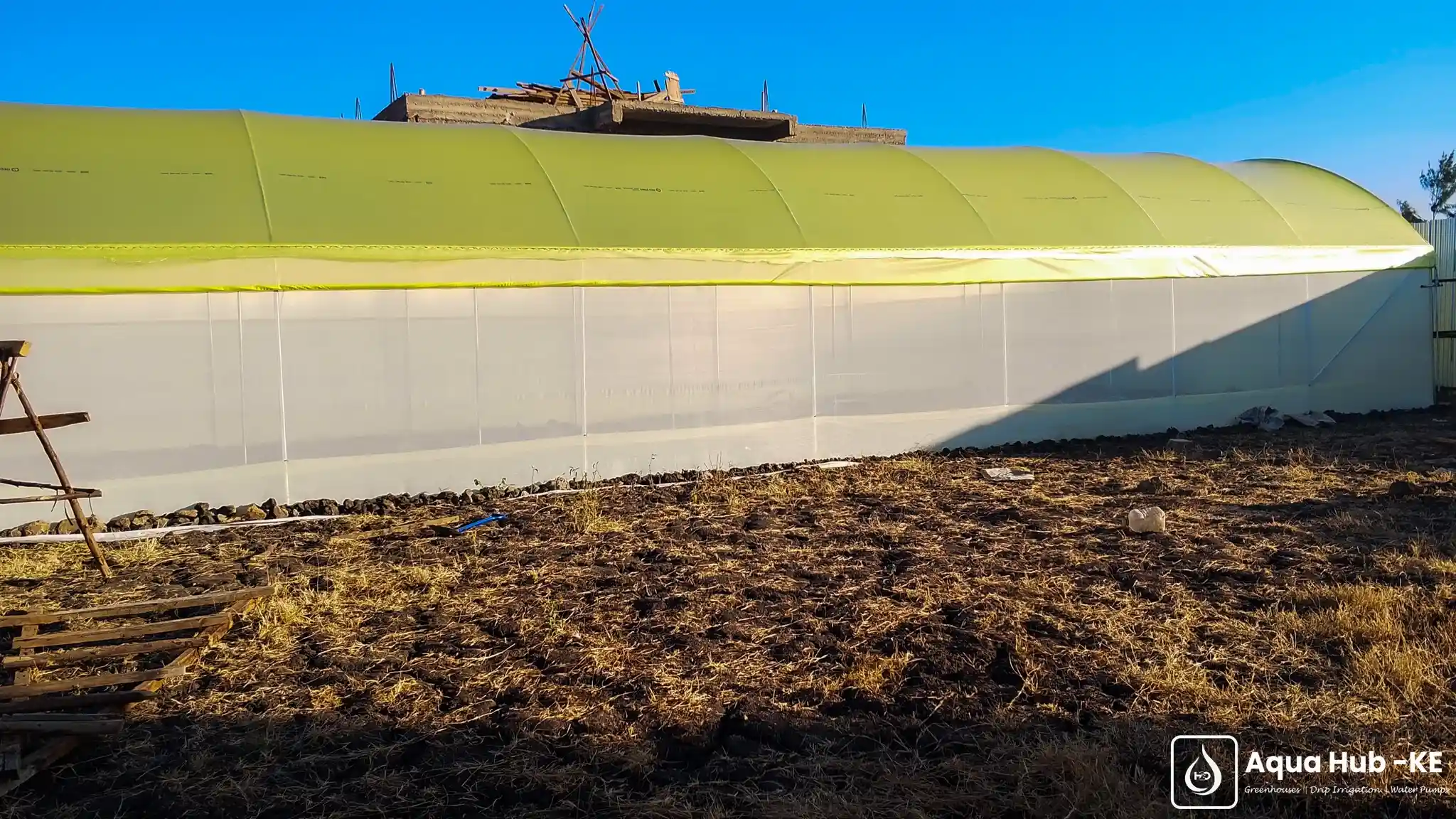
Before transplanting, the soil inside the greenhouse needs to be prepared properly. Capsicum grows best at pH 6.0 to 6.8. Soil outside this range affects nutrient uptake and causes deficiency symptoms often misdiagnosed as pests or disease.
Transplanting Capsicum into the Greenhouse
Capsicum seedlings are ready to transplant when they are 15 to 20cm tall and show a first root ball when removed from the tray. Typically, farmers perform the transplant in the evening when it is cool. To transplant your capsicum crop from the nursery to the greenhouse successfully, you must follow a number of steps, including:
- Firstly, water the seedling trays thoroughly an hour before transplanting so the growing medium holds together around the roots when you remove the seedlings from the cells
- Next, plant at the same depth the seedlings was growing in the tray. Planting too deep buries the stem and increases the risk of stem rot at soil level.
- Finally, water the plants immediately after transplanting.
Managing Capsicum Through the Growing Season
To ensure maximum production from your capsicum crop, there are a number of factors you have to consider such as:
- Firstly, you must maintain the greenhouse temperatures between 18°C and 30°C which is the optimal temperature for capsicum.
- Additionally, the capsicum crop should be trellised for better support of the branches as they develop
- Finally, using insect netting in your greenhouse helps to protect the crop from pests and diseases.
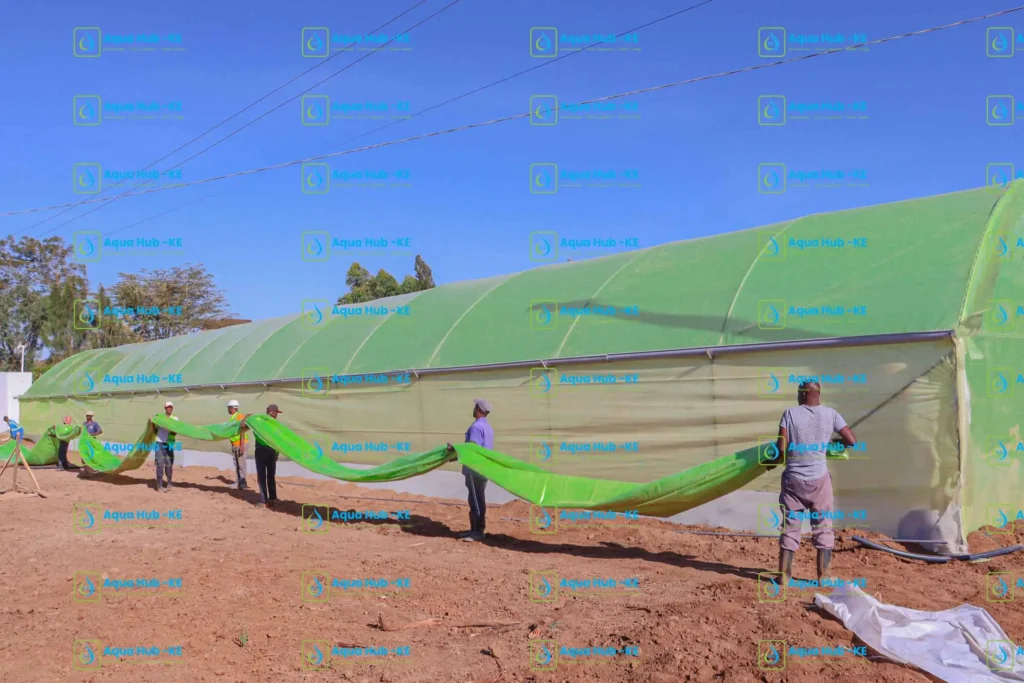
However, before you can reap the benefits of greenhouses for capsicum farming, you must first ensure that you have proper greenhouse installation. Our technicians at Aqua Hub Kenya offer professional recommendations on the best greenhouses as well as proper installation to ensure maximum yields. To get in touch with one of Aqua Hub Kenya’s technicians, simply call +254790719020.
Buy a Greenhouse for Capsicum Farming From Aqua Hub Kenya
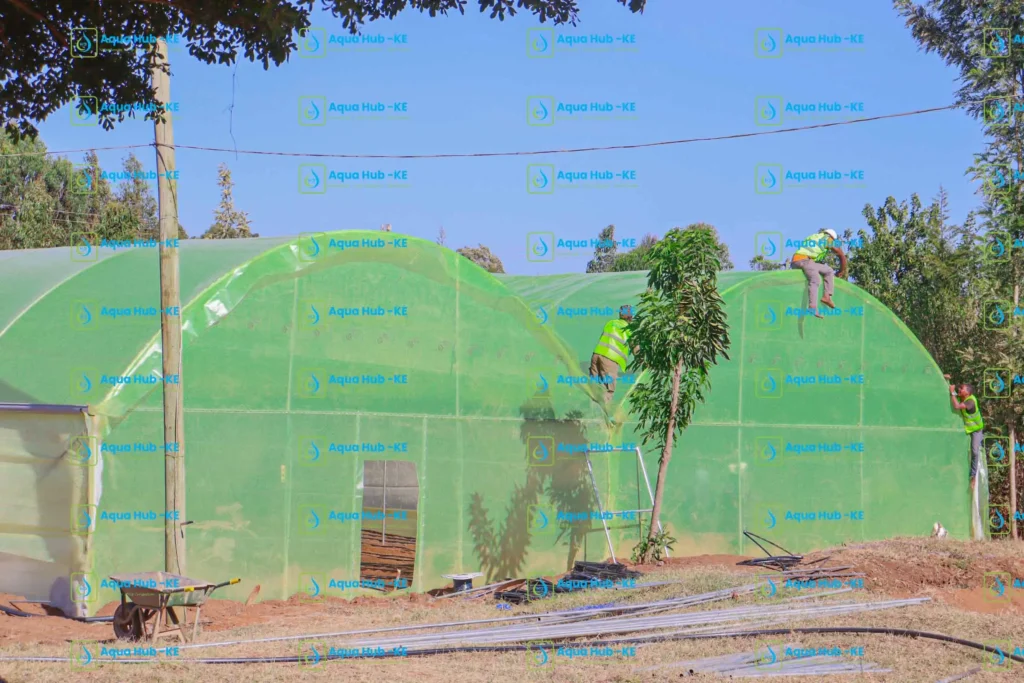
We supply and install wooden and metallic greenhouses for capsicum farming across Kenya. We stock everything you need for a complete setup including drip irrigation systems, seed trays and various additional accessories.
Call us on +254790719020 or email info@aquahubkenya.co.ke to get a quote on the best greenhouse option for you based on your location and the scale of your project.
Frequently Asked Question
How can I farm green capsicum in Kenya?
The best way to farm green capsicum in Kenya is by using greenhouses. This is because they offer controlled environments that protect your crop throughout the growing cycle thus maximizing yields.
How much capsicum can be produced from 1 acre of land?
An acre of land can produce anywhere between 8 to 40 tonnes of capsicum especially when you grow the crop in a greenhouse.
How long does capsicum take to mature in Kenya?
Capsicum takes 2 to 3 months to mature in Kenya after being transplanted into a greenhouse.
Can bell peppers be grown in a greenhouse?
Yes. Bell Peppers can be grown in a greenhouse. In fact, they tend to have higher yield when grown in controlled environments such as Aqua Hub Kenya’s greenhouses for capsicum farming.
What is the best month to plant capsicum?
There is no best month to plant capsicum when using greenhouses for capsicum farming. This is because a farmer has control over the environment conditions within a greenhouse allowing for year-long production.