
Blog
Affordable Seedling Trays for Tree Seedlings in Kenya
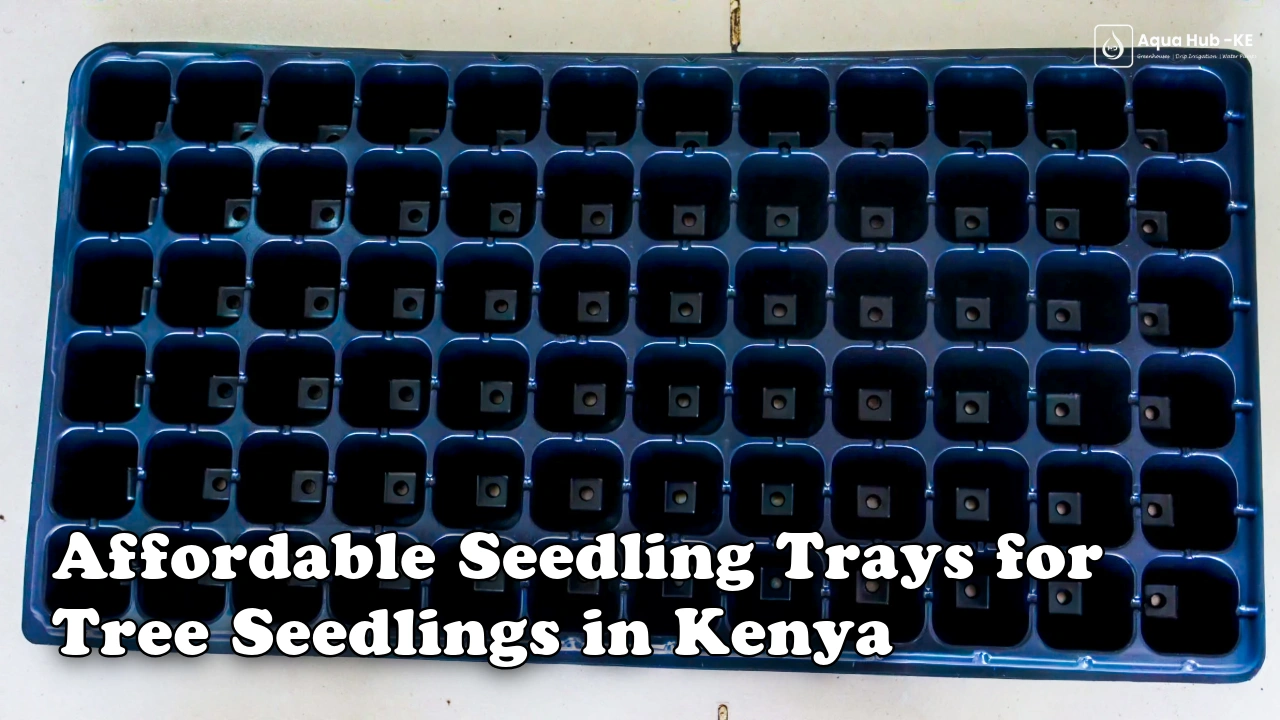
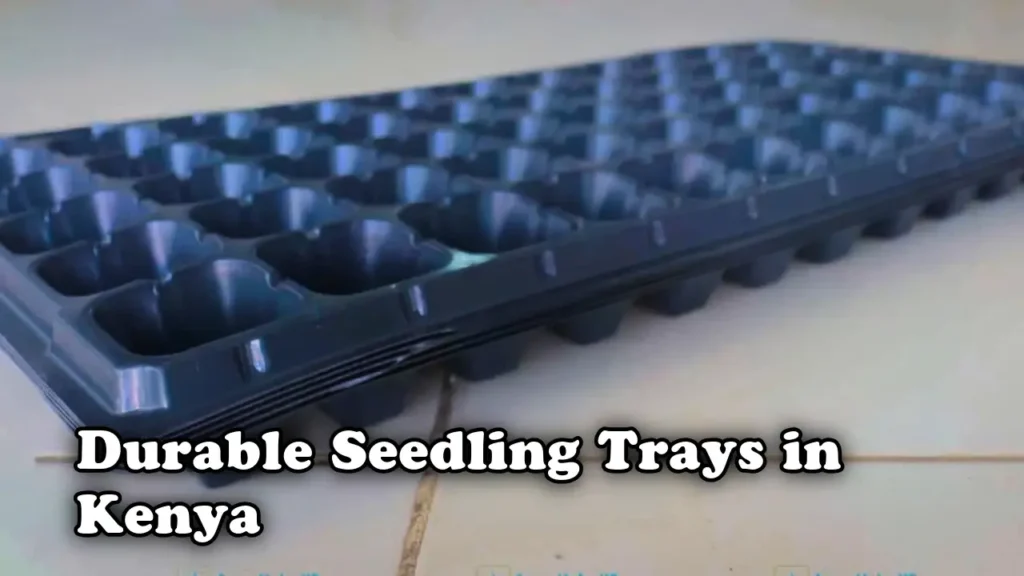
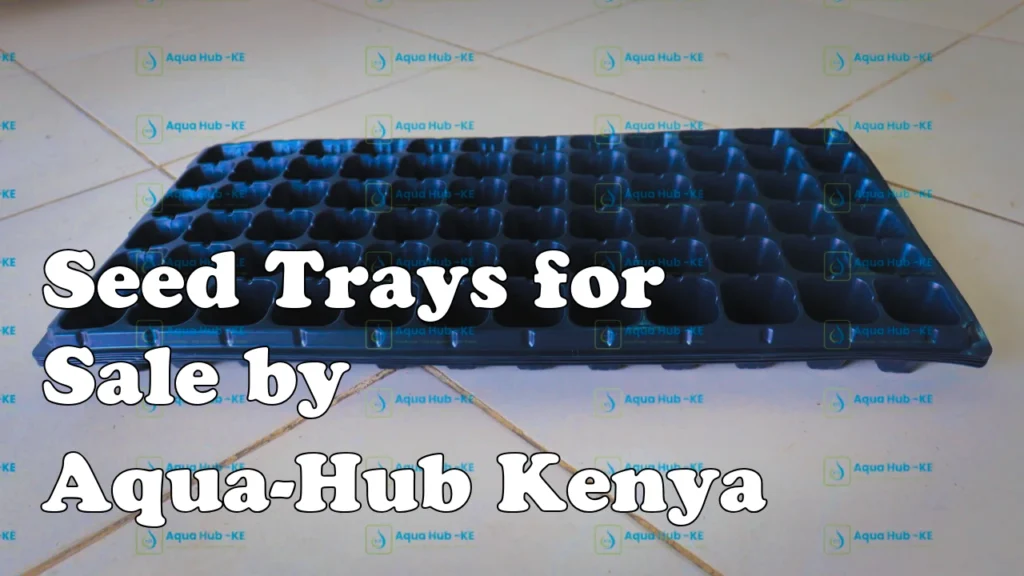
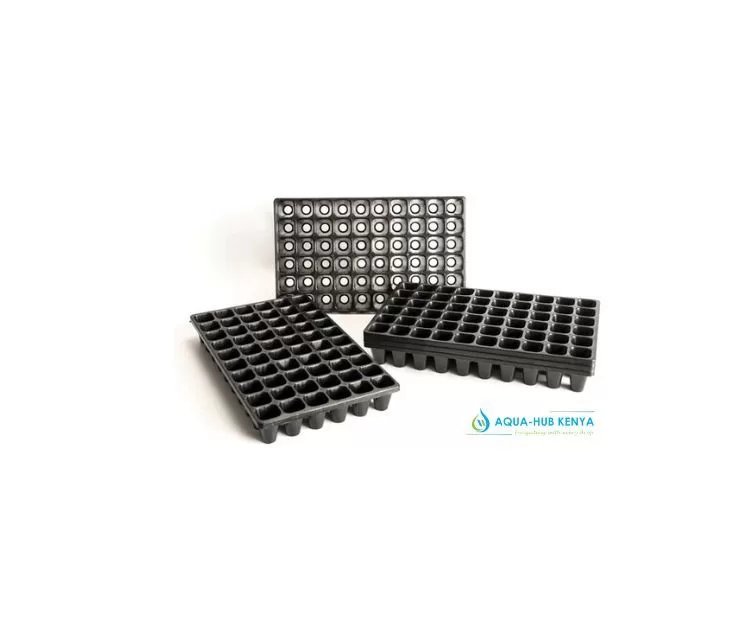
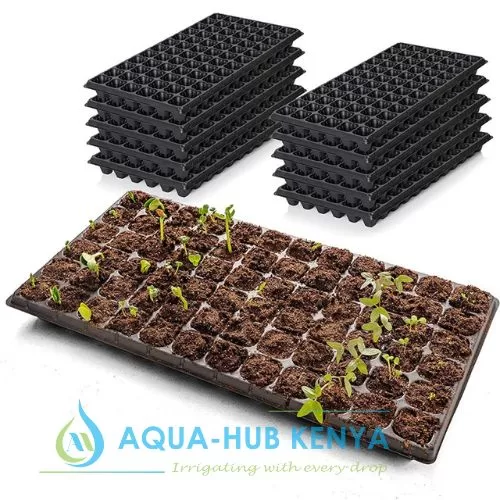
Affordable seedling trays cost KES 140 each at Aqua Hub Kenya, and they come in five cell counts from 50 to 288.
A tree seedling raised in its own cell keeps its roots intact until planting day, which helps the young tree settle quickly in the field. Trays also let a nursery raise hundreds of seedlings in a small space, so a farmer can raise all the seedlings for a field before the rains start.
Aqua Hub Kenya supplies trays with 50, 72, 128, 200 and 288 cells, which gives tree farmers a size for every species. Tell the team how many trees you plan to plant by calling +254790719020, and ask which tray size suits them.
Pricing Affordable Seedling Trays at Aqua Hub Kenya for 1,000 Trees
Each tray costs KES 140, and the number of trays you need depends on the cell count, because a tray with more cells raises more seedlings. The table shows how many trays 1,000 seedlings need in each size, with the cost of those trays.
| Cells per tray | Trays for 1,000 seedlings | Cost (KES) |
|---|---|---|
| 50 | 20 | 2,800 |
| 72 | 14 | 1,960 |
| 128 | 8 | 1,120 |
| 200 | 5 | 700 |
| 288 | 4 | 560 |
Some seeds fail to sprout, so you need to order a few extra trays to cover the gaps. Send your target number of trees to info@aquahubkenya.co.ke to receive the exact price for your order.
Why Tree Seedlings Start Stronger in Affordable Nursery Trays from Aqua Hub Kenya
An open seedbed packs seedlings close together, and their roots tangle as they grow. A tray cell changes four things for the seedling:
- Each seedling has its own cell, so its roots grow in their own space.
- A seedling competes less with its neighbours, and it can receive the water it needs without overwatering the cell next to it.
- Weak seedlings are easy to spot and remove, which leaves a stronger batch for planting.
- When a seedling comes out of its cell, the soil stays around its roots in a solid plug, so the farmer plants the whole plug and the tree suffers less shock after planting.
Seedlings lifted from an open bed lose many of their fine roots, and they need longer to recover.
Seedling Tray Sizes in the Aqua Hub Kenya Range and the Trees They Suit
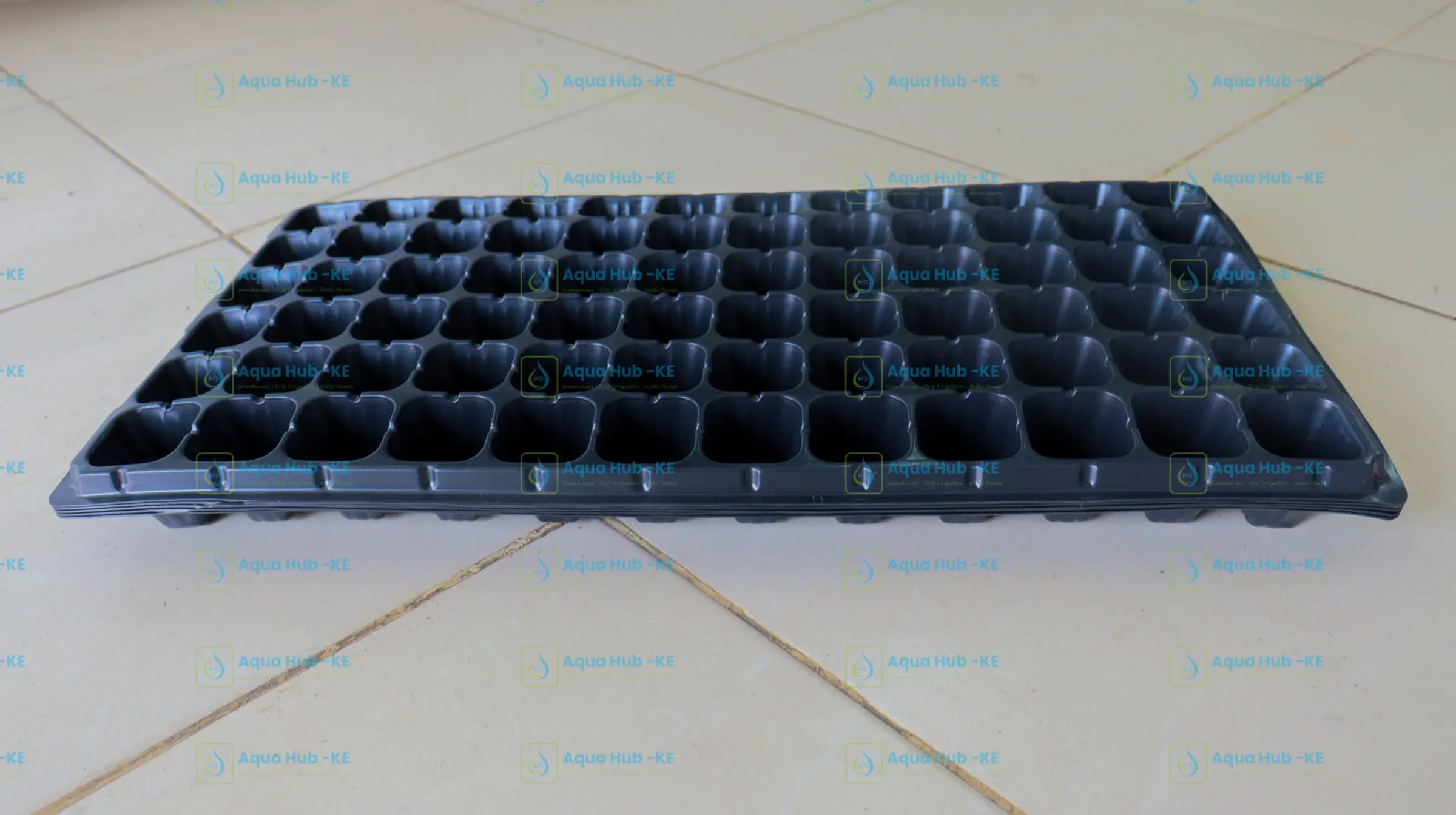
The cell count decides how long a seedling can stay in the tray and how large it can grow before it needs more room. Trees differ in seed size and growth rate, so the tray size should follow the species you raise.
| Tray size (cells) | Best for |
|---|---|
| 200 and 288 | Small-seeded trees that need little room in their first weeks |
| 128 | Species that fall between the small-seeded and larger-seeded groups |
| 50 and 72 | Trees with bigger seeds, and trees that stay longer in the nursery |
Larger cells give the roots space to develop before planting. If you are unsure which size fits your species, name it when you call +254790719020, and the team will suggest a tray size.
Small-Seeded Trees in 200 and 288 Cell Trays
Small seeds produce small seedlings that need little room in their first weeks. These tray sizes suit trees such as:
- Grevillea.
- Calliandra.
- Eucalyptus.
- Cypress.
- Casuarina.
- Leucaena.
Move these seedlings to the field, or to larger containers, before the roots fill the cells.
Setting Up Affordable Seedling Trays Supplied by Aqua Hub Kenya
The mix in the cells affects germination as much as the seed does. Follow these steps when you prepare and sow a tray:
- Use a loose mix that drains well, since it lets air reach the roots, whereas heavy clay holds water and encourages rot.
- Fill every cell to the top and press the mix down lightly.
- Water the tray before sowing, so that the mix settles and the seeds do not sink too deep.
- Sow one seed in each cell, at a depth about equal to the width of the seed.
- If two seeds sprout in one cell, remove the weaker one early, because two seedlings in one cell compete for the same space and their roots tangle.
Watering Tree Seedlings
Small cells hold little mix, so they dry out faster than a seedbed. Water the trays every morning with a fine spray from a watering can or a hand sprayer, and add a second watering in the afternoon during hot weather. Cells at the edge of a tray dry first, so check them before the middle cells. Do not let water stand in the cells, because roots that sit in wet mix rot. If the mix stays soggy, water less often and check the drainage holes for blockage.
Stand the trays on a bench instead of the soil. A bench keeps roots from growing out of the drainage holes into the ground, and it lets air move beneath the tray. It also keeps the trays clear of mud splash, which can carry disease onto the leaves. A simple frame of timber or poles is enough, as long as it is level and holds the weight of wet trays.
Timing Tree Seedlings with Kenya’s Rains
Most of Kenya has a long rainy season and a short one, and seedlings planted at the start of the rains have the best chance to establish. Count backwards from the planting date to find when to sow, because each species needs a different number of weeks in the nursery. Ask your local forestry or agriculture officer how long your species takes, and then sow so that the seedlings are ready when the rains begin. Sowing in batches a week or two apart also spreads the work and gives you seedlings at different stages. Plan this early, because a late sowing leaves the seedlings too small to plant when the rains arrive.
Shade Nets from Aqua Hub Kenya for Hardening Off Seedlings
Young seedlings burn in strong sun, so cover the trays with a shade net during the first weeks. A 75% shade net suits seedlings and nurseries. As the planting date approaches, reduce the shade step by step so that the seedlings adjust to full sun before they reach the field. Farmers call this process hardening off, and it lowers the shock of transplanting. Leave the trays without shade for the last few days before planting. Aqua Hub Kenya supplies shade nets, and you can call +254790719020 to ask which shade rate suits your nursery.
Reusing Aqua Hub Kenya’s Affordable Seedling Trays Across Seasons
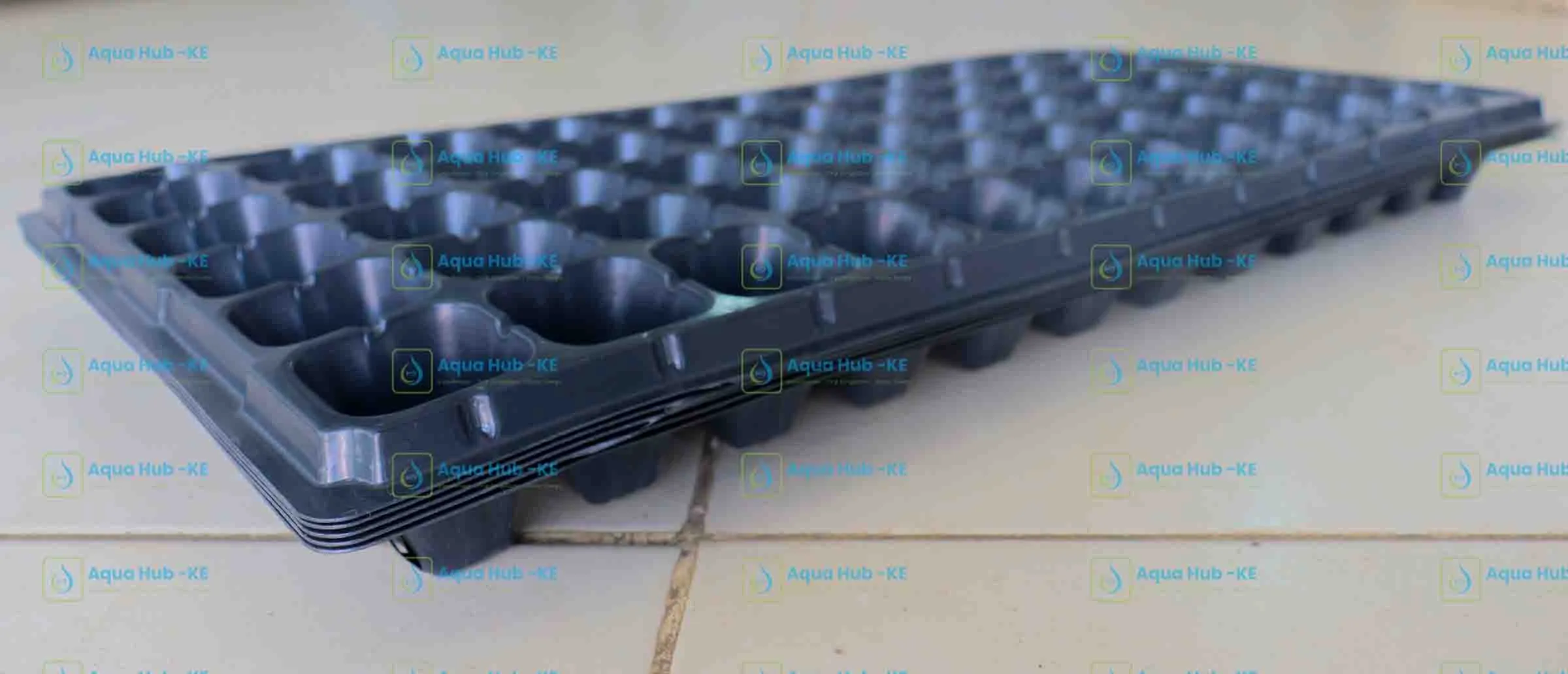
A tray lasts through many batches when the farmer cleans it after each use. Look after each tray as follows:
- Tip out the old mix and wash the cells with clean water.
- Let the tray dry in the shade, and store it flat and out of the sun so that it keeps its shape.
- Wash the tray again before the next sowing if it held diseased seedlings, because disease can pass from one batch to the next.
- Reuse the tray for several seasons, which spreads its KES 140 cost over many seedlings.
Why Buy Affordable Seedling Trays from Aqua Hub Kenya?
Aqua Hub Kenya offers five tray sizes, so a nursery can match the cell count to each tree species instead of forcing every seedling into one size. A farmer who raises several species can buy different sizes in the same order. A nursery can also start with one size and add others as its list of species grows.
Aqua Hub Kenya also stocks shade nets and irrigation equipment for the rest of the nursery. To order trays for your nursery, email info@aquahubkenya.co.ke with the species and the number of trees you plan to raise, or call +254790719020.
Frequently Asked Questions
What are seedling trays?
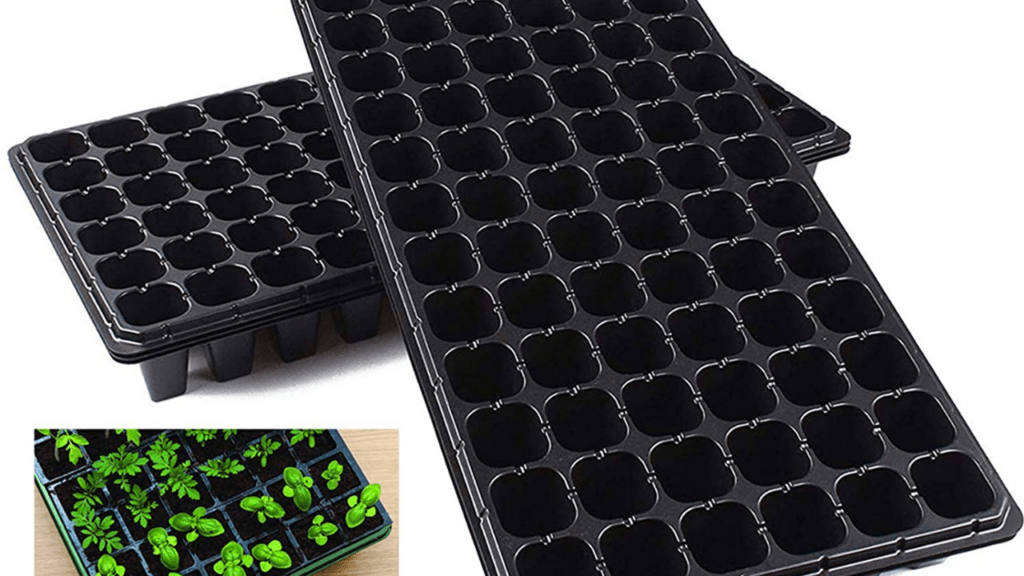
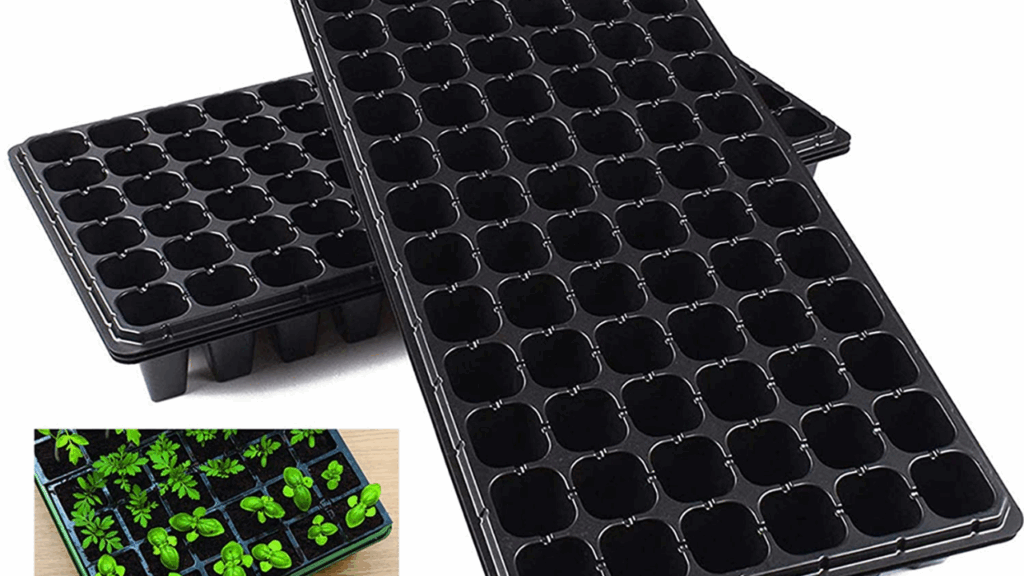
Seedling trays are plastic trays with many small cells, each of which holds one seedling.
How much do seedling trays cost in Kenya?
Seedling trays cost KES 140 each at Aqua Hub Kenya. Call +254790719020, or email info@aquahubkenya.co.ke, with the number of trays you want, and the team will total the order.
Which tray size is best for tree seedlings?
The best size depends on the species and on how long the seedling stays in the tray. Small-seeded trees suit the 200 and 288 cell trays, and trees that stay longer suit the 50 and 72 cell trays. The 128 cell size sits between the two.
How many seedling trays do I need for 1,000 tree seedlings?
1,000 seedlings need 20 trays of 50 cells, 14 of 72 cells, 8 of 128 cells, 5 of 200 cells or 4 of 288 cells. Order a few extra to cover seeds that fail to sprout.
Can I reuse seedling trays?
Yes, you can reuse seedling trays after you wash them and let them dry, and you should wash them twice if the last batch had disease.
How deep should I sow tree seeds in a seedling tray?
Sow tree seeds at a depth about equal to the width of the seed.
When should I move plant out of the trays?
Move a plant when its roots fill the cell and hold the soil together as a plug. Waiting longer lets the roots circle inside the cell.
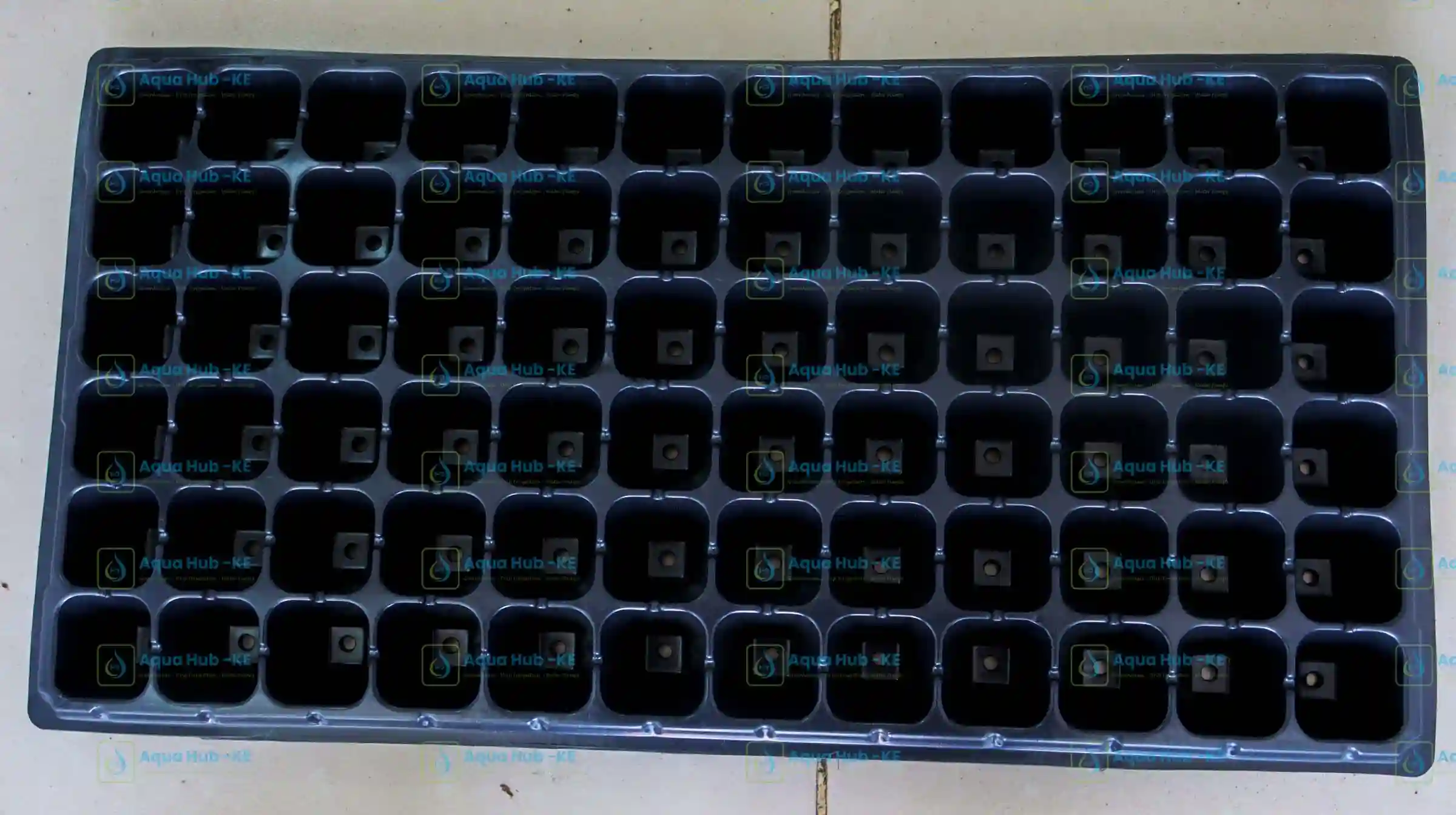
agricultural seedling trays in Kenya
Do seedlings in trays need shade?
Yes, young seedlings in trays need shade for their first weeks. Strong sun burns the leaves and dries the small amount of mix in each cell. Cover the trays with a shade net, and reduce the shade gradually as the planting date approaches.
What soil mix should I use in seedling trays?
Use a loose mix that drains well, because heavy clay holds too much water in a small cell. Fill each cell to the top and water the tray before sowing. Avoid garden soil taken straight from the field, because it can carry weed seeds and disease.
Final Thoughts on Affordable Seedling Trays from Aqua Hub Kenya for Tree Nurseries
Affordable seedling trays give each tree its own space to grow, and the plug of roots and soil that results helps the tree establish after planting. Choosing the cell count to match the species, sowing one seed per cell and hardening the seedlings before planting all raise the share of trees that survive. A nursery that plans its trays and its watering before sowing wastes fewer seeds.
Affordable seedling trays cost KES 140 each, and 1,000 seedlings need between 4 and 20 trays depending on the cell count. For an exact price on your order, speak to the team through +254790719020 or email info@aquahubkenya.co.ke.