
Blog
How to Raise Seedlings on Planting Trays
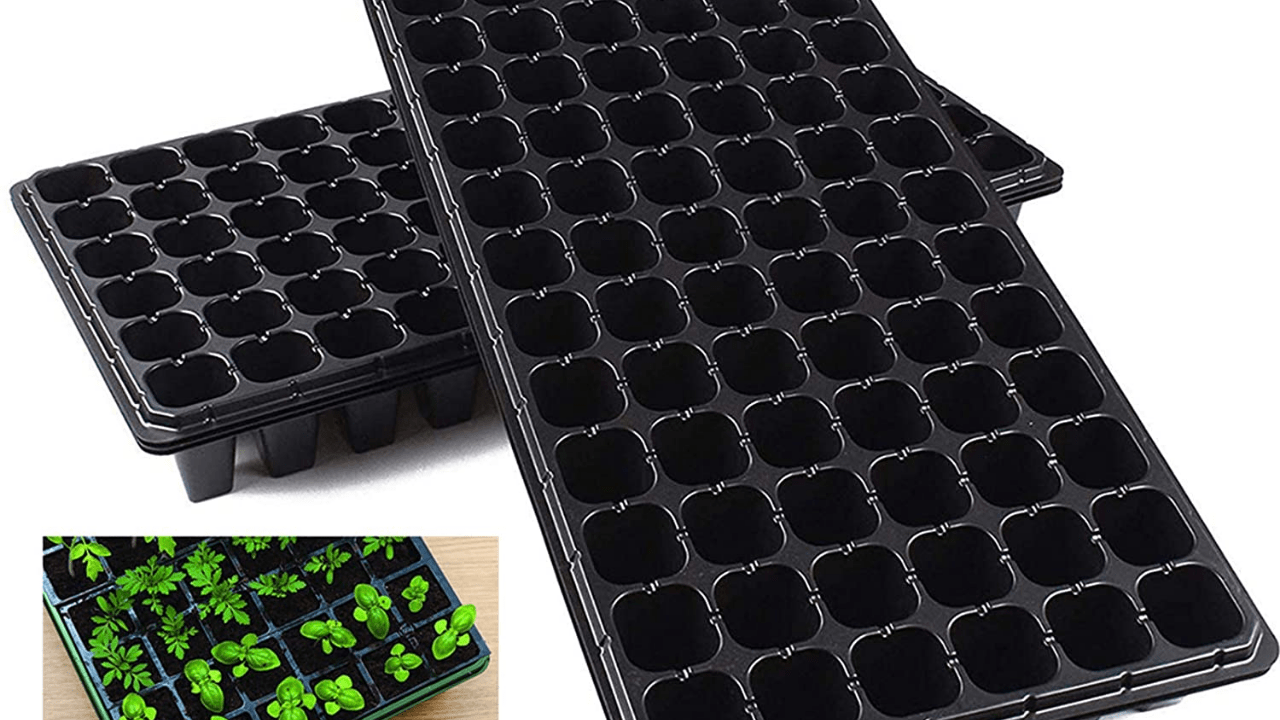
Aqua Hub Kenya is the ideal supplier of special planting trays for seedling propagation in Kenya. We deal with different types of Planting trays depending on the number and type of seedlings that our clients grow.
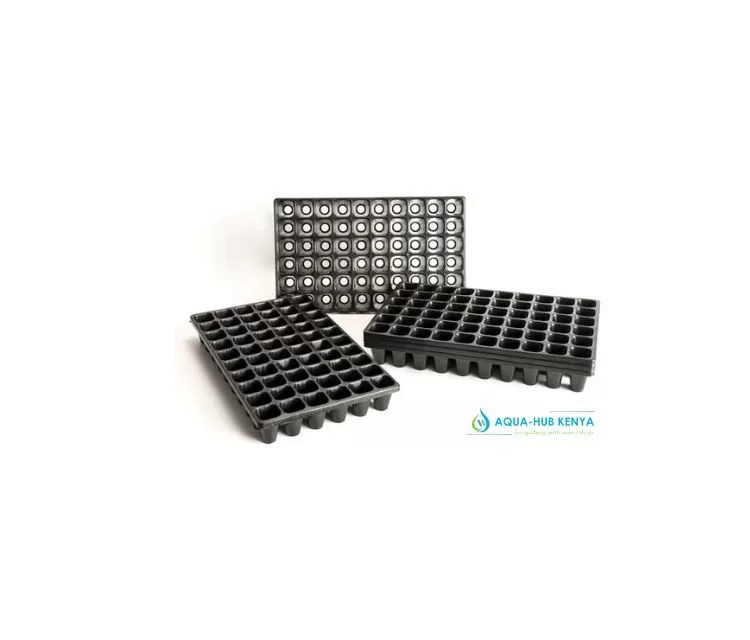
We supply seedling trays of 50, 72, 128, 200 and 288 cells.
How Much is a Planting Tray in Kenya?
The cost of planting trays in Kenya varies depending on different suppliers in the market. Our planting trays are KES 150 each.
Start Seedlings with Our Quality Trays
As often dry season may persist and the cost of viable seedlings may increase. We advise our clients to grow their seedlings with the help of agronomists.
We offer you all you will need including trays, planting substances, irrigation kits such as misters, and shade nets for housing your seedlings.
Remember we can also help you install a greenhouse structure to propagate your vegetable and fruit seedlings.
Call 0790719020 to learn more about our products.
What are planting trays?
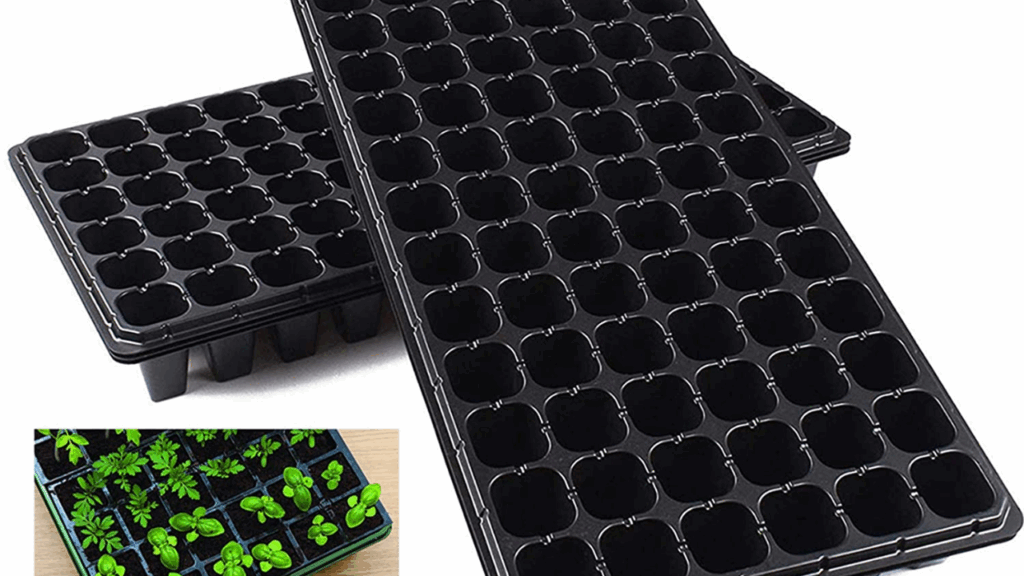
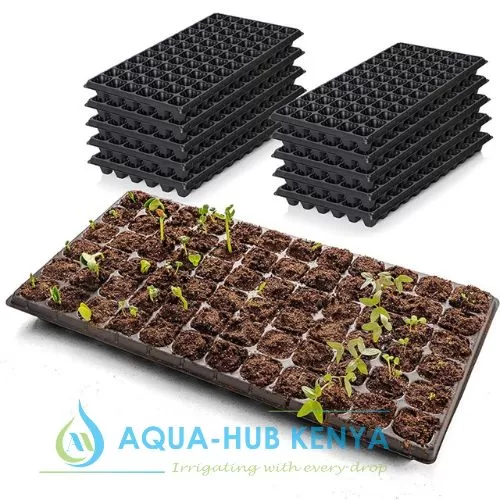
Planting trays are plastic devices that enable the propagation of seedlings from the germination stage to when they are ready to transplant. Trays are made of plastic or sometimes carton boxes with a design containing holes or cells where seedlings are grown.
Features of Our Trays
• Made of plastic UV-treated materials. This means that they can work well without damage by ultraviolet rays
• Black in color
• Contains a certain number of cells that hold seedlings. Cells range from 50 to 288.
• The cell size varies according to the seedling size.
Seedling Trays for Sale in Kenya
We stock a range of seedling trays with the following cells:
- 50 cell tray
- 72 cell tray
- 128 cell tray
- 200 cell tray
- 288 cell tray
Why Raise Seedlings on Trays?
Raising seedlings in a planting tray is a good way to ensure that a maximum number of seedlings survive to maturity.
Planting in trays significantly reduces the diseases that are often associated with some soils in various regions. Once you in grow in trays you can easily control the amount of water and nutrients applied.
Trays also lower overcrowding and thus enhance viable seedlings to develop in the end.
Above all, seedling trays enhance healthy seedlings by lowering the chance of erosion from heavy rainfall.
Which Growing Media for Seedlings?
A special growing substance known as cocopeat is often used to propagate seedlings as an alternative to soil. Cocopeat is preferable to soil due to its excellent water and nutrient-holding capacity.
How to Raise Seedlings in Planting Trays
First ensure you have the right cocopeat, or propagation medium. Cocopeat is available in our shops. Visit aquahubkenya.co.ke or contact 0790719020 to order treated coco peat.
Once you get the cocopeat you may proceed to propagate your seedlings right away.
In case you have untreated cocopeat, you have to treat it by:
- Crushing the cocopeat blocks into fine cocopeat dust.
- Place the cocopeat dust into a tray and add water.
- Add water up to 3 times the weight of the cocopeat block. If it is a 5 kg block, use 15 l of water.
- Wash the coco peat using hands and remove fibres in the mixture.
- Add three drops of calcium nitrate to the mixture to remove salts available in the mixture.
- Leave the mixture for 24 hours for all the salts to dissolve in calcium nitrate
- After 24 hours drain the excess water and leave the cocopeat to dry
Which Size of Seedling Tray to Use
- 50 cell tray – tomato, capsicum, cucumber, squash,
- 72 cell tray – beans, peas, maize, spinach, kales,
- 128 cells – vegetable seedlings including kales, cabbage and broccoli.
- 200 cells – onion, herbs, and garlic seedlings.
- 288 cells – can also be used for onions and other smaller seedlings.
How to Propagate Seeds in Trays
The steps to plant seedlings in trays are the following:
- Add 22 l of water to 5 kg of cocopeat dust in a bucket.
- Place the moist coco-peat substance to a nearly full level on the cells of the tray.
- Sow seedlings on the cells while ensuring they are 1-2 cm deep.
- Ensure all cells have been propagated.
- Fill the remaining part of the cells with planting media.
- Water the cells till all the cells are moist.
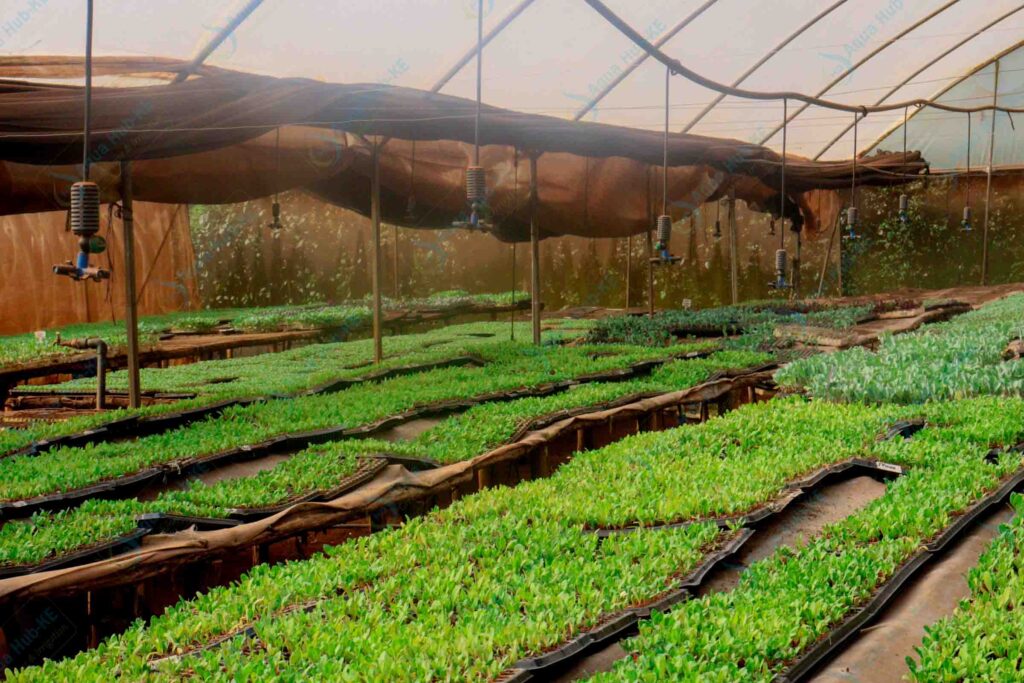
- Do this for all the trays while arranging them on a proper structure with a shade net.
- You may label the tray for future confirmation and proper management.
Advantages of Planting Trays
- They have a long shelf life of 2-3 years.
- Seedling trays enhance the maturity of maximum seedlings.
- The use of trays saves on space and thus allows for the propagation of more seedlings.
- Viable seedlings can develop due to proper spacing.
- Allows for faster germination of seeds.
- Trays allow for easier transplanting, as they reduce the chance of damaging seedlings when uprooting.
Where to Buy Planting Trays in Kenya
Among the best suppliers of planting trays in Kenya, Aqua Hub LTD offers affordable prices and bulk seedling trays.
If you are looking for quality seedling planting trays, get them from Aqua Hub Kenya.
Call 0790719020
Frequently Asked Questions
1. How much is a seedling tray in Kenya?
KES 150 each.
2. What is the cost of seedling trays with 72 holes?
KES 150.
3. How long can plants stay in seed starting trays?
3 – 4 weeks depending on the type of plants.
4. Can I reuse seed starting trays?
Yes. You can reuse seedling trays if still in good condition, but you must sterilise them.
5. What problems occur when using germination trays?
Overwatering, leaching of seedlings and dying of seedlings
6. When to transfer plants from the seedling tray?
Transplant your seedlings once they develop 2-3 true leaves.
7. How many seeds do you put in a seedling tray?
1 or 2 depending on the type of seedlings.
8. What is the best size seed tray?
Varies with crop type. For vegetables, you can use 72-cell trays.
9. Where should I put my seedling tray?
Place your trays in a greenhouse or shade house environment.
10. Where Can I Buy Seedling Trays in Kenya?
Aqua Hub LTD.