
Blog
HDPE Pipes for Flood Irrigation by Aqua Hub KE
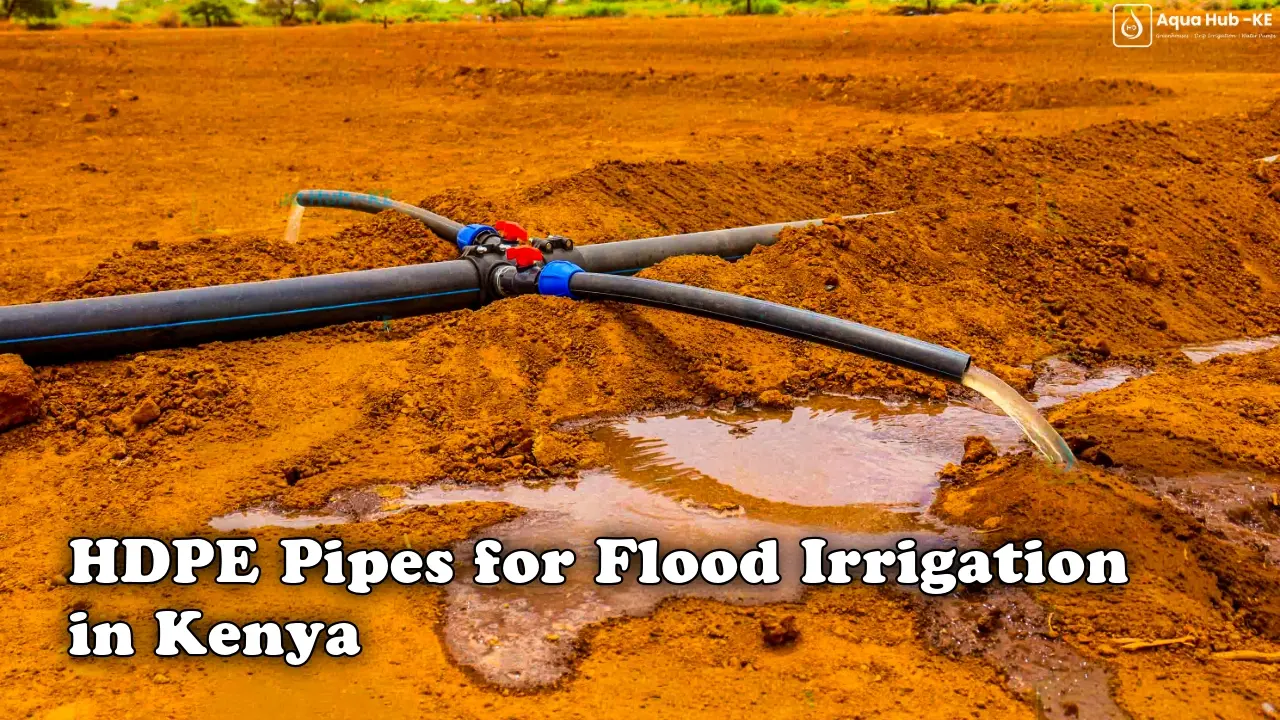
HDPE pipes for flood irrigation start at KES 2,500 for a 16 mm × 100 m roll at Aqua Hub Kenya, and the final price depends on the size and the pressure rating of the pipe.
Flood irrigation covers a field by letting water flow across the soil, so it needs a delivery line that carries large volumes from the source to the field without losing water on the way. Open channels lose water through the soil and through evaporation, whereas a closed pipe delivers almost all of it. HDPE, or high-density polyethylene, is a tough and flexible plastic that suits this job.
Aqua Hub Kenya supplies HDPE pipes and the fittings that go with them, and the team also installs the pipes on your farm. To plan the pipe run for your field, call +254790719020 and describe your water source and your land.
Prices of HDPE Pipes for Flood Irrigation at Aqua Hub Kenya
HDPE pipes for flood irrigation range from KES 2,500 to KES 35,700 per roll. The table below lists each size with its pressure rating.
| Pipe size and roll length | PN8 price (KES) | PN10 price (KES) |
|---|---|---|
| 16 mm × 100 m | On request | 2,500 |
| 20 mm × 100 m | 3,500 | 3,500 |
| 25 mm × 100 m | 4,000 | 4,500 |
| 32 mm × 100 m | 5,500 | 7,100 |
| 40 mm × 100 m | 8,500 | 11,500 |
| 50 mm × 100 m | 16,000 | 16,000 |
| 63 mm × 100 m | 19,500 | 23,500 |
| 110 mm × 50 m | 31,300 | 35,700 |
PN8 and PN10 are pressure ratings, and the number shows the pressure in bar that the pipe is built to handle. Choose the rating that matches the pressure of your pump or water source. For more on sizes and uses, read our guide to HDPE irrigation pipes. Several factors set the price of an order:
- Diameter of the pipe.
- Number of rolls needed to cover the line from the source to the field.
- Pressure rating, either PN8 or PN10.
- Number and type of fittings in the layout.
- Whether you want the team to install the pipes.
A sketch of your field lets the team price your order exactly, so email it to info@aquahubkenya.co.ke.
Budgeting for Fittings and Installation
The pipe is only part of the bill, since the fittings and the installation add to the total. Fittings vary with the layout, because a field with many basins needs more outlets and valves than a field with a few. Therefore, ask for a quote that covers the whole system, from pipe to installation, so that you see the full cost before you commit. To request that quote, call +254790719020 and give the team your field details.
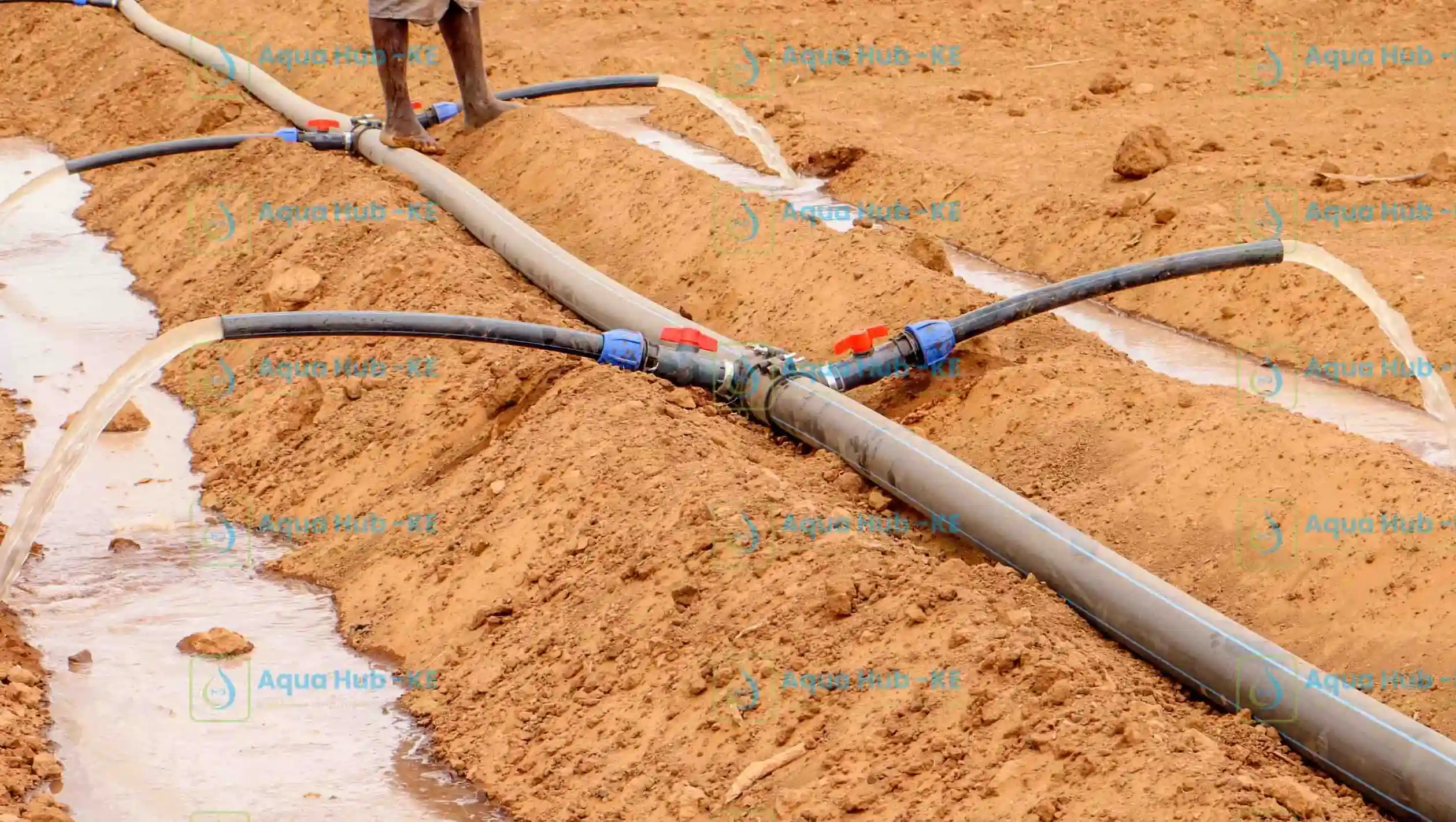
How Aqua Hub Kenya’s HDPE Pipes for Flood Irrigation Carry Water to the Field
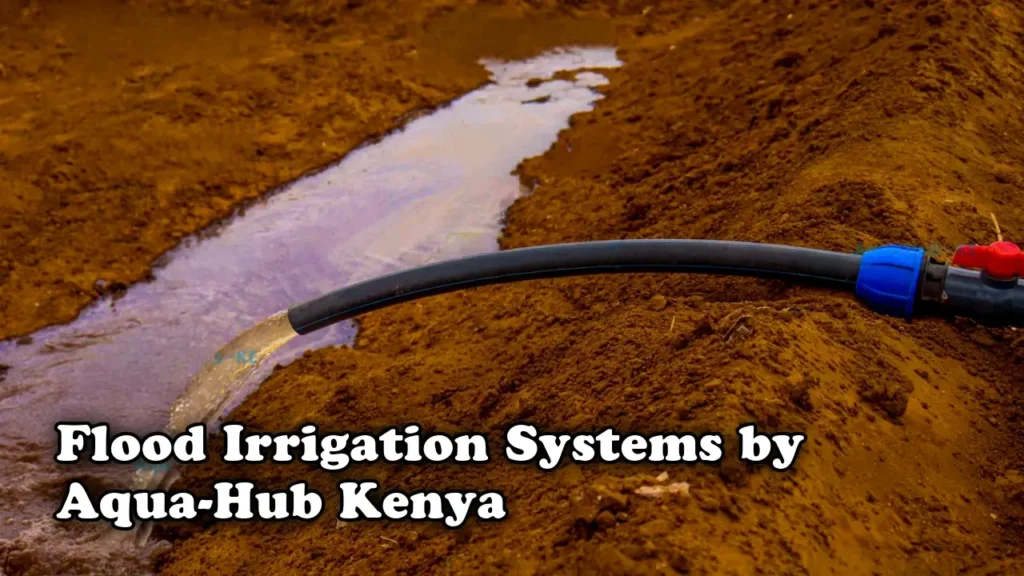
A pipe carries water from the source to the head of the field, which is the upper edge where the water enters. The source can be a pump, a canal, a dam or a river. Outlets at the head of the field then release the water into each basin or furrow, and the water spreads across the soil from there.
Basins and Furrows
In a basin system, the farmer levels the ground into beds with small banks around them, and the pipe outlet fills each bed in turn. In a furrow system, the outlet feeds the top of each furrow, and the water runs down the row between the plants. Either way, fittings that control the flow let you irrigate one section at a time, so the water reaches every part of the field.
Why Farmers Choose HDPE Pipes for Flood Irrigation from Aqua Hub Kenya
Farmers who switch from open channels to pipes keep more of the water they pump or divert. Closed pipes also keep livestock and debris out of the water, so fewer blockages reach the outlets. To compare HDPE with other pipe types, see our guide to the best irrigation pipes in Kenya. HDPE is also easier to handle than metal pipe, because it is lighter and it bends to follow the ground. Crews can lay long runs with fewer joints, and fewer joints mean fewer places for leaks.
Durability in the Field
HDPE resists rust and rot, which damage metal and wood in wet soil. It also handles ground movement and temperature changes better than rigid pipe, so it suits fields where the soil shifts between the wet and dry seasons. Even so, protect the pipe from sharp tools and heavy vehicles, because they can cut or crush it.
Planning a Flood Irrigation Layout with HDPE Pipes Supplied by Aqua Hub Kenya
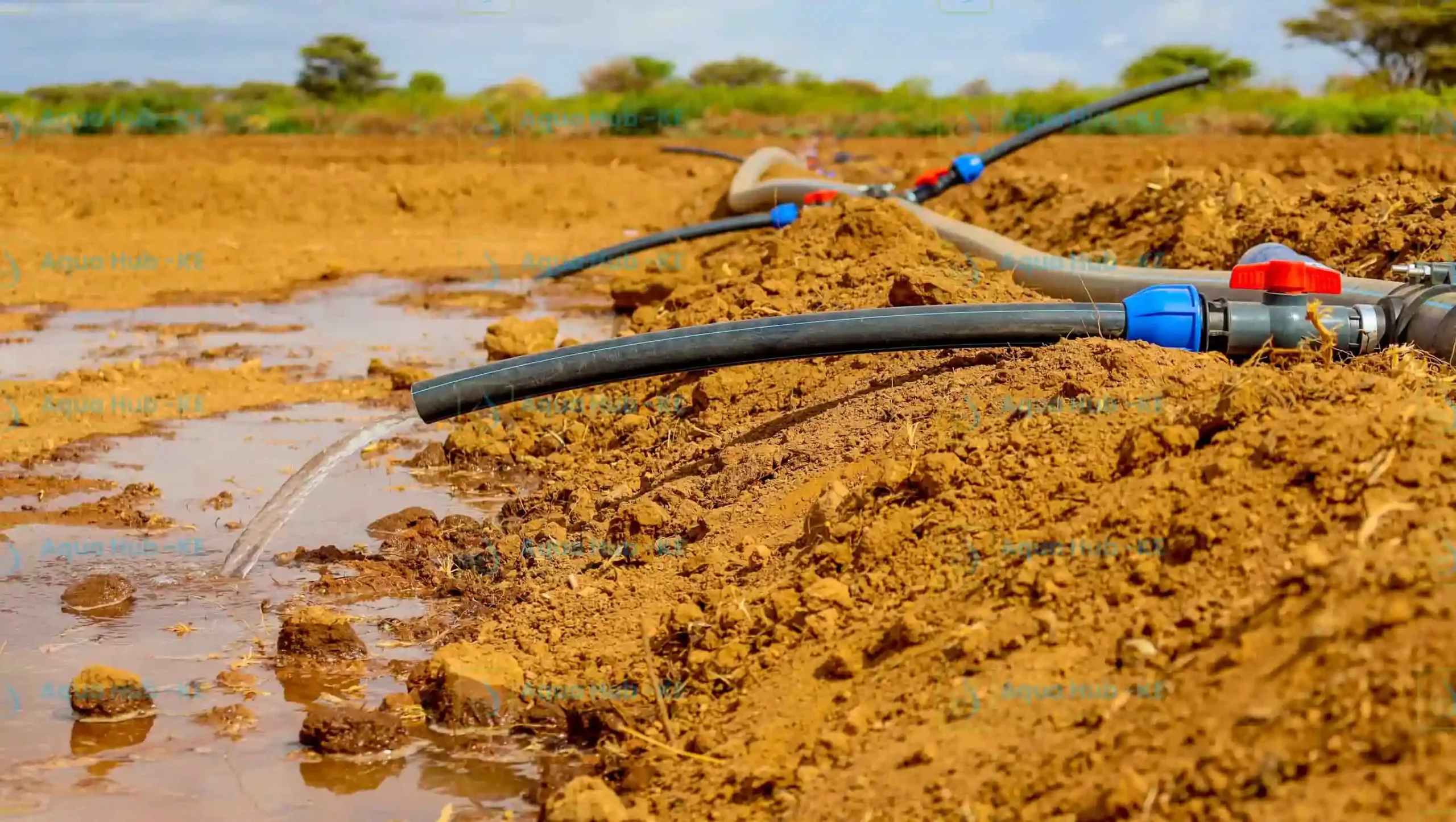
A good layout wastes no water and reaches every part of the field. Start by walking the land and recording the following measurements:
- How far the water source lies from the head of the field.
- Slope of the land along the field and across it.
- Number of basins or furrows you want to irrigate at the same time.
- Flow and pressure available at the source.
The slope matters because water runs faster down a steep field and soaks in less evenly. Likewise, the flow at the source limits how many outlets you can open at once, since each extra outlet takes water from the others. Draw a simple sketch of the field with the source, the head of the field and the position of each basin or furrow, and attach it to your email. Send your measurements to info@aquahubkenya.co.ke, and the team will work out the pipe sizes and outlet positions that suit your field.
Pipe Size, Flow and Distance for Aqua Hub Kenya’s HDPE Pipes
Choosing the right diameter is the most important decision when you buy HDPE pipes for flood irrigation. A pipe that is too narrow for the flow slows the water and wastes pump energy, whereas a pipe that is too wide costs more than the job needs. Long runs lose pressure through friction, so a longer line often needs a wider pipe. Sharp bends and many fittings add further loss, so keep the route as straight as the land allows. Send your flow and distance to info@aquahubkenya.co.ke, or call +254790719020, and ask which diameter suits your layout.
Fittings for HDPE Pipes for Flood Irrigation in the Aqua Hub Kenya Range
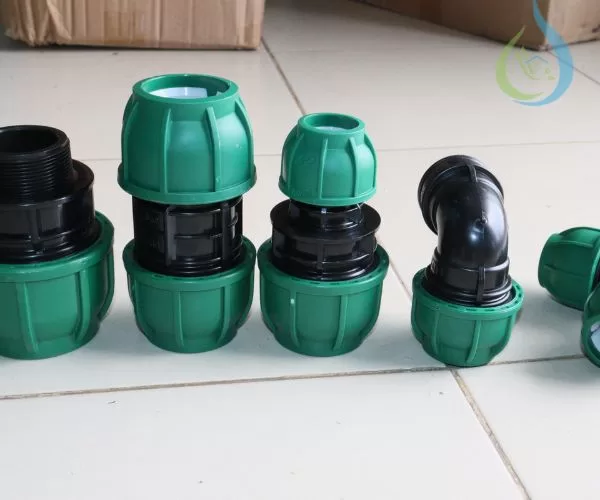
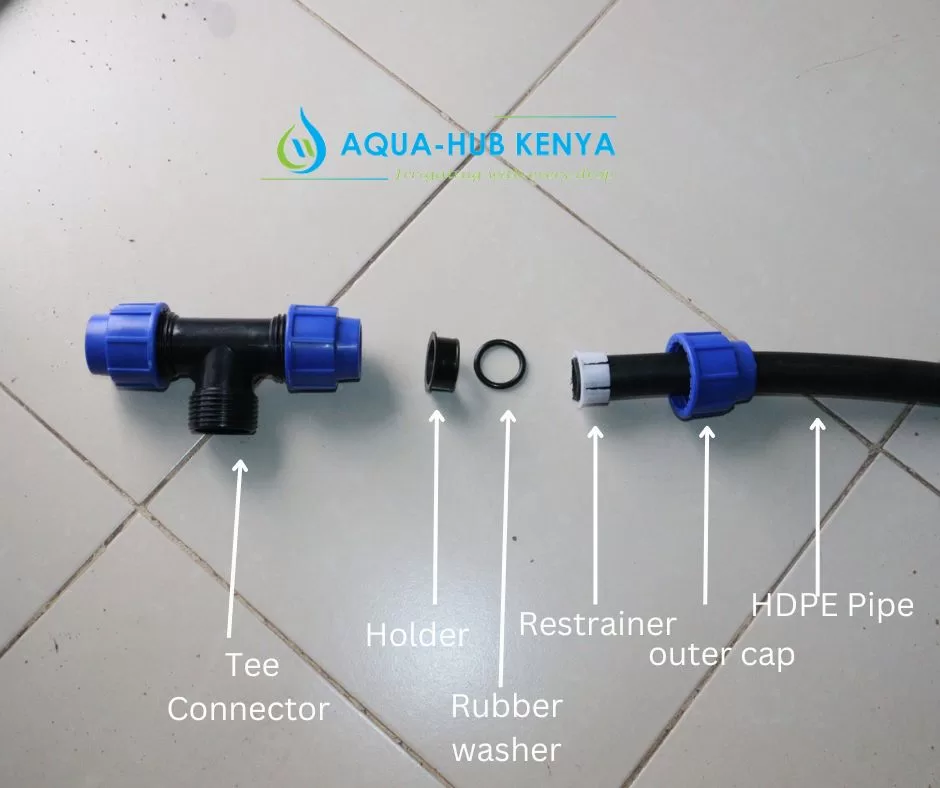
Fittings join lengths of pipe, turn the line and release water at the right points, and the page on HDPE pipes and fittings shows the types on offer. A flood irrigation layout often uses the following:
- Couplers join two lengths of pipe.
- Elbows change the direction of the line.
- Tees split the line into branches.
- Reducers link pipes of different diameters.
- End caps close the end of a line.
- Valves control the flow to each outlet.
Tell the team which parts of your field you irrigate together by calling +254790719020, and they will list the fittings your layout needs.
HDPE Pipe Installation for Flood Irrigation from Aqua Hub Kenya
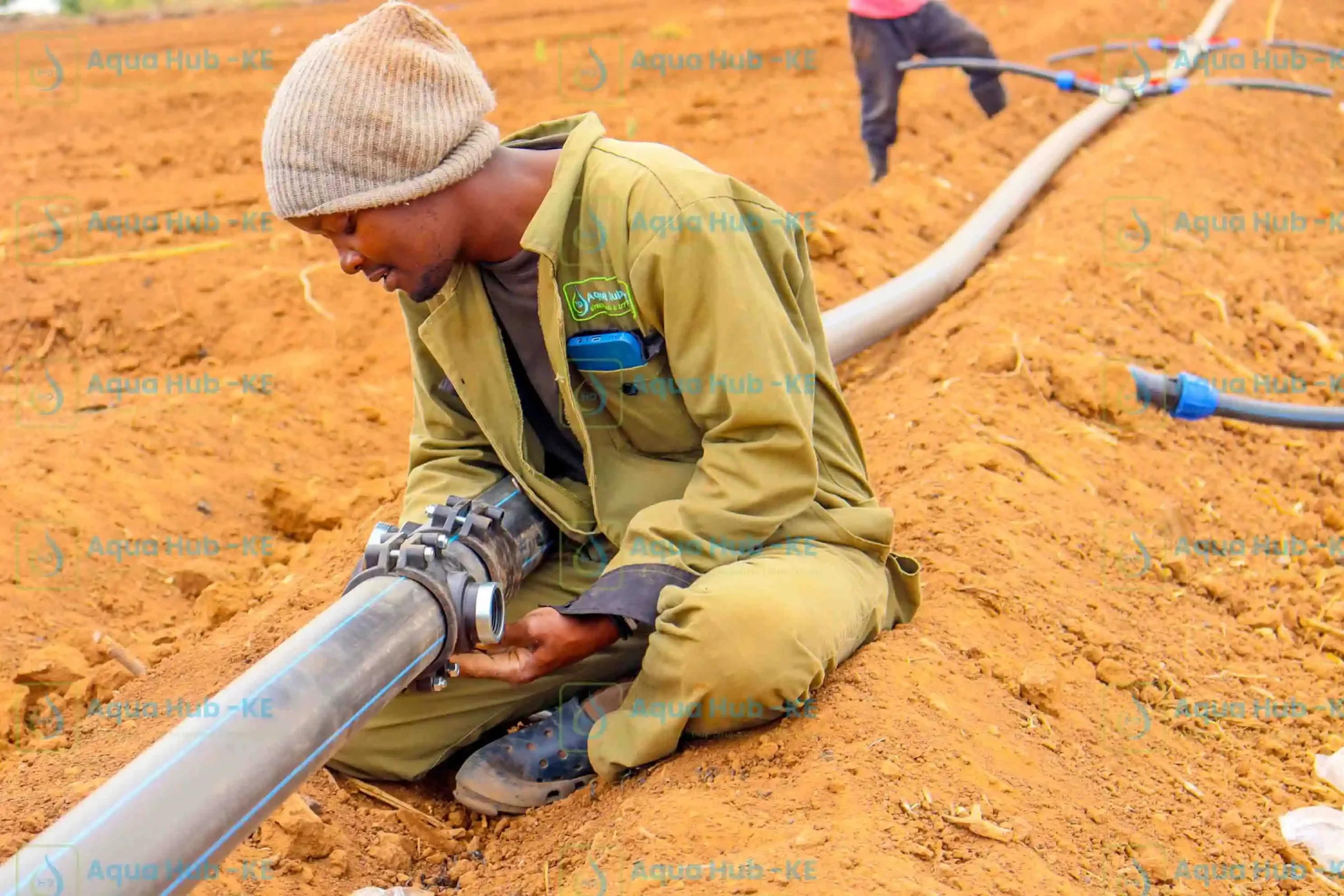
Aqua Hub Kenya installs the pipes it supplies as part of its flood irrigation systems, so you do not need to hire a separate crew. A typical installation follows this order:
- First, the installers mark the pipe route from the source to the field.
- Once the route is clear, they lay the pipe along it.
- Next, they join the lengths with fittings and set the outlets at the head of the field.
- After the joints are secure, they fill the line with water.
- Finally, they check every joint and outlet for leaks.
Preparing the Field Before the Pipes Arrive
The farmer can save time by preparing the site first. Clear the route of stones and stumps, and mark where the outlets should sit. Level the basins or shape the furrows, because the outlets work best when the water has a clear path across the soil. Once the site is ready, call +254790719020 to arrange the installation.
Keeping HDPE Pipes for Flood Irrigation by Aqua Hub Kenya in Working Order
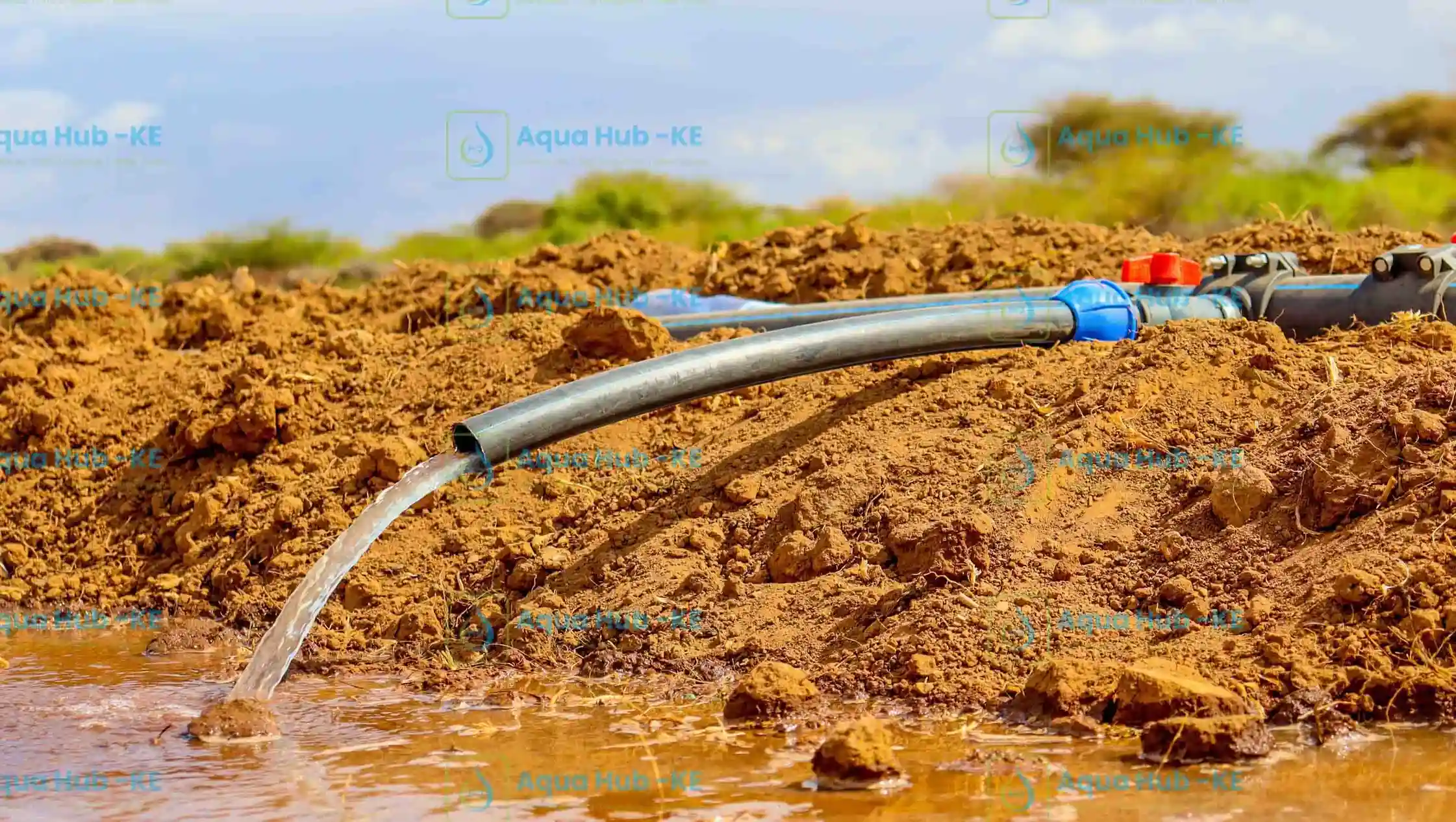
HDPE pipe needs little care, but a short check after each irrigation round prevents most faults. After each round, check the following:
- Joints and fittings for leaks.
- Outlets for silt and blockages.
- The pipe along its route for cuts or crushed sections.
- The soil around the pipe for erosion.
Bury or cover exposed lengths where you can, because long exposure to strong sun ages any plastic pipe. If you find damage that you cannot fix, email info@aquahubkenya.co.ke and describe the problem to the team.
Why Choose Aqua Hub Kenya for HDPE Pipes for Flood Irrigation?
Aqua Hub Kenya supplies the pipes and the fittings and then installs them, so one supplier handles the whole job from the first measurement to the first irrigation. This arrangement removes the need to coordinate separate sellers and crews.
The team also supplies pumps and drip kits, which helps if you plan to add pressurised irrigation to another part of the farm later. To get a pipe plan for your land, send your field size and water source to info@aquahubkenya.co.ke or call +254790719020.
Frequently Asked Questions
What are HDPE pipes?
HDPE pipes are tough, flexible plastic pipes made from high-density polyethylene.
How much do HDPE pipes cost in Kenya?
HDPE pipes for flood irrigation cost between KES 2,500 and KES 35,700 per roll at Aqua Hub Kenya, depending on size and pressure rating. Call +254790719020 for the exact price, or email info@aquahubkenya.co.ke.
Why use pipes instead of open channels for flood irrigation?
Open channels lose water through the soil and through evaporation. A closed pipe delivers most of the water to the field, so the same source irrigates more land.
Which pipe diameter suits my field?
The diameter depends on the flow from the source and the distance to the field.
Can I bury HDPE pipes?
Yes. Burying the pipe along its route keeps it clear of vehicles and sunlight.
Do HDPE pipes work with a pump?
Yes, a pump supplies the pressure that moves water through the pipe. On a sloping site, gravity can do the same job without a pump.
Does sunlight damage HDPE pipes?
Long exposure to strong sun can age any plastic pipe, so bury or shade exposed lengths where you can.
Can HDPE pipes also serve a drip system?
Yes, HDPE pipes also work as main lines for drip irrigation. Aqua Hub Kenya supplies drip kits as well, and you can call +254790719020 to ask about a combined layout.
How many outlets does a flood irrigation layout need?
Most layouts use one outlet for each basin or furrow head. The number you open at once depends on the flow from your source.
Final Thoughts on HDPE Pipes for Flood Irrigation
HDPE pipes carry water to the field with far less loss than open channels, and they handle rough ground and changing weather well. A clear layout, the right fittings and a clean, well-prepared site help the system deliver water evenly to every basin and furrow. Farmers who plan the layout before they buy usually avoid costly changes later.
HDPE pipes for flood irrigation cost between KES 2,500 and KES 35,700 per roll, depending on size and pressure rating. To price a full system of HDPE pipes for flood irrigation on your farm, call +254790719020 or email info@aquahubkenya.co.ke.