
Blog
Insect nets for Agriculture in Kenya
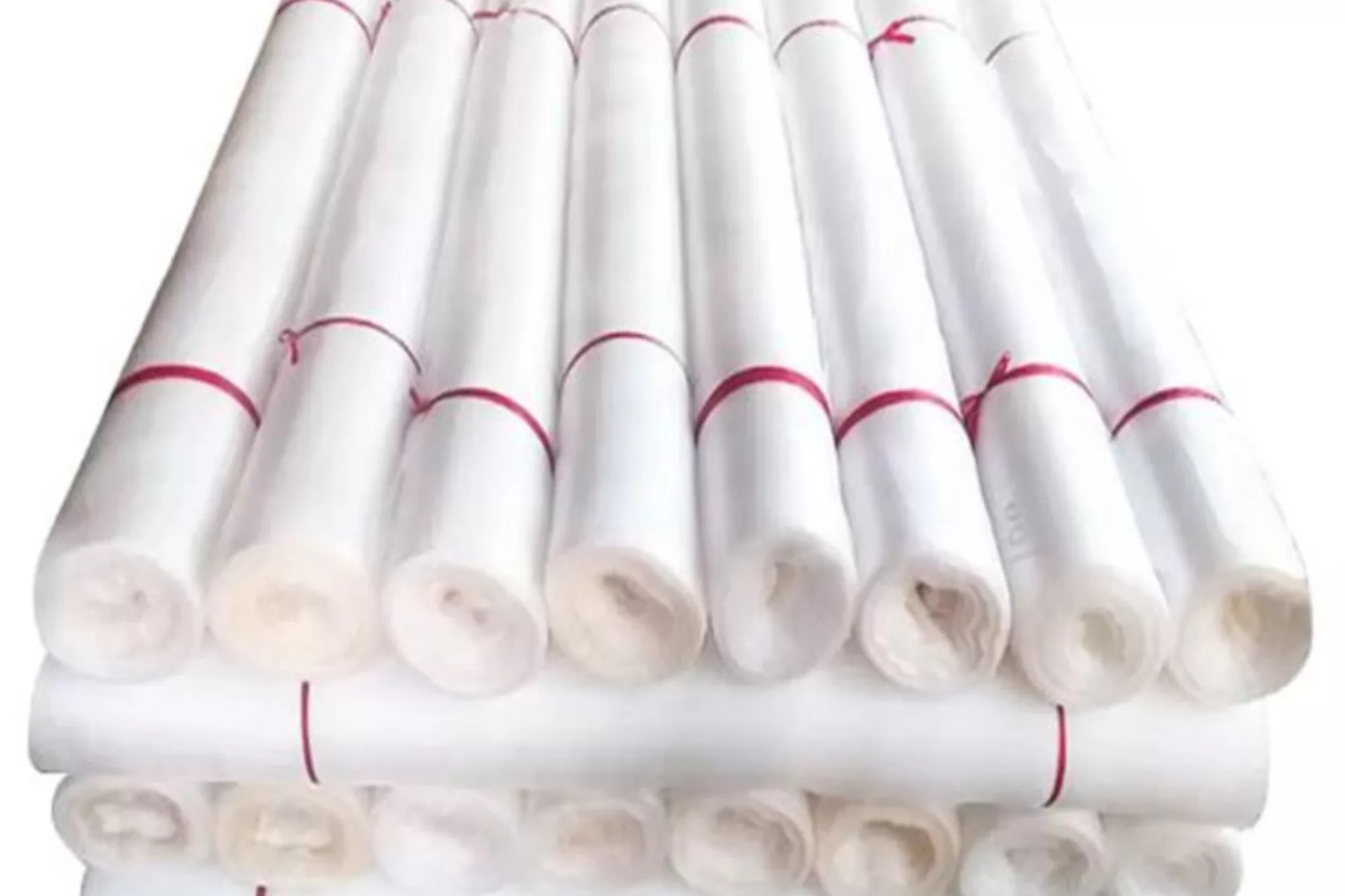
Insect nets for agriculture in Kenya by Aqua Hub are the best method of controlling pests. Our nets are more than suitable to handle notorious pests and insects in your orchards, greenhouses or shade houses.
Crops need to be kept free from insects and birds that feed on leaf foliage and flowers. Birds and insects can damage stems and flower buds, thus preventing the growth of trunks and production of fruits. This directly impacts the yield produced.
Quick Takeaways
- Insect nets reduce pest attacks by physically blocking whiteflies, aphids, thrips, and leaf miners.
- Prices in Kenya range from KES 65 – KES130 per square meter depending on mesh size and quality.
- UV-treated insect nets can last 5 – 7 years.
- Insect nets are ideal for crops like tomatoes, capsicum, cabbage, kale, and strawberries.
- Proper installation improves airflow while minimising disease transmission.
- Insect nets often reduce pesticide spraying by over 40%.
Insect Nets Prices in Kenya
| Size(m) | Price (KES) |
| 2.5 x 50 | 10,000 |
| 2.5 x 100 | 20,000 |
| 3 x 50 | 13,200 |
| 5.5 x 30 | 12,375 |
What are Insect nets?
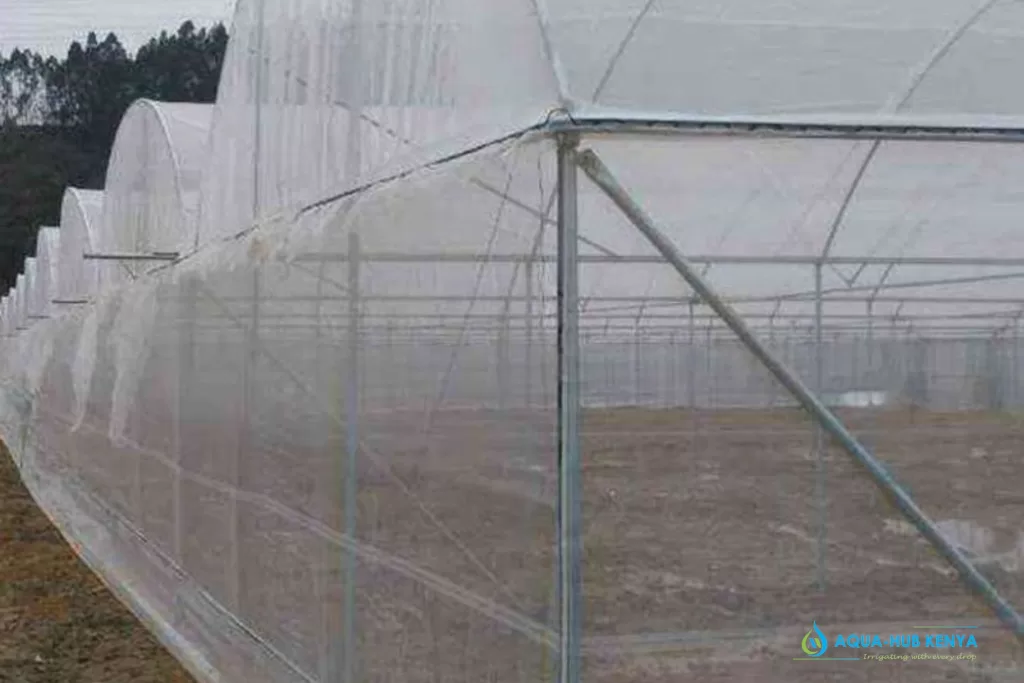
Insect nets are fabricated nets made from HDPE material. They are often reinforced in the walls of greenhouses and shade houses to protect plants from destructive insects such as
- bees – Feeds on flower buds
- Aphids – Aphids can destroy the yield on crops such as tomatoes, beans, potatoes, and oranges.
- Beetles – flower buds
- Grasshoppers – attacks the leaves of maize plants, sorghum, and cassava.
- Vine and stalk borers – damages the stalk of stalk growing plants such as maize, millet and
- Cabbage worms – feed on cabbage leaves and kales.
- Army worms – attacks the leaves of maize, beans, and vegetables.
Why Insect nets for Agriculture in Kenya
Insect nets come handy in providing a physical barrier to insects that can enter into the farms and crop plantations. Nets have highly knitted meshes to block tiny flies from entering.
Insect nets do not block the sun from reaching the plants. It allows 80% of the sun rays and air to penetrate.
Features of Insect nets
- UV treated to resist harsh conditions
- They are normally brilliant white to shy away insects (Most insects avoid bright light)
- Mesh surface with holes of 0.4 mm and 0.9 mm diameter
- Dimensions of 3 m by 50 m, 2.5 m by 50 m, 2.5 m by 100 m and 5.5 m by 30 m length
Importance of Insect Netting
Insect nets have significantly proven to be effective in most parts of the country which are prone to insect attack. Netting reduces the use of chemical insecticides which damages the soil fertility and at the same time lowers the cost of production by a huge percentage.
Insect nets enhance high level of production by preventing birds and insects, which are leading hazards in growth of flowering plants.
Uses of Insects Nets
- Mainly used in Greenhouses – Insects are common in greenhouses due to warm environments present inside.
- Insect nets are applied in open fields to prevent birds from feeding on plants such as sorghum and fruits like citrus.
- In solar dryers, netting is useful in blocking insects that feed on grain and foodstuffs. i.e.,
weevils, houseflies etc.
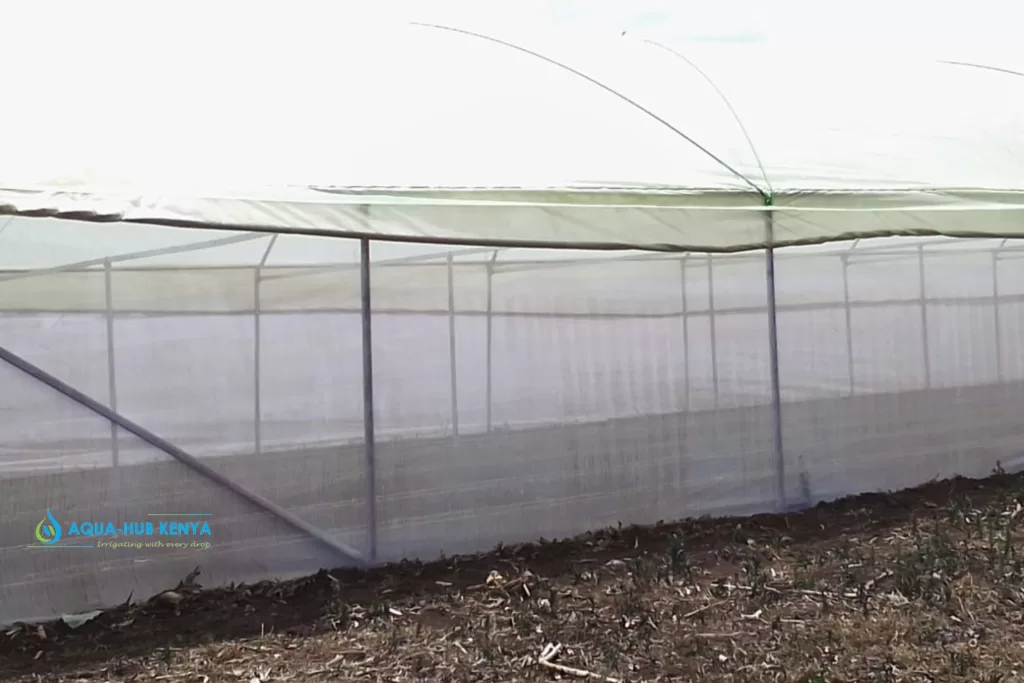
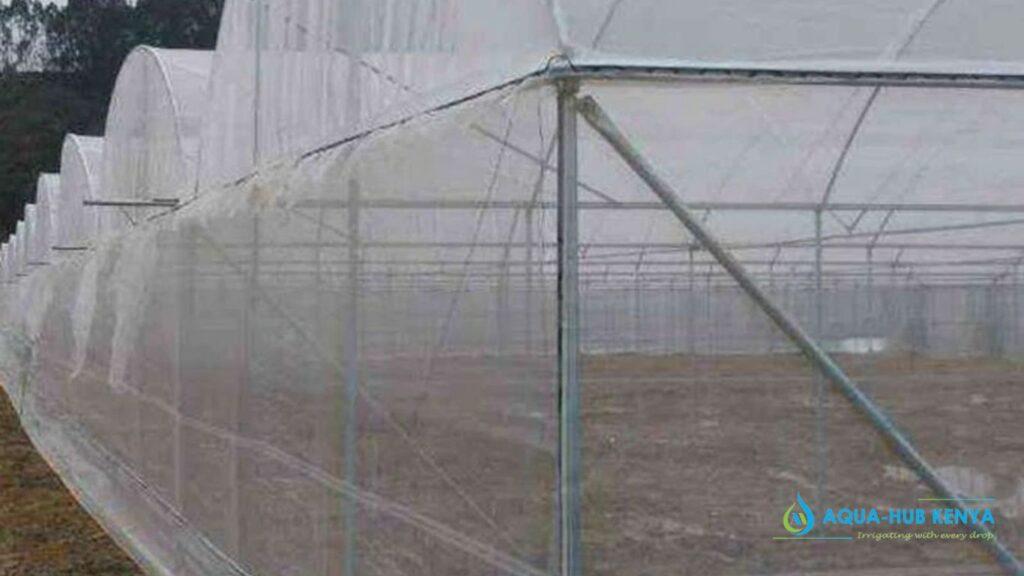
Insect nets used as greenhouse side cover to prevent pest entry and act as ventilation
Which Plants Should Be Protected Using Insect Nets?
Tomatoes
Tomatoes are highly susceptible to whiteflies and Tuta absoluta. Insect netting significantly reduces infestations.
Capsicum and Chili
Thrips and aphids can devastate pepper crops, especially in dry seasons.
Cabbages
Insect nets prevents diamond back moth and aphid attacks in cabbage farms.
Strawberries
Insect nets reduce fruit damage and improve quality for high-value markets.
Leafy Vegetables
Spinach, kales, lettuce, and coriander are often infested by aphids. Insect nets can be used to reduce aphids and other pest from attacking vegetables in greenhouse.
Common Uses of Insect Nets in Kenya
Greenhouse Side Nets
These are installed along greenhouse walls and ventilation areas to prevent insect entry while maintaining airflow. They are common in tomato and capsicum farming.
Net House Insect Nets
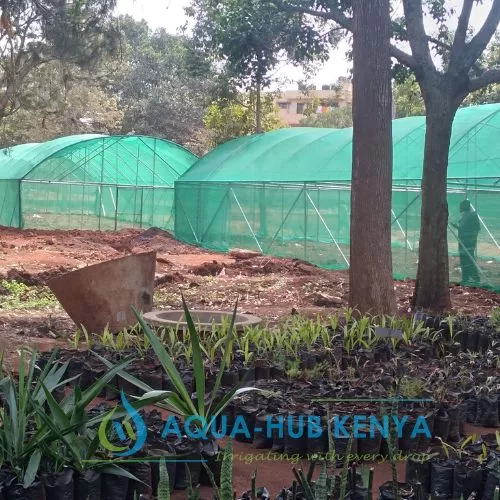
Net houses fully enclose crops using insect-proof mesh. They are popular for seedling production and high-value vegetables.
Walk-In Tunnel Nets
These are smaller structures suitable for smallholder farmers growing vegetables on limited land.
Floating Row Covers
Lightweight insect nets placed directly over crops to protect seedlings from early pest attacks.
Farmers should choose a net type depending on crop value, climate conditions, and available budget.
How to Use Insect Nets for Agriculture
Covering Greenhouses
Install insect nets along ventilation openings and sidewalls to block pests entering through airflow channels.
Building Net Houses
Net houses fully enclose crops and create a controlled environment for sensitive vegetables.
Protecting Seedlings
Young seedlings are highly vulnerable to pest attacks. Using insect nets during nursery stages improves survival rates.
Where to Buy Insect Nets in Kenya
Get quality insect nets from Aqua Hub Kenya. We have quality insect nets and profile bars and wires to set up the structure for your shade house or greenhouse.
Contact us for more information on 0790719020 or email us via info@aquahubkenya.co.ke.
Frequently Asked Questions
1. How much are insect nets in Kenya?
KES 80 KES 135 per square meter.
2. How much is a roll of shade net?
KES 13,000 – KES 36,000
3. Which crops require insect nets?
Tomatoes, capsicum, cabbage, kale, strawberries, and leafy vegetables.
4. How long do insect nets last?
5 years.
5. Can insect nets reduce pesticide use?
Yes. Farmers often reduce pesticide spraying by over 40% after installing insect nets.
6. Are insect nets suitable for open-field farming?
Yes. Floating row covers and walk-in tunnels work well in open-field vegetable farming.
7. What is the difference between 40 mesh and 50 mesh nets?
A 50-mesh net blocks smaller insects like thrips but may reduce airflow slightly more than 40 mesh.
8. Can insect nets be used with greenhouses?
Absolutely. Greenhouses side walls are covered with insects nets
9. Which mesh size of insect nets should I use?
It depends on the type of crops grown. If the net attracts smaller insects use 25 mesh net.
10. Where can I buy insect nets in Kenya?
Aqua Hub Kenya