
Blog
Solar Dryer Construction by Aqua Hub Kenya
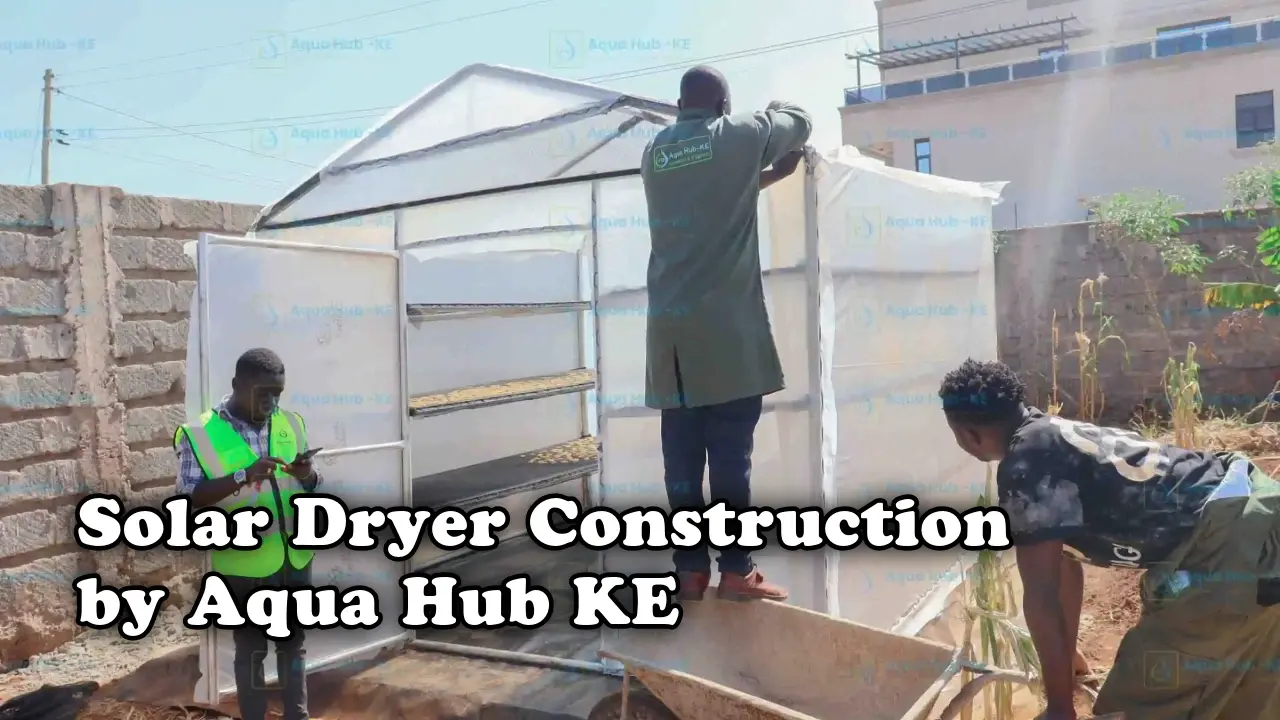
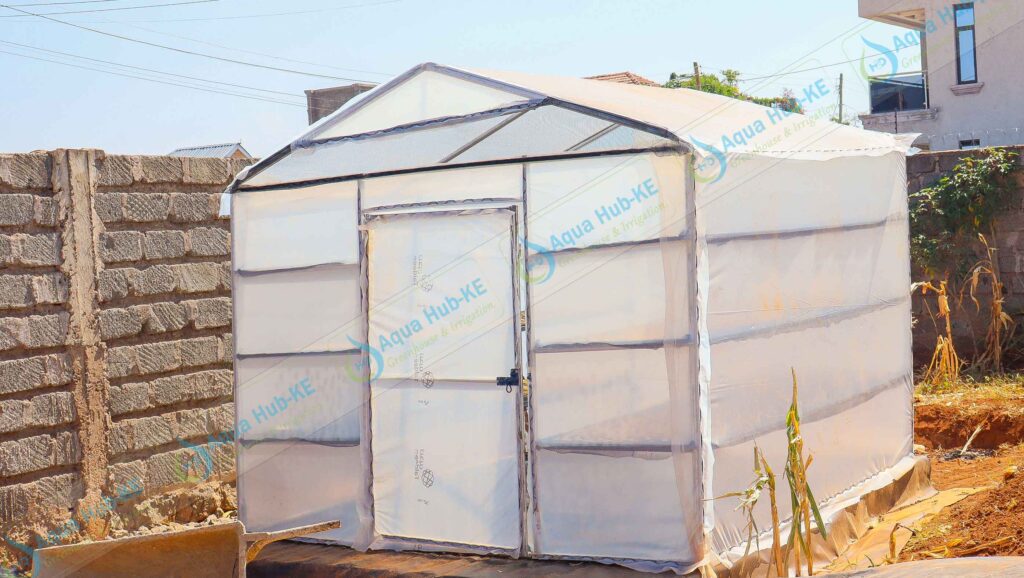
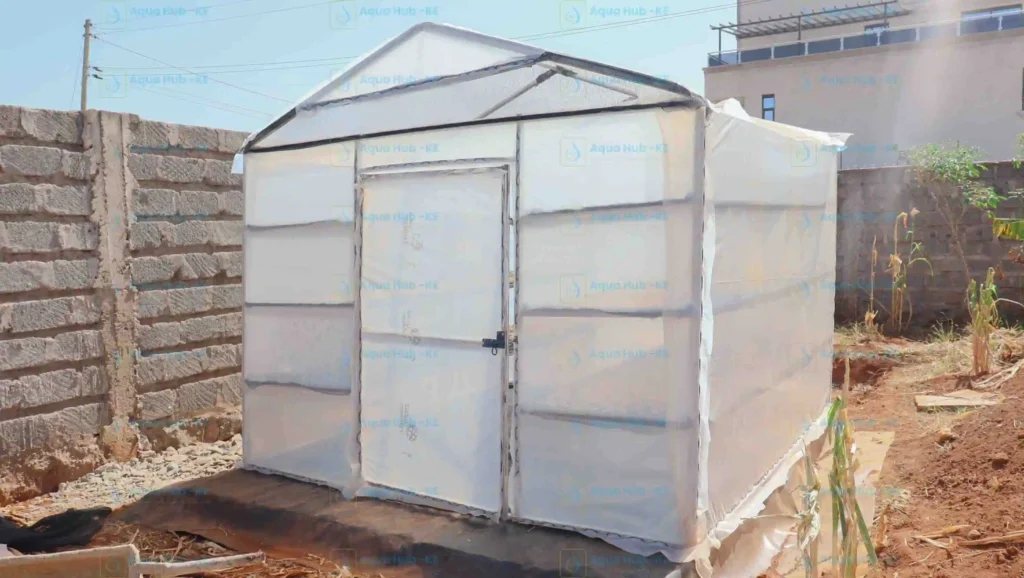
Solar dryer construction costs from KES 55,000 for a 1.5 m × 1.5 m × 1.5 m wooden dryer and reaches KES 153,000 for a 3 m × 2 m × 2 m steel dryer.
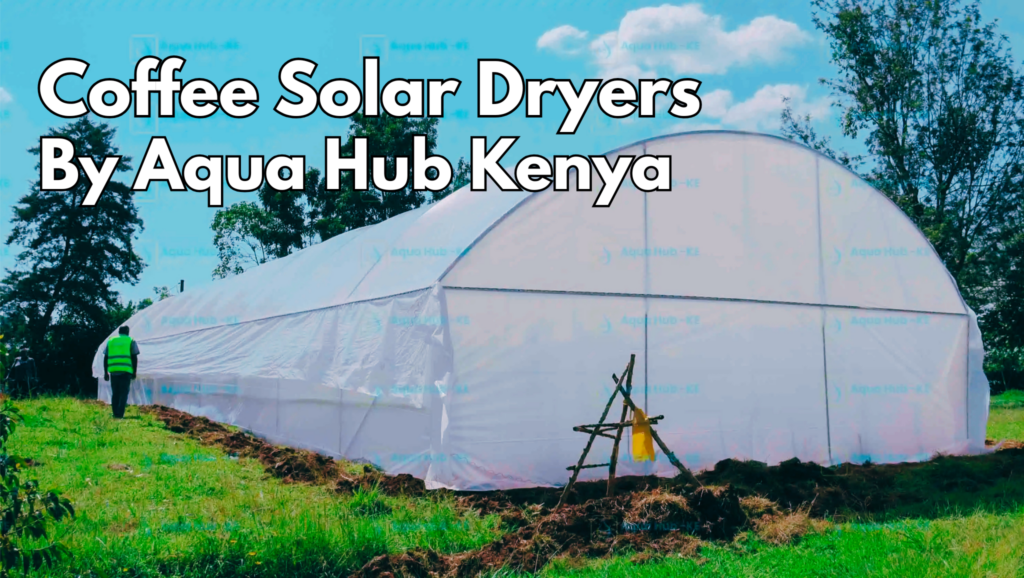
A solar dryer uses sunshine to remove moisture from fruits, vegetables, herbs and fish inside a closed, ventilated chamber. Because the chamber shields produce from dust, rain, insects and birds, the harvest dries clean and keeps its colour and taste. As a result, farmers lose less produce after harvest and sell dried goods at better prices.
Farmers who want a dryer built to their own measurements should start with Aqua Hub Kenya. Our team builds and installs wooden and steel dryers in four sizes. Accordingly, we match each build to your harvest. Call +254790719020 to describe your produce, and we prepare a quote for your build.
Solar Dryer Construction Cost in Kenya by Aqua Hub Kenya
Aqua Hub Kenya prices each dryer by size and frame material. For this reason, the tables below list every size with its wooden and steel price and its drying capacity. Email info@aquahubkenya.co.ke with your chosen size, and our team replies with your exact price.
Solar Dryer Construction Prices by Size at Aqua Hub Kenya
| Dryer Size (Length × Width × Height) | Wooden Frame (KES) | Steel Frame (KES) |
|---|---|---|
| 1.5 m × 1.5 m × 1.5 m | 55,000 | 105,000 |
| 2 m × 2 m × 1.5 m | 75,000 | 120,000 |
| 2 m × 2 m × 2 m | 85,000 | 140,000 |
| 3 m × 2 m × 2 m | 90,000 | 153,000 |
Wooden frames cost less at every size, so solar dryer construction stays within reach of small farms. The wooden 3 m × 2 m × 2 m dryer costs only KES 5,000 more than the wooden 2 m × 2 m × 2 m dryer, yet it holds far more produce.
Capacity and Shelves for Each Dryer Size at Aqua Hub Kenya
| Dryer Size (Length × Width × Height) | Drying Capacity | Shelves |
|---|---|---|
| 1.5 m × 1.5 m × 1.5 m | 40 to 50 kg | 2 |
| 2 m × 2 m × 1.5 m | 50 to 100 kg | 2 |
| 2 m × 2 m × 2 m | 90 to 130 kg | 3 |
| 3 m × 2 m × 2 m | 150 to 180 kg | 3 |
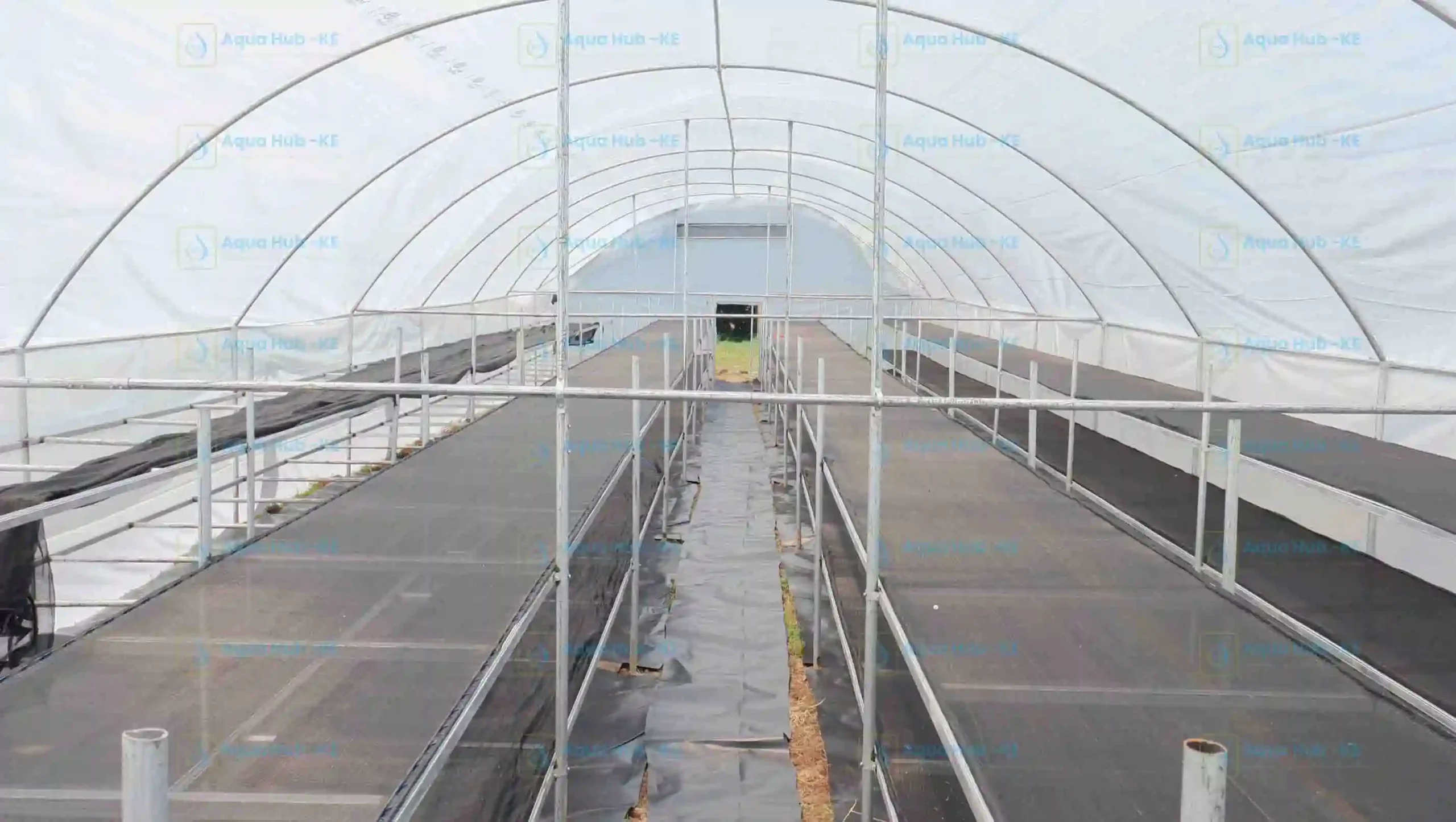
Choosing the Right Size for Solar Dryer Construction on Your Farm
Size decides how much produce you dry at one time. Consider these points before you pick a dryer:
- Harvest volume: Estimate the kilograms you need to dry in one batch.
- Crop type: Each crop spreads differently on a tray, so count the trays you need.
- Drying frequency: A farm that dries every week needs a bigger unit.
- Available space: Pick a spot that gets sun through the whole day.
- Future growth: Choose the next size up if your harvest is growing.
For example, households and small plots do well with the 1.5 m × 1.5 m × 1.5 m dryer, which holds 40 to 50 kg. In contrast, group farms and traders handle bigger loads with the 3 m × 2 m × 2 m dryer, which holds 150 to 180 kg. Then tell our team your harvest volume via the telephone number +254790719020, and we recommend a size for your solar dryer construction.
Wooden or Steel Frame for Solar Dehydrator Construction at Aqua Hub Kenya
Frame material changes both your price and the life of your dryer, so frame choice is the biggest decision in solar dryer construction. Compare the two options below:
| Feature | Wooden Frame | Steel Frame |
|---|---|---|
| Price range | KES 55,000 to 90,000 | KES 105,000 to 153,000 |
| Upfront cost | Lower | Higher |
| Strength | Suits light to medium daily use | Suits heavy daily use |
| Service life | Good with regular care | Longer, since steel resists rot and termites |
| Best for | Small farms and first-time dryers | Group farms and traders |
Choose wood to lower your upfront cost. Likewise, select steel for heavier daily use and a longer service life. In addition, you can ask our team which frame fits your farm by dialling +254790719020.
Materials Used in Solar Dryer Construction by Aqua Hub Kenya
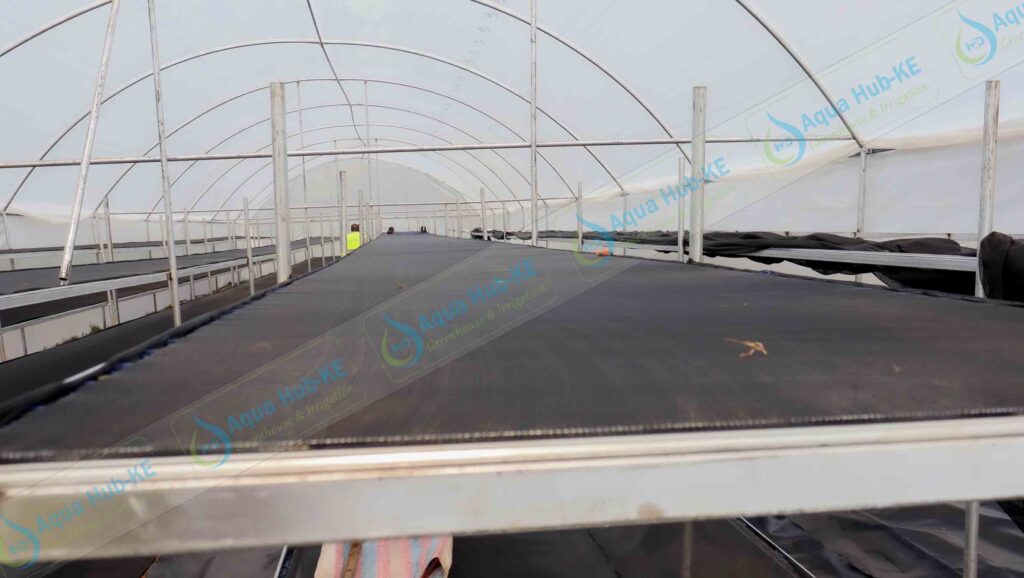
Every part of a solar dryer has a clear job, which is why material quality matters. Our team builds each dryer from these parts:
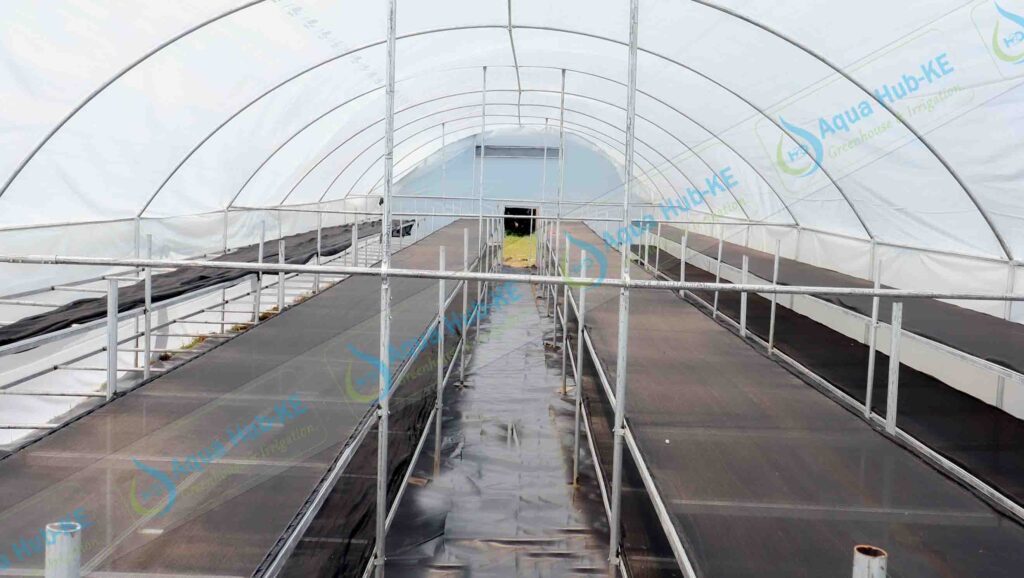
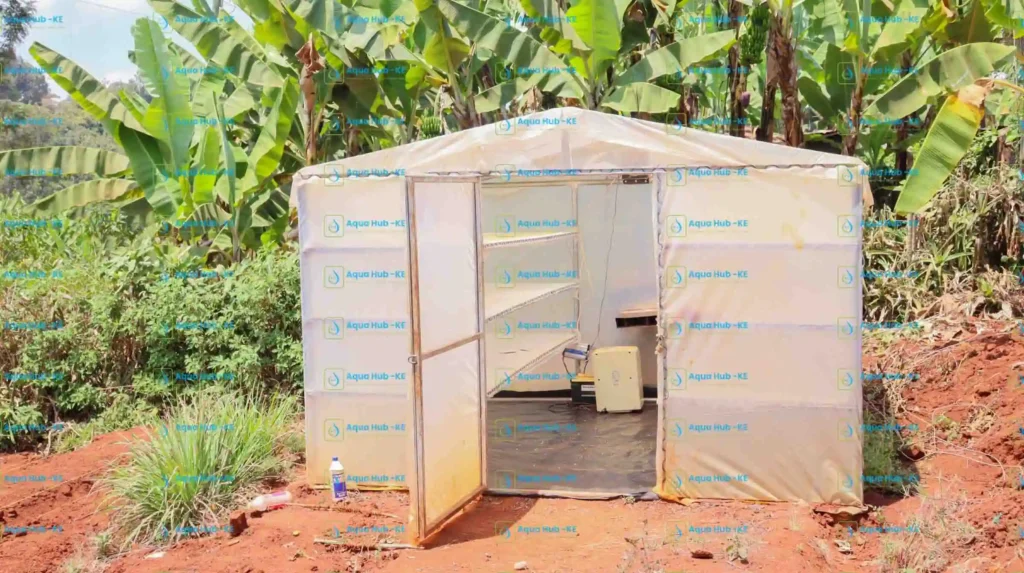
- Frame: Wood or steel that carries the full weight of trays and produce.
- Transparent cover: UV-resistant sheeting that lets sunlight in and holds heat.
- Black absorber: A dark surface that soaks up sun and warms the air.
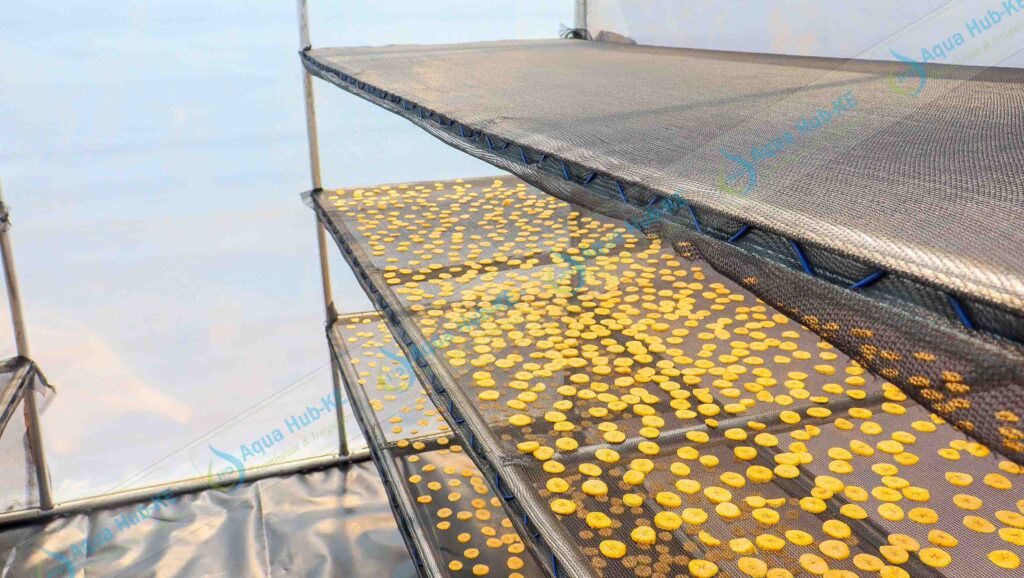
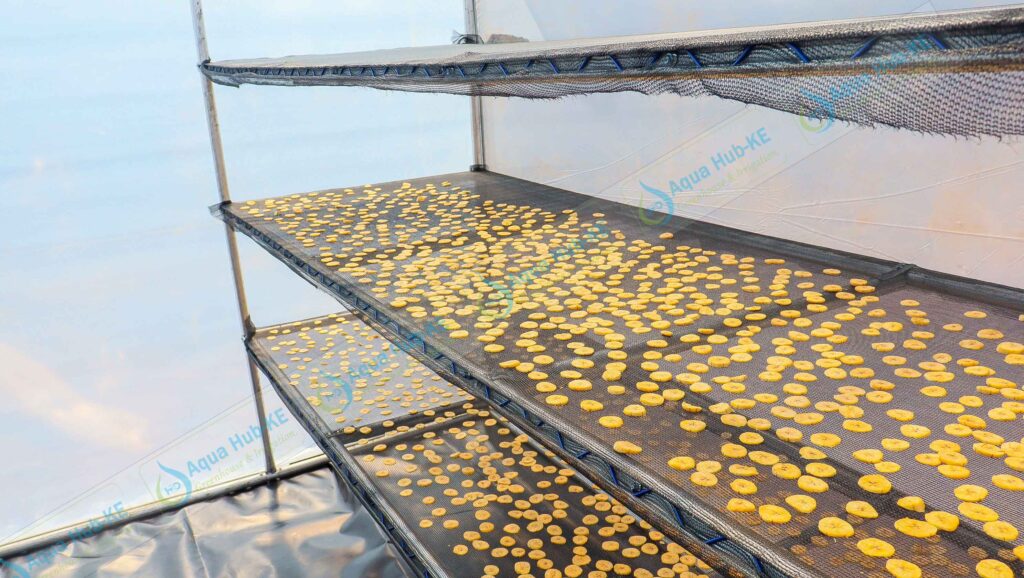
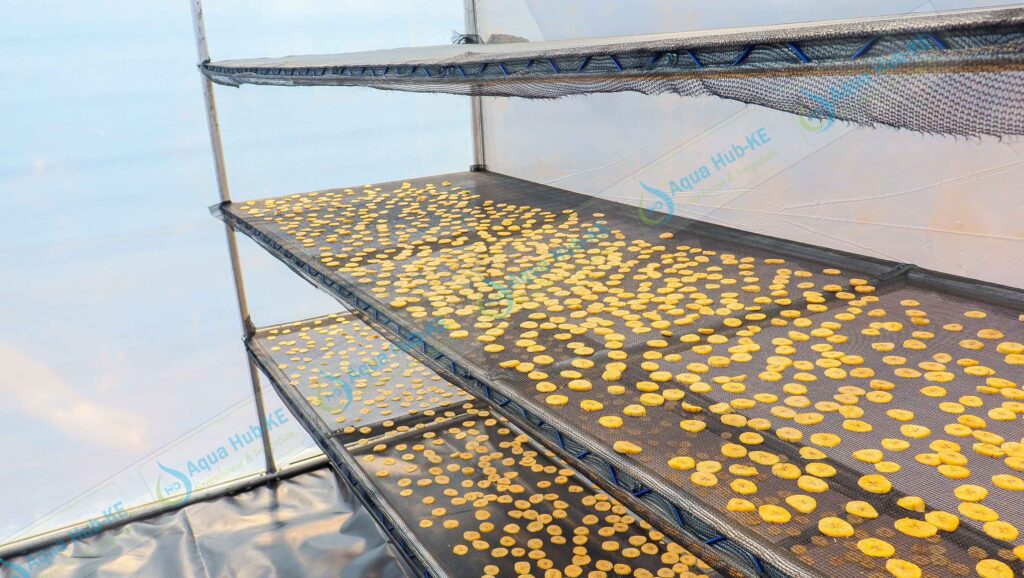
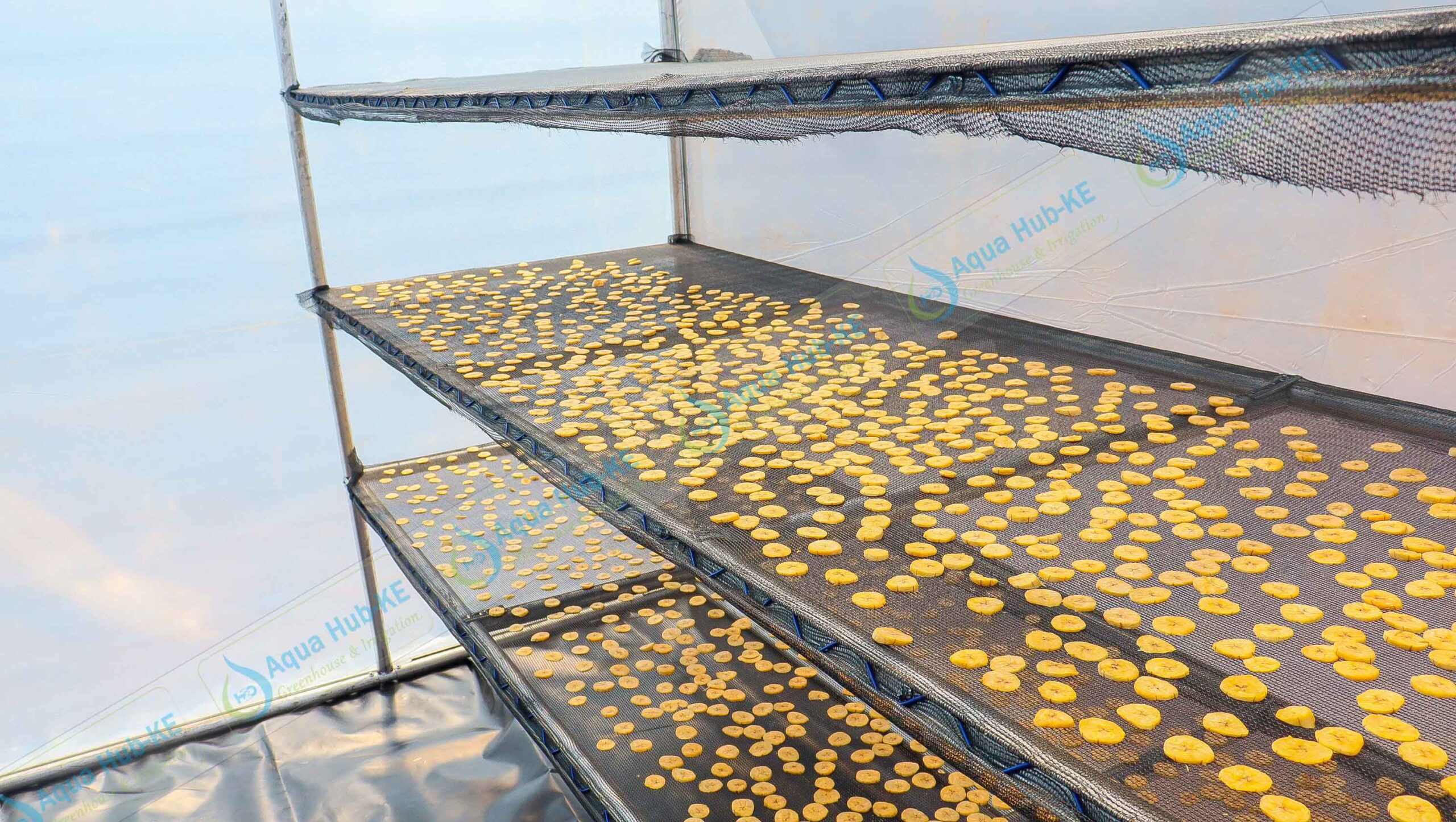
- Drying trays: Mesh shelves that let air pass under the produce.
- Vents: Openings at the bottom and the top that move air through the chamber.
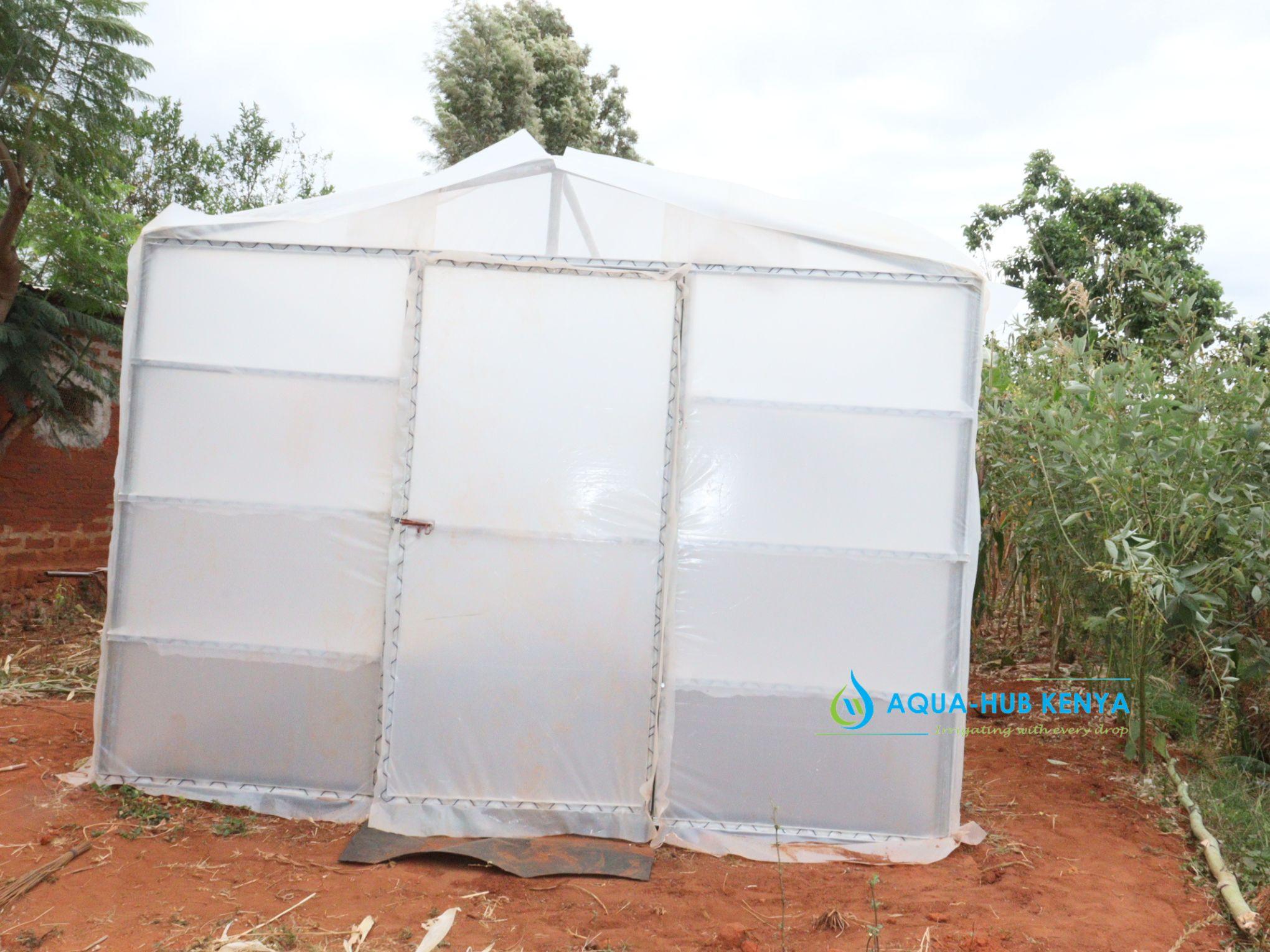
- Door: A tight-fitting door that keeps out dust and insects.
Because the cover and absorber trap heat, the chamber warms well above the outside air. Solar dryer construction with quality parts therefore keeps the heat steady through the day.
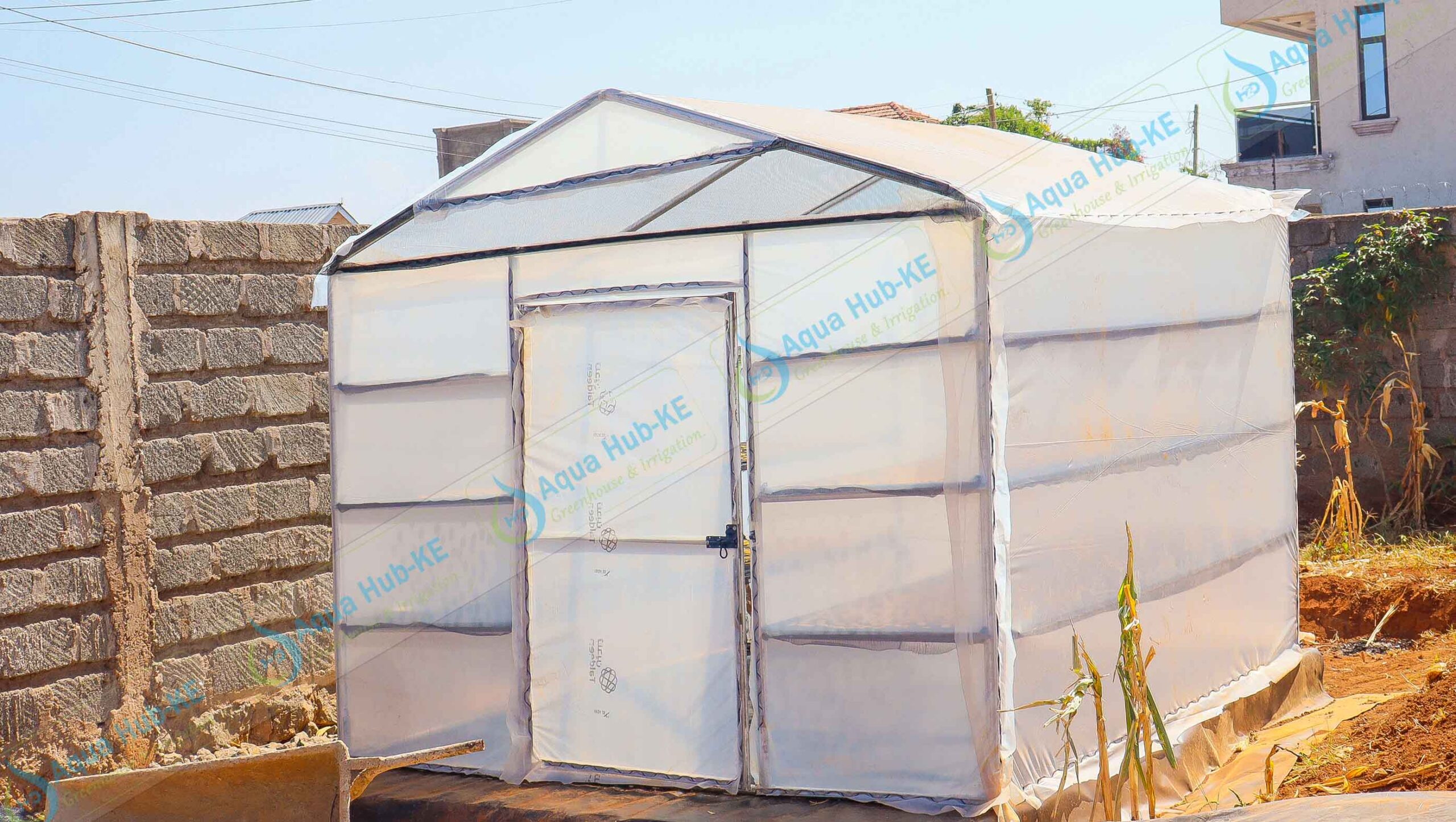
How a Solar Dehydrator from Aqua Hub Kenya Works to Dry Produce Faster
A solar dryer moves warm air over your produce in a simple cycle:
- Sunlight passes through the cover and heats the black absorber.
- The absorber warms the air inside the chamber.
- Warm air rises and carries moisture off the produce.
- Fresh air enters through the lower vents to replace it.
- Damp air leaves through the upper vents.
As a result, this cycle runs all day without fuel or electricity. Since the chamber holds produce away from soil, flies, rain and dust, the dried product stays clean. By comparison, open-air drying leaves crops exposed to all of these.
Airflow and Solar Fans in Solar Dryer Construction by Aqua Hub Kenya
Good airflow decides how fast produce dries, so every solar dryer construction needs well-placed vents. Vents at the bottom and the top create a natural draft, and a small solar fan can lift the flow when the air is still. Place the intake vents low and the outlet vents high, since warm air rises. Additionally, ask our team about adding a solar fan to your build. Follow these habits to keep the air moving:
- Keep the lower vents clear of weeds and dust.
- Spread produce in a single layer on each tray.
- Leave gaps between trays so air can pass.
- Turn the produce when it dries unevenly.
Crops You Can Dry in a Solar Dryer from Aqua Hub Kenya
A solar dryer handles many farm products, and these crops give farmers the best returns:
- Mangoes
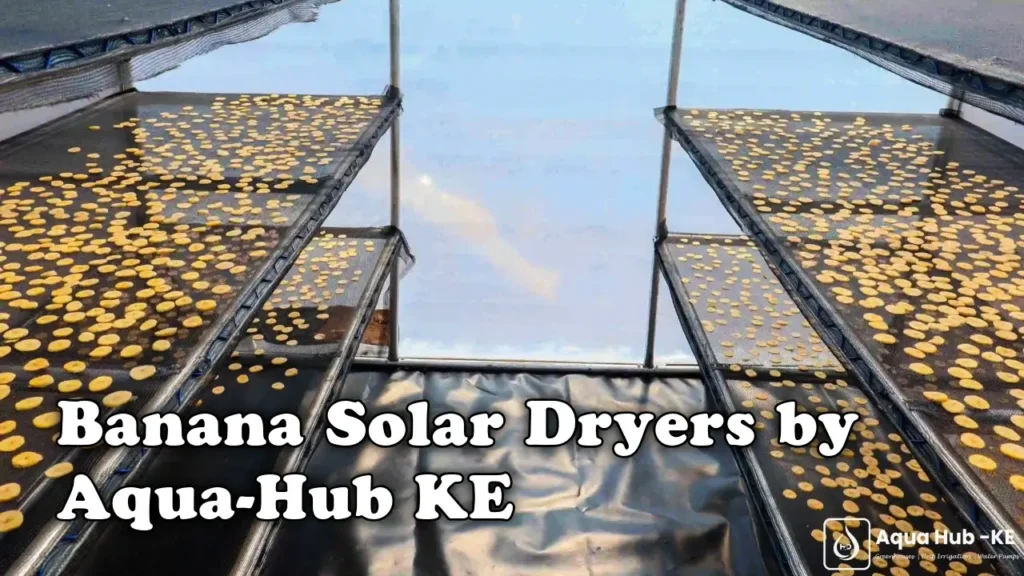
- Bananas
- Pawpaw
- Tomatoes
- Kale
- Chillies
- Omena
Slice fruits and vegetables thinly so they dry evenly. Dried produce also stores longer and sells in markets all year.</p>
Our Solar Dryer Construction Process at Aqua Hub Kenya
Aqua Hub Kenya handles solar dryer construction from the first measurement to the final check. Book your build by emailing info@aquahubkenya.co.ke, and our team follows these steps:
- Discuss your crop and site with our team.
- Pick a size and a wooden or steel frame.
- Receive your exact quote.
- Watch our team build the frame and fit the trays, cover, vents and door.
- Install the dryer on a level, sunny spot on your farm.
- Test the airflow and learn how to load the trays.
Professional construction gives you a sealed chamber and correct vent placement from day one. As a result, you avoid gaps that let heat and insects in.
Looking After Your Solar Dehydrator through Every Season
Solar dryer construction pays off for longer when you follow simple habits:
- Wipe the trays after each batch.
- Clean the cover so sunlight passes through.
- Check the vents for blockages.
- Inspect the joints and door seals.
- Store spare trays in a dry place.
Consequently, the dryer serves your farm for many seasons.
Why Choose Aqua Hub Kenya for Solar Dryer Construction?
A solar dryer pays off only when it is built to last, and that is the standard Aqua Hub Kenya works to. We build in wood and steel, in multiple sizes, and every price comes with a clear capacity and shelf count, so you compare options at a glance. Besides dryers, we supply greenhouses, shade nets, irrigation kits and water pumps, which lets you equip your farm with one supplier. Solar dryer construction from our team starts at KES 55,000.
Share your crop and daily harvest with us, and we suggest the size and frame that fit. Email your details to info@aquahubkenya.co.ke, or call +254790719020 whenever you are ready.
Frequently Asked Questions
How much do solar Dehydrator cost in Kenya?
The cost of a solar dryer in Kenya ranges from KES 55,000 for a 1.5 m × 1.5 m × 1.5 m wooden dryer and reaches KES 153,000 for a 3 m × 2 m × 2 m steel dryer.
How to construct a solar Dehydrator?
To construct a solar dryer you will need to first order high quality materials from Aqua Hub Kenya by calling +254790719020 or emailing info@aquahubkenya.co.ke. Next, you need to set up the frames, cover it with polythene, lay out the drying trays and finally install proper ventillation. To ensure that
Can Aqua Hub Kenya Handle Solar Dryer Construction on My Farm?
Aqua Hub Kenya handles solar dryer construction on your farm from the first measurement to the final check. Also, our team shows you how to load the trays.
How Long Does a Solar Dryer from Aqua Hub Kenya Take to Dry Produce?
A solar dryer from Aqua Hub Kenya takes from several hours to a few days to dry produce, depending on the crop and how thinly you slice it. Therefore, thinner slices dry faster.
Which Crops Dry Well in a Solar Dryer?
Fruits, vegetables, herbs and fish dry well in a solar dryer. In particular, mangoes, bananas, tomatoes and omena are popular choices.
Do I Need Electricity for a Solar Dehydrator?
A solar dryer needs no electricity because the sun supplies the heat. Moreover, a small solar fan can add airflow when you want faster drying.
How Do I Keep a Solar Dryer Clean?
Keep a solar dryer clean by wiping the trays after each batch and washing the cover when dust builds up. Also, keep the vents clear so air flows freely.
Solar dryer construction in Kenya
Final Thoughts on Solar Dryer Construction from Aqua Hub Kenya
Solar dryer construction turns sunshine into a reliable way to preserve your harvest. Together, the right size, a sturdy frame, mesh trays and well-placed vents give you clean, evenly dried produce. Furthermore, good airflow and simple cleaning keep the dryer working through every season.
Solar dryer construction at Aqua Hub Kenya costs from KES 55,000 to KES 153,000. Therefore, place your order with Aqua Hub Kenya, and our team confirms your exact price when you reach us through +254790719020 or info@aquahubkenya.co.ke.