
Blog
Shade House Construction in Kenya | Costs by Aqua Hub KE
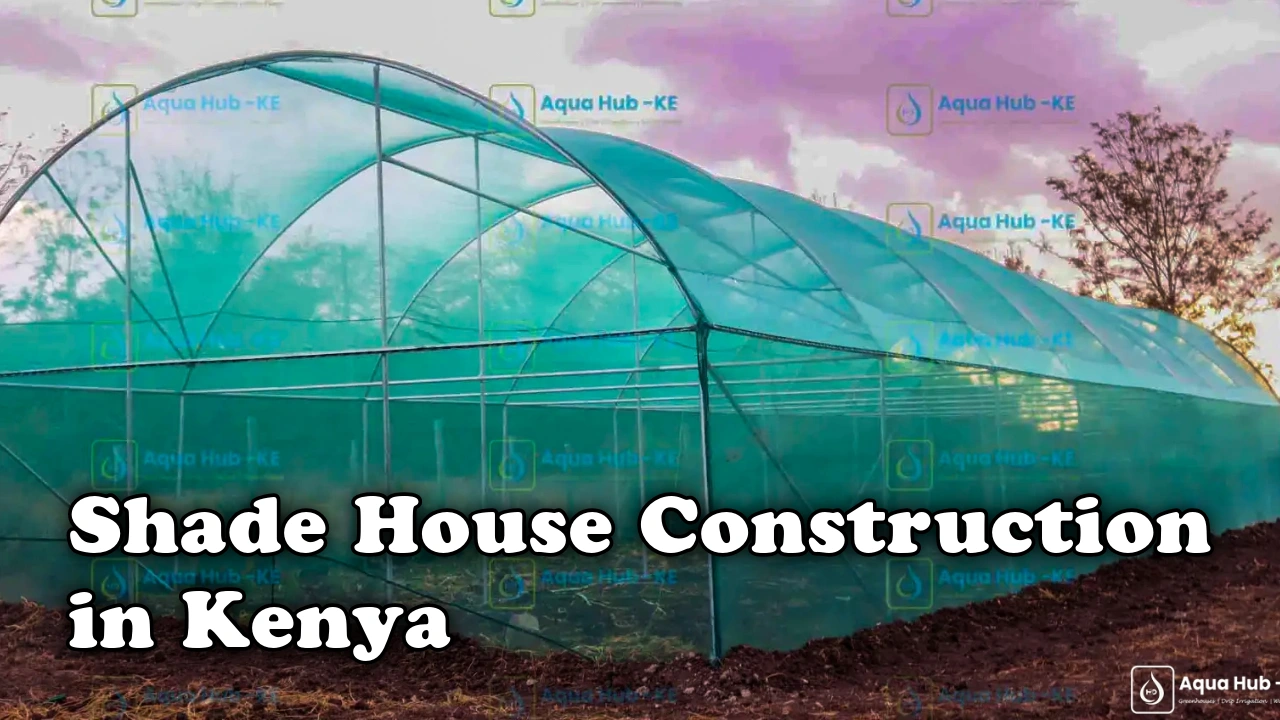
Shade house construction in Kenya costs between KES 210,000 to KES 1,500,000, and the final figure depends on the floor area, frame material, net density and site conditions.
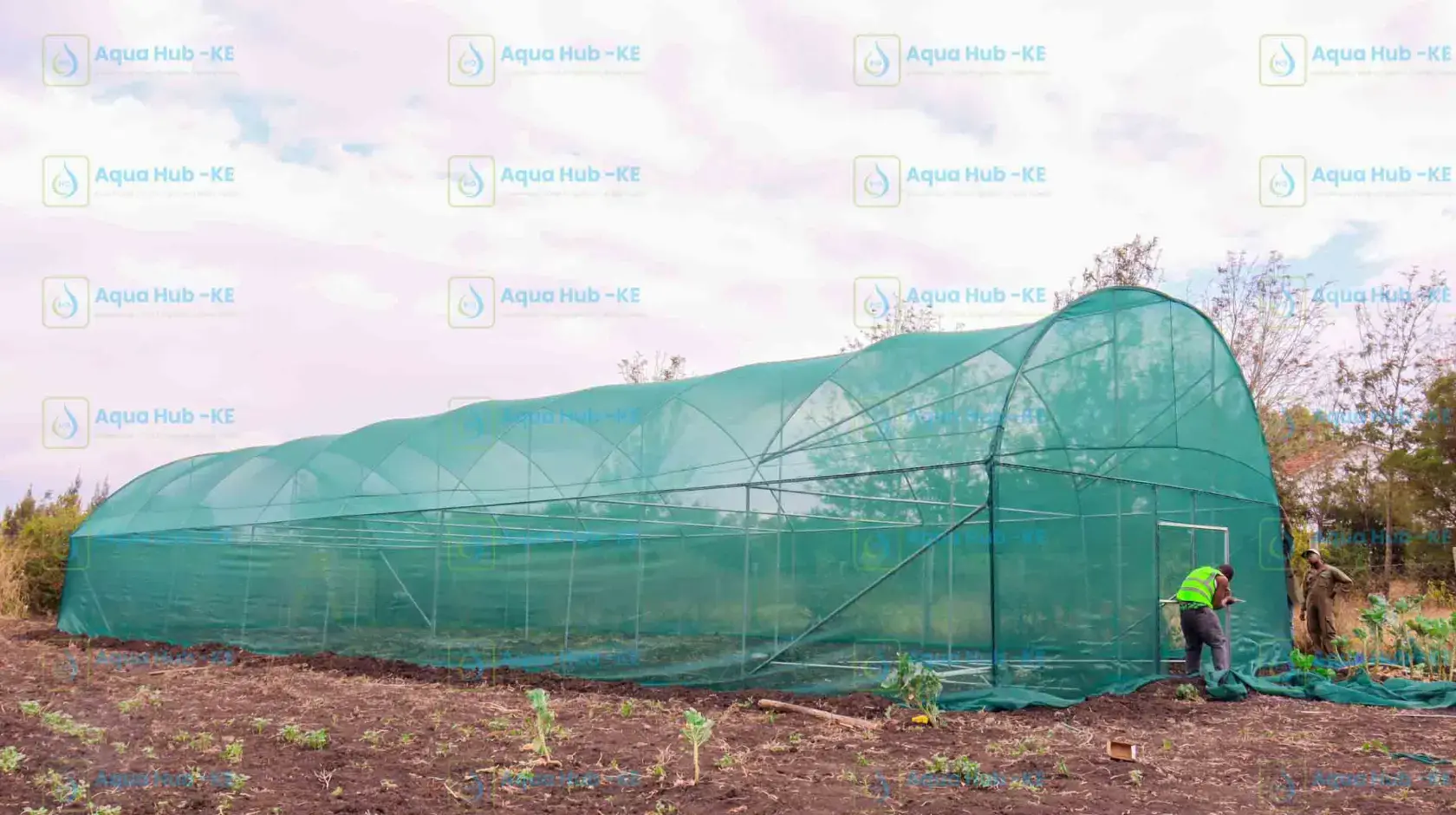
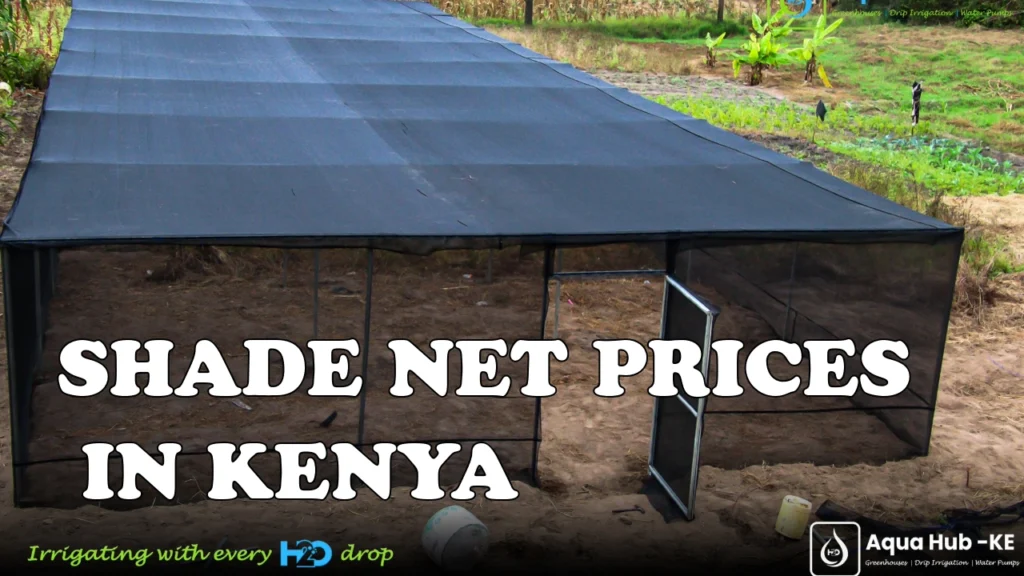
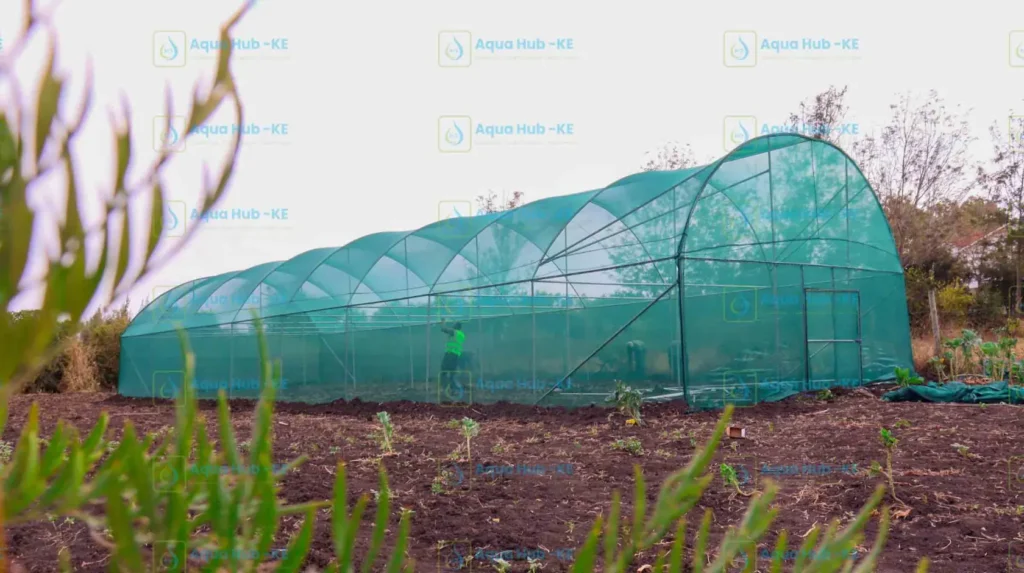
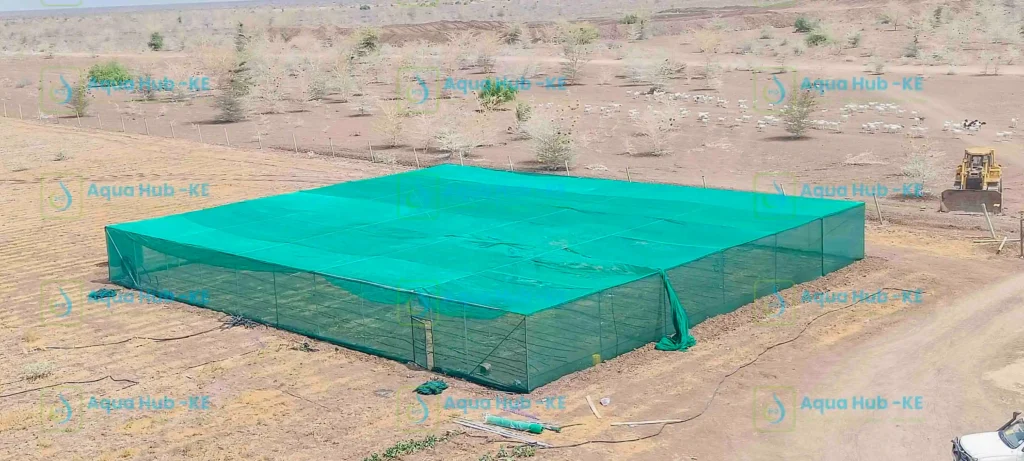
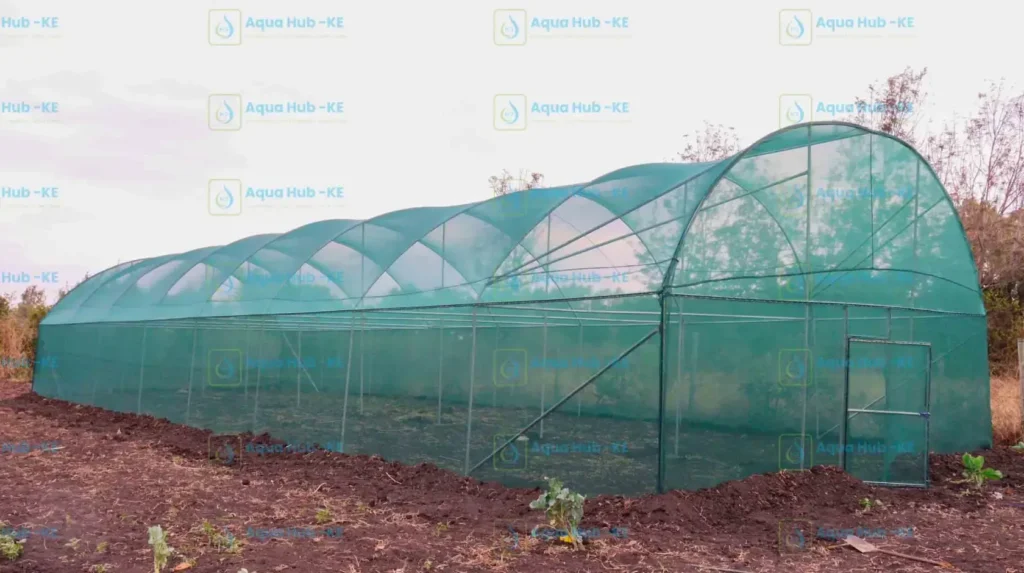
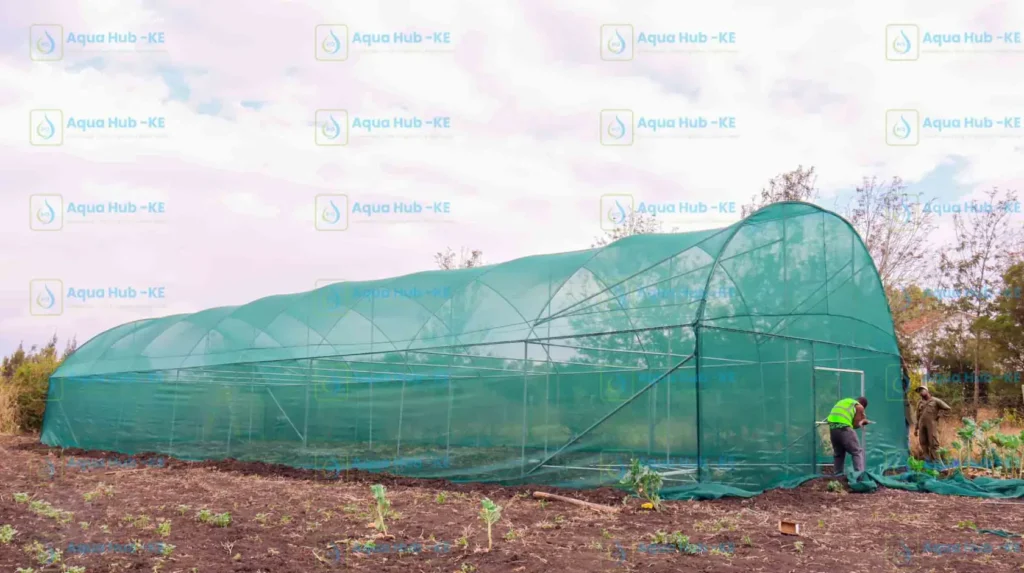
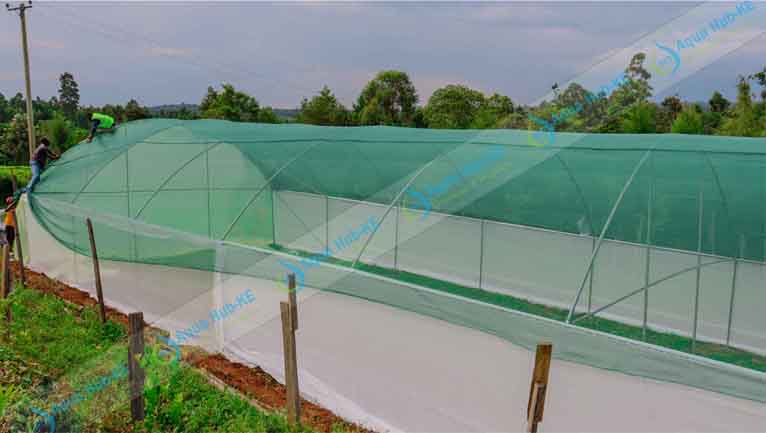
A shade house is a steel or timber frame covered with UV-stabilised netting. It filters harsh sunlight, blocks hail and cuts water loss. As a result, crops produce better quality yield.Hence why more Kenyan farmers now invest in shade house construction for vegetable plots and tree nurseries.
Aqua Hub Kenya is the best place to buy and build a shade house in Kenya. As one of the biggest suppliers of agricultural structures in the country, the company delivers quality materials, expert installation, affordable quotes and reliable after-sales support. Contact Aqua Hub Kenya by calling +254790719020 or email info@aquahubkenya.co.ke today to get your quote.
Shade House Construction Cost per Square Metre from Aqua Hub Kenya
Aqua Hub Kenya prices shade house construction per square metre. Therefore, you pay only for the area you cover. You should measure your plot first, and then send the dimensions to our team. Then, we can calculate your exact cost and generate an exact quote based on your particular needs.
Shade House Construction Price Aqua Hub Kenya
Use the table below to plan your budget. Our team fills in the figures after a site assessment.
| Shade house size | Estimated cost (KES) |
| 4 x 50 m | 210,000 |
| 16 x 50 m | 690,000 |
| 32 x 50 m | 1,250,000 |
| 64 x 31 m | 1,500,000 |
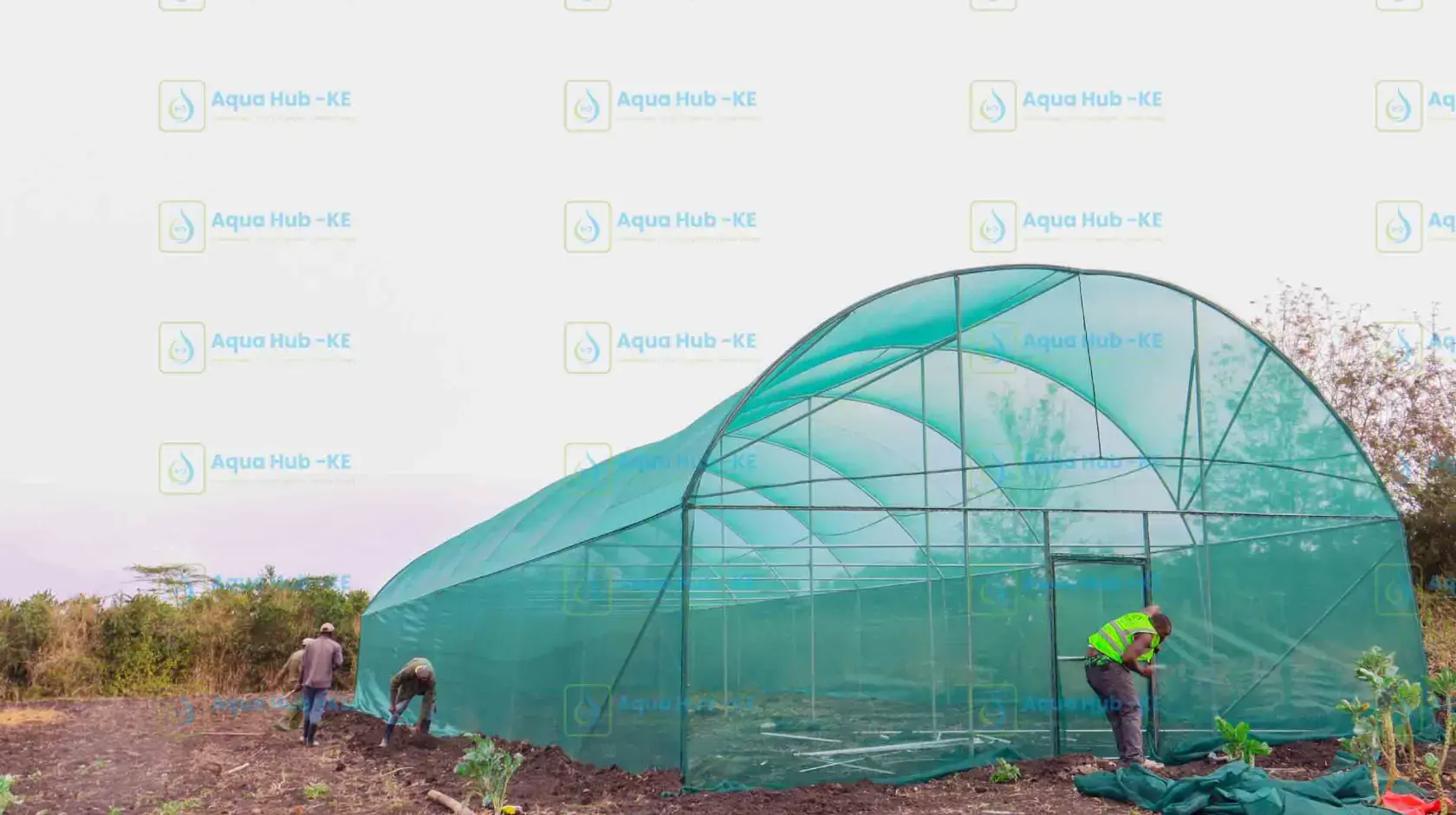
While this breakdown is based on the size of the house, the cost might still vary based on the shade net filtration percentage that your shade house uses as shown below
| Shade Net Percentage | Cost (KES) |
| 35% | KES 13,000 |
| 55% | KES 19,000 |
| 75% | KES 26,000 |
| 90% | KES 36,000 |
Furthermore, each quote lists materials, labour, transport and accessories separately. To know the exact cost of installation for your particular requirements, call +254790719020 to talk to our technicians today.
Factors That Affect Shade House Construction Cost
Several factors shape the final price of shade house construction. Therefore, you need to review each one before you place an order.
- Floor area: Larger blocks use more posts and cables, so the total rises with the area.
- Frame material: Galvanised steel pipes cost more upfront, but they last for many seasons.
- Net density: Heavier nets use more yarn, and therefore carry a higher price.
- Site conditions: Sloping or rocky ground also needs extra preparation work.
- Structure height: Taller structures support climbing crops such as tomatoes, so they need longer columns.
- Add-on systems: Drip irrigation and fertigation kits add to the total, and they raise your yields.
Frame Materials for Shade House Construction by Aqua Hub Kenya
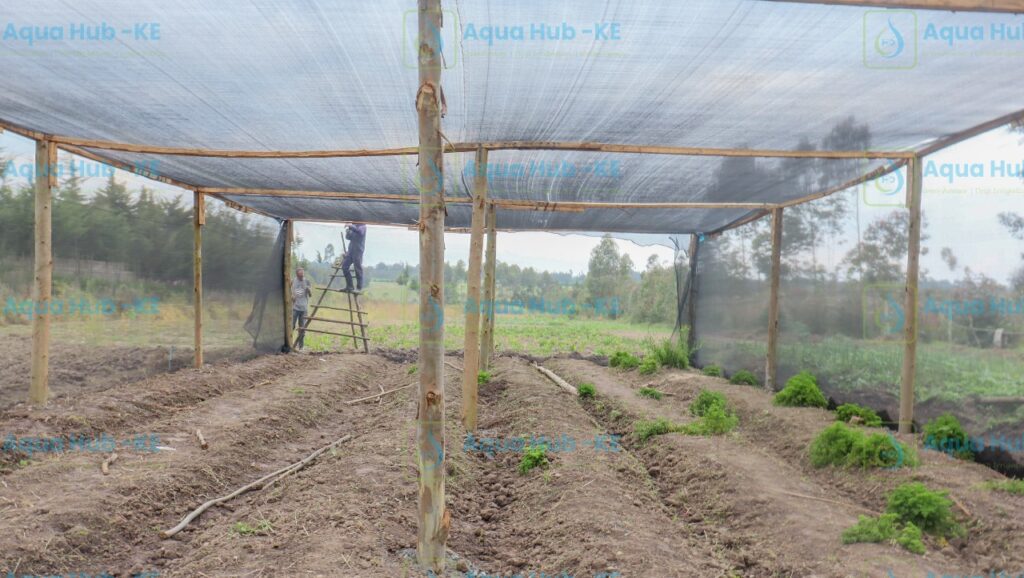
The frame carries the whole structure, so you must select it with care. Aqua Hub Kenya supplies galvanised steel pipes that resist rust and strong wind. Likewise, we also offer treated timber poles for small blocks.
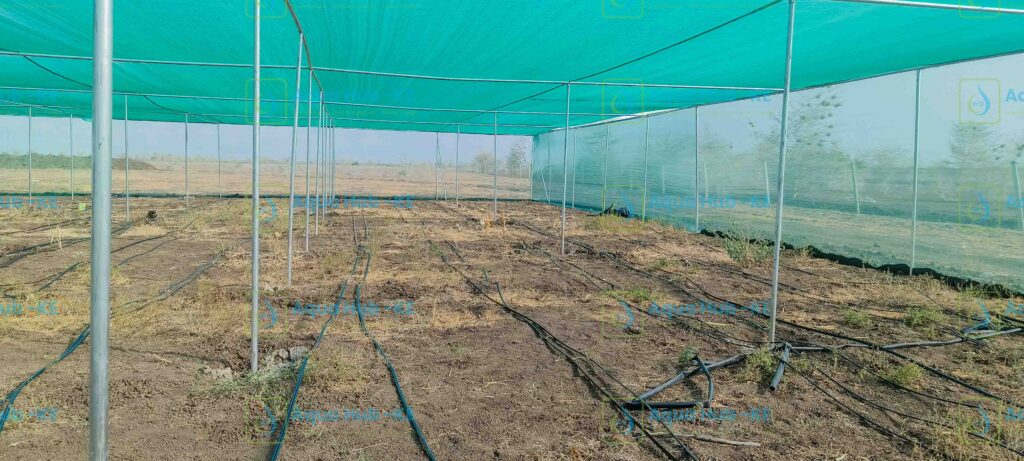
- Galvanised steel columns: These give the longest service life for any shade house.
- Treated timber poles: These suit small plots and boundary supports.
- Steel cables and wire: These hold the net tight across the full span.
Net Density and Colour Choices at Aqua Hub Kenya
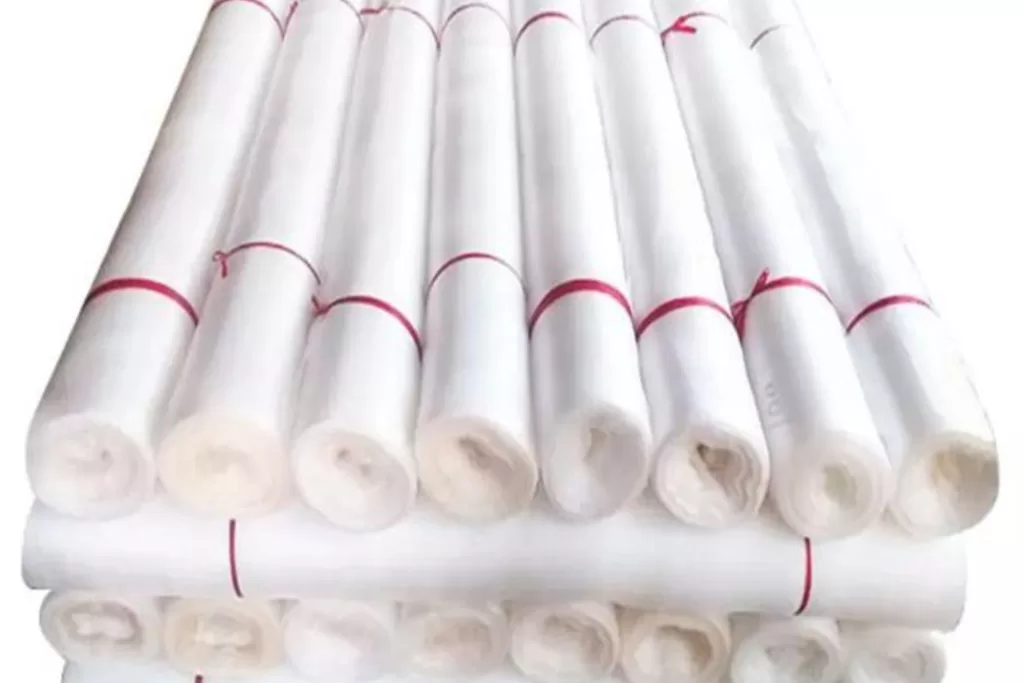
Net density controls how much light reaches your crops. For example, a 30% net suits sun-loving crops, while a 70% net protects delicate seedlings. Additionally, Aqua Hub Kenya stocks UV-stabilised nets in black, green, white and aluminet.
- 30% to 40%: Best for tomatoes and capsicum.
- 50%: Best for leafy vegetables, cucumbers, french beans and strawberries.
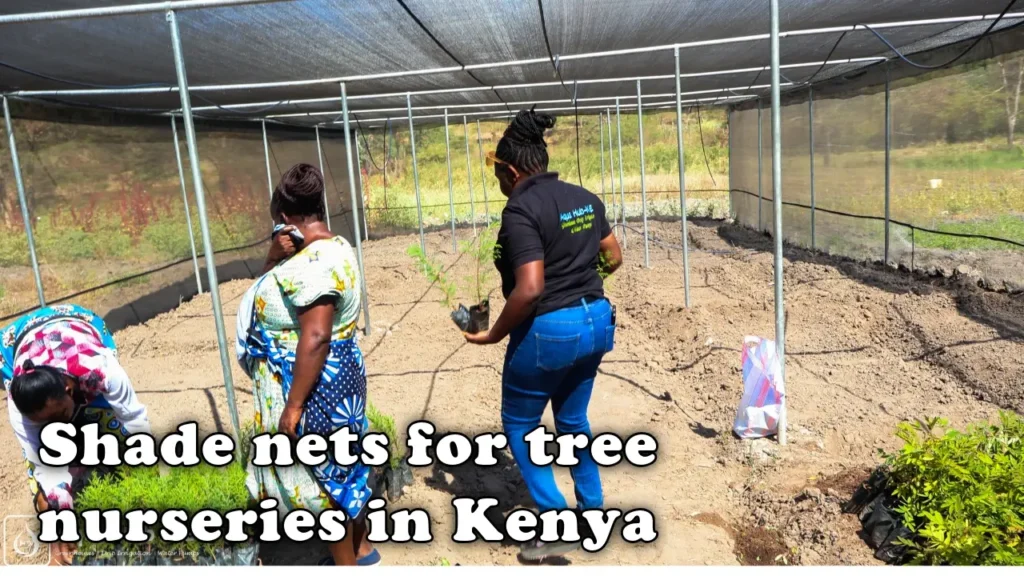
- 60% to 80%: Best for nurseries and young seedlings.
Besides light control, the right colour also lowers heat inside the structure. Consequently, your plants grow with less stress.
Parts of a Shade House Built by Aqua Hub Kenya
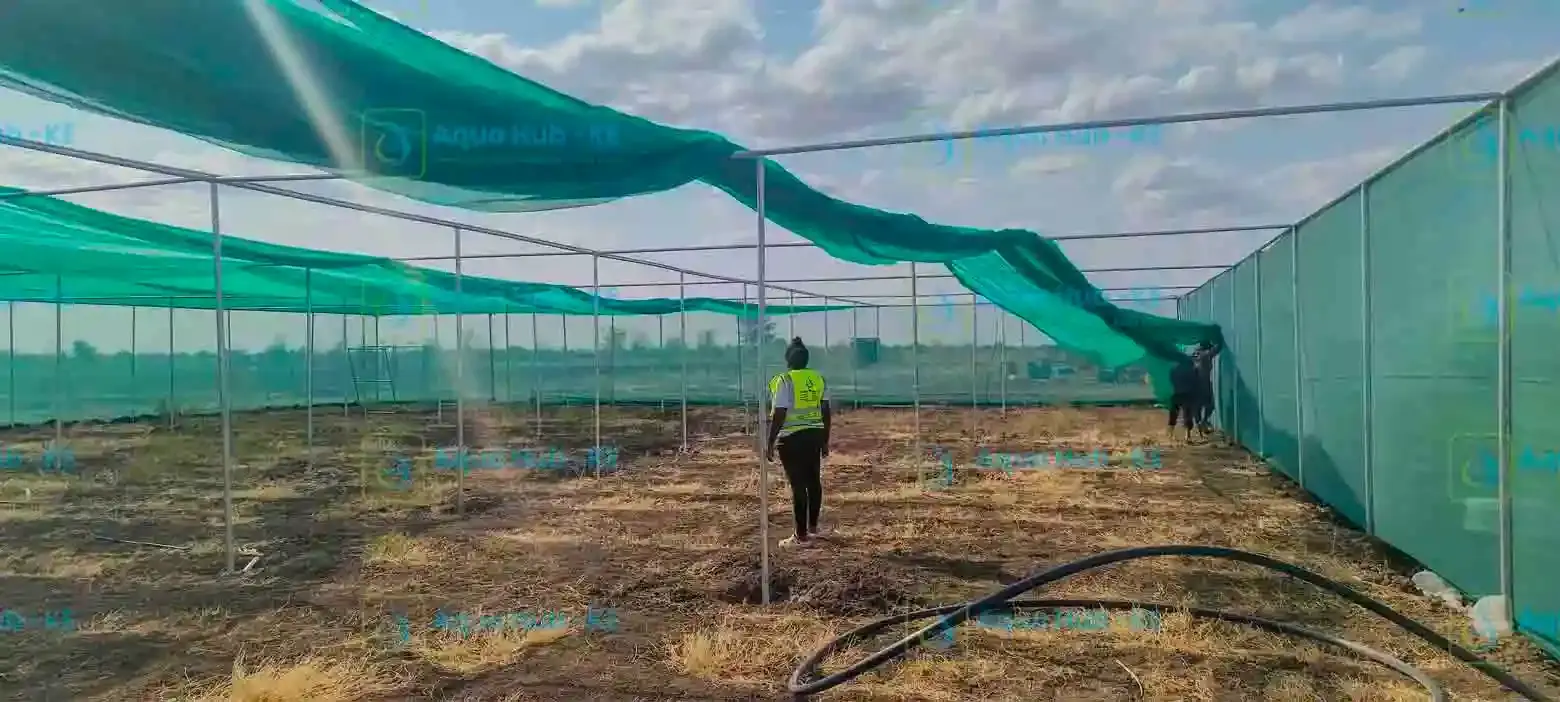
A complete structure has several parts that work together. Aqua Hub Kenya supplies every component of shade house construction, so you buy all materials from one trusted dealer.
- Steel columns and arches: These form the skeleton of the structure.
- Shade roof: This filters sunlight and softens heavy rain and hail.
- Insect net sides: These keep pests out and let air move freely.
- Entry lobby and doors: These limit the movement of insects into the crop area.
- Gutters and drainage: These move rainwater away from the plants.
- Drip irrigation lines: These deliver water and nutrients straight to the roots.
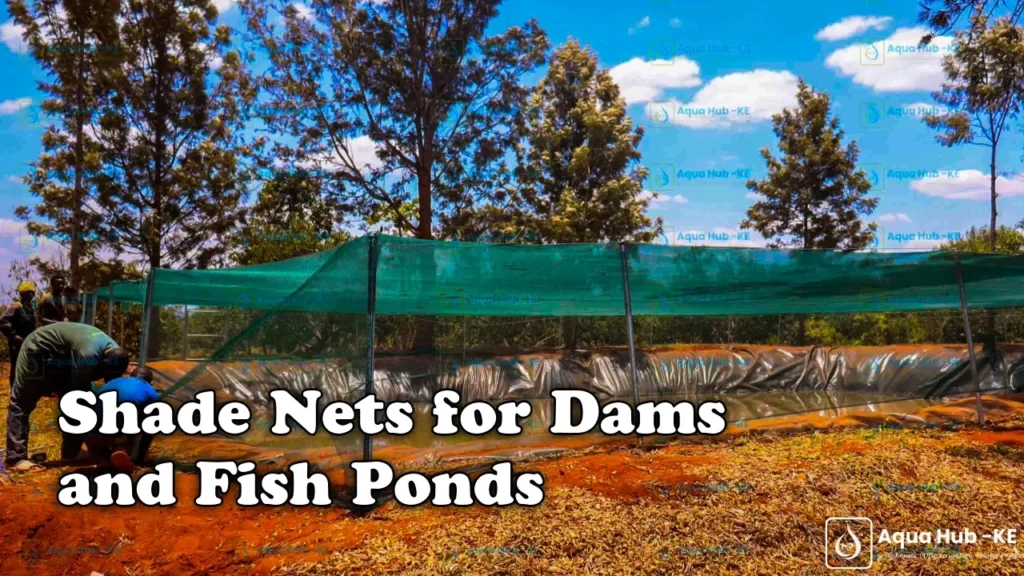
Because of this complete range, you avoid delays and mismatched parts. Moreover, Aqua Hub Kenya also supplies dam liners for farmers who store water for their blocks.
Shade House Construction Steps Followed by Aqua Hub Kenya
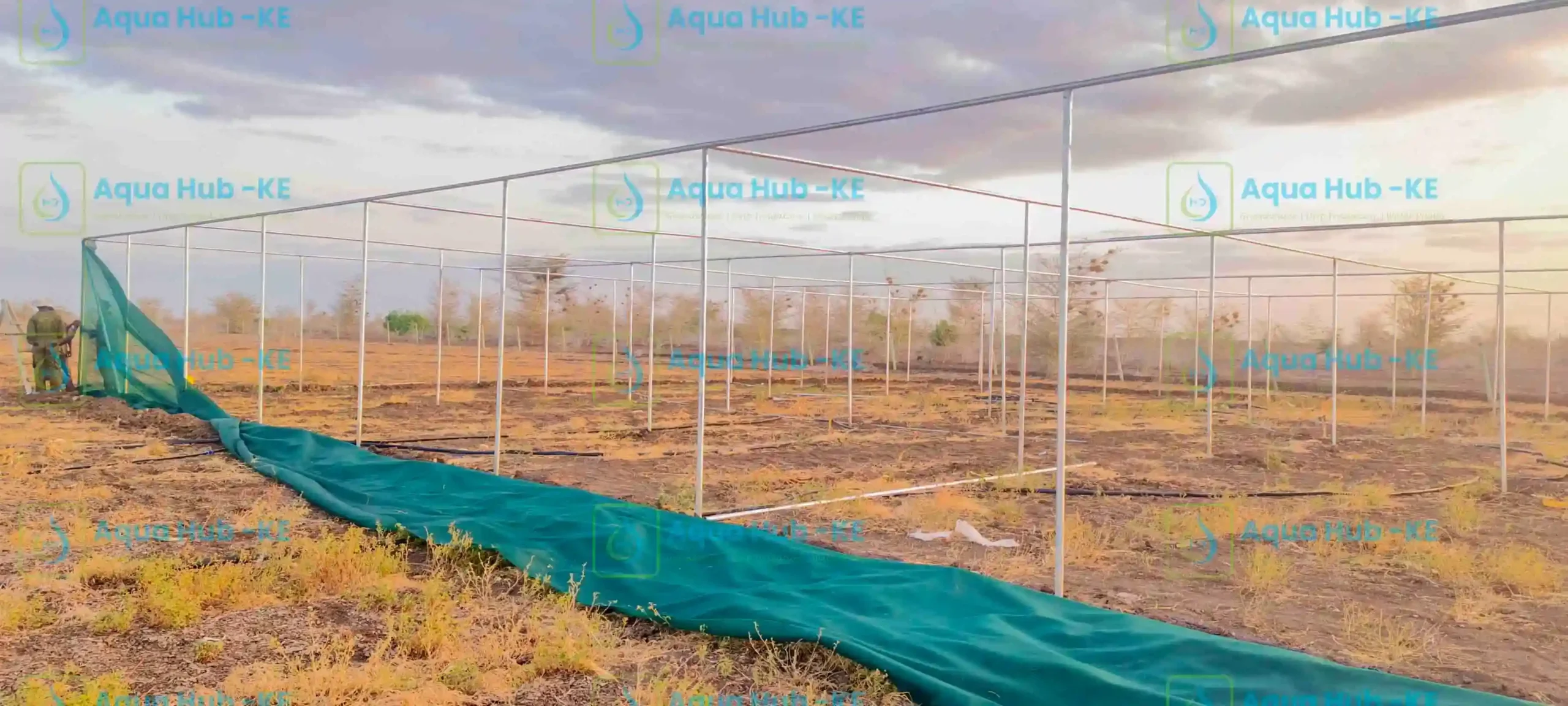
Aqua Hub Kenya follows a proven process on every site. Each stage of shade house construction has a clear owner and a clear timeline. As a result, you receive a finished structure that is ready for planting.
Site Preparation for Shade House Construction
Our technicians visit your farm before any work starts. Then they check the land and plan the layout around your crop and your water source.
Site Survey and Layout Checks
- Slope and drainage: Technicians check where rainwater flows so the structure stays dry.
- Soil condition: They test the ground to choose the right footing depth.
- Wind direction: They position the frame to resist the strongest local winds.
- Water source: They plan the irrigation route from your tank, dam or borehole.
- Access road: They confirm that delivery trucks can reach the site.
Installation Steps
- Design and quotation: We draw the layout and send your itemised cost.
- Site clearing and marking: Next, workers level the ground and mark the position of each column.
- Foundation and column fixing: After that, the crew sets concrete footings and erects the steel frame.
- Net installation: Afterwards, installers stretch and secure the roof and side nets.
- Door and lobby fitting: Then the team hangs the doors and fits the insect-proof entry.
- Final inspection: We test the tension, the doors, the irrigation lines and the drainage before handover.
Benefits of a Shade House from Aqua Hub Kenya
A shade structure pays back quickly. Consequently, farmers who build one report better crop quality and steadier harvests.
- Lower heat stress: Nets reduce leaf scorch, so the temperature stays in a good range for growth.
- Less water use: Shade slows evaporation, so irrigation volumes drop.
- Protection from hail: The net absorbs hail impact, so crops survive storms that destroy open-field plantings.
- Fewer pests: Insect netting keeps whiteflies and aphids away from the plants.
- Longer growing seasons: Stable conditions let farmers plant and harvest across more months.
In addition, shade house construction costs far less than building a glass or polythene greenhouse. Therefore, a shade house gives the strongest return for large blocks.
Best Crops for a Shade House
Growers should match each crop to the correct net density before shade house construction begins. For this reason, Aqua Hub Kenya advises farmers on this choice during the site survey.
- Tomatoes and capsicum
- Cucumbers and french beans
- Kale, spinach, lettuce and coriander
- Cut flowers such as roses and carnations
- Tree seedlings and tissue culture bananas
- Herbs and strawberries
Many Kenyan farmers also grow export vegetables under shade nets. Hence, a well-built structure opens the door to premium markets.
Why Choose Aqua Hub Kenya for Shade House Construction
Aqua Hub Kenya is the top-rated supplier of shade nets and shade houses in Kenya. Our customers choose us for the following reasons.
- Quality materials: We supply UV-stabilised nets and galvanised steel that give guaranteed durability.
- Affordable pricing: Our itemised quotes give you full control over your budget.
- Expert installation: Because experienced technicians build every structure to the correct specification, you get a reliable result.
- Complete product range: We also supply drip irrigation kits, dam liners, greenhouses, insect nets and raingun sprinklers for your farm.
- Reliable support: Our team answers your questions before and after installation.
- Customer-friendly service: We guide you from the first call to the final handover.
Therefore, you should contact Aqua Hub Kenya on +254790719020 or info@aquahubkenya.co.ke to start your shade house construction project. Our team responds quickly, so your quote arrives without delay.
Frequently Asked Questions
How much does shade house construction cost in Kenya?
Shade house construction costs an amount that depends on the floor area, frame material, net density and site conditions. Therefore, you should request an itemised quote that shows the price per square metre.
What size of structure suits commercial farming?
A shade house of 1,000 square metres or more suits commercial farming. Also, larger blocks spread the structure cost across more plants.
Which shade net percentage should farmers choose?
The shade net percentage farmers should choose is 30% to 40% for fruiting crops and 50% for leafy vegetables. Meanwhile, nurseries need 60% to 80% shade for young seedlings.
How long does a shade house last?
A shade house lasts for many years when the frame is galvanised steel and the net is UV-stabilised. In addition, good tension and regular inspection extend the life of the net.
What crops grow well under shade nets?
Tomatoes, capsicum, cucumbers, leafy vegetables, cut flowers and seedlings grow well under shade nets. These crops respond strongly because they thrive with reduced heat and light stress.
How long does shade house construction take?
Shade house construction takes a number of days that depends on the floor area and site conditions. Small plots finish faster than large blocks.
What is the difference between a shade house and a greenhouse?
A shade house uses netting to filter sunlight, while a greenhouse uses plastic or glass to trap heat. Shade net structures suit hot regions, and greenhouses suit cool regions.
Does shade netting reduce water use?
Shade netting reduces water use because it slows evaporation from the soil and leaves. Also, drip irrigation inside the structure saves even more water.
Final Thoughts on Shade House Construction with Aqua Hub Kenya
Shade house construction gives farmers lower heat stress, less water use, better crop quality and strong protection from hail and pests. Furthermore, the cost depends on floor area, frame material, net density and add-on systems, so you should plan each part of the budget carefully. As a result, an itemised quote from a trusted supplier is your most important first step.
Aqua Hub Kenya is the best choice for your project. The company supplies quality materials, expert installation, affordable pricing and a full range of related farm products. Therefore, you should buy your shade house from Aqua Hub Kenya today. Call +254790719020 or email info@aquahubkenya.co.ke to place your order.

One thought on “Shade House Construction in Kenya | Costs by Aqua Hub KE”