
Blog
Drip Irrigation Kits for Quarter Acre Farms in Kenya
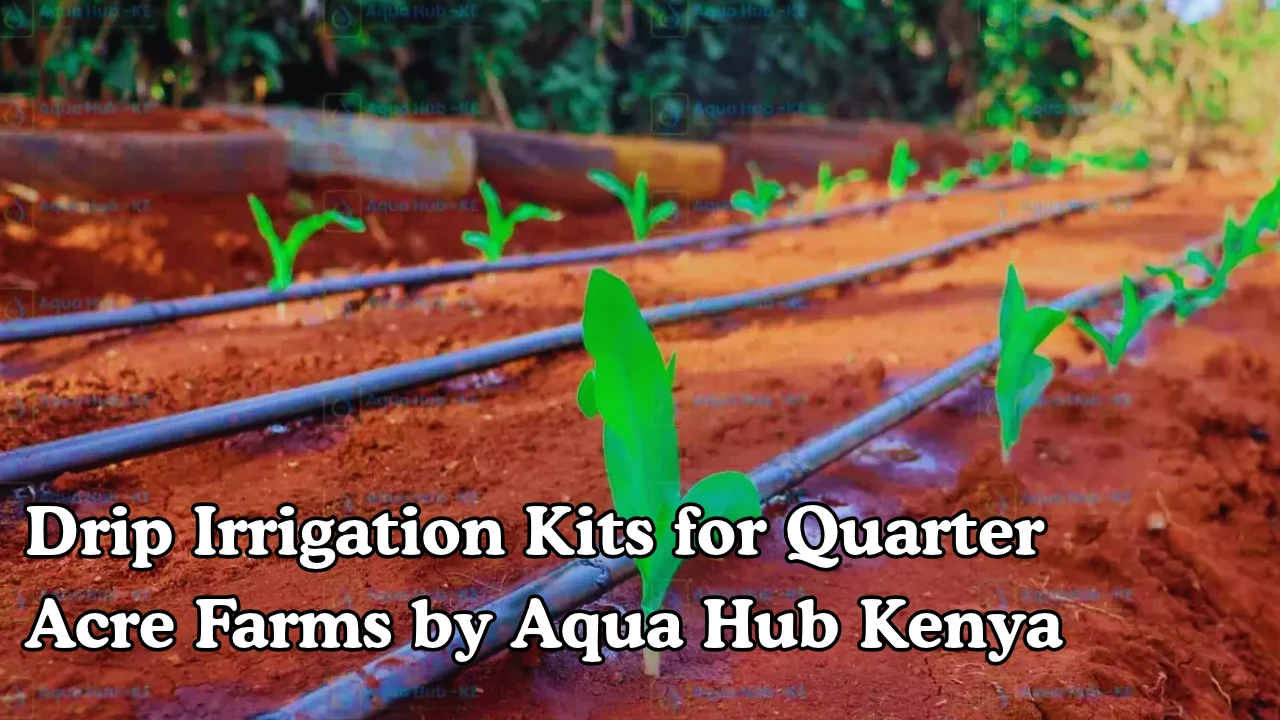
Drip irrigation kits for quarter acre farms in Kenya cost between KES 35,000 and KES 55,000 at Aqua Hub Kenya, depending on the number of drip lines you lay per bed. A quarter acre is one of the most common plot sizes among smallholder farmers in Kenya, and it is large enough to run a profitable vegetable enterprise when water is managed well.
The main challenge on such plots is watering consistently without wasting water, time or labour. A drip irrigation kit solves this by delivering water directly to the roots of each plant through a network of pipes and drip lines. At Aqua Hub Kenya, we supply, design and install drip irrigation kits sized for quarter acre farms, from kitchen-garden vegetables to commercial onions and tomatoes.
This guide explains what a quarter acre drip kit costs, what it contains, which crops it suits and how it is installed.
Cost of Drip Irrigation Kits for Quarter Acre Farms in Kenya
The price of a drip irrigation kit depends mainly on the size of the land and the number of drip lines per bed. Crops planted in several rows per bed, such as onions, need more drip lines than crops planted in a single or double row. Consequently, the amount of drip line, fittings and connectors increases with each additional line.
The table below shows Aqua Hub Kenya’s drip irrigation prices by land size. The quarter acre row is highlighted for easy reference, while the other sizes help you plan if you intend to expand. For larger farms, see our guide on the cost of drip irrigation per acre.
| Size of the land | 1 line per bed | 2 lines per bed | 3 lines per bed |
|---|---|---|---|
| 1 Acre | KES 140,000 | KES 180,000 | KES 220,000 |
| 1/2 Acre | KES 70,000 | KES 90,000 | KES 110,000 |
| 1/4 Acre | KES 35,000 | KES 45,000 | KES 55,000 |
| 1/8 Acre | KES 17,500 | KES 22,500 | KES 27,500 |
Which Quarter Acre Kit Should You Choose?
- 1 line per bed (KES 35,000): Suitable for crops planted in a single row along the bed, such as watermelons and cabbages with wide spacing.
- 2 lines per bed (KES 45,000): The most common choice for tomatoes, capsicum, kales, strawberries and other vegetables planted in two rows.
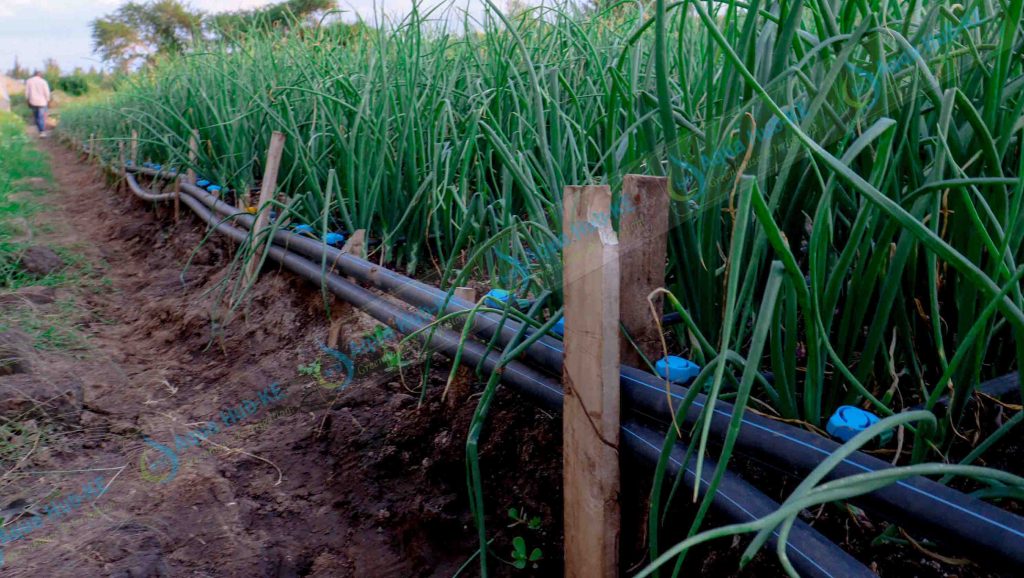
- 3 lines per bed (KES 55,000): Recommended for onions, garlic and other closely spaced crops grown in several rows per bed.
Factors That Affect the Final Price
The kit prices above give a reliable starting point. However, the final cost of your project depends on conditions on your farm. These include:
- Water source: A farm with an existing elevated tank can run a gravity-fed system. A farm drawing from a borehole, river or dam may need a pump, such as a submersible borehole pump, which adds to the cost.
- Distance from the water source: A longer mainline from the tank or borehole to the farm requires more pipe.
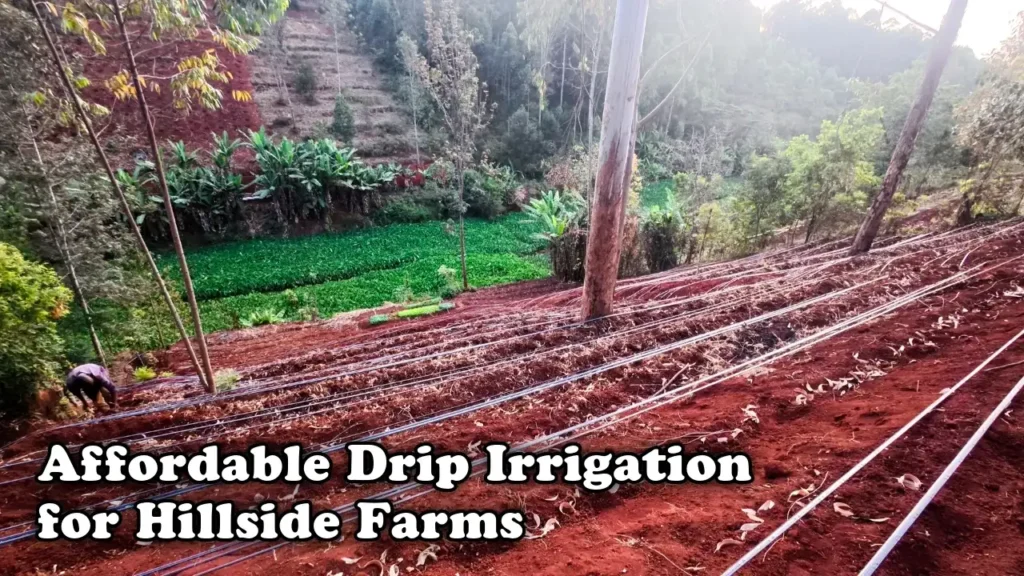
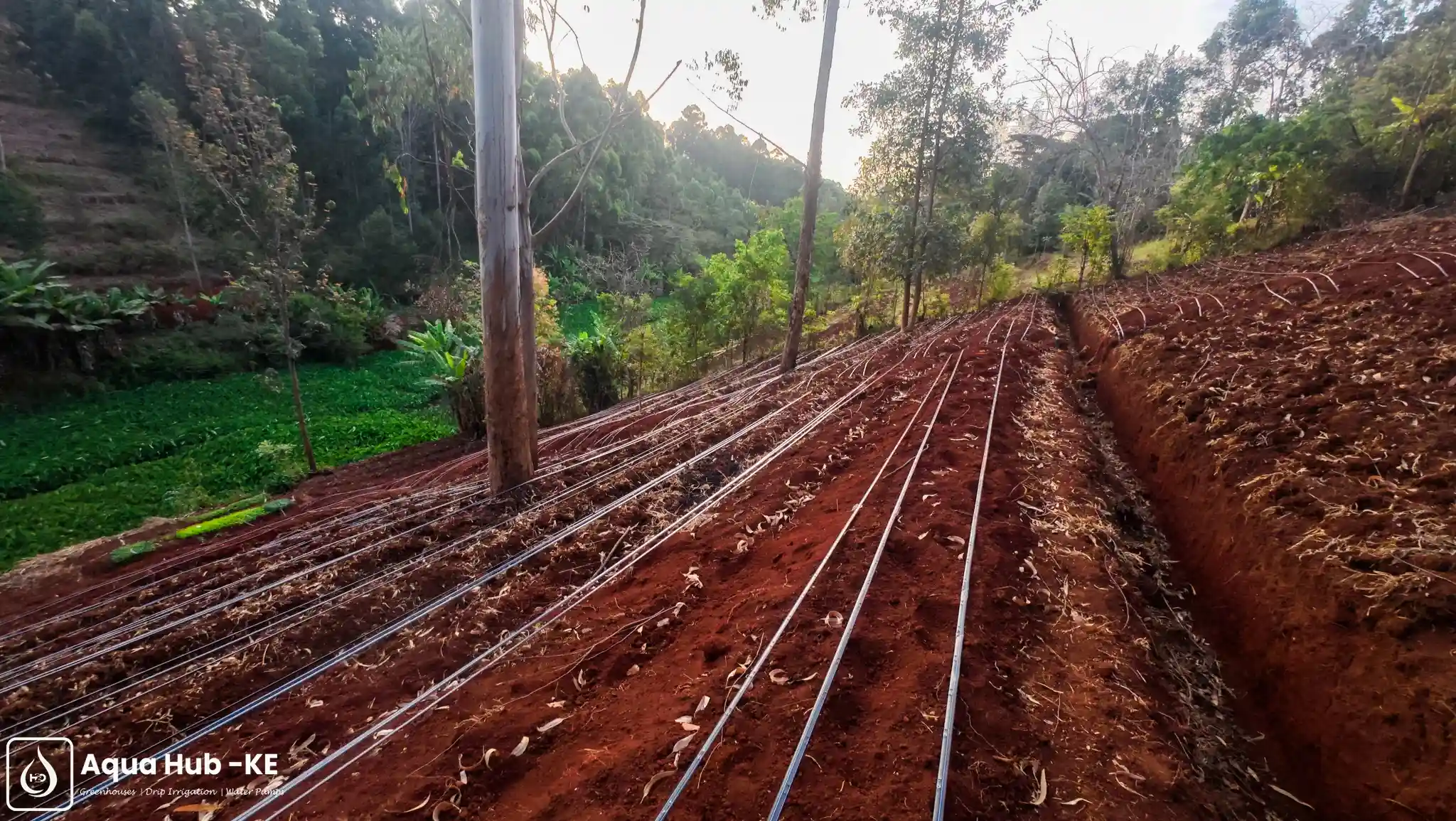
- Terrain: Sloping land may require heavier 0.4 mm drip lines and pressure regulators to keep water flowing evenly. Our guide to drip irrigation for hillside farms explains this in detail.
- Filtration: Dam and river water carry more dirt than borehole or mains water, so they need stronger filters for drip irrigation.
- Automation: Timers, fertigation equipment and hydrants with control valves are optional additions that increase the initial cost but reduce labour.
For this reason, we recommend requesting a current quotation from our team once you know your water source and the crop you intend to grow. The quotation will confirm exactly what is included for your farm, such as installation, tanks and pumps. Our article on drip irrigation installation cost in Kenya explains how these costs add up.
What Is a Drip Irrigation Kit?
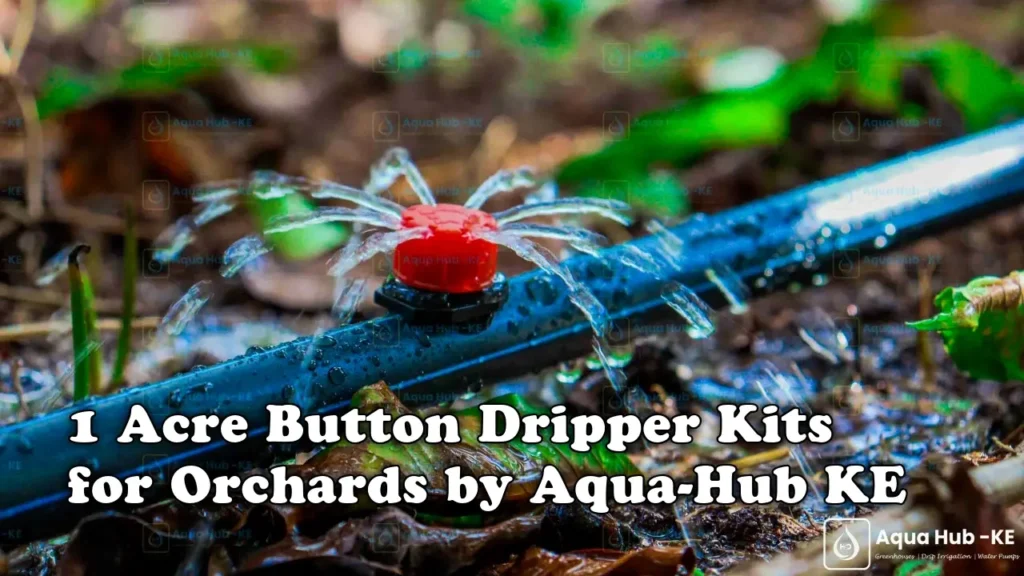
A drip irrigation kit is a complete set of pipes, drip lines and fittings that delivers water slowly and directly to the root zone of each plant. Instead of wetting the whole field, the system releases water through small emitters built into the drip line at fixed spacing.
As a result, very little water is lost to evaporation, runoff or weeds growing between the beds. The soil around each plant stays evenly moist, which encourages steady growth and uniform crop quality.
Components of a Quarter Acre Drip Irrigation Kit
A standard drip irrigation kit from Aqua Hub Kenya contains the following components:
| Component | Function |
|---|---|
| Tank connector | Connects the system to your water tank or storage |
| Filter (screen or disc) | Removes dirt and particles to prevent emitters from clogging |
| Main pipe (HDPE or PVC) | Carries water from the source to the farm |
| Sub-mainline pipe | Distributes water across the beds |
| Ball control valves | Control water flow to different sections of the farm |
| Compression fittings | Tees, elbows, couplings and adapters that join the pipes |
| Saddle clamps and drip fittings | Connect the drip lines to the sub-mainline |
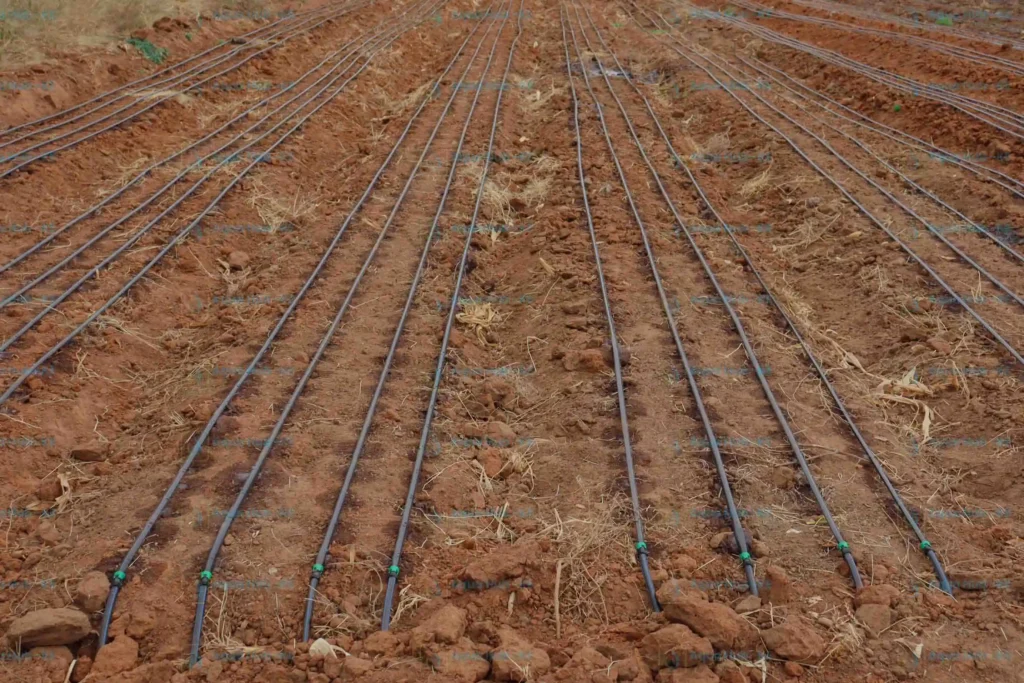
| Drip lines | Deliver water to each plant through built-in emitters |
| End caps and drip-end plugs | Seal the ends of pipes and drip lines |
We use compression fittings because they make future repairs and maintenance easier. Furthermore, our drip lines are made from UV-treated polyethylene, which withstands the strong sunlight experienced across most Kenyan farming areas.
Drip Line Specifications
Our drip lines are 16 mm in diameter and are available in two wall thicknesses:
- 0.3 mm: Suitable for flat land and standard vegetable production.
- 0.4 mm: Heavier and more durable. We recommend it for sloping or hilly land, where it is used together with pressure regulators.
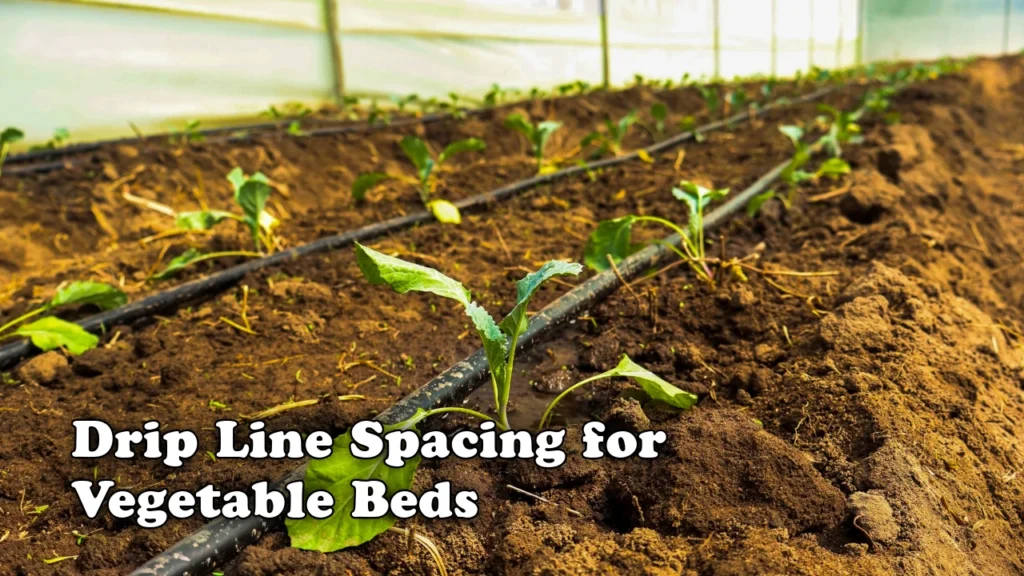
The drip lines are available with emitter spacing of 15 cm, 20 cm and 30 cm. Choosing the right spacing is important because each emitter should serve one plant or a small group of plants.
| Emitter spacing | Suitable crops |
|---|---|
| 15 cm | Onions, garlic, carrots |
| 20 cm | Kales, tomatoes, capsicum, broccoli, strawberries, spinach |
| 30 cm | Cabbages, watermelons |
How Much Drip Line Does a Quarter Acre Need?
A quarter acre measures approximately 1,012 square metres, which is close to a plot of 30 m by 34 m. On our standard layout, each bed is 1 m wide with a walking path between beds.
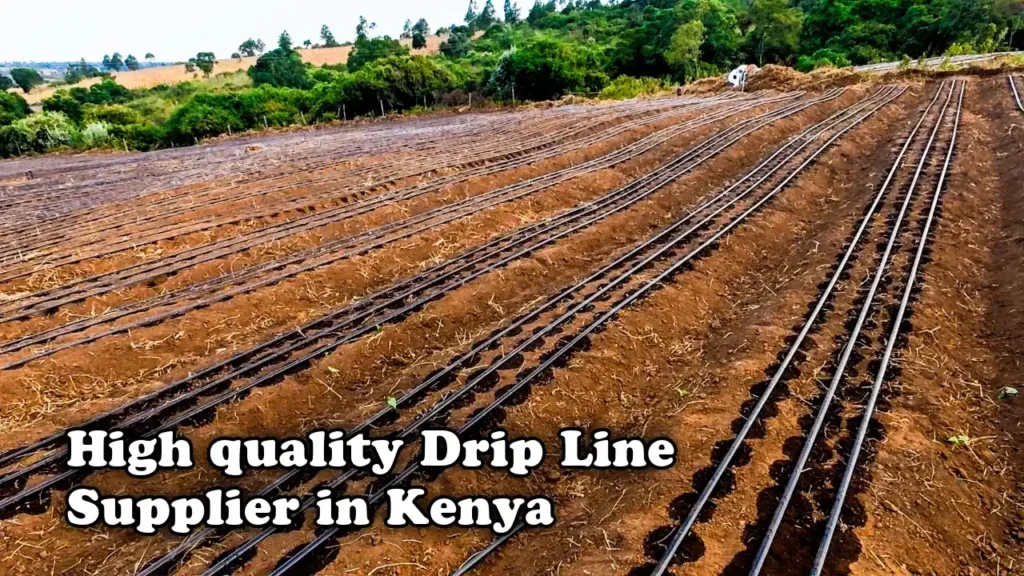
On a plot of this size, a farmer can fit roughly 20 to 22 beds. Therefore, the total bed length is in the region of 600 to 700 metres. A single-line layout uses about that much drip line, while two and three lines per bed double or triple the requirement. Our team measures your plot during the site survey to calculate the exact quantity, so you neither run short nor pay for excess material.
Crops Suitable for Quarter Acre Drip Irrigation
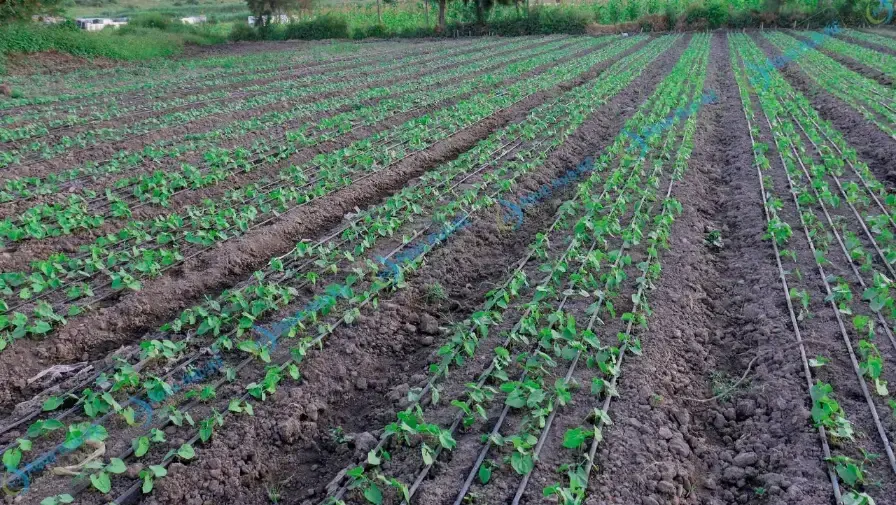
A quarter acre under drip irrigation is well suited to high-value horticultural crops. These crops respond well to consistent watering and can return the cost of the kit within a few seasons when managed properly.
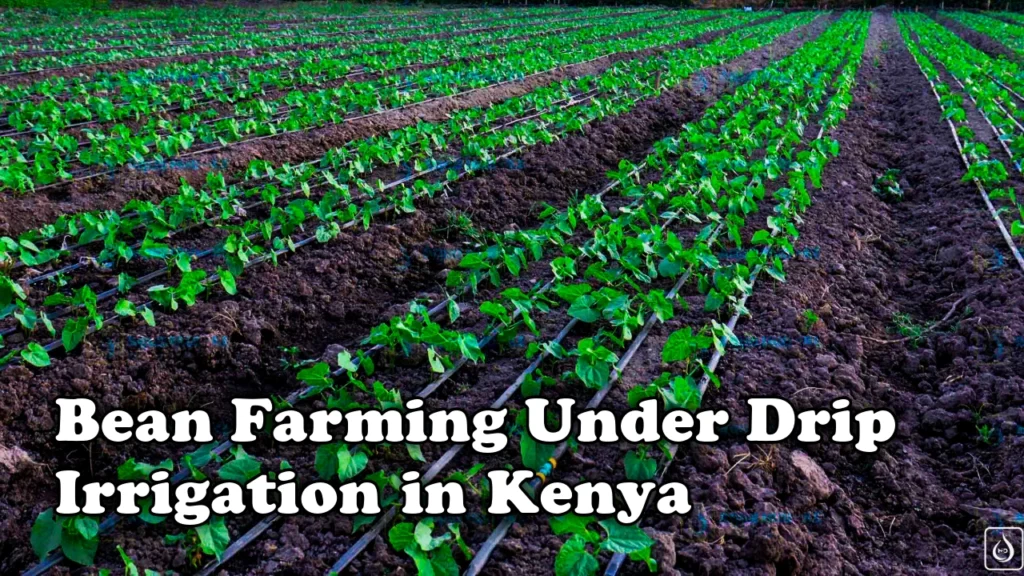
- Tomatoes: Grown on 2 lines per bed with 20 cm spacing. Drip irrigation keeps the leaves dry, which reduces the risk of leaf diseases common with overhead watering.
- Onions and garlic: Require 3 or 4 lines per bed because they are planted in several close rows. They are popular in drier areas, where even moisture is essential for good bulb formation. Learn more about drip irrigation for onions and garlic.
- Capsicum: Grown on 2 lines per bed. Capsicum is sensitive to water stress, so a steady supply improves fruit size and quality.
- Kales, spinach and other leafy greens: Grown on 2 lines per bed with 20 cm spacing. They provide a regular income through continuous harvesting.
- Watermelons: Grown on 1 line per bed with 30 cm spacing, making them one of the most affordable crops to set up on drip.
- Strawberries: Grown on 2 lines per bed, often together with mulching film.
Quarter acre drip kits are used by farmers across Kenya, including those in Kiambu, Murang’a, Nyeri, Kirinyaga, Nakuru and Eldoret. In areas with unreliable rainfall, drip irrigation allows farmers to produce during the dry season, when vegetable prices are usually higher.
Benefits of Drip Irrigation Kits for Quarter Acre Farms
Efficient Use of Water
Drip irrigation applies water only where the plant needs it. Consequently, a farmer with a limited water supply, such as a single tank, a shared borehole or a small dam, can irrigate a larger area than with hosepipes or furrows. This matters on smallholdings, where water is often the main factor limiting production. Lining a farm pond with UV-stabilized dam liners helps you store rainwater for the dry season.
Reduced Labour Requirements
Watering a quarter acre by hand or hosepipe takes several hours every day. With a drip kit, the farmer simply opens the valve and the system waters all the beds at once. As a result, the farmer or family members have more time for weeding, scouting for pests, harvesting and marketing.
Better Crop Growth and Uniform Yields
Every plant on the same drip line receives a similar amount of water. Hence, crops grow at a uniform rate and mature together, which makes harvesting and selling easier. Consistent soil moisture also reduces problems such as fruit cracking and blossom end rot in tomatoes.
Fertigation
Drip lines can deliver water-soluble fertilizer directly to the root zone, a process known as fertigation. Because the fertilizer goes straight to the roots, less is wasted and the plants take it up more efficiently. This is particularly useful on degraded or less fertile soils, and a venturi fertigation unit makes it simple to set up.
Fewer Weeds and Diseases
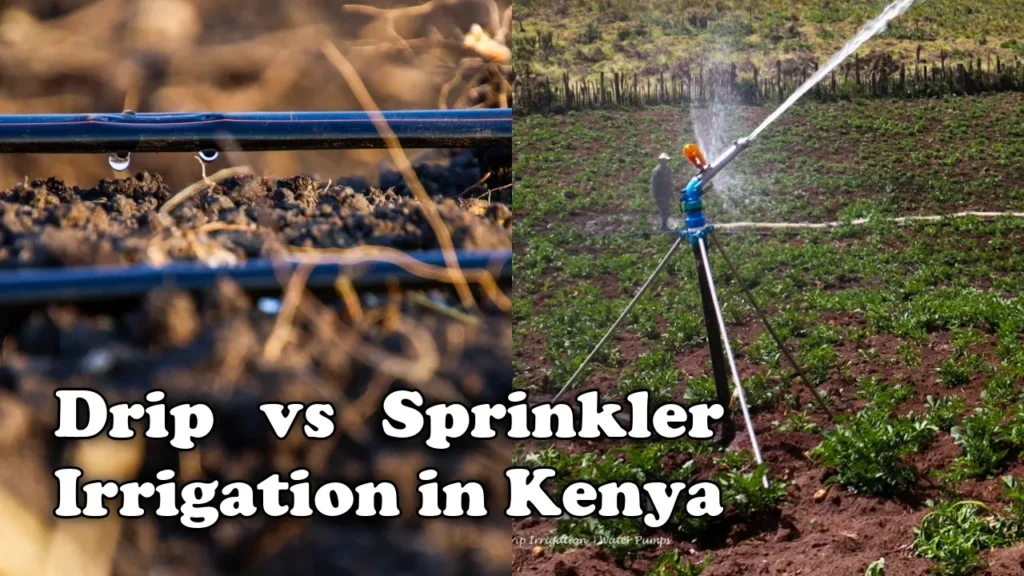
The spaces between beds remain dry because the system waters only the planting rows. Therefore, fewer weeds germinate on the paths. In addition, keeping the leaves dry reduces fungal diseases that spread through wet foliage. This is one of the main differences in our comparison of drip vs sprinkler irrigation.
Low Energy Costs
A quarter acre drip system can run on gravity when the tank is placed high enough. The system operates at low pressure of about 1 to 2 bar, and a tank raised above 3 metres can generate sufficient pressure on flat land. Where a pump is needed, solar-powered surface pumps are a popular option because they have low running costs.
How a Quarter Acre Drip Irrigation Kit Is Installed
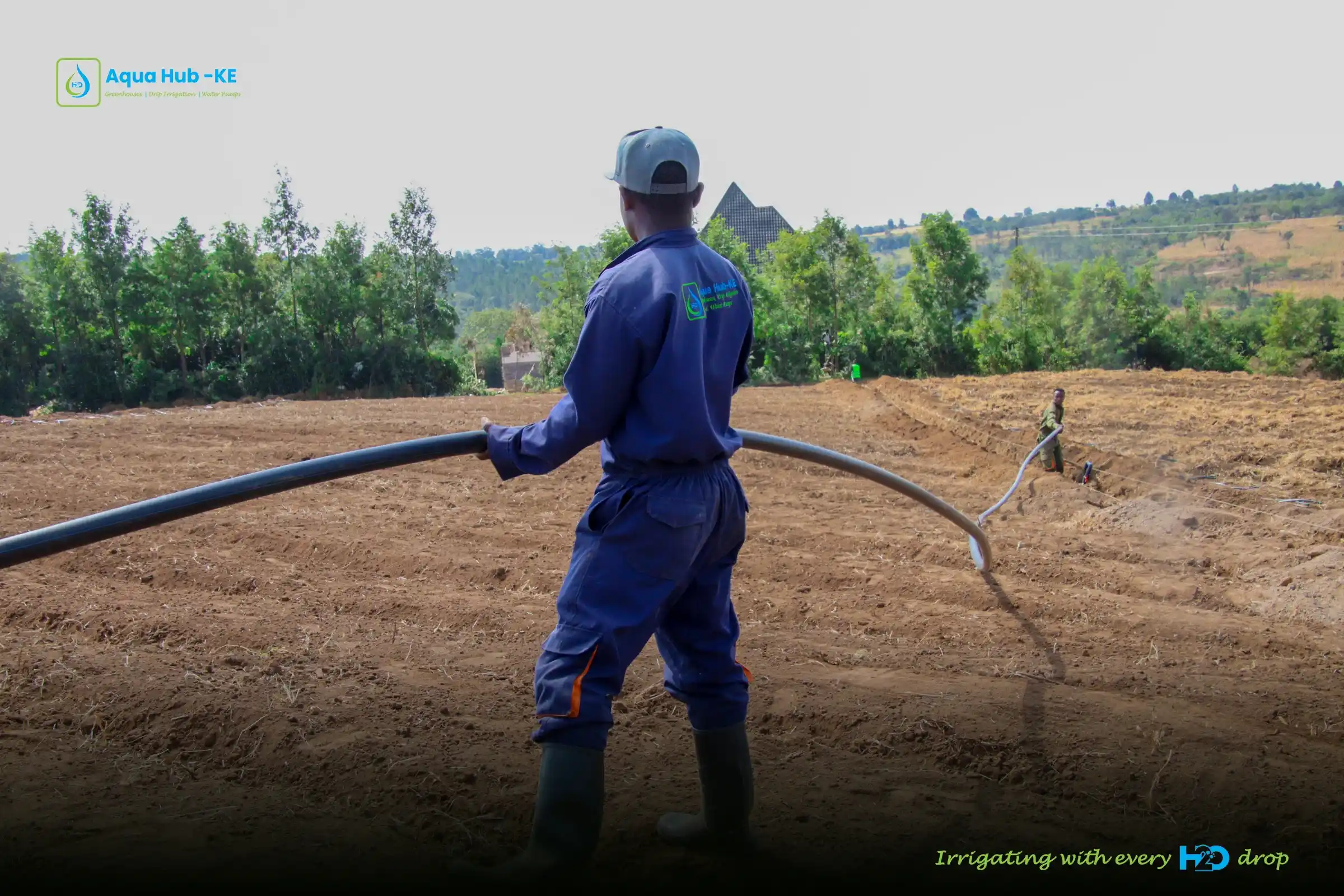
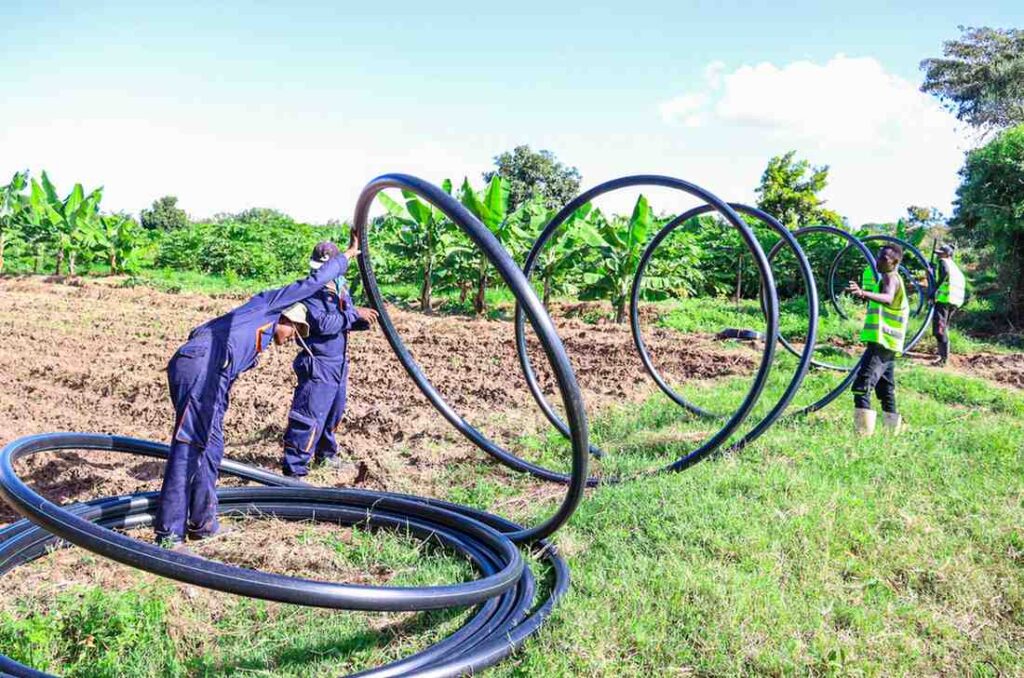
Proper installation determines how well and how long the system will perform. Our technicians follow these steps, which we also cover in our guide on how to install drip irrigation kits:
- Site survey: We assess the land size, elevation and water source. This information is used to design the layout and prepare an accurate quotation.
- Land preparation: The farmer clears vegetation, roots and stones, cultivates the soil to a fine tilth and prepares beds of about 1 m width.
- Water source setup: The tank connector is fitted to the tank or the pump outlet.
- Filter installation: The filter is installed near the water source. A backflow preventer and pressure reducer are added where the water source requires them.
- Trenching and mainline installation: Trenches are dug and the mainline and sub-mainline pipes are laid and joined with compression fittings.
- Valve connection: Control valves are installed so that different sections can be watered separately if needed.
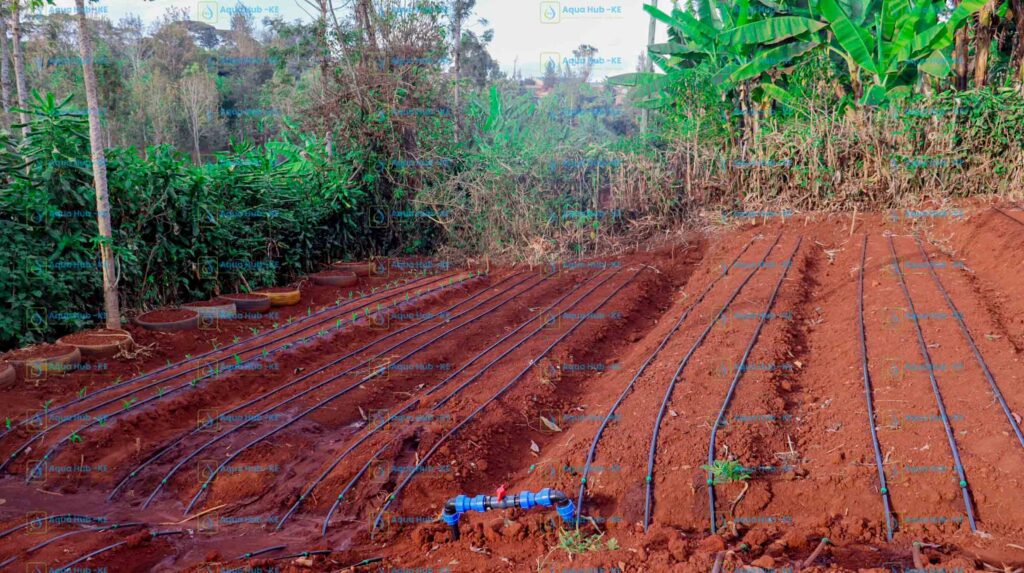
- Drip line connection: Drip lines are connected to the sub-mainline using saddle clamps, risers and start connectors, then laid along each bed.
- Flushing: The system is flushed to remove dirt that entered the pipes during installation.
- End sealing and testing: End caps and drip-end plugs are fitted, and the system is tested to confirm that all emitters release water evenly.
Common Mistakes to Avoid
- Skipping the filter: Unfiltered water, especially from rivers and dams, clogs emitters within a short time.
- Wrong emitter spacing: Using 30 cm spacing on onions, for example, leaves many plants without enough water.
- Ignoring slope: On sloping land, plants at the lower end receive more water than those at the top unless the system is designed for the terrain.
- Placing the tank too low: A gravity-fed system without enough height delivers weak and uneven flow.
- Laying drip lines upside down or twisted: Emitters should face upwards so that dirt does not settle in them.
Although some farmers install drip kits themselves, mistakes in layout and connection often lead to leaks and uneven watering. For this reason, we recommend professional installation, especially for first-time users.
Maintenance Tips
A well-maintained drip irrigation system lasts between 5 and 15 years. To keep your kit in good condition:
- Clean the filter regularly, particularly when using dam or river water.
- Flush the drip lines periodically by opening the end plugs and allowing water to run through.
- Inspect the lines for leaks and damage from rodents, tools or livestock.
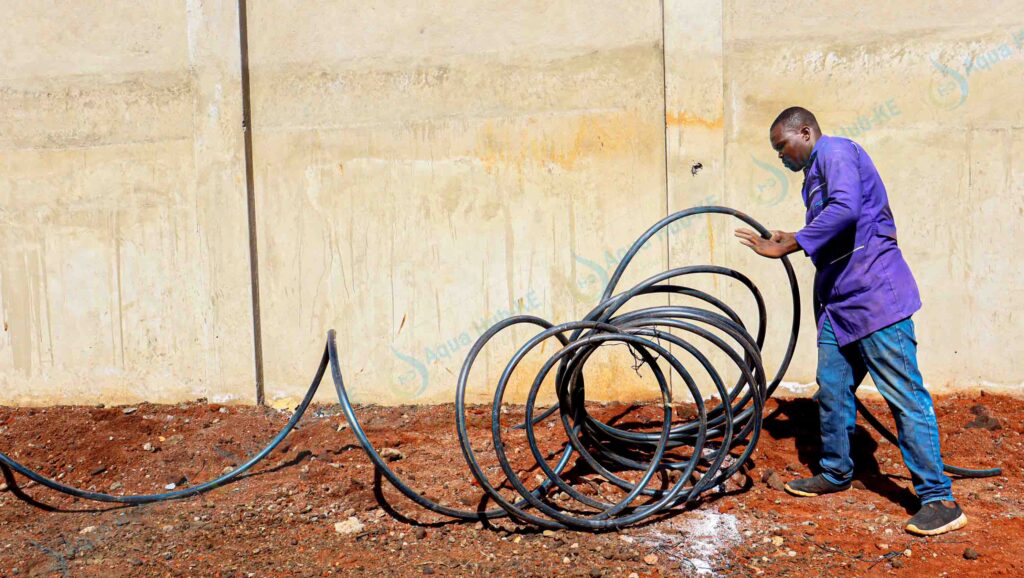
- Roll up and store drip lines in a shaded place between seasons if the land will be ploughed.
Why Choose Aqua Hub Kenya for Your Drip Irrigation Kit?
At Aqua Hub Kenya, we specialize in irrigation systems, greenhouse construction and agricultural water solutions. When you buy a quarter acre drip irrigation kit from us, you receive:
- Professional consultation: We recommend the right number of lines per bed, emitter spacing and drip line thickness for your crop and terrain.
- Quality materials: Our kits use HDPE pipes, compression fittings and UV-treated drip lines.
- Site survey and layout design: We design the system to suit your plot, including uneven terrain.
- On-site installation: Our technicians install the system and test it before handover.
- Fertigation support: We advise on applying fertilizer through your drip system.
- Complementary products: We also supply water pumps, dam liners for water harvesting, greenhouses, shade nets, sprinklers and rain guns. Hence, you can source your entire irrigation project from one supplier.
We serve farmers across Kenya from our Nairobi office on Eastern Bypass, Benedicta, and our Eldoret branch.
Frequently Asked Questions
How much is a drip irrigation kit for a quarter acre in Kenya?
At Aqua Hub Kenya, a quarter acre drip irrigation kit costs KES 35,000 for 1 line per bed, KES 45,000 for 2 lines per bed and KES 55,000 for 3 lines per bed.
Can I expand my quarter acre kit later?
Yes. A drip system can be extended by adding more sub-mainline pipe and drip lines, provided the water source and mainline can supply the larger area. Let our team know about your expansion plans so we can size the mainline correctly from the start.
Can I use a drip kit without a pump?
Yes. A gravity-fed system works well when the water tank is raised above 3 metres and the land is relatively flat. Where the water source is lower than the farm, a pump is necessary.
Which water source is best for drip irrigation?
Borehole water stored in a tank is ideal because it is clean. Dam, river and pan water can also be used, but they require good filtration to prevent clogging.

How many lines per bed do I need?
It depends on the crop. Onions and garlic need 3 or more lines, while tomatoes, capsicum, kales and strawberries usually need 2. Widely spaced crops such as watermelons need 1.
How long does a drip irrigation kit last?
With proper filtration and regular maintenance, a drip irrigation system lasts between 5 and 15 years.
Does Aqua Hub Kenya install drip kits outside Nairobi?
Yes. We serve farmers in different parts of the country through our Nairobi and Eldoret offices. Contact us to confirm installation arrangements for your location.
Get Your Quarter Acre Drip Irrigation Kit from Aqua Hub Kenya
A drip irrigation kit is one of the most practical investments a quarter acre farmer can make. It saves water and labour, supports fertigation and allows you to produce high-value crops throughout the year.
Contact Aqua Hub Kenya today for a quotation, a site survey or advice on the right drip irrigation kit for your farm.
- Nairobi (Eastern Bypass, Benedicta): 0790 719 020 | info@aquahubkenya.co.ke
- Eldoret: 0711 138 312 | aquahub.irri@gmail.com