
Blog
Drip vs Sprinkler Irrigation in Kenya | Cost Comparison in 2026
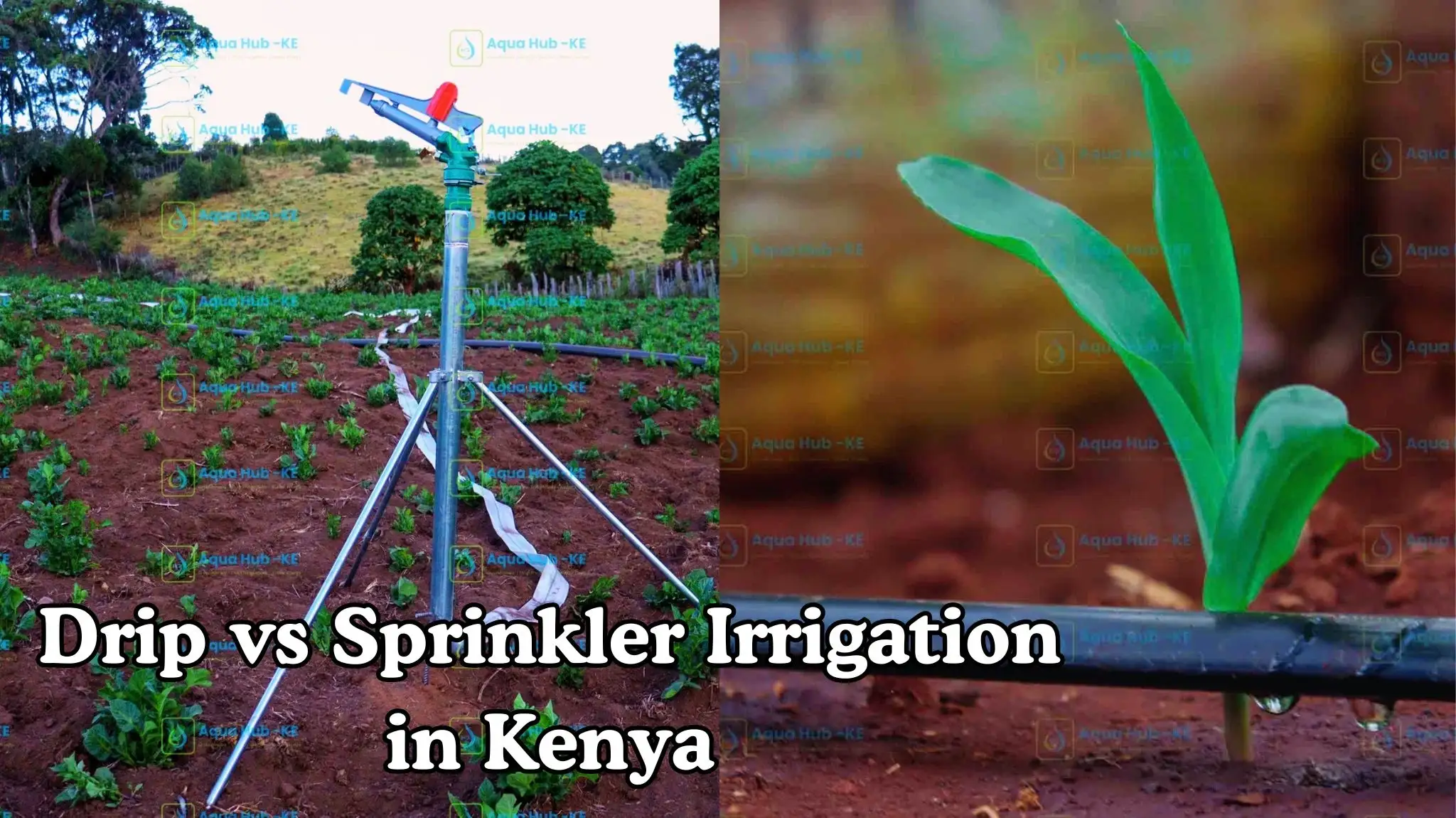
Drip vs sprinkler irrigation costs vary based on the type of system installed. Irrigation costs in Kenya depend on your farm size and system type. Drip irrigation runs from KES 20,000 for an 1/8 acre to KES 180,000 for a full acre, while sprinklers start at KES 500 each and rain guns reach KES 45,000. Pumps, filtration, pipes, fittings and labour also affect the final price
Aqua Hub Kenya is one of the biggest suppliers of both drip and sprinkler irrigation systems in Kenya. Moreover, we have qualified technicians who can advise you on the best irrigation method for your crops.
To get professional recommendations and purchase high quality sprinkler irrigation systems, call Aqua Hub Kenya via telephone on +254790719020.
Drip vs Sprinkler Irrigation Price List from Aqua Hub Kenya
Aqua Hub Kenya offers the best prices on drip and sprinkler irrigation systems. Each price below covers pipes emitters, filters and fittings, therefore you pay for one complete system with no hidden fees. Besides the kit prices listed, we also offer site survey prior to making a quote and professional installation.
Cost of Drip Irrigation by Aqua Hub Kenya
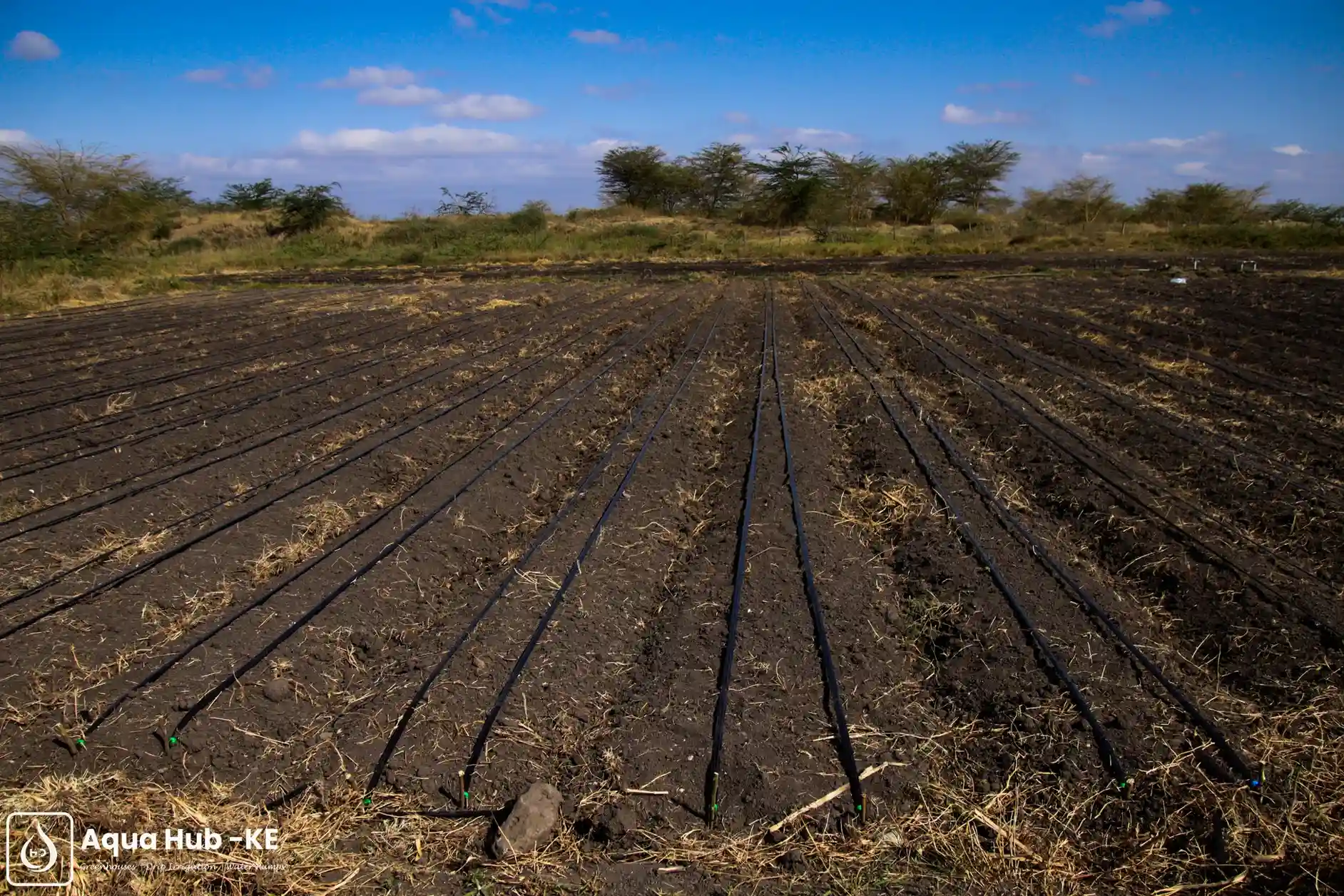
The cost of drip irrigation is determined by the farm size as shown in the table below.
| Farm Size | Cost |
| 1 Acre | KES 135,000 – KES 180,000 |
| ½ Acre | KES 70,000 – KES 90,000 |
| ¼ Acre | KES 40,000 – KES 55,000 |
| 1/8 Acre | KES 20,000 – KES 25,000 |
Additional factors that impact the final cost of your drip irrigation system include:
- The number of drip lines laid per bed
- The type of emitters used
- Water pumps
- Filtration units
- Labour costs
Cost of Sprinkler Irrigation by Aqua Hub Kenya
When purchasing a sprinkler irrigation system in Kenya, the final price you pay will depend on a number of variables such as:
- Type of sprinkler
- Pipes and fittings
- Water pumps
- Control valves
- Labour costs
The current costs of sprinklers at Aqua Hub Kenya are:
| Sprinkler Type | Spray Radius | Cost |
| Sprinkler 3/4 “-Plastic | 8–12 meters | KES 500 |
| Sprinkler 1″ – Brass | 12–20 meters | KES 4,000 |
| Sprinkler 1.5″-Brass | 20–28 meters | KES 7,000 |
| Sprinkler 2″- Brass | 28–36 meters | KES 9,000 |
| Rain Gun | 15-60 meters | KES 8,000 – KES 45,000 |
If you are a farmer looking to start using irrigation to improve your yield, contact Aqua Hub Kenya via +254790719020 to get a quote on the best irrigation system for your use case.
What is the Difference between Drip vs Sprinkler Irrigation?
Understanding the difference in drip vs sprinkler irrigation starts by knowing what each method of irrigation entails.
What is Drip Irrigation by Aqua Hub Kenya?
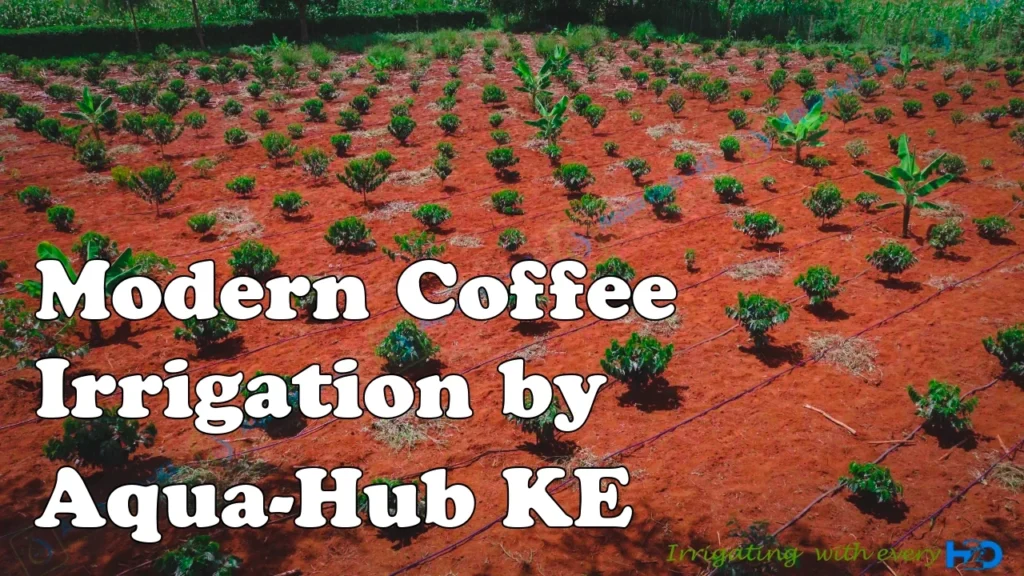
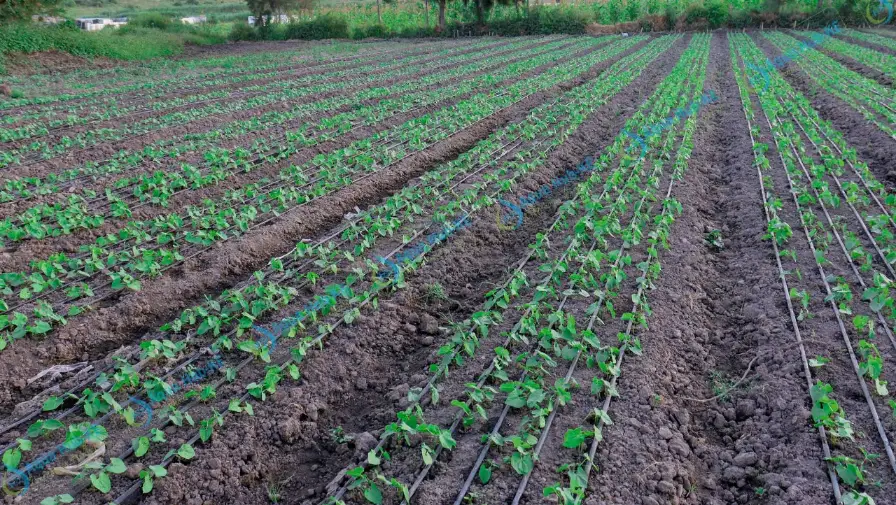
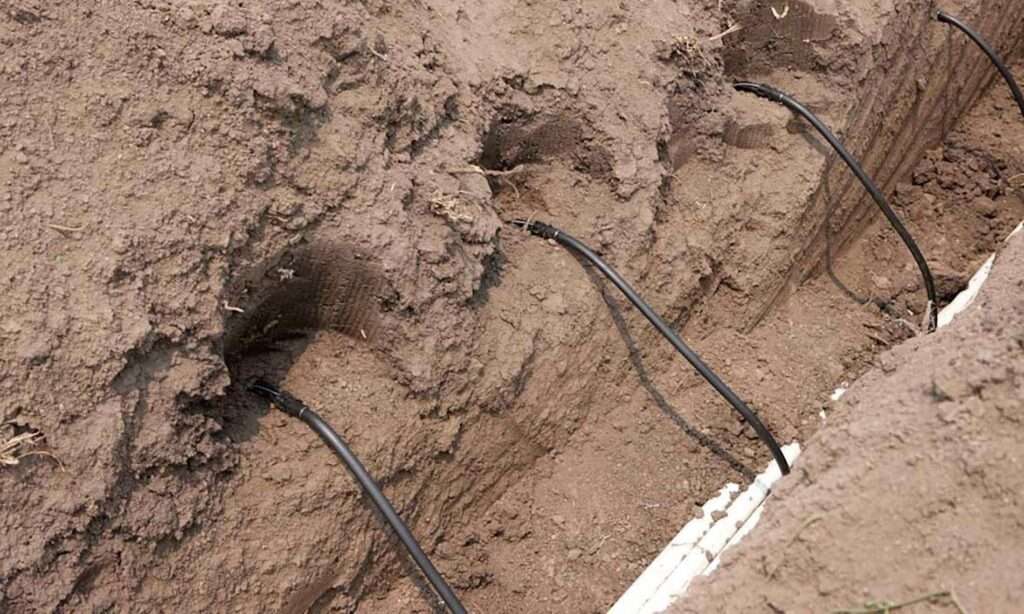
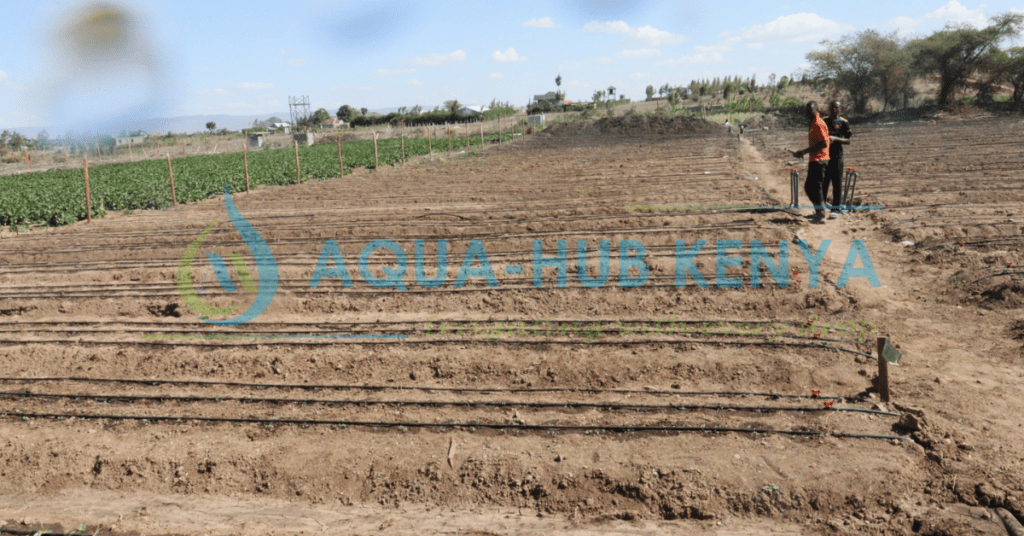
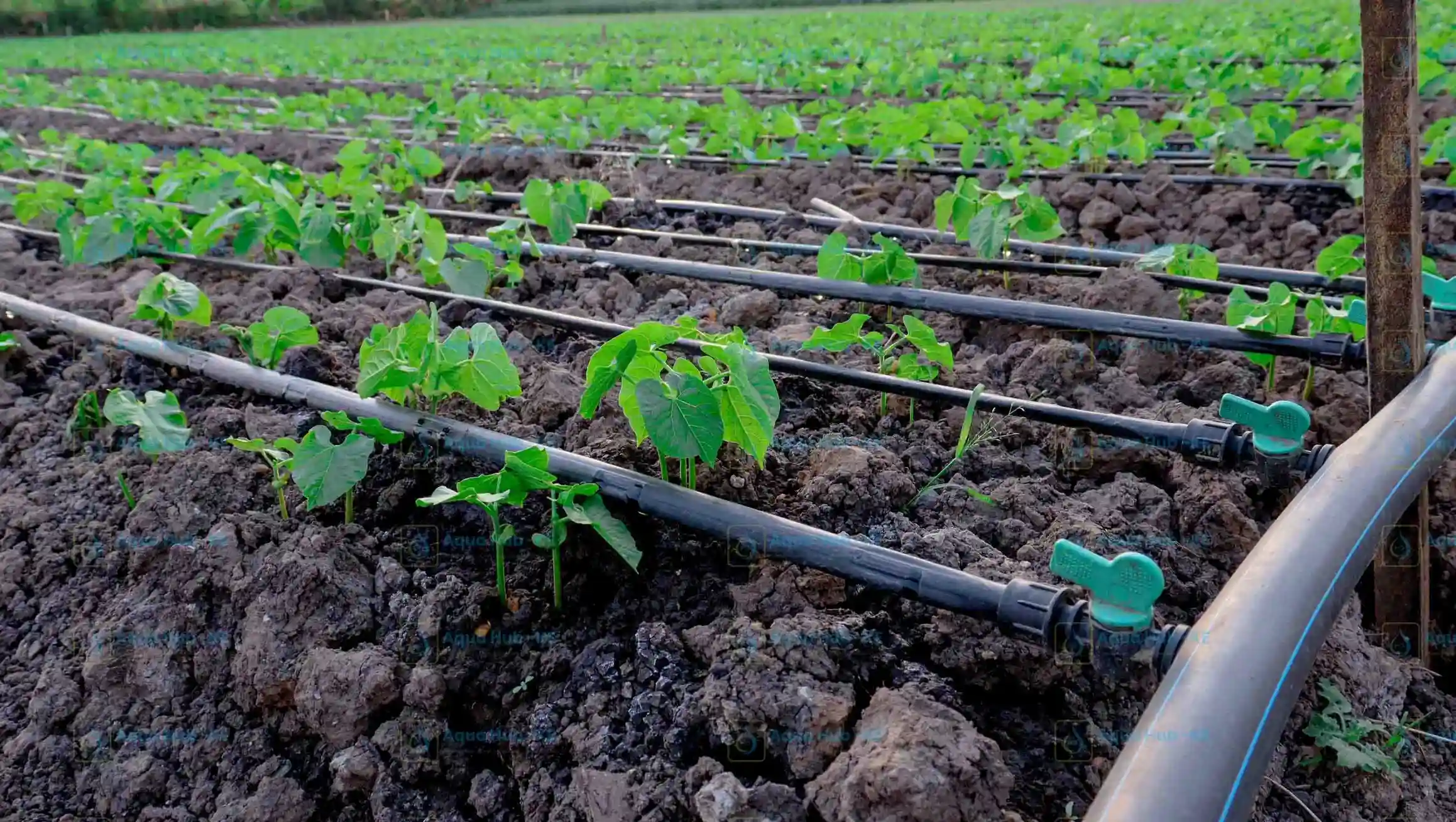
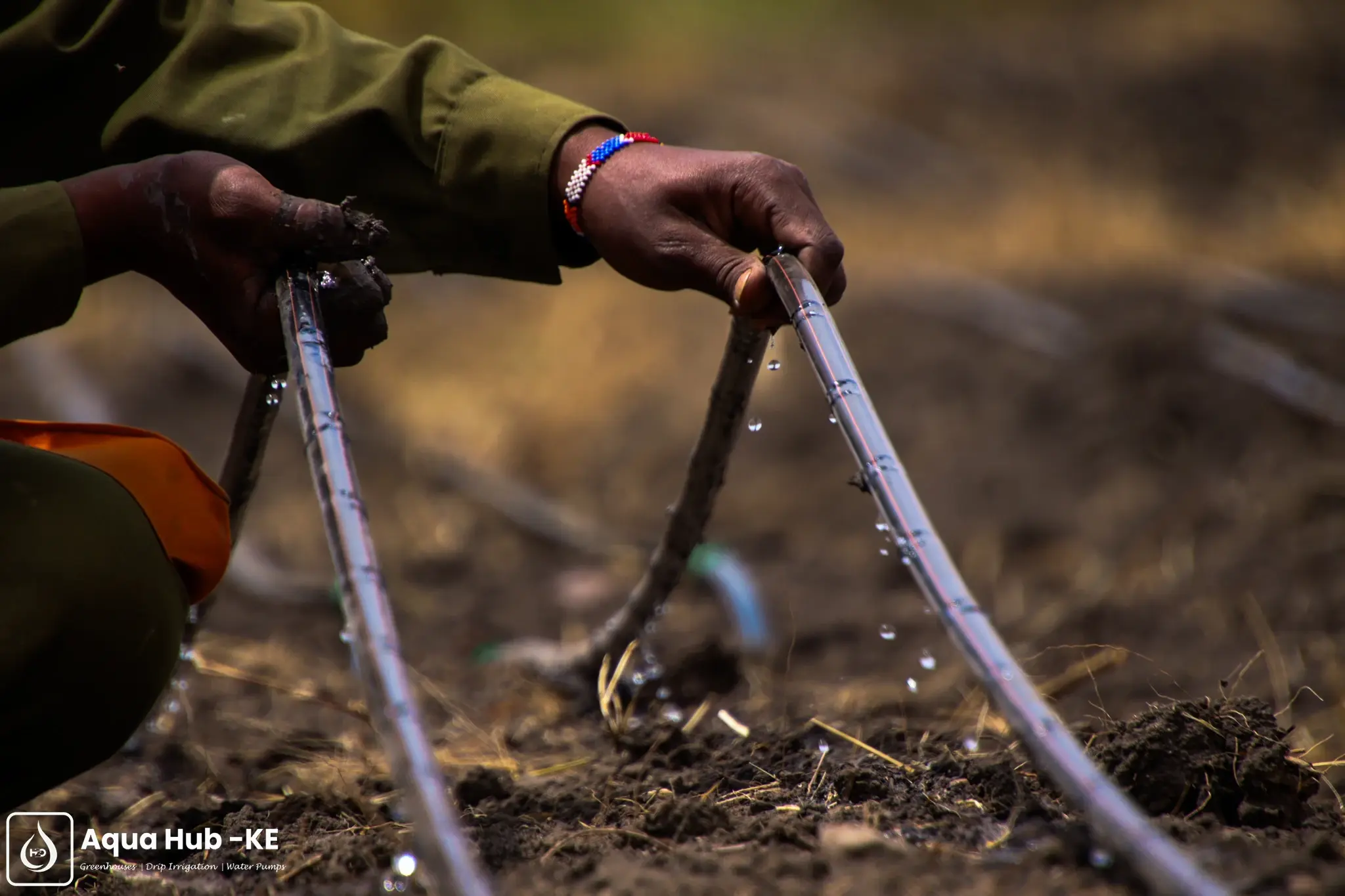
Drip irrigation is a system that delivers water slowly to the root zone of each plant through HDPE pipes and emitters. Besides saving water, it supports fertigation. This is because farmers can feed crops with fertilizer through the same line. Drip works best for a number of crops such as
- capsicum
- tomatoes
- avocado
- coffee
Aqua Hub Kenya offers high quality UV-stabilized drip systems that can be re-used for up to 15 years. Therefore, you can reap the benefits of high yield without needing to replace your entire irrigation system each season.
What is Sprinkler Irrigation by Aqua Hub Kenya?
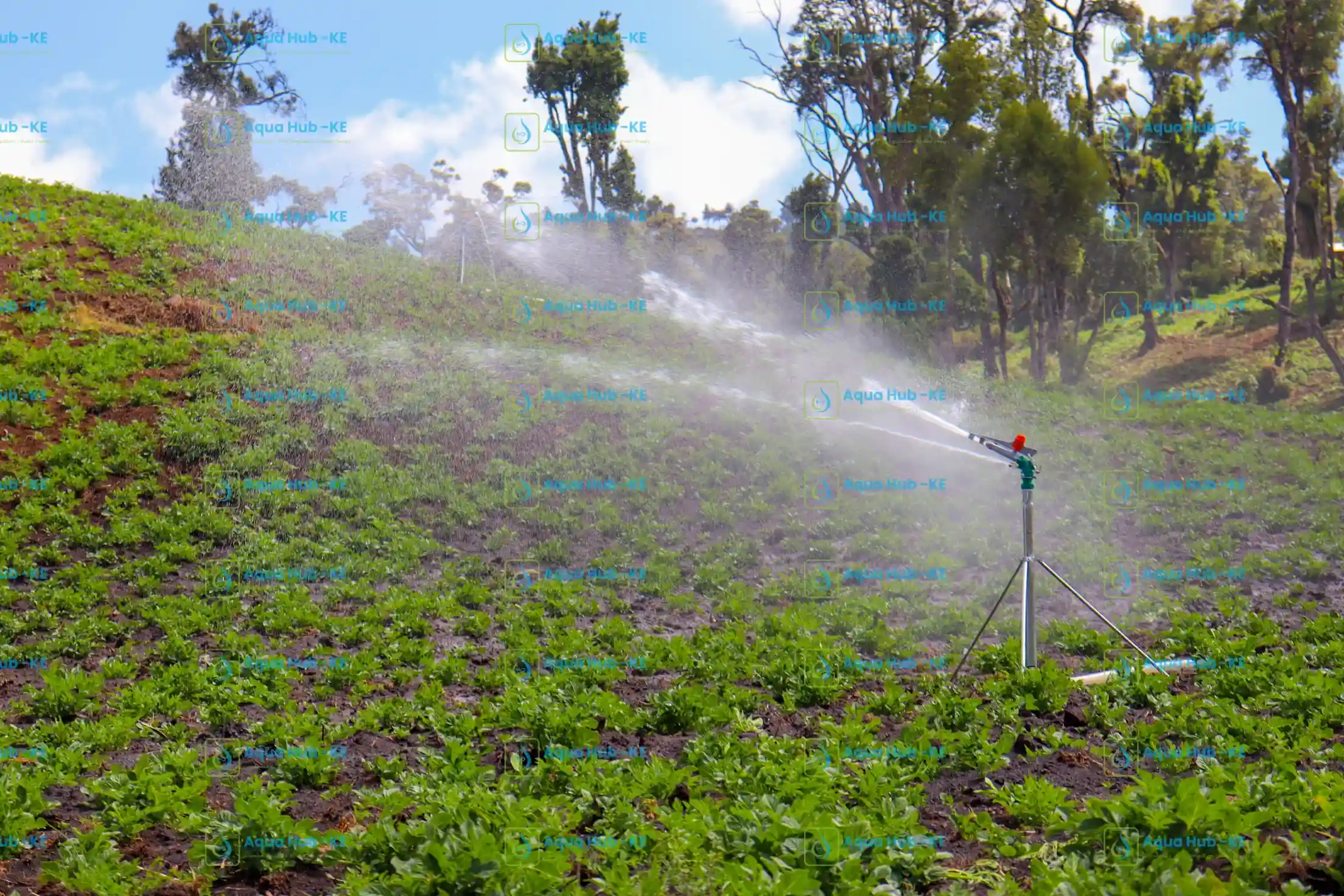
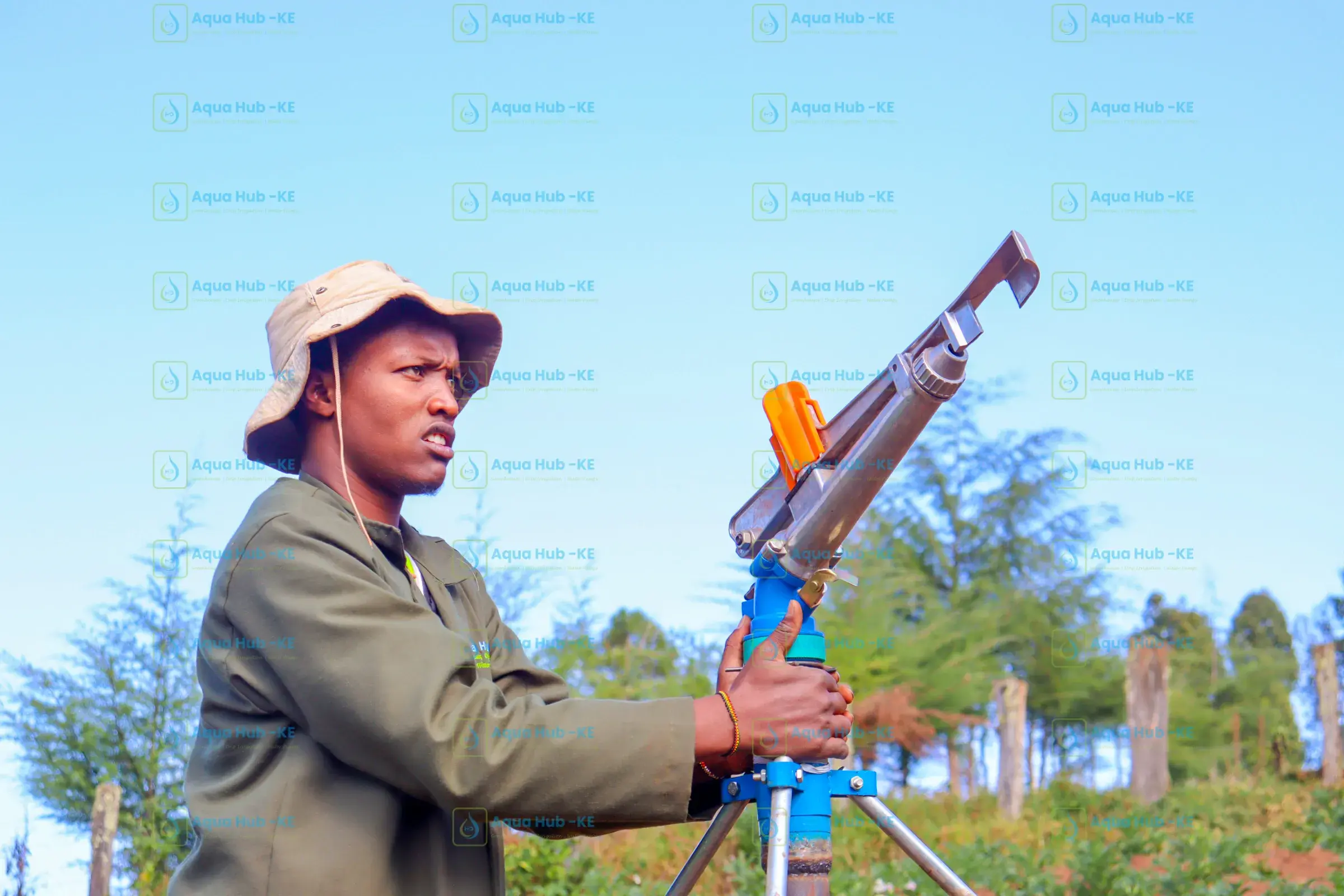
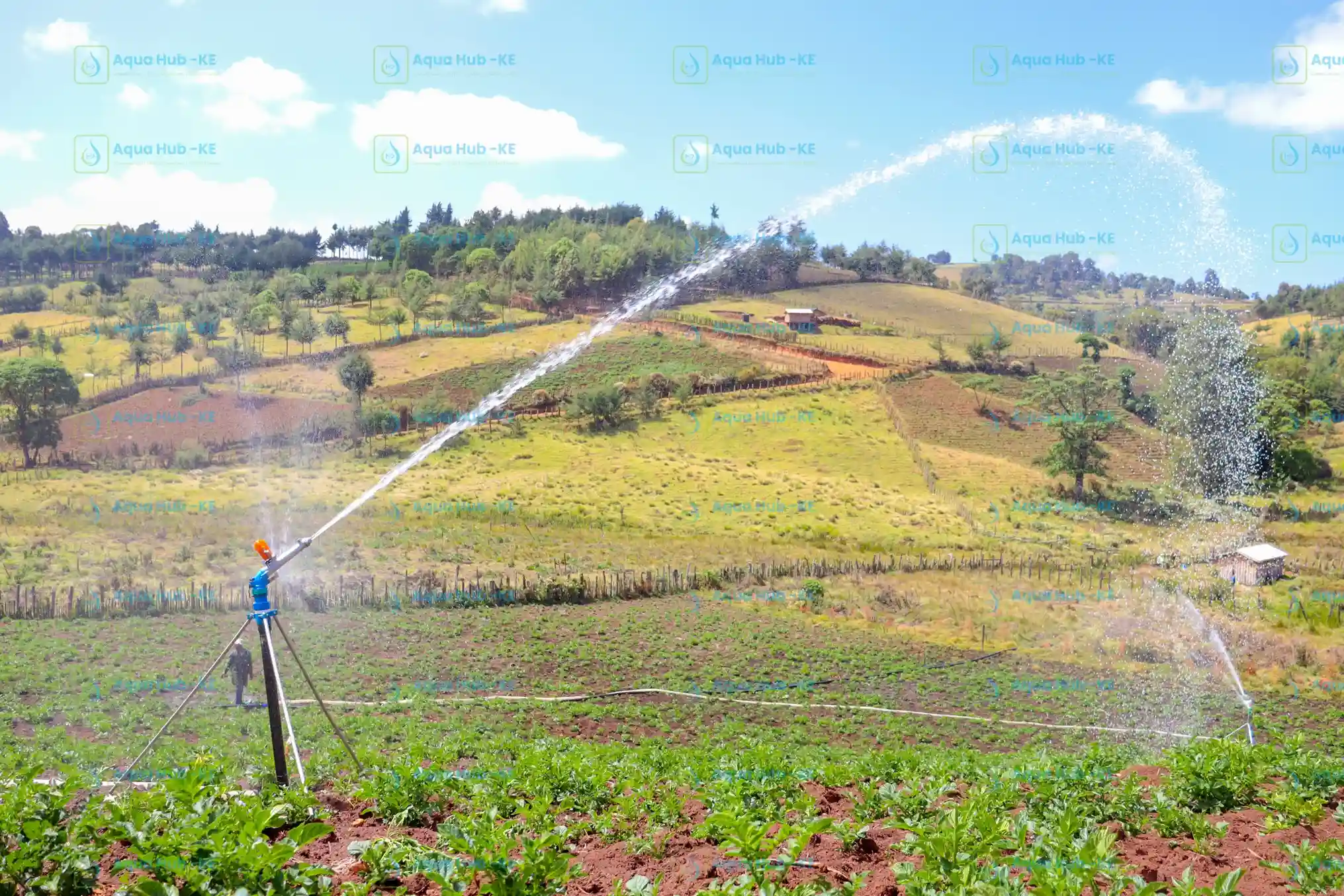
Aqua Hub Kenya’s sprinkler irrigation sprays water over crops like natural rainfall. Firstly, a pump pushes water through pipes to the sprinkler heads. Then, the heads can spray water over a wide area. Sprinkler irrigation is frequently used in Kenya to water several types of crops such as:
- Kales
- Spinach
- Potatoes
- Wheat
- Chilli
Furthermore, sprinklers are the most common irrigation method for lawns and golf courses.
Which method is better for farmers, drip vs sprinkler irrigation?
Both systems work well in different applications. To know which system you should use for your crops, you should consider the following factors:
- Water use: drip uses 30 to 60 percent less water than sprinklers. Consequently, farmers in dry areas are better served by drip irrigation over using sprinklers..
- Coverage: sprinklers cover large open fields quickly, while drip waters each plant row directly. Therefore, crops that are planted in rows with even spacing work better under drip irrigation. In contrast, a farmer growing crops with uneven spacing would benefit more from using sprinklers,
- Installation cost: when comparing drip vs sprinkler irrigation, sprinkler sets tend to cost less to install, while drip kits cost less to run.
- Disease control: drip keeps leaves dry, therefore it reduces fungal disease in tomatoes and capsicum.
- Pressure: drip works at low pressure, so small pumps and solar pumps run it easily. On the other hand, sprinklers usually need stronger pumps.
How much water does each system save?
Drip saves the most water because it applies water only at the root zone. Meanwhile, sprinklers lose some water to wind and evaporation, especially at midday. Farmers should therefore irrigate early in the morning with sprinklers to improve efficiency. Once you switch to drip, your water use usually drops.
Crop-by-crop Guide to Drip vs Sprinkler Irrigation Selection
When it comes to crops, a large number of them can be grown under either method of irrigation. However, most produce optimal yields with one or the other. To know which between drip vs sprinkler irrigation wins for your crop, reference the guide below:
- Tomatoes: drip. Drip keeps leaves dry, so blight pressure drops. Fertigation also feeds each plant evenly.
- Capsicum: drip. Roots need steady moisture which is provided by drip irrigation.Furthermore, drip prevents the swings in soil moisture that cause blossom end rot.
- French beans: drip. Export farms need uniform pods. Since drip supplies equal water along every row, it is the better choice.
- Onions: drip. Shallow roots need frequent small doses, therefore drip fits the crop well especially during the bulb stage.
- Avocado: drip. Hass roots rot in soggy soil. Because drip delivers measured water to each tree it prevents the soil from becoming too wet.
- Mango: drip. Young trees establish faster once drip feeds the root zone daily.
- Coffee: drip. Fertigation through the line also boosts cherry size and yield.
- Kales: sprinkler. Dense planting needs full bed coverage. Moreover, sprinklers also wash dust off the leaves.
- Spinach: sprinkler. Plants grow close together, so overhead water wets the whole bed evenly.
- Coriander (dhania): sprinkler. Short cycles keep the seedbed moist, and germination improves as a result.
- Maize: sprinkler. Large open fields need wide coverage. Using a rain gun saves labour which in turn lowers production costs.
- Irish potatoes: sprinkler. Sprinklers cool the soil during hot spells, while allowing ridges to receive water uniformly.
- Pasture and lucerne: sprinkler. Big paddocks need fast coverage. Since a rain gun waters many acres per day, it makes the watering process more efficient.
- Tea: sprinkler. Estates on wide slopes cover more ground with overhead sets since fewer lines need laying.
Drip vs Sprinkler Irrigation; Which Should I Choose?
As discussed previously, the question of drip vs sprinkler is not as easy as “always use drip” or “always use sprinklers”. Instead, each irrigation method works best for different applications.
When Should a Farmer Use Sprinkler Irrigation by Aqua Hub Kenya?
There are a number of situations where sprinklers clearly outshine drip irrigation including:
- Large open fields: a rain gun covers acres quickly, therefore labour costs stay low.
- Densely planted leafy crops: kales and spinach need whole-bed coverage, so sprinklers fit better than lines.
- Germination stage: sprinklers keep the seedbed surface moist, and seeds emerge evenly as a result.
- Frost or heat protection: overhead water cools crops during hot weather, while it also washes dust from leaves.
- Pasture and fodder: big paddocks in Eldoret and Nakuru need fast, wide coverage.
- Temporary cropping: portable sets can be moved between plots, so one kit serves several fields.
- Non-farm sites: lawns, sports fields and quarries all need broad coverage, and sprinklers also settle dust.
- Lower setup budget: sprinkler sets cost less to install, therefore small farms start irrigating sooner.
When Should a Farmer Use Drip Irrigation by Aqua Hub Kenya?
When it comes to drip vs sprinkler irrigation, drip irrigation is the clear winner when used when:
- Water is scarce: drip applies water only at the root zone, so farms in Garissa and Kajiado stretch every litre.
- Crops grow in rows: tomatoes and capsicum line up along laterals, therefore each plant gets its own emitter.
- Greenhouse production: drip keeps humidity low, so fungal disease drops.
- Fertigation is part of your plan: you inject fertilizer through the line, and nutrients reach roots directly.
- Land slopes: drip works at low pressure, while runoff stays minimal.
- You run a solar pump: low pressure means a small panel array powers the whole system, and fuel bills also fall.
- You grow orchards: avocado and mango trees receive a steady dose at the trunk, so fruit set improves.
- Wind blows often: gusts cannot carry the water away, since drip releases it at ground level.
If you are still unsure on which irrigation method you should be using at your farm, call Aqua Hub Kenya’s professional technicians through +254790719020 and get the best recommendation based on your exact needs.
Frequently Asked Questions
- Each system requires different levels of pressure
- Drip and sprinkler systems typically run for different, conflicting amounts of time
- Combining the two methods could easily result in underirrigation or over irrigation as each irrigation method discharges different quantities of water
Does drip irrigation by Aqua Hub Kenya save more water than sprinklers?
Yes, drip irrigation saves more water than sprinklers because it waters only the root zone.
Can I use a solar pump with drip irrigation?
Yes, you can use a solar pump with drip irrigation since drip works at low pressure.
Final Thoughts on Drip vs Sprinkler Irrigation by Aqua Hub Kenya
Drip and sprinkler systems both deliver strong results, so the right choice depends on your crop, your water source, your budget and your farm size. Drip suits row crops, orchards, greenhouses and sloping land, since it saves water and supports fertigation. Sprinklers suit open fields, leafy crops, pasture and portable setups, while they also cost less to install. Therefore, you should match the system to your farm before you spend any money.
Aqua Hub supplies both options at the best prices, with kits starting from KES 20,000 for drip and KES 500. Additionally, our team sizes the pump and filters for your layout, so your system runs well from day one. To learn more about drip vs sprinkler irrigation in Kenya or to place an order, call +254790719020 today.