
Blog
Greenhouse Mister Systems | Aqua Hub Kenya Prices 2026
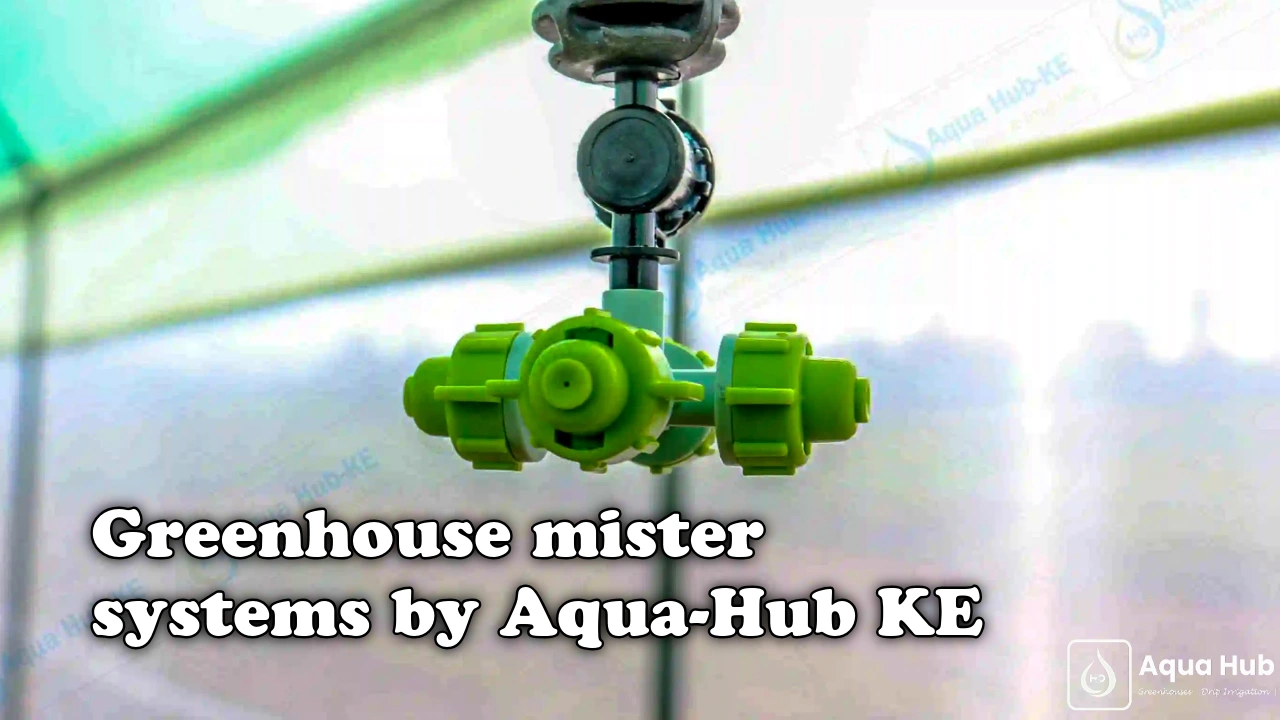
A greenhouse mister systems are specialized irrigation device that sprays small water droplets into the air to cool the environment. This ensures that the temperature within the greenhouse are kept at an optimal level for plant growth. Additionally, these mister systems also water the plant.
Aqua Hub Kenya offers quality greenhouse mister systems for sale. Additionally, we also offer installation and maintenance of your system, ensuring that you can get up and running as soon as possible.
The cost of a mister system from Aqua Hub Kenya varies between KES 300 and KES 1,000.
Why Greenhouse Farmers Choose Mister Systems in Kenya
Greenhouse mister systems have become one of the fastest-growing investments among Kenyan greenhouse farmers in 2026. Rising temperatures inside poorly ventilated greenhouses push farmers to seek cooling methods that protect crops without draining water reserves. A mister system releases water into fine droplets that evaporate quickly and pull heat out of the greenhouse air. Consequently, this gives crops a stable microclimate throughout the day.
Greenhouse Mister Systems Price in Kenya
The price of greenhouse mister systems in Kenya varies according to teh size of the greenhouse and the number of misting lines required per row. The average cost of a greenhouse mister system for an 8m by 15m greenhouse ranges between KES 6,000 and KES 20,000.
Technical Requirements for Greenhouse Mister Systems in Kenya
Commercial greenhouse operations across Kenya now install mister systems to protect high-value crops from adverse weather conditions. Farmers in warmer regions such as Machakos and Kajiado rely on misting systems to keep greenhouse temperatures within a workable range during long dry spells.
The main technical requirements for greenhouse mister systems include:
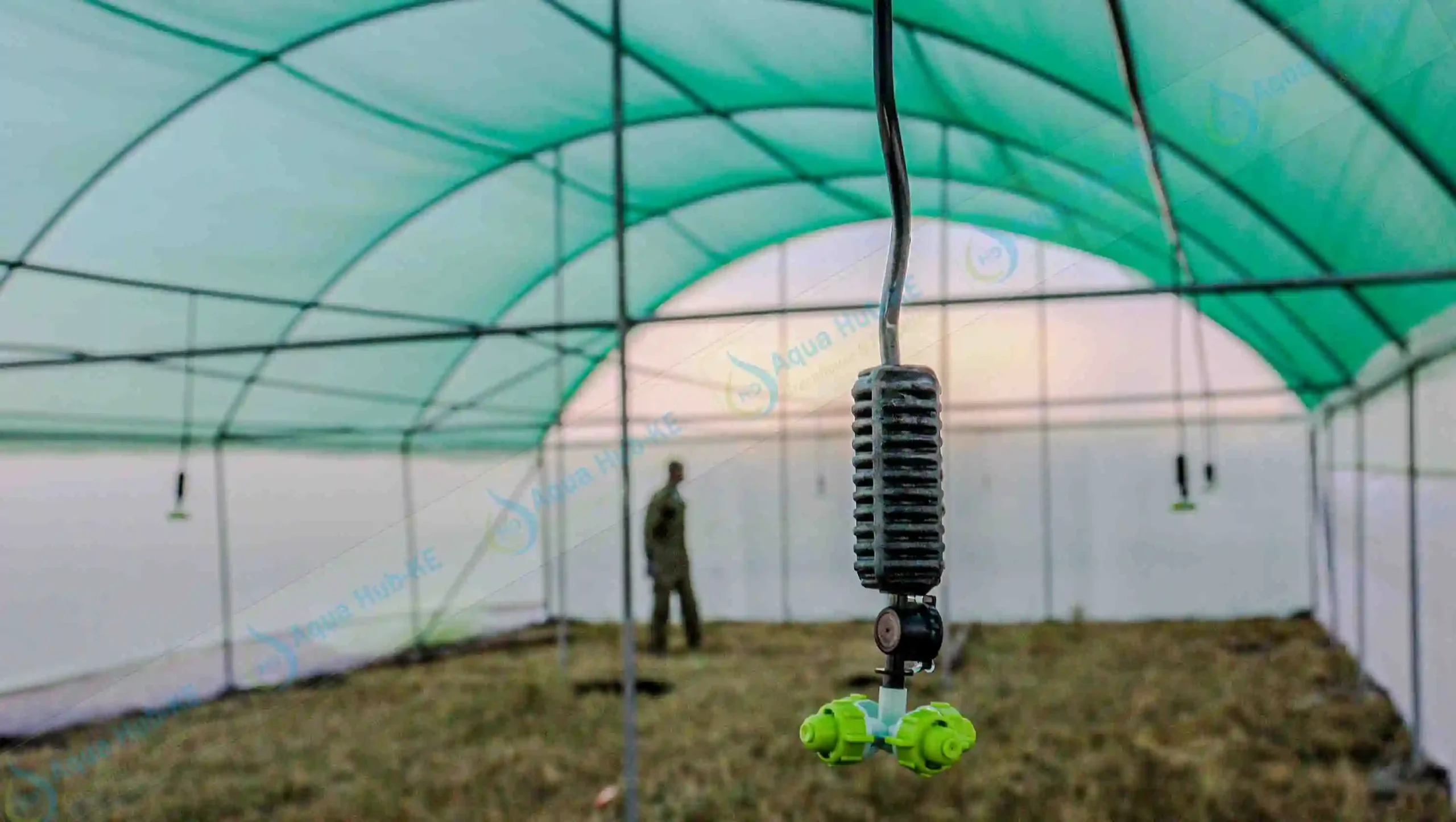
- Water Pressure – mister nozzles require a minimum operating pressure of 3 to 5 bar to atomize water correctly.
- Water Quality – clean, filtered water prevents nozzle clogging and extends the lifespan of the lifespan of the system.
- Greenhouse Height – misting lines perform best when mounted 2 to 2.5 meters above the crop canopy.
- Ventilation – adequate airflow helps the mist disperse evenly and stops excess moisture from settling on leaves.
Types of Misting Nozzles for Kenyan Greenhouses
There are various types of misting nozzles, such as:
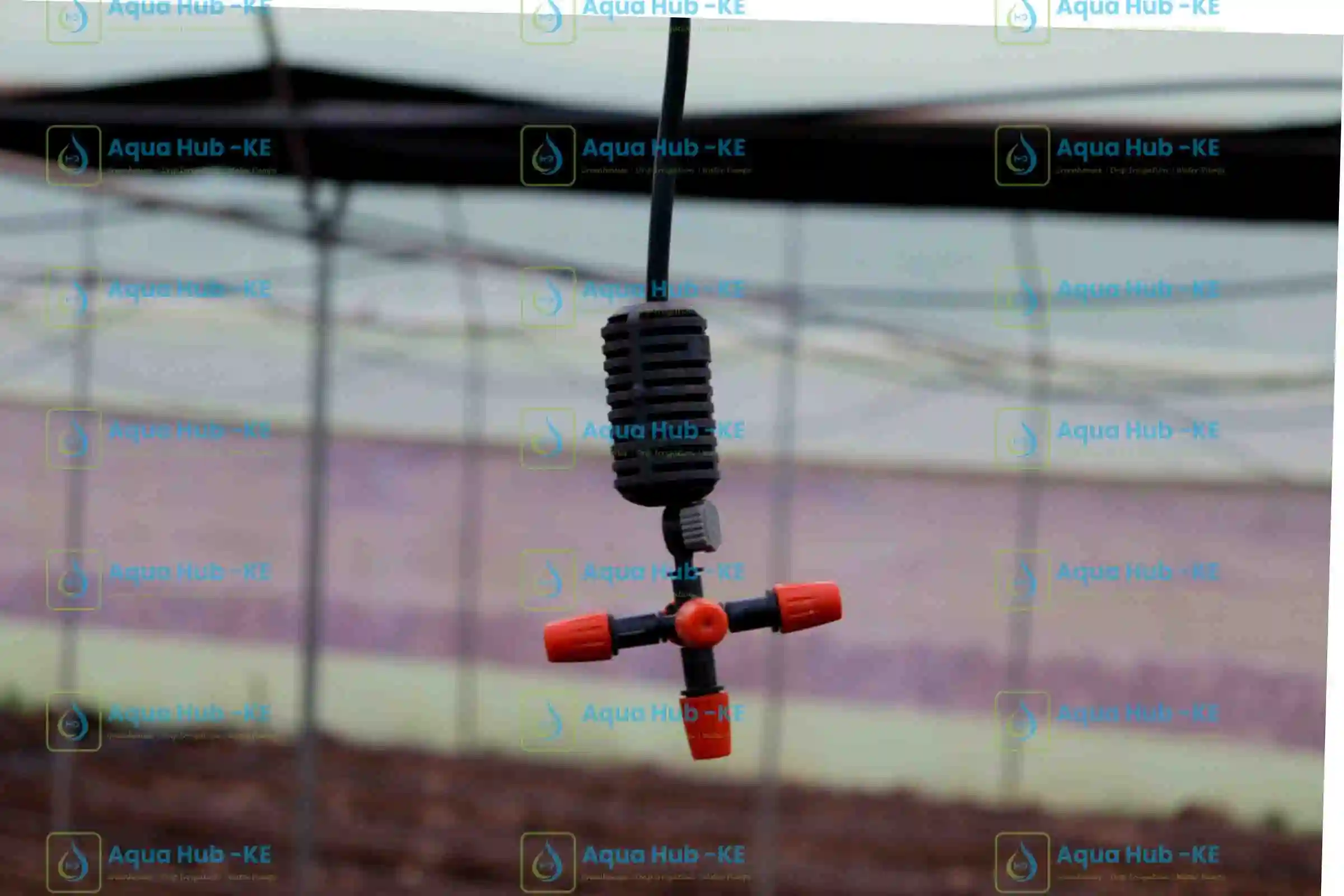
- Anti-drip nozzles – shut off automatically to stop dripping once the system depressurizes.
- Fogging nozzles – produce ultra-fine droplets ideal for humidity control in propagation areas.
- Standard misting nozzles – deliver a coarser mist suited for general greenhouse cooling.
- Adjustable-flow nozzles – allow farmers to regulate output depending on the crop stage.
Components of a Greenhouse Fogging System
A greenhouse misting system has several components including:
- Misting Nozzles – Break water into fine droplets that cool and humidify the air.
- Filtration Unit – Removes debris from the water supply before it reaches the nozzles.
- Pressure Pump – Boosts water pressure to the level required for proper atomization.
- Timer Controller – Automates the schedule so farmers avoid manual operation.
- PE Delivery Pipes – Carry water from the source to the overhead lines.
- Pressure Regulator – Maintains steady pressure across the entire network.
- Solenoid Valve – Controls water flow to different zones within the greenhouse.
How to Improve Water Pressure in a Greenhouse Misting System
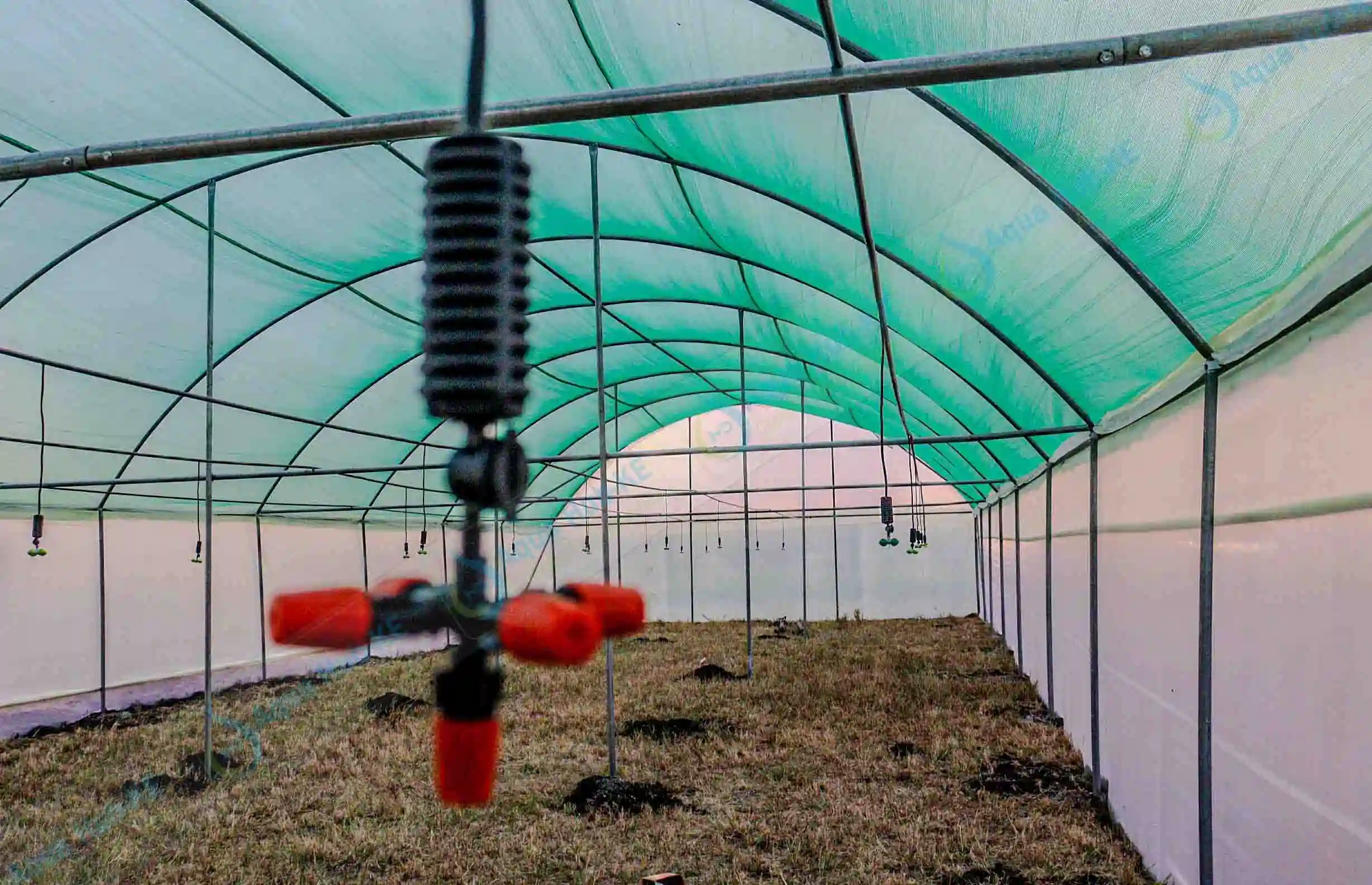
Weak water pressure reduces the effectiveness of a mister system considerably. Farmers experiencing low pressure should install a booster pump between the water source and the misting line. This helps to maintain consistent atomization throughout the greenhouse.
How to Start a Misting Project
- Assess the greenhouse temperature and humidity patterns to determine how much cooling the crop needs.
- Check your water source capacity and pressure to confirm it can support a misting system.
- Consult an irrigation specialist to design a nozzle layout that matches your greenhouse dimensions. Aqua Hub Kenya can help you with that.
- Source quality misting nozzles from a trusted supplier, along with the filtration and pressure equipment needed to run them properly.
- Prepare your greenhouse structure by clearing overhead space for the lines.
- Consult Aqua Hub Kenya by calling +254790719020 or email info@aquahubkenya.co.ke for guidance on layout and nozzle spacing.
- Purchase and install a complete kit. Aqua Hub supplies and installs misting systems across Kenya.
- Test the system fully before introducing seedlings or transplants into the greenhouse.
Greenhouse Misting System Installation
To get a misting system to run correctly, the installation process must be done carefully. This is because a poorly fitted system wastes water and leaves part of the greenhouse under-cooled. Consequently, farmers benefit from following a structured process rather than improvising as they go. The steps involved in installation include:
- First, measure the greenhouse dimensions to determine how many misting lines and nozzles the space requires.
- Next, test the water source for adequate pressure, since misting nozzles need 3 to 5 bar to atomize water properly.
- Then, install a booster pump if the existing pressure falls short of that requirement.
- Afterward, fit a filtration unit ahead of the nozzles to keep debris and mineral particles from clogging the system.
- Mount the overhead lines parallel to the greenhouse ridge, positioning them roughly 2 to 2.5 metres above the crop canopy.
- Next, attach nozzles along the line at 40cm to 60cm intervals to maintain even coverage across every row.
- Then, fit each nozzle with an anti-drip valve to stop water from pooling on leaves once the cycle ends.
- Once the hardware sits in place, connect a timer controller to automate the misting schedule and remove the need for manual operation.
- Finally, run a full test cycle to confirm even mist distribution before introducing seedlings or transplants into the greenhouse.
Contact Aqua Hub Kenya today for professional installation by calling +254790719020. Our technicians can also guide you through the process of selecting the best greenhouse msiting system for your use case.
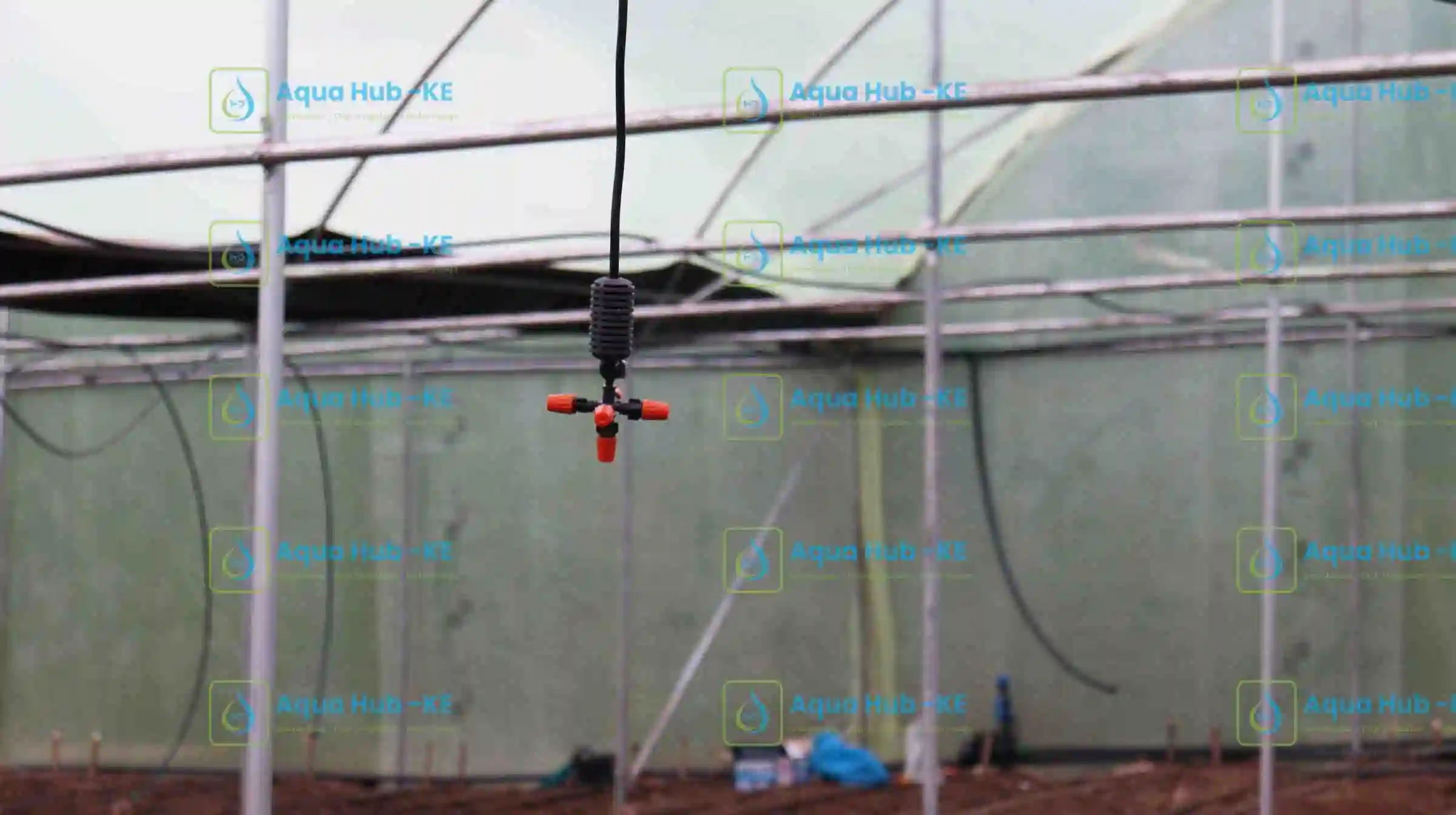
Maintenance of fogging systems
To ensure that your fogging system works at full capacity, you must perform regular maintenance. Some of the things you must do include:
- Clean nozzles regularly to prevent mineral buildup from blocking water flow.
- Monitor humidity levels daily since excess moisture encourages fungal growth on leaves.
- Install the system early in the greenhouse cycle to establish a stable microclimate from the start.
- Adjust frequency during the cooler months to match lower cooling demand.
- Inspect pipes and connectors monthly to catch leaks before they waste water.
Frequently Asked Questions
What does a greenhouse mister system do?
A greenhouse mister system cools the greenhouse air and raises humidity by releasing water through fine nozzles mounted overhead, protecting crops from heat stress and supporting steady growth through hot weather.
How much does a greenhouse mister system cost in Kenya?
The cost of a greenhouse mister system in Kenya depends on greenhouse size and nozzle count, but farmers can expect to pay between KES 6,000 and KES 20,000 for a standard 8m by 30m installation.
Can misters replace drip irrigation in a greenhouse?
A mister system cannot replace drip irrigation in a greenhouse, since misting manages air temperature and humidity while drip irrigation delivers water directly to the root zone. Most farmers run both systems together to cover cooling and watering needs separately.
How often should a farmer run the misting cycle?
A farmer should run the misting cycle in short bursts every 15 to 20 minutes during peak heat, then reduce the frequency once temperatures drop in the late afternoon.
Does misting increase the risk of plant disease?
Misting can increase the risk of plant disease if the system runs too often or ventilation stays poor, since excess moisture on leaves invites fungal infection. Farmers who balance frequency with good airflow avoid this risk comfortably.
What crops benefit most from greenhouse misting systems?
The crops that benefit most from greenhouse misting systems are seedlings and young cuttings, since they need stable humidity to root and establish quickly. Mature fruiting crops also benefit during extreme heat, though farmers should reduce misting once flowering begins to avoid disrupting pollination.
Who installs greenhouse fogging systems in Kenya?
Aqua Hub Kenya installs greenhouse mister systems in Kenya, designing, supplying, and fitting complete systems from its base in Nairobi, Utawala.
Final Thoughts on Greenhouse Fogging Systems
Misting solves a problem that many Kenyan farmers underestimate until their crops start wilting under midday heat. A well-designed system stabilizes temperature and protects flowering stages, cutting water waste compared to manual spraying methods along the way. Farmers who invest in proper nozzle spacing, filtration, and pressure regulation see stronger yields and healthier plants across every growing cycle. Aqua Hub Kenya supplies complete kits and handles installation from start to finish, giving farmers a system built to match their greenhouse dimensions and crop needs.