
Blog
Pawpaw Irrigation Kit: Button Drippers in Kenya
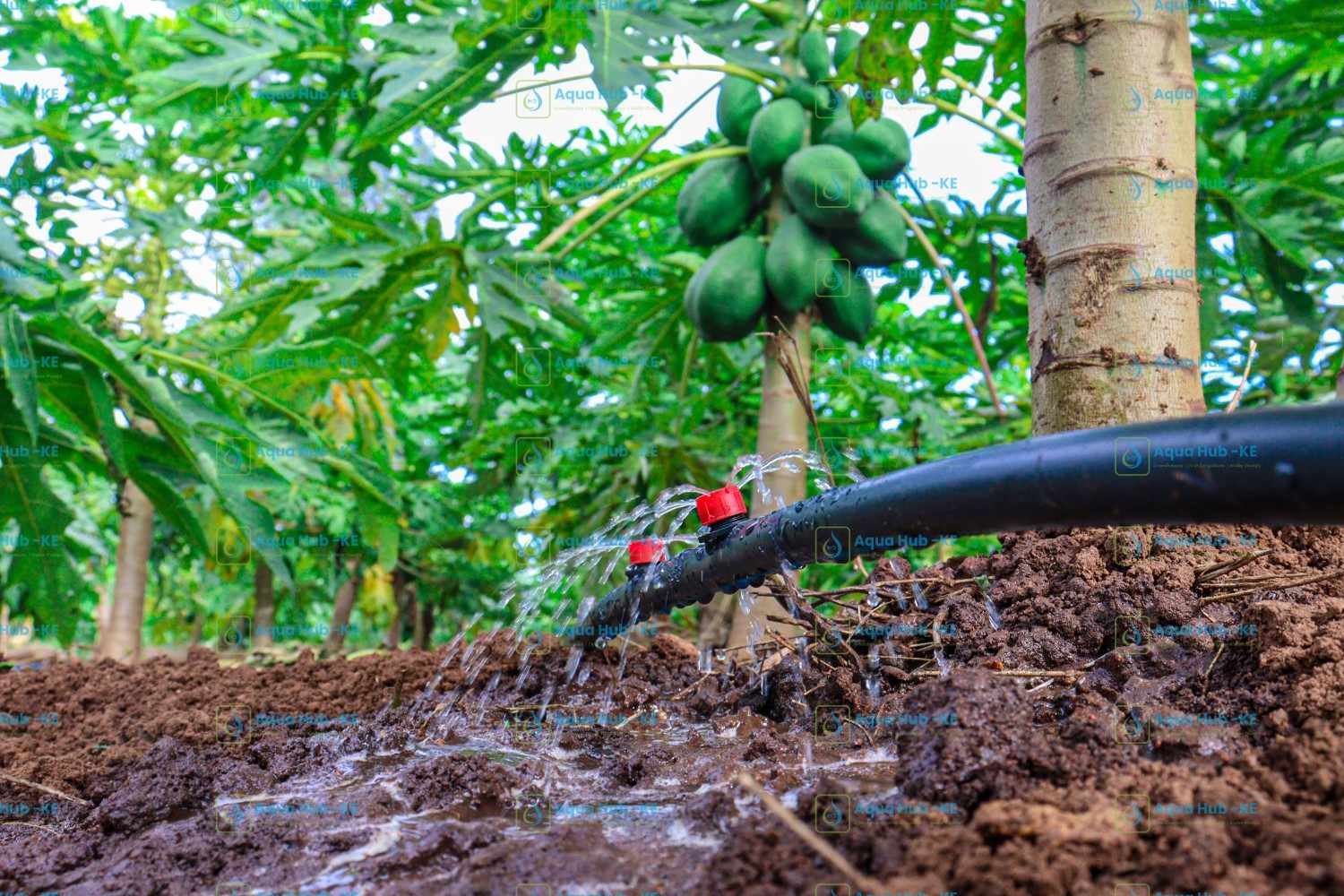
Buy the Pawpaw button drip irrigation kit from Aqua Hub Ltd, designed as per the water needs and size of your farm. Our button drip irrigation system includes a set of pipes, connectors and button drippers designed for high performance. Get a complete pawpaw button drip irrigation kit at KES 100,000–KES 180,000 per acre. Cost varies with the system complexity, with automated systems available at much more expensive prices.
Call 0790719020
Pawpaw, often referred to as papaya, is a popular fruit grown in Kenya, known for its delicious taste and health benefits. Like other crops, it requires regular watering to thrive, particularly in regions with insufficient rainfall.
Quick Takeaways
- Button drippers are ideal for pawpaw farming in Kenya
- Pawpaw irrigation kit ranges from KES 135,000 to 180,000
- Pawpaw does well in warm tropical climates with temperature of 21°c – 33°c
- Proper spacing is ideal for efficient production and irrigation.
- Installation quality affects performance
- Drip irrigation saves water and boosts yields
Pawpaw Farming in Kenya
Pawpaw farming in Kenya has gained much popularity due to its short maturity period and high market demand. Harvesting can begin with 8 – 12 months after planting. Unreliable rainfall has made irrigation essential for consistent and high production of papaya fruits.
Why Button Drip Irrigation Kit for Papaya Farming
Button drip irrigation systems supply water directly to plant roots, promote crop health and minimise water waste.
Purchasing the right irrigation kit is essential for farmers hoping to produce a high-quality yield of papaya.
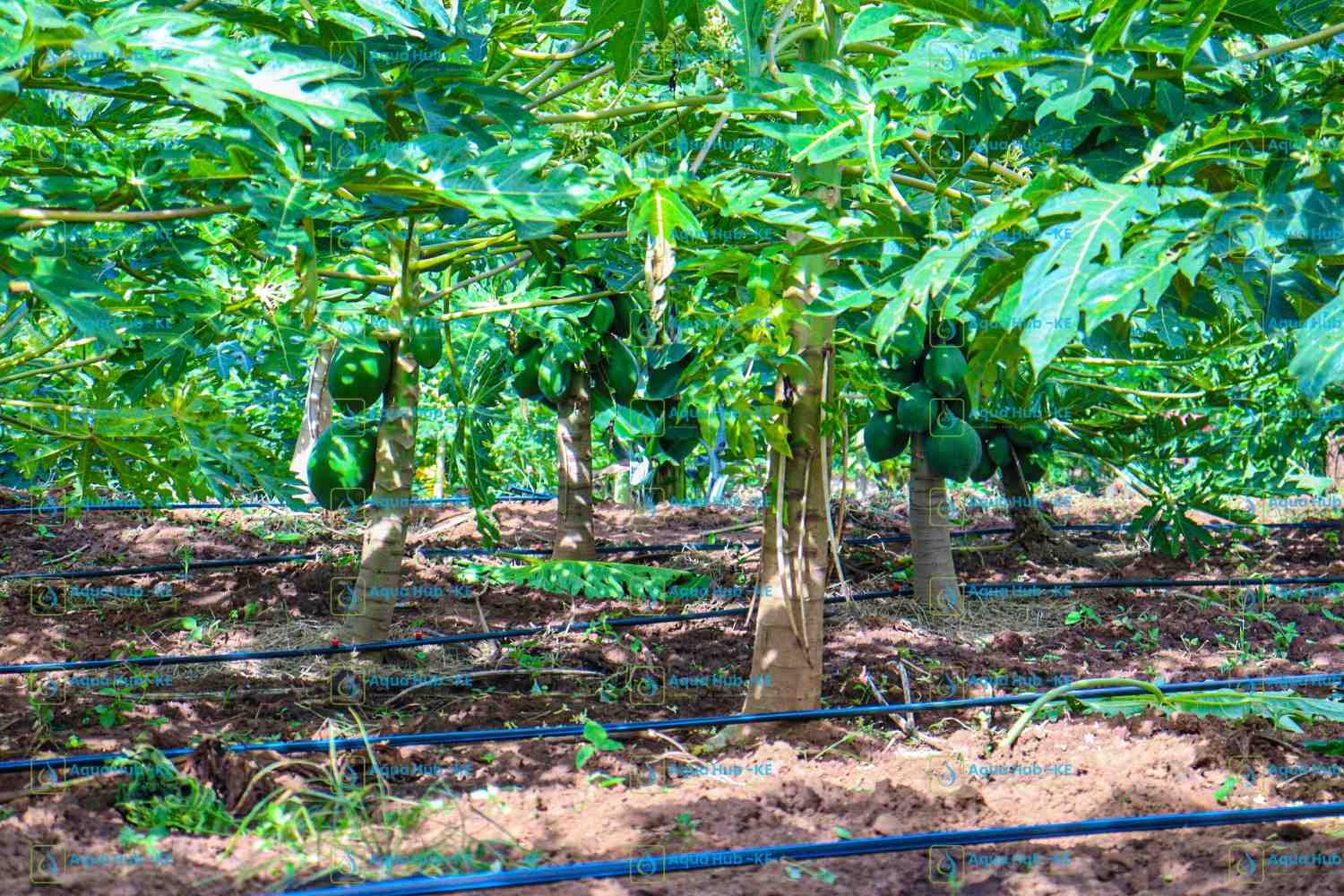
Irrigation of Papaya trees using button drippers
Conditions for Pawpaw Farming in Kenya
- Pawpaw thrives in warm tropical climates with temperatures between 21°C and 33°C.
- It requires well-drained loamy soils with a pH of 5.5–7.0.
- Poor drainage can lead to root rot, a major issue in pawpaw farming.
Watering is critical, especially during the flowering and fruiting stages. Consistent water supply ensures uniform fruit size and quality.
Pawpaw Spacing and Farm Layout
Proper spacing is crucial for both growth and irrigation efficiency. Standard spacing ranges from the following:
- 5m × 2.5m
- 3m × 3m
This spacing allows adequate sunlight and airflow while simplifying drip line installation.
With wider spacing, button drippers are ideal because each plant receives targeted watering. For example, a 3m × 3m layout me about 450 plants per acre.
Button Drip Irrigation Kit?
A papaya button drip irrigation kit is designed with the following:
- HDPE mainline Pipe
- Sub-mainline HDPE Pipe
- Irrigation water filter
- Connectors
- Ball Valves
- A water pump
Button drippers are ideal for fruit trees such as papaya and other widely spaced plants. It irrigates in a low-pressure and high-flow-rate manner.
Types of Button Drippers in Kenya
Adjustable Drippers
- Flow can be controlled (0–70 L/hr)
- Suitable for varying plant sizes
Non-Adjustable Drippers
- Fixed flow rate
- Simpler and cheaper
- Prices range from KES 10 to 13 per dripper
- Choose adjustable drippers if your farm has mixed crop stages.
Button Drip Irrigation Kit for 1 Acre
A 1-acre farm accommodates around 400 – 450 pawpaw trees. Each plant is allocated 1-2 button drippers depending on the soil water retention rate. A 1-acre button drip irrigation kit for papaya can cost between KES 85,000 and KES 200,000.
How to Install a Pawpaw Button Drip Irrigation Kit
- Plan layout based on spacing
- Install mainline pipes
- Add filter and pressure regulator
- Connect sub-main pipes
- Punch holes and fix drippers
- Test system
Water Requirements for Pawpaw Trees
Irrigation of papaya should be done 2-3 times per week, but you can adjust according to your soil moisture rate.
The rate of pawpaw irrigation varies with the growth stages below:
- Seedling stage: frequent light watering
- Flowering: moderate irrigation
- Fruiting: high water demand
Benefits of Button Drippers for Pawpaw Farming
- Water efficiency: Direct root watering minimizes waste
- Higher yields: Consistent moisture improves fruit quality
- Reduced labor: Automation saves time
- Disease control: Dry leaves reduce fungal infections
Pawpaw Irrigation Kit Suppliers in Kenya
For quality drip irrigation kits and button drippers, buy from Aqua Hub Kenya.
We are the most convenient supplier; our charges are inclusive of installation fees. Our projects are undertaken with professionalism and with dedication to ensure our clients get value for money.
Challenges in Pawpaw Irrigation farming
- Water scarcity – before you decide to grow papaya under irrigation, you should ensure you have sufficient water.
- High initial cost – the irrigation system can be a bit costly, especially for smallholder farmers. Look for financing options such as Saccos or cooperative societies.
- Clogging of button drippers – use a high-quality water filter in your irrigation system.
Tips for Maximizing Yield
- Use fertigation
- Monitor soil moisture
- Maintain proper spacing
- Schedule irrigation properly
Frequently Asked Questions
1. How much is a button drip irrigation system in Kenya?
KES 130,000 – KES 180,000 per acre.
2. Is pawpaw farming profitable in Kenya?
Papaya farming has high potential. When done well, it is highly profitable.
3. How many drippers per pawpaw plant?
Typically 1–2 drippers per plant depending on size.
4. What is the spacing for pawpaw farming?
2.5m × 2.5m or 3m × 3m.
5. What is the best irrigation system for pawpaw in Kenya?
Drip irrigation with button drippers is the most efficient for fruit trees.
6. How much time does a papaya tree take to give fruit?
6 – 8 months.
7. How often should pawpaw be irrigated?
2–3 times per week depending on soil moisture.
8. How long does a pawpaw take to mature from seed?
6 – 11 months
9. How much water does a papaya plant need?
10 litres per day.
10. Where Can I Buy Irrigation Kits in Kenya?
Aqua Hub Kenya